Method
Prepare the chicken safely
Do not rinse 500 g of boneless skinless chicken breast. Place it on a board used for raw poultry, pat it dry with paper towels, and cut it into 2.5 cm (1 in) pieces. Season with 1 1/2 g of fine sea salt for chicken and 1/2 g of black pepper for chicken. Wash your hands with soap for 20 seconds, then wash the knife, board, and nearby work surface with hot, soapy water before preparing the remaining ingredients.
Brown the chicken
Heat 15 ml of olive oil in a large, deep skillet over medium-high heat until it shimmers. Add the seasoned chicken pieces in one layer and cook for 4 to 5 minutes, turning once, until browned on two sides. The centers may still be undercooked at this stage. Transfer the chicken to a clean plate; do not return it to any surface that held the raw chicken.
04:00Soften the shallots
Reduce the heat to medium and add 10 g of unsalted butter. Finely chop 2 shallots, add them to the skillet, and cook for about 3 minutes, stirring often, until softened and translucent at the edges.
03:00Cook the garlic
Mince 3 garlic cloves, add it to the softened shallots, and cook for 30 seconds, stirring constantly, until fragrant without letting it brown.
00:30Toast the orzo
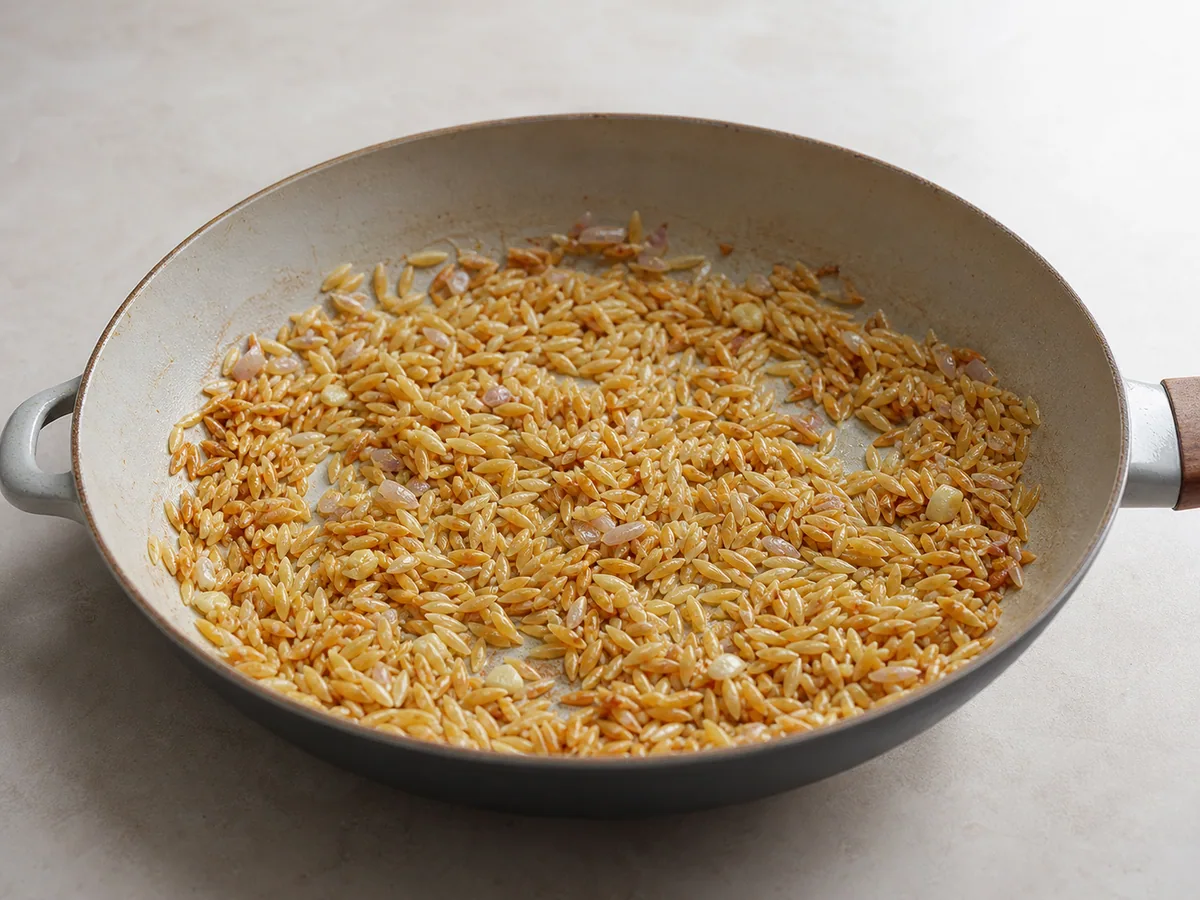
Add 240 g of wheat orzo pasta to the skillet and cook for 1 minute, stirring constantly, until the grains are evenly coated and lightly toasted.
01:00Simmer the chicken and orzo
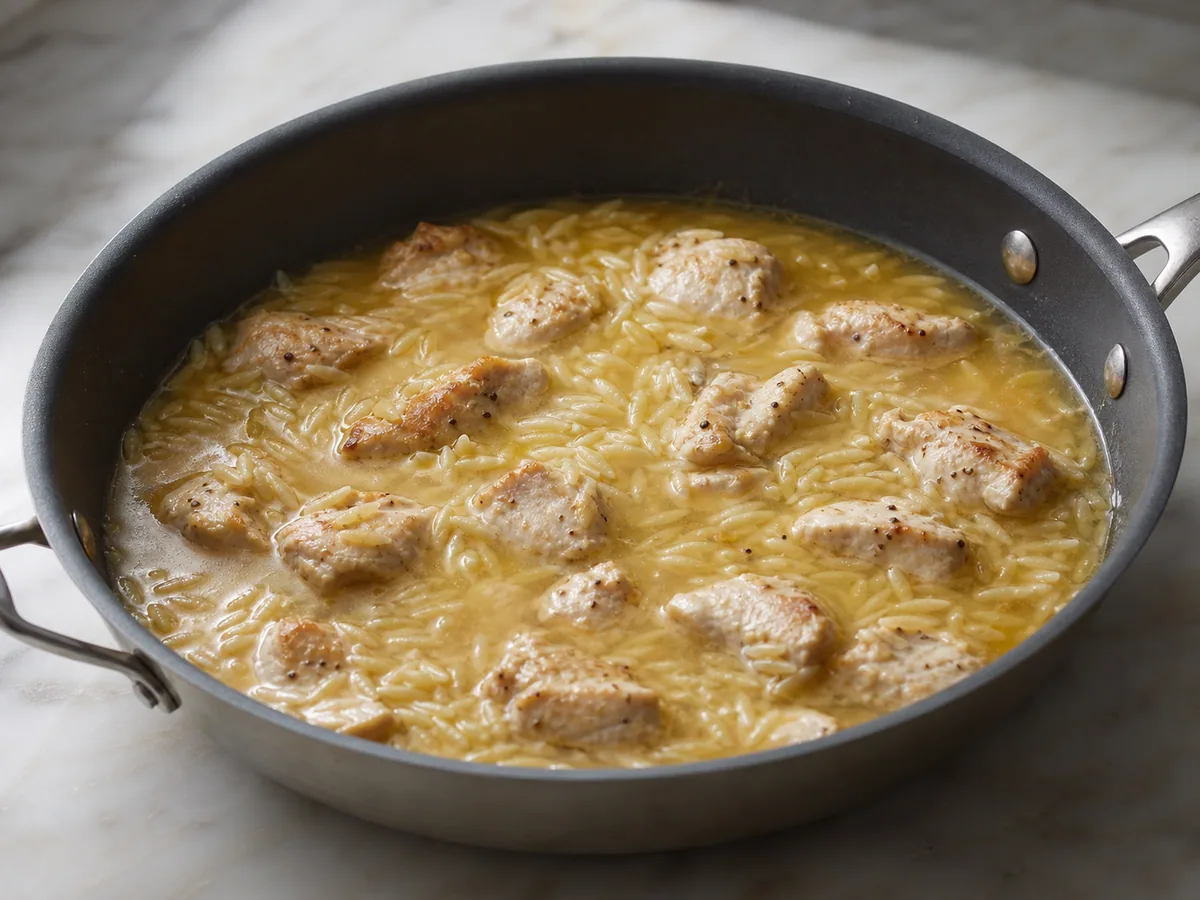
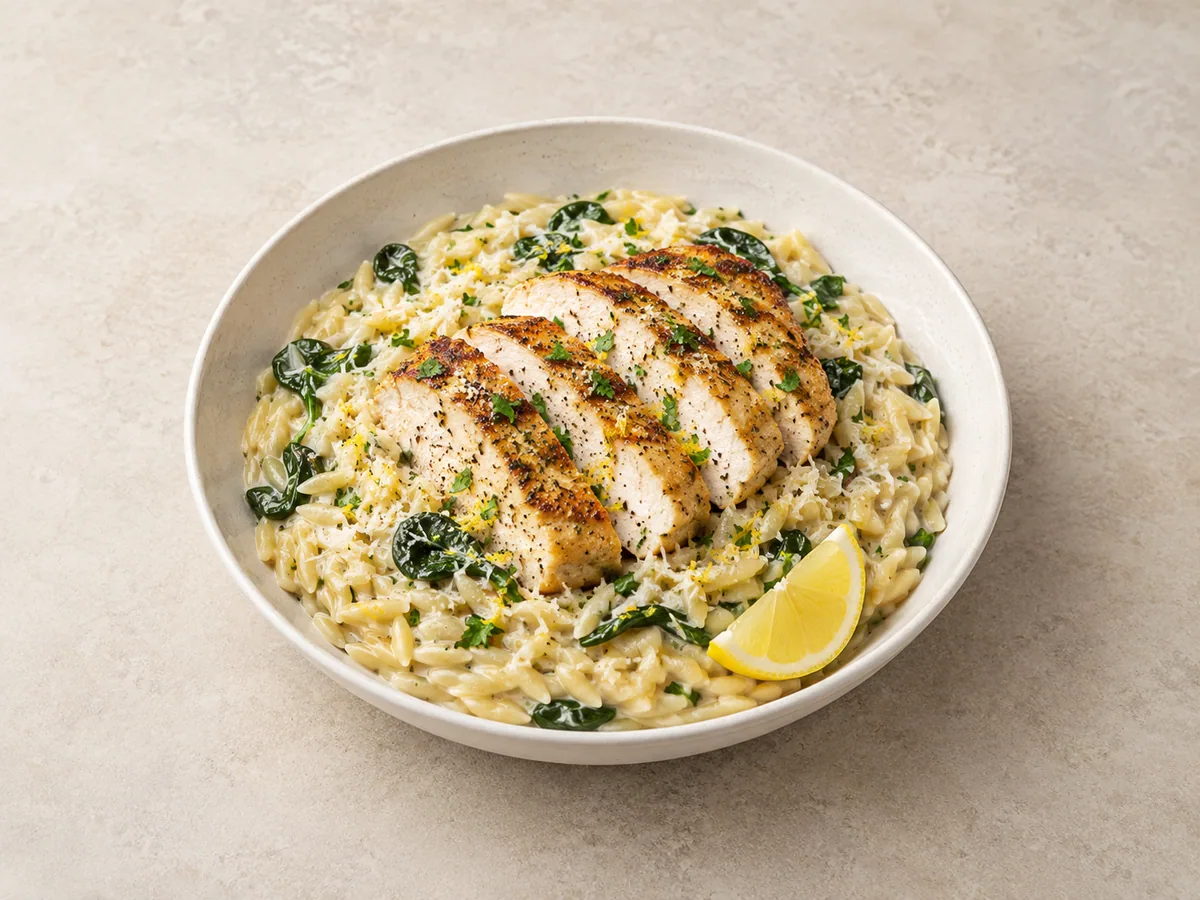
Pour in 720 ml of unsalted chicken stock, then stir in 3 g of fine sea salt for sauce, 1/2 g of black pepper for sauce, and 10 g of Dijon mustard, scraping the skillet to release the browned bits. Return the chicken and any juices from the clean plate. Bring to a gentle boil, reduce the heat to medium-low, and simmer uncovered for 10 to 12 minutes, stirring every 1 to 2 minutes so the orzo does not catch. Begin checking at 10 minutes: the orzo should be al dente, and the thickest chicken pieces must reach 74°C/165°F on a food thermometer. Add small splashes of hot water if the pan looks dry before both are done.
10:00Wilt the spinach in the cream
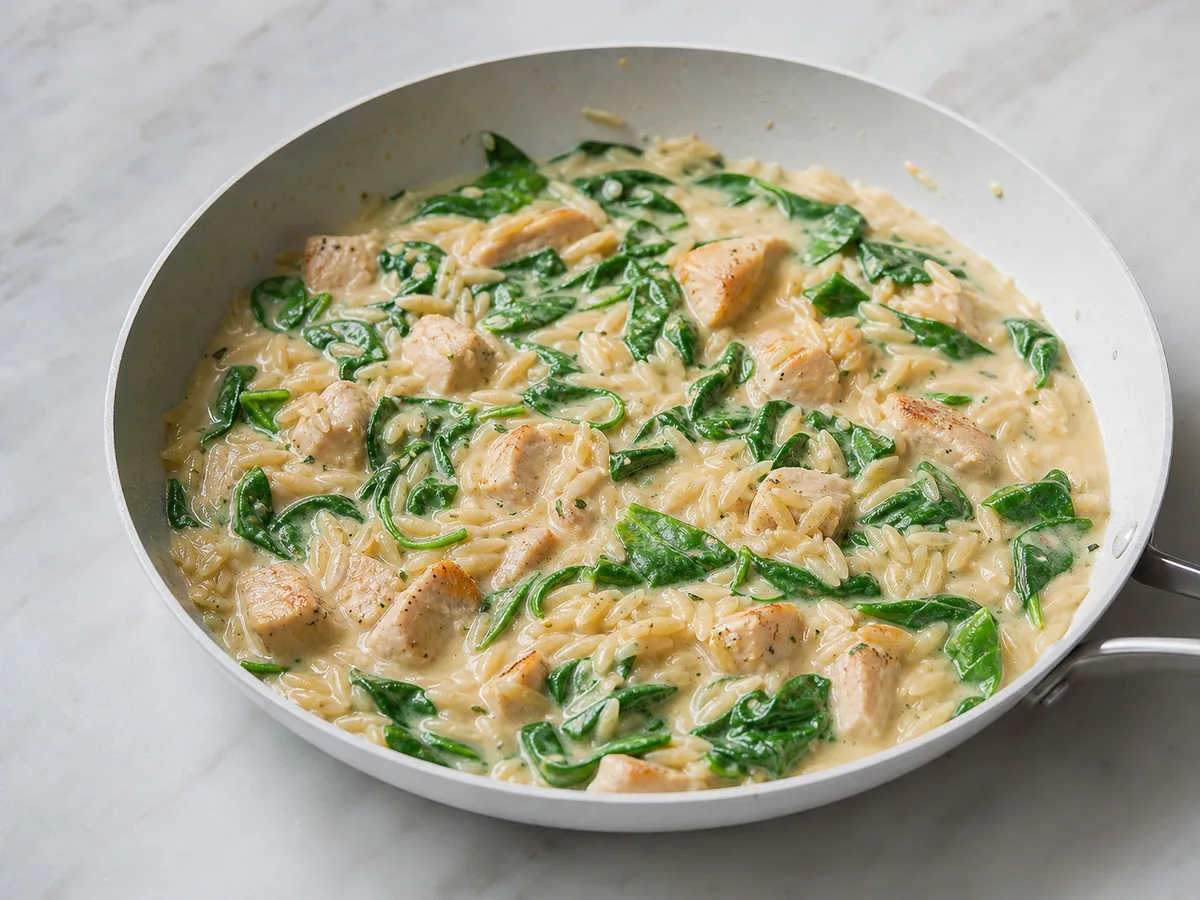
Lower the heat and stir in 90 ml of heavy cream and 100 g of baby spinach. Cook for 1 to 2 minutes, stirring gently, just until the spinach wilts and the sauce looks glossy.
01:00Finish with lemon and Parmesan
Remove the skillet from the heat. Finely grate the zest from 1 large lemon, then squeeze in its juice. Stir in 40 g of finely grated Parmesan cheese until melted. Chop 15 g of fresh parsley, fold most of it through the orzo, and scatter the rest over the top. Let the skillet stand for 2 minutes so the sauce settles around the pasta, then serve immediately.
02:00


Smart Substitutions
- Prefer chicken thighs? Use boneless skinless thighs cut into bite-size pieces and cook them to 74°C/165°F, checking with a food thermometer.
- No heavy cream? Use full-fat evaporated milk, add it over low heat, and keep the lemon addition off the heat to reduce the chance of splitting.
- No spinach? Use green peas for a sweeter finish, or add finely sliced kale with the stock so it has time to soften.
- No Parmesan? Use finely grated pecorino and reduce the sauce salt slightly because pecorino is often saltier.
Tips and Variations
- Stir the orzo frequently near the end of simmering; its starch thickens the sauce but also makes it prone to catching on the skillet.
- Keep the simmer gentle after the chicken returns so the breast meat cooks through without becoming tough.
- Serve while the sauce is softly flowing. The orzo continues to absorb liquid as it stands at the table.
What Went Wrong?
- Orzo is firm but the pan is dry Add hot water in small splashes and continue simmering, stirring often, until the pasta is al dente.
- Sauce is too loose Let the finished skillet stand for 2 minutes. If it is still loose, stir over low heat briefly until it coats the orzo.
- Sauce looks grainy Move the skillet off the heat and stir in a small splash of cream. High heat can make Parmesan clump or dairy separate.
- Lemon flavor is harsh Stir in a little more cream or Parmesan to round the acidity, then taste before adding any more salt.
Nutrition Estimate
- Fiber: 4 g per serving
- Sodium: 780 mg per serving
Nutrition disclaimer:This recipe is provided for general cooking information only. Nutrition values are estimates and may vary by ingredients, brands, preparation methods, and serving sizes. Check ingredient labels and follow appropriate food-safety practices. This content is not medical, dietary, allergy, or professional food-safety advice.
FAQ
Found an error or have a suggestion?
Help us improve this recipe. Send us your feedback and include the recipe name so we can take a look.