Method
Prepare the noodles, vegetables, and sauce
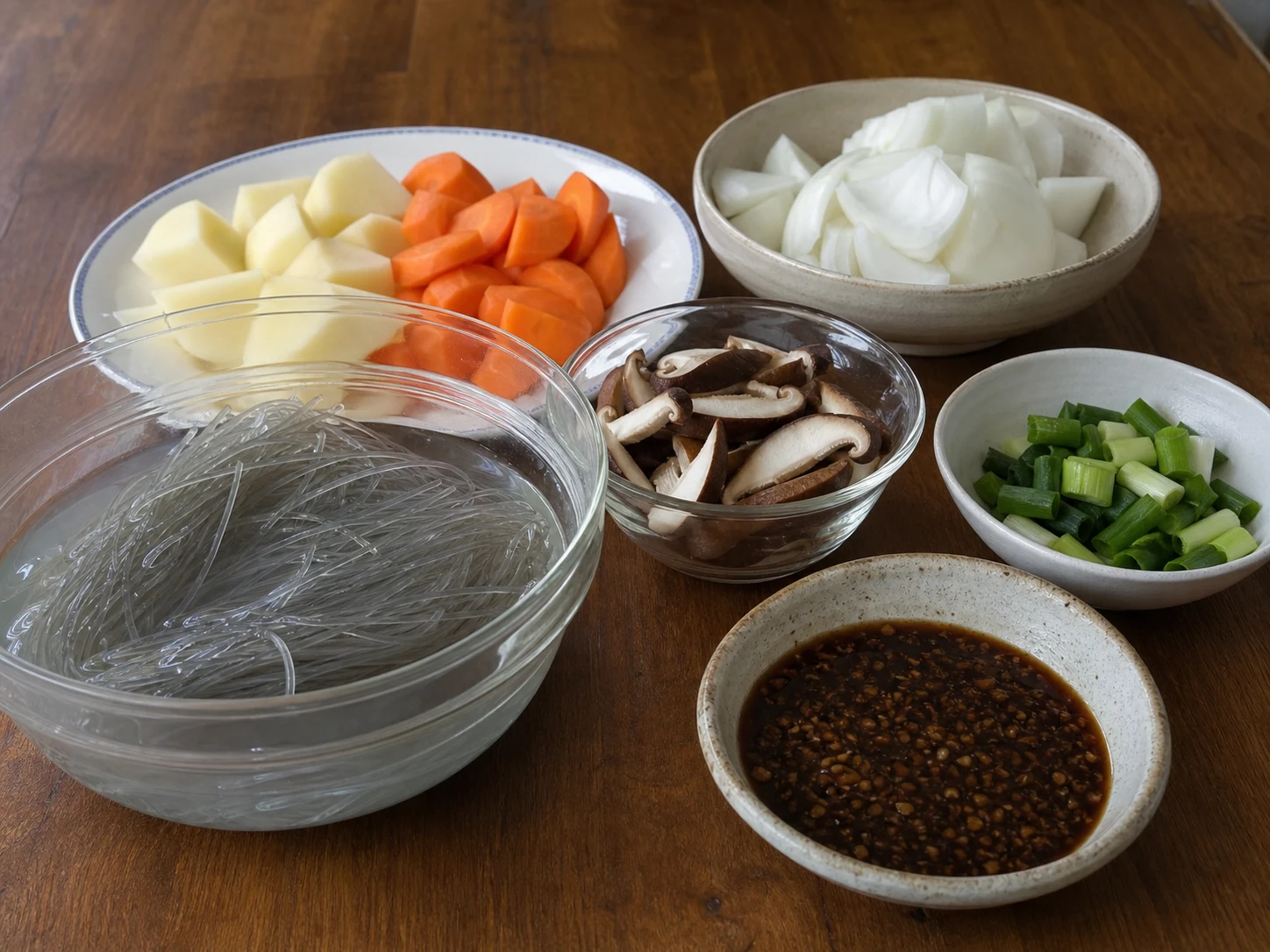
Place 120 g of Korean sweet potato starch noodles in a large bowl and cover generously with warm water. Soak for 20 minutes, then drain well. Meanwhile, scrub and cut 400 g of Yukon Gold potatoes into 3 cm chunks; peel and cut 180 g of carrot into thick diagonal slices; cut 200 g of yellow onion into wedges; trim and halve 120 g of fresh shiitake mushrooms; and cut 4 scallions into 5 cm lengths, keeping the pale and green parts separate. Mince 8 garlic cloves and grate 15 g of fresh ginger. Stir 480 ml of water, 90 ml of Korean soy sauce for braising (jin-ganjang or yangjo-ganjang), 30 g of dark brown sugar, 20 ml of honey, 8 garlic cloves, 15 g of fresh ginger, and 1 g of black pepper together until the sugar dissolves.
20:00Start the chicken braise
Do not rinse the chicken. Cut 800 g of boneless skinless chicken thighs into 5 cm pieces on a board reserved for raw poultry, then transfer it to a wide heavy pot. Wash your hands, knife, board, and any surface that touched raw chicken before handling ready-to-eat ingredients. Pour the prepared sauce into the pot, add 3 small mild Korean dried red chiles, stemmed and left whole, and bring to a lively simmer over medium-high heat. Cover, reduce the heat to medium, and cook for 10 minutes, turning the chicken once with clean tongs.
10:00Braise the chicken and vegetables
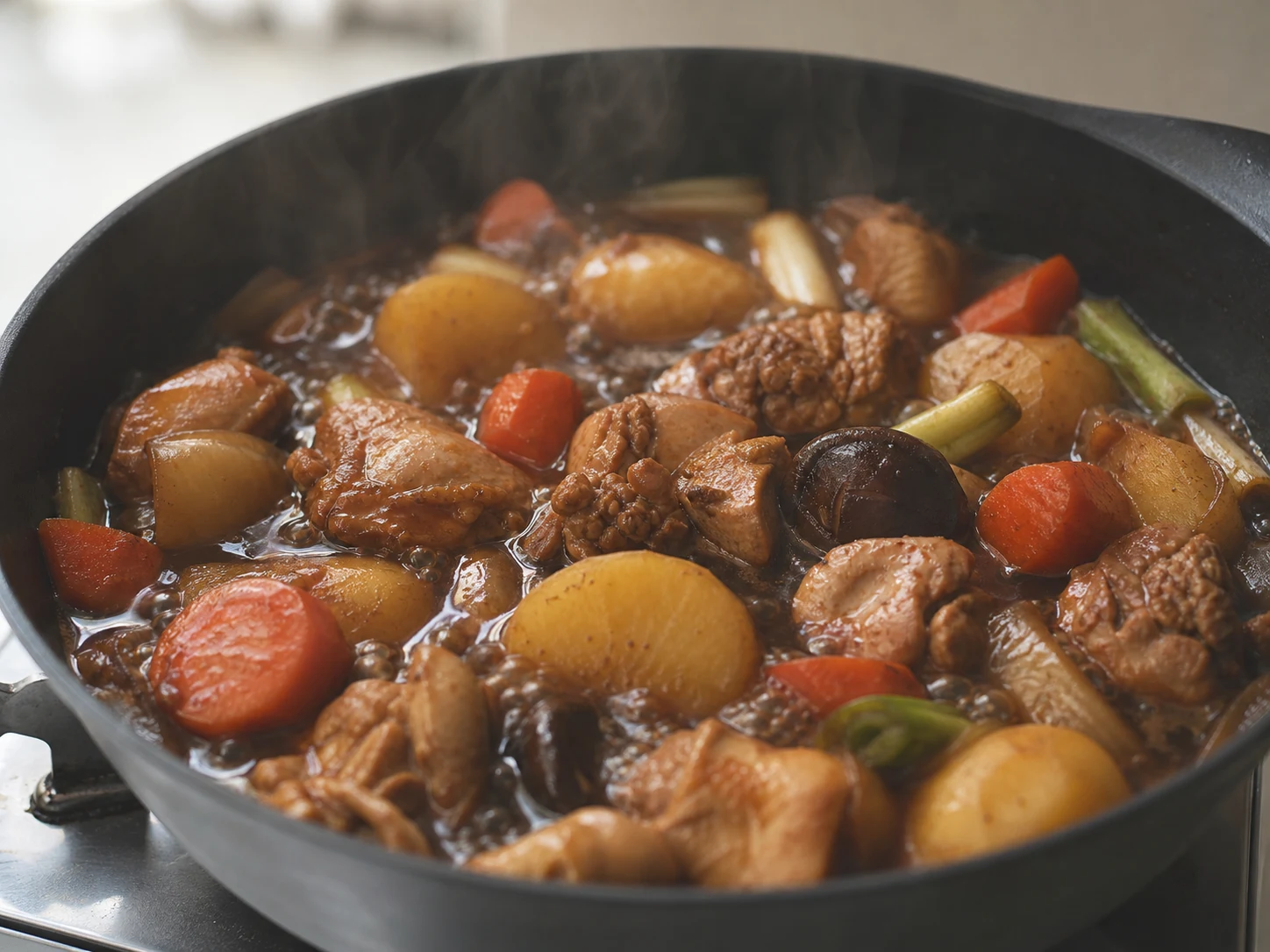
Add 400 g of Yukon Gold potatoes, 180 g of carrot, 200 g of yellow onion, 120 g of fresh shiitake mushrooms, and the pale scallion parts to the pot. Stir gently, cover, and maintain a steady simmer over medium heat for 15 minutes, checking at the first timer. The potatoes should be nearly tender but still hold their shape. Insert a food thermometer into the thickest chicken piece; it must reach 74°C/165°F. If either the chicken or potatoes need more time, continue cooking in 2-minute intervals.
15:00Cook the noodles and reduce the sauce
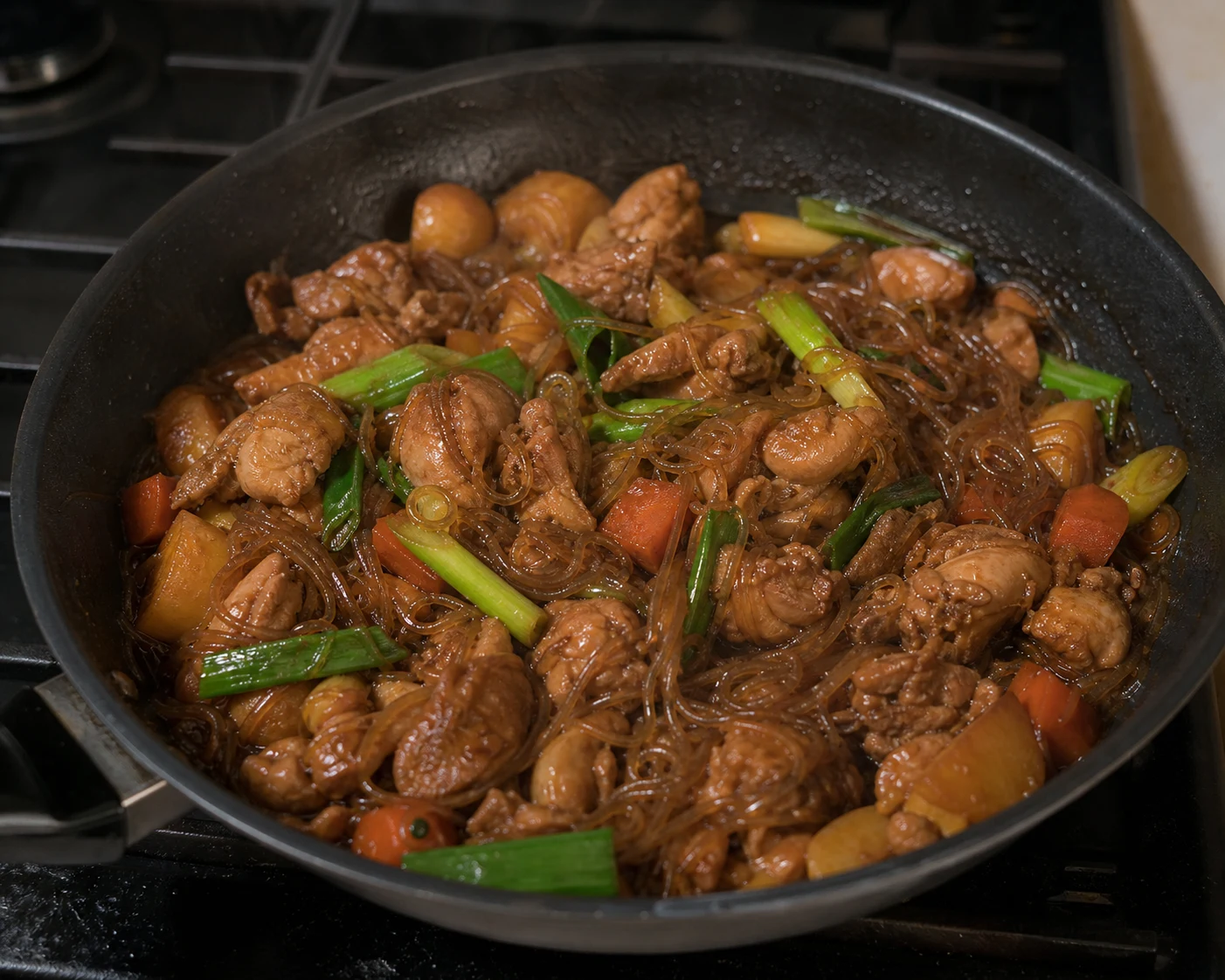
Add 120 g of Korean sweet potato starch noodles and the green scallion parts to the pot. Simmer uncovered over medium heat for 5 to 7 minutes, lifting and turning the noodles gently so they stay mostly under the sauce. Begin checking at 5 minutes: the noodles should be translucent and pleasantly chewy, and the sauce should cling to the chicken and vegetables while a little liquid remains in the bottom of the pot. Lower the heat if the sauce starts catching.
05:00Finish and serve
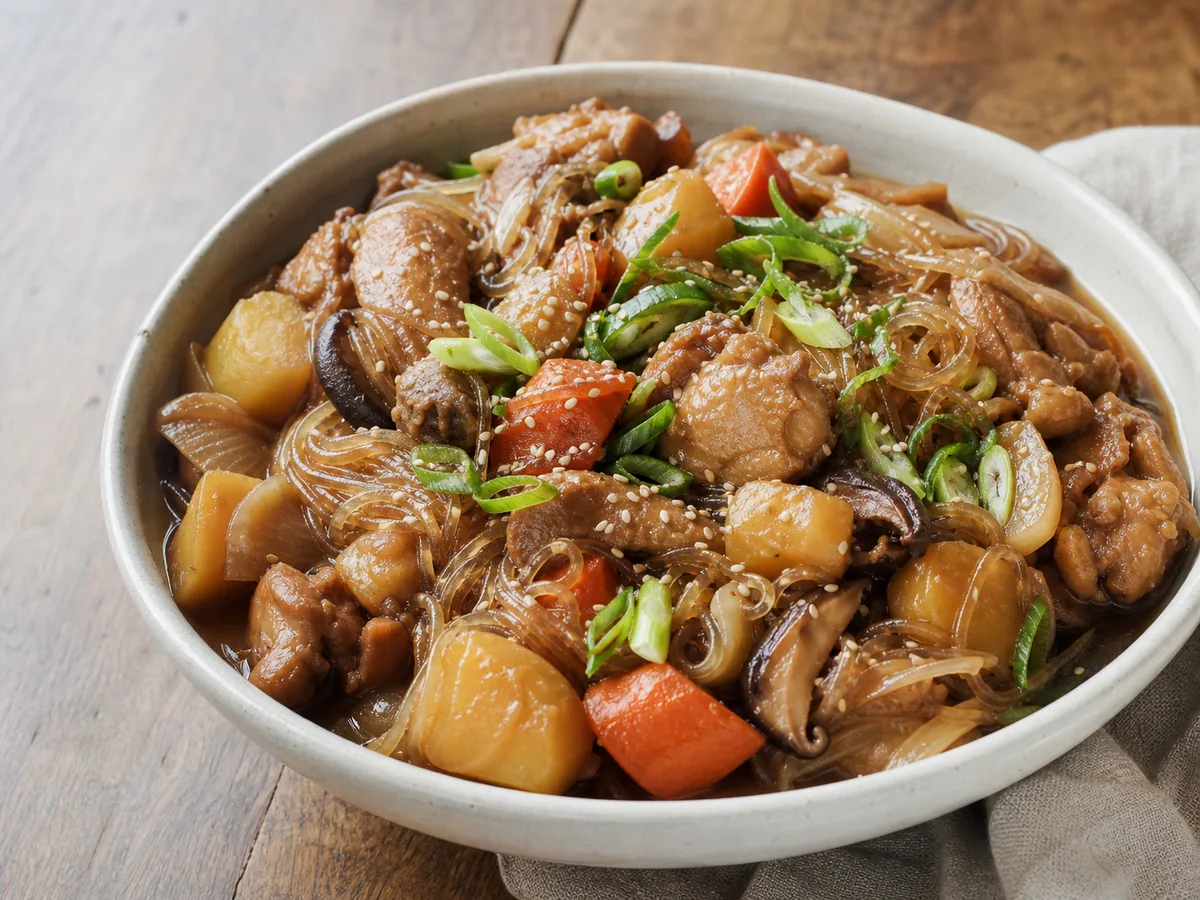
Remove the pot from the heat and fold in 10 ml of toasted sesame oil. Taste the sauce; it should be savory-sweet with a gentle chile warmth. Transfer the jjimdak to a wide serving bowl, sprinkle with 10 g of toasted sesame seeds, and serve immediately with cooked short-grain rice (optional).


Smart Substitutions
- No sweet potato noodles? Use mung bean glass noodles and begin checking a minute earlier because they can soften faster.
- Prefer bone-in chicken? Use 1.1 kg (2.4 pounds) of skinless thigh and drumstick pieces. Simmer the chicken in the sauce, covered, for 15 minutes before adding the potatoes and other vegetables; then continue with the 15-minute vegetable braise and cook longer in 2-minute intervals as needed. Verify the thickest pieces reach 74°C/165°F without touching bone.
- Want a mild pot? Omit the dried red chiles; the garlic, ginger, soy sauce, and sesame oil will still give the braise plenty of character.
- No shiitake mushrooms? Use cremini mushrooms, cut into large pieces so they remain distinct after braising.
Tips and Variations
- Choose a wide pot rather than a narrow saucepan so the sauce reduces evenly and the noodles are easier to turn.
- Keep the potato chunks substantial; small pieces can collapse before the chicken and noodles are ready.
- When the noodles go in, tuck them beneath the liquid for the first minute so they season evenly instead of clumping on top.
What Went Wrong?
- Sauce tastes too salty Add a splash of hot water, simmer briefly, and balance with a small touch of honey only if needed.
- Noodles are still firm Add a little hot water, cover for 1 to 2 minutes, then uncover and test again.
- Potatoes are breaking apart Stop stirring with a spoon; lift and turn the noodles with tongs while leaving the vegetables in place.
- Sauce is thin after the noodles soften Move the solids to the sides and simmer the center of the pot uncovered until the liquid turns glossy.
Nutrition Estimate
- Fiber: 7 g per serving
- Sodium: 1560 mg per serving
Nutrition disclaimer:This recipe is provided for general cooking information only. Nutrition values are estimates and may vary by ingredients, brands, preparation methods, and serving sizes. Check ingredient labels and follow appropriate food-safety practices. This content is not medical, dietary, allergy, or professional food-safety advice.
FAQ
Found an error or have a suggestion?
Help us improve this recipe. Send us your feedback and include the recipe name so we can take a look.