Method
Mix and hydrate the dough
Warm 300 ml of whole milk to 38–43°C (100–110°F). In a large mixing bowl, whisk together 480 g of all-purpose flour, 75 g of granulated sugar, 7 g of instant yeast, and 8 g of fine salt. Beat 1 large egg into the warm milk, pour the liquid into the dry ingredients, and mix until no dry flour remains. Let the rough dough stand for 10 minutes so the flour can absorb the liquid. Do not taste the raw dough. After handling the raw flour, egg, or dough, wash your hands and clean bowls, utensils, and work surfaces with hot, soapy water before touching the baked rolls.
10:00Work in the butter and knead
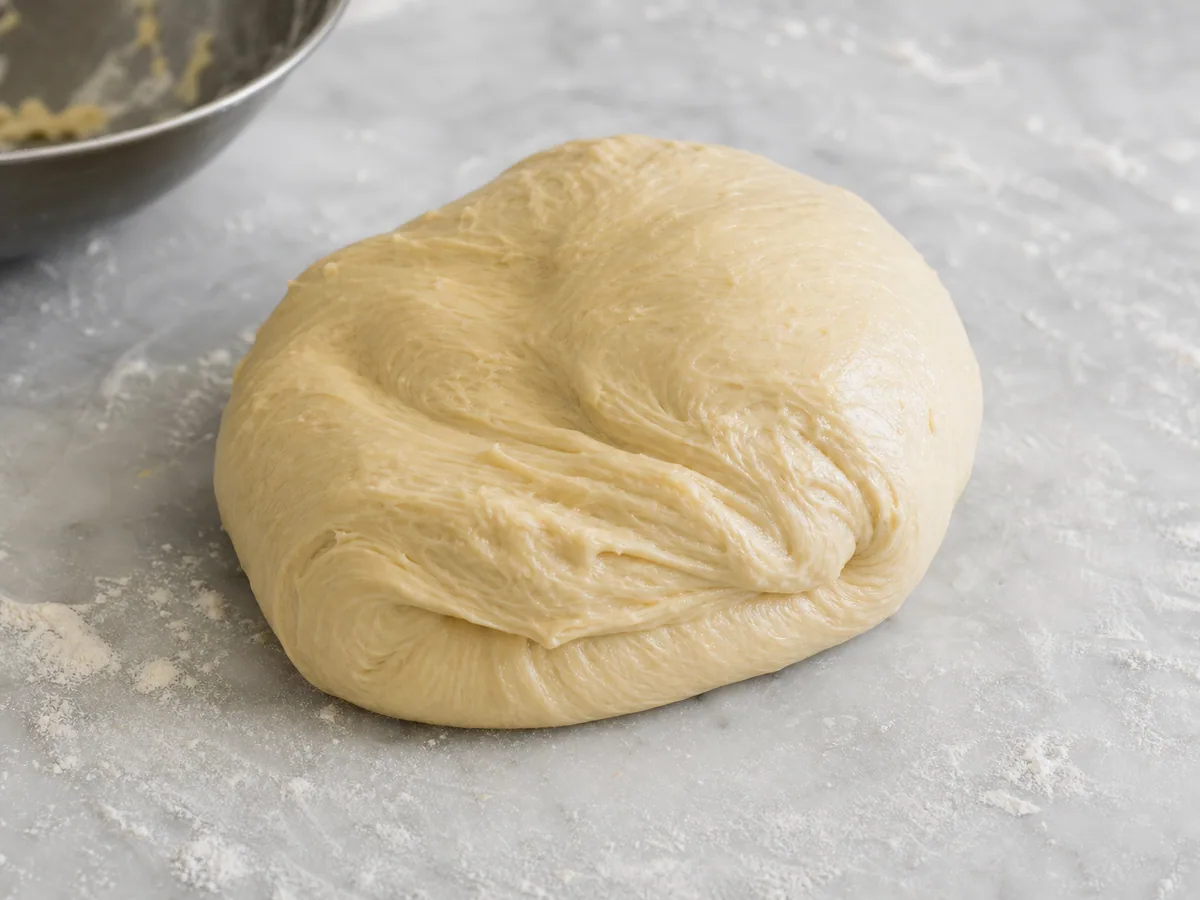
Cut 60 g of unsalted butter into small pieces. Add it to the dough in several additions, kneading until each addition disappears before adding more. Continue kneading for 8 to 10 minutes with a stand mixer on medium-low speed, or 12 to 15 minutes by hand, until the dough is smooth, elastic, and slightly tacky. At the first timer check, stretch a small piece; it should form a thin membrane before tearing.
08:00Let the dough rise
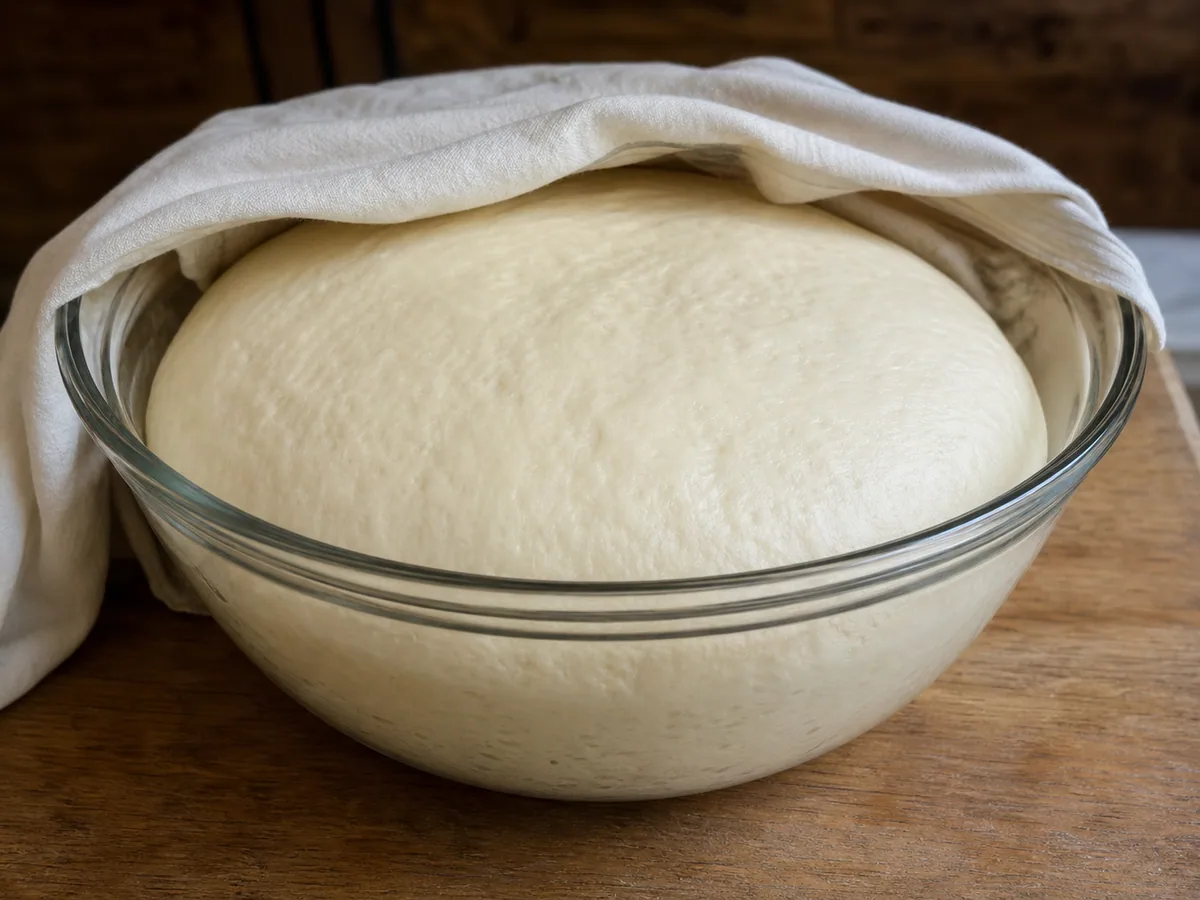
Shape the dough into a ball and place it in a lightly greased bowl. Cover and leave in a warm, draft-free place for 60 to 75 minutes, until roughly doubled in volume. Begin checking at 60 minutes; properly risen dough should keep a shallow indentation when pressed gently with a fingertip.
60:00Portion, shape, and coat the rolls
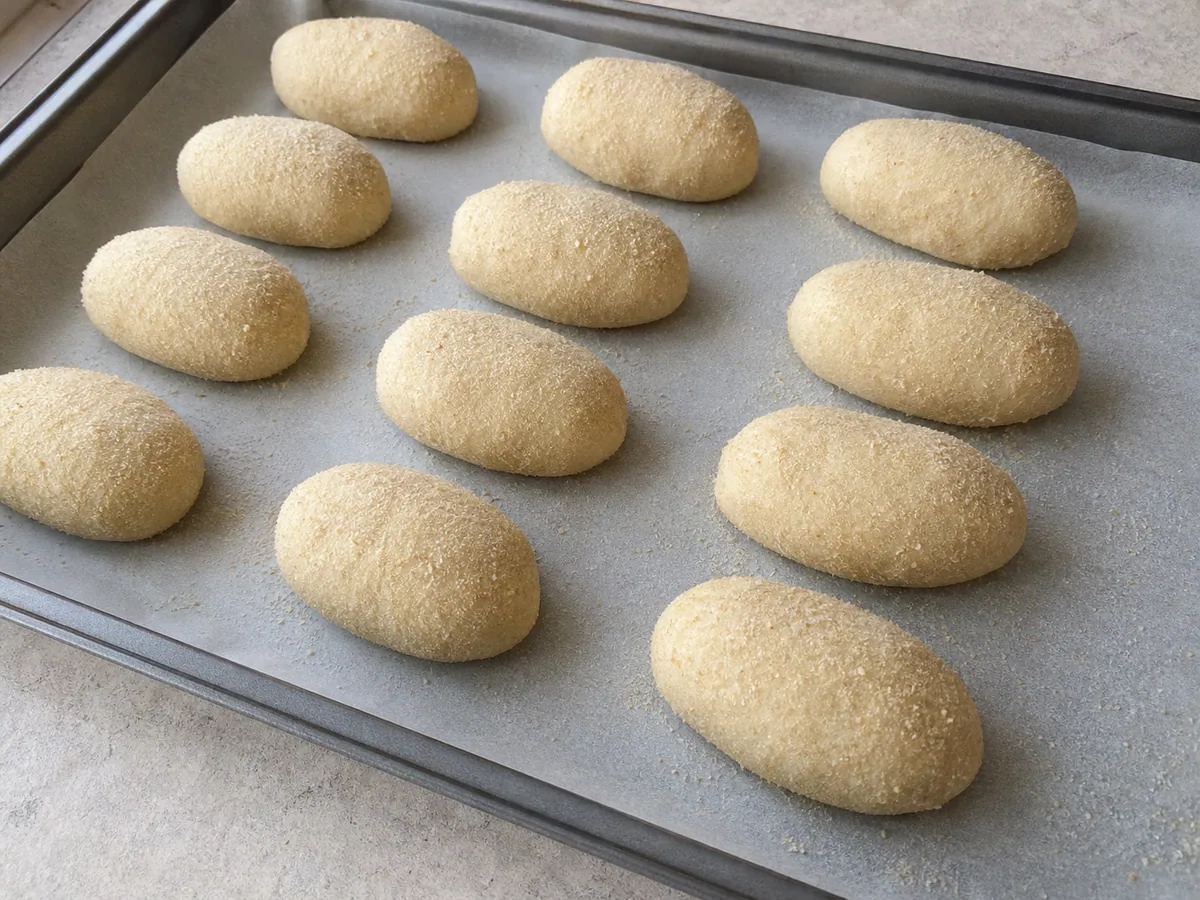
Line one or more baking sheets with parchment and spread 55 g of fine dry breadcrumbs in a shallow dish. Gently press the risen dough to release large air pockets. Divide it into 2 equal portions per serving, which is 16 portions for the default 8 servings; each default portion will weigh about 65 g. Shape each piece into a compact oval, roll it in the breadcrumbs, and set it seam-side down with about 5 cm (2 in) of space around it.
Proof the shaped rolls and heat the oven
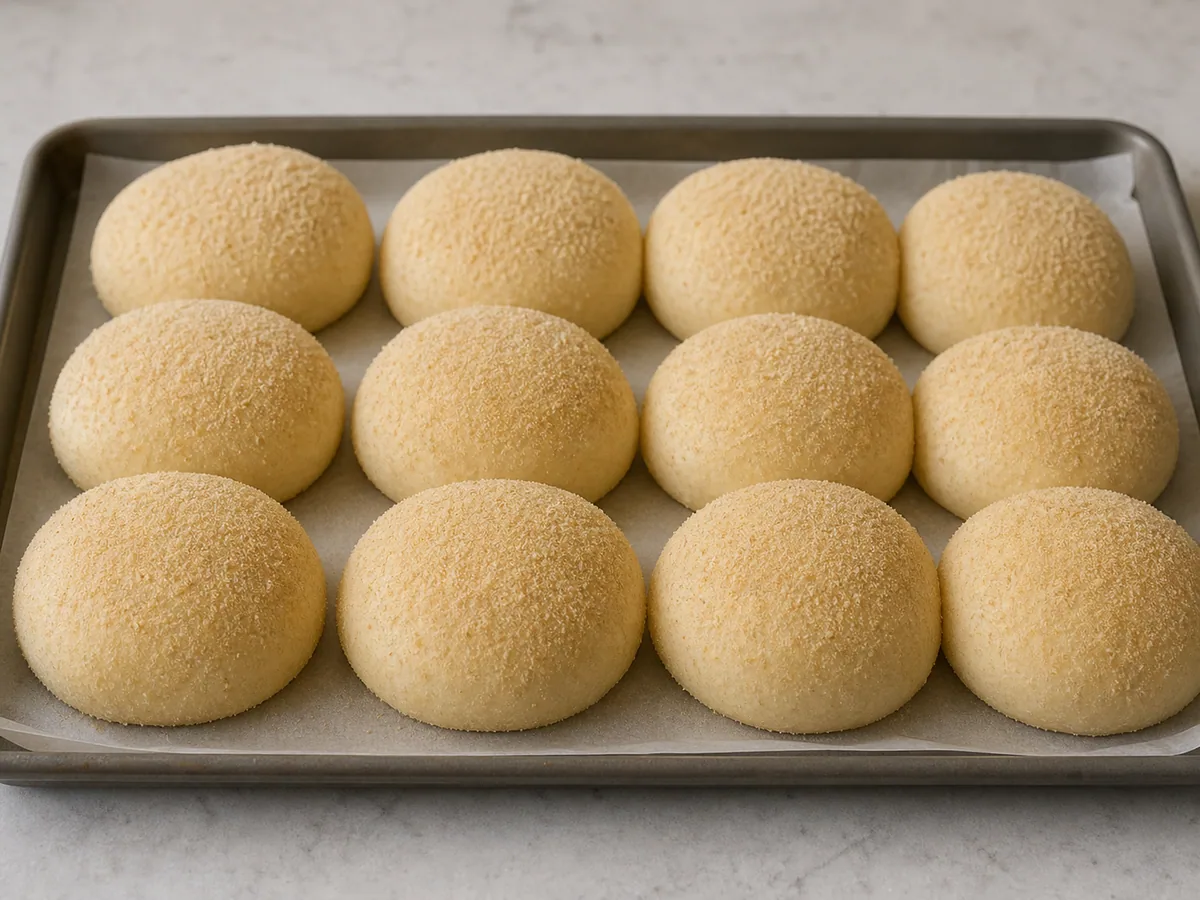
Cover the shaped rolls loosely and let them rise for 35 to 45 minutes, until visibly puffy and nearly doubled. Begin checking at 35 minutes; a gentle fingertip press should spring back slowly. During the final 20 minutes, heat the oven to 180°C (350°F).
35:00Bake until softly golden
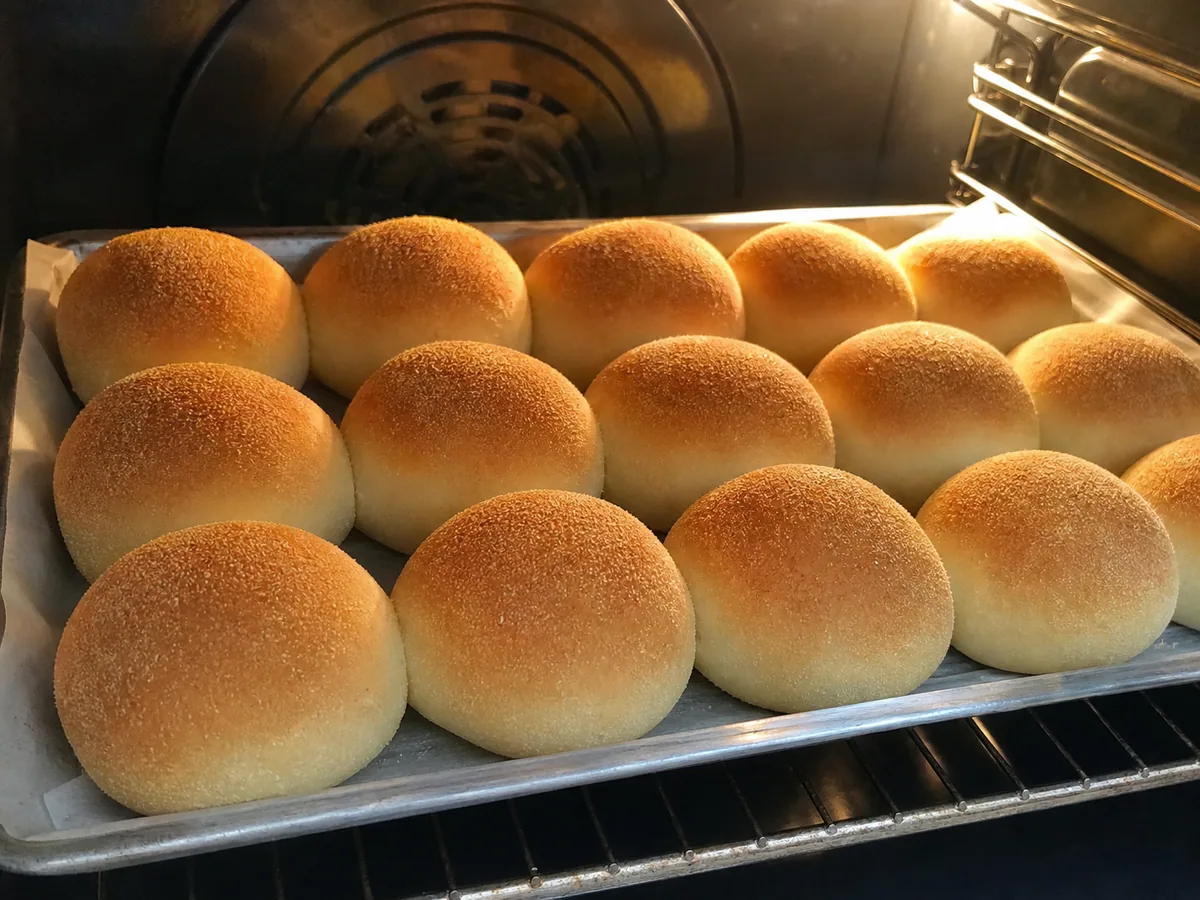
Bake for 16 to 20 minutes, rotating the baking sheets if the oven browns unevenly, until the rolls are softly golden and feel light for their size. Begin checking at 16 minutes. To verify the egg-enriched centers are fully baked, insert an instant-read thermometer into the middle of a center roll; it should register at least 88°C/190°F.
16:00Set the crumb and serve
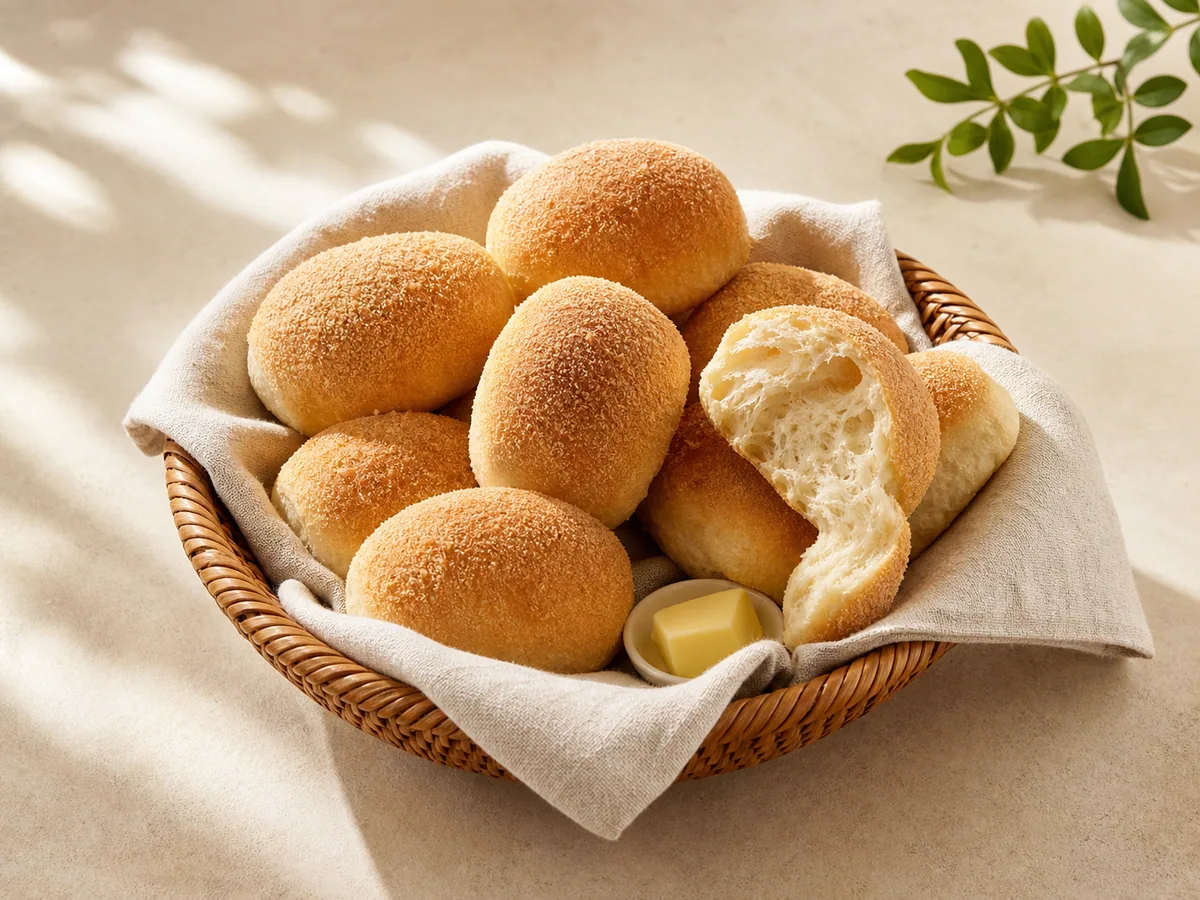
Transfer the rolls to a wire rack and let them cool for 10 minutes so the crumb can set without losing its warmth. Tear or split the pandesal and serve with salted butter for serving (optional).
10:00


Smart Substitutions
- No whole milk? Use an equal volume of unsweetened soy beverage or oat beverage; the flavor will be less dairy-rich.
- No instant yeast? Use the same weight of active dry yeast and let it stand in the warm milk until foamy before mixing the dough.
- No unsalted butter? Use an equal weight of salted butter and reduce the fine salt slightly—by about 1/4 teaspoon (1.5 g) at the default 8-serving yield.
- No fine breadcrumbs? Pulse plain panko or unsweetened crackers until sandy and fine enough to cling evenly.
Tips and Variations
- Weigh the flour when possible; scooped cups can compact and make the dough too stiff.
- Keep the portions close in size so the centers finish baking at the same time.
- Use the dough's volume and fingertip response, not the clock alone, to judge each rise.
What Went Wrong?
- Dough is very sticky Keep kneading before adding flour. The dough often becomes smoother as gluten develops and the butter is fully absorbed.
- Rolls are dense The dough may have needed more kneading or rising time. Look for a stretchy membrane after kneading and clear expansion during both proofs.
- Rolls spread instead of rising Shape each portion with a taut outer surface and stop the second proof when a fingertip indentation still returns slowly.
- Breadcrumbs fall off Coat the pieces immediately after shaping while their surface is still slightly tacky, pressing very gently as you roll them.
Nutrition Estimate
- Fiber: 2 g per serving
- Sodium: 471 mg per serving
Nutrition disclaimer:This recipe is provided for general cooking information only. Nutrition values are estimates and may vary by ingredients, brands, preparation methods, and serving sizes. Check ingredient labels and follow appropriate food-safety practices. This content is not medical, dietary, allergy, or professional food-safety advice.
FAQ
Found an error or have a suggestion?
Help us improve this recipe. Send us your feedback and include the recipe name so we can take a look.