Method
Cook the panade
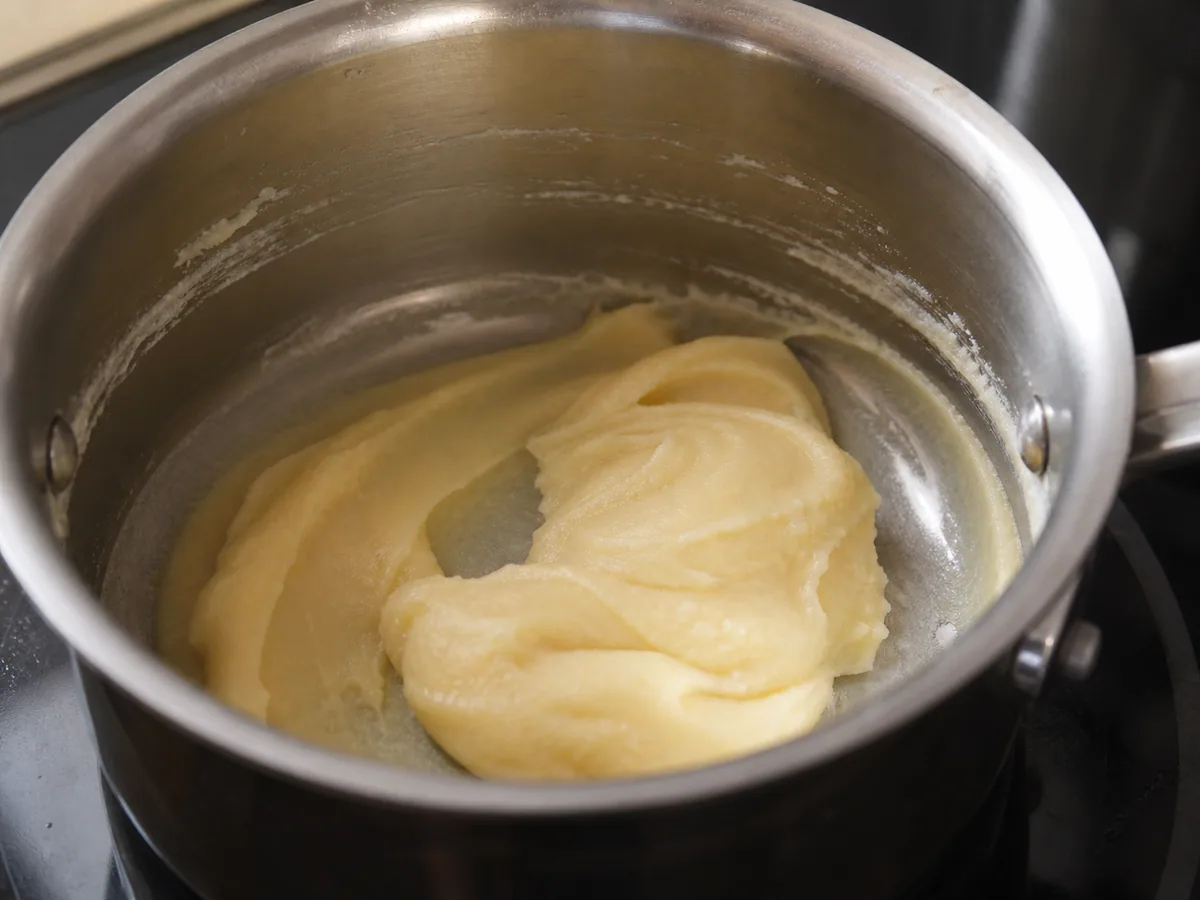
Combine 180 ml of whole milk for dumplings and 45 g of unsalted butter for dumplings in a medium saucepan over medium heat. Bring the mixture just to a simmer, then add 75 g of all-purpose wheat flour for dumplings all at once. Stir firmly with a wooden spoon for about 3 minutes, pressing out dry pockets, until the dough pulls into one mass and a thin film forms on the bottom of the pan.
03:00Cool the panade
Spread the panade on a clean plate in a layer about 2 cm (3/4 in) thick. Let it stand for 15 minutes, turning it once with a clean spatula, until it feels cool rather than warm. Warm panade can soften the fish mixture and make shaping difficult.
15:00Blend the quenelle mixture
Have a large bowl of ice ready beside the food processor. Cut 450 g of skinless boneless pike fillets into small chunks and process until finely ground, stopping to scrape the bowl. Add the cooled panade in pieces and process until combined. Add 2 large eggs one at a time, then pour in 120 ml of heavy cream for dumplings gradually while pulsing. Between processing bursts, lift the processor bowl from its base and nest it in the ice briefly if the mixture begins to warm. Add 4 g of kosher salt for dumplings, 1 g of ground white pepper, and 1/4 g of ground nutmeg. Stop as soon as the mixture is cool, glossy, smooth, and thick enough to hold a soft peak. After handling the uncooked fish and egg mixture, wash the processor parts, utensils, hands, and work surface with hot soapy water before touching ready-to-eat ingredients.
Shape and poach the quenelles
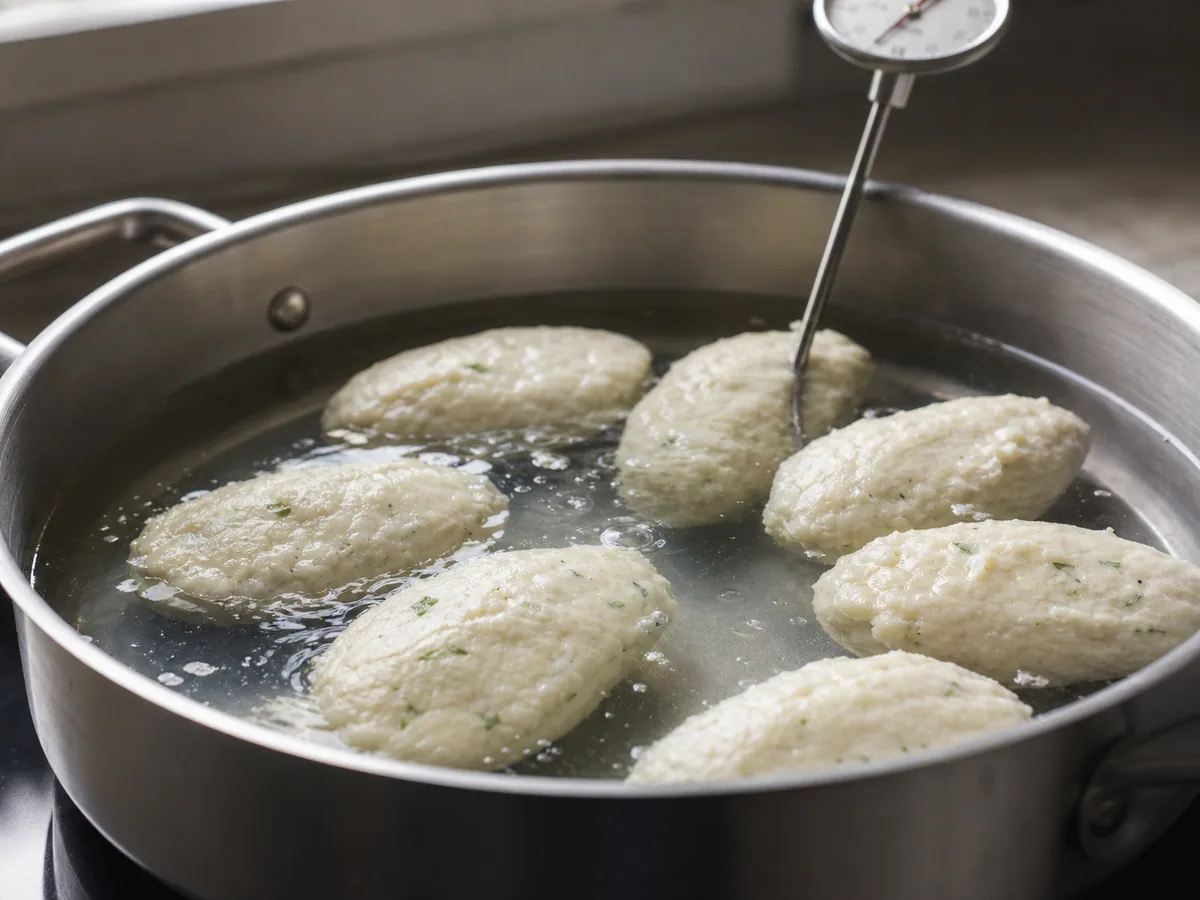
Heat a wide pan of water to a bare simmer, about 85 to 90°C (185 to 194°F); vigorous boiling can tear the dumplings. Dip two large spoons in the hot water, use them to form smooth ovals, and slide each one into the pan, allowing two dumplings per serving. Poach gently for 10 to 12 minutes, turning once. Begin checking at 10 minutes. The dumplings should feel springy and reach at least 71°C/160°F at the center on a food thermometer. Lift them onto a clean towel-lined tray and drain well.
10:00Cook the sauce roux
Melt 30 g of unsalted butter for sauce in a medium saucepan over medium-low heat. Add 24 g of all-purpose wheat flour for sauce and whisk for 2 minutes, keeping the roux pale and smooth. It should smell lightly toasted but show no browning.
02:00Thicken the cream sauce
Whisk 360 ml of whole milk for sauce into the roux in several additions, smoothing each addition before adding more. Bring the sauce to a gentle simmer and cook for 5 to 7 minutes, whisking often, until it coats the back of a spoon. Begin checking at 5 minutes and lower the heat if it bubbles hard.
05:00Finish the tomato cream sauce
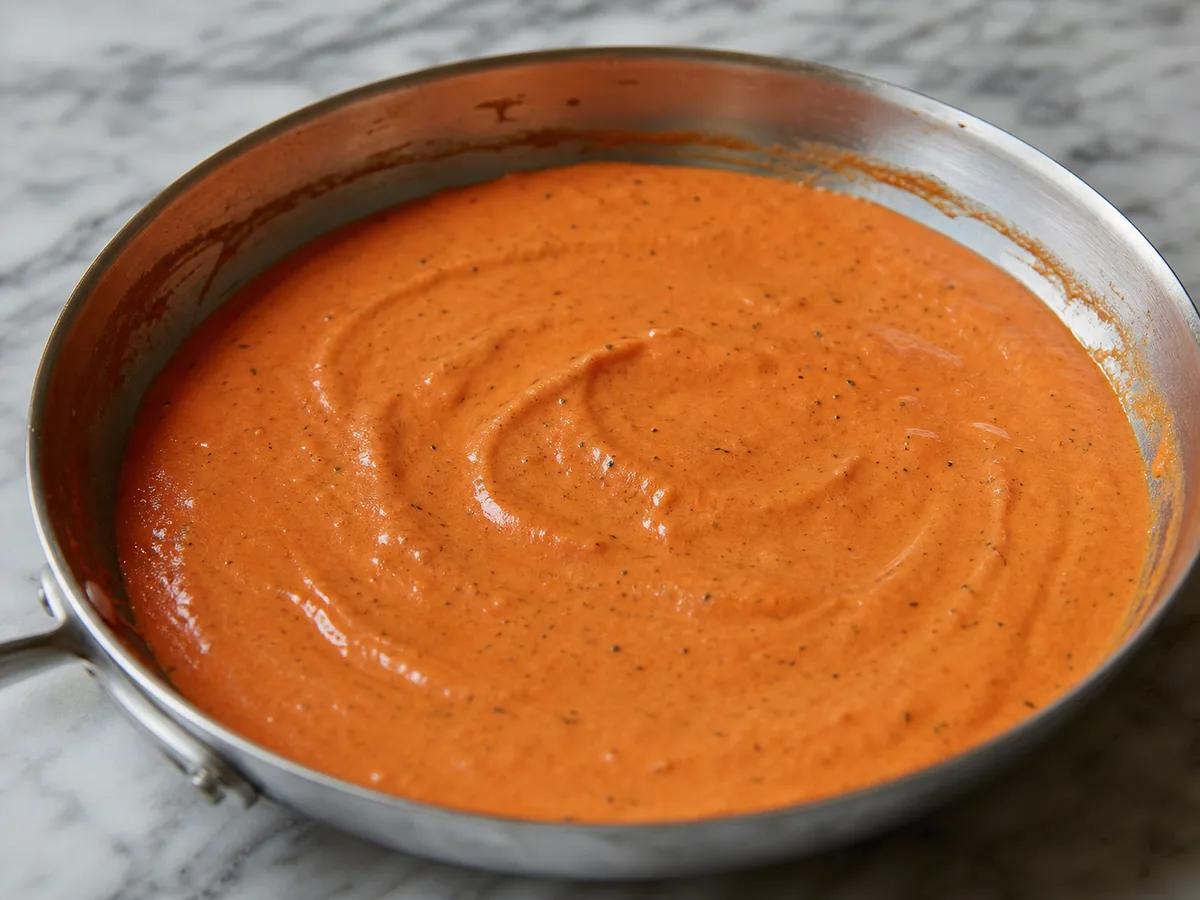
Whisk 240 g of plain tomato puree into the thickened sauce until the color is even, then add 120 ml of heavy cream for sauce, 15 ml of fresh lemon juice, and 2 g of kosher salt for sauce. Simmer gently for 3 minutes, stirring often, until silky and coral pink. Taste and keep the sauce slightly loose because it will thicken in the oven.
03:00Assemble and bake
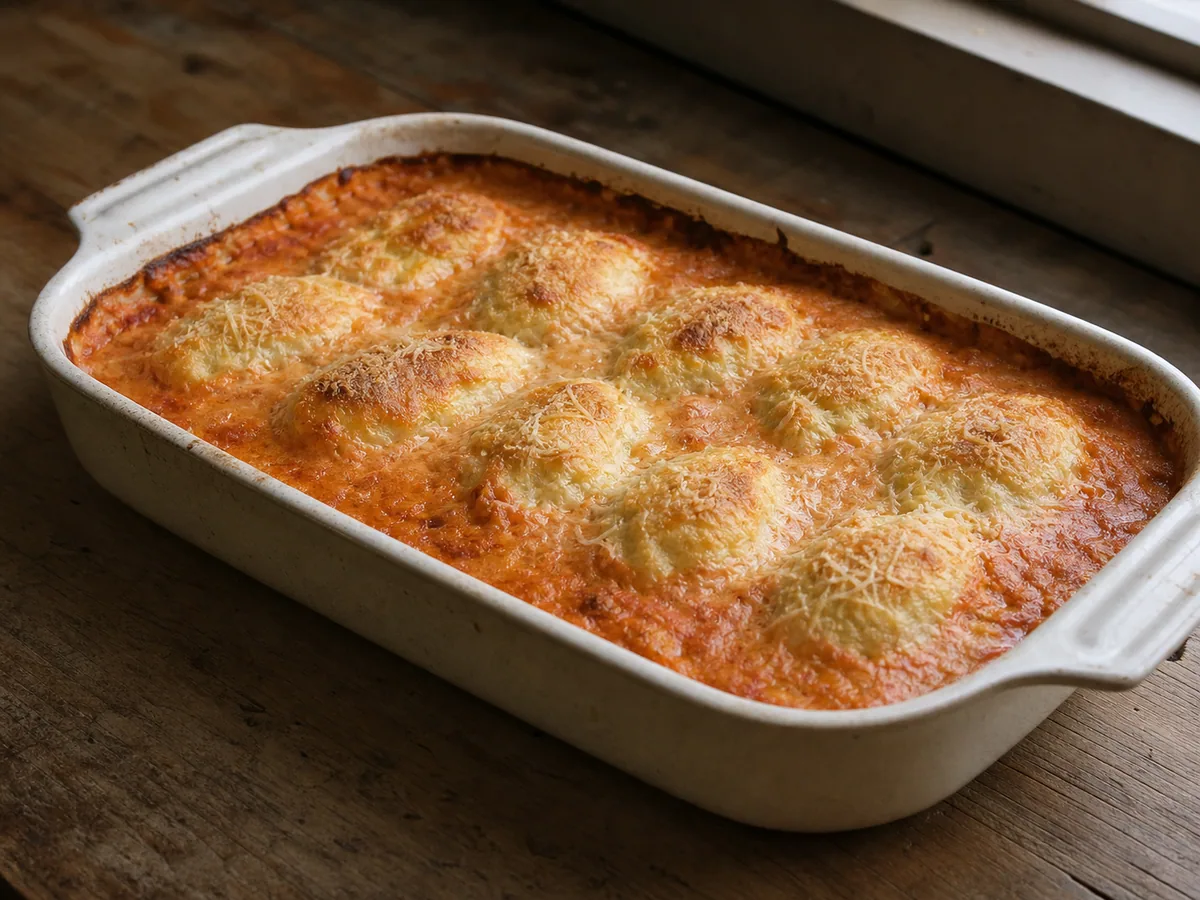
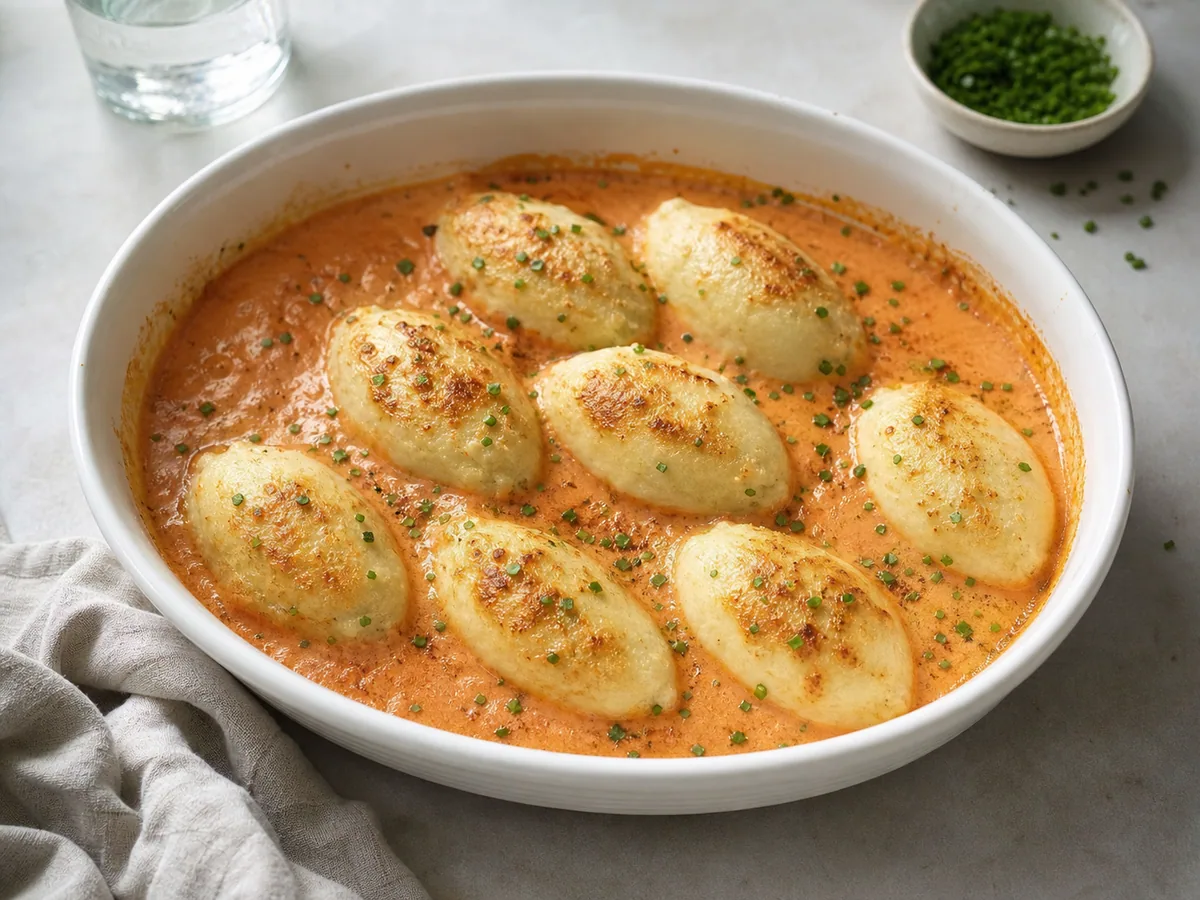
Heat the oven to 200°C (400°F). For 4 servings, use an approximately 3-quart (3-liter) gratin dish, or another baking dish that holds all eight poached dumplings in one uncrowded layer. Spoon the tomato cream sauce into the dish, nestle the dumplings into the sauce with their tops exposed, and scatter 30 g of finely grated Parmesan cheese evenly over them. Bake for 15 to 18 minutes, beginning the check at 15 minutes, until the sauce bubbles around the edges, the dumplings are visibly puffed, and the cheese is lightly browned.
15:00Finish and serve
Chop 8 g of fresh chives and scatter them over the hot gratin. Let the vigorous bubbling settle briefly, then spoon two quenelles and plenty of sauce onto each warm plate. Serve immediately while the dumplings are at their lightest.


Smart Substitutions
- No pike? Use skinless boneless cod, hake, or pollock. The flavor will be milder and the mixture may need a few extra pulses to become smooth.
- No whole milk? Use 2% milk; the sauce will be slightly less round but will still thicken properly.
- No chives? Use flat-leaf parsley or a small amount of fresh tarragon for a more aromatic finish.
- No Parmesan? Use finely grated Gruyère for a softer, nuttier gratin crust.
Tips and Variations
- Nest the processor bowl in a larger bowl of ice if the fish mixture begins to lose its cool, glossy texture.
- Keep the poaching water at a bare simmer; strong bubbles can roughen or split the delicate ovals.
- Dip both spoons in hot water before shaping each quenelle so the mixture releases cleanly.
What Went Wrong?
- Quenelle mixture is too loose Set the processor bowl over ice and pulse briefly. If it still flows, blend in a small spoonful of cooked panade before shaping a test dumpling.
- Dumplings break while poaching Lower the water temperature and shape a smaller test quenelle. A bare simmer and a smooth, thick mixture prevent most breakage.
- Sauce has flour lumps Whisk the milk in smaller additions. Press the finished sauce through a fine sieve before adding the tomato puree and cream.
- Quenelles are dense Stop processing as soon as the cream is incorporated, and avoid boiling during poaching; both can tighten the texture.
Nutrition Estimate
- Fiber: 2 g per serving
- Sodium: 860 mg per serving
Nutrition disclaimer:This recipe is provided for general cooking information only. Nutrition values are estimates and may vary by ingredients, brands, preparation methods, and serving sizes. Check ingredient labels and follow appropriate food-safety practices. This content is not medical, dietary, allergy, or professional food-safety advice.
FAQ
Found an error or have a suggestion?
Help us improve this recipe. Send us your feedback and include the recipe name so we can take a look.