Method
Cook the coconut-pandan rice
Rinse 280 g of jasmine rice in a fine sieve until the water runs mostly clear, then drain well. Put the rice in a medium saucepan and add 180 ml of full-fat coconut milk, 240 ml of water for rice, 2 pandan leaves, and 3 g of fine salt for rice. Bring to a gentle boil over medium-high heat and stir once. Cover, reduce the heat to low, and cook for 15 minutes, until the liquid is absorbed. Remove the pan from the heat and let it stand, covered, for 10 minutes. Discard the pandan leaves and fluff the rice with a fork.
15:00Prepare the sambal paste
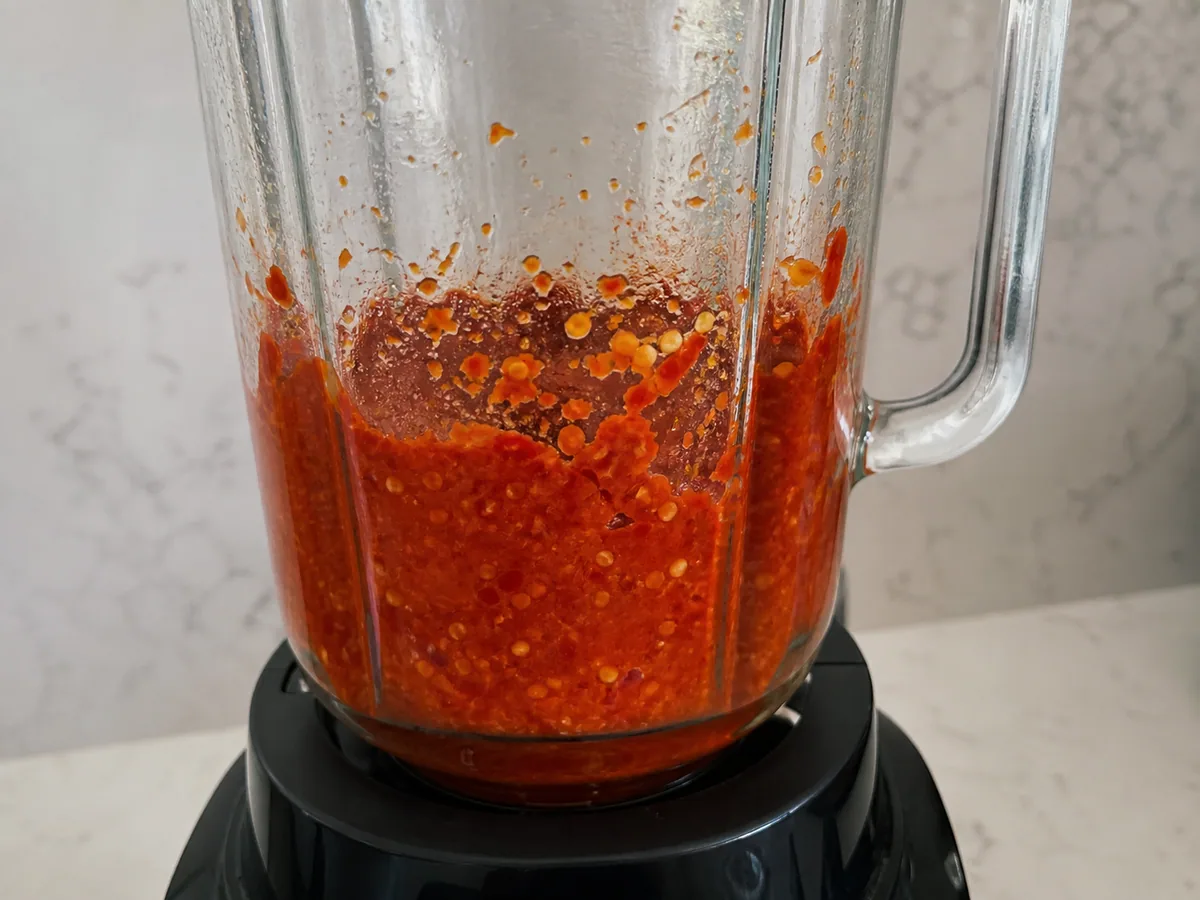
Cover 20 g of dried red chiles with very hot water and soak for 15 minutes, until pliable. Drain well and remove some seeds for a milder sambal. Peel 140 g of shallots, 4 garlic cloves, and 15 g of fresh ginger. Trim the tough outer layer from 1 lemongrass stalk and slice the tender core. Put the drained chiles and prepared aromatics in a blender with 60 ml of water for sambal and 20 g of tamarind concentrate. Blend to a thick, slightly coarse paste, stopping to scrape down the sides as needed.
15:00Brown the tempeh
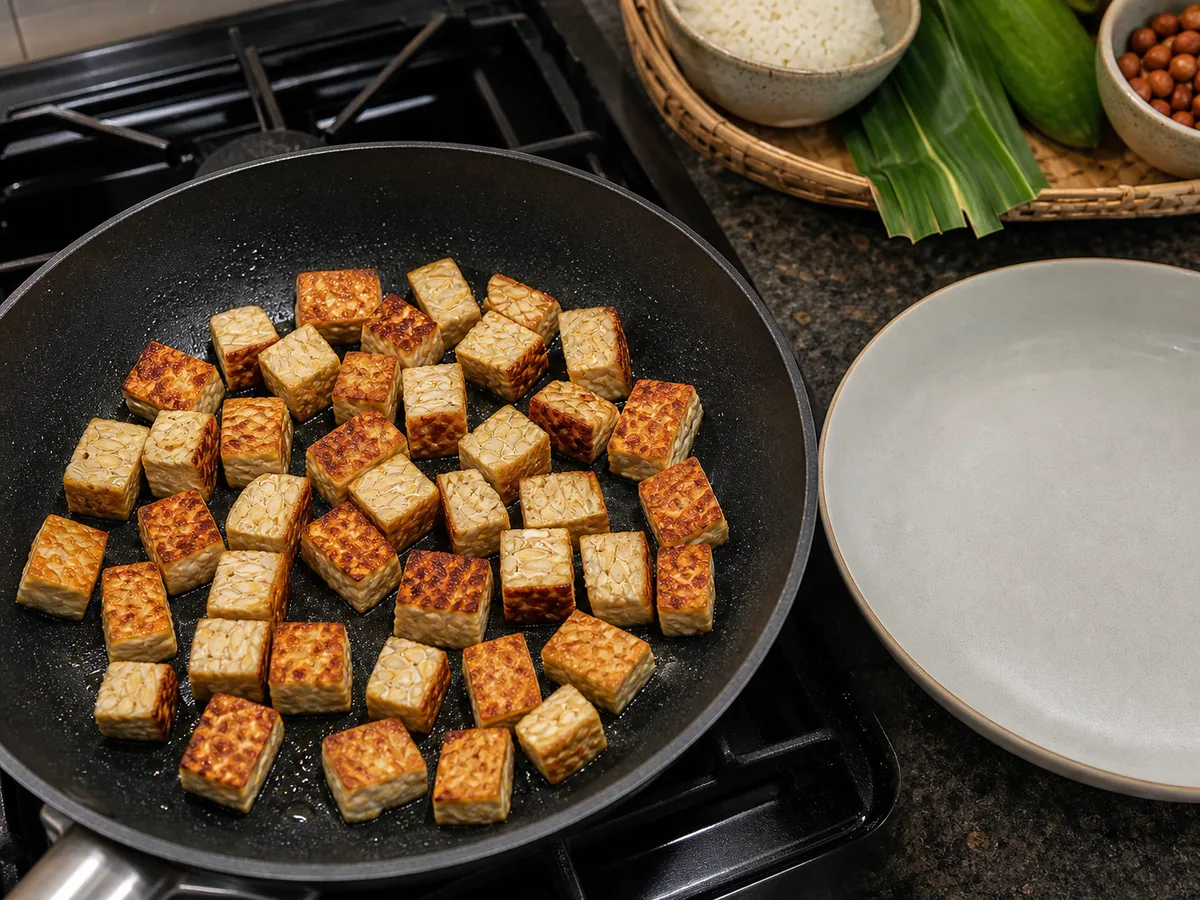
Cut 340 g of plain soy tempeh into 1.5 cm (1/2 in) cubes. Heat 15 ml of neutral oil for tempeh in a wide skillet over medium-high heat. Add the tempeh in one layer and cook for 8 to 10 minutes, turning every 2 minutes, until several sides are deep golden and the centers are steaming hot. Set the timer for 8 minutes and begin checking the color then. Transfer the tempeh to a plate.
08:00Cook the sambal and glaze the tempeh
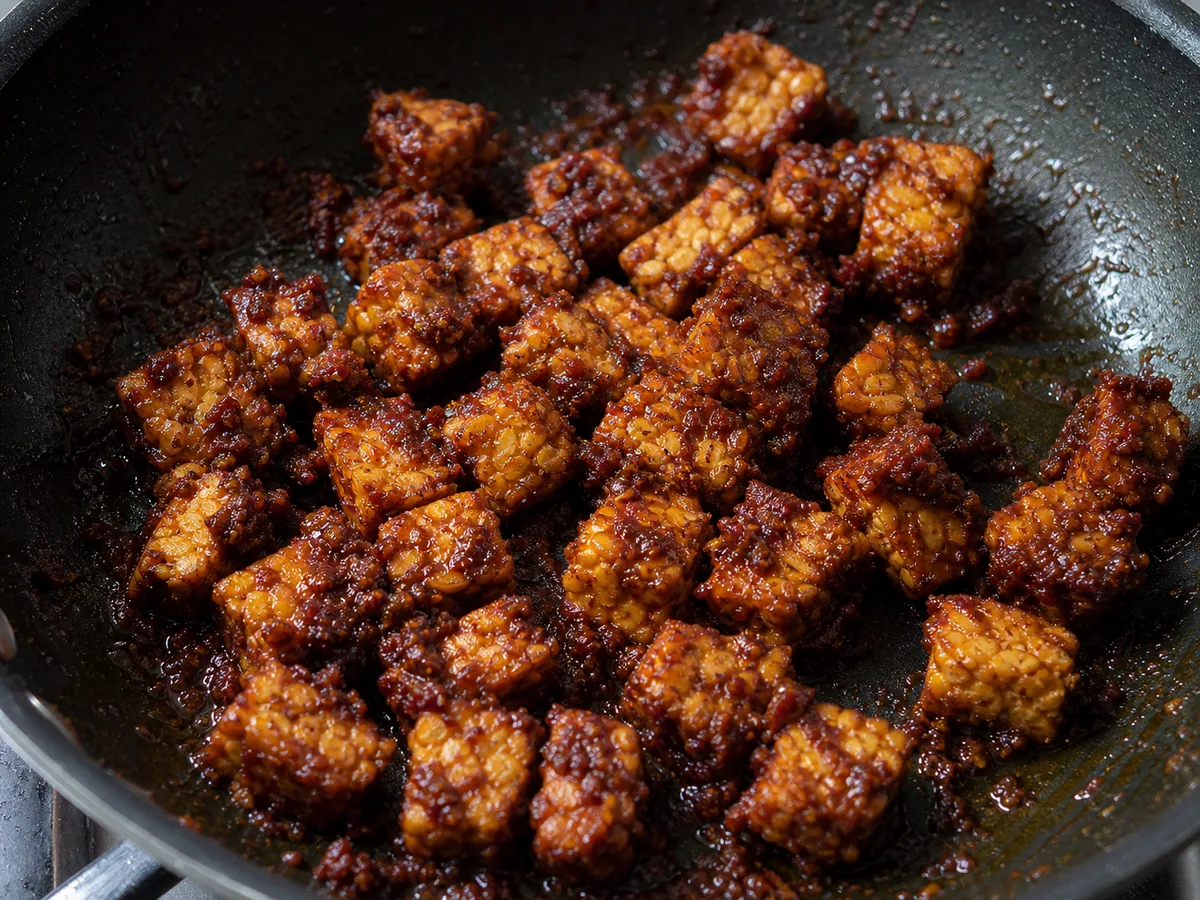
Heat 30 ml of neutral oil for sambal in the same skillet over medium heat. Add the blended paste carefully; it may sputter. Cook for 10 to 12 minutes, stirring often and scraping the bottom, until the paste darkens, loses its raw aroma, and a little oil glistens around the edges. Set the timer for 10 minutes and check the paste then. Stir in 25 g of light brown sugar, 15 ml of soy sauce, and 3/4 g of fine salt for sambal, then cook for 2 minutes. Fold in the browned tempeh and cook for 2 to 3 minutes, until every cube is evenly coated and the sambal is thick enough to cling.
10:00Prepare the accompaniments and serve
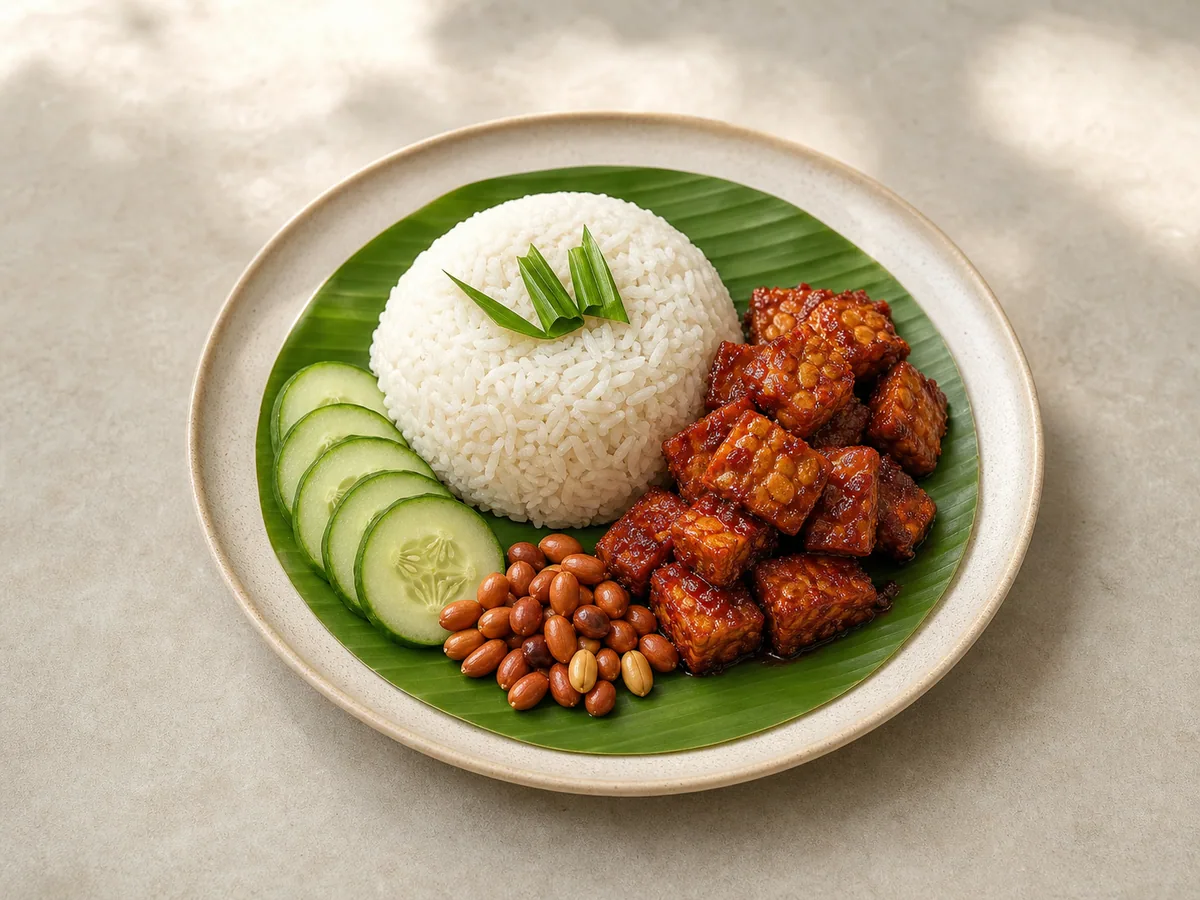
Slice 200 g of cucumber into thin rounds. Divide the coconut-pandan rice among plates, keeping it in a compact mound. Spoon the sambal tempeh beside the rice, then add the cucumber and 60 g of unsalted roasted peanuts in separate piles so the cool, crisp, and crunchy elements stay distinct. Serve immediately while the rice and tempeh are hot.


Smart Substitutions
- No pandan leaves? Omit them and cook the rice with coconut milk as written; the rice will be less floral but still rich and fragrant.
- Want a milder sambal? Replace 10 g (about 1/3 ounce) of the dried chiles with 1/2 medium red bell pepper (about 75 g), and reduce the sambal water by 1 tablespoon (15 ml). Cook the paste until fully concentrated.
- No tamarind concentrate? Omit the tamarind from the blender and reduce the sambal water by 1 tablespoon (15 ml). After the paste has cooked until dark and concentrated, stir in 1 tablespoon (15 ml) lime juice with the brown sugar and soy sauce, then taste and adjust.
- Avoiding wheat? Choose a tamari or soy sauce that is specifically labeled to meet your dietary needs.
Tips and Variations
- Drain the rinsed rice thoroughly so the coconut cooking liquid stays correctly balanced.
- Give the sambal enough time in the skillet; the flavor rounds out when the paste darkens and the oil begins to glisten at the edges.
- Use a wide skillet and keep the tempeh in one layer so it browns instead of steaming.
What Went Wrong?
- Rice is gummy The rice may have held excess rinse water or been stirred too much. Drain it well before cooking and stir only once when the liquid first comes to a boil.
- Sambal tastes harsh Cook it a few minutes longer over medium-low heat, then adjust with a small amount of brown sugar or tamarind to balance the heat.
- Tempeh is pale and soft The skillet was likely crowded or not hot enough. Brown the cubes in a single layer and let each side develop color before turning.
- Sambal catches on the pan Lower the heat and stir in a small splash of water, scraping up the browned paste before it turns bitter.
Nutrition Estimate
- Fiber: 9 g per serving
- Sodium: 623 mg per serving
Nutrition disclaimer:This recipe is provided for general cooking information only. Nutrition values are estimates and may vary by ingredients, brands, preparation methods, and serving sizes. Check ingredient labels and follow appropriate food-safety practices. This content is not medical, dietary, allergy, or professional food-safety advice.
FAQ
Found an error or have a suggestion?
Help us improve this recipe. Send us your feedback and include the recipe name so we can take a look.