Method
Prepare the cabbage and lamb
Remove any bruised outer leaves from 1200 g of green cabbage. Cut the cabbage through the core into thick wedges, leaving enough core attached to hold each wedge together. Pat 1200 g of bone-in lamb shoulder and neck pieces dry with paper towels and keep the pieces on a rimmed tray. After handling the raw lamb, wash your hands, knife, board, and nearby work surface before touching the cabbage or cooked food again.
Layer the pot
Arrange a layer of 1200 g of bone-in lamb shoulder and neck pieces in a large heavy pot, placing the fattier pieces on the bottom. Alternate the remaining 1200 g of bone-in lamb shoulder and neck pieces and 1200 g of green cabbage in even layers, distributing 10 g of fine sea salt and 10 g of whole black peppercorns between the layers and finishing with cabbage. Pour 300 ml of water down the side of the pot so the seasonings stay distributed. Do not stir.
Simmer until the lamb is tender
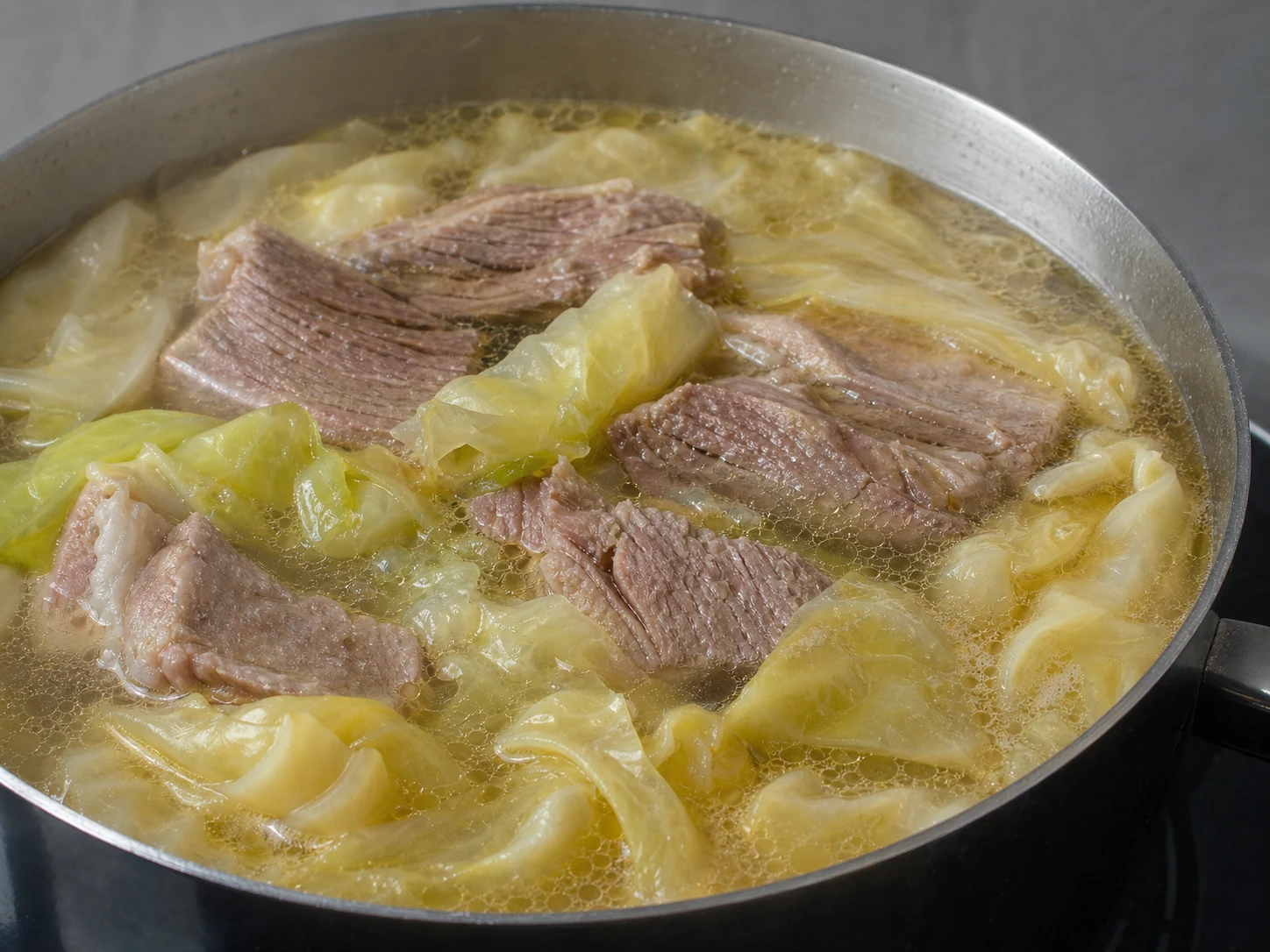
Cover the pot and bring the liquid to a boil over medium-high heat. As soon as steady bubbles appear, reduce the heat to low and maintain a quiet simmer for 2 to 2 1/2 hours. Shake the pot gently once or twice instead of stirring, and skim off any gray foam that gathers at the surface. Begin checking at 2 hours: insert a food thermometer into the thickest part of a lamb piece without touching bone. The lamb must reach at least 63°C/145°F. Continue simmering until a fork slides in easily and the meat loosens from the bone. When the lamb is tender, remove the pot from the heat, keep it covered, and rest for at least 3 minutes before serving.
2:00:00Boil the potatoes
When the lamb is nearly tender and about 30 to 35 minutes remain before serving, scrub 700 g of small waxy potatoes and place them in a saucepan. Cover with cold water, bring to a boil, then lower the heat and simmer for 18 to 22 minutes, depending on size. Begin checking at 18 minutes; a thin knife should slide into the center with little resistance. Drain well and let the potatoes steam-dry in the warm pan for 2 minutes.
18:00Finish and serve
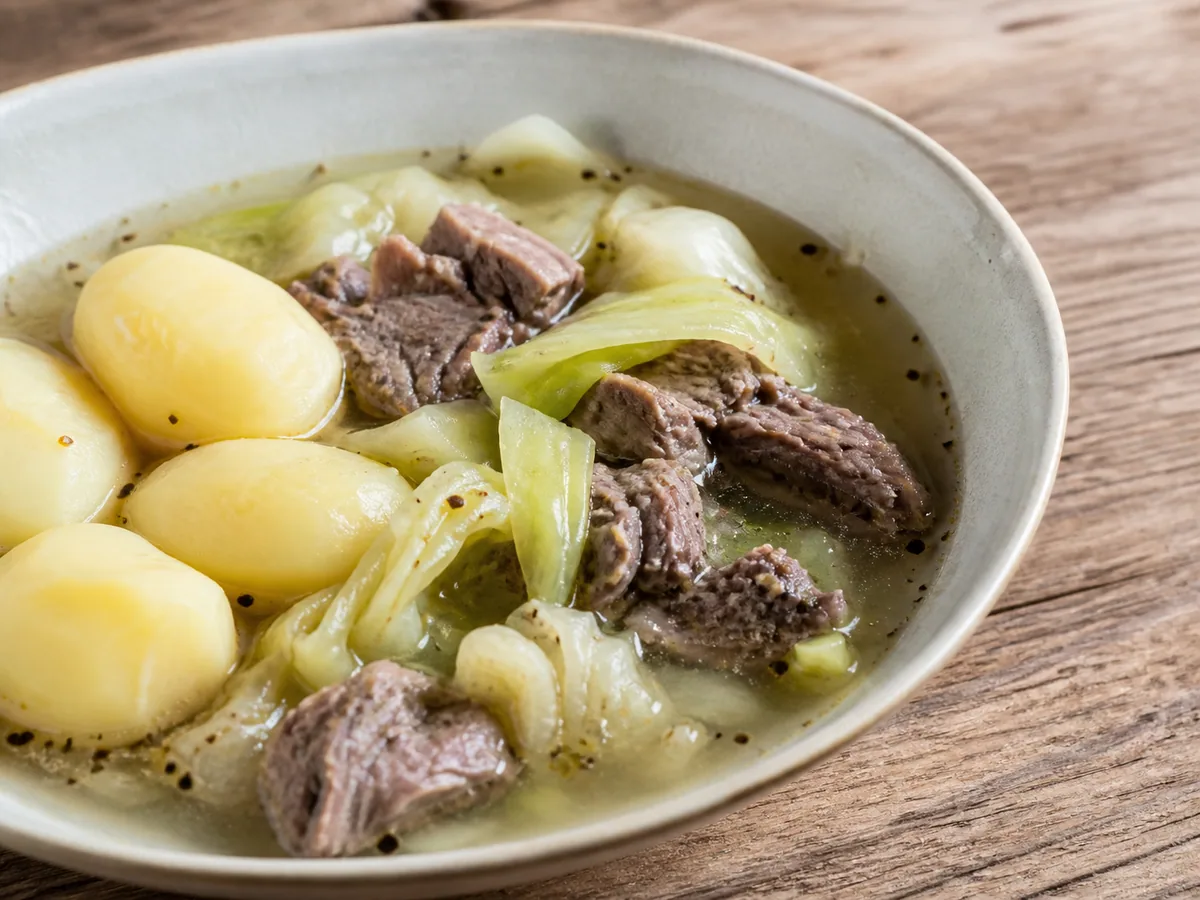
Skim excess fat from the surface if needed. Use tongs to divide the lamb and cabbage among deep bowls, then ladle in enough hot broth to moisten each serving. Serve the boiled potatoes alongside so they can be broken into the peppery broth at the table.

Smart Substitutions
- No lamb neck? Use bone-in shoulder, shank, or a mixture of slow-cooking lamb cuts with a similar amount of bone and fat.
- No green cabbage? Use firm Savoy cabbage; keep the wedges thick because its leaves soften faster.
- No whole peppercorns? Use half as much coarsely cracked black pepper and tie it in a small spice bag to keep the broth easy to eat.
- No small potatoes? Use larger waxy potatoes cut into evenly sized pieces so they finish cooking together.
Tips and Variations
- Leave part of the cabbage core attached to each wedge so the layers stay distinct during the long simmer.
- Place the fattiest lamb pieces against the bottom of the pot; their rendered fat helps protect the leaner pieces above.
- Shake the covered pot gently instead of stirring, which keeps the cabbage from shredding into the broth.
What Went Wrong?
- Lamb is still chewy Keep the pot at a quiet simmer and check again every 15 minutes; slow-cooking cuts become tender only after their connective tissue softens.
- Cabbage is falling apart Lower the heat and stop stirring. The liquid should barely bubble around the edges of the pot.
- Broth looks greasy Let the surface settle for a minute, then skim excess fat with a wide spoon before serving.
- Peppercorns dominate each bite Use a slotted spoon to leave most loose peppercorns in the pot while still ladling in the seasoned broth.
Nutrition Estimate
- Fiber: 12 g per serving
- Sodium: 1150 mg per serving
Nutrition disclaimer:This recipe is provided for general cooking information only. Nutrition values are estimates and may vary by ingredients, brands, preparation methods, and serving sizes. Check ingredient labels and follow appropriate food-safety practices. This content is not medical, dietary, allergy, or professional food-safety advice.
FAQ
Found an error or have a suggestion?
Help us improve this recipe. Send us your feedback and include the recipe name so we can take a look.