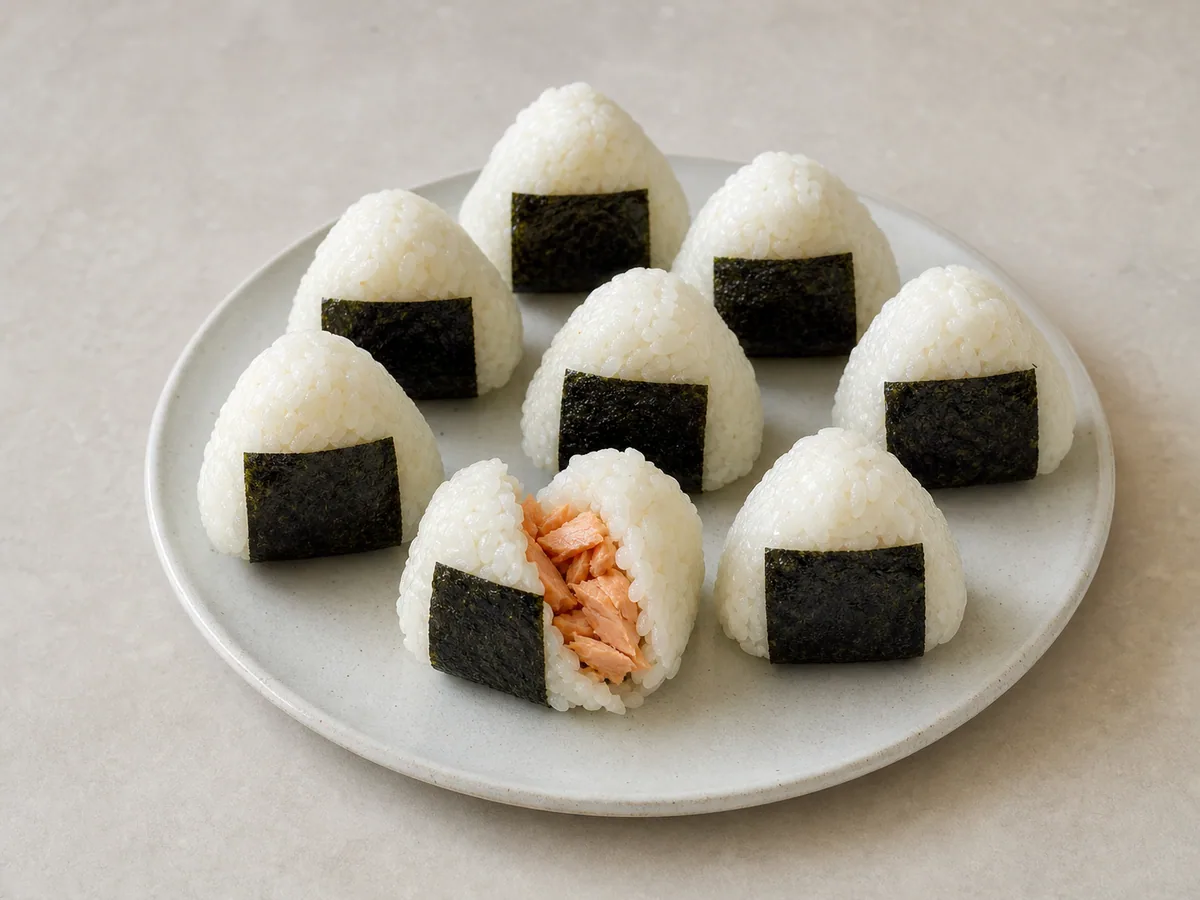
Method
Rinse and soak the rice
Place 300 g of Japanese short-grain white rice in a bowl and cover it with cool water. Swish gently, drain the cloudy water, and repeat until the water is only faintly cloudy. Drain well, transfer the rice to a heavy saucepan, add 360 ml of water, and let it soak for 20 minutes so the grains hydrate evenly.
20:00Cook the rice
Cover the saucepan and bring it to a steady boil over medium heat; listen for active bubbling rather than lifting the lid. Reduce the heat to low and cook for 12 minutes without uncovering the pan.
12:00Rest the rice
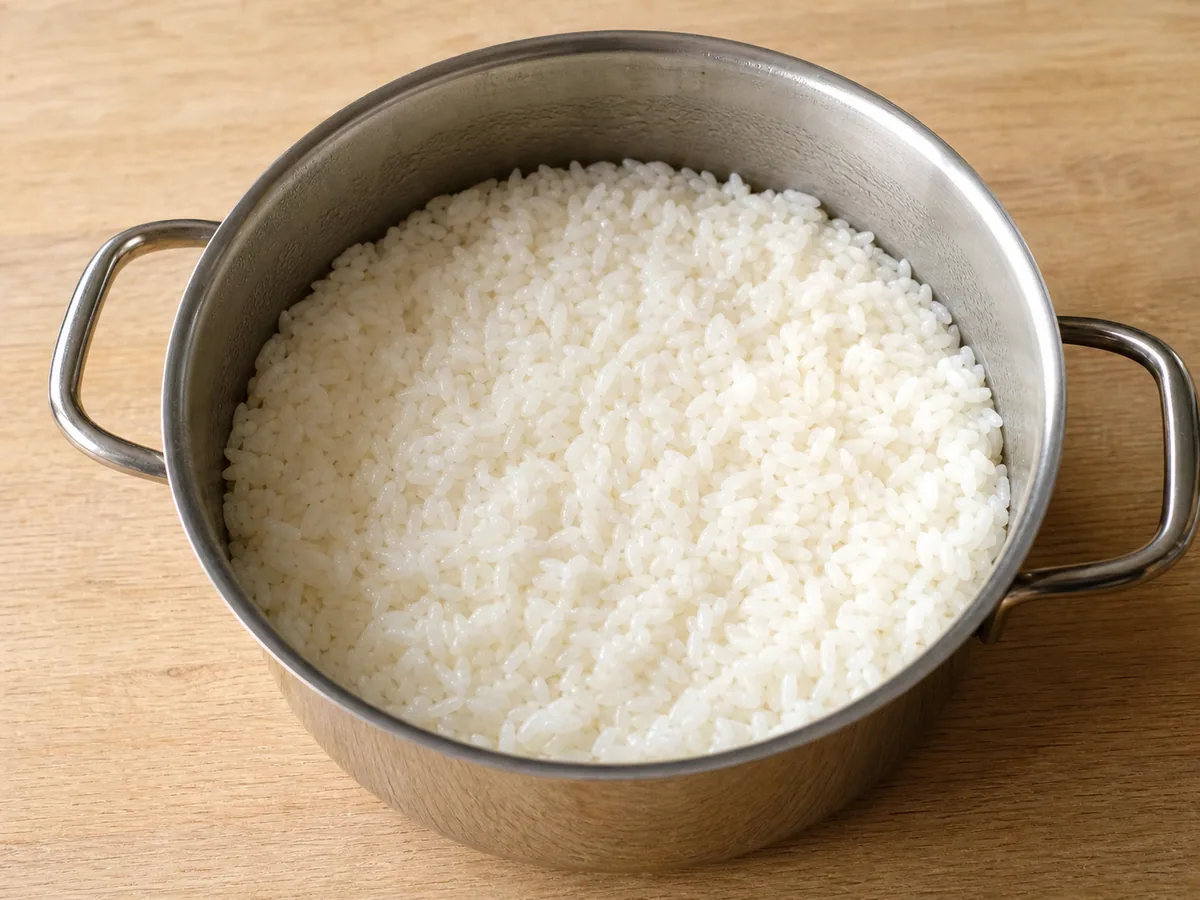
Remove the saucepan from the heat and leave it covered for 10 minutes so the trapped steam finishes the center of each grain. Uncover the pan after the rest. The rice should be tender, glossy, and cohesive, with distinct grains and no visible water remaining.
10:00Cook the salmon safely
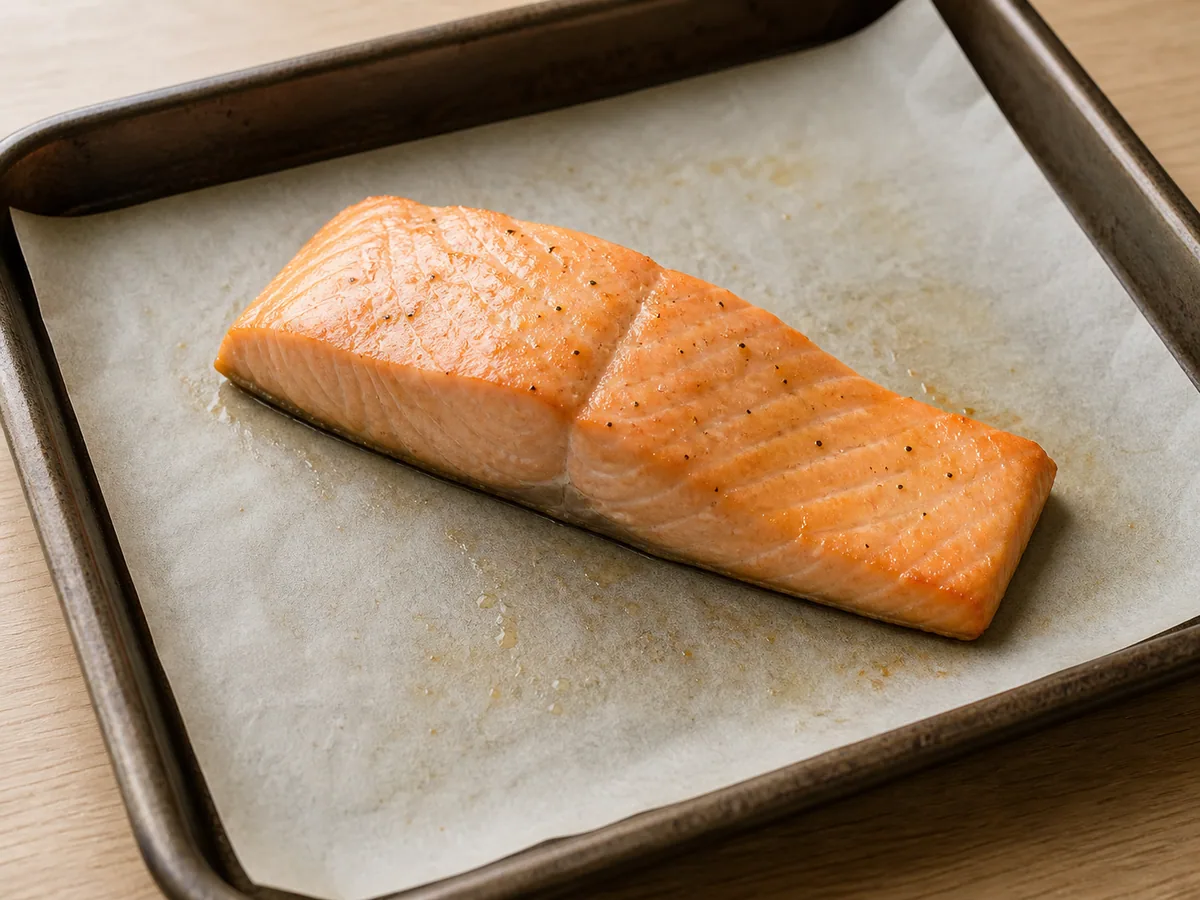
Heat the oven to 200°C (400°F). Line a small baking tray with parchment. Pat 225 g of salmon fillet dry, place it on the tray, and season evenly with 1 1/2 g of kosher salt for salmon. Bake for 10 to 14 minutes, checking at 10 minutes, until a food thermometer inserted into the thickest part reads 63°C/145°F and the flesh is opaque and flakes easily. After handling raw salmon, wash your hands and clean any utensils or surfaces that touched it before working with the cooked rice or nori.
10:00Flake the salmon and cool the rice
Transfer the cooked salmon to a clean plate. Remove the skin if present, check carefully for pin bones, and break the flesh into small moist flakes. Uncover the rice, loosen it gently with a rice paddle using a cutting-and-folding motion, and let it stand for about 5 minutes. It should be warm enough to hold together but comfortable to handle.
05:00Fill, shape, and wrap the onigiri
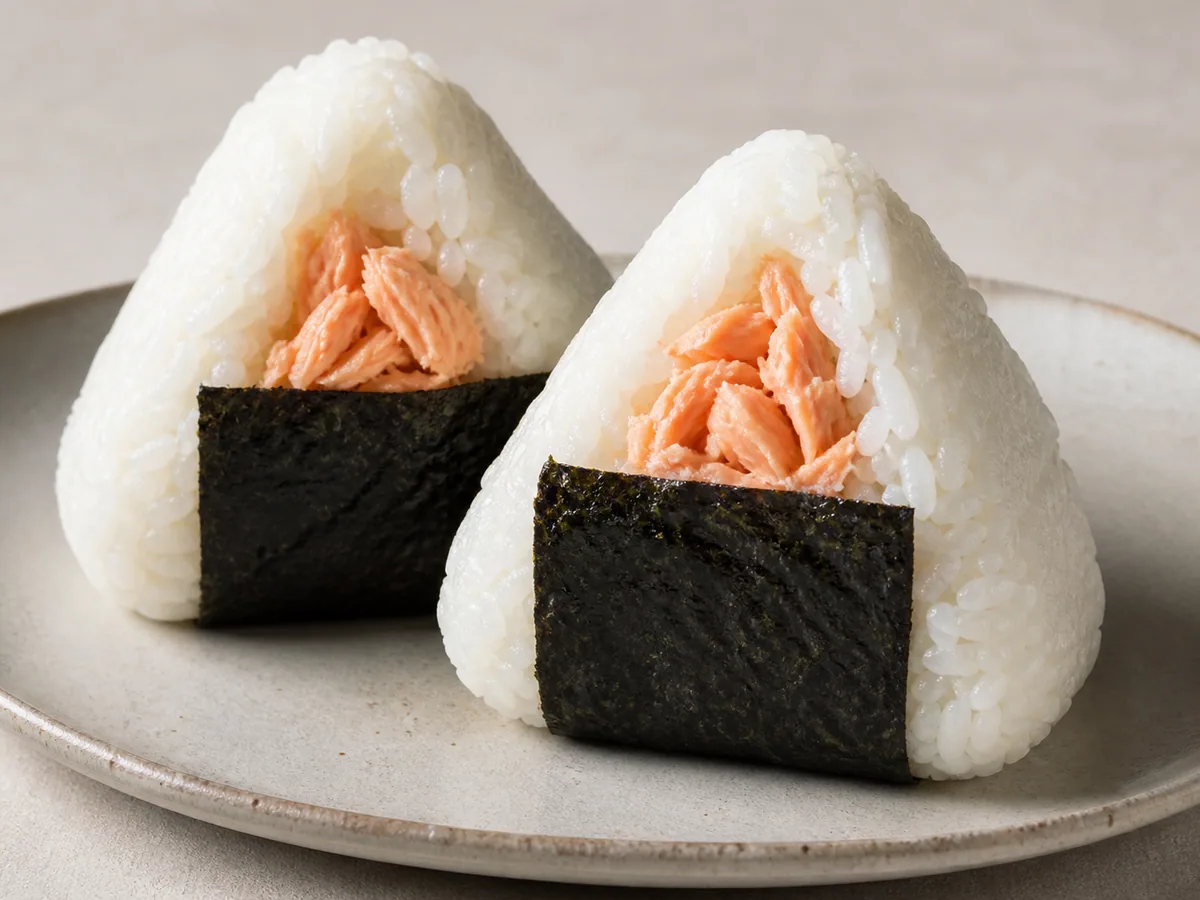
Set out a small bowl of cool water. Divide 3 g of kosher salt for shaping into one small pinch for each rice ball. Cut 4 nori sheets into enough wide strips for one strip per rice ball. Divide the warm rice into two portions per serving, then divide the flaked salmon evenly among those portions. Moisten clean hands with the water, shake off the excess, and rub one measured pinch of salt over your damp palms. Flatten one rice portion into a thick oval, make a well in the center, add salmon, and fold the rice over the filling. Press gently into a compact triangle or round, turning it between your palms rather than squeezing hard. Repeat with the remaining portions, remoistening your hands and using one salt pinch for each rice ball, then wrap each onigiri with a nori strip and serve immediately.


Smart Substitutions
- No fresh salmon? Use plain canned salmon, drain it thoroughly, and omit the salmon salt when the fish is already seasoned.
- No Japanese short-grain rice? Use another plump short-grain or medium-grain white rice and follow its package water ratio; long-grain rice will not bind as reliably.
- No nori? Shape the rice balls with damp salted hands and serve them unwrapped.
- Prefer another fish? Use a fully cooked trout fillet and flake it in the same way, checking for bones before filling the rice.
Tips and Variations
- Use plastic wrap as a barrier when the rice still feels too warm for bare hands; it also helps beginners form neat triangles.
- Keep the filling centered and leave a complete layer of rice around it so the onigiri stays intact when lifted.
- Wrap with nori only after shaping so the seaweed remains crisp against the warm rice at serving time.
What Went Wrong?
- Onigiri falls apart Shape while the rice is still warm and use short-grain rice. Press a little more firmly at the corners without crushing the grains.
- Rice sticks to your hands Moisten clean hands again with the salted water, then shake off excess droplets before handling the next portion.
- Salmon breaks through the rice Use a slightly smaller mound of filling and make a deeper well before folding the rice over it.
- Salmon is dry Begin checking at 10 minutes and remove it as soon as the thickest part reaches 63°C/145°F; flake it into larger pieces rather than mashing it.
Nutrition Estimate
- Fiber: 3 g per serving
- Sodium: 500 mg per serving
Nutrition disclaimer:This recipe is provided for general cooking information only. Nutrition values are estimates and may vary by ingredients, brands, preparation methods, and serving sizes. Check ingredient labels and follow appropriate food-safety practices. This content is not medical, dietary, allergy, or professional food-safety advice.
FAQ
Found an error or have a suggestion?
Help us improve this recipe. Send us your feedback and include the recipe name so we can take a look.