Method
Brown the beef and vegetables
Heat 10 ml of neutral oil for filling in a wide skillet over medium heat. Cut 120 g of yellow onion, 60 g of carrot, and 120 g of Yukon Gold potato into 6 mm (1/4 in) pieces so the filling will sit neatly inside the bread. Add 120 g of yellow onion and cook for 4 to 5 minutes, stirring occasionally, until softened and translucent. Add 150 g of 90% lean ground beef, break it into small crumbles, and cook for 4 to 5 minutes until no pink remains. Use a food thermometer to confirm the thickest cluster of beef reaches 71°C (160°F). Stir in 60 g of carrot and 120 g of Yukon Gold potato. Wash your hands and clean any utensil or work surface that touched raw beef before continuing.
Simmer and thicken the curry
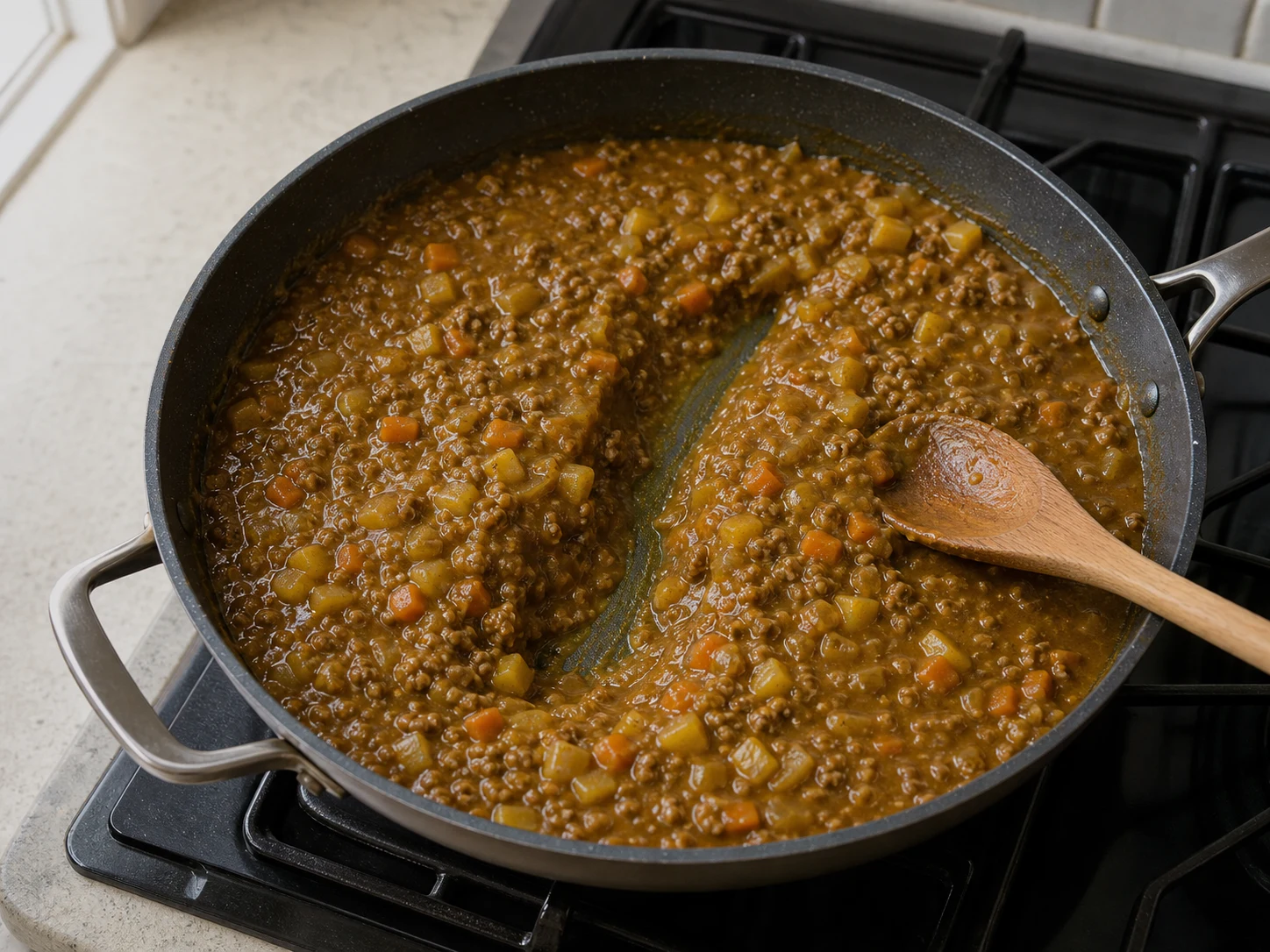
Pour in 240 ml of water for filling and bring the skillet to a gentle simmer. Cover and cook until the potato is tender when pierced, checking after 10 minutes. Lower the heat, add 36 g of Japanese curry roux, and stir until fully dissolved. Continue cooking uncovered for 4 to 6 minutes, stirring often, until the curry is thick enough for a spoon drawn through it to leave a clear trail. The filling should mound rather than run.
10:00Cool the filling
Spread the curry in a thin layer on a clean rimmed tray or wide plate. Let it stand until it is no longer warm and holds its shape when scooped, checking after 20 minutes. Begin mixing the dough in the next step while the filling stands. A cool, firm filling is much easier to seal inside the dough.
20:00Mix and knead the dough
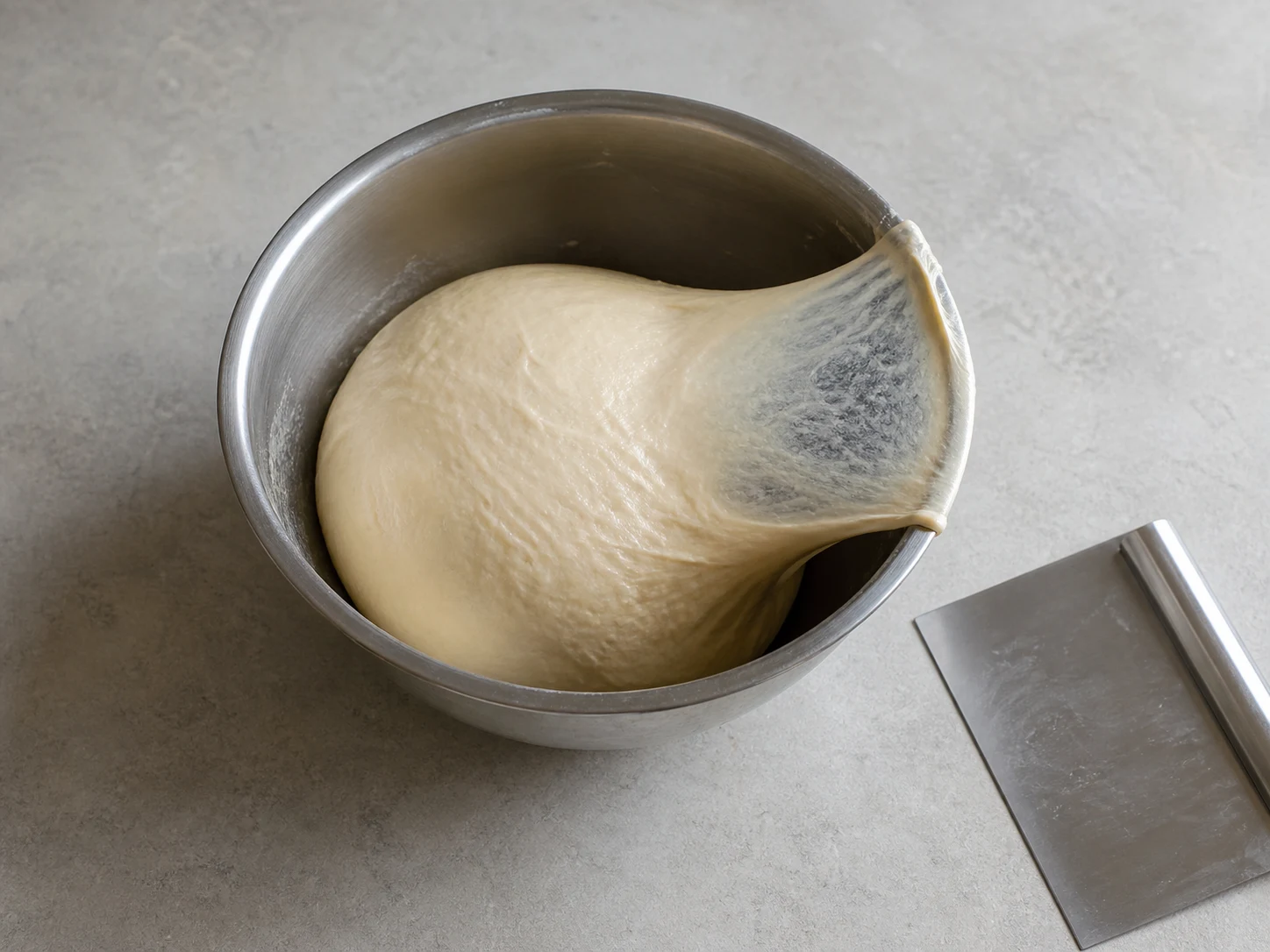
Warm 180 ml of whole milk to 38-43°C (100-110°F). Combine 180 ml of whole milk, 20 g of granulated sugar, 7 g of instant yeast, and 1 large egg for dough in a large bowl. Add 320 g of bread flour and 4 g of kosher salt, then mix until a shaggy dough forms. Knead on a clean surface until the dough begins to smooth out. Work in 28 g of unsalted butter a little at a time, then continue kneading until the dough is supple, slightly tacky, and stretches into a thin translucent sheet without tearing, checking after 8 minutes.
08:00Let the dough rise
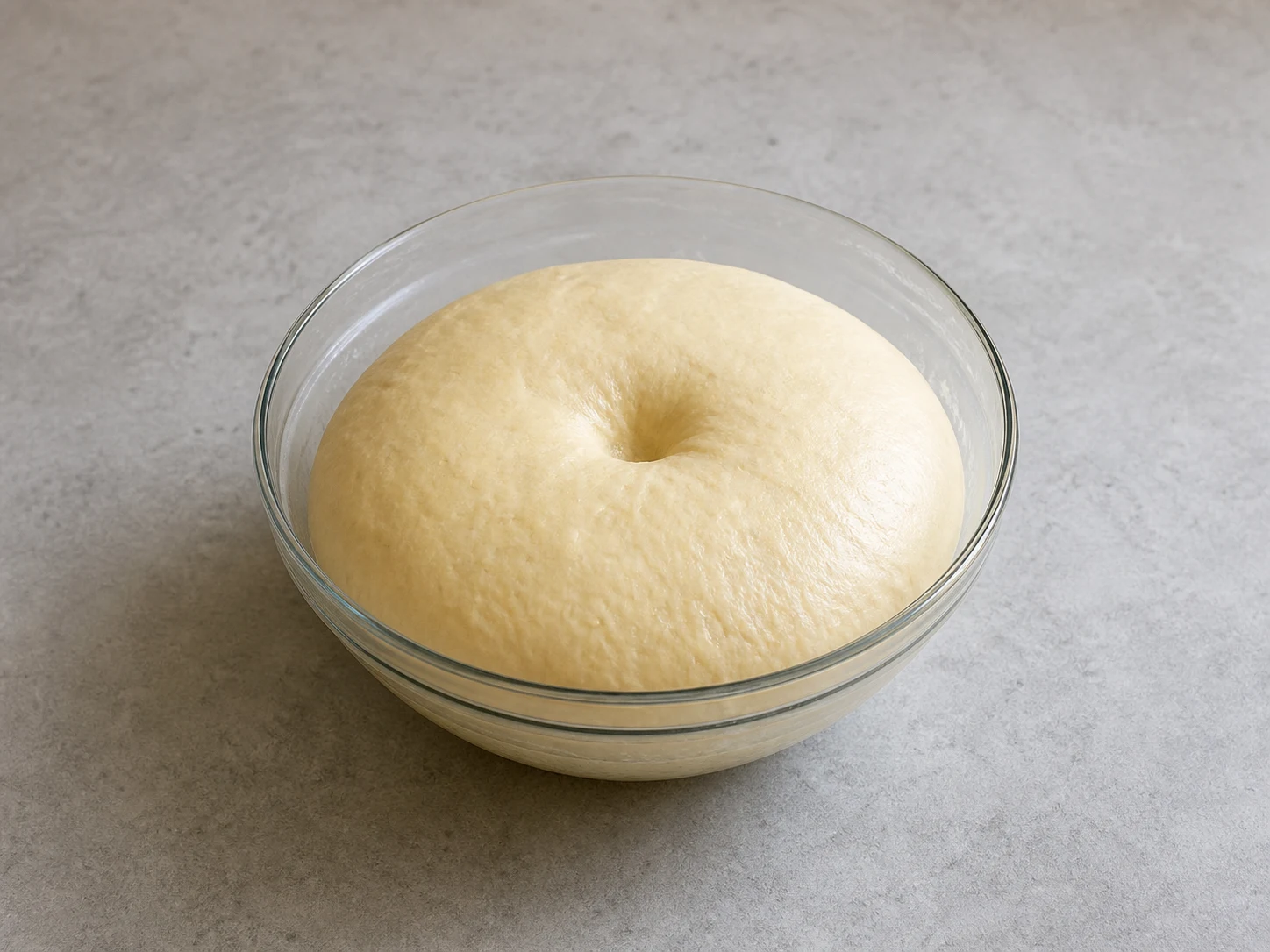
Shape the dough into a ball and place it in a lightly greased bowl. Cover and let it rise in a warm, draft-free place until doubled in volume. Begin checking after 60 minutes; properly risen dough will hold a shallow fingertip indentation that slowly springs partway back.
60:00Divide and fill the rolls
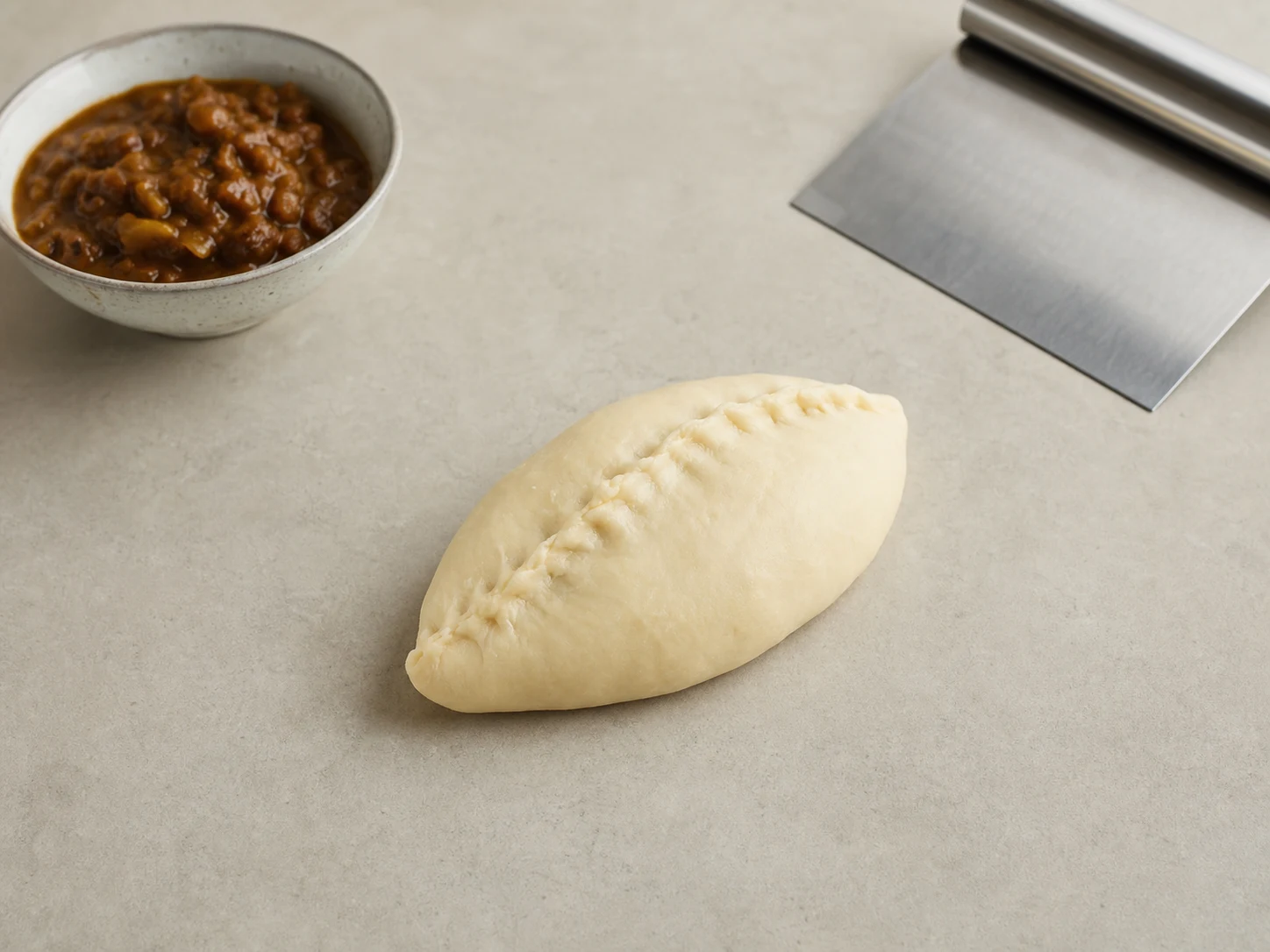
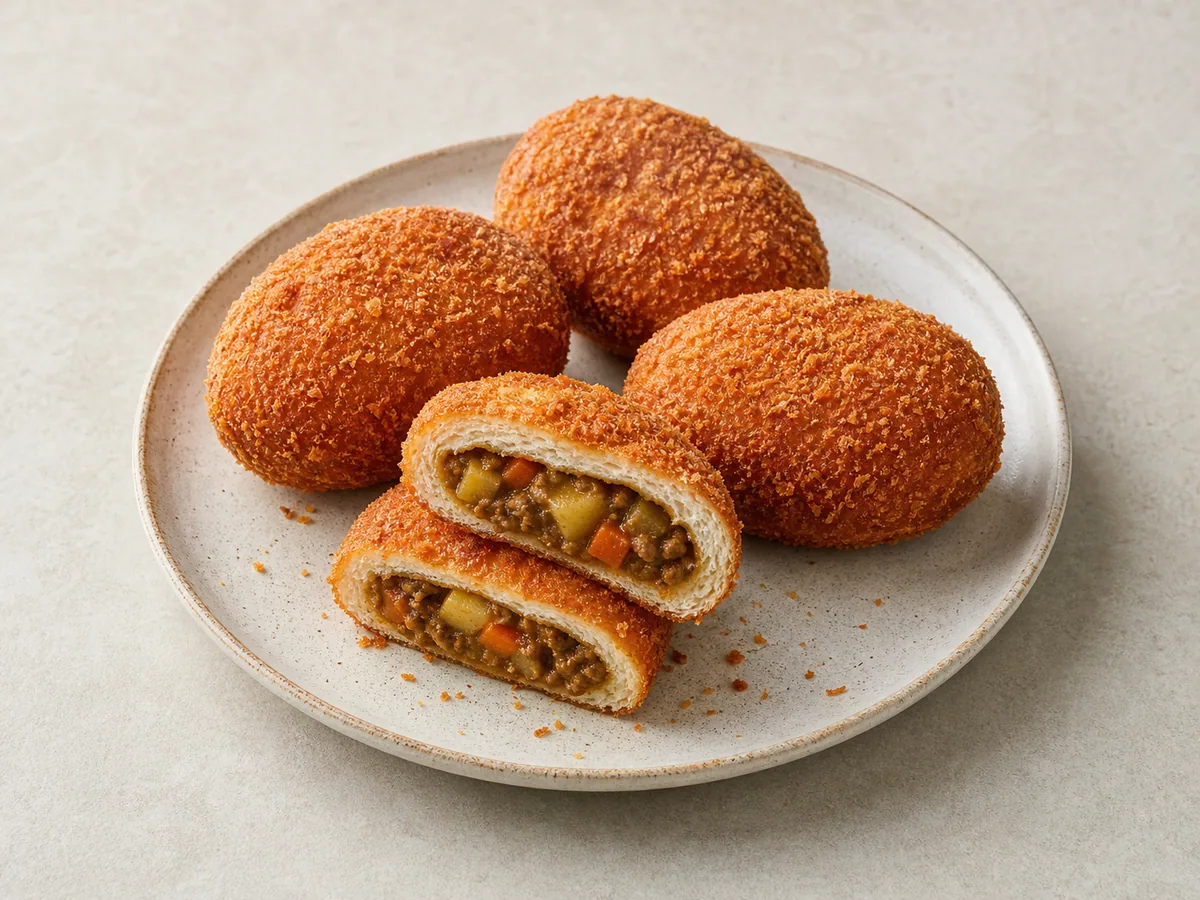
Press the risen dough gently to release large air pockets, then divide it into equal portions, allowing two rolls per serving. Round each portion, cover, and let the dough relax for 10 minutes. Flatten one portion into a 12 cm (5 in) circle with a slightly thicker center. Place a compact scoop of cooled curry in the middle, bring the dough edges together over the filling, and pinch firmly until the seam is completely closed. Roll the sealed piece gently into an oval and keep it covered while shaping the rest.
10:00Coat and proof the rolls
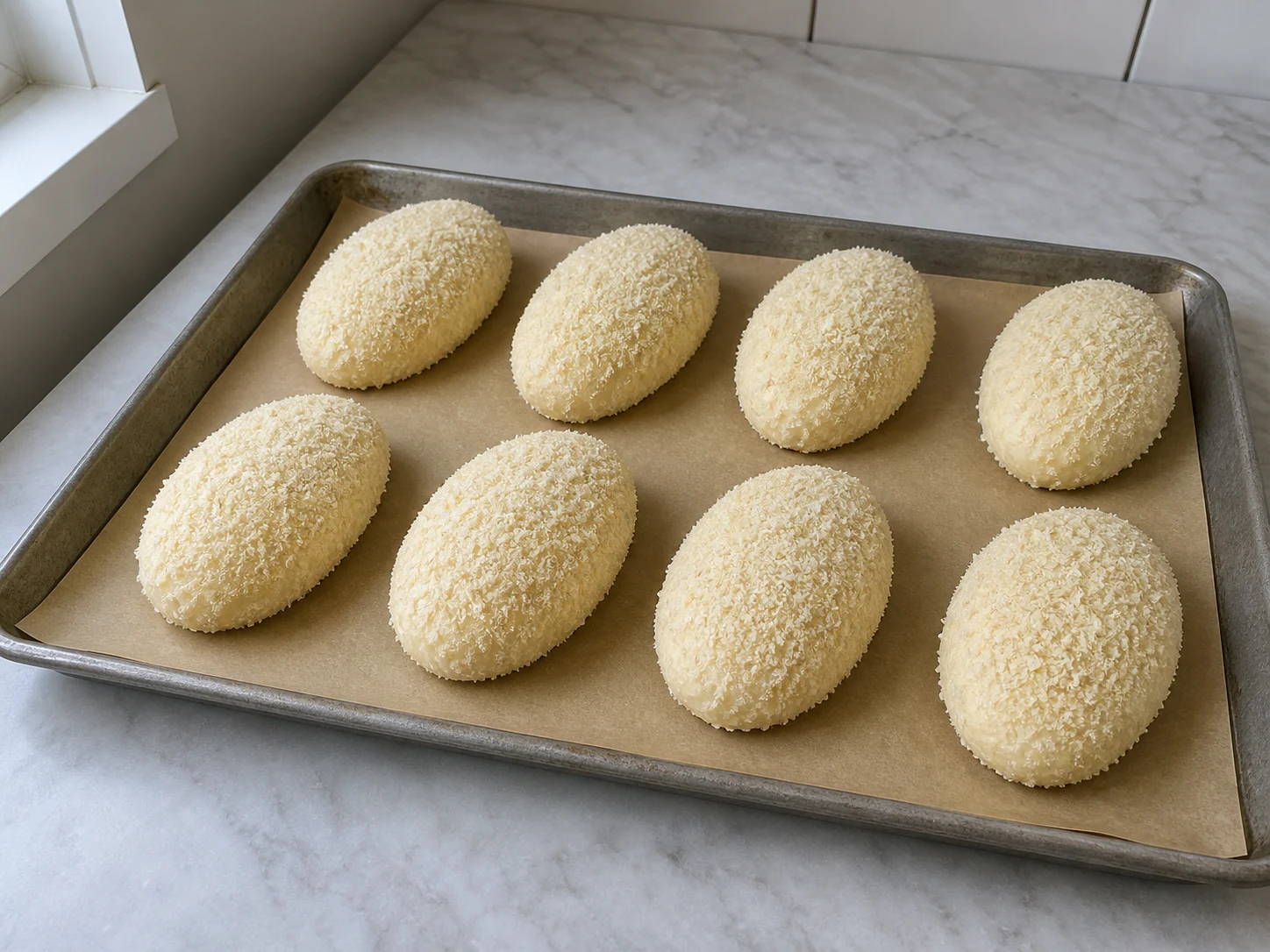
Place 25 g of all-purpose flour in one shallow bowl. Whisk 1 large egg for coating with 15 ml of water for coating in a second bowl, and put 80 g of panko breadcrumbs in a third. Roll each shaped piece lightly in flour and shake off the excess, coat it in the egg mixture, then press it gently into the panko so the surface is evenly covered. Set the rolls seam-side down on a lined tray, cover loosely, and let them rise until noticeably puffy but not doubled, checking after 20 minutes.
20:00Fry until crisp and golden
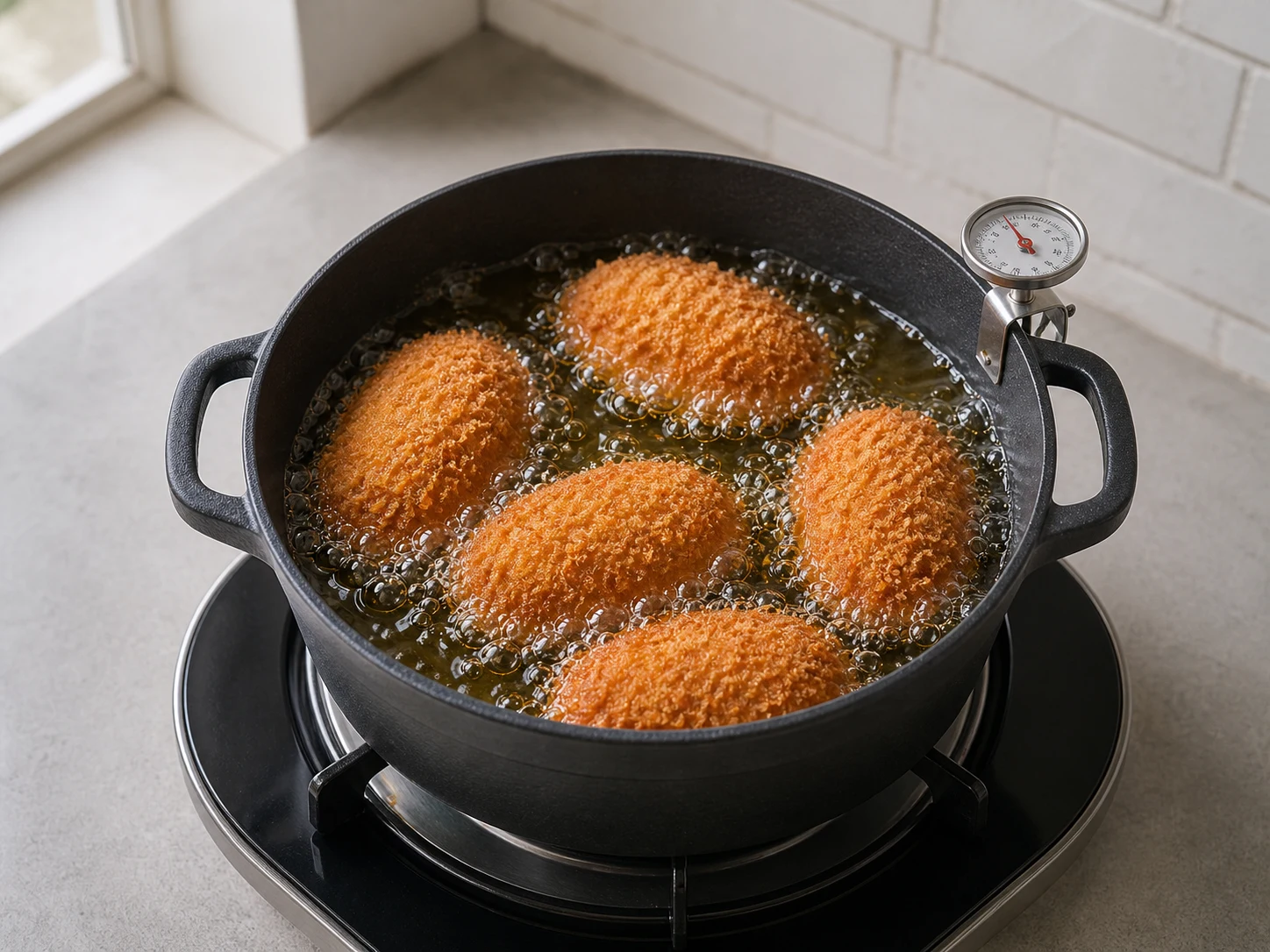
Pour neutral frying oil into a deep, heavy pot to a depth of about 5 cm (2 in), leaving at least 8 cm (3 in) of headroom above the oil. Set the pot securely on a stovetop burner. Heat the oil to 170°C (340°F) and monitor the temperature with a deep-fry thermometer. Lower the rolls into the oil in small batches without crowding. Fry for 3 to 4 minutes, turning several times, until evenly deep golden and crisp; begin checking at 3 minutes. Lift the first roll out and let excess oil drip back into the pot, then insert an instant-read thermometer from the side into the thickest bread layer, avoiding the curry filling. The bread should reach about 88°C (190°F) and show no wet or gummy dough; return the roll to the oil briefly if needed. Let the oil return to 170°C (340°F) between batches.
03:00Drain and serve
Lift the rolls from the oil with a spider or slotted spoon and let excess oil drip back into the pot. Transfer them to a wire rack set over a tray so the crust stays crisp. Let the curry settle for 5 minutes before serving; the centers will be very hot.
05:00


Smart Substitutions
- No ground beef? Use finely chopped cremini mushrooms and shelled edamame, cooking until the mixture is dry before adding the curry roux.
- No whole milk? Use unsweetened soy milk or the same volume of water; the bread will be slightly less rich.
- No Japanese curry roux? Melt 1 tablespoon (14 g) unsalted butter, cook it with 1 tablespoon (8 g) all-purpose flour for 1 minute, then stir in 2 teaspoons Japanese curry powder and 1/2 teaspoon kosher salt. Add this roux after the potato is tender and simmer for 4 to 6 minutes, stirring often, until the filling leaves a clear trail and holds a mound.
- Prefer an oven method? Mist the coated rolls evenly with neutral oil and bake at 180°C (350°F) for 25 to 30 minutes, turning after 15 minutes, until deeply browned. Begin checking at 25 minutes and confirm the thickest bread layer reaches about 88°C (190°F) with no wet or gummy dough.
Tips and Variations
- Chop the filling vegetables small and evenly; large pieces make the rolls difficult to seal and can tear the dough.
- Keep flour off the dough edges while shaping, because a dusty seam will not pinch closed securely.
- Use a thermometer for the frying oil. A steady 170°C (340°F) gives the panko time to crisp without making the crust greasy or overly dark.
What Went Wrong?
- The seams open while frying Use less filling, wipe any curry from the dough edges, and pinch the seam twice before coating.
- The crust feels oily Bring the oil back to 170°C (340°F) and fry fewer rolls at a time so the temperature does not fall sharply.
- The outside browns too quickly Lower the oil temperature slightly and make sure the rolls are not oversized; the dough needs time to cook before the panko becomes dark.
- The filling leaks through the dough Cook the curry longer until it leaves a clear trail in the skillet, then let it cool until it holds a firm scoop.
Nutrition Estimate
- Fiber: 5 g per serving
- Sodium: 915 mg per serving
Nutrition disclaimer:This recipe is provided for general cooking information only. Nutrition values are estimates and may vary by ingredients, brands, preparation methods, and serving sizes. Check ingredient labels and follow appropriate food-safety practices. This content is not medical, dietary, allergy, or professional food-safety advice.
FAQ
Found an error or have a suggestion?
Help us improve this recipe. Send us your feedback and include the recipe name so we can take a look.