Method
Prepare the leeks and vegetables
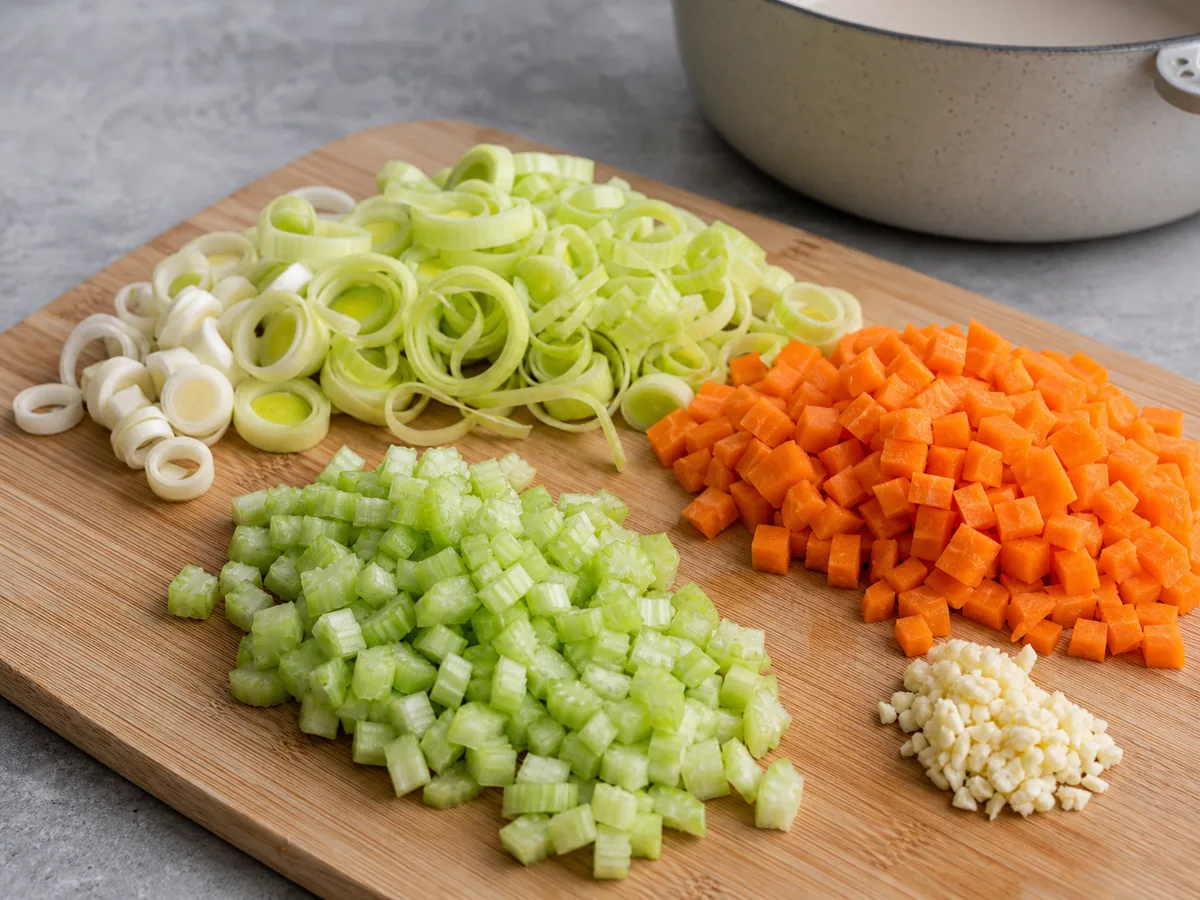
Trim off the roots and tough dark-green tops from 300 g of leeks. Split the white and pale-green portions lengthwise, rinse thoroughly between the layers, and slice crosswise. Cut 150 g of carrots and 120 g of celery into small, even pieces. Mince 3 garlic cloves. Keep this board and knife away from raw poultry.
Soften the vegetables
Melt 30 g of unsalted butter in a large heavy pot over medium heat. Add 300 g of leeks, 150 g of carrots, 120 g of celery, and 5 g of kosher salt. Cook for about 8 minutes, stirring often, until the leeks are soft and glossy and the carrots have begun to soften, without letting the vegetables brown.
08:00Build the soup base
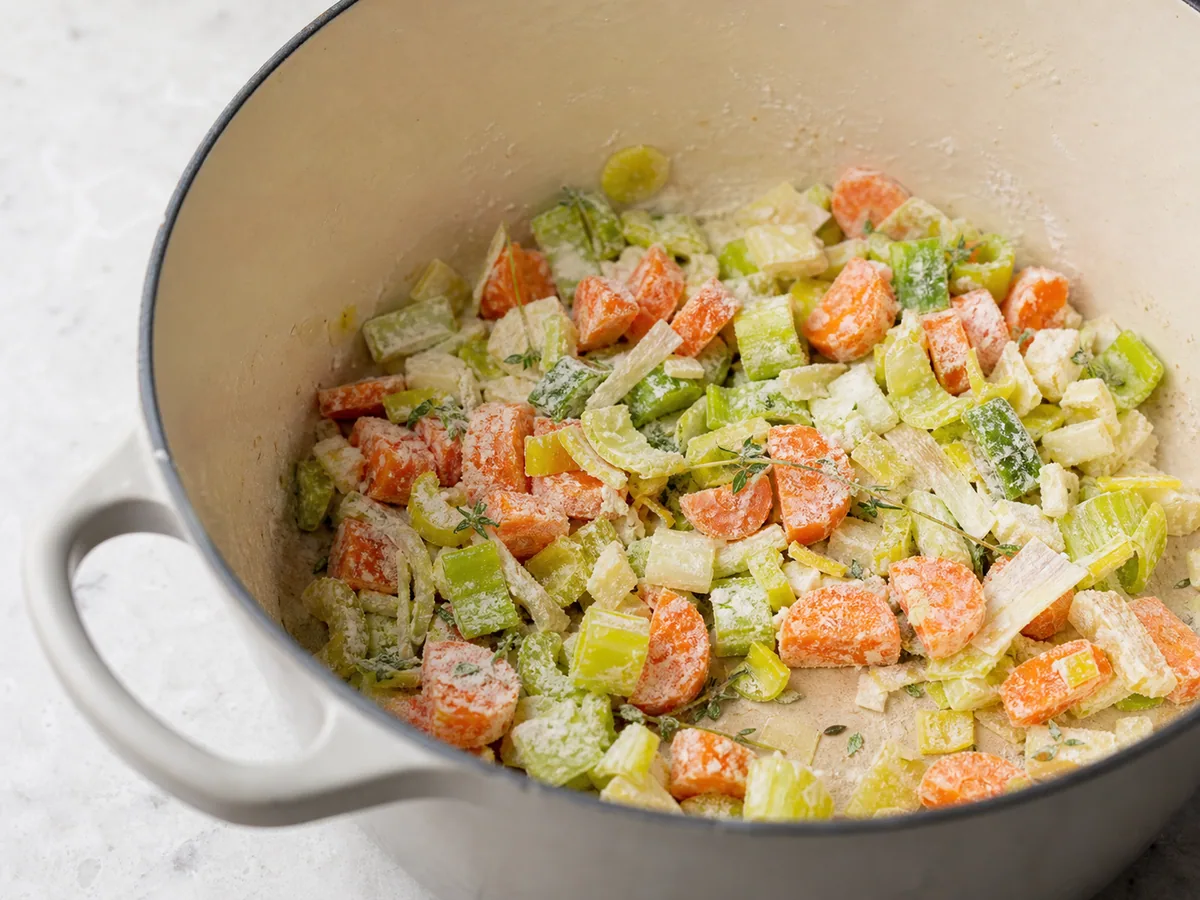
Stir in 3 garlic cloves and 4 g of fresh thyme leaves until fragrant. Sprinkle 30 g of all-purpose wheat flour evenly over the vegetables and cook while stirring continuously until no dry flour remains and a thin coating forms on the bottom of the pot. Do not let the flour darken.
Give the wild rice a head start
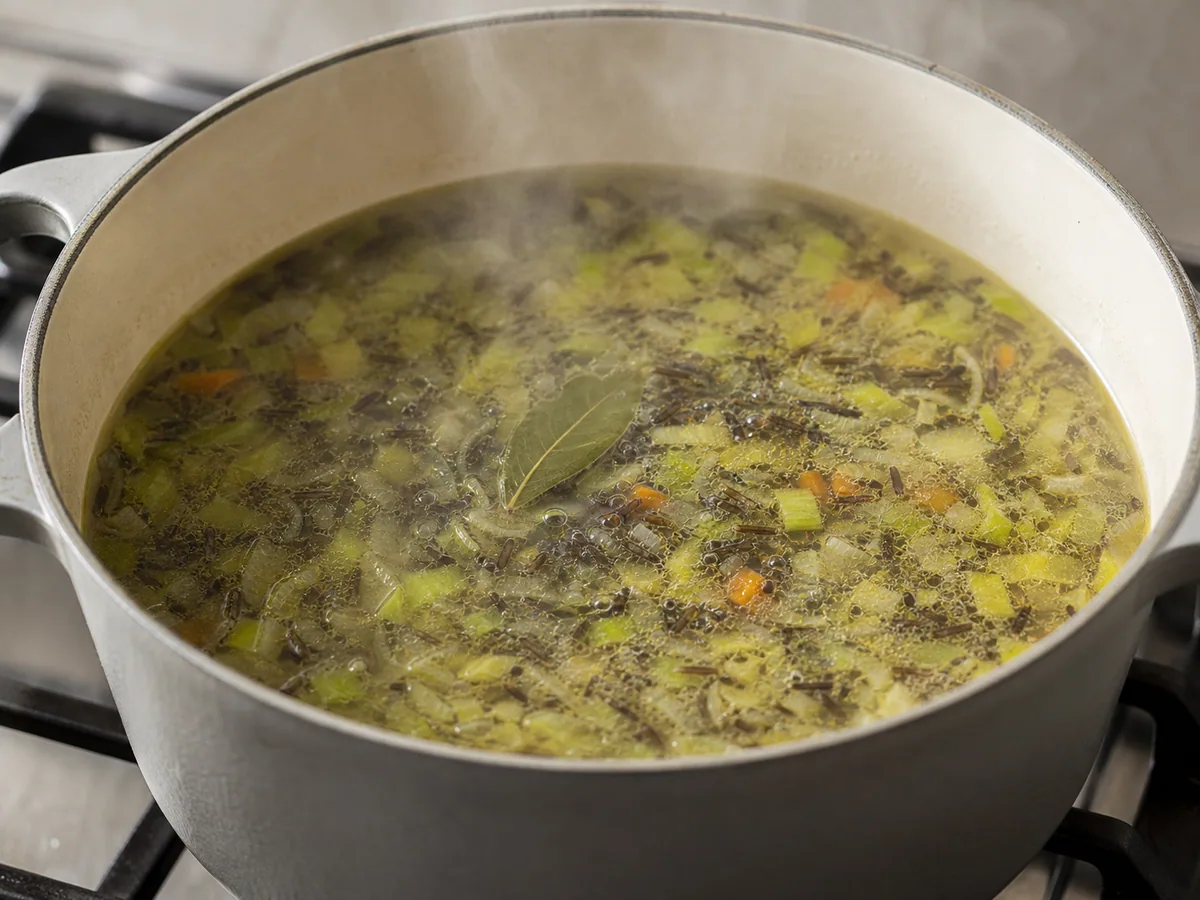
Gradually pour in 1440 ml of unsalted chicken broth, scraping the bottom of the pot as the liquid loosens the flour. Stir in 160 g of Canadian wild rice, 1 bay leaf, and 1 g of black pepper. Bring the soup to a boil, then reduce the heat to low, partially cover, and maintain a gentle simmer for 30 minutes. Stir once or twice so the rice does not settle on the bottom.
30:00Cook the chicken safely
Pat 600 g of boneless skinless chicken thighs dry with paper towels; do not rinse them. Lower the pieces into the gently simmering soup with clean tongs and make sure they are mostly submerged. Wash hands and clean any utensil or surface that touched raw poultry before continuing. Partially cover and simmer gently for 15 to 20 minutes. Begin checking at 15 minutes with a food thermometer inserted into the thickest part of each piece; remove each piece only after it reaches 74°C/165°F. The wild rice should be tender with a slight chew and many grains should have split. If the rice needs longer, continue simmering after removing the chicken.
15:00Shred the cooked chicken
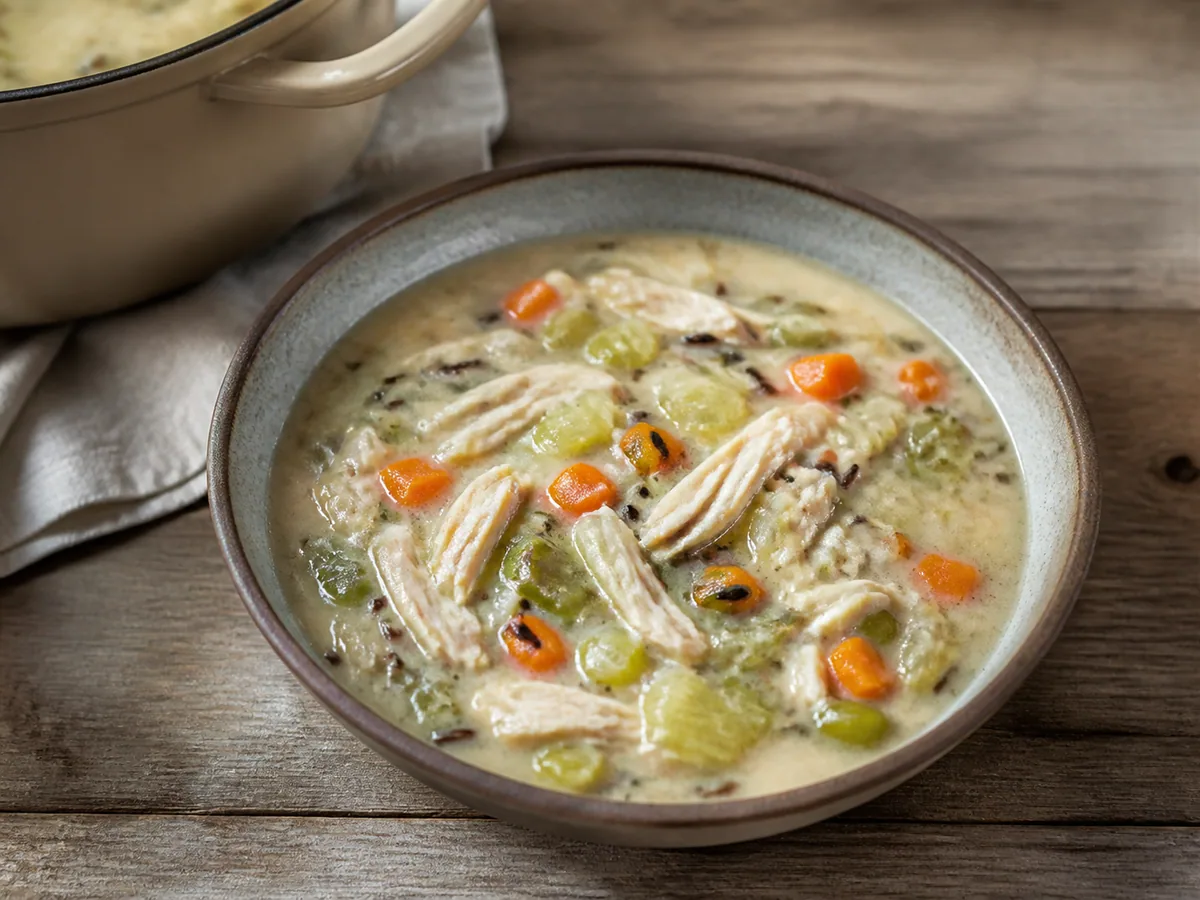
Transfer 600 g of boneless skinless chicken thighs, which are now fully cooked, to a clean plate and let them stand for 5 minutes so they are easier to handle. Pull them into bite-size pieces with two forks. Remove 1 bay leaf from the pot and discard it.
05:00Finish the creamy soup
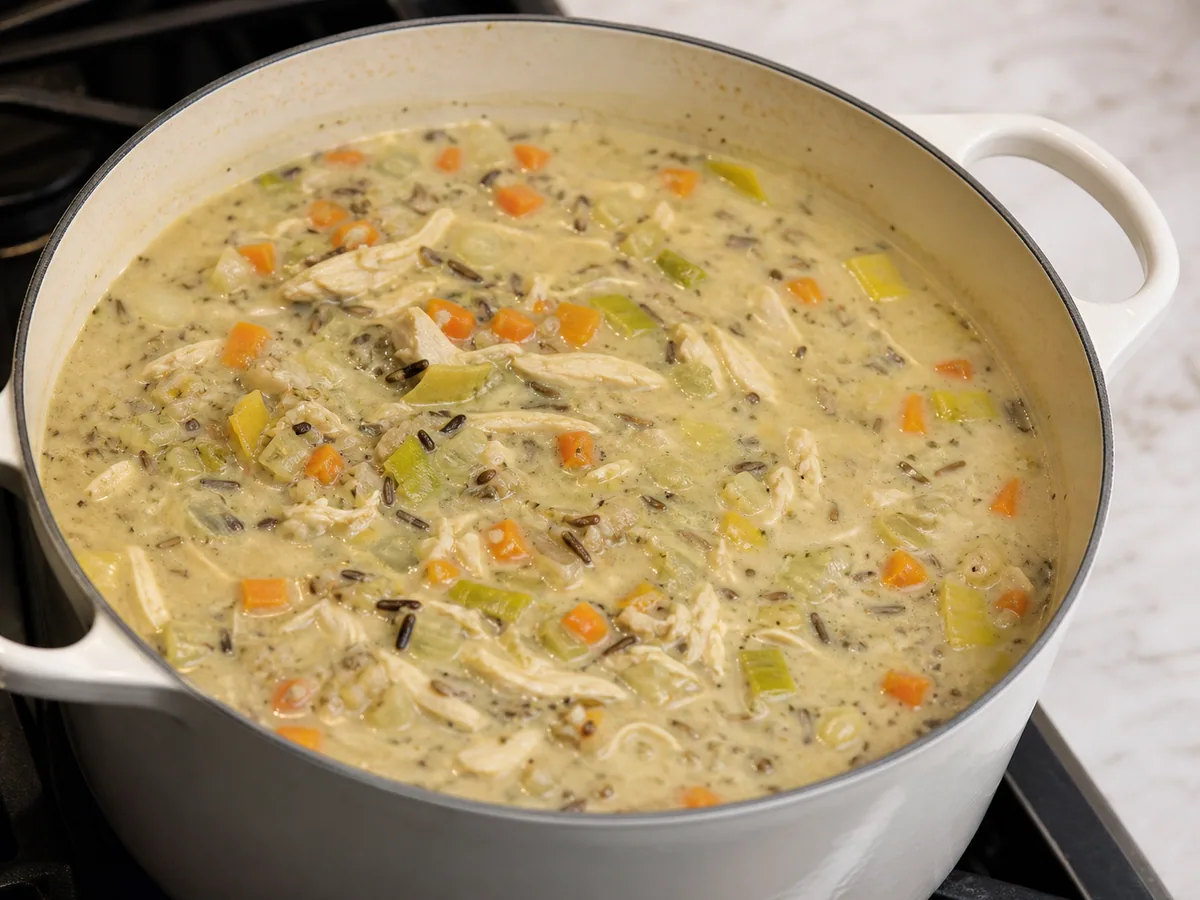
Return 600 g of boneless skinless chicken thighs to the pot and stir in 480 ml of 2% cow's milk. Warm over low heat for about 5 minutes without boiling, until the broth looks softly creamy, the rice is plump, and the chicken is hot throughout. Remove the pot from the heat, stir in 15 ml of lemon juice, and taste for seasoning. Ladle into bowls and scatter fresh parsley (optional) over the top for serving.
05:00


Smart Substitutions
- No chicken thighs? Use boneless skinless chicken breasts and remove each piece from the soup as soon as it reaches 74°C/165°F so the lean meat stays tender.
- No fresh thyme? Use 1 teaspoon dried thyme, adding it with the garlic so it has time to soften and release its aroma.
- Need a dairy-free finish? Use olive oil in place of butter and an unsweetened, unflavoured oat beverage in place of milk; the flavour and richness will change.
- Need a wheat-free thickener? Use a gluten-free all-purpose blend that is intended for thickening sauces, and add it in the same stage as the flour.
Tips and Variations
- Rinse between every leek layer; trapped grit is easy to miss and stands out in a creamy broth.
- Keep the pot at a lazy simmer so the chicken stays tender and the flour thickens without catching on the bottom.
- Wild rice varieties cook at different rates, so use split grains and a tender, pleasantly chewy texture as the final cue.
What Went Wrong?
- Wild rice is still firm Keep the soup at a gentle simmer and add a small splash of hot broth if the liquid level drops before the grains split and soften.
- Soup is too thick Stir in more warm broth or milk a little at a time until the soup is loose enough to ladle.
- Soup is too thin Simmer uncovered over low heat, stirring frequently, until the broth lightly coats the back of a spoon.
- Chicken feels dry Check each piece separately and remove it as soon as the thickest part reaches 74°C/165°F; smaller pieces may finish first.
Nutrition Estimate
- Fiber: 4 g per serving
- Sodium: 600 mg per serving
Nutrition disclaimer:This recipe is provided for general cooking information only. Nutrition values are estimates and may vary by ingredients, brands, preparation methods, and serving sizes. Check ingredient labels and follow appropriate food-safety practices. This content is not medical, dietary, allergy, or professional food-safety advice.
FAQ
Found an error or have a suggestion?
Help us improve this recipe. Send us your feedback and include the recipe name so we can take a look.