Method
Heat the oven and prepare the tray
Heat the oven to 220°C (425°F), or 200°C fan. Line a sturdy baking tray with baking parchment and place an oven rack in the upper-middle position so the scones colour well without scorching underneath.
Make the cheese and chive crumb base
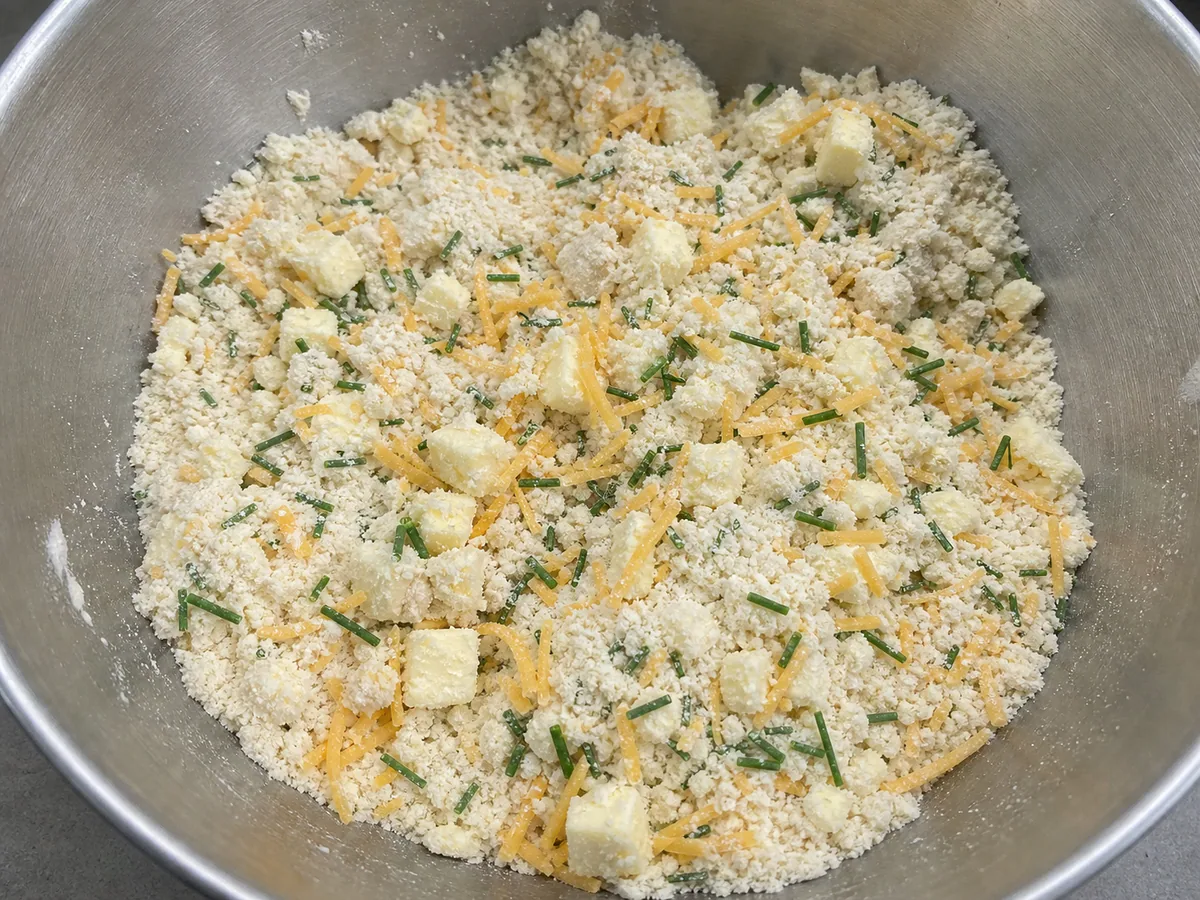
Add 240 g of self-raising flour, 4 g of baking powder, 1 1/2 g of fine sea salt, 1/2 g of black pepper, and 2 g of English mustard powder to a large bowl and whisk until evenly blended. Cut 60 g of unsalted butter into small cubes, add it to the bowl, and rub with your fingertips until the mixture resembles coarse crumbs with a few pea-size pieces remaining. Grate 120 g of mature Cheddar; set aside roughly one quarter for the tops. Snip 14 g of fresh chives into short pieces and stir them into the bowl with the remaining cheese.
Mix a soft dough
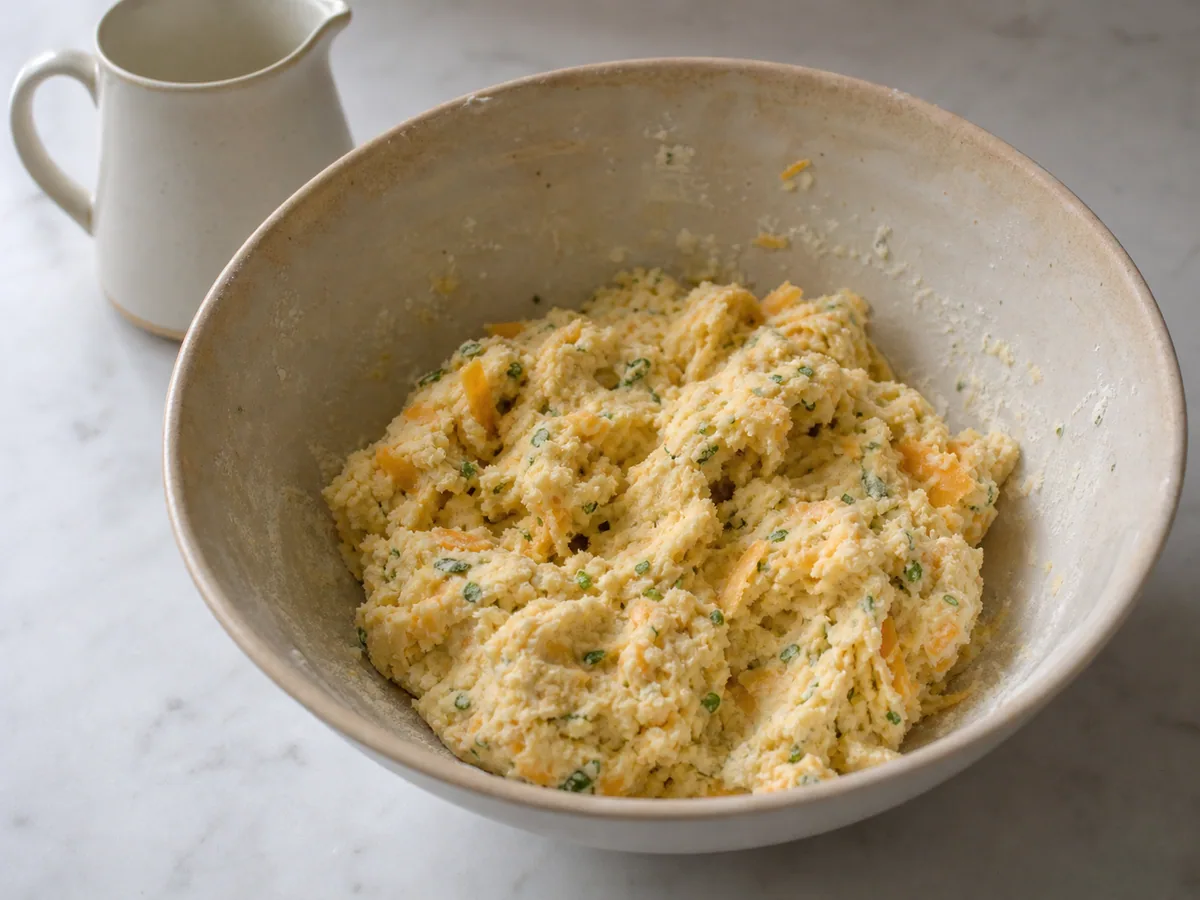
Beat 1 large egg with 90 ml of whole milk for dough in a small jug. Pour the mixture into the dry ingredients and fold with a table knife or flexible spatula just until no dry pockets remain. The dough should look rough and feel soft rather than smooth. Do not taste the raw dough. Wash the jug, utensil, and work surface after contact with raw egg and flour.
Shape and cut the scones
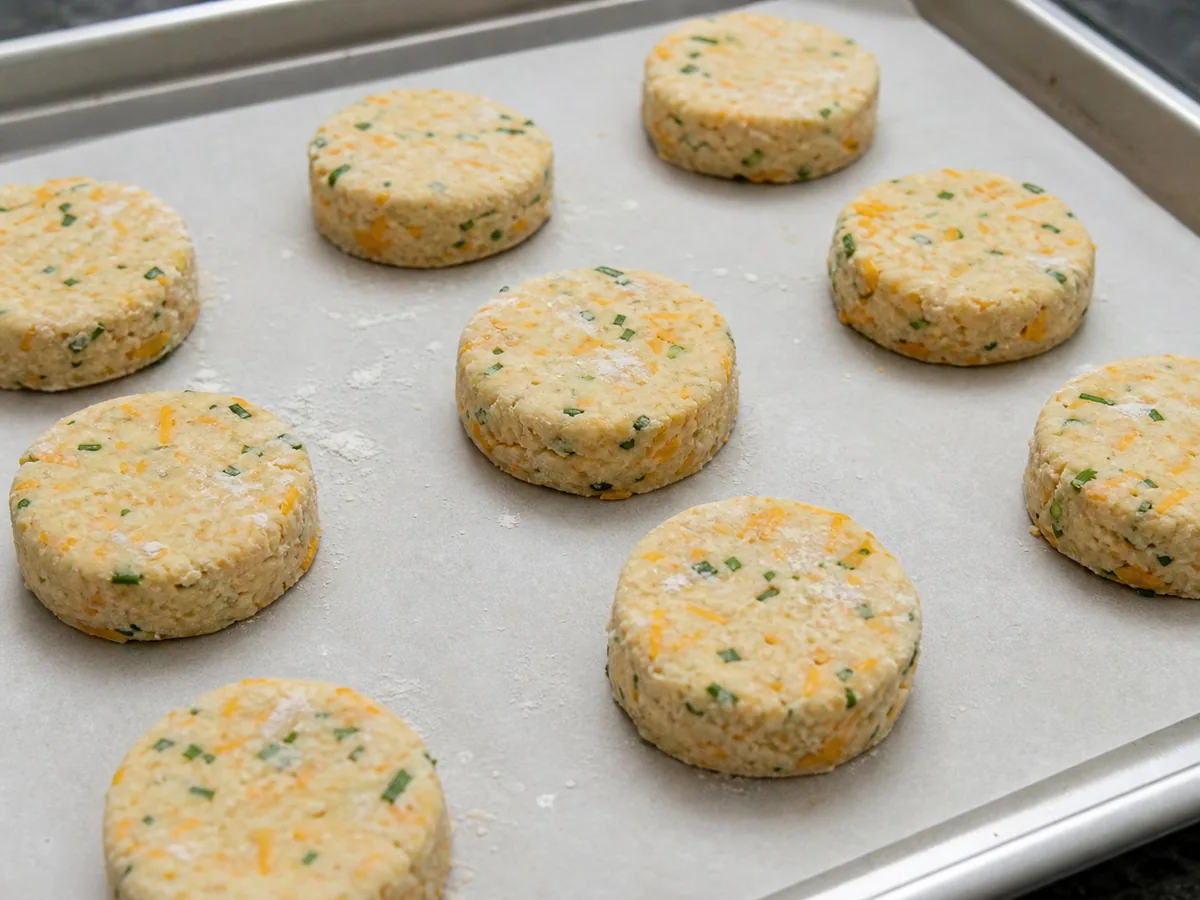
Scatter 8 g of plain flour for dusting over a clean work surface. Turn out the dough, bring it together with two or three light folds, and pat it to about 3 cm (1 1/4 in) thick. Cut straight down with a 6 cm (2 1/2 in) round cutter without twisting. Place the rounds on the prepared tray with space between them; press the scraps together only once and cut the remaining rounds. The default batch makes about 8 scones.
Glaze and bake until golden
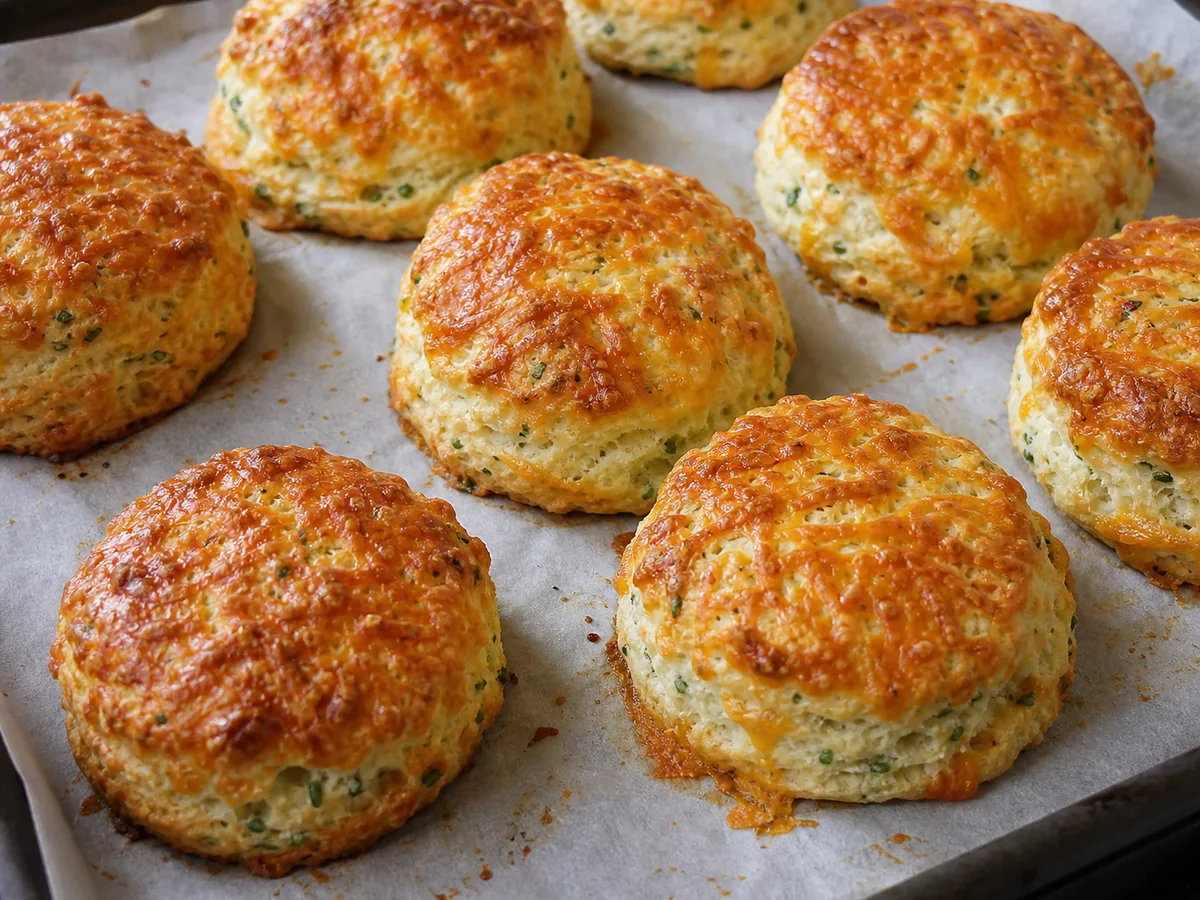
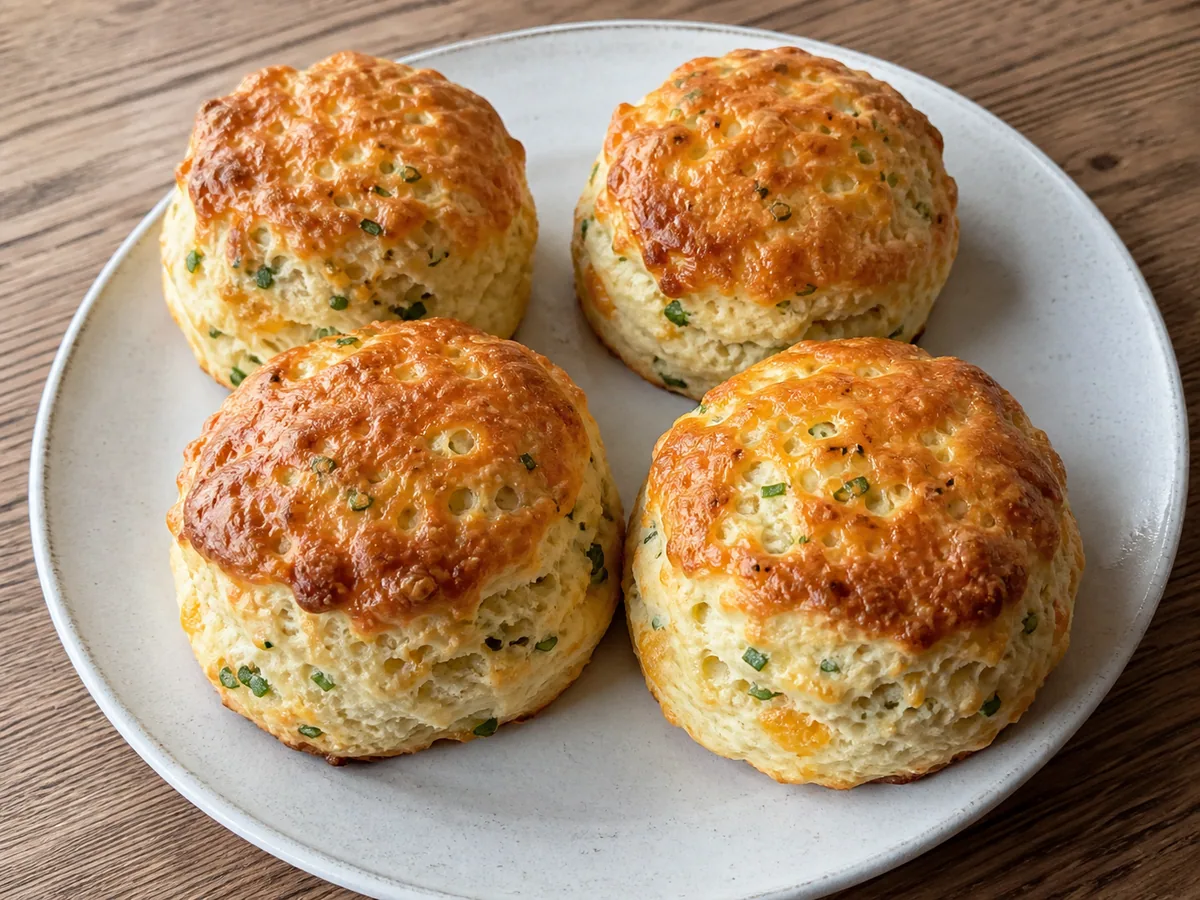
Brush the tops with 15 ml of whole milk for brushing, keeping the milk off the cut sides so the scones can rise cleanly. Scatter the reserved cheese over the tops. Bake for 13 to 16 minutes, rotating the tray once if your oven browns unevenly, until the scones are well risen, deep golden, and dry rather than doughy at the centre. Begin checking at 13 minutes and continue baking as needed.
13:00Rest briefly and serve
Move the scones to a wire rack and let them stand for 5 minutes. Serve while still warm, when the cheese crust is crisp and the centre is tender.
05:00


Smart Substitutions
- No mature Cheddar? Use Red Leicester, Double Gloucester, or another firm, full-flavoured cheese that grates cleanly.
- No fresh chives? Use finely sliced spring onion greens or chopped flat-leaf parsley for a different fresh note.
- No mustard powder? Use 1 tablespoon Dijon mustard and reduce the dough milk by 1 teaspoon, adding the remaining milk gradually until the dough is soft.
- No whole milk? Use the same measured amount of buttermilk and fold it in gradually. Add a little more only if dry flour remains and the dough will not hold together.
Tips and Variations
- Keep the butter and milk cold so the dough stays firm enough to rise rather than spread.
- Press the cutter straight down and lift it straight up; twisting seals the edges and limits lift.
- Grate the Cheddar coarsely so distinct savoury pockets remain in the baked crumb.
What Went Wrong?
- Scones spread instead of rising The dough was too wet or warm. Measure the milk carefully, handle the dough briefly, and move it into the hot oven as soon as it is cut.
- Scones are dense The dough was mixed or folded too much. Stop when it just holds together and press the scraps only once.
- Tops are pale Brush the surface evenly with milk and make sure the oven is fully heated before the tray goes in.
- Centres are dry Begin checking at 13 minutes and remove the scones as soon as the centres are set and the tops are deeply golden.
Nutrition Estimate
- Fiber: 1 g per serving
- Sodium: 360 mg per serving
Nutrition disclaimer:This recipe is provided for general cooking information only. Nutrition values are estimates and may vary by ingredients, brands, preparation methods, and serving sizes. Check ingredient labels and follow appropriate food-safety practices. This content is not medical, dietary, allergy, or professional food-safety advice.
FAQ
Found an error or have a suggestion?
Help us improve this recipe. Send us your feedback and include the recipe name so we can take a look.