Method
Soak the rice and lentils
Rinse 120 g of white rice, 70 g of split pigeon peas (toor dal), 50 g of split chickpeas (chana dal), and 45 g of split mung beans (moong dal) in several changes of water until the water is mostly clear. Put them in a large bowl, cover generously with cool tap water, and soak for 6 hours, until the rice grains snap easily when pressed and the lentils are plump.
6:00:00Blend a coarse batter
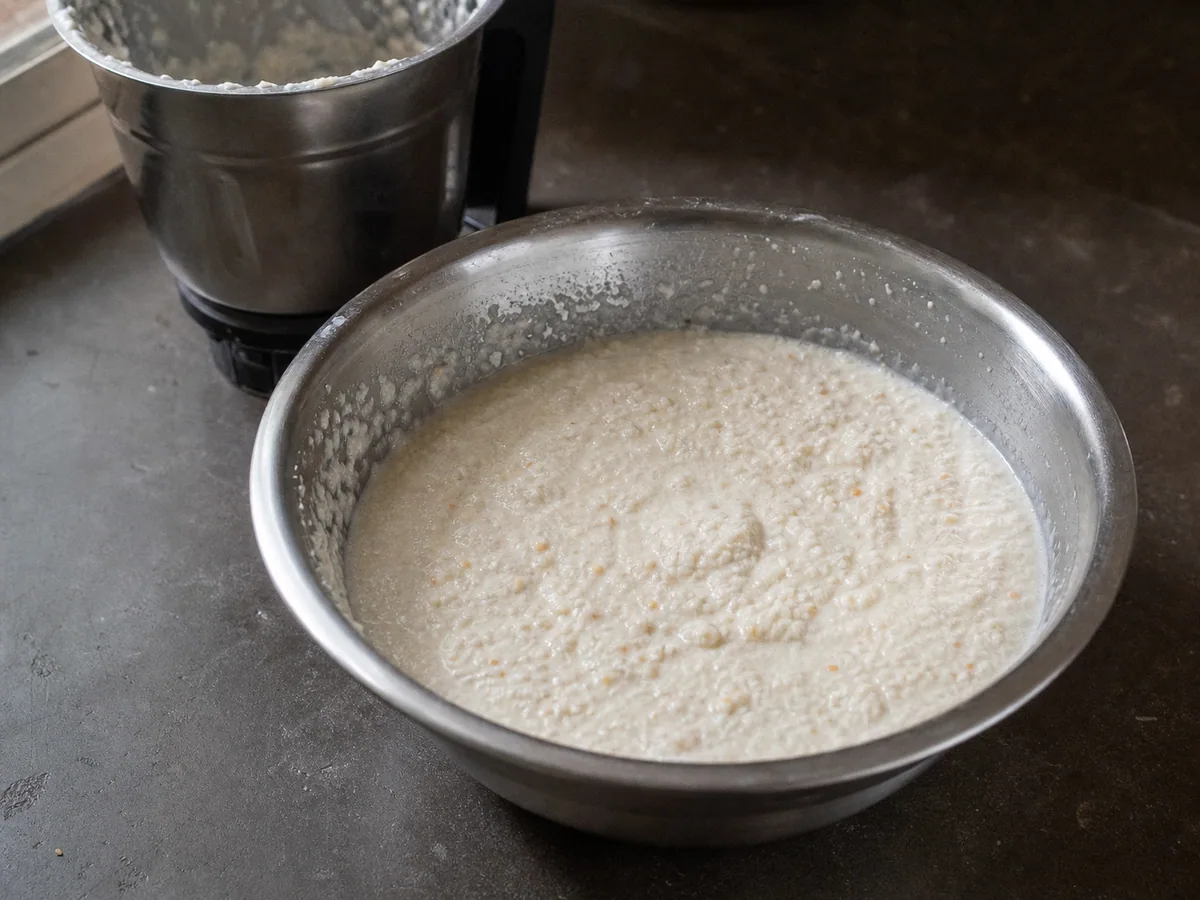
Drain the soaked rice and lentils thoroughly. Working in batches, blend them with 120 g of plain whole-milk yogurt and 120 ml of water. Stop while the batter is thick and pourable with a fine, semolina-like grain; scrape down the blender as needed, but do not make it completely smooth.
Ferment until lightly aerated
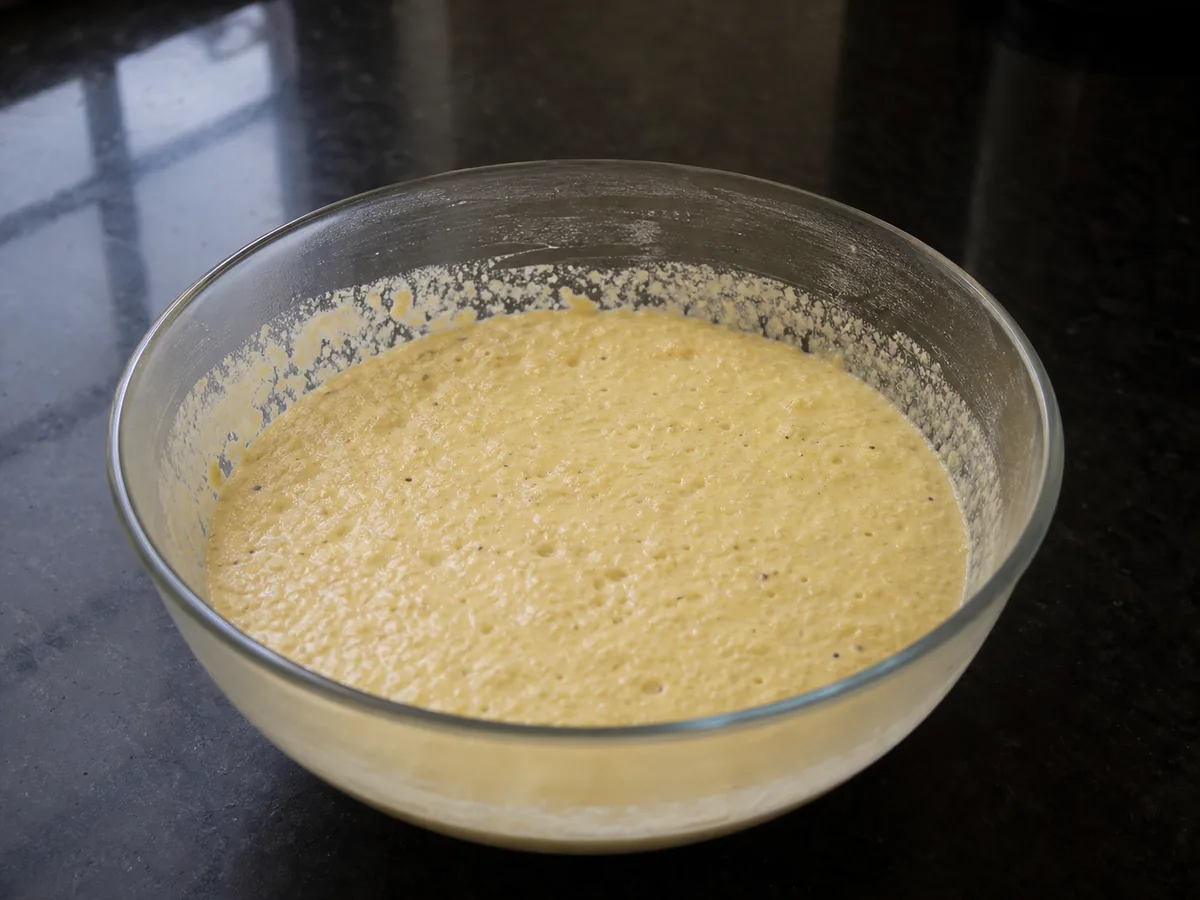
Scrape the batter into a clean large bowl and cover it loosely. Leave it in a comfortably warm spot for about 8 hours, until the surface is slightly risen, dotted with small bubbles, and smells pleasantly tangy. It does not need to double in volume.
8:00:00Season the batter and heat the oven
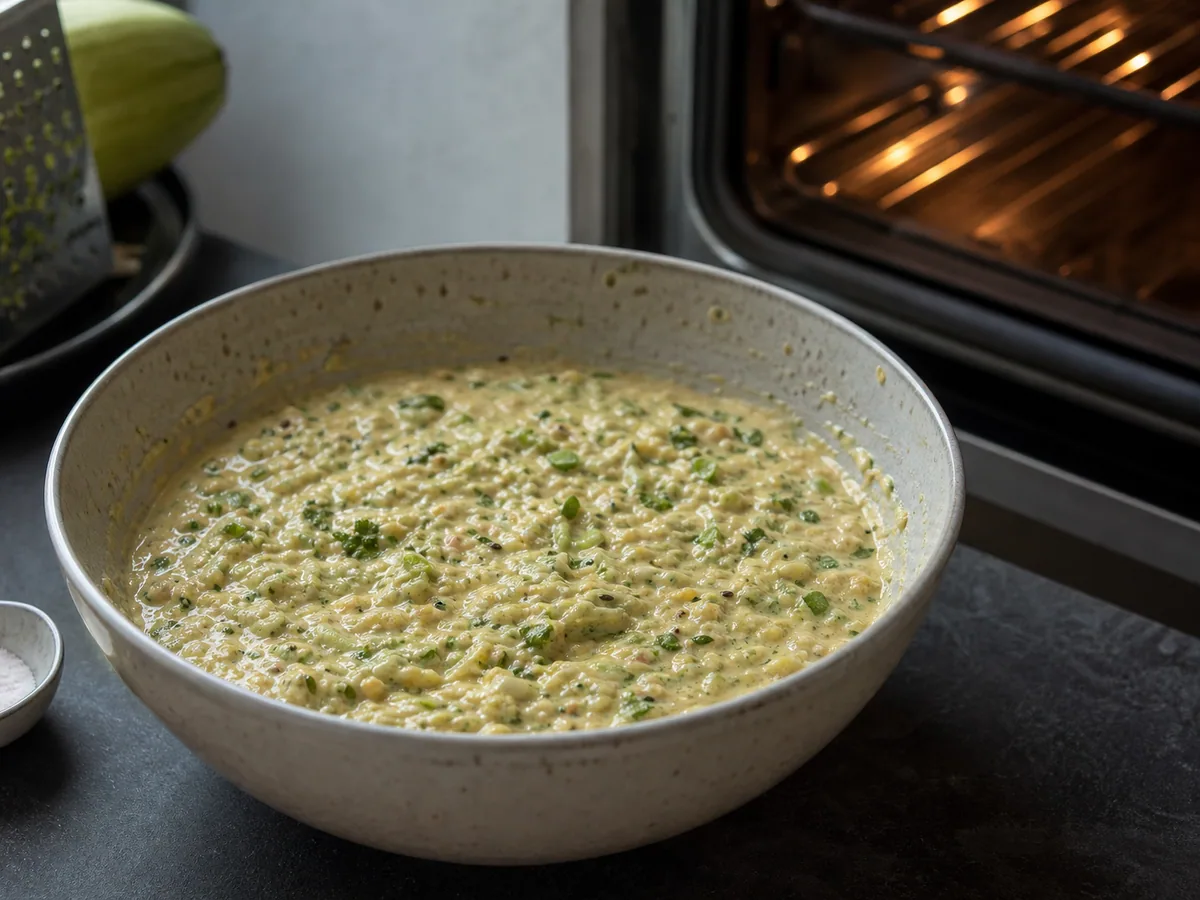
Heat the oven to 190°C (375°F). Trim and peel 300 g of bottle gourd, then taste a tiny raw shaving before grating it. If it tastes distinctly or unusually bitter, spit it out and discard the entire gourd; do not cook it. Remove any hard mature seeds or spongy core, then grate the gourd on the large holes of a box grater; if it releases a puddle of liquid, squeeze it once lightly. Grate 15 g of fresh ginger, finely chop 2 green chiles, and chop 15 g of fresh cilantro. Fold them into the fermented batter with 2 g of ground cumin, 2 g of ground coriander, 1 g of ground turmeric, 8 g of granulated sugar, 15 ml of lemon juice, 5 g of kosher salt, and 15 ml of neutral oil for batter. Sprinkle 2 g of baking soda over the surface and fold just until the batter looks a little lighter; proceed immediately so the lift is not lost.
Temper the spices and fill the pan
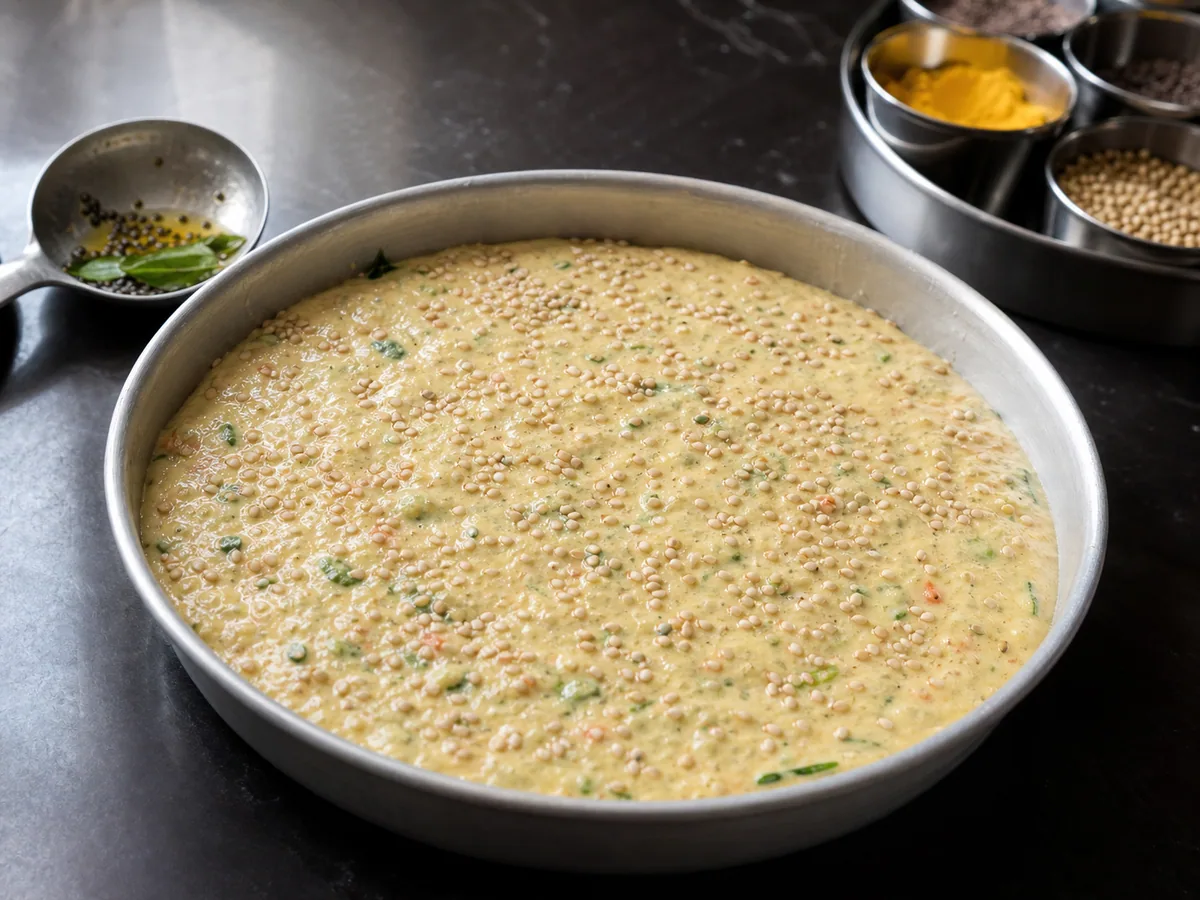
Choose either a stovetop-safe ovenproof skillet or a metal baking dish that holds the batter about 3 cm (1 1/4 in) deep. If using the ovenproof skillet, heat 15 ml of neutral oil for pan in it over medium heat. If using a baking dish, heat 15 ml of neutral oil for pan in a separate small skillet instead; do not place the baking dish on a burner. Add 5 g of brown mustard seeds. When they begin to pop, carefully add 12 fresh curry leaves—they may sputter—and 0.3 g of asafoetida, then cook for about 10 seconds. Remove the skillet from the heat. If using a baking dish, immediately pour the hot tempering into it and tilt the dish carefully to coat the base. Pour in the batter at once and level the surface without pressing it down. Scatter 14 g of sesame seeds evenly over the top and drizzle with 15 ml of neutral oil for topping.
00:10Bake until deeply golden
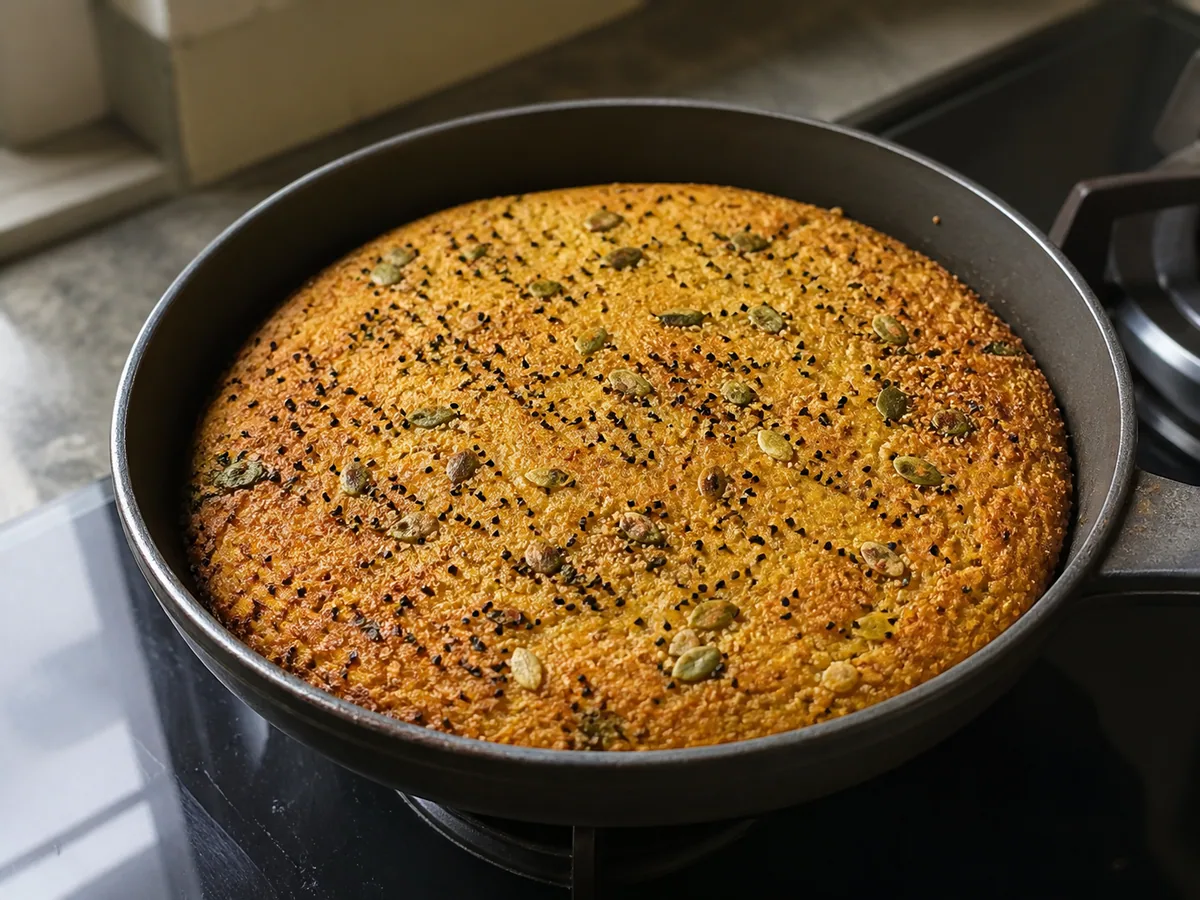
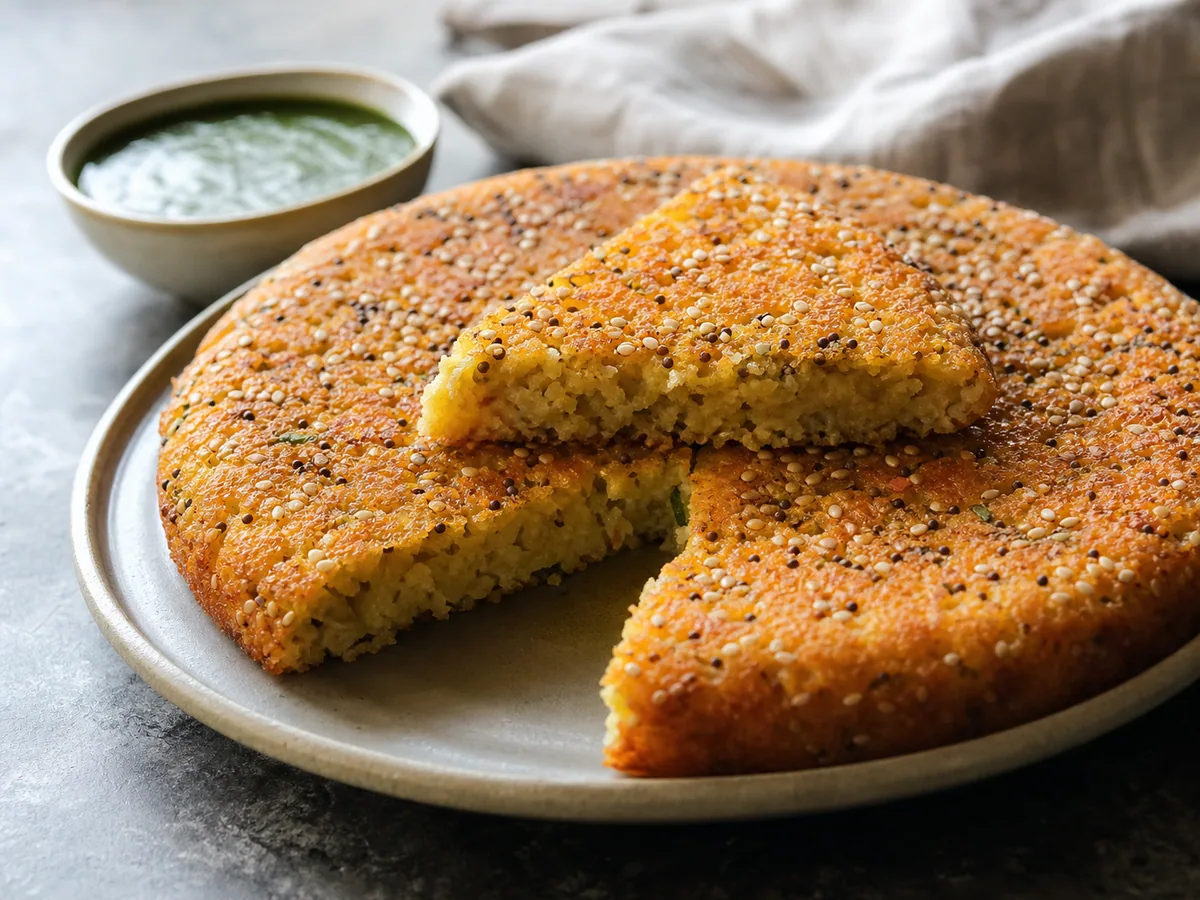
Bake at 190°C (375°F) for 40 to 45 minutes, starting to check at 40 minutes. The top should be deeply golden and dry, the edges should pull slightly from the pan, and the center should spring back when pressed gently. A thin skewer inserted into the center should come out without wet batter; add a few more minutes if needed.
40:00Rest, cut, and serve
Let the handvo rest in the pan for 10 minutes so the crumb settles and the crust releases cleanly. Loosen the edge with a thin spatula, cut into wedges, and serve warm with green chutney (optional).
10:00


Smart Substitutions
- No bottle gourd? Use zucchini in the same quantity and squeeze it lightly if it is especially watery.
- No toor dal? Replace it with an equal total weight of extra chana dal and moong dal; the flavor will be a little milder but the batter will still hold well.
- Different yogurt? Plain lower-fat yogurt or plain unsweetened plant-based yogurt can replace whole-milk yogurt; avoid sweetened or flavored varieties.
- No ovenproof skillet? Bloom the mustard seeds, curry leaves, and asafoetida in a small skillet, then pour the tempering into a lightly oiled metal baking dish before adding the batter.
Tips and Variations
- Judge fermentation by small bubbles and a clean tangy aroma rather than dramatic volume; handvo batter usually rises modestly.
- Mix in the baking soda only after the oven and pan are ready, then fill the pan without delay.
- Preserve a batter depth close to 3 cm (1 1/4 in) when changing pans so the center cooks through before the crust becomes too dark.
What Went Wrong?
- Center is dense or gummy The batter may have been blended too smooth, spread too deeply, or removed too soon. Bake until a skewer shows no wet batter and use a shallower layer next time.
- Handvo has little tang Let the batter ferment until small bubbles appear and the aroma is noticeably but pleasantly sour; a cool room can slow that change.
- Baking soda flavor is noticeable Measure the baking soda carefully and bake as soon as it is folded into the seasoned batter.
- Sesame crust stays pale Place the pan on the upper-middle oven rack and allow the full baking time, watching the edges so they do not scorch.
Nutrition Estimate
- Fiber: 8 g per serving
- Sodium: 660 mg per serving
Nutrition disclaimer:This recipe is provided for general cooking information only. Nutrition values are estimates and may vary by ingredients, brands, preparation methods, and serving sizes. Check ingredient labels and follow appropriate food-safety practices. This content is not medical, dietary, allergy, or professional food-safety advice.
FAQ
Found an error or have a suggestion?
Help us improve this recipe. Send us your feedback and include the recipe name so we can take a look.