Method
Soften the bread and prepare the vegetables
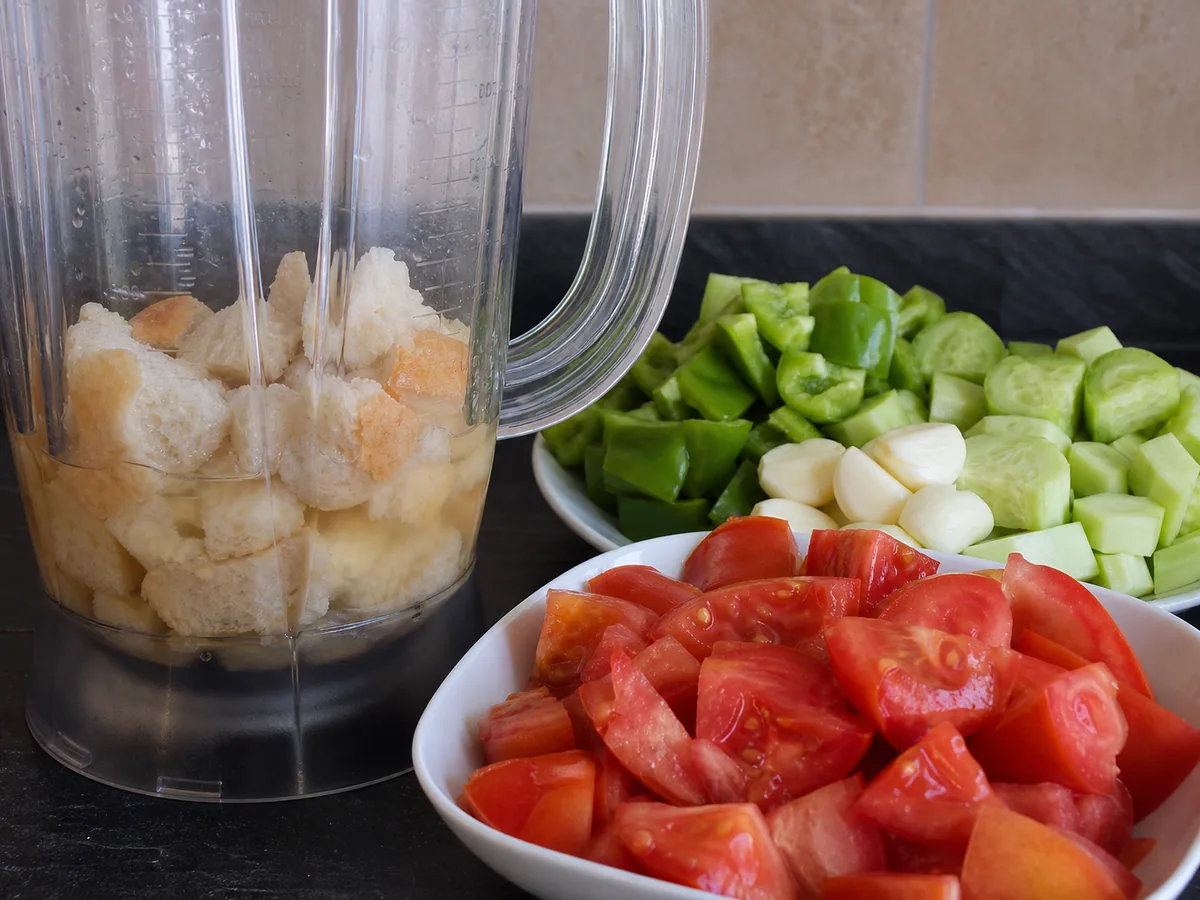
Put 60 g of crusty white bread in the blender jar, pour in 120 ml of ice-cold water and 30 ml of sherry vinegar, and leave for 5 minutes so the crumb softens evenly. Meanwhile, rinse 1000 g of ripe tomatoes, 200 g of cucumber, and 120 g of green bell pepper. Core the tomatoes, trim the cucumber, halve and seed the pepper, then cut the vegetables into rough chunks. Peel 6 g of garlic.
05:00Blend the vegetable base
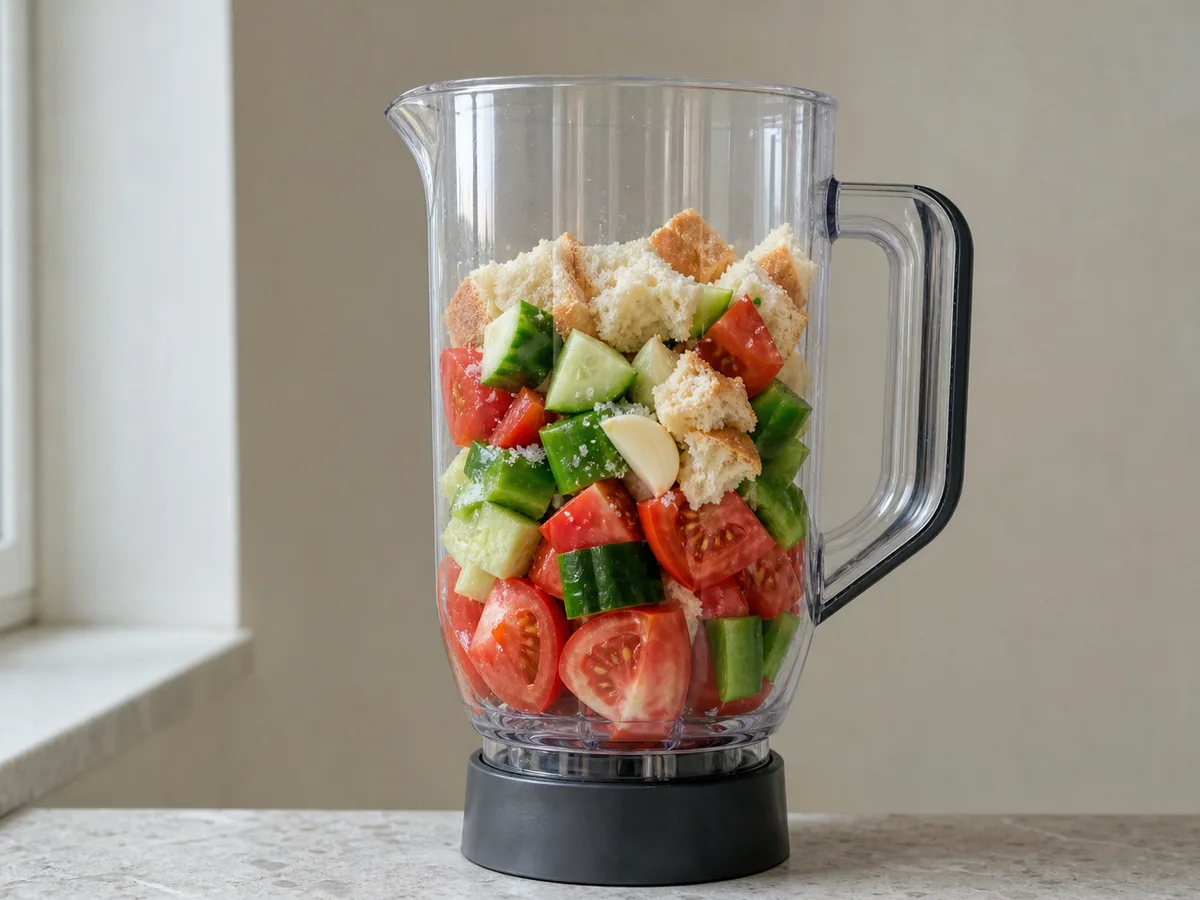
Add the prepared vegetables, 6 g of garlic, and 4 g of fine sea salt to the blender. Secure the lid, start on low speed, then increase to high and blend for 60 to 90 seconds. Stop at the first check when the mixture looks uniform and no large pieces remain; scrape down the jar and continue briefly if needed.
01:00Emulsify the soup
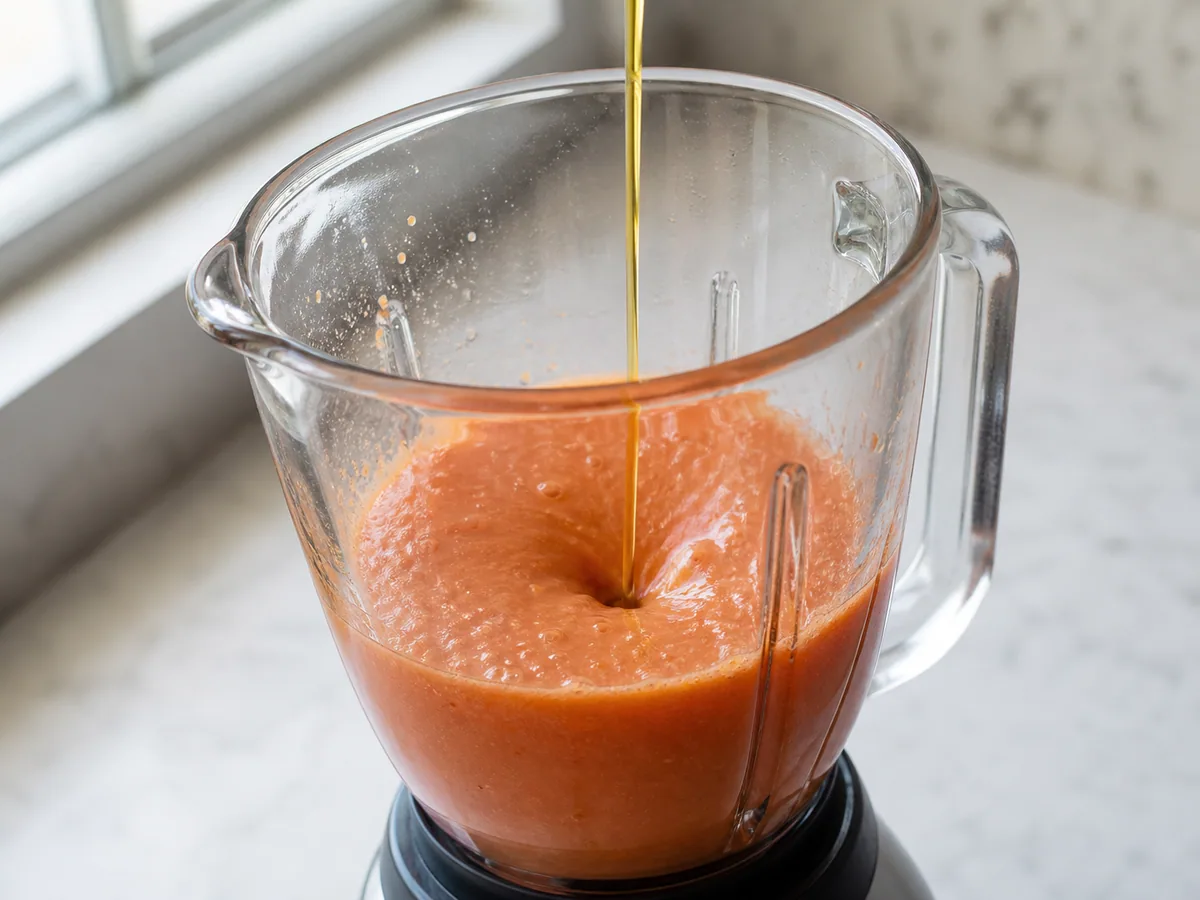
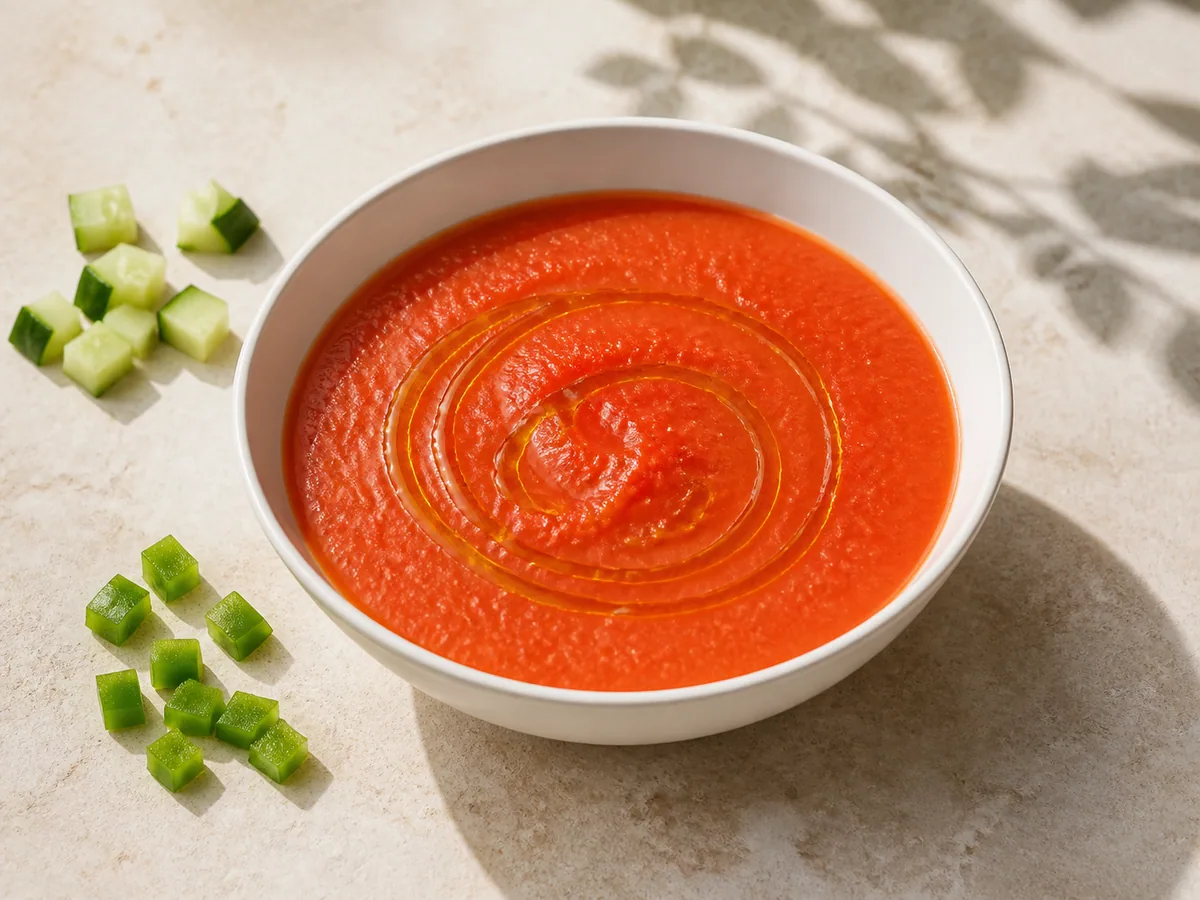
With the blender running on medium, pour in 60 ml of extra virgin olive oil in a thin, steady stream. Increase to high and blend for 30 to 45 seconds, checking at 30 seconds. The gazpacho should look smooth, slightly lighter in color, and glossy rather than separated.
00:30Strain and serve
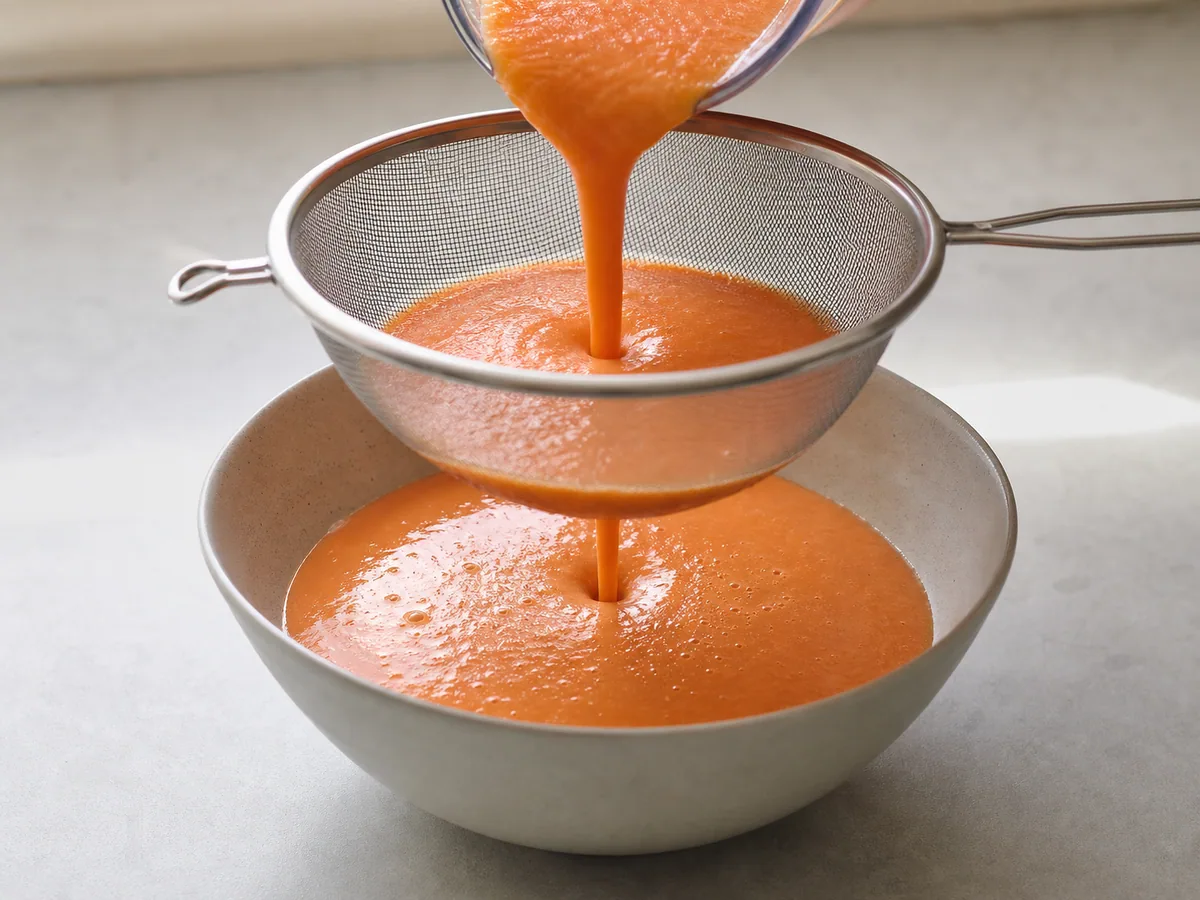
For the silkiest texture, pass the gazpacho through a fine-mesh sieve into a pitcher, pressing gently with a ladle and leaving the dry pulp behind. Taste for a balanced savory, bright finish. Pour into chilled bowls or glasses and serve immediately.


Smart Substitutions
- No sherry vinegar? Use red wine vinegar for a similarly clean, savory acidity.
- No crusty white bread? Use the soft interior of a plain baguette or country loaf.
- Prefer a milder pepper? Replace the green bell pepper with yellow bell pepper for a softer, slightly sweeter flavor.
- Garlic tastes too assertive? Use half a large clove and keep the rest of the recipe unchanged.
Tips and Variations
- Use tomatoes that smell fragrant at the stem and yield slightly when pressed; the soup has no cooking step to concentrate weak flavor.
- Add the olive oil slowly while the blender is moving so it disperses into the vegetable base instead of floating on top.
- Press gently when straining. Forcing dry pulp through the sieve can make the finished soup grainy.
What Went Wrong?
- Gazpacho is too thin Blend for another 30 seconds to strengthen the emulsion. Next time, add the water gradually and stop when the soup pours in a steady ribbon.
- Texture is gritty Pass the soup through a fine-mesh sieve and leave the dry pulp behind rather than pressing it through.
- Flavor tastes flat Add salt in very small increments and taste after each addition; acidity alone will not correct underseasoning.
- Garlic overwhelms the vegetables Use half the clove in the next batch. Raw garlic becomes more pronounced after thorough blending.
Nutrition Estimate
- Fiber: 4 g per serving
- Sodium: 482 mg per serving
Nutrition disclaimer:This recipe is provided for general cooking information only. Nutrition values are estimates and may vary by ingredients, brands, preparation methods, and serving sizes. Check ingredient labels and follow appropriate food-safety practices. This content is not medical, dietary, allergy, or professional food-safety advice.
FAQ
Found an error or have a suggestion?
Help us improve this recipe. Send us your feedback and include the recipe name so we can take a look.