Method
Prepare the root vegetables
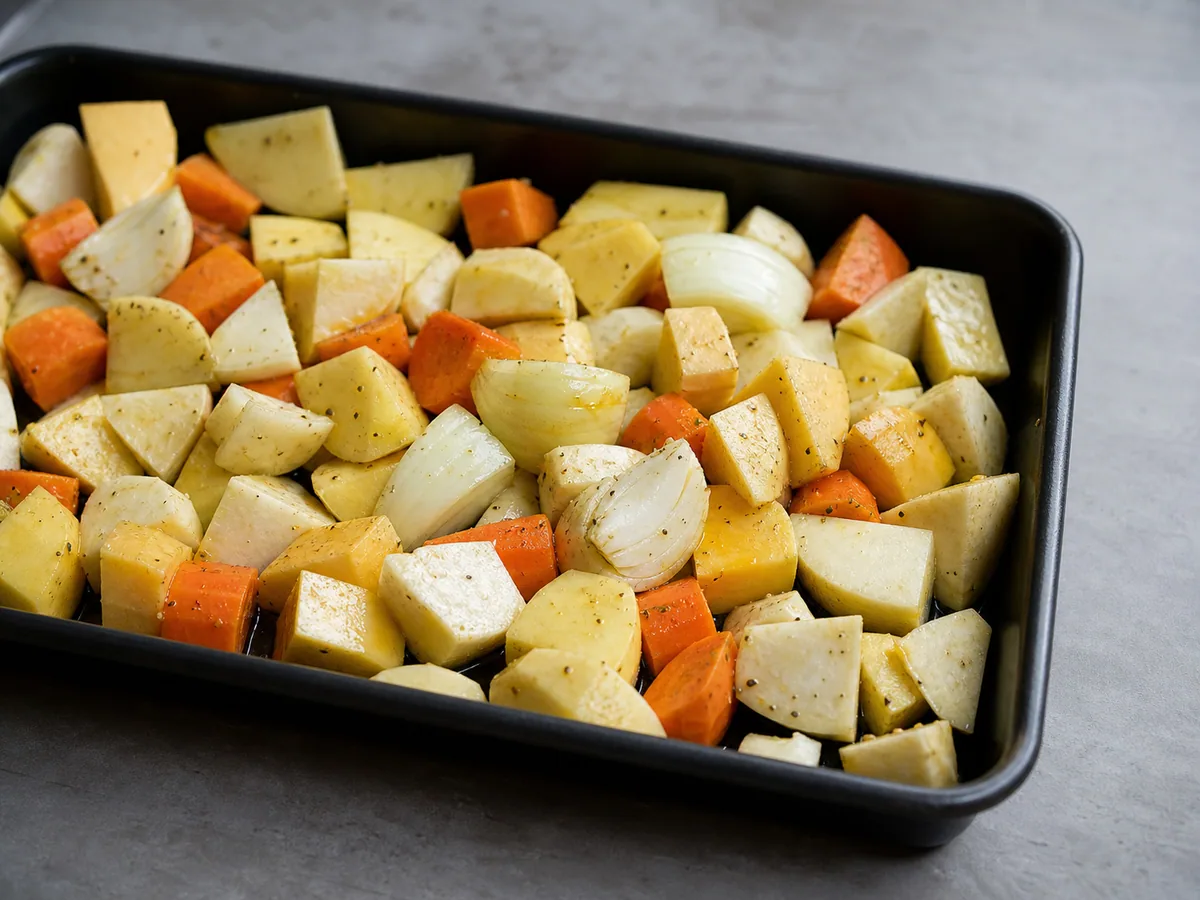
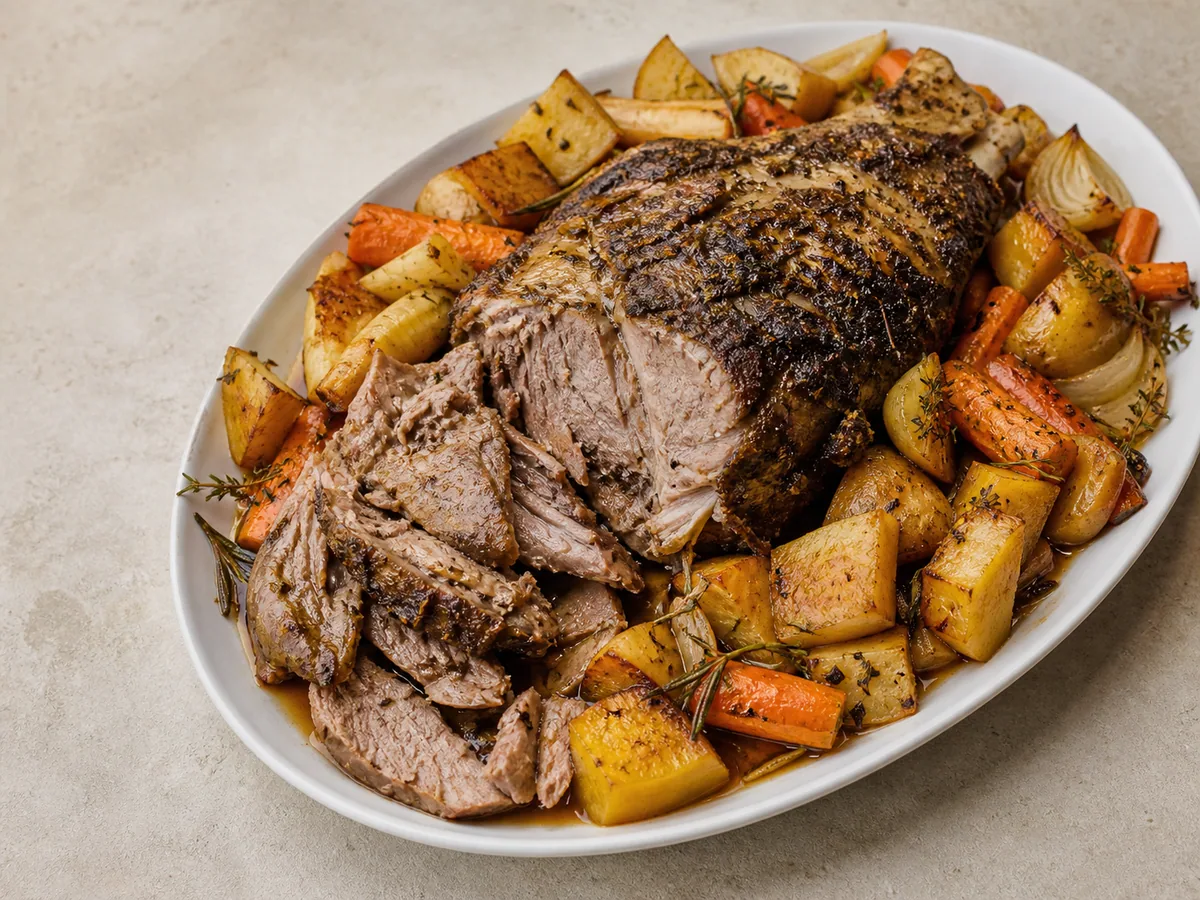
Heat the oven to 230°C (450°F). Peel the vegetables as needed. Cut 750 g of waxy potatoes, 350 g of carrots, 350 g of rutabaga, 300 g of parsnips, and 250 g of yellow onions into sturdy 4 to 5 cm (1 1/2 to 2 in) pieces so they cook at a similar rate. Add them to a deep roasting pan large enough to hold everything in a single, fairly even layer. Pour over 45 ml of canola oil, toss thoroughly, and clear a space in the center for the lamb.
Season the lamb and assemble the pan
Set 1500 g of boneless lamb shoulder on a clean tray and pat it dry with paper towels; do not rinse it. Mince 6 garlic cloves and chop 10 g of fresh rosemary and 8 g of fresh thyme. Mix them with 30 ml of apple cider vinegar, 12 g of Morton coarse kosher salt, and 4 g of black pepper to make a coarse, damp seasoning paste. Rub it over every side of the lamb, then place the lamb in the cleared center of the roasting pan. Pour 360 ml of water around the vegetables without washing the seasoning from the meat. Wash your hands, knife, board, and any surface that touched the raw lamb before handling ready-to-eat food.
Build the browned crust
Roast uncovered for 20 minutes, until the top of the lamb is browned and the edges of the vegetables begin to sizzle. Reduce the oven to 165°C (325°F), cover the pan tightly with a lid or foil, and return it to the oven promptly so the pan stays hot.
20:00Slow-roast until the shoulder begins to soften
Roast the covered pan at 165°C (325°F) for 2 hours. Carefully uncover it away from your face, turn the vegetables through the pan juices, and spoon a little of the liquid over the lamb. The shoulder should be visibly shrinking and relaxing, but it may still resist a fork at this stage. Cover tightly again.
2:00:00Cook to a fully tender finish
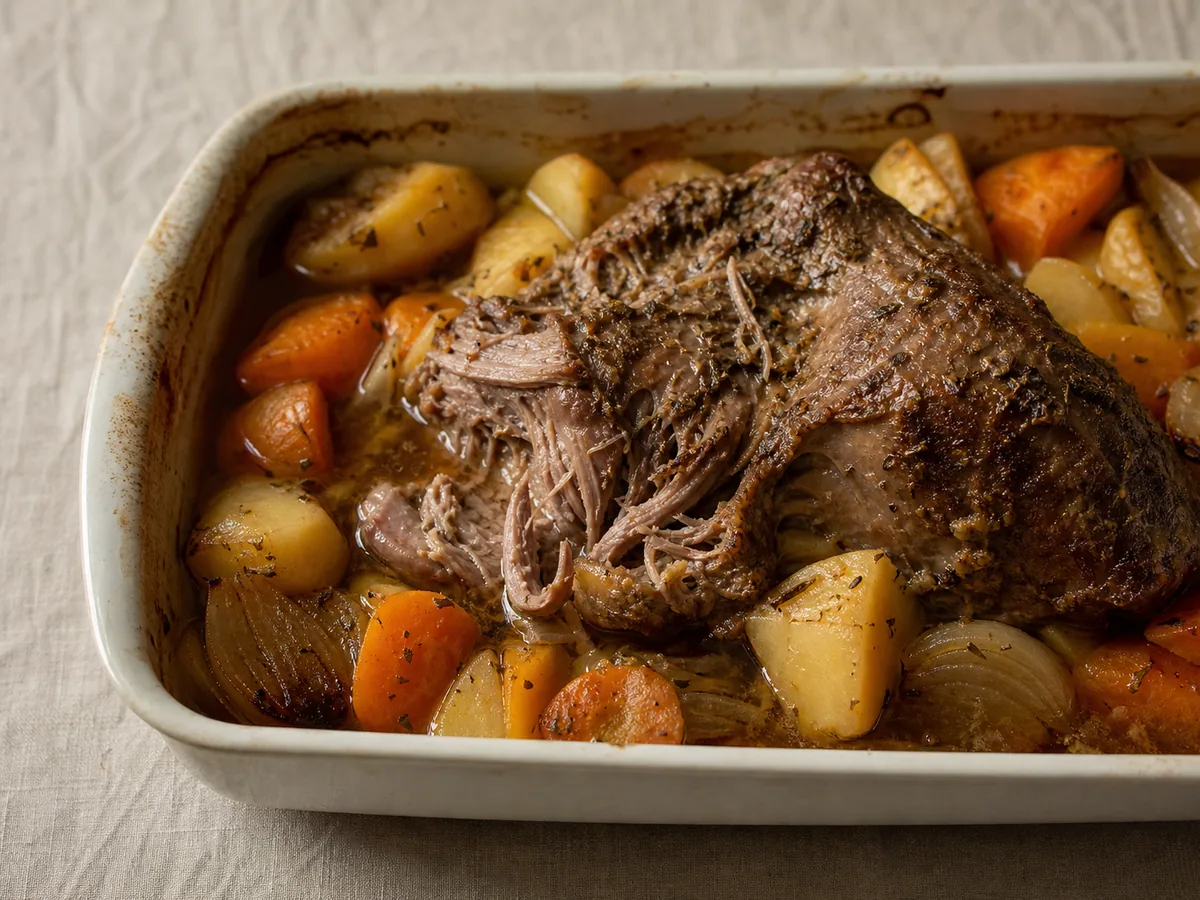
Continue roasting, covered at 165°C (325°F), for 60 to 90 minutes. Begin checking at 60 minutes. Insert a food thermometer into the thickest part of the lamb, avoiding any dense seam of fat. Whole lamb cuts are safe at 63°C (145°F) with a 3-minute rest, but this shoulder is ready for serving only when it reaches about 90 to 95°C (194 to 203°F), has no raw center, and a fork twists into the meat with little resistance. If it is still tight after 90 minutes, continue for no more than two additional 15-minute intervals, checking after each.
60:00Rest the lamb and brown the vegetables
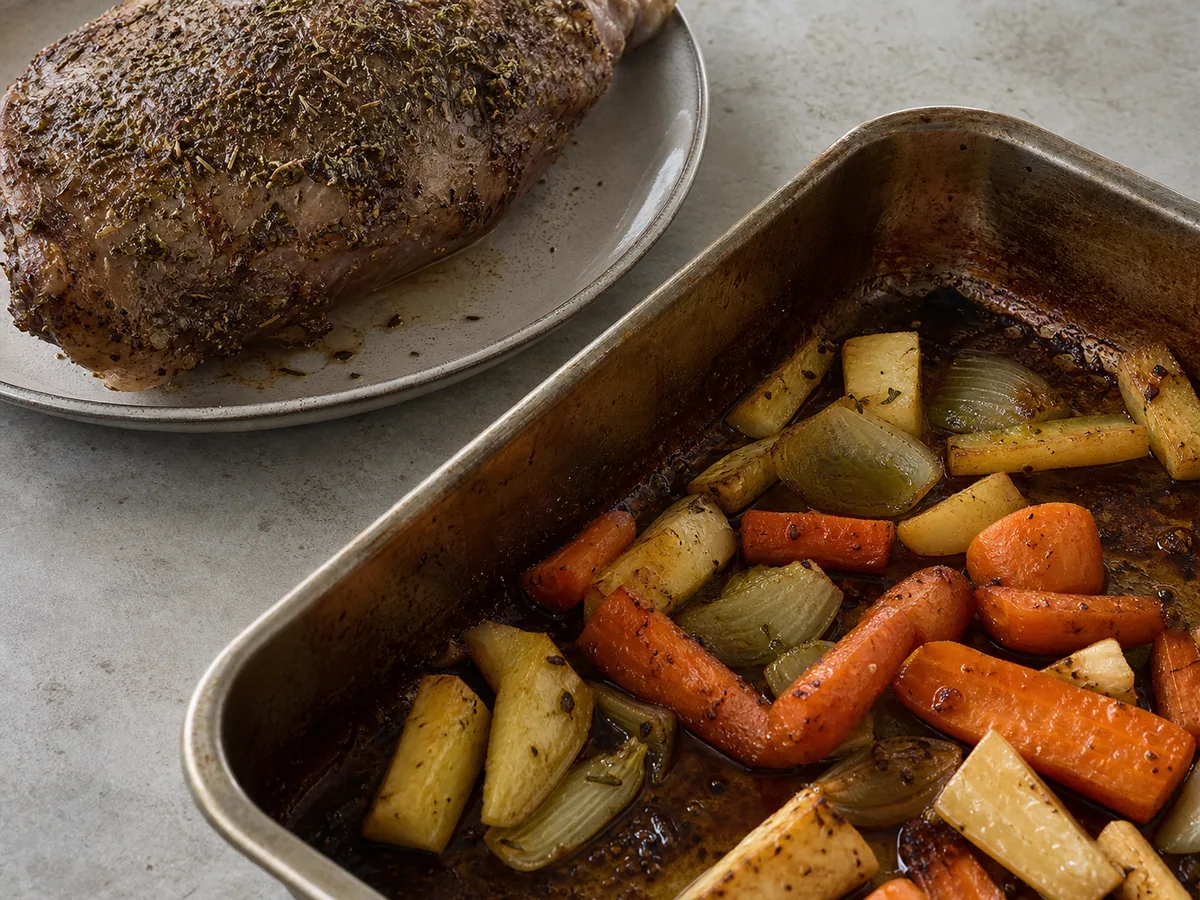
Transfer the fully cooked lamb to a clean carving board and tent it loosely with foil. Increase the oven to 220°C (425°F). Turn the vegetables once more, spread them into an even layer, and roast uncovered for 20 minutes while the lamb rests. The vegetables are ready when their edges are caramelized and the pan juices have reduced to a glossy coating.
20:00Carve and serve with the pan juices
Skim off any large pools of surface fat from the roasting pan, then stir the reduced juices through the vegetables. Cut the lamb across the grain into thick slices where it holds together and pull the softer sections into generous pieces. Arrange the lamb over the roots, spoon the hot pan juices over everything, and serve immediately.


Smart Substitutions
- No lamb shoulder? Use bone-in lamb shanks weighing about 25 percent more than the listed boneless shoulder amount (about 1.9 kg / 4.1 lb for 6 servings). Use a second pan if needed, and cook until each shank reaches the same fully tender texture and temperature range.
- No rutabaga? Use turnips or celeriac, cut into the same large pieces.
- No parsnips? Replace them with more carrots or potatoes while keeping the total vegetable weight similar.
- No fresh herbs? Use about one-third as much dried rosemary and dried thyme; crush them between your fingers before mixing the seasoning paste.
Tips and Variations
- Keep the root vegetable pieces large. Small pieces can collapse before the shoulder becomes tender.
- Pour the water around the lamb rather than over it so the herb crust stays in place during the first hot roast.
- For an 8-serving batch, use a second pan if needed rather than crowding the vegetables; preserve a single, fairly even layer.
What Went Wrong?
- Lamb is safely cooked but still tough Cover the pan again and continue at 165°C (325°F) in 15-minute intervals, for no more than 30 additional minutes. Shoulder needs time near 90 to 95°C (194 to 203°F) for its connective tissue to soften.
- Vegetables are soft before the lamb is tender Lift the vegetables to a clean ovenproof dish, keep the lamb covered until tender, then return the vegetables for the final high-heat browning step.
- Pan is drying out Add a small splash of hot water around the sides, cover tightly, and continue roasting. The pan should stay moist but not soupy.
- Root vegetables look pale Spread them out well for the final uncovered roast and turn them so a fresh cut side contacts the hot pan.
Nutrition Estimate
- Fiber: 9 g per serving
- Sodium: 970 mg per serving
Nutrition disclaimer:This recipe is provided for general cooking information only. Nutrition values are estimates and may vary by ingredients, brands, preparation methods, and serving sizes. Check ingredient labels and follow appropriate food-safety practices. This content is not medical, dietary, allergy, or professional food-safety advice.
FAQ
Found an error or have a suggestion?
Help us improve this recipe. Send us your feedback and include the recipe name so we can take a look.