Method
Prepare the chicken and vegetables
Pat 700 g of boneless skinless chicken thighs dry with paper towels and place it on a plate reserved for raw poultry. Season the pieces with half of 5 g of kosher salt for chicken and sauce and all of 1 g of black pepper. Dice 300 g of yellow onions. Seed 120 g of Hungarian wax pepper and cut it into small pieces. Core 150 g of fresh tomato and chop it. After handling raw chicken, wash hands, knife, board, and nearby work surfaces with hot soapy water before continuing.
Brown the chicken
Heat 15 ml of sunflower oil in a wide Dutch oven over medium-high heat until shimmering. Add 700 g of boneless skinless chicken thighs in a single layer, working in batches if needed. Brown the pieces for 8 to 10 minutes total, turning once, until both sides are deeply golden; the chicken will not be cooked through yet. Start checking at 8 minutes. Transfer browned pieces to a second plate reserved for partially cooked chicken and keep it away from ready-to-eat ingredients.
08:00Soften the onions
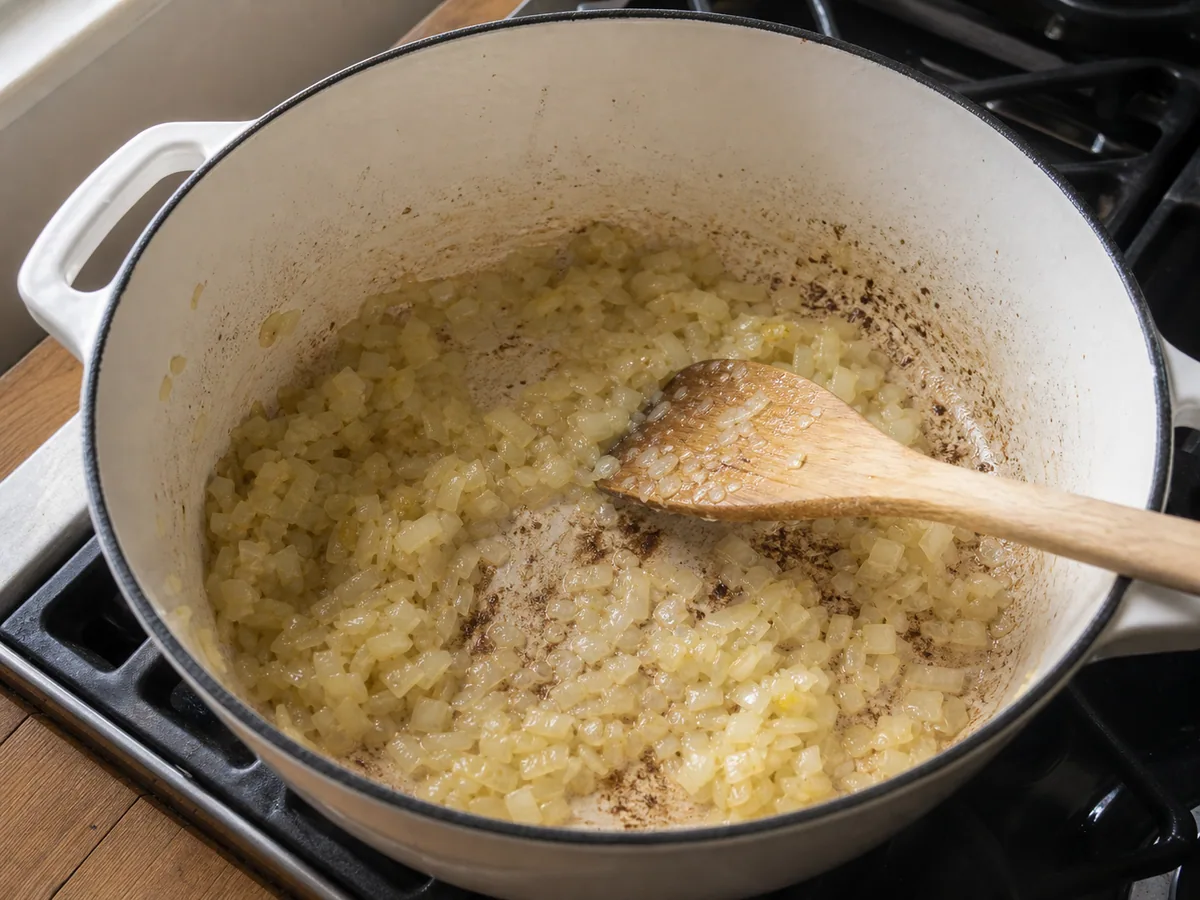
Lower the heat to medium. Add 300 g of yellow onions and remaining half of 5 g of kosher salt for chicken and sauce to the pot. Cook for 7 to 9 minutes, stirring often and scraping up the browned chicken bits, until the onions are soft, glossy, and only lightly colored. Start checking at 7 minutes.
07:00Cook the pepper and tomato
Stir 120 g of Hungarian wax pepper and 150 g of fresh tomato into the onions. Cook over medium heat for 4 minutes, stirring occasionally, until the tomato begins to collapse and the pepper softens around the edges.
04:00Bloom the paprika and start the braise
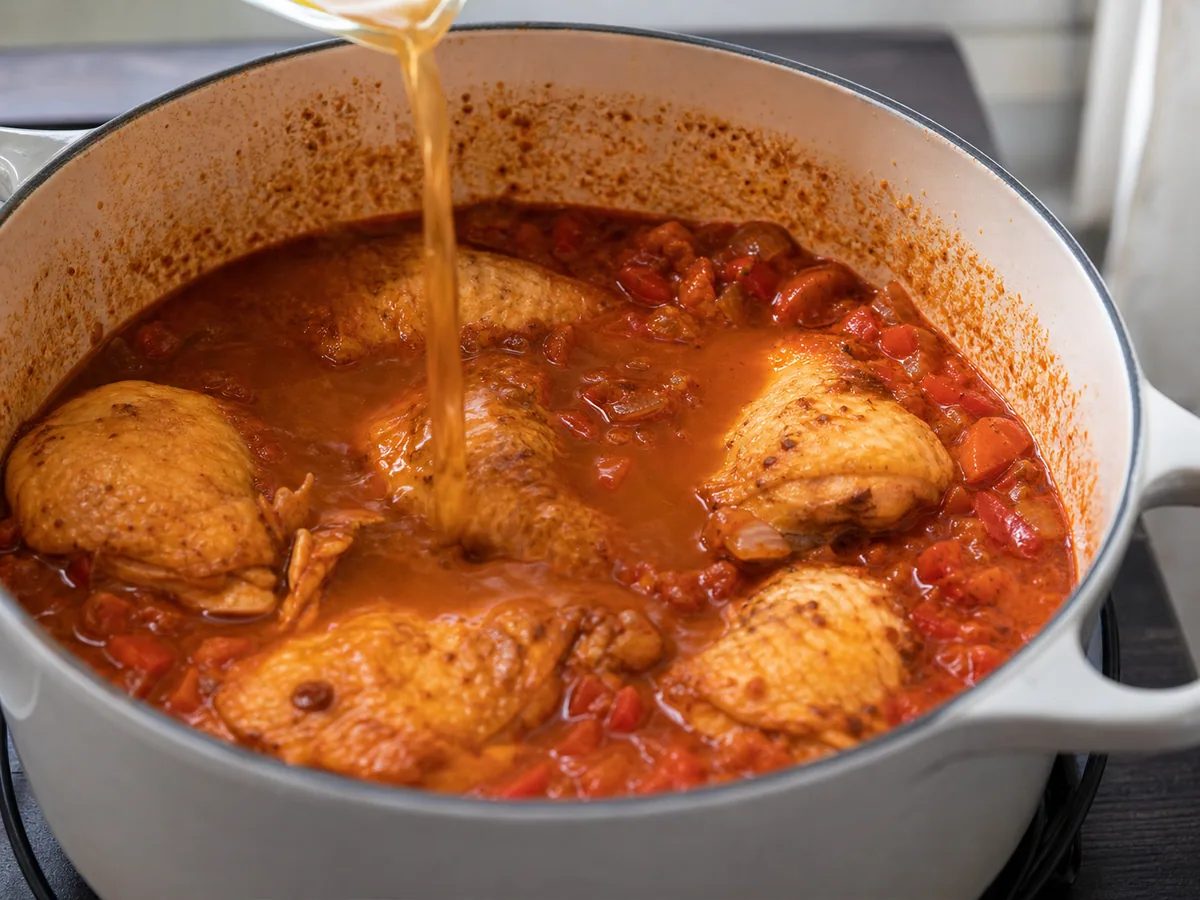
Remove the pot from the heat so the spice cannot scorch. Stir in 20 g of sweet Hungarian paprika for 30 seconds, just until fragrant and evenly brick-red. Immediately pour in 240 ml of unsalted chicken stock and scrape the bottom of the pot. Return 700 g of boneless skinless chicken thighs and any collected juices to the sauce, then bring everything to a gentle simmer over medium heat.
00:30Braise the chicken until tender
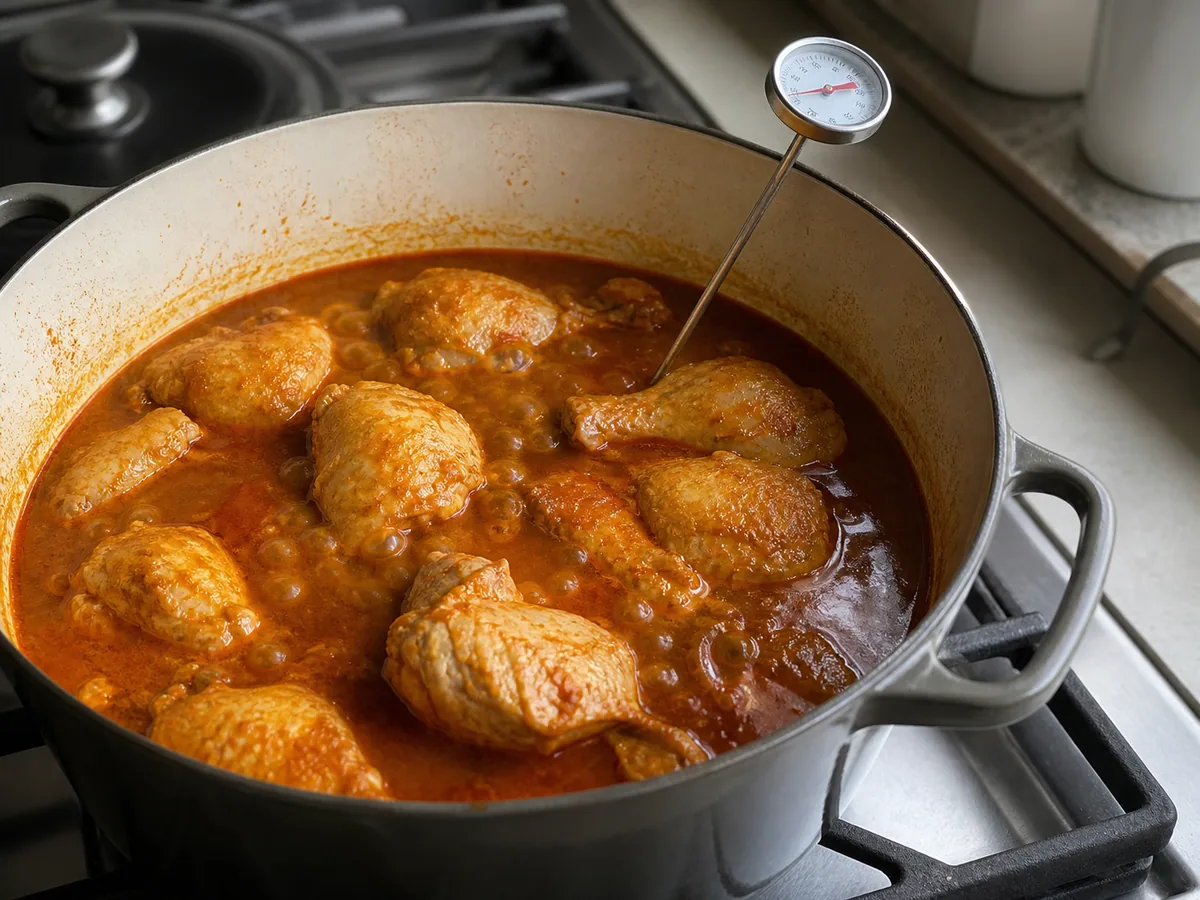
Partly cover the pot and reduce the heat to low. Simmer 700 g of boneless skinless chicken thighs gently for 25 to 30 minutes, turning the pieces once, until tender. Start checking at 25 minutes. Use a food thermometer in the thickest piece; every piece must reach at least 74°C (165°F). Transfer cooked chicken to a clean plate with clean tongs.
25:00Mix the nokedli batter
While the chicken braises, bring a large pot of water to a steady boil. Whisk 2 large eggs, 120 ml of water, and 3 g of fine salt for nokedli in a large bowl. Add 250 g of all-purpose flour for nokedli and stir just until no dry flour remains. The batter should be thick, sticky, and rough rather than smooth; stop mixing once it drops slowly from a spoon.
Shape and cook the nokedli
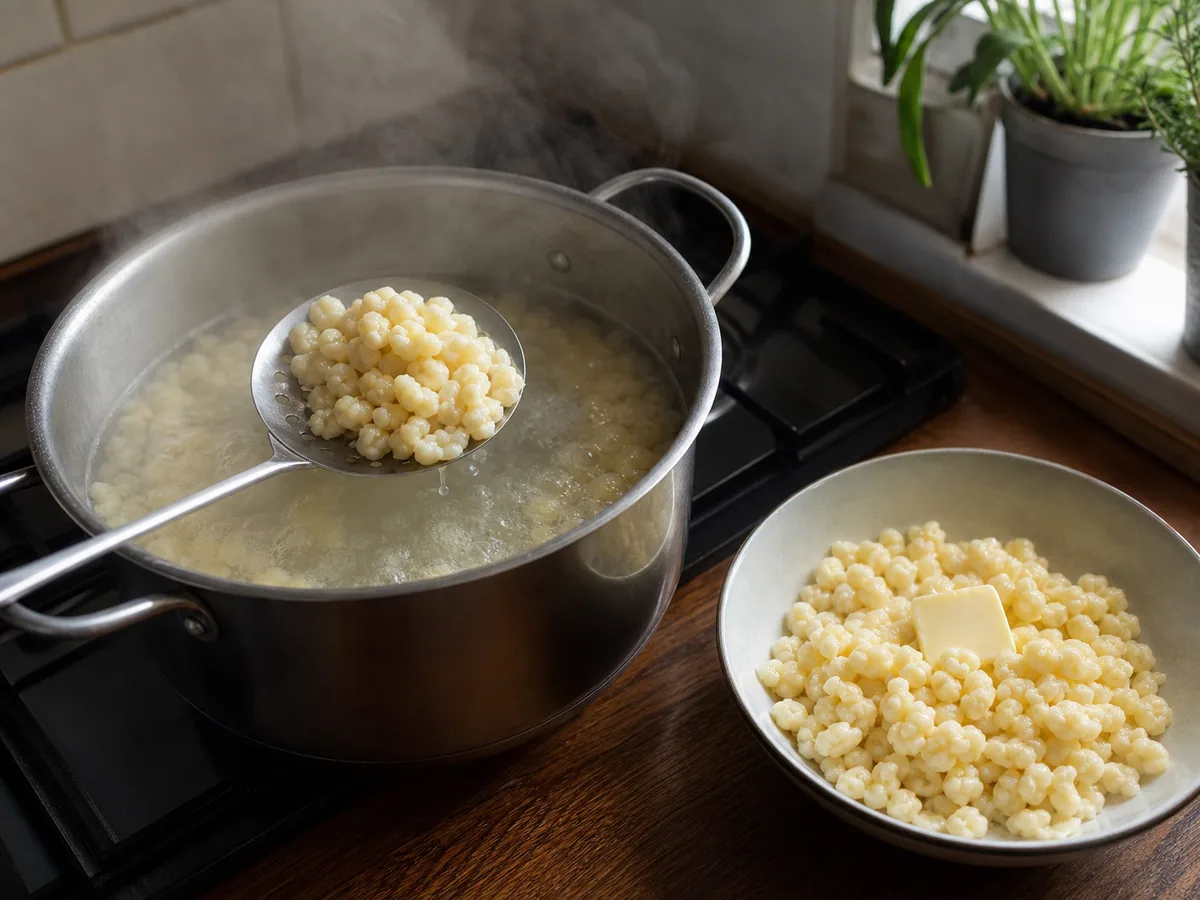
Set a nokedli or spaetzle maker over the boiling water. Push the batter through in small batches, stirring once so the dumplings do not clump. When a batch floats, cook it for 2 to 3 minutes more; start checking at 2 minutes. Lift out the dumplings with a slotted spoon, drain well, and transfer them to a large bowl. Toss the cooked nokedli with 20 g of unsalted butter.
02:00Temper the sour cream and cook the sauce
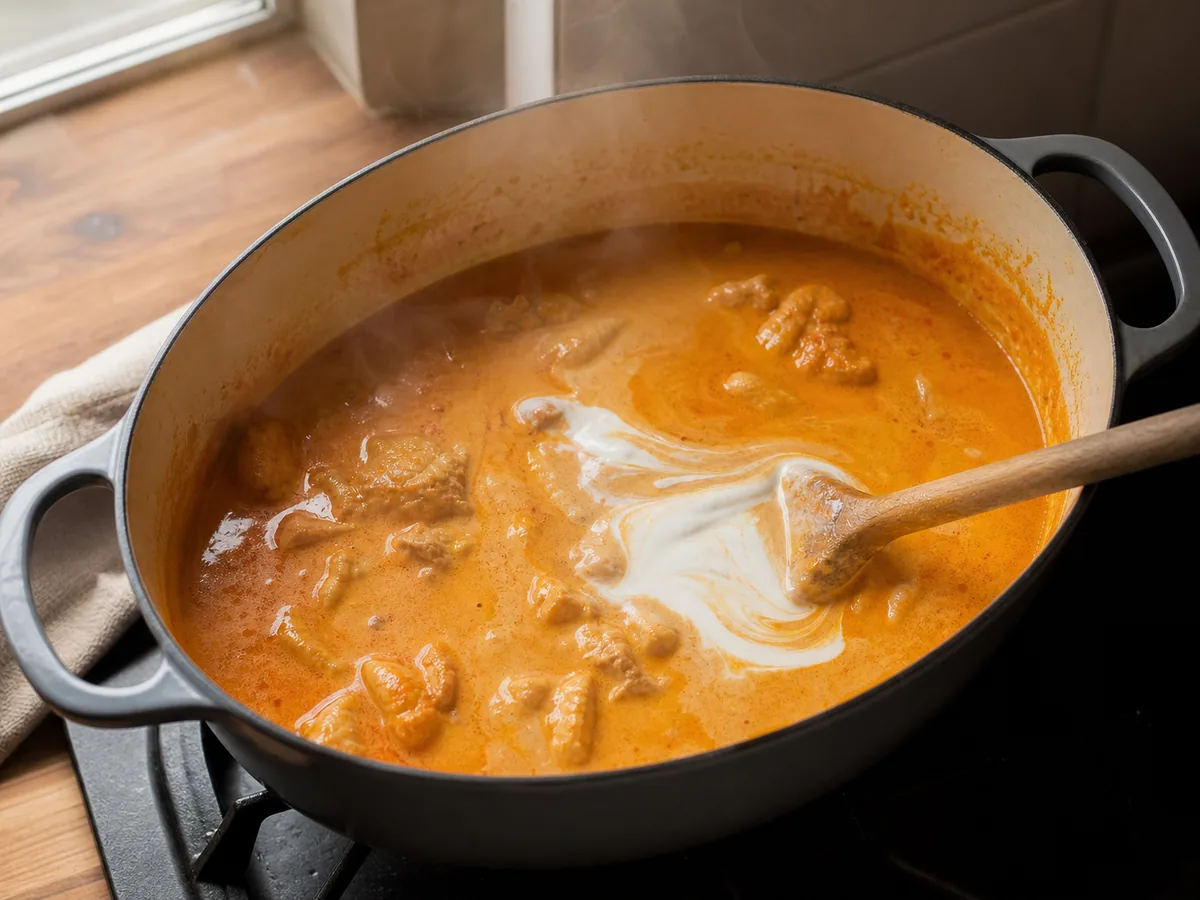
Whisk 180 g of full-fat sour cream with 15 g of all-purpose flour for sauce in a bowl until completely smooth. Whisk in several spoonfuls of hot paprika sauce one at a time to warm the mixture gradually. Remove the pot from the heat and stir the tempered sour cream mixture into the sauce. Return the pot to low heat and cook at a bare simmer for 3 minutes, stirring constantly, until the sauce is smooth, slightly thickened, and steaming throughout; do not let it boil hard.
03:00Return the chicken and serve
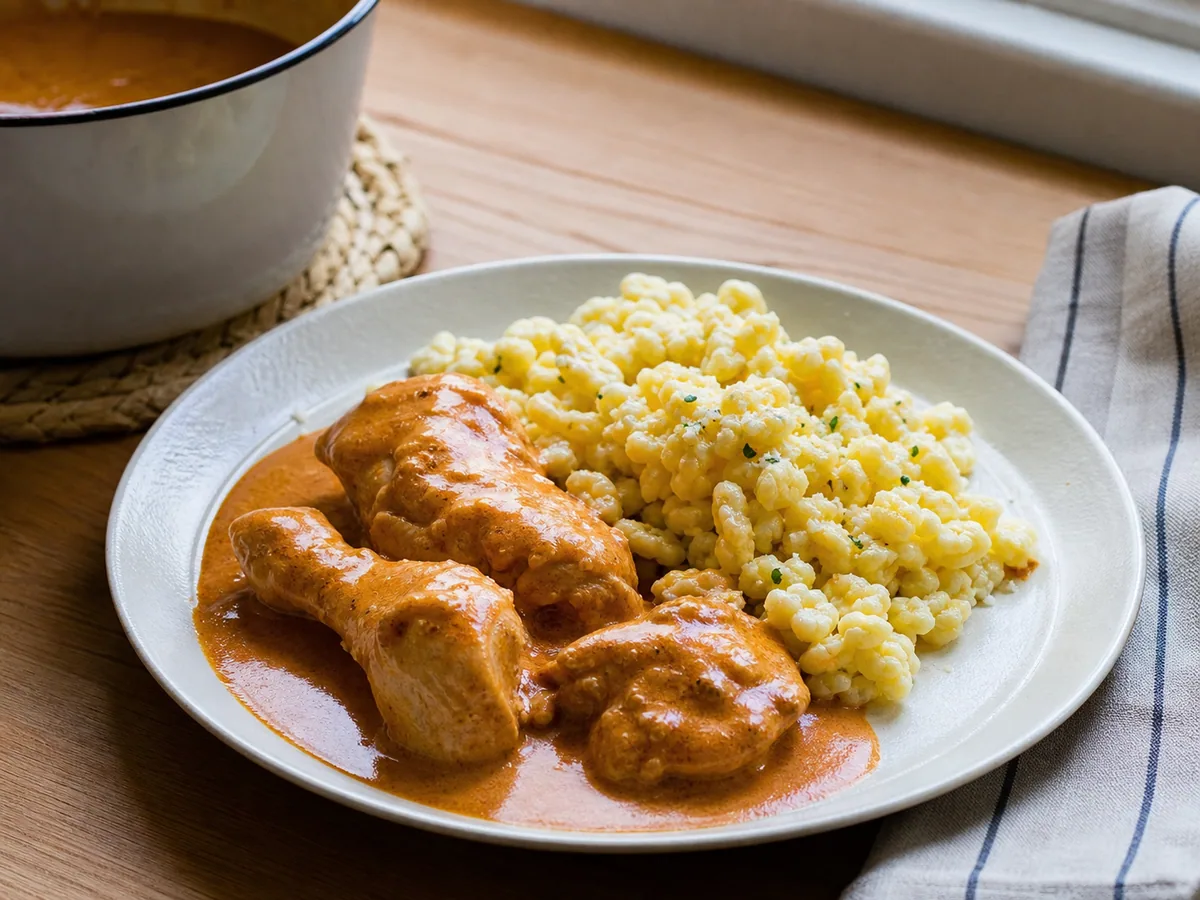
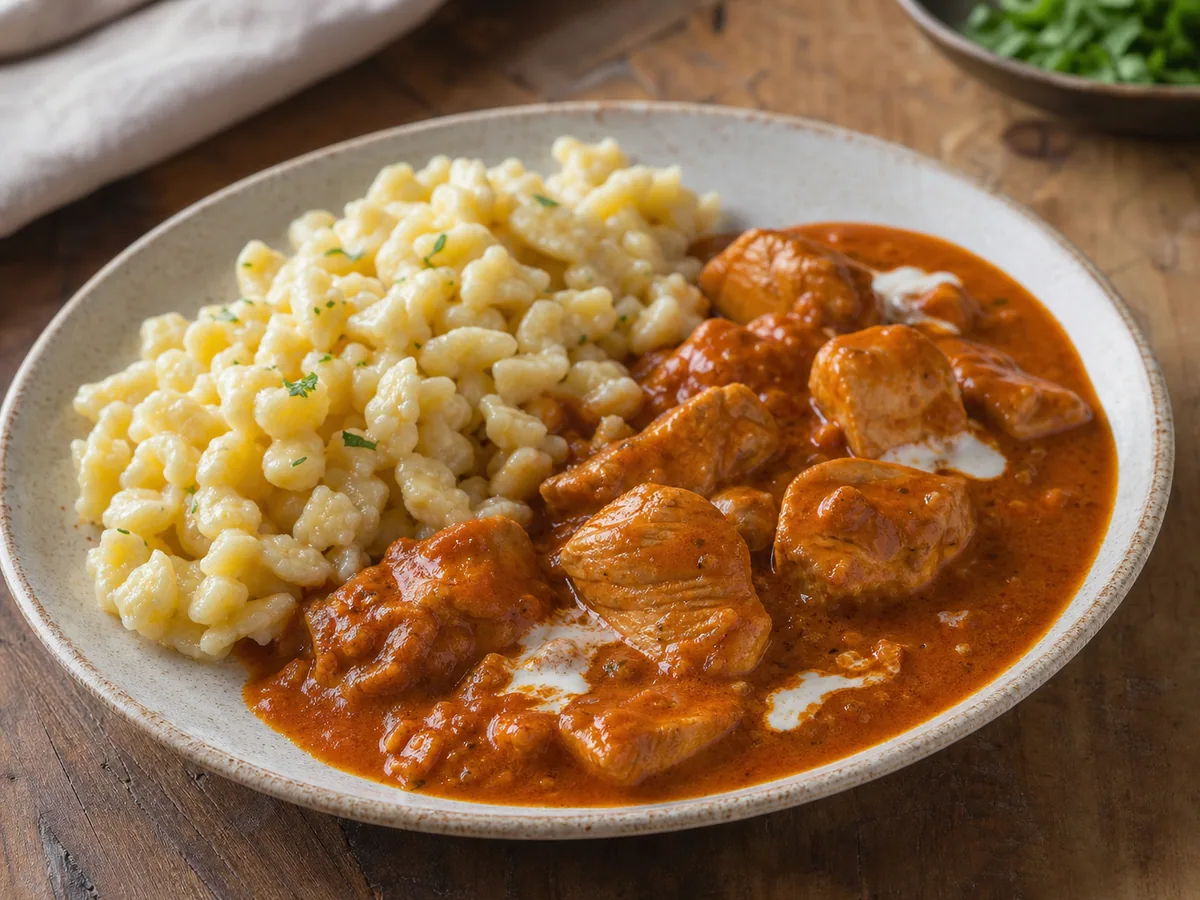
Return 700 g of boneless skinless chicken thighs and any collected juices to the smooth paprika sauce. Warm over low heat for 2 minutes without boiling, turning the pieces once so they heat evenly. Use a food thermometer in the thickest piece; every piece must still register at least 74°C (165°F). Serve the chicken and sauce with the buttered nokedli.
02:00


Smart Substitutions
- No Hungarian wax pepper? Use a mild banana pepper or yellow bell pepper for a similar fresh sweetness without adding smoke.
- No nokedli maker? Press the batter through a sturdy large-holed colander, or cut small pieces from a damp board directly into the boiling water.
- Prefer bone-in chicken? Use bone-in thighs or drumsticks and extend the gentle braise as needed until every piece reaches 74°C (165°F) and feels tender near the bone.
- No sour cream? Crème fraîche gives a smoother, less tangy finish. Temper it with hot sauce in the same way and keep the pot below a boil.
Tips and Variations
- Use fresh, bright-red Hungarian sweet paprika; dull brown spice will give the sauce less aroma and a muddier color.
- Keep the chicken at a quiet simmer rather than a hard boil so the thighs stay tender while the onion base thickens the sauce.
- Work the nokedli batter in small batches so the water returns to a boil quickly and the dumplings keep their light, irregular shape.
What Went Wrong?
- Paprika sauce tastes bitter The paprika likely scorched. Dilute with a little unsalted stock if the bitterness is mild; if it is strong, rebuild the onion and paprika base.
- Sour cream forms small lumps Take the pot off the heat and whisk the sauce gently. Tempering with more hot sauce before combining helps the dairy blend smoothly.
- Chicken is cooked but still firm Keep it at a gentle simmer and check again after several minutes. Thigh meat becomes tender after the connective tissue has time to soften.
- Nokedli are gummy or dense Mix only until the flour disappears and cook smaller batches. A smooth, heavily worked batter develops too much gluten.
Nutrition Estimate
- Fiber: 6 g per serving
- Sodium: 970 mg per serving
Nutrition disclaimer:This recipe is provided for general cooking information only. Nutrition values are estimates and may vary by ingredients, brands, preparation methods, and serving sizes. Check ingredient labels and follow appropriate food-safety practices. This content is not medical, dietary, allergy, or professional food-safety advice.
FAQ
Found an error or have a suggestion?
Help us improve this recipe. Send us your feedback and include the recipe name so we can take a look.