Method
Prepare the broth and poach the chicken
Heat the oven to 220°C (425°F). Pat 700 g of boneless skinless chicken thighs dry and place it on a board used only for raw poultry. Quarter 100 g of yellow onion for broth, then add it to a wide pot with 960 ml of water and 1 bay leaf. Bring the liquid to a gentle simmer. Lower 700 g of boneless skinless chicken thighs into the pot with clean tongs, keep the liquid at a bare simmer, and skim off any foam. Cook for 16 to 20 minutes, starting the temperature check at 16 minutes, until the thickest piece is close to 68°C (155°F). Using freshly washed tongs, transfer the chicken to a rimmed baking sheet and proceed immediately to the next step; do not hold the partially cooked chicken.
16:00Immediately roast and verify doneness
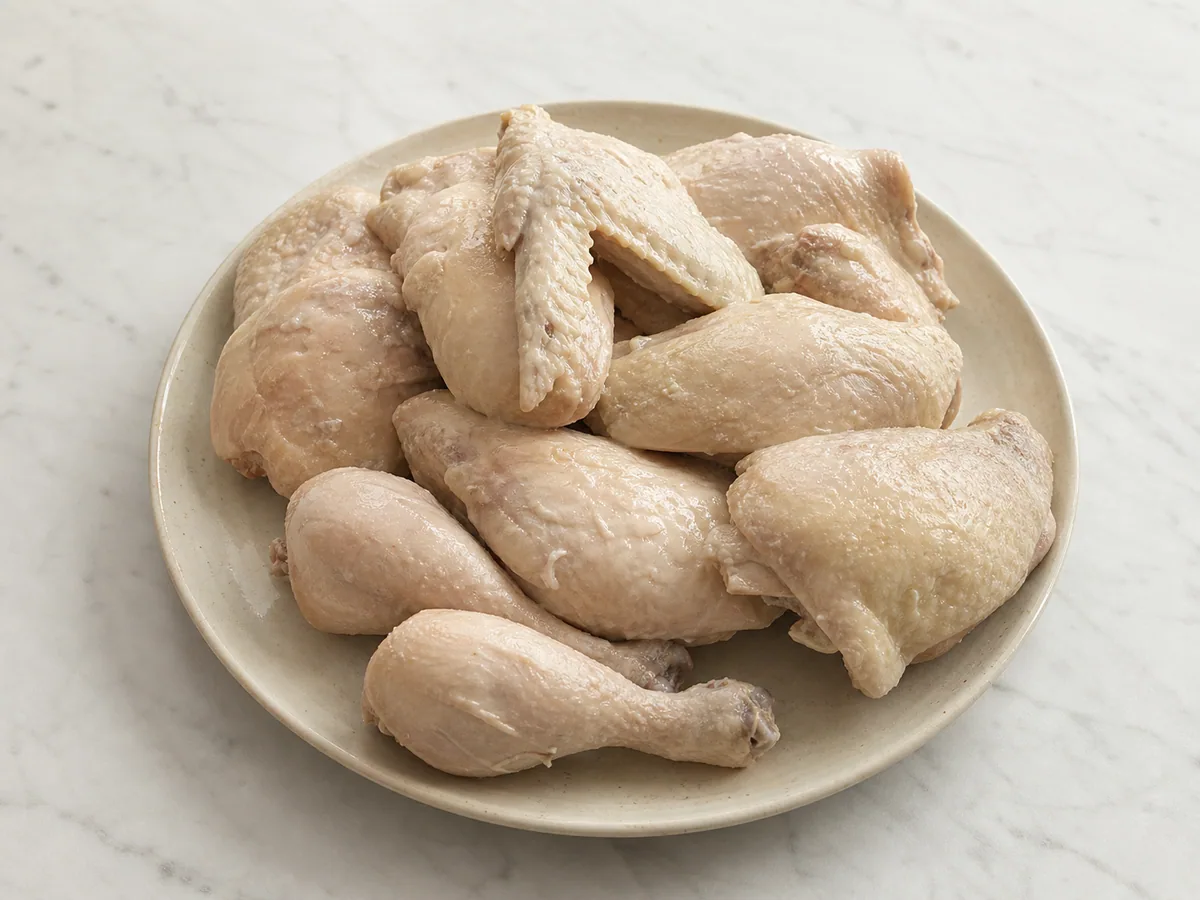
Immediately drizzle 700 g of boneless skinless chicken thighs with half of 15 ml of olive oil, turn it with clean tongs to coat, and roast for 8 to 12 minutes, starting the check at 8 minutes, until lightly browned and a food thermometer inserted into the thickest piece registers 74°C/165°F. While the chicken roasts, measure 360 ml of reserved chicken cooking liquid from the pot and discard the remaining solids. Wash the board, tongs, and any surfaces that contacted raw or partially cooked chicken. Transfer the fully cooked chicken with clean tongs to a clean plate and let it rest while you make the sauce.
08:00Soften the onion for the sauce
Chop 100 g of yellow onion for sauce. Pour the unused oil from the chicken step into a wide saucepan and warm it over medium-low heat. Add the onion and cook for 7 to 9 minutes, stirring often, until soft and pale gold.
07:00Cook the garlic and blend the walnut sauce
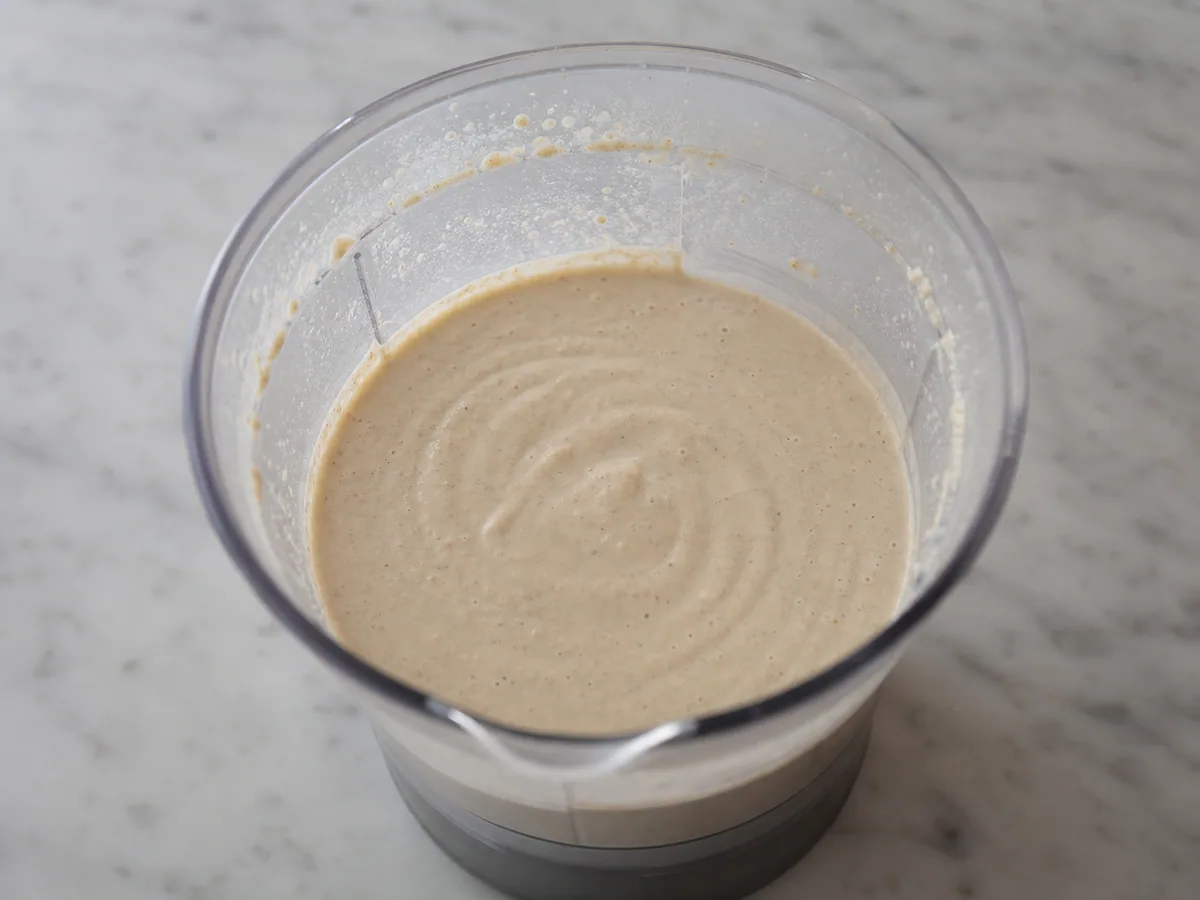
Mince 4 garlic cloves, add it to the softened onion, and stir for 30 seconds without letting it brown. Transfer the cooked onion and garlic to a food processor with 200 g of walnut halves, 2 g of ground coriander, 2 g of ground blue fenugreek, 1 g of ground dried marigold (Imeretian saffron), 1/2 g of ground cinnamon, 1/4 g of ground cloves, 1/2 g of cayenne pepper, 1/2 g of black pepper, and 7 g of kosher salt. Pulse to a very fine meal, then blend while adding 360 ml of reserved chicken cooking liquid gradually until the sauce is smooth, thick, and pourable, falling from a spoon in a slow ribbon.
00:30Warm the walnut sauce
Pour the walnut mixture into a clean pot and set it over low heat. Whisk constantly for 3 to 5 minutes, until steaming and slightly thickened; do not let it boil.
03:00Coat the chicken and finish the sauce
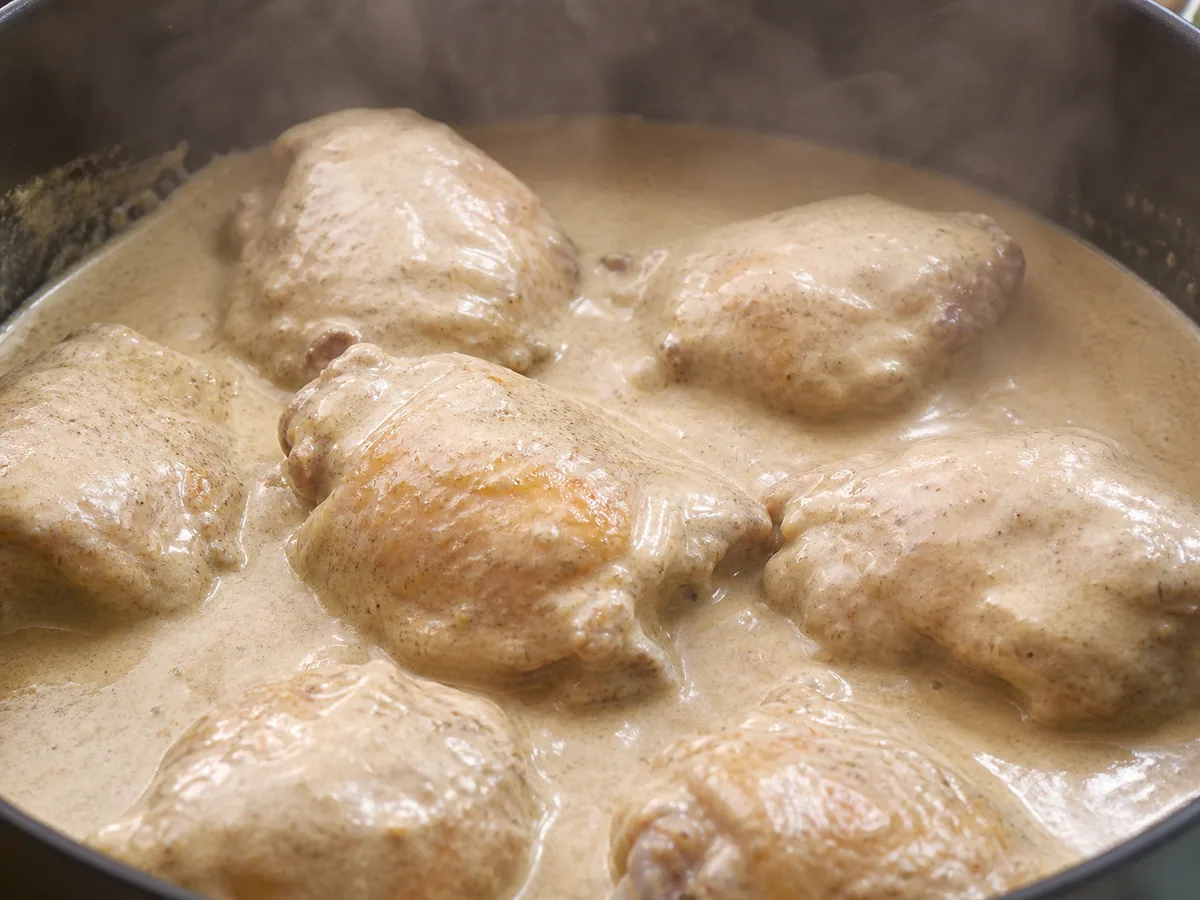
Return 700 g of boneless skinless chicken thighs to the pot and turn each piece in the warm walnut sauce. Simmer very gently for 2 to 3 minutes, then remove the pot from the heat and stir in 22 ml of white wine vinegar. The sauce should coat a spoon but still fall in a slow ribbon.
02:00Let the sauce settle and serve warm
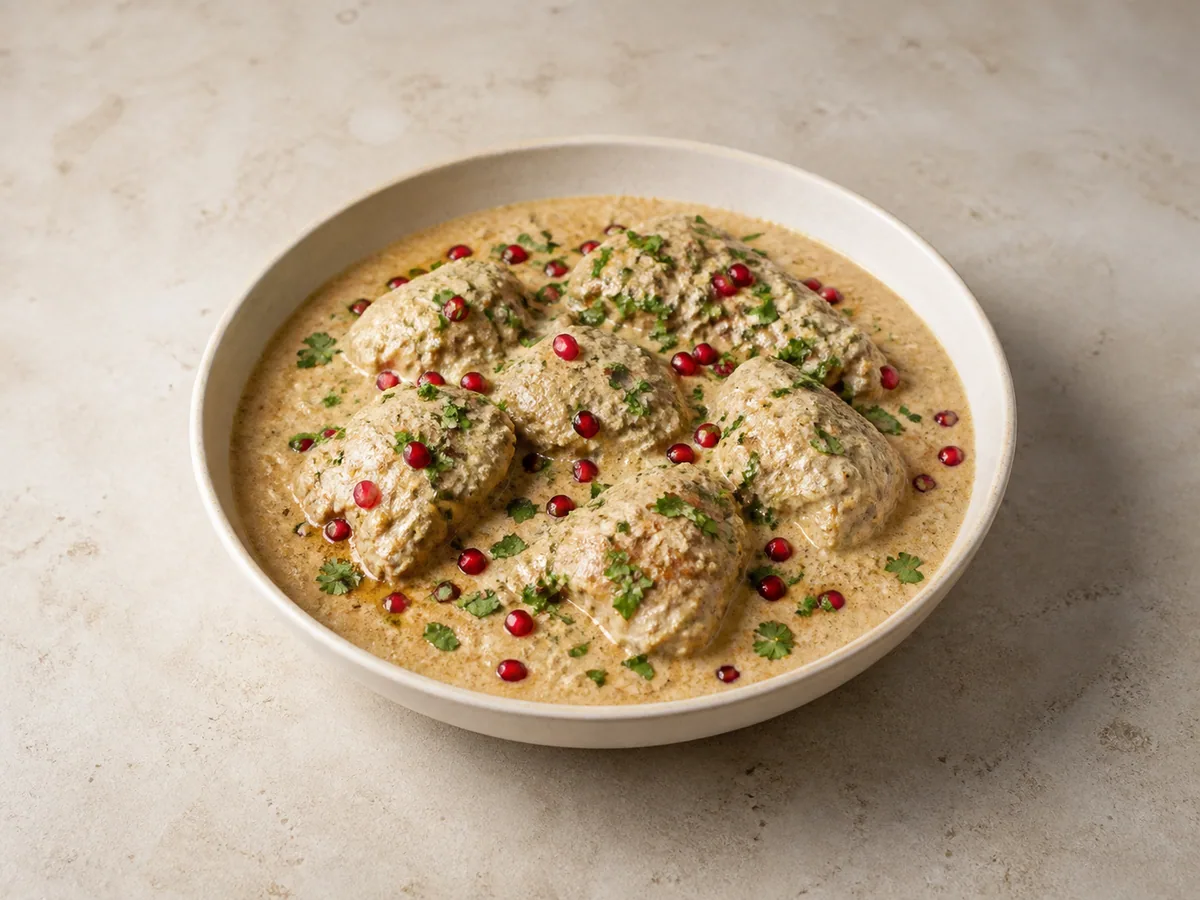
Let the satsivi stand off the heat for 15 to 20 minutes, starting the check at 15 minutes, until the sauce thickens around the chicken and is warm rather than piping hot. Chop 15 g of fresh cilantro. Spoon the chicken and plenty of sauce into a shallow serving bowl, then finish with 15 g of fresh cilantro and 40 g of pomegranate seeds. Serve immediately while the sauce is supple enough to spoon.
15:00


Smart Substitutions
- No ground blue fenugreek? Use half as much standard ground fenugreek; its flavor is sharper and more bitter.
- No ground dried marigold? Use a small pinch each of turmeric and mild paprika for color, understanding that the floral note will be different.
- Prefer chicken breast? Use boneless skinless breasts, begin checking early, and finish them at 74°C/165°F with a food thermometer.
- No white wine vinegar? Use apple cider vinegar or mild rice vinegar for a clean, gentle tang.
Tips and Variations
- Pulse the walnuts in short bursts and scrape the processor often so they become fine without turning into a dense nut butter.
- Keep the sauce below a boil; gentle heat preserves its pale color and smooth texture.
- Check the thickest chicken piece in more than one spot because thigh pieces can vary in size.
What Went Wrong?
- Sauce is gritty Blend it longer with a small splash of warm reserved cooking liquid, then press it through a fine sieve if needed.
- Sauce is too thick Whisk in warm reserved cooking liquid a spoonful at a time until it falls from the spoon in a slow ribbon.
- Sauce looks oily The heat was likely too high. Remove the pot from the burner and whisk in a splash of warm cooking liquid until the sauce comes back together.
- Chicken is dry Begin checking at the first stated time and remove it from the oven as soon as the thickest piece reaches 74°C/165°F.
Nutrition Estimate
- Fiber: 5 g per serving
- Sodium: 830 mg per serving
Nutrition disclaimer:This recipe is provided for general cooking information only. Nutrition values are estimates and may vary by ingredients, brands, preparation methods, and serving sizes. Check ingredient labels and follow appropriate food-safety practices. This content is not medical, dietary, allergy, or professional food-safety advice.
FAQ
Found an error or have a suggestion?
Help us improve this recipe. Send us your feedback and include the recipe name so we can take a look.