Method
Prepare the oven and trays
Heat the oven to 220°C (425°F). Position racks in the upper and lower thirds for two-tray baking, or center one rack for a single tray. For the default 4-serving batch, line two 33 x 46 cm (13 x 18 in) baking trays with parchment. For 2 servings, use one tray; for 6 or 8 servings, prepare additional trays and bake in two-tray batches without crowding. Fit a piping bag with a plain round tip, or have two teaspoons ready for portioning.
Cook the choux base
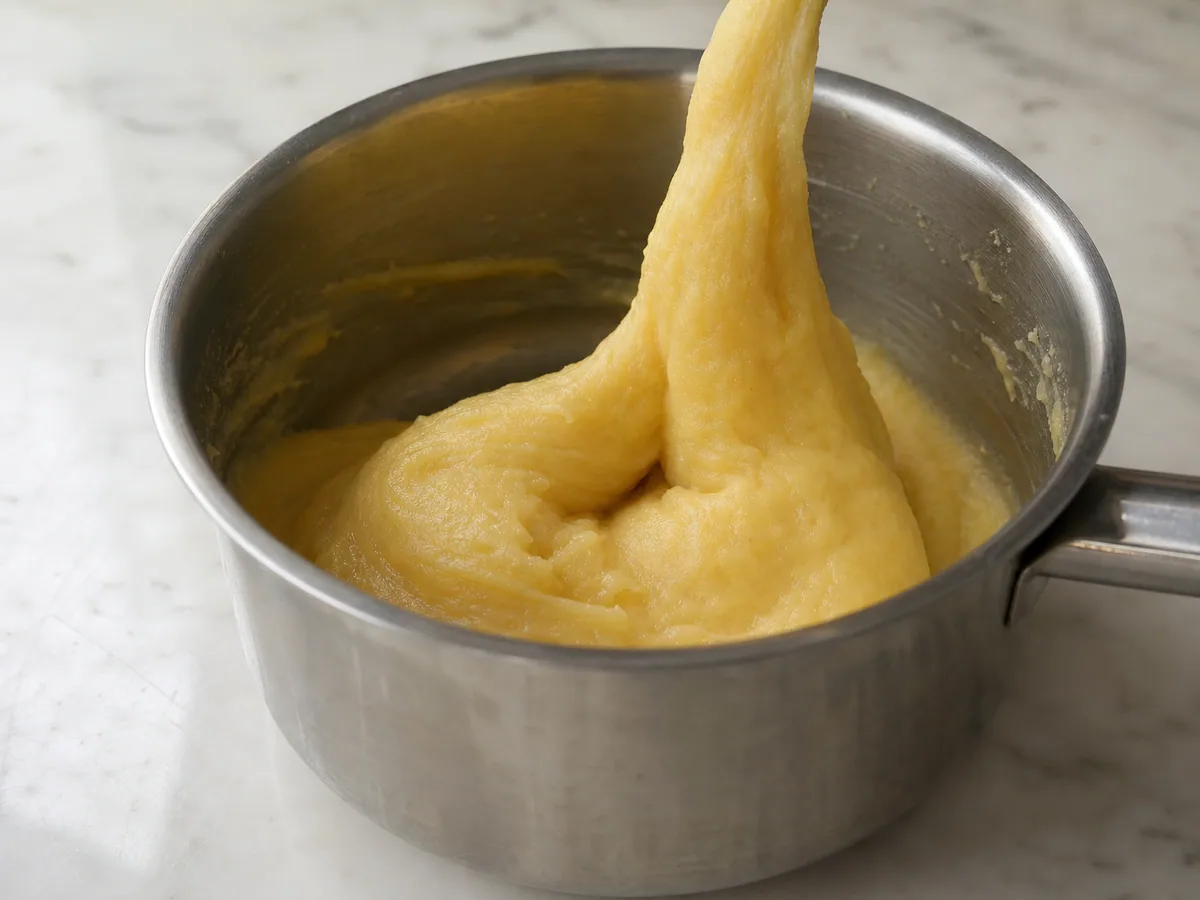
Combine 120 ml of water, 120 ml of whole milk, 85 g of unsalted butter, 3 g of fine salt, 1/2 g of black pepper, and 1/4 g of ground nutmeg in a medium saucepan. Bring the mixture to a full boil over medium-high heat, stirring until the butter has melted. Remove the pan from the heat, add 125 g of all-purpose flour all at once, and stir vigorously with a sturdy spoon until no dry flour remains. Return the pan to medium heat and beat the paste for 2 to 3 minutes, until it gathers into a smooth ball and leaves a thin film on the bottom of the pan.
02:00Work in the eggs
Transfer the hot paste to a mixing bowl and spread it against the sides of the bowl. Let it stand for 5 minutes so it is warm rather than steaming. Crack 4 large eggs into a jug and beat until blended. Wash your hands with soap and water immediately after cracking the eggs and before touching clean handles or equipment. Add the beaten egg gradually, mixing thoroughly after each addition; the dough may look separated before becoming smooth again. Stop when it is glossy and thick enough to fall from the spoon in a slow V-shaped ribbon.
05:00Add the cheese and shape the puffs
Set aside about one-quarter of 135 g of Gruyère cheese for the tops and fold the remainder into the dough until evenly distributed. Transfer the dough to the piping bag, or use the teaspoons, and make rounded 3 cm (1 1/4 in) mounds on the prepared trays, leaving about 5 cm (2 in) between them. Smooth any sharp peaks with a fingertip dipped in water, then sprinkle the reserved cheese neatly over the mounds. Wash your hands and wash the bowl, jug, whisk, spoon, piping equipment or teaspoons, and any work surface that touched the raw egg dough with hot, soapy water before handling cooked gougères or clean serving items.
Set the puffed shells
Bake at 220°C (425°F) for 15 minutes without opening the oven door. The gougères should rise quickly and begin to color; keeping the door closed preserves the steam that forms their hollow centers.
15:00Brown and dry the gougères
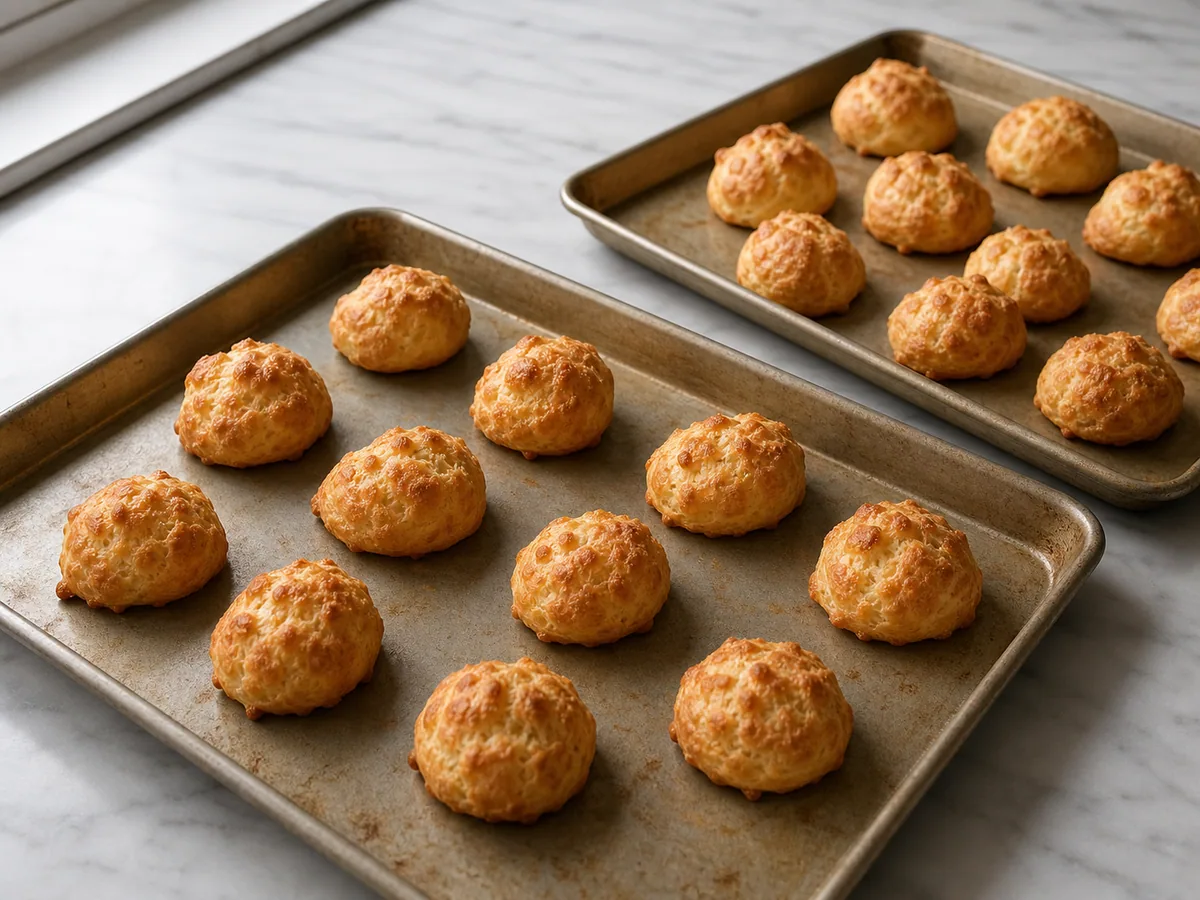
Reduce the oven to 180°C (350°F). Rotate each tray from front to back and, when baking two trays, swap their rack positions quickly, then continue baking for 20 to 25 minutes. Begin checking at 20 minutes. The gougères are ready when deeply golden, firm, and light for their size, with no wet dough visible inside a test puff. Because the dough contains egg, use a food thermometer when checking safety-sensitive doneness; the center of a test puff must reach at least 71°C/160°F.
20:00Vent the shells and serve
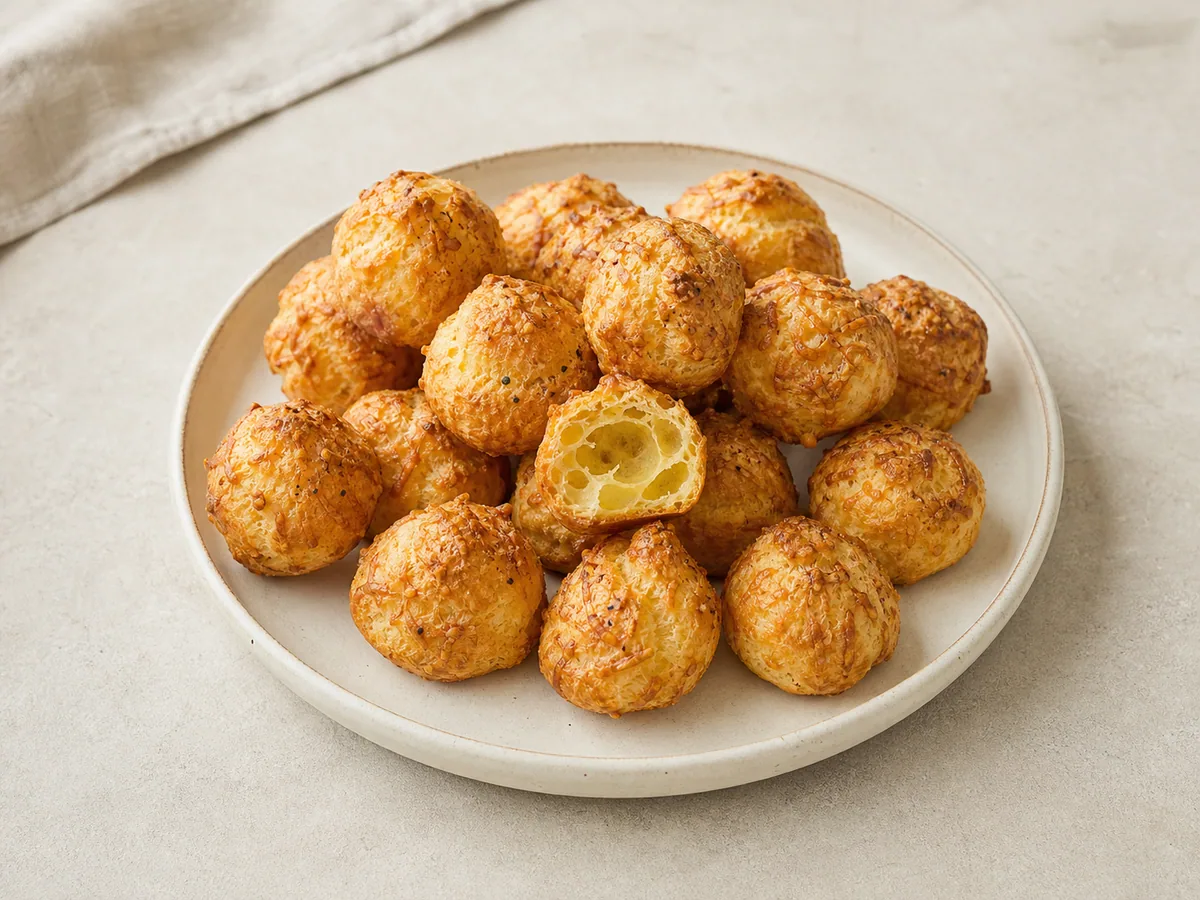
Pierce each gougère once near the base with a thin skewer to release trapped steam. Return the tray or trays to the switched-off oven with the door slightly open for 5 minutes, then arrange the puffs on a plate and serve while warm and crisp.
05:00


Smart Substitutions
- No Gruyère? Use the same weight of Comté or Emmental for a similarly nutty flavor and dependable melt.
- No whole milk? Replace it with an equal amount of water; the shells will be slightly crisper and less deeply browned.
- No ground nutmeg? Omit it or replace it with a small pinch of white pepper for a different warm note.
- No piping bag? Portion the dough with two teaspoons and smooth the tops with a damp fingertip.
Tips and Variations
- Add the beaten egg slowly. The paste absorbs it in stages, and stopping at the V-shaped ribbon keeps the dough strong enough to rise.
- Finely grate the Gruyère so it disperses through the dough instead of weighing down individual puffs.
- Keep the oven door closed during the hot first bake; an early rush of cool air can interrupt the steam lift.
What Went Wrong?
- Puffs spread instead of rising The dough was probably too loose. Add the beaten egg more gradually next time and stop as soon as the mixture forms a slow V from the spoon.
- Puffs collapse after baking Bake until the shells are deeply golden and dry inside, then pierce and vent them so trapped steam does not soften the structure.
- Centers remain wet Continue baking at 180°C (350°F) in 3-minute intervals, checking one test puff until the interior is dry and at least 71°C/160°F.
- Cheese burns on the tray Keep the topping centered on each mound and brush stray shreds from the parchment before baking.
Nutrition Estimate
- Fiber: 1 g per serving
- Sodium: 500 mg per serving
Nutrition disclaimer:This recipe is provided for general cooking information only. Nutrition values are estimates and may vary by ingredients, brands, preparation methods, and serving sizes. Check ingredient labels and follow appropriate food-safety practices. This content is not medical, dietary, allergy, or professional food-safety advice.
FAQ
Found an error or have a suggestion?
Help us improve this recipe. Send us your feedback and include the recipe name so we can take a look.