Method
Prepare the oven and baking dish
Heat the oven to 180°C (350°F). Use a 23 x 33 cm (9 x 13 in) baking dish (for 8 servings); scaled batches should use a vessel that keeps the batter at a similar depth. Line the base with baking parchment. Melt 40 g of unsalted butter, brush a thin film over the parchment and sides, and keep the remainder for the batter.
Mix the cassava and ube batter
Whisk 2 large eggs in a large bowl until blended. Add 240 g of ube halaya, 300 ml of full-fat coconut milk, 300 g of sweetened condensed milk for batter, reserved melted butter, and 2 g of fine salt. Whisk until the ube is evenly dispersed and no large streaks remain. Fold in 680 g of sweet cassava, peeled and finely grated until every strand is coated. Do not taste the raw batter.
Bake the cassava base
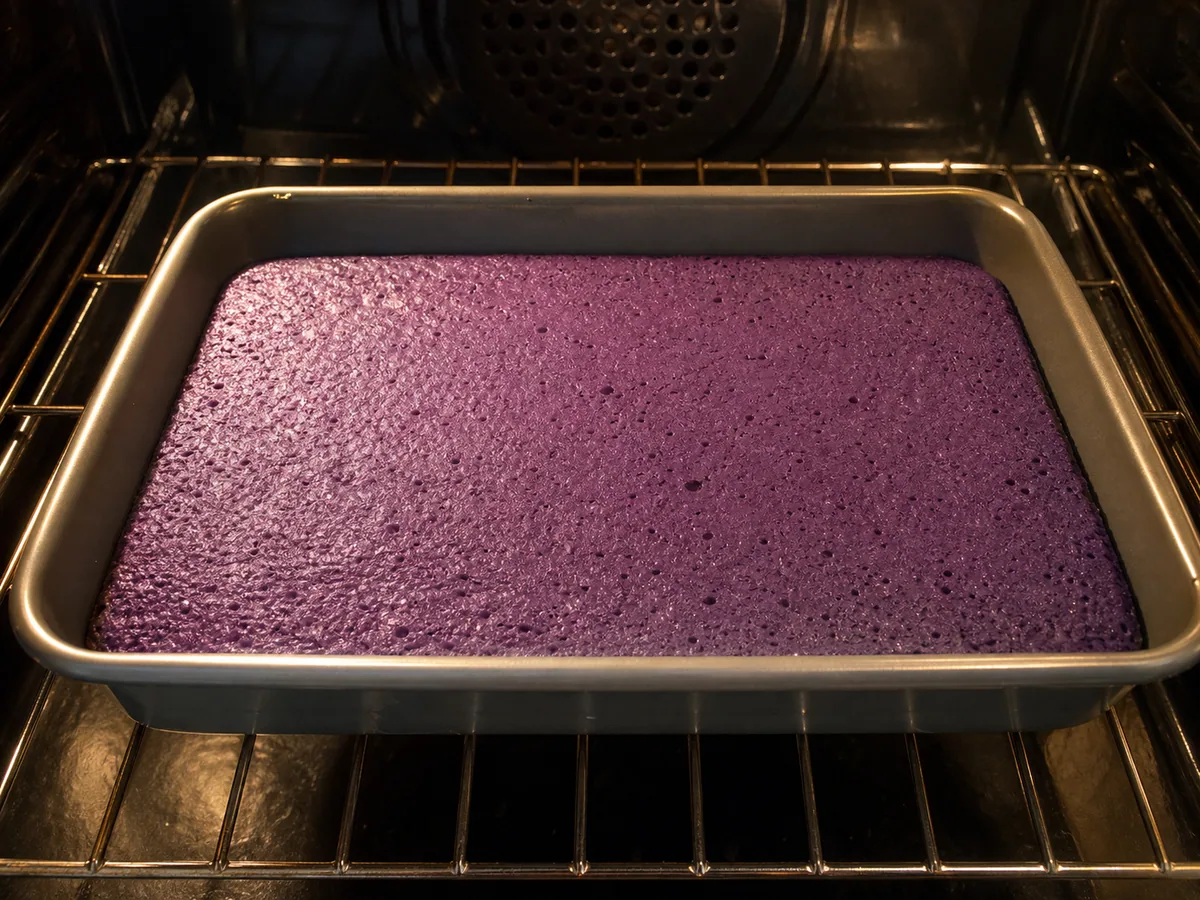
Spread the batter in an even layer and smooth the surface. Bake on the center rack for 50 to 60 minutes, rotating the dish once, until the edges are lightly browned, the center no longer ripples when nudged, and a food thermometer inserted in the center reads at least 71°C/160°F. Begin checking at 50 minutes and continue baking as needed.
50:00Mix and add the coconut custard topping
While the base finishes baking, whisk 120 ml of coconut cream, 80 g of sweetened condensed milk for topping, and 1 large egg yolk until smooth. Stir half of 40 g of mild cheddar cheese into the custard. Pour the mixture over the hot cake, spread it to the edges, and scatter the remaining cheese evenly over the surface.
Set and brown the topping
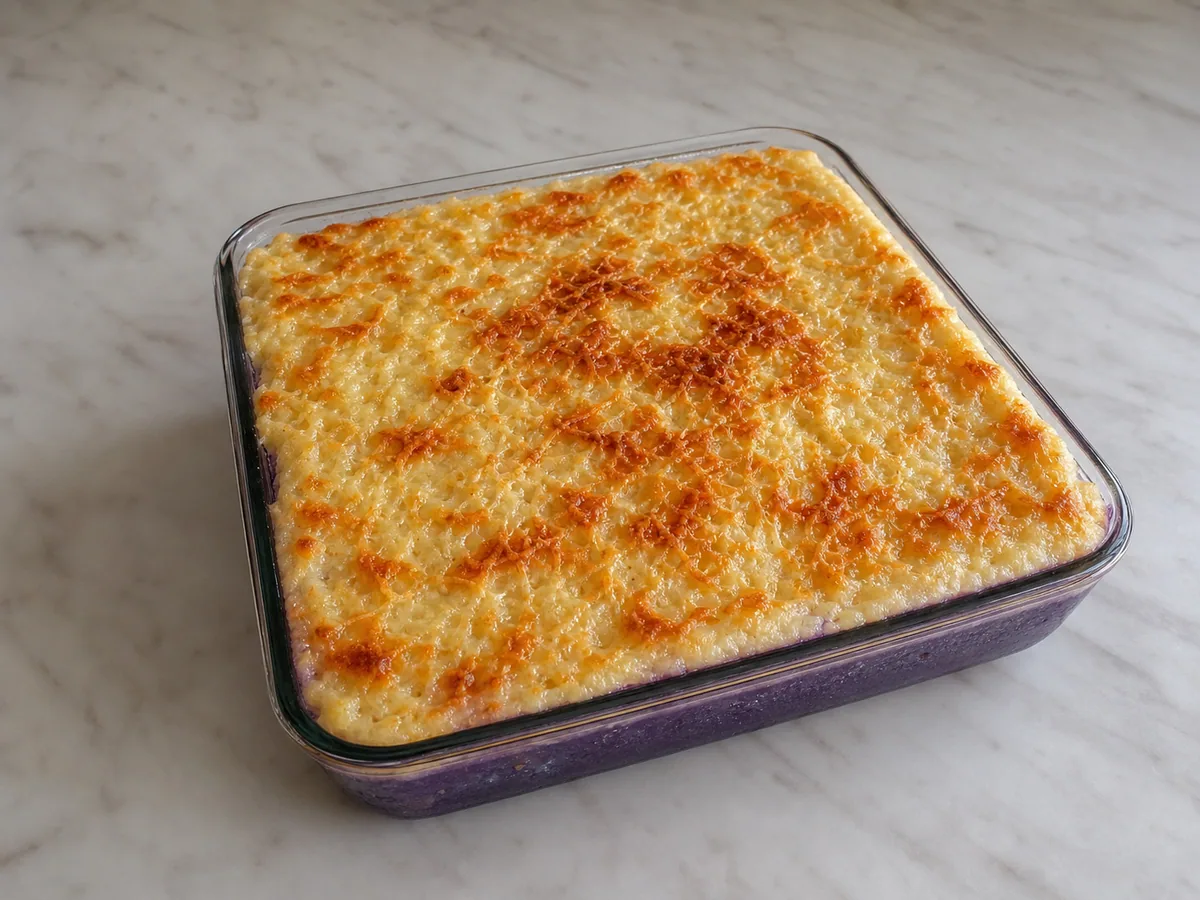
Return the dish to the oven and bake for 15 to 20 minutes, until the custard is set across the center, small golden patches appear around the edges, and the topping reaches at least 71°C/160°F on a food thermometer. Begin checking at 15 minutes so the cheese stays lightly browned rather than dark.
15:00Rest and slice the cake
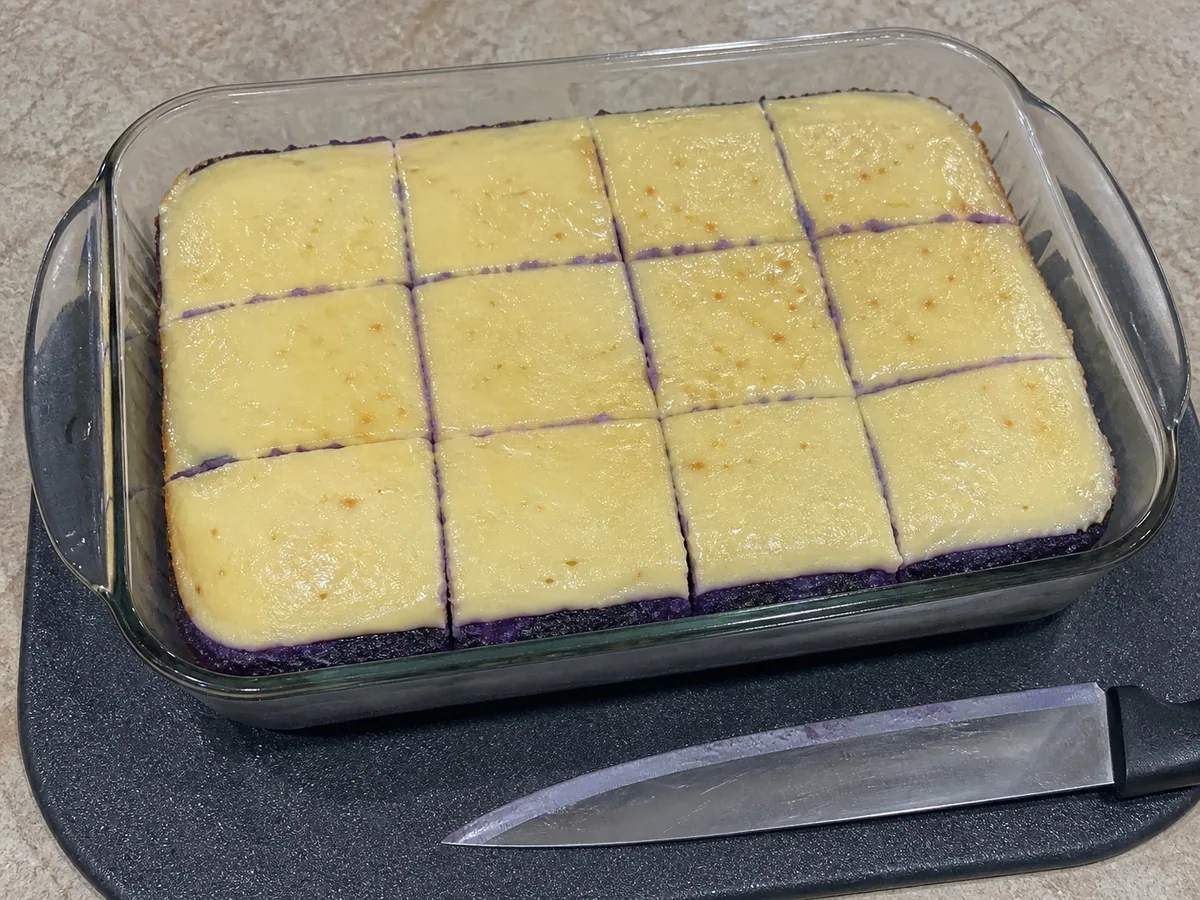
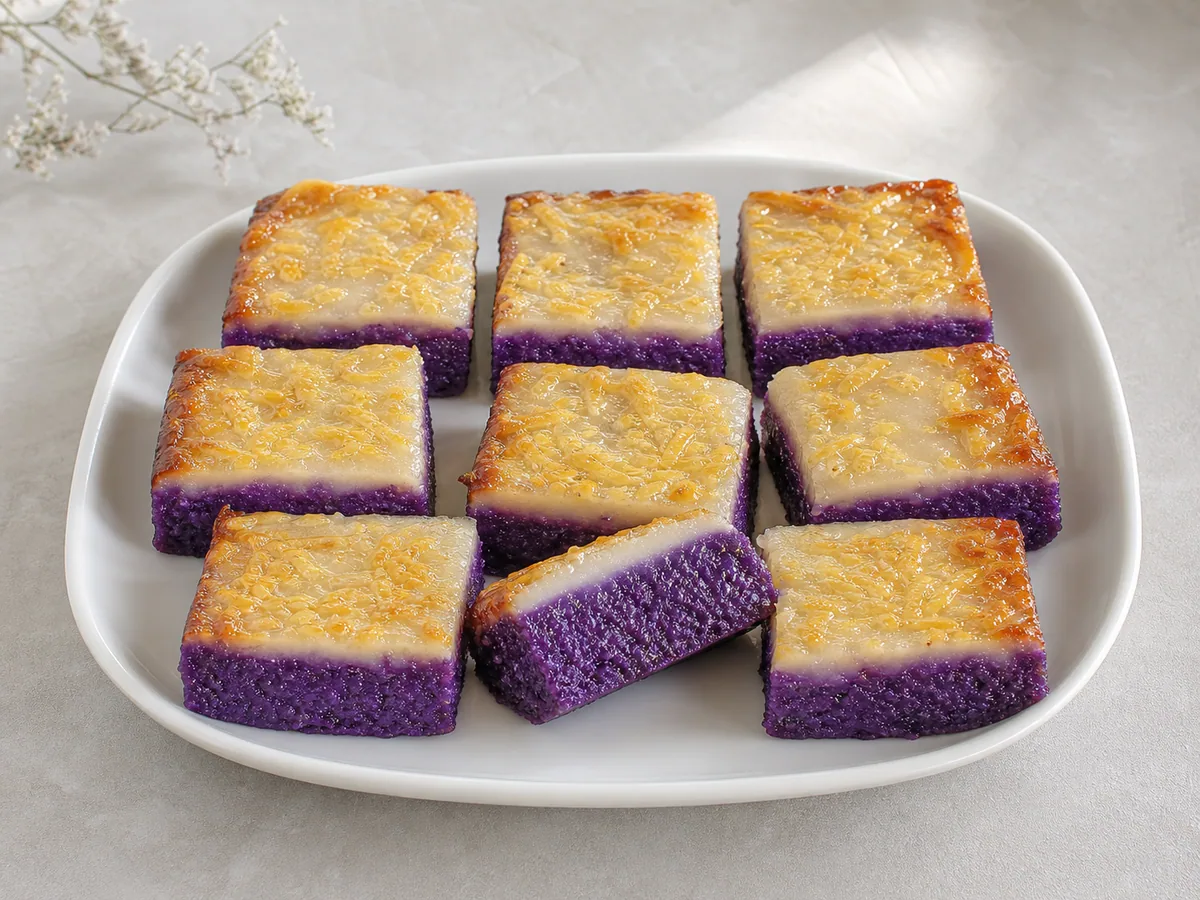
Set the dish on a heatproof surface and let the cake stand for 30 minutes. The cassava will firm as steam settles, making the layers cleaner to cut. Run a thin knife around the edges, then cut into serving squares and serve slightly warm or at room temperature.
30:00


Smart Substitutions
- No ube halaya? Use the same weight of smooth cooked ube and expect a paler, less sweet cake.
- No coconut cream? Use the thickest part of full-fat coconut milk for a slightly lighter topping.
- No mild cheddar? Use Edam, gouda, or another mild, lightly salty melting cheese.
- Prefer less dairy? Use sweetened condensed coconut milk and plant-based butter, then omit the cheese.
Tips and Variations
- Whisk the ube halaya with part of the coconut milk first when it is very firm; this prevents purple streaks and dense pockets.
- Spread the batter to an even depth so the center sets before the edges become tough.
- Use a clean, lightly greased knife and wipe it between cuts for sharper squares.
What Went Wrong?
- Center is still loose Continue baking the base in 5-minute intervals until it no longer ripples and reaches at least 71°C/160°F.
- Custard topping is browning too quickly Lay a loose sheet of foil over the dish and continue baking until the center is fully set.
- Ube forms dense purple pockets Whisk the halaya smooth with coconut milk before combining it with the remaining batter ingredients.
- Slices slump when cut Let the cake stand for the full 30 minutes so the cassava starch can settle and firm.
Nutrition Estimate
- Fiber: 3 g per serving
- Sodium: 240 mg per serving
Nutrition disclaimer:This recipe is provided for general cooking information only. Nutrition values are estimates and may vary by ingredients, brands, preparation methods, and serving sizes. Check ingredient labels and follow appropriate food-safety practices. This content is not medical, dietary, allergy, or professional food-safety advice.
FAQ
Found an error or have a suggestion?
Help us improve this recipe. Send us your feedback and include the recipe name so we can take a look.