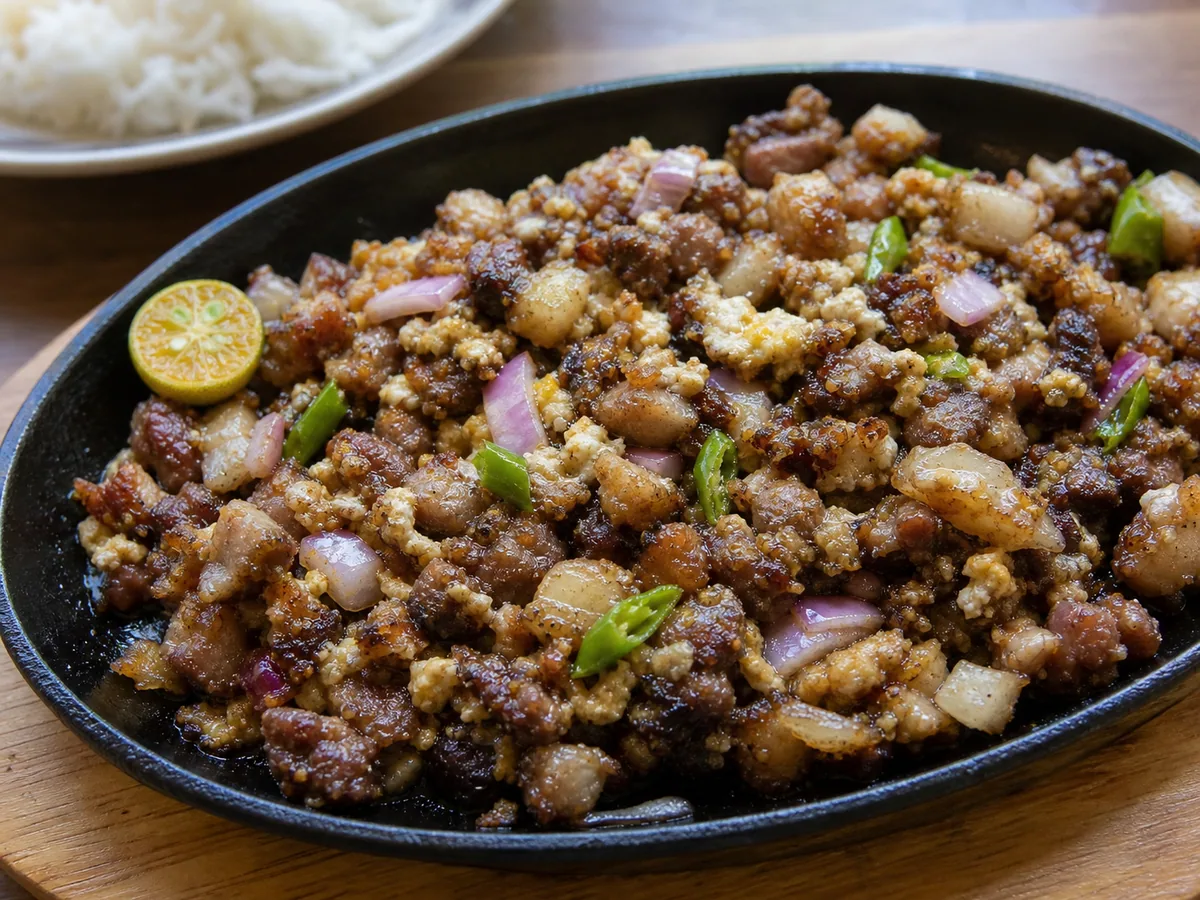
Method
Simmer the pork until tender and safe
Set 600 g of boneless pork shoulder and 300 g of skin-on pork belly on a dedicated raw-meat cutting board without rinsing them. If either piece is thicker than 5 cm (2 in), cut it into large chunks no thicker than 5 cm (2 in). Transfer the pork to a large pot and add 1.44 liters of water, 3 g of kosher salt for simmering, 2 bay leaves, 2 g of whole black peppercorns, and 4 garlic cloves for simmering. Bring to a boil over high heat, skim any foam, then reduce to a steady simmer. Start checking at 45 minutes and continue cooking for up to 60 minutes, turning the pork once, until a knife enters with slight resistance and a food thermometer inserted into the thickest parts reads at least 63°C/145°F. Transfer the pork to a clean tray.
45:00Rest the pork and clean the work area
Let the cooked pork rest on the clean tray for 3 minutes. During the rest, wash hands, utensils, the thermometer probe, and any surface that touched raw pork with hot soapy water before handling ready-to-eat ingredients.
03:00Cut the pork for crisp edges
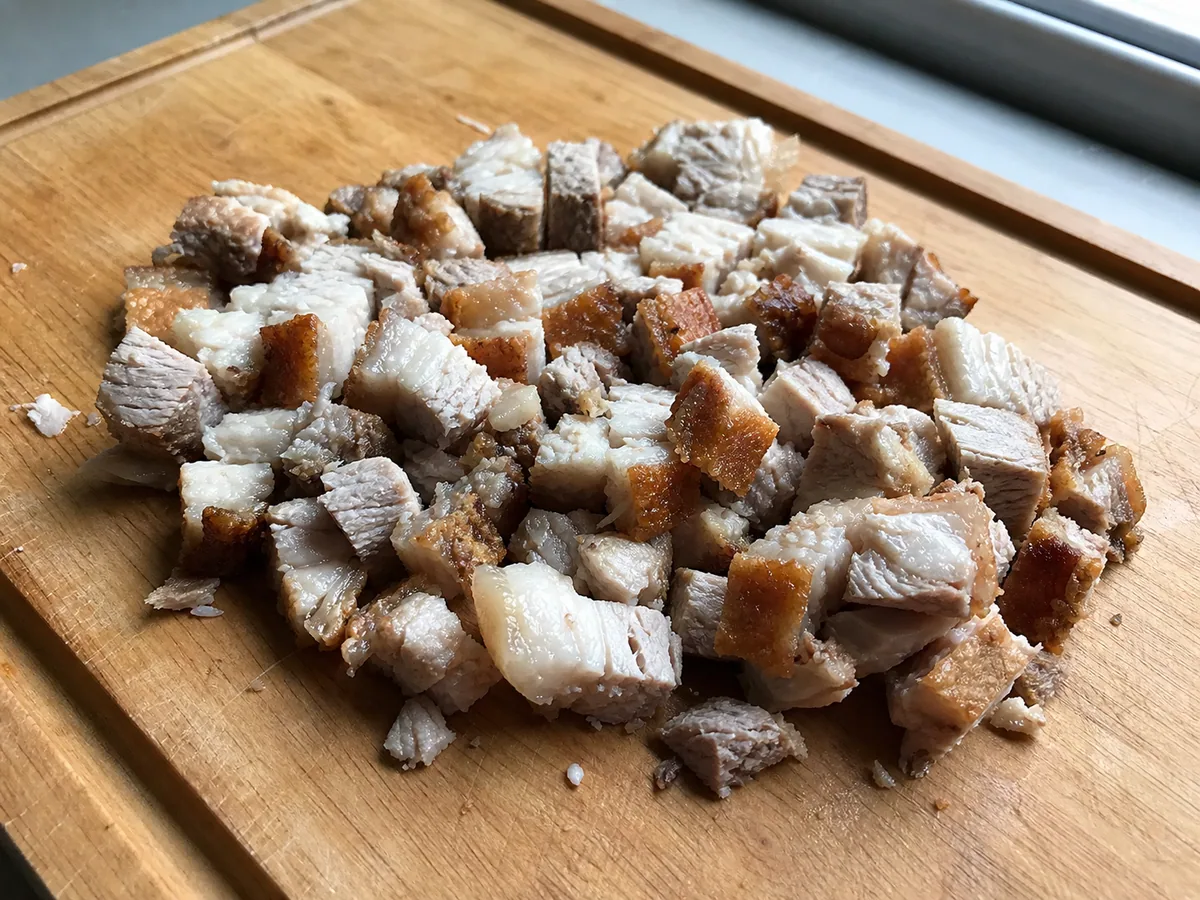
Pat the cooked pork thoroughly dry with paper towels. Cut both cuts into irregular 1 to 1.5 cm (about 1/2 in) pieces, keeping some skin, fat, and lean meat in each handful. Discard the simmering liquid and aromatics. The drier and less uniform the pieces are, the more browned corners the skillet can create.
Prepare the aromatics and calamansi seasoning
Before crisping the pork, chop 135 g of red onion for skillet and 65 g of red onion for finishing separately into small pieces. Mince 2 garlic cloves for skillet. Thinly cut 5 g of red Thai chile for skillet and 5 g of red Thai chile for finishing separately into rings, removing the seeds for gentler heat. In a small bowl, stir together 60 ml of fresh calamansi juice, 30 ml of soy sauce, 15 ml of cane vinegar, 3 g of kosher salt for seasoning, and 1 g of ground black pepper until the salt dissolves. Beat 2 large eggs in a separate clean bowl until the whites and yolks are completely combined.
Crisp the pork in batches
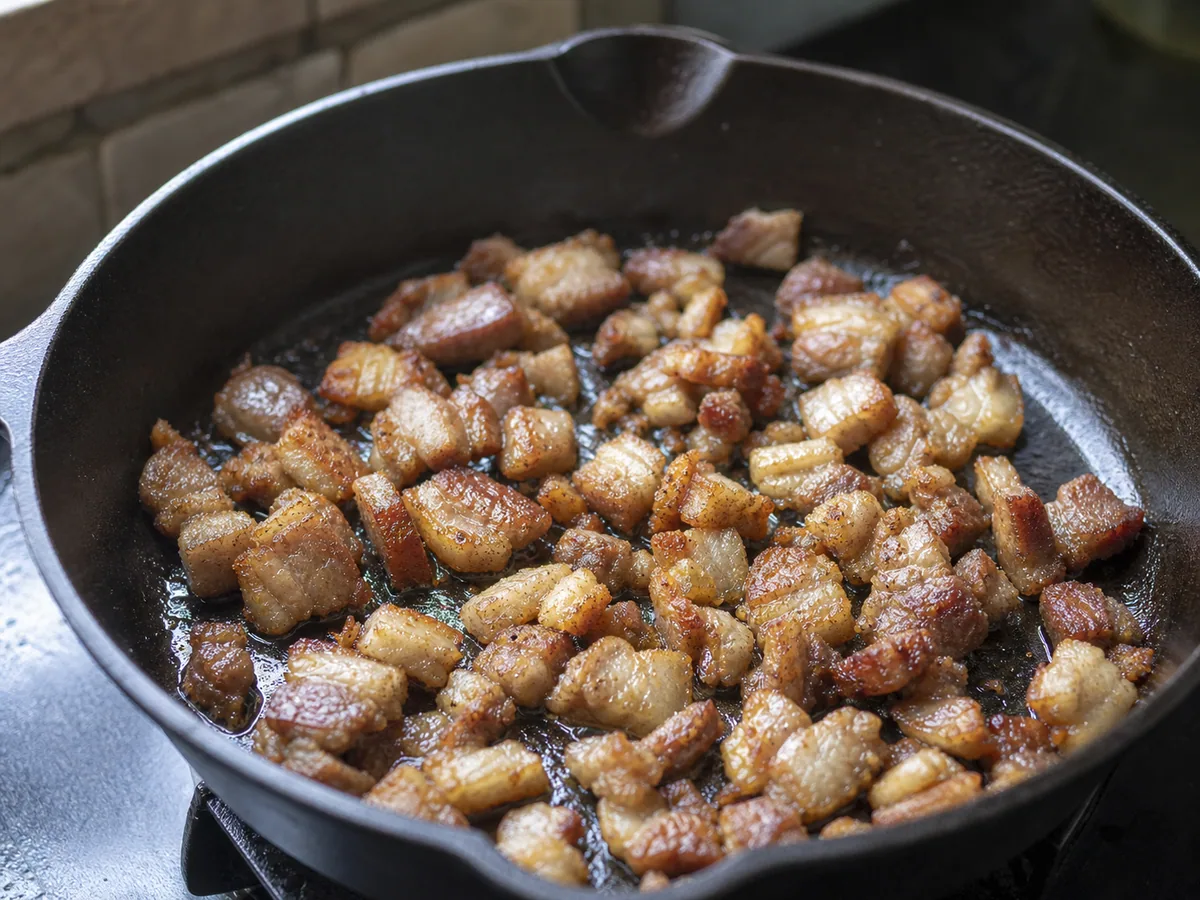
Heat a wide cast-iron or heavy skillet over medium-high heat until hot. Add half of the chopped pork in one uncrowded layer. Start checking at 6 minutes and continue cooking for up to 8 minutes, stirring only every minute or two, until the edges are deep golden and the skin pieces are crisp. Transfer to a clean bowl with a slotted spoon and repeat with the remaining pork, restarting the timer for the second batch. Leave about 1 tablespoon of rendered fat in the skillet and carefully spoon away the excess.
06:00Build the sizzling sisig
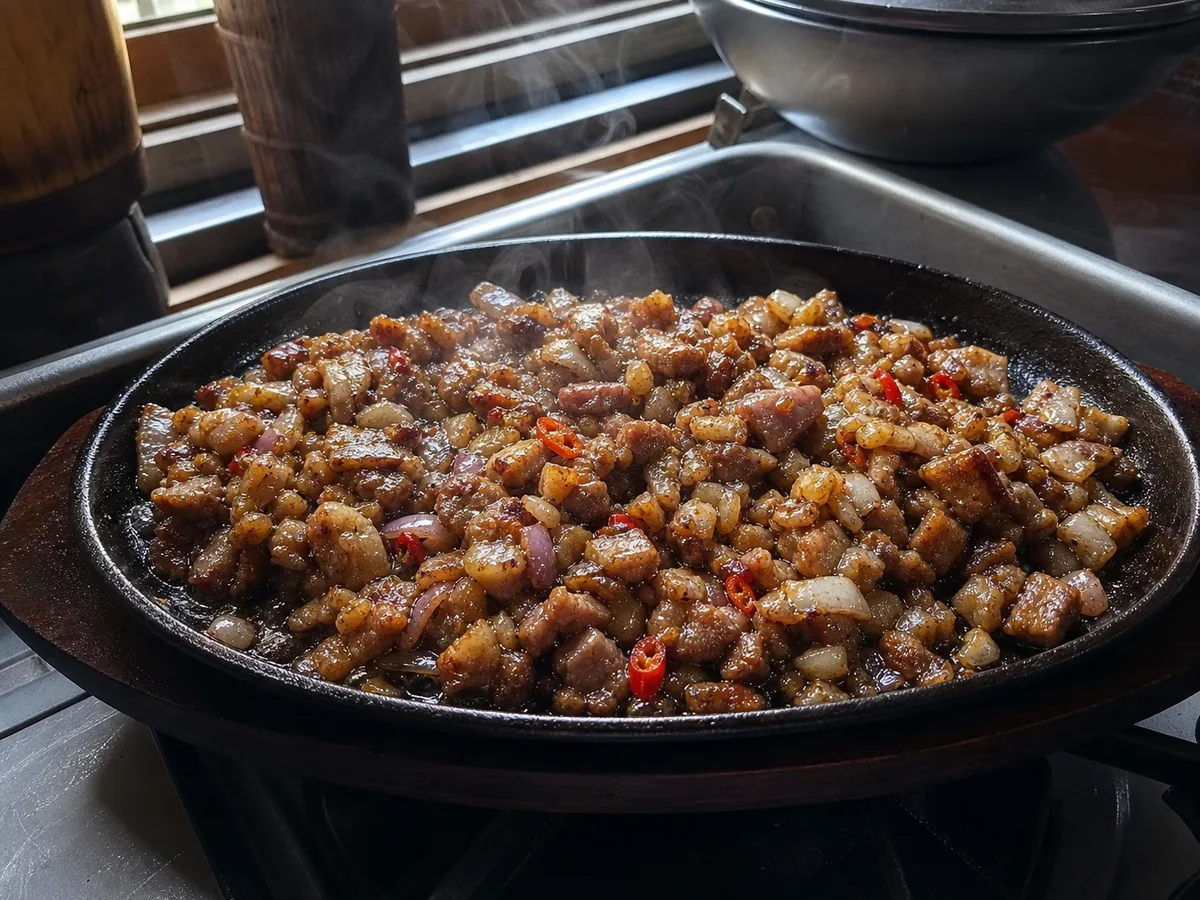
Return the skillet to medium heat. Add 2 garlic cloves for skillet, 135 g of red onion for skillet, and 5 g of red Thai chile for skillet to the rendered fat. Cook for 2 minutes, stirring often, until the onion softens at the edges but still has bite. Return all the crisp pork to the skillet and toss until hot. Pour in the calamansi seasoning and stir just until it coats the pork and the sharp vinegar aroma softens.
02:00Cook the egg fully and serve

Reduce the heat to medium-low. Pour 2 large eggs evenly over the pork and stir continuously, scraping the bottom and folding the mixture so the egg cooks in small, tender curds around the meat. Start checking at 2 minutes and continue cooking for up to 4 minutes, until no glossy liquid egg remains and a food thermometer checked in several spots reads at least 71°C/160°F. Fold in 65 g of red onion for finishing and 5 g of red Thai chile for finishing. Using dry oven mitts, set the hot skillet on a heatproof trivet at the table and serve while the pork is still sizzling.
02:00


Smart Substitutions
- No calamansi? Use fresh lime juice with a small splash of orange or mandarin juice to round out the acidity.
- No cane vinegar? Use rice vinegar or coconut vinegar for a clean, sharp finish.
- Prefer leaner pork? Replace the pork belly with an equal weight of pork shoulder; the result will be less rich, so use a light coating of neutral cooking oil in the skillet if the pork does not render enough fat.
- Want milder heat? Remove the chile seeds or replace the Thai chiles with a mild long green chile.
Tips and Variations
- Dry the simmered pork thoroughly; surface moisture steams the pieces before they can brown.
- Crisp in batches and let each batch sit between stirs so the skillet can build a dark crust.
- Add the calamansi mixture only after the pork is crisp, then cook it briefly to keep the citrus lively.
What Went Wrong?
- Pork will not crisp The pieces are probably damp or crowded. Pat them dry again and cook in a wider skillet or smaller batches.
- Egg still looks wet Keep stirring over medium-low heat until no glossy streaks remain and the mixture reaches at least 71°C/160°F in several spots.
- Pork is tough It needed more simmering before crisping. Continue the initial simmer until a knife enters with only slight resistance.
- Sisig tastes too sharp Toss it over medium heat for another 30 seconds so the vinegar softens, then fold in more of the chopped onion.
Nutrition Estimate
- Fiber: 1 g per serving
- Sodium: 1190 mg per serving
Nutrition disclaimer:This recipe is provided for general cooking information only. Nutrition values are estimates and may vary by ingredients, brands, preparation methods, and serving sizes. Check ingredient labels and follow appropriate food-safety practices. This content is not medical, dietary, allergy, or professional food-safety advice.
FAQ
Found an error or have a suggestion?
Help us improve this recipe. Send us your feedback and include the recipe name so we can take a look.