Method
Prepare the limes
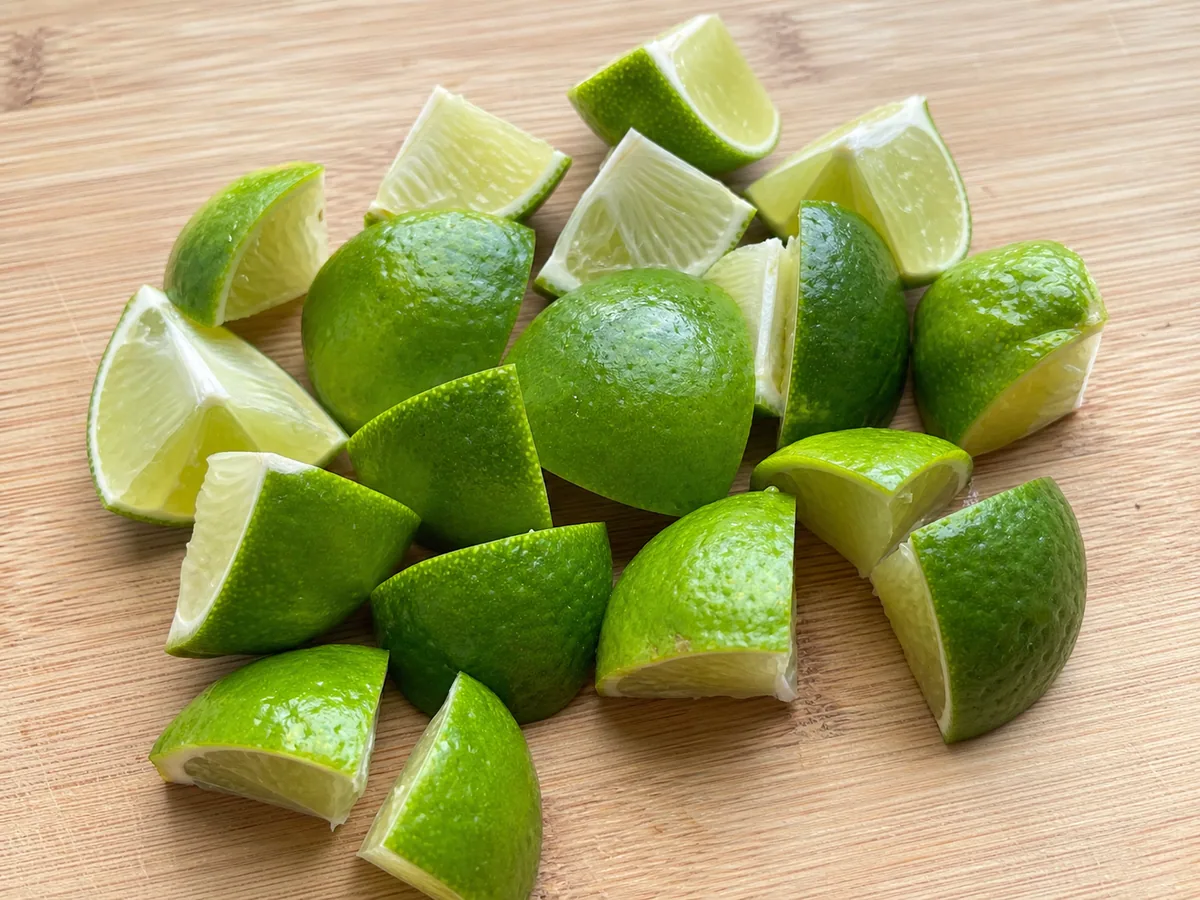
Rinse 4 small thin-skinned limes thoroughly under cool running water and scrub the peels well because they will be blended. Dry them, trim a thin slice from both ends of each lime, and quarter the fruit lengthwise. Cut away the thick white core from each quarter and remove any visible seeds, leaving the fragrant green peel attached.
Pulse and strain the limes
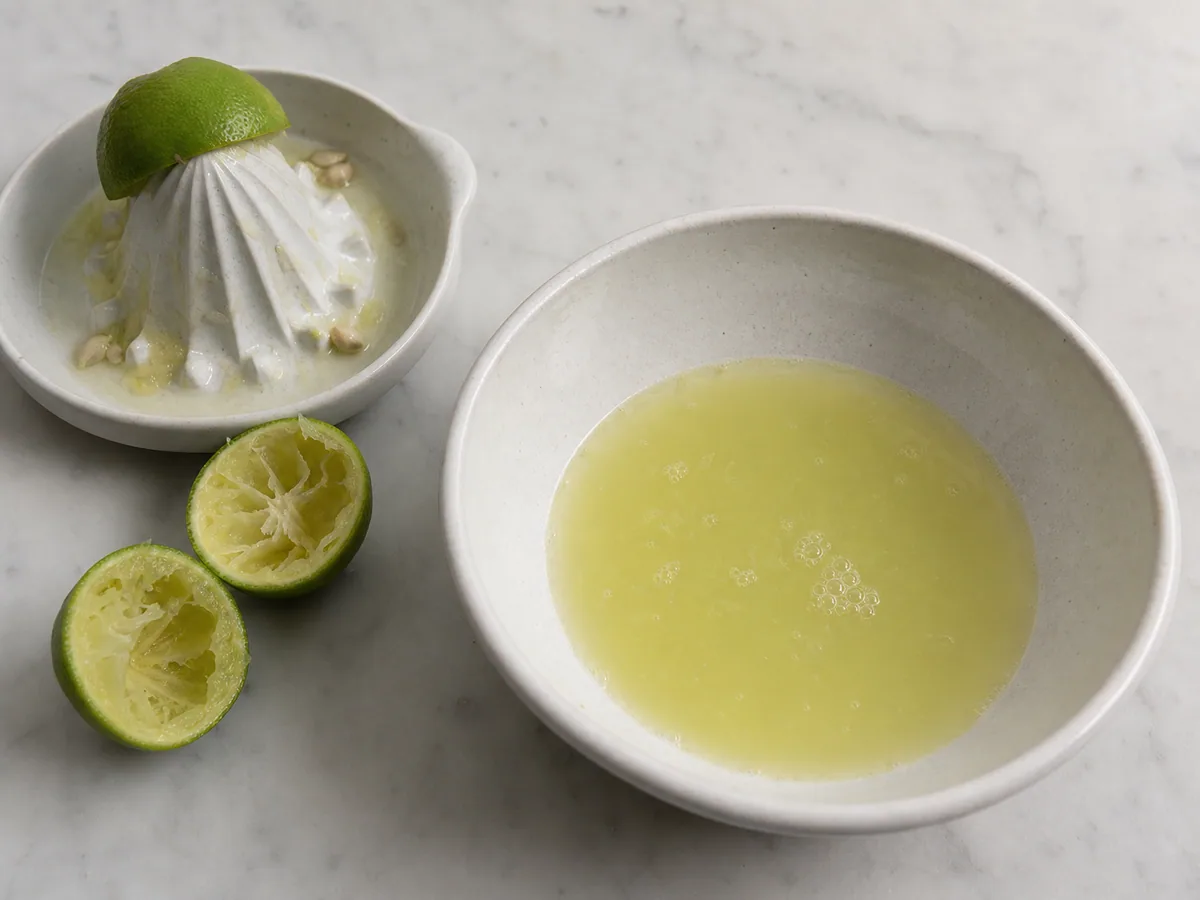
Put the prepared lime pieces in a blender and add 720 ml of cold water. Pulse 5 to 7 times for about 1 second each, stopping as soon as the peel is coarsely broken and the liquid turns pale green. Do not run the blender continuously. Pour through a fine-mesh sieve into a pitcher and press gently with a spoon; avoid crushing the peel against the sieve, which can make the drink bitter.
Blend until cold and frothy
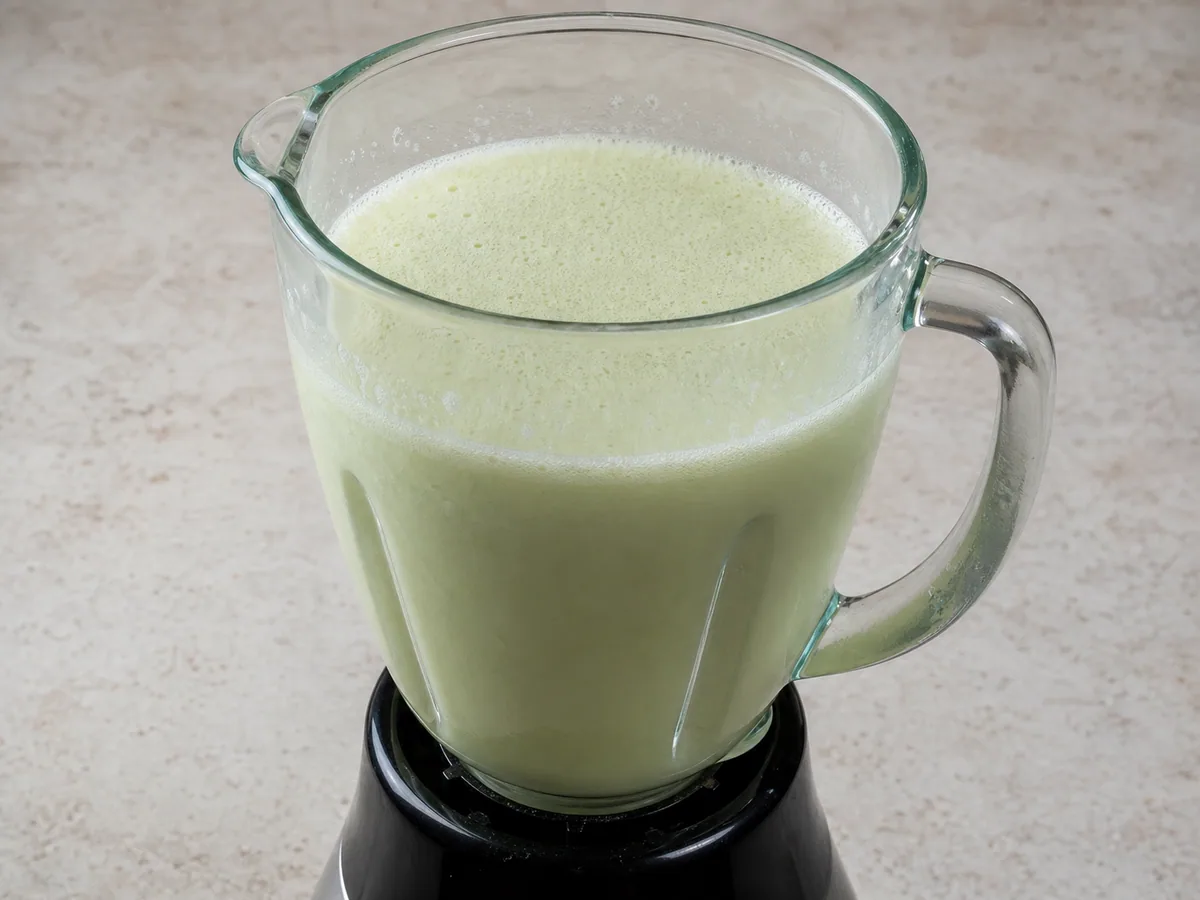
Rinse the blender jar to remove peel fragments, then return the strained lime liquid to it. Add 200 g of sweetened condensed milk, 25 g of granulated sugar, and 280 g of ice cubes for blending. Blend for 15 seconds, until the drink is very cold, lightly thickened, and capped with fine foam.
00:15Check the texture
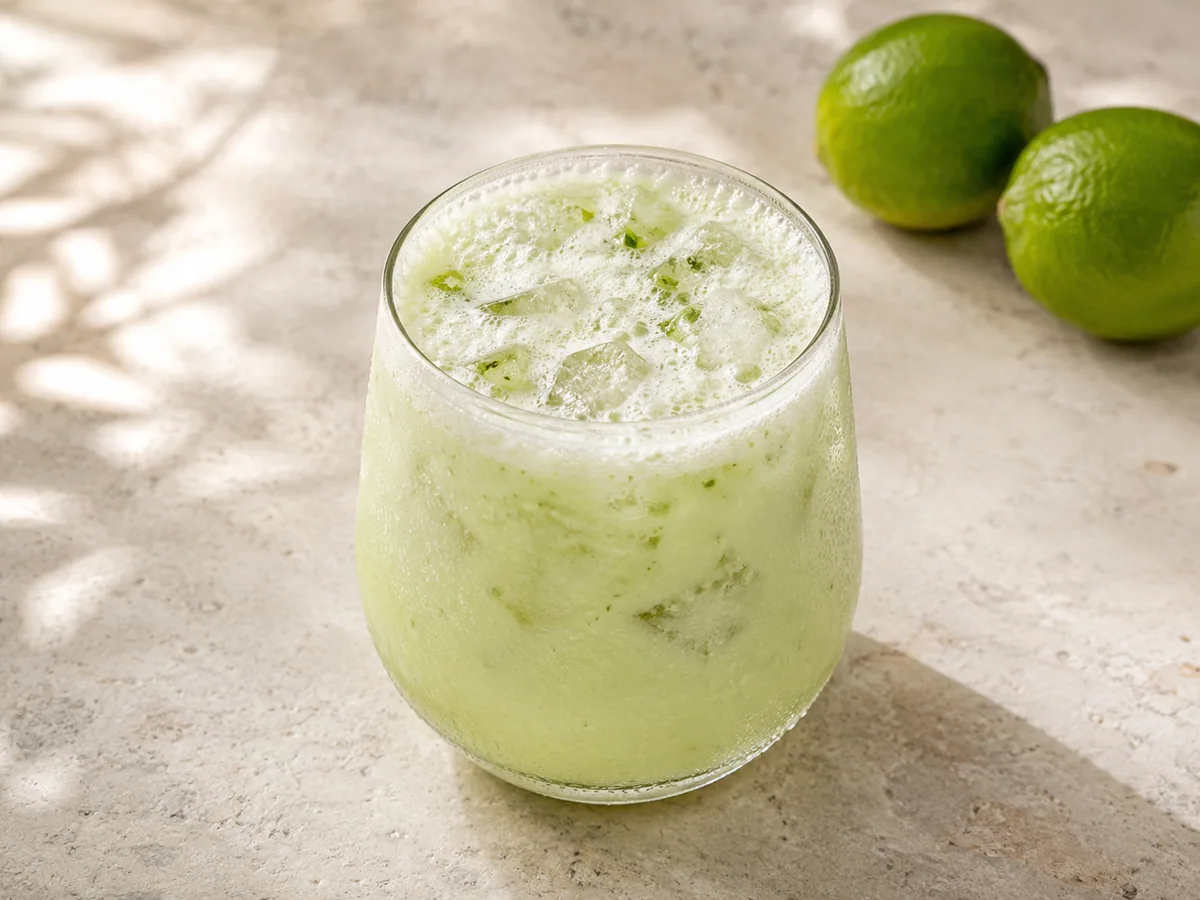
Check the limeade immediately after blending. It should be pourable, lightly thickened, and covered with fine foam, with no large ice pieces remaining. If large ice pieces remain, blend for up to 5 seconds more, then stop as soon as the texture is even.
00:05Pour and serve
Divide 280 g of ice cubes for serving among serving glasses. Pour the limeade over the ice, stir each glass once to distribute the foam, and serve immediately while the citrus flavor is bright and the drink is at its coldest.


Smart Substitutions
- No dairy condensed milk? Use sweetened condensed coconut milk. The drink will have a noticeable coconut flavor and may need slightly less granulated sugar.
- Only large limes? Choose smooth, thin-skinned fruit and use enough to give the blender a similar loose layer of lime pieces rather than packing it tightly.
- Prefer less sweetness? Reduce the granulated sugar first, then taste after the condensed milk is blended in and adjust only if the lime is especially sharp.
- No fine-mesh sieve? Line a colander with clean cheesecloth and let the liquid pass through without squeezing the peel solids.
Tips and Variations
- Scrub the limes thoroughly because the aromatic outer peel goes into the blender.
- Pulse instead of blending continuously; prolonged blending pulls harsh flavor from the white pith.
- Use very cold water and solid ice cubes so the limeade becomes frothy before the ice melts and dilutes it.
What Went Wrong?
- Limeade tastes bitter The peel was blended too long or too much white pith remained. Strain without pressing hard, then soften the current batch with a little more sweetened condensed milk; use shorter pulses next time.
- Flavor is too sharp Blend in a little more sweetened condensed milk or granulated sugar, tasting between additions so the lime still tastes vivid.
- Drink is too thick Blend in a small splash of cold water until it pours easily but still holds a light foam.
- Foam is weak Return the drink to the blender and pulse briefly with a few ice cubes until a fine, even froth forms.
Nutrition Estimate
- Fiber: 1 g per serving
- Sodium: 60 mg per serving
Nutrition disclaimer:This recipe is provided for general cooking information only. Nutrition values are estimates and may vary by ingredients, brands, preparation methods, and serving sizes. Check ingredient labels and follow appropriate food-safety practices. This content is not medical, dietary, allergy, or professional food-safety advice.
FAQ
Found an error or have a suggestion?
Help us improve this recipe. Send us your feedback and include the recipe name so we can take a look.