Method
Wake up the fennel
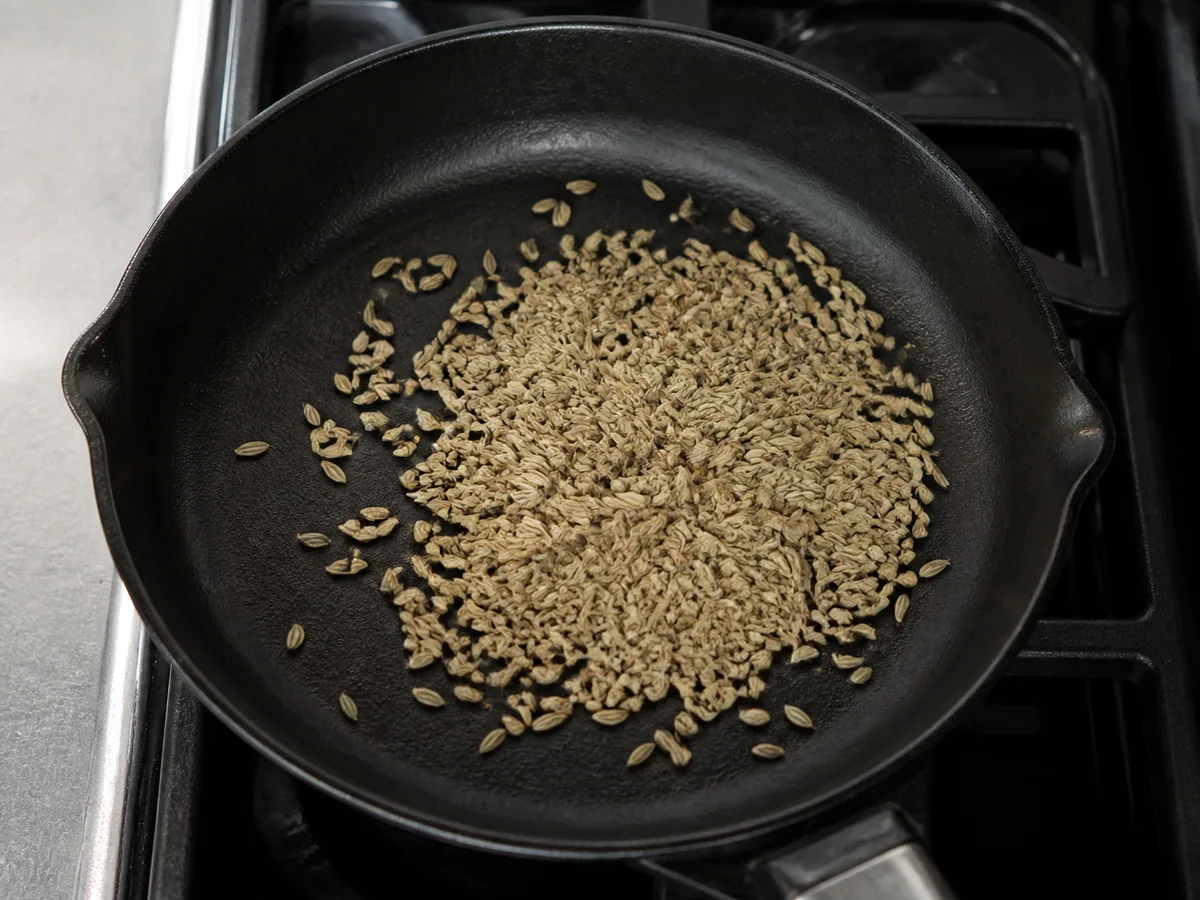
Warm a small dry skillet over medium-low heat. Add 10 g of fennel seeds and stir for 1 to 2 minutes, beginning the first check at 1 minute, until the seeds smell sweet and herbal but remain tan rather than dark brown. Tip them onto a plate and let them lose their heat before mixing.
01:00Mix and knead the dough
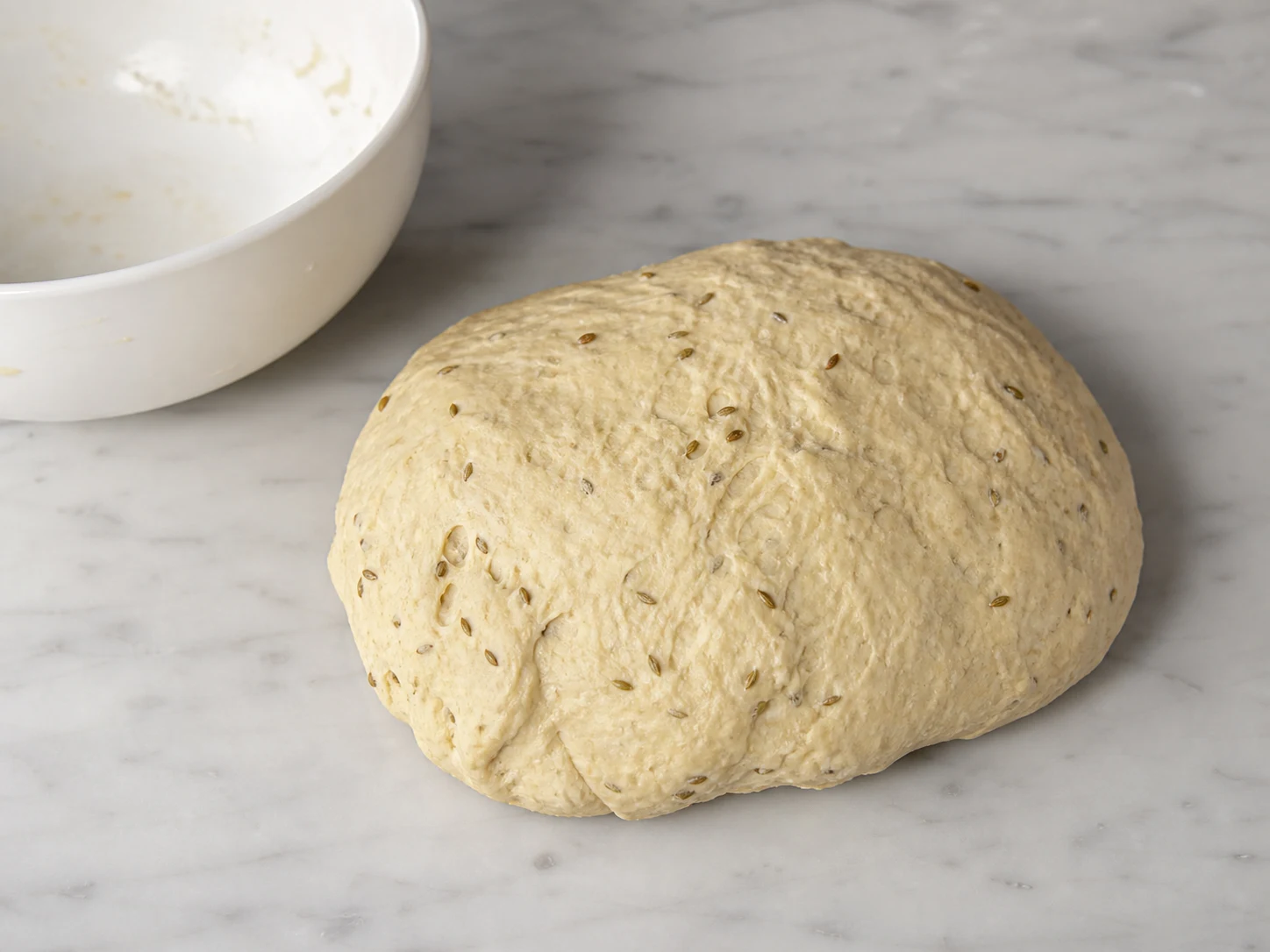
Combine 400 g of all-purpose flour and 8 g of fine sea salt in a large bowl, then stir in 10 g of fennel seeds after they have cooled. Make a well in the center and pour in 160 ml of water and 75 ml of extra-virgin olive oil. Mix from the center outward until a shaggy dough forms. Turn it onto a clean work surface and knead for 7 to 8 minutes, beginning the first check at 7 minutes, until smooth, firm, and pliable with no dry flour remaining.
07:00Let the dough relax
Shape the dough into a ball and cover it with an upturned bowl. Let it rest at room temperature for 15 minutes. The dough will relax enough to roll cleanly but should not rise because it contains no leavening.
15:00Roll and join the rings
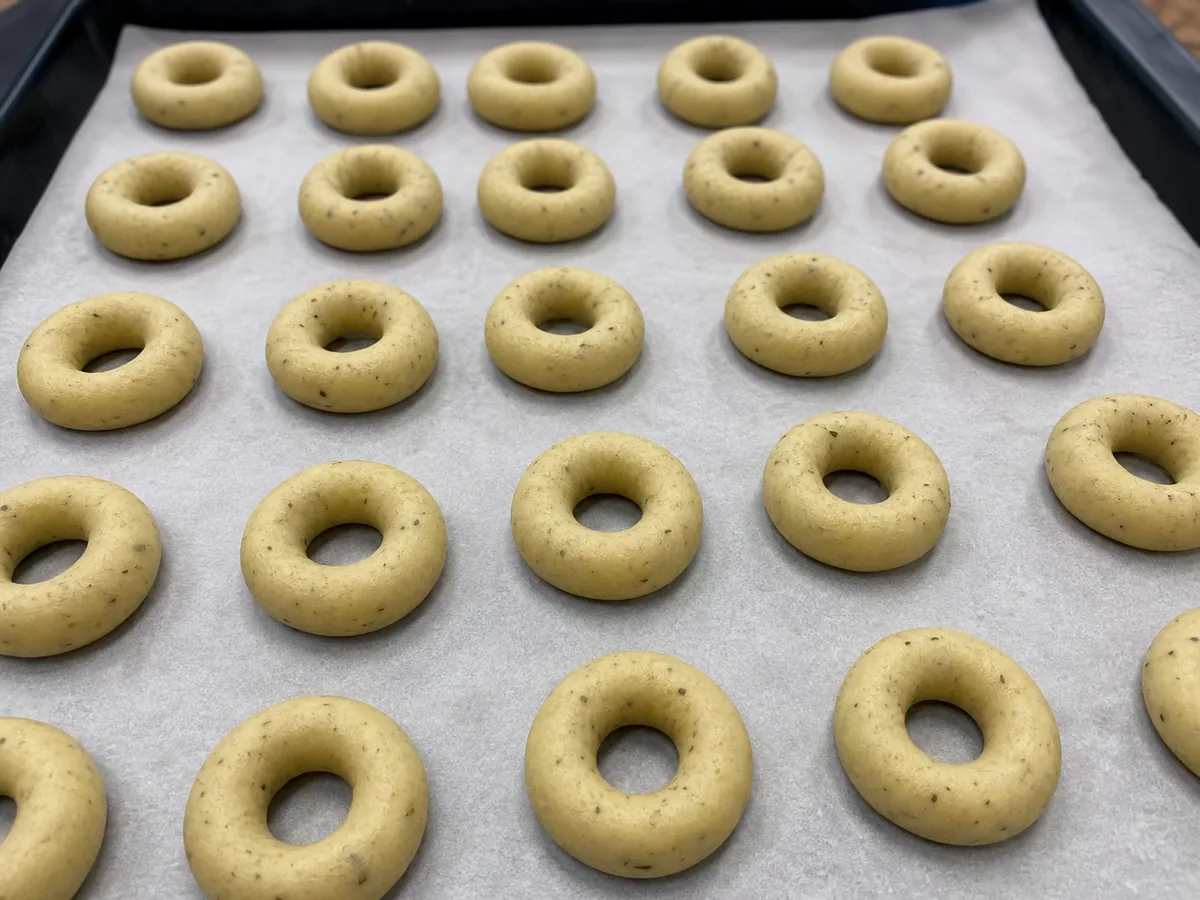
For the default 4-serving batch, line two baking sheets with parchment paper; use additional sheets or bake in batches when scaling up. Pinch off portions of dough weighing about 14 to 15 g each. Roll each portion under your palms into a rope about 10 to 11 mm thick and 12 cm long. Bring the ends together, overlap them by about 1 cm, and press the seam firmly without flattening the ring. Keep the remaining dough covered so its surface stays supple.
Set the shape in boiling water
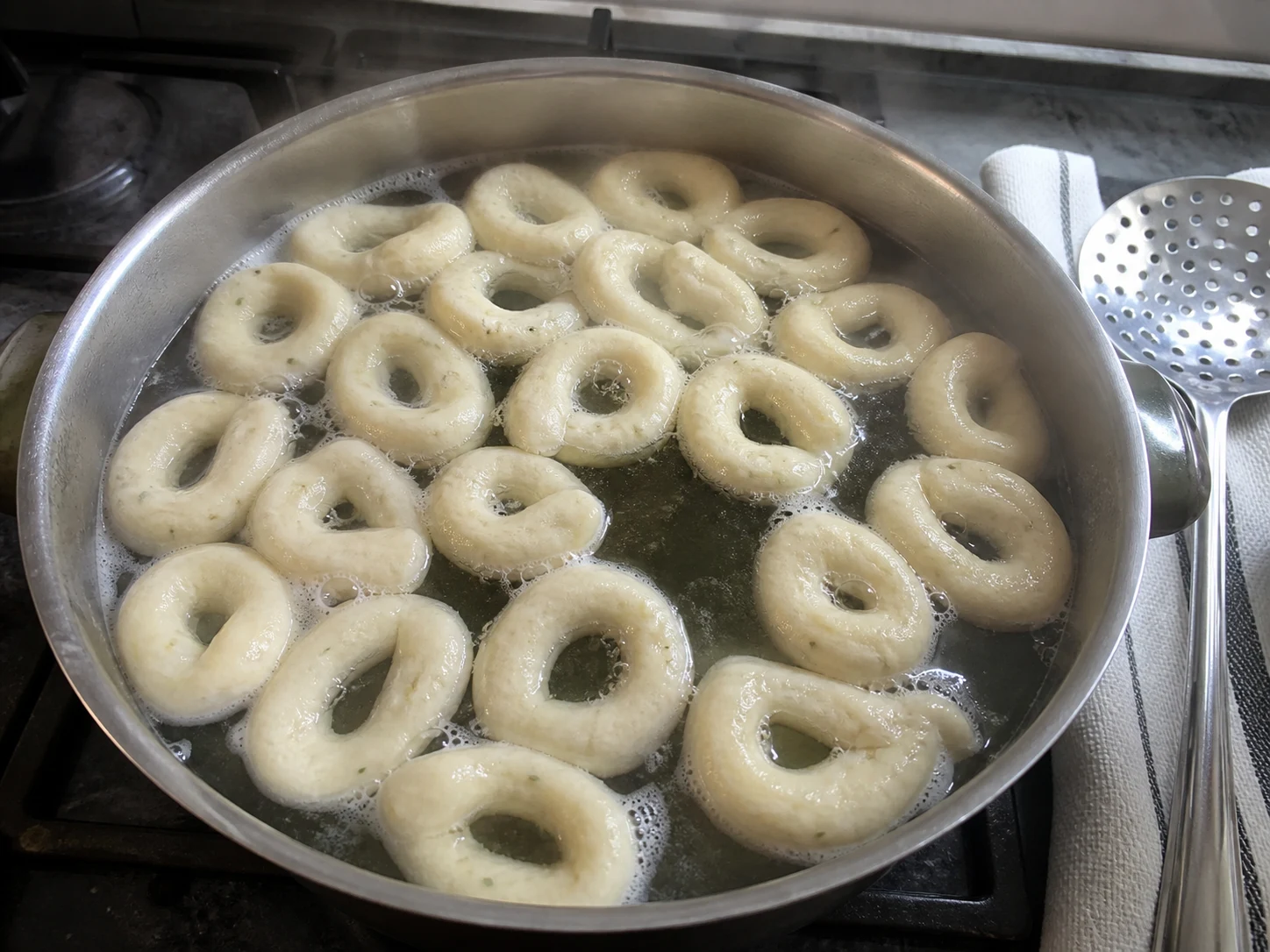
Heat the oven to 190°C (375°F). Bring a wide pot of water to a gentle boil. Working in small batches so the rings have room to move, lower the shaped taralli into the water and nudge any that stick to the bottom. Begin checking at 30 seconds; when each ring rises to the surface, usually within 30 to 60 seconds, lift it out with a slotted spoon and transfer it to a clean kitchen towel. Let surface moisture drain while the next batch cooks.
00:30Bake until deeply golden
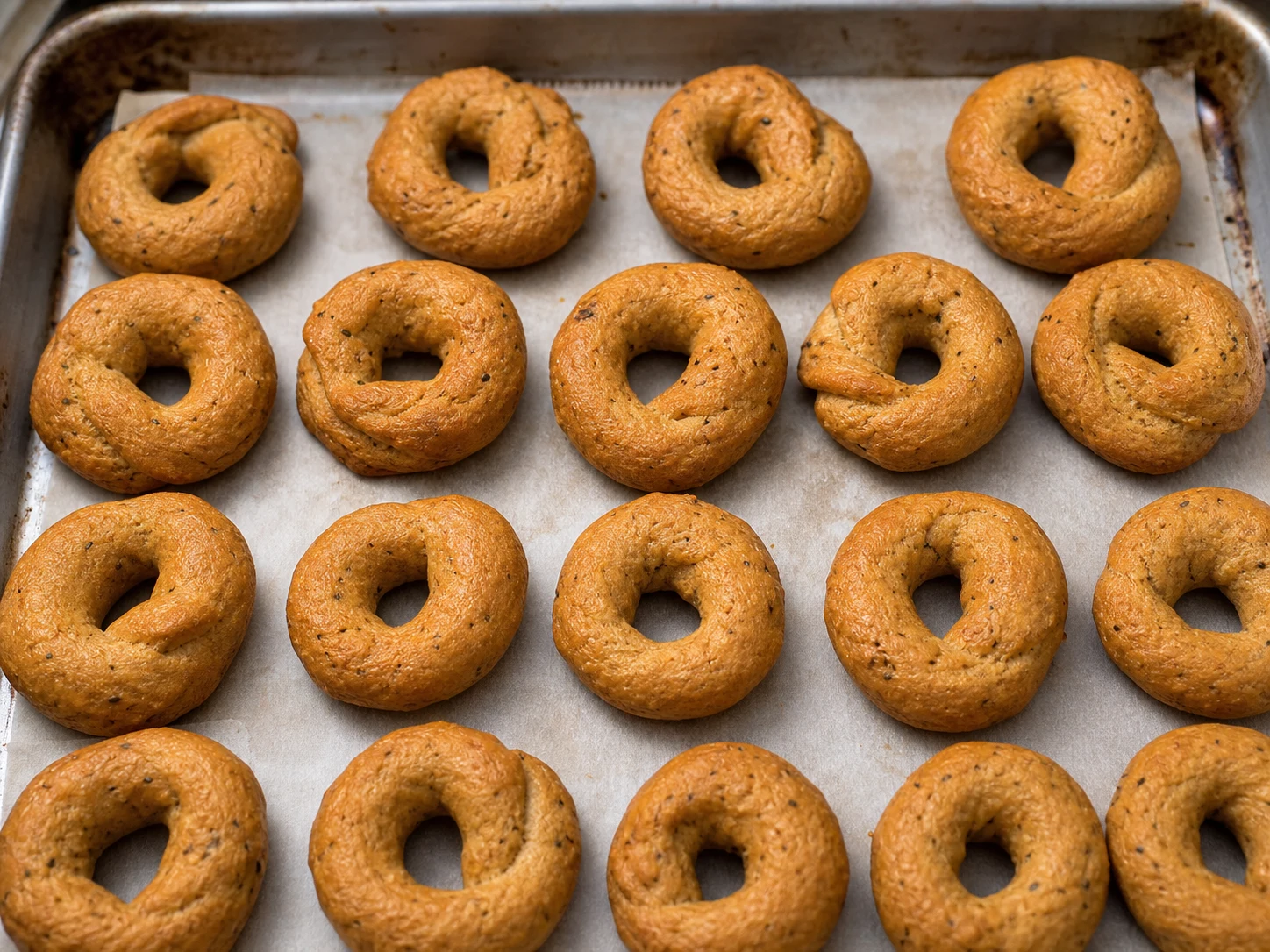
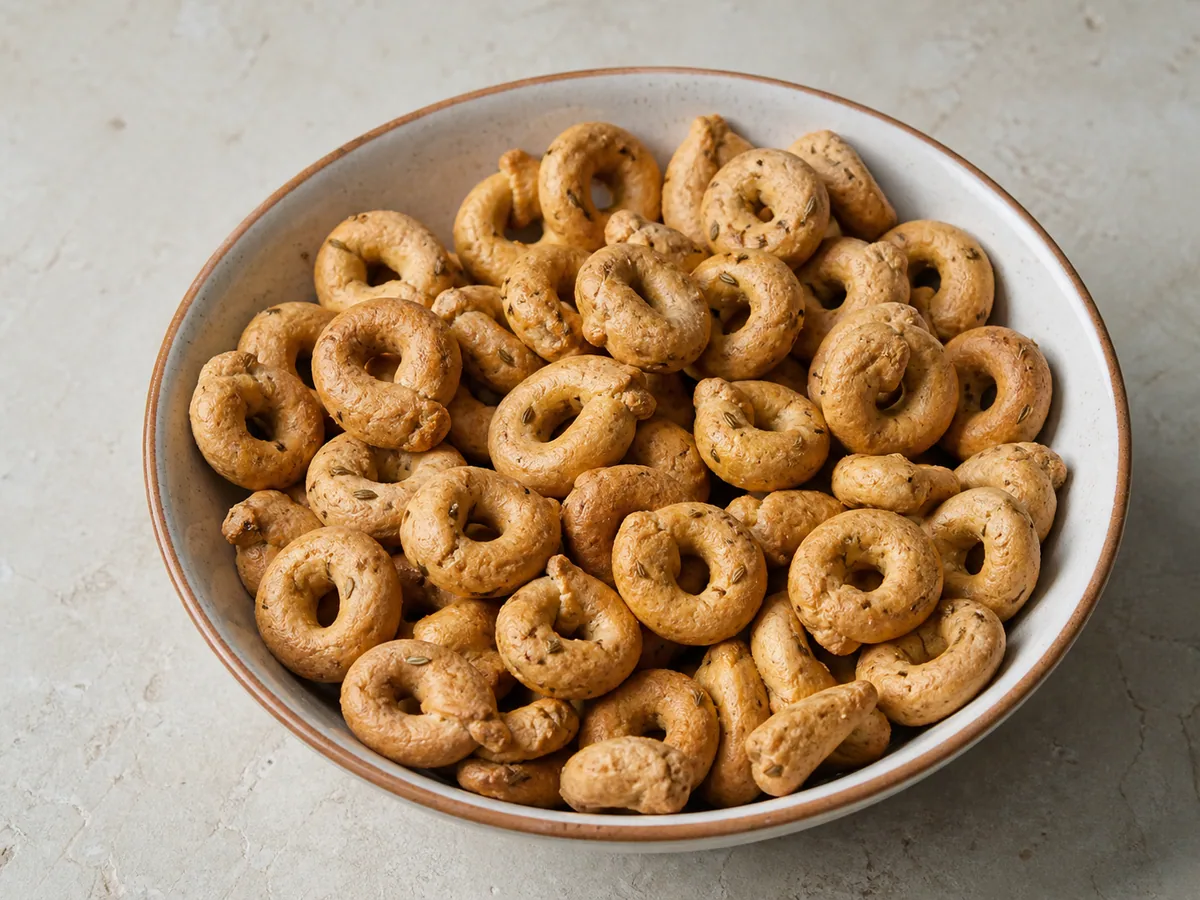
Arrange the drained rings on the parchment-lined baking sheets with a little space between them. Bake in the middle of the oven for 28 to 35 minutes, rotating the sheets front to back and switching their positions halfway through. Begin the first doneness check at 28 minutes. The taralli are ready when evenly deep golden, dry to the touch, and firm at the seams.
28:00Let the crunch develop
Move the taralli to a wire rack and let them cool for 10 minutes. They will firm as the last steam escapes; serve once crisp and no longer hot.
10:00


Smart Substitutions
- No all-purpose flour? Use bread flour and add water gradually; its stronger gluten can make the dough slightly firmer.
- No fennel seeds? Use anise seeds for a sweeter aromatic note or coarsely cracked black pepper for a sharper savory version.
- Prefer a milder oil? Use mild olive oil in the same amount for a gentler flavor while retaining the dough’s characteristic olive-oil richness.
- Want a rustic texture? Replace up to one-quarter of the flour with fine semolina and add the water gradually until the dough is firm but pliable.
Tips and Variations
- Weigh the flour when possible; a packed measuring cup can make the dough dry and difficult to roll.
- Keep unshaped dough covered while you work so the final rings join as neatly as the first.
- Give the boiled rings time to shed surface water before baking so they color evenly instead of steaming.
What Went Wrong?
- Dough cracks while rolling Knead in a few drops of water, then rest the dough for several minutes before trying again.
- Dough feels sticky Let it rest before adding more flour, then use only a light dusting on the work surface.
- Rings open in the pot Overlap the ends more firmly and keep flour away from the seam so the dough can bond to itself.
- Taralli are browned but still soft Shape the next batch thinner; for the current batch, continue baking at 170°C (340°F) until the centers feel dry.
Nutrition Estimate
- Fiber: 4 g per serving
- Sodium: 790 mg per serving
Nutrition disclaimer:This recipe is provided for general cooking information only. Nutrition values are estimates and may vary by ingredients, brands, preparation methods, and serving sizes. Check ingredient labels and follow appropriate food-safety practices. This content is not medical, dietary, allergy, or professional food-safety advice.
FAQ
Found an error or have a suggestion?
Help us improve this recipe. Send us your feedback and include the recipe name so we can take a look.