Method
Cook and dry the potatoes
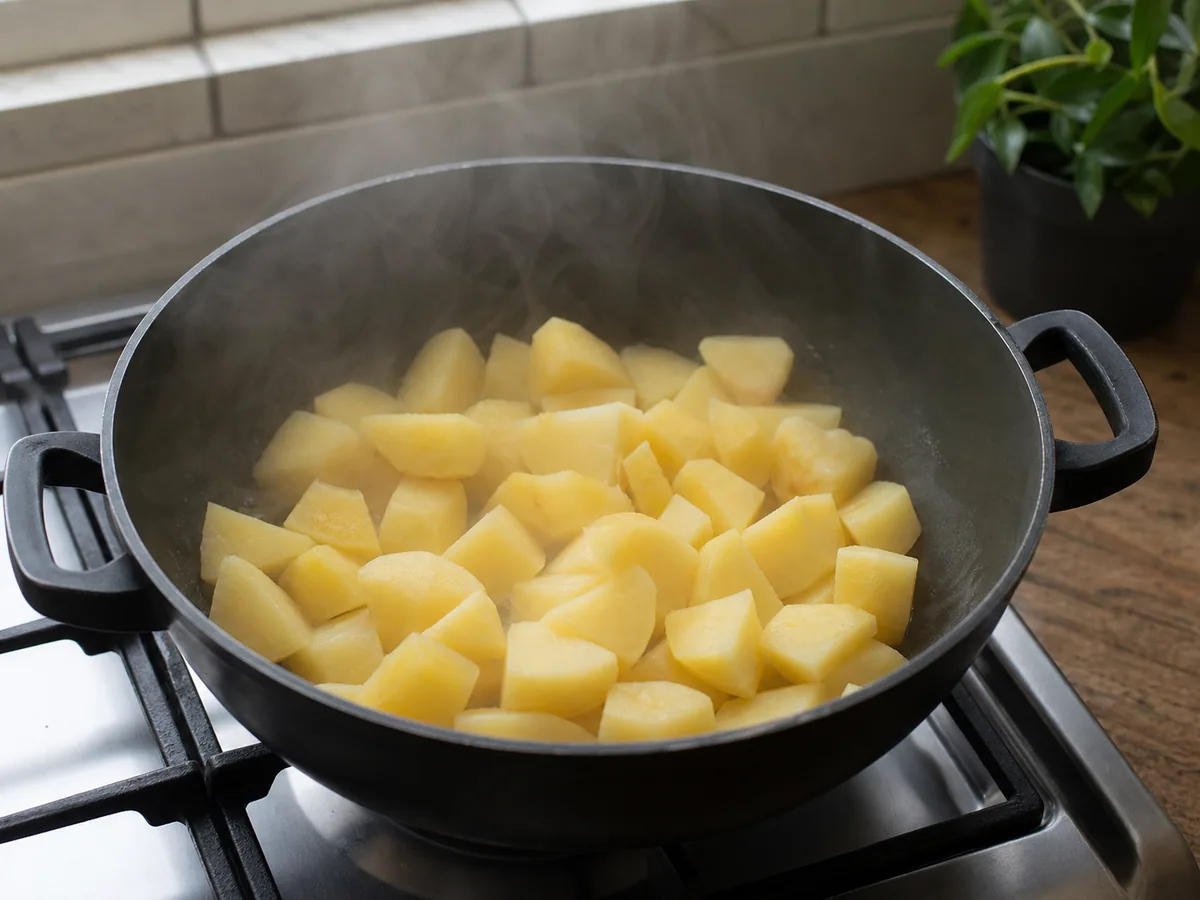
Peel 1000 g of starchy potatoes and cut them into evenly sized chunks. Put them in a large pot, cover with cold water, and bring to a boil over high heat. Lower the heat to maintain a steady simmer and cook until a knife slides through the center without resistance, beginning the first check at 20 minutes. Drain thoroughly, return the potatoes to the hot pot, and shake them briefly over low heat until surface moisture has evaporated.
20:00 first checkMake the scallion-achiote base
Thinly slice 70 g of scallions for patties. Warm 10 ml of neutral oil for potato mixture in a small skillet over medium-low heat. Add the scallions and 2 g of ground achiote for patties, then cook, stirring often, until the scallions are soft and the oil is evenly orange, 4 to 5 minutes. Keep the heat gentle so the scallions soften without browning.
04:00Mash and rest the potato mixture
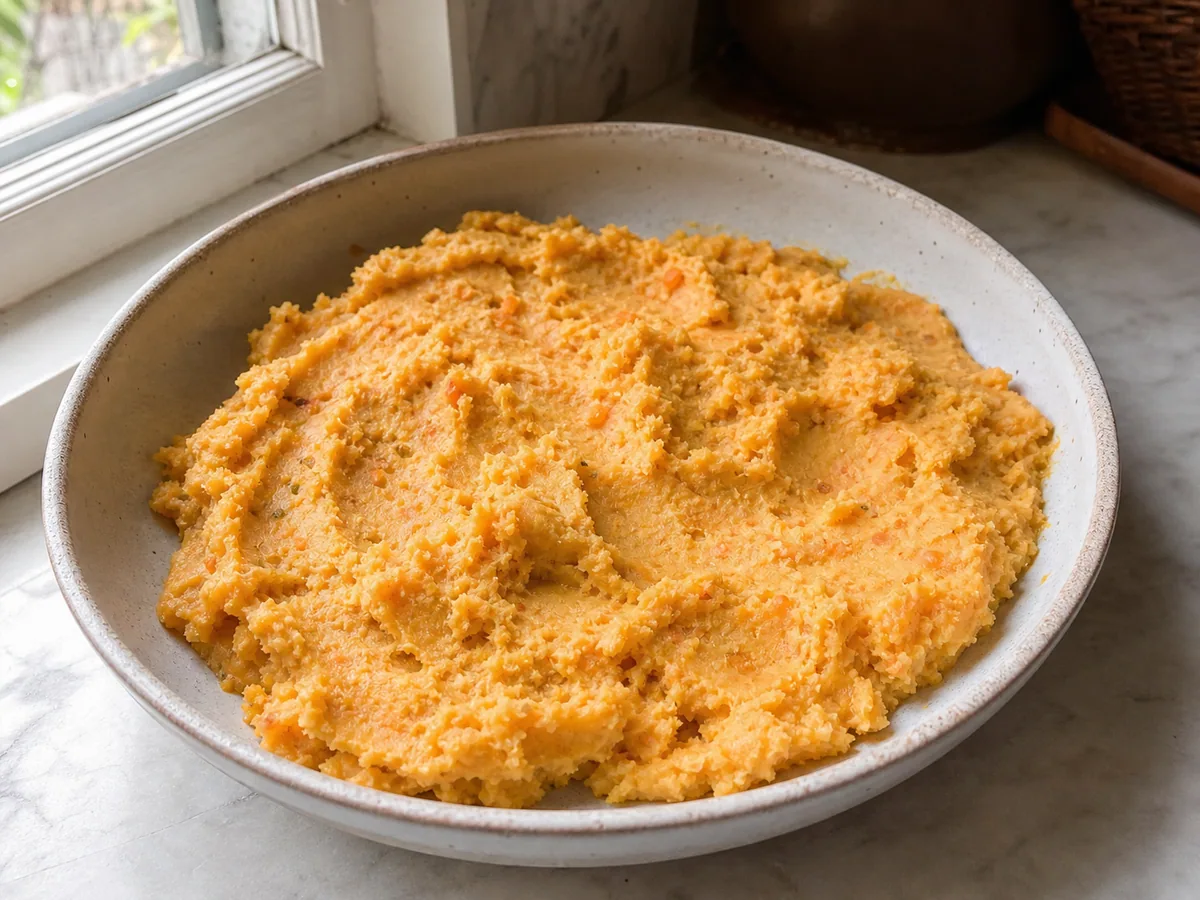
Add the scallion-achiote base and 3 g of fine sea salt for patties to the hot potatoes. Mash until no firm pieces remain, stopping as soon as the mixture is cohesive so it does not turn gluey. Spread the mash in the pot or a wide bowl and let it stand uncovered for 30 minutes, until warm rather than steaming and firm enough to hold a clean pressed edge.
30:00Build the peanut sauce base
While the potatoes rest, thinly slice 50 g of scallions for peanut sauce. Warm 10 ml of neutral oil for peanut sauce in a small saucepan over medium-low heat. Add the scallions, 1 g of ground achiote for peanut sauce, 2 g of ground cumin, and 1 1/2 g of fine sea salt for peanut sauce. Cook, stirring often, until the scallions are fully softened and fragrant, about 4 minutes; do not let the spices darken.
04:00Simmer the salsa de maní
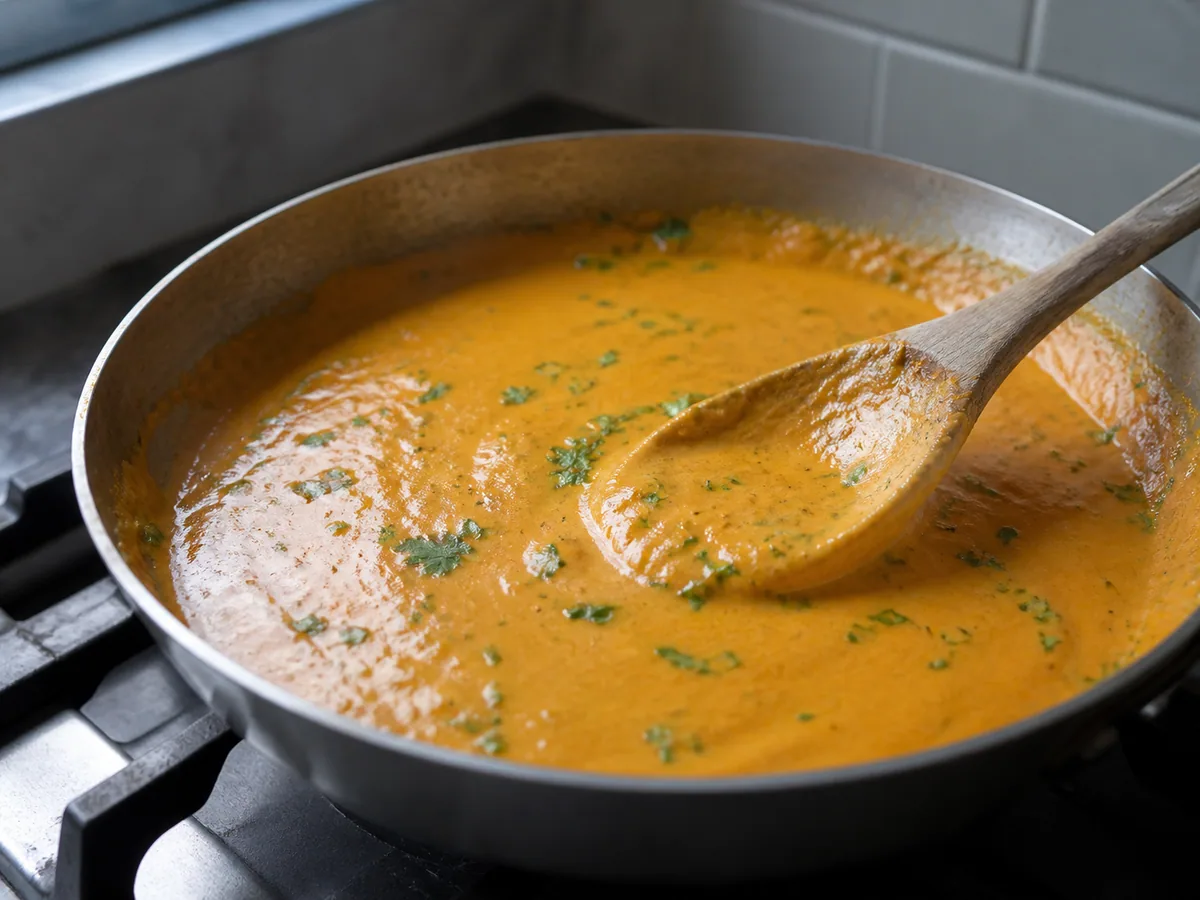
Whisk 100 g of smooth unsweetened peanut butter with 300 ml of whole milk in a bowl until mostly smooth. Pour the mixture into the saucepan and bring it to a very gentle simmer, whisking along the bottom and corners. Cook until creamy and thick enough to coat a spoon, beginning the first check at 6 minutes. Chop 10 g of fresh cilantro, stir it into the sauce, and reduce the heat to very low while you shape and brown the patties. If the sauce tightens, add small splashes of water (optional) and whisk until spoonable.
06:00 first checkShape and fill the patties
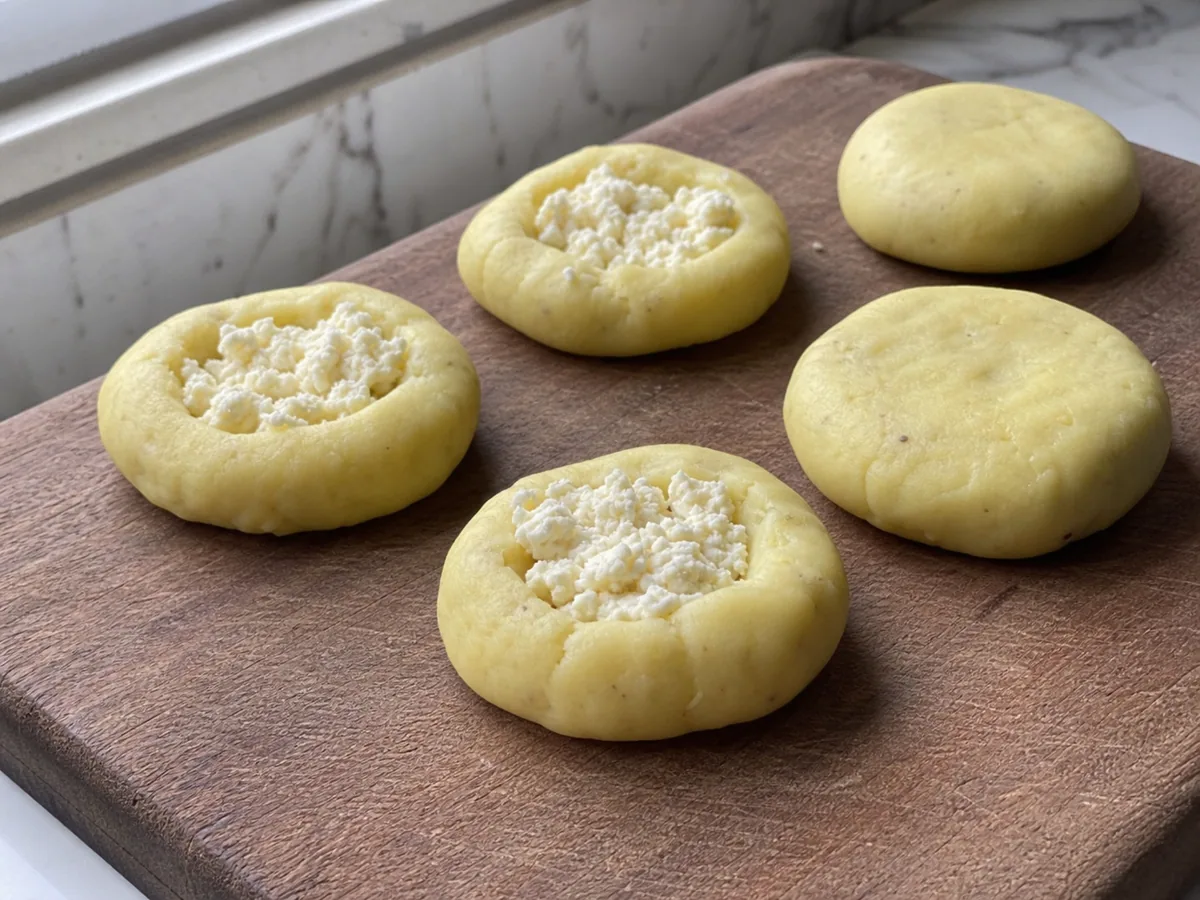
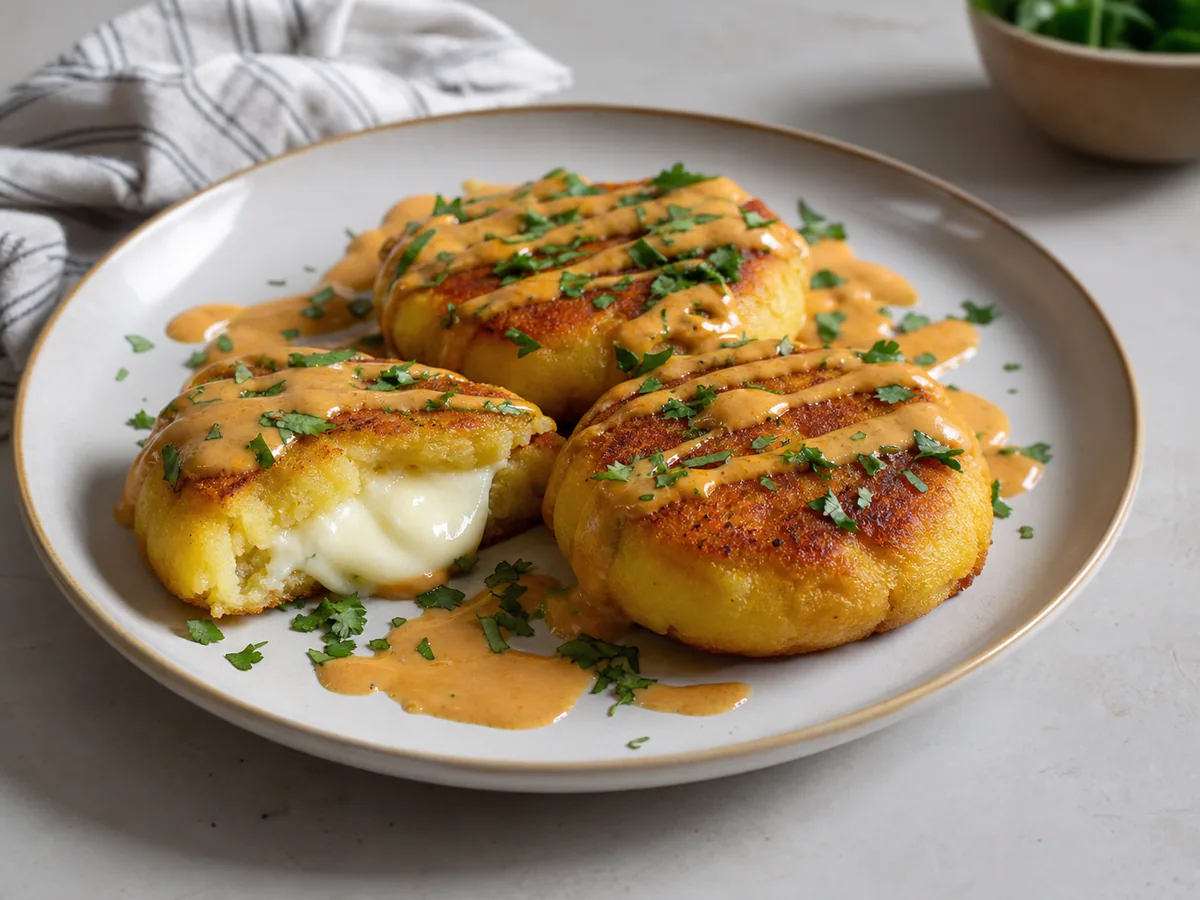
Crumble 180 g of pasteurized queso fresco into small pieces. Divide the potato mixture into equal portions, allowing two patties per serving. Roll each portion into a ball, press a deep hollow in the center, add an equal share of cheese, and pinch the potato closed around it. Flatten gently into a round patty about 10 cm (4 in) wide and 2 cm (3/4 in) thick, smoothing any cracks so the cheese is fully enclosed.
Brown the patties
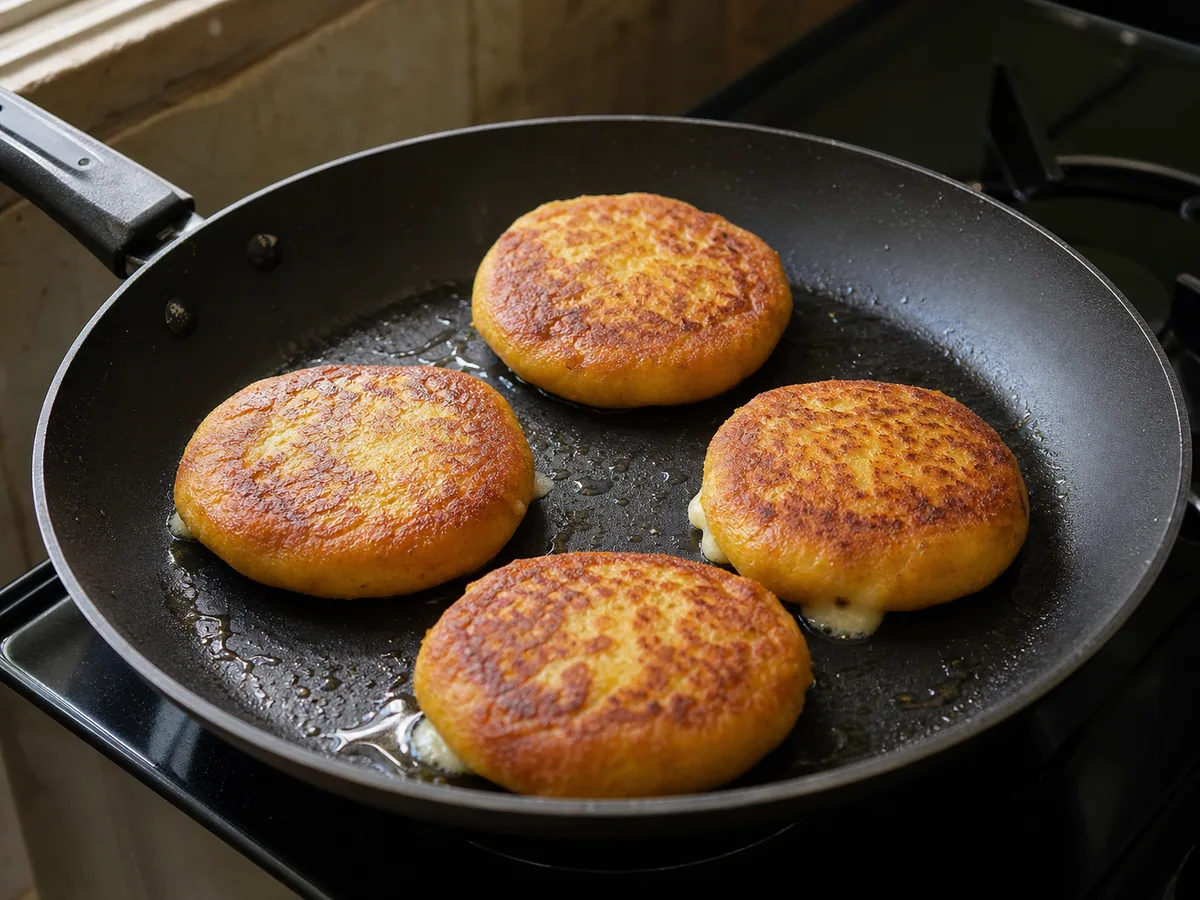
Heat a large well-seasoned skillet or nonstick griddle over medium heat. Add 20 ml of neutral oil for frying and spread it into a thin film. Arrange the patties in a single layer without crowding, working in batches as needed. Cook each batch for 8 to 10 minutes total, turning once only after the underside has formed a firm deep-golden crust. The second side should be equally browned, the patties should feel set at the edges, and the cheese should be hot through.
08:00 per batchSauce and serve
Give the warm peanut sauce a final whisk and adjust its consistency with small splashes of water (optional) if needed; it should flow slowly rather than sit in a stiff mound. Arrange the hot llapingachos on plates and spoon the sauce alongside or over part of each patty, leaving some crust exposed. Serve immediately while the edges are crisp and the cheese center is warm.


Smart Substitutions
- No queso fresco? Use farmer cheese or low-moisture mozzarella. Choose a mild cheese that softens without releasing a large amount of liquid.
- No achiote? Use sweet paprika for warm color and add a very small pinch of turmeric for a golden tone.
- No scallions? Use finely cut white onion and cook it gently until completely soft before mixing it with the potatoes or sauce.
- No peanut butter? Unsweetened sunflower seed butter makes a savory alternative, though the sauce will taste less traditionally nutty.
Tips and Variations
- Choose russet or another floury potato; waxy potatoes stay dense and make the patties harder to seal.
- Turn each patty only after the first side has developed a firm crust that releases cleanly from the skillet.
- Keep the peanut sauce at a bare simmer. Strong boiling can make it catch on the bottom and turn pasty.
What Went Wrong?
- Patties crack while shaping Mash the potatoes more thoroughly while they are still warm, then press each crack closed before adding the cheese.
- Patties stick to the skillet Let the pan preheat fully, use a thin even film of oil, and wait for a firm crust before trying to turn them.
- Cheese leaks out Use smaller cheese pieces, smooth the seam completely, and keep the heat at medium so the crust sets gradually.
- Peanut sauce is too thick Whisk in water a small splash at a time over low heat until the sauce flows slowly from a spoon.
Nutrition Estimate
- Fiber: 7 g per serving
- Sodium: 950 mg per serving
Nutrition disclaimer:This recipe is provided for general cooking information only. Nutrition values are estimates and may vary by ingredients, brands, preparation methods, and serving sizes. Check ingredient labels and follow appropriate food-safety practices. This content is not medical, dietary, allergy, or professional food-safety advice.
FAQ
Found an error or have a suggestion?
Help us improve this recipe. Send us your feedback and include the recipe name so we can take a look.