Method
Prepare the pan and almond mixture
Heat the oven to 180°C (350°F). Choose a round springform pan matched to the batch size so the batter stays close to the default depth: 12 cm (5 in) for 2 servings, 16 cm (6 in) for 4 servings, 20 cm (8 in) for 6 servings, or 23 cm (9 in) for 8 servings. Line the base with parchment, then brush the sides lightly with 5 ml of neutral oil. Whisk 250 g of ground almonds with 2 1/2 g of ground cinnamon in a medium bowl until evenly combined.
Aerate the eggs and finish the batter
Beat 5 large eggs with 250 g of granulated sugar in a large bowl on medium-high speed for 4 to 5 minutes, beginning the first check at 4 minutes. The mixture should look pale, thickened, and fall from the beaters in ribbons that sit briefly on the surface. Finely grate the yellow zest from 1 lemon directly into the bowl. Fold in the almond mixture in two additions with a wide spatula, turning the bowl as you work, until no dry pockets remain and the batter is thick but still pourable.
04:00Bake until set and golden
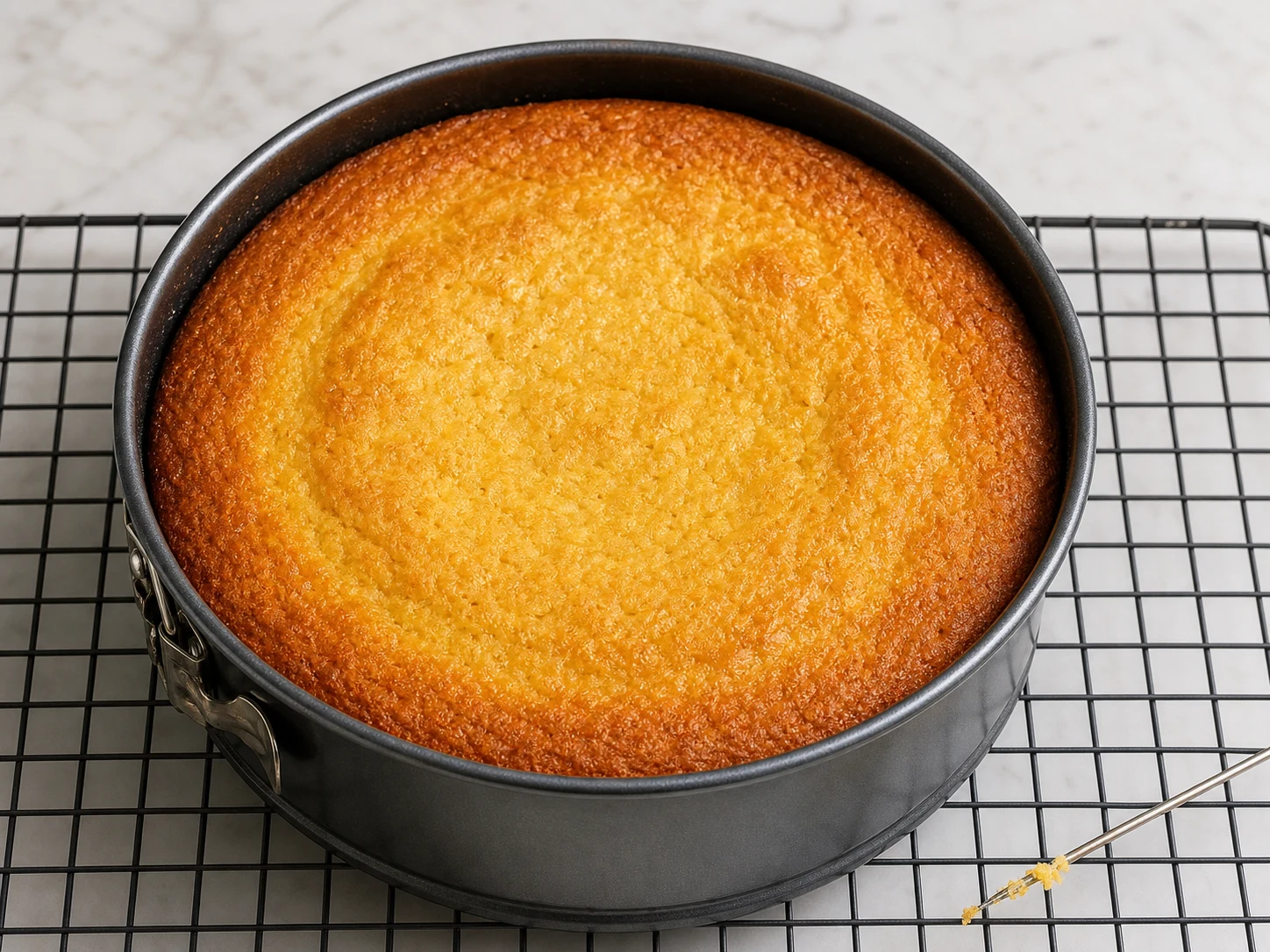
Scrape the batter into the prepared pan and level the surface gently. Bake on the middle rack at 180°C (350°F), beginning the first check at 24 minutes for 2 or 4 servings, 26 minutes for 6 servings, or 28 minutes for 8 servings. The cake will usually need 24 to 28 minutes for 2 or 4 servings, 26 to 30 minutes for 6 servings, or 28 to 32 minutes for 8 servings. The top should be evenly golden, the center should spring back lightly, and a tester should emerge with a few moist crumbs but no wet batter. For a precise check, use a food thermometer: the center should register about 93°C/200°F, safely above the 71°C/160°F minimum for egg dishes.
28:00Cool and add the Santiago cross
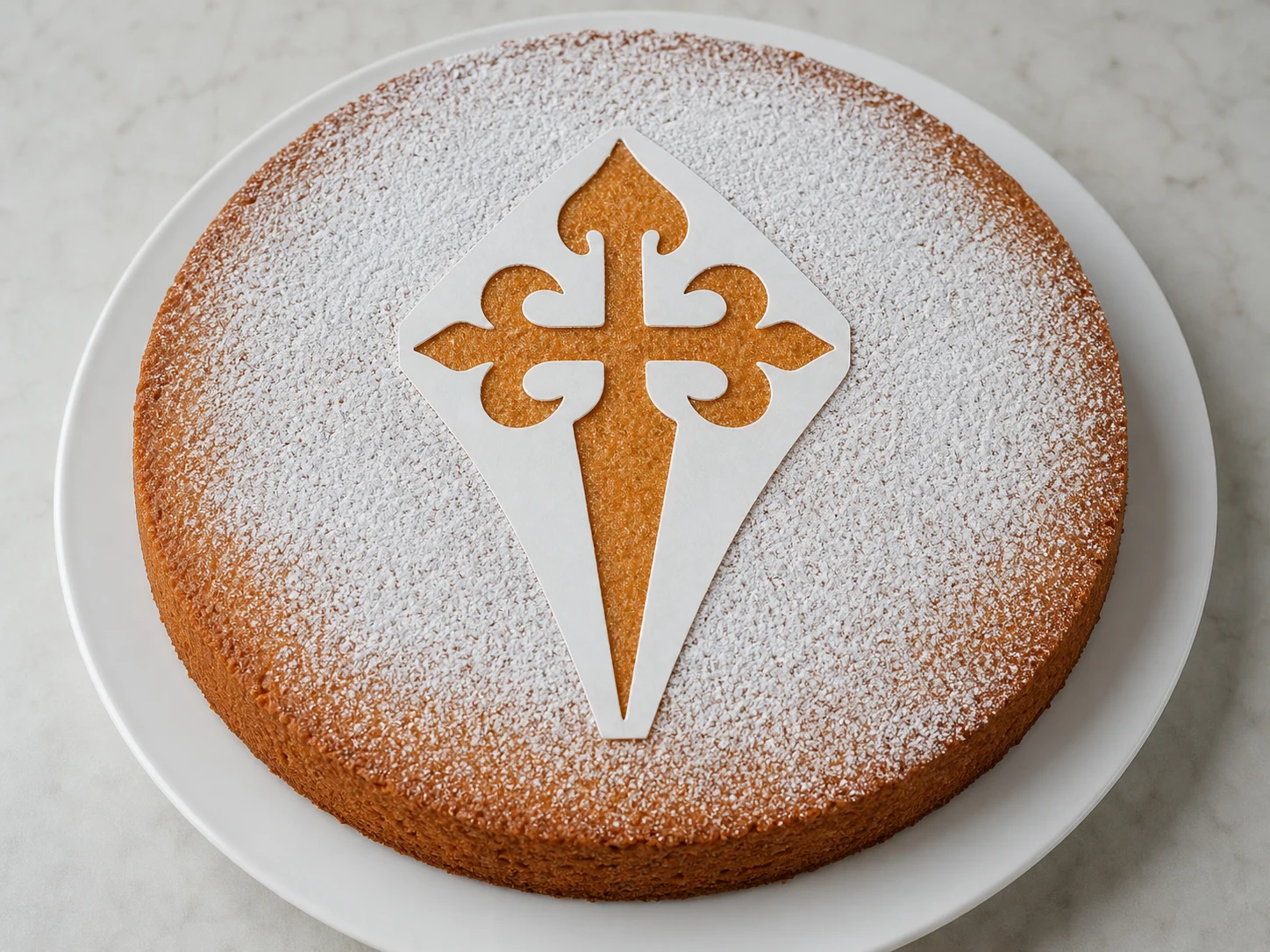
Set the pan on a wire rack and cool the cake completely for 45 minutes. Release the sides, slide the cake onto a serving plate, and place a clean paper Cross of Saint James stencil flat in the center. Dust the surface evenly with 15 g of powdered sugar, lift the stencil straight up without dragging it, and cut the cake into wedges for serving.
45:00


Smart Substitutions
- Starting with whole almonds? Use the same weight of blanched almonds and pulse them with a spoonful of the listed granulated sugar until fine. Stop before the nuts turn oily or begin forming a paste.
- No lemon? Use orange zest for a softer citrus note that still suits the almond base.
- No cinnamon? Omit it for a cleaner almond-and-lemon profile.
- Skipping powdered sugar? Serve the cake plain; it will keep its flavor and texture, but not the traditional cross decoration.
Tips and Variations
- Weigh the almonds and sugar for the most consistent texture; their balance defines the cake.
- Stop beating the egg mixture only when a ribbon remains visible for a moment before sinking back.
- Wait until the cake is fully cool before dusting so the powdered sugar stays dry and the stencil edge remains sharp.
What Went Wrong?
- Cake is heavy and compact The egg mixture may not have held enough air, or the almond mixture was folded too vigorously. Beat to a clear ribbon stage and use broad, gentle folds.
- Oily patches appear in the crumb The almonds were probably ground beyond a fine meal and began releasing oil. Use commercially ground almonds or stop processing before they clump.
- Top is brown but center is still wet Lay foil loosely over the top and continue baking until the tester shows no wet batter and the center reaches about 93°C/200°F.
- Powdered-sugar cross looks blurred Make sure the cake is completely cool, press the stencil flat, dust lightly, and lift it straight upward without sliding.
Nutrition Estimate
- Fiber: 4 g per serving
- Sodium: 45 mg per serving
Nutrition disclaimer:This recipe is provided for general cooking information only. Nutrition values are estimates and may vary by ingredients, brands, preparation methods, and serving sizes. Check ingredient labels and follow appropriate food-safety practices. This content is not medical, dietary, allergy, or professional food-safety advice.
FAQ
Found an error or have a suggestion?
Help us improve this recipe. Send us your feedback and include the recipe name so we can take a look.