Method
Prepare the spice, mushrooms, and aromatics
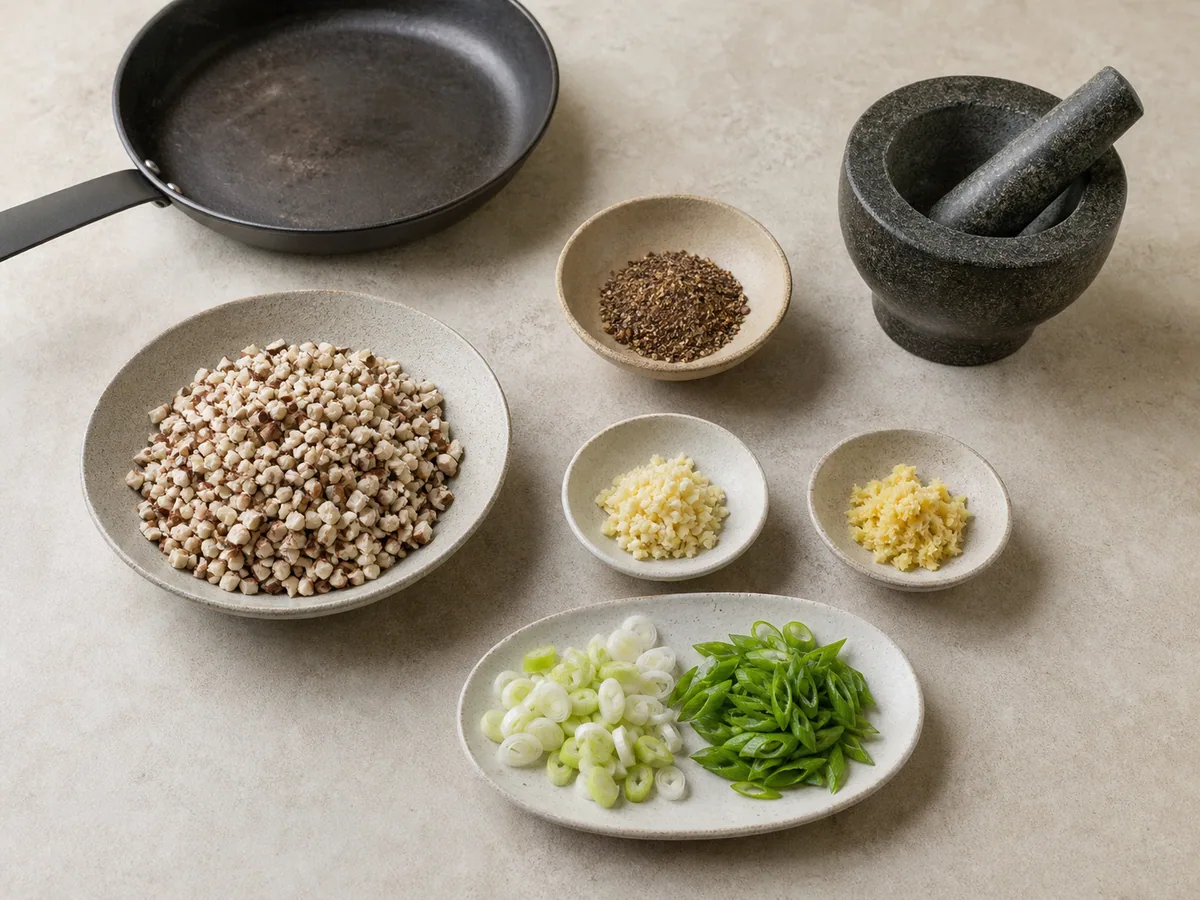
Toast 4 g of Sichuan peppercorns in a dry large skillet over medium-low heat for 1 to 2 minutes, shaking the pan, until citrusy and fragrant but not darkened. Transfer them to a mortar or spice grinder, cool briefly, and grind to a fine powder; reserve half for finishing. Finely chop 280 g of fresh shiitake mushrooms to a coarse mince. Mince 3 garlic cloves, grate 15 g of fresh ginger, and thinly slice 4 scallions, keeping the pale and green slices separate.
01:00Warm and firm the tofu
Bring a wide saucepan of water to a bare simmer. Cut 450 g of firm tofu into 2.5 cm (1 in) cubes and slide them gently into the water. Simmer for 2 minutes, keeping the water below a boil so the cubes do not break. Lift the tofu out with a slotted spoon and let it drain while you start the sauce.
02:00Brown the mushroom mince
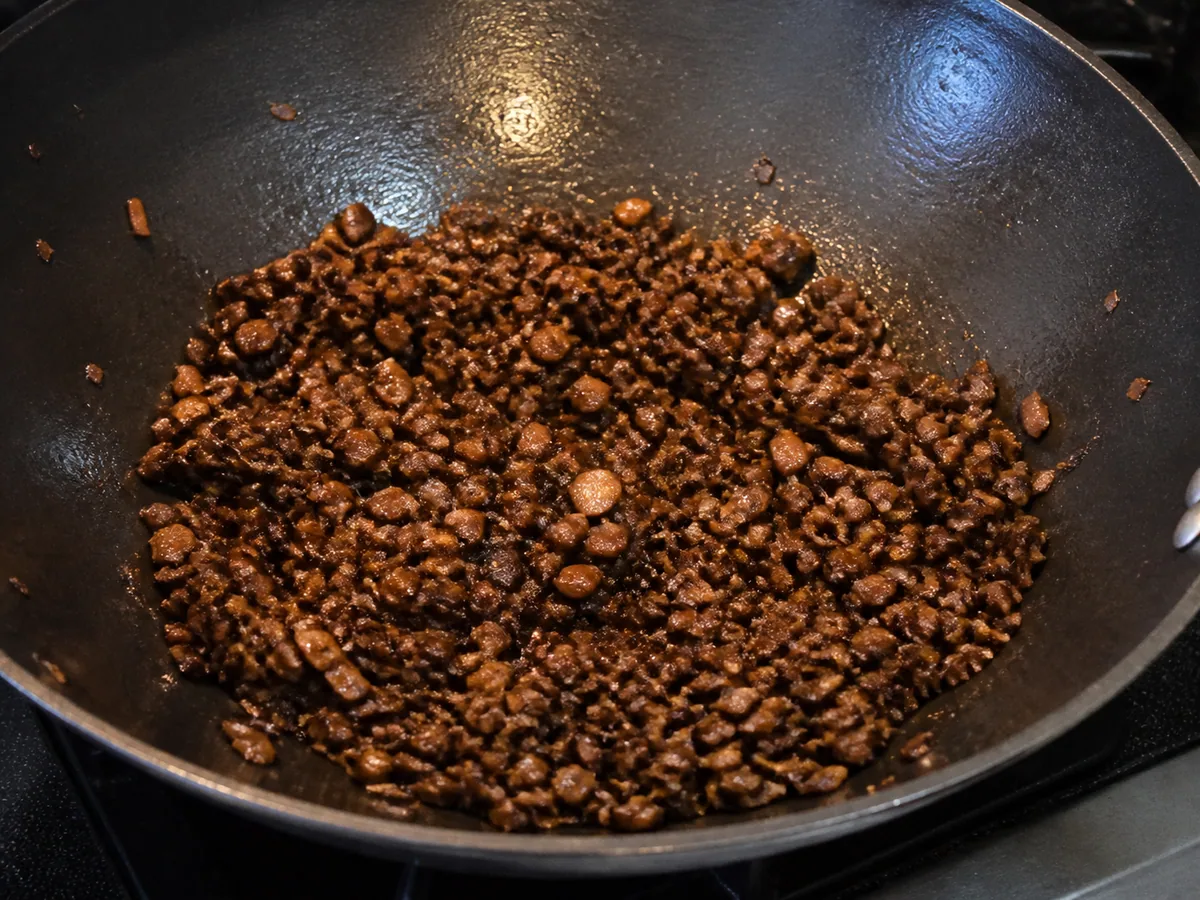
Heat the large skillet over medium-high heat and add 30 ml of neutral cooking oil. Add 280 g of fresh shiitake mushrooms and spread them into an even layer. Cook for 6 to 8 minutes, stirring only every minute or so, until their liquid has evaporated and the smallest pieces are browned at the edges. Begin checking at 6 minutes; the pan should look nearly dry rather than watery.
06:00Fry the fermented sauce base
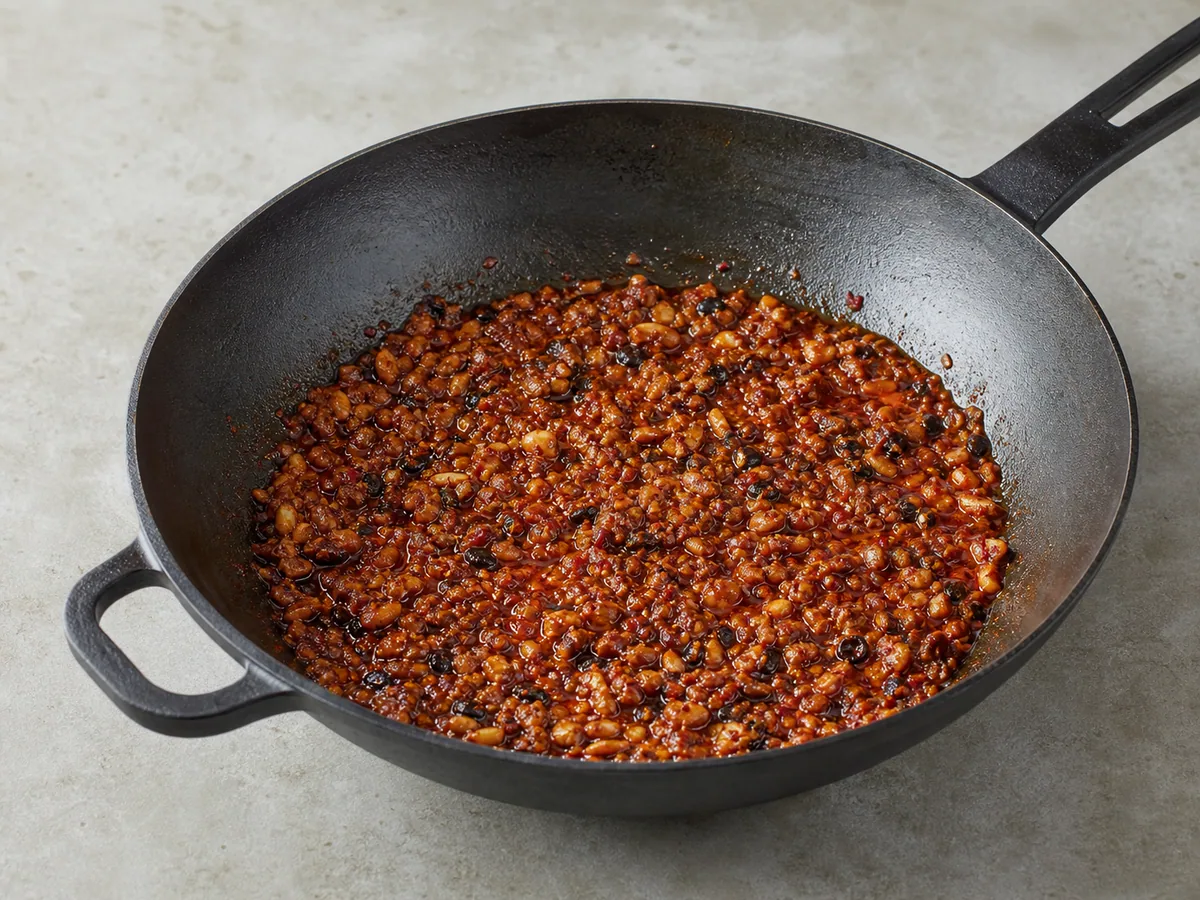
Reduce the heat to medium. Add the pale slices prepared from 4 scallions, followed by 3 garlic cloves and 15 g of fresh ginger, then add 32 g of doubanjiang (fermented broad bean chile paste), 10 g of fermented black soybeans, and 3 g of Chinese chile flakes. Stir constantly for 1 to 2 minutes, pressing the pastes into the mushrooms, until the oil turns red and the mixture smells deeply savory. Lower the heat if the chile paste begins to catch on the skillet.
01:00Simmer the tofu in the sauce
Pour in 360 ml of low-sodium vegetable stock and stir in 4 g of granulated sugar, scraping up the browned bits. Bring the sauce to a gentle simmer, then slide in 450 g of firm tofu. Simmer for 5 to 7 minutes, nudging the skillet instead of stirring vigorously, until the tofu is hot through and the liquid has reduced slightly. Begin checking at 5 minutes; the sauce should still be loose enough to flow around the cubes.
05:00Thicken gradually and finish
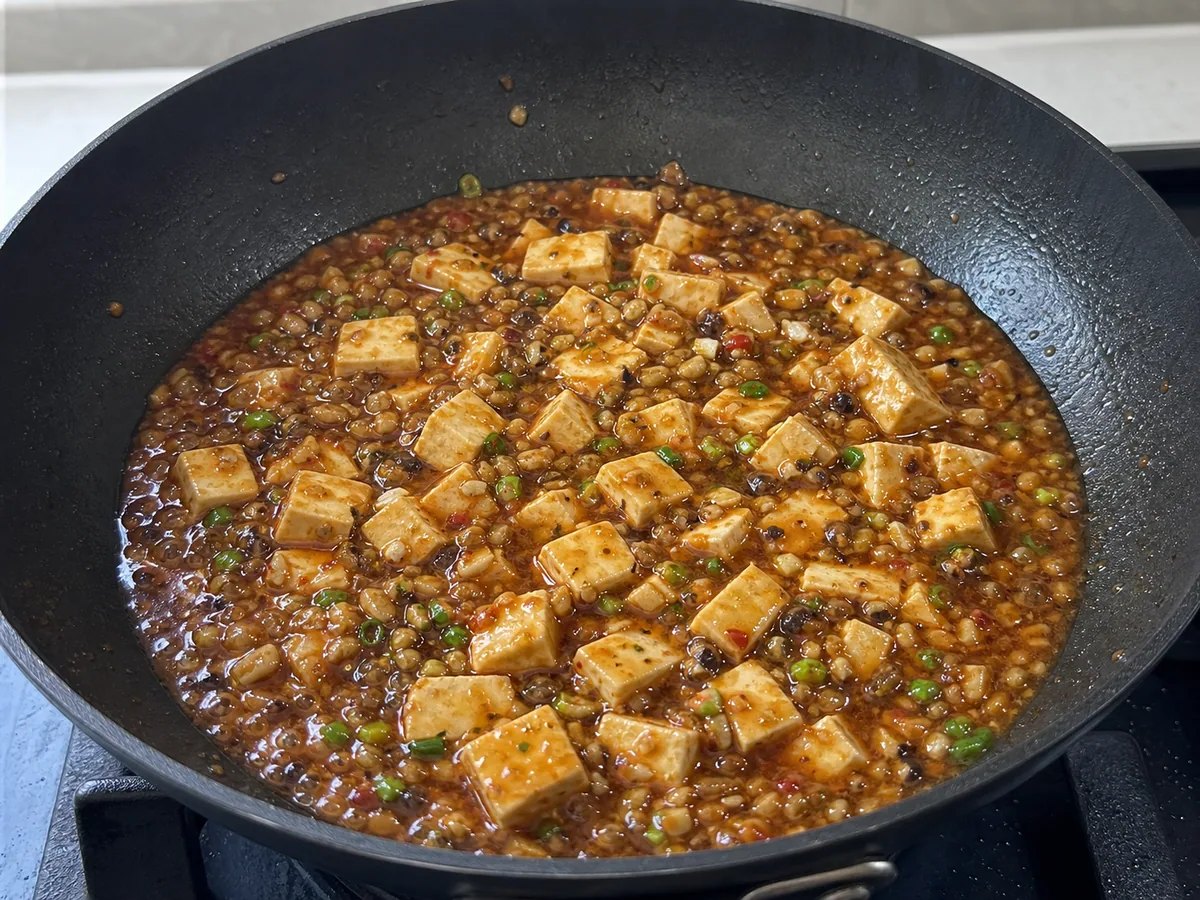
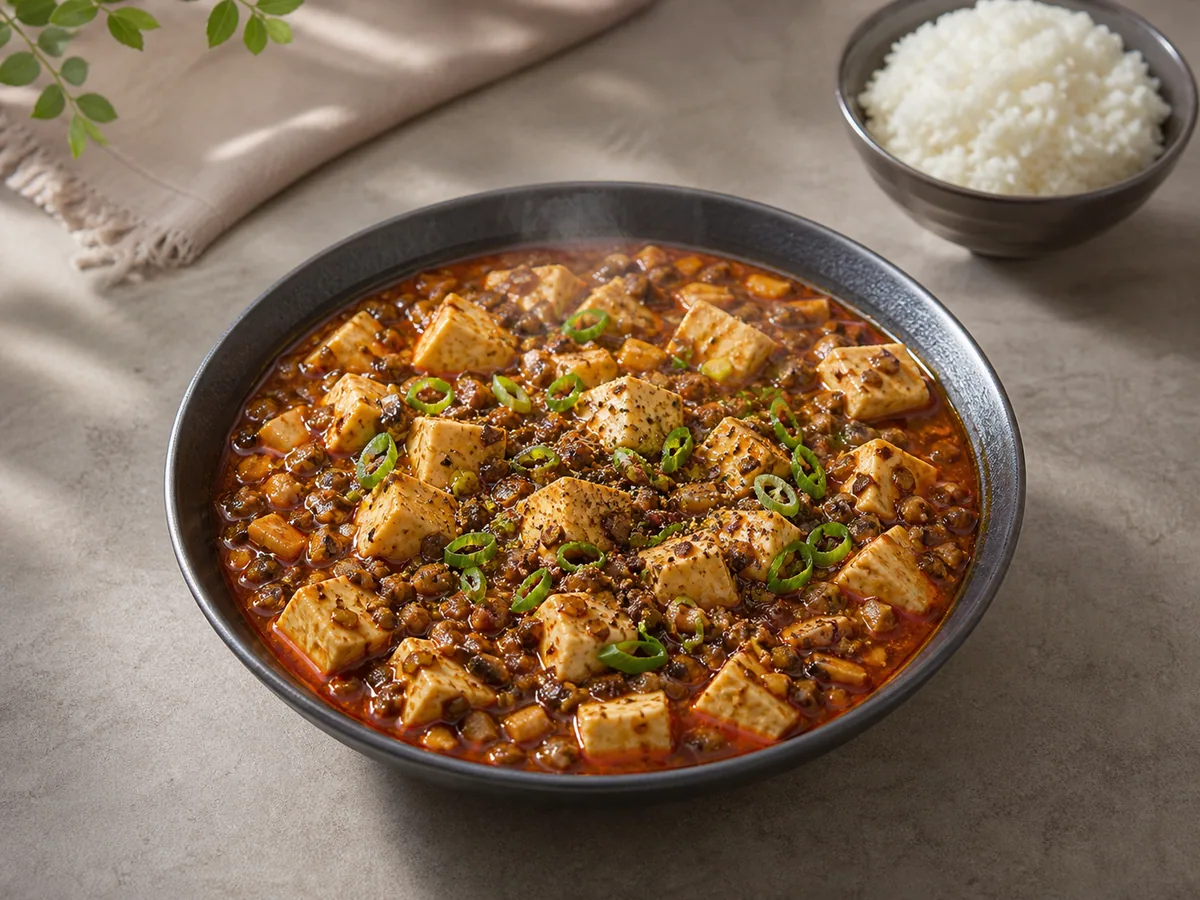
Stir 12 g of cornstarch with 30 ml of water for slurry until completely smooth. Drizzle half of the slurry around the skillet and gently shake the pan. Start a 20-second timer and wait 20 to 30 seconds before judging the texture. Add more slurry only as needed, restarting the timer after each addition; the sauce should look glossy and lightly cling to the tofu, not set into a gel. Turn off the heat and fold in 5 ml of toasted sesame oil, the green slices prepared from 4 scallions, and the reserved ground portion of 4 g of Sichuan peppercorns. Serve immediately with steamed rice (optional).
00:20


Smart Substitutions
- No fresh shiitakes? Use cremini or oyster mushrooms and cook them until their released liquid has fully evaporated.
- No fermented black soybeans? Add another small spoonful of doubanjiang, tasting carefully because chile bean pastes vary widely in saltiness.
- Need less heat? Omit the chile flakes and use half the Sichuan peppercorns; the fermented sauce will still taste full and savory.
- Avoiding wheat? Choose a verified wheat-free fermented chile bean paste and check the labels on the fermented black soybeans and stock.
Tips and Variations
- Rinse the fermented black soybeans briefly and pat them dry when the brand tastes aggressively salty.
- Chop the mushrooms by hand rather than pureeing them so the sauce keeps a meaty, nubby texture.
- Shake or swirl the skillet after the tofu goes in; repeated spoon stirring is the fastest way to break the cubes.
What Went Wrong?
- Sauce is watery Let it simmer uncovered for another minute, then add a little more of the prepared slurry and wait before judging the texture.
- Sauce became too thick Loosen it with a splash of low-sodium vegetable stock and gently swirl the skillet until glossy again.
- Tofu is breaking apart Lower the simmer and move the pan by its handle instead of stirring through the cubes.
- Sichuan pepper tastes bitter The peppercorns were likely scorched; toast a fresh batch over lower heat and grind it after cooling.
Nutrition Estimate
- Fiber: 4 g per serving
- Sodium: 850 mg per serving
Nutrition disclaimer:This recipe is provided for general cooking information only. Nutrition values are estimates and may vary by ingredients, brands, preparation methods, and serving sizes. Check ingredient labels and follow appropriate food-safety practices. This content is not medical, dietary, allergy, or professional food-safety advice.
FAQ
Found an error or have a suggestion?
Help us improve this recipe. Send us your feedback and include the recipe name so we can take a look.