Method
Start the tomato relish
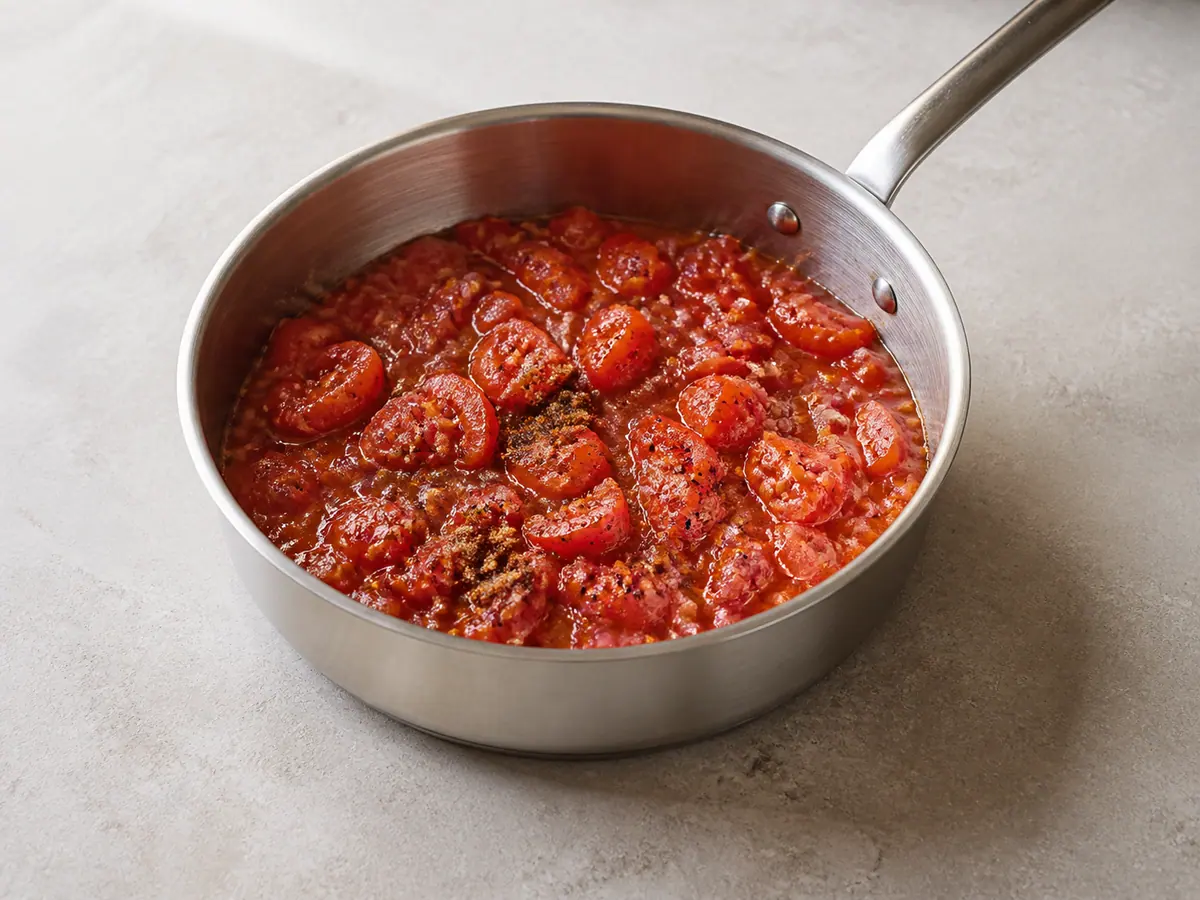
Chop 400 g of ripe tomatoes into roughly 1 cm pieces. Peel and finely chop 100 g of small red onion. Put both in a wide saucepan with 40 g of packed light brown sugar, 60 ml of malt vinegar, 4 g of yellow mustard seeds, 2 g of fine salt for relish, and 1 g of black pepper. Set over medium-high heat and stir until the sugar dissolves and the juices begin to bubble, then reduce the heat to maintain a steady simmer.
Reduce the relish
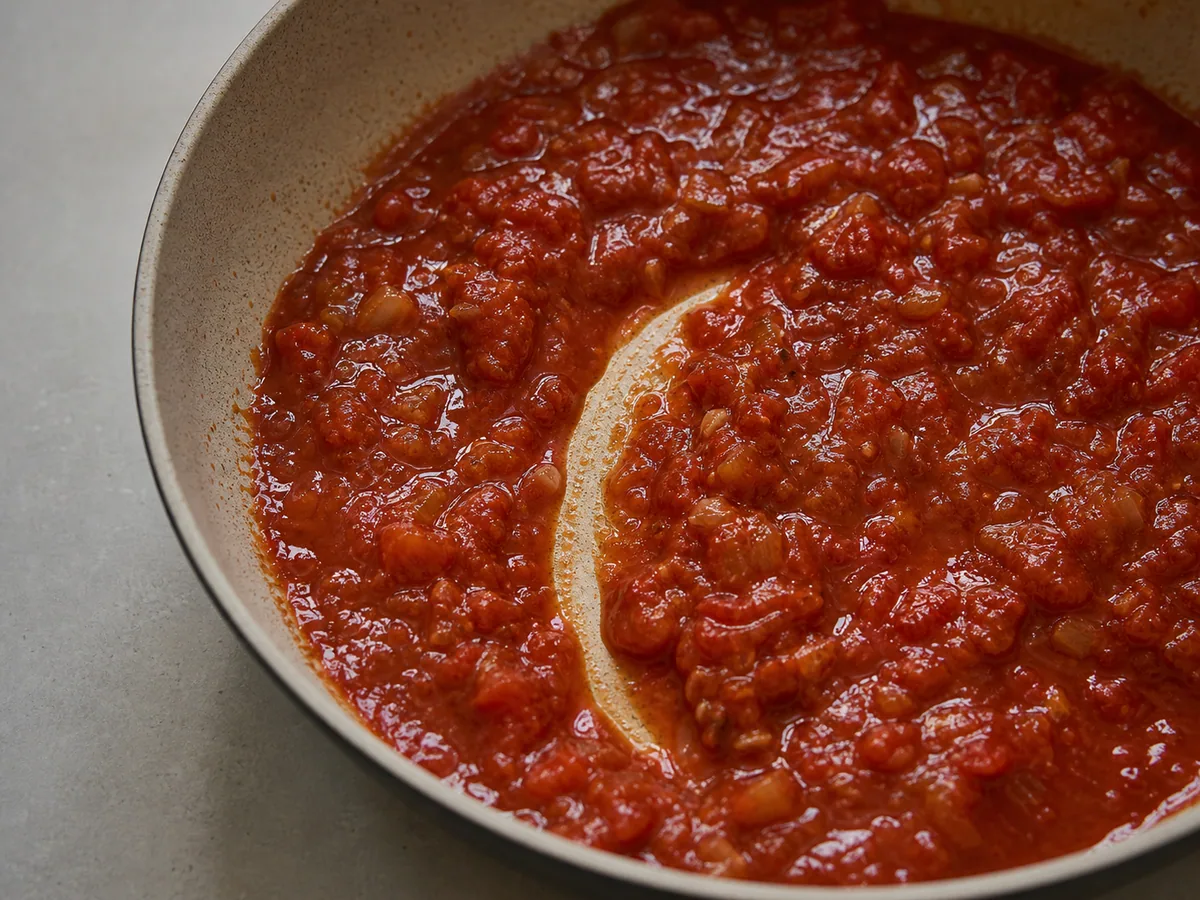
Simmer uncovered for 20 to 25 minutes, stirring every few minutes and more often near the end, until the tomatoes have softened and the mixture is glossy and chunky. It is ready when a spoon drawn across the base leaves a clear track for a second or two. Remove from the heat while you finish the scones.
20:00Cook and dry the potatoes
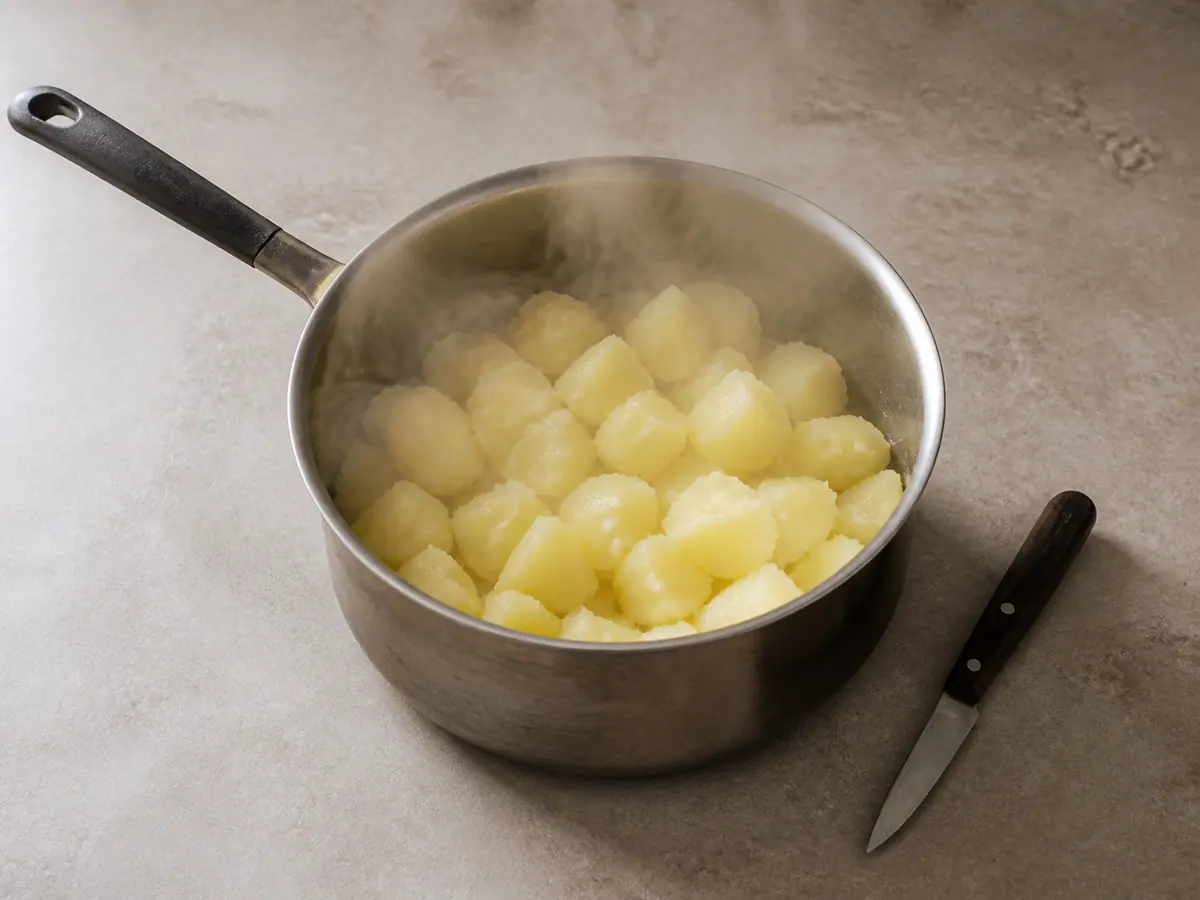
While the relish simmers, peel 500 g of floury potatoes and cut them into evenly sized chunks. Put them in a saucepan, cover with cold water, and bring to a boil. Lower the heat and simmer for 15 to 18 minutes, checking at 15 minutes, until a small knife slides through without resistance. Drain thoroughly, return the potatoes to the hot pan over low heat, and shake the pan gently until visible steam subsides and the potato surfaces look dry. Mash until smooth while still warm.
15:00Make the potato dough
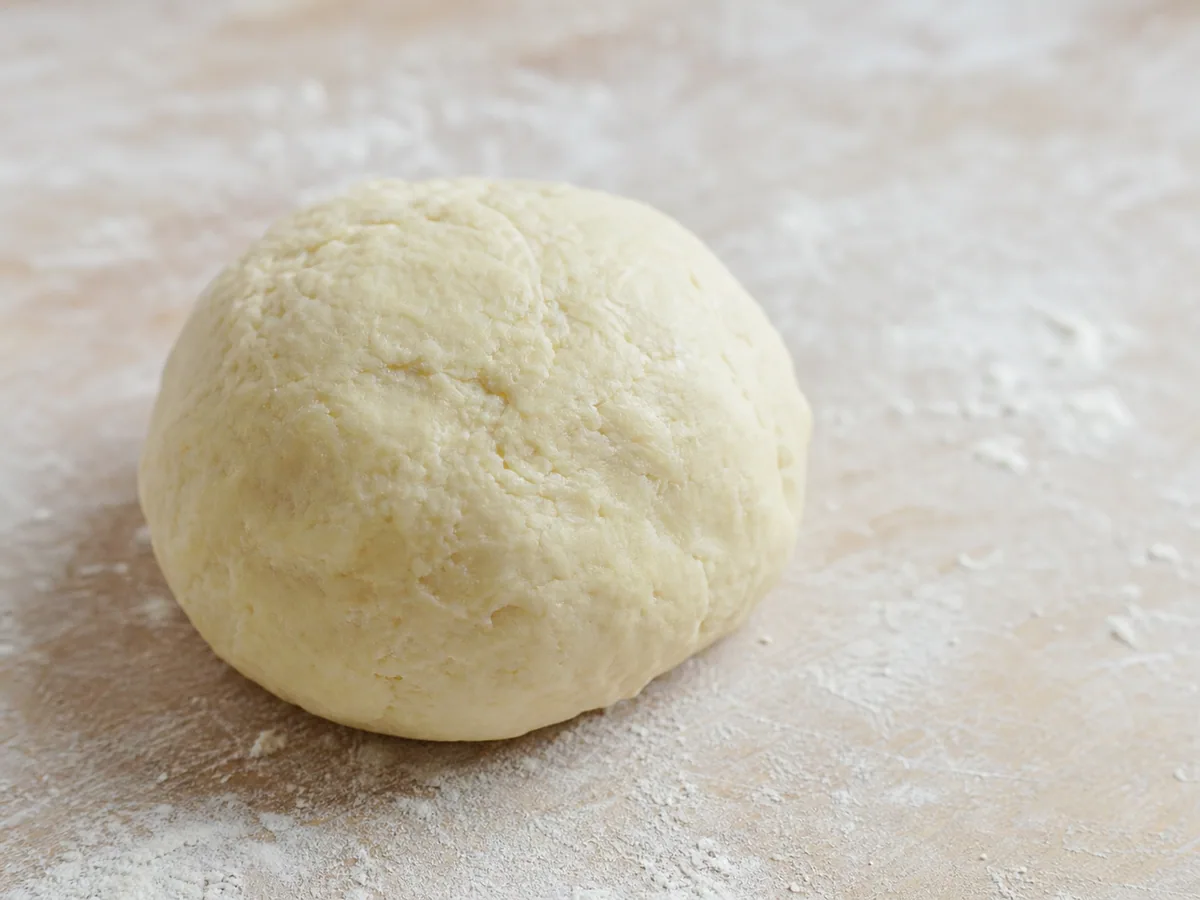
Add 28 g of unsalted butter for dough and 3 g of fine salt for scones to the warm potatoes and mash until the butter has disappeared. Add 125 g of plain flour, keeping back a small spoonful for the work surface. Stir just until a soft, cohesive dough forms. Stop as soon as no dry flour remains; heavy kneading makes the scones firm.
Shape the tattie scones
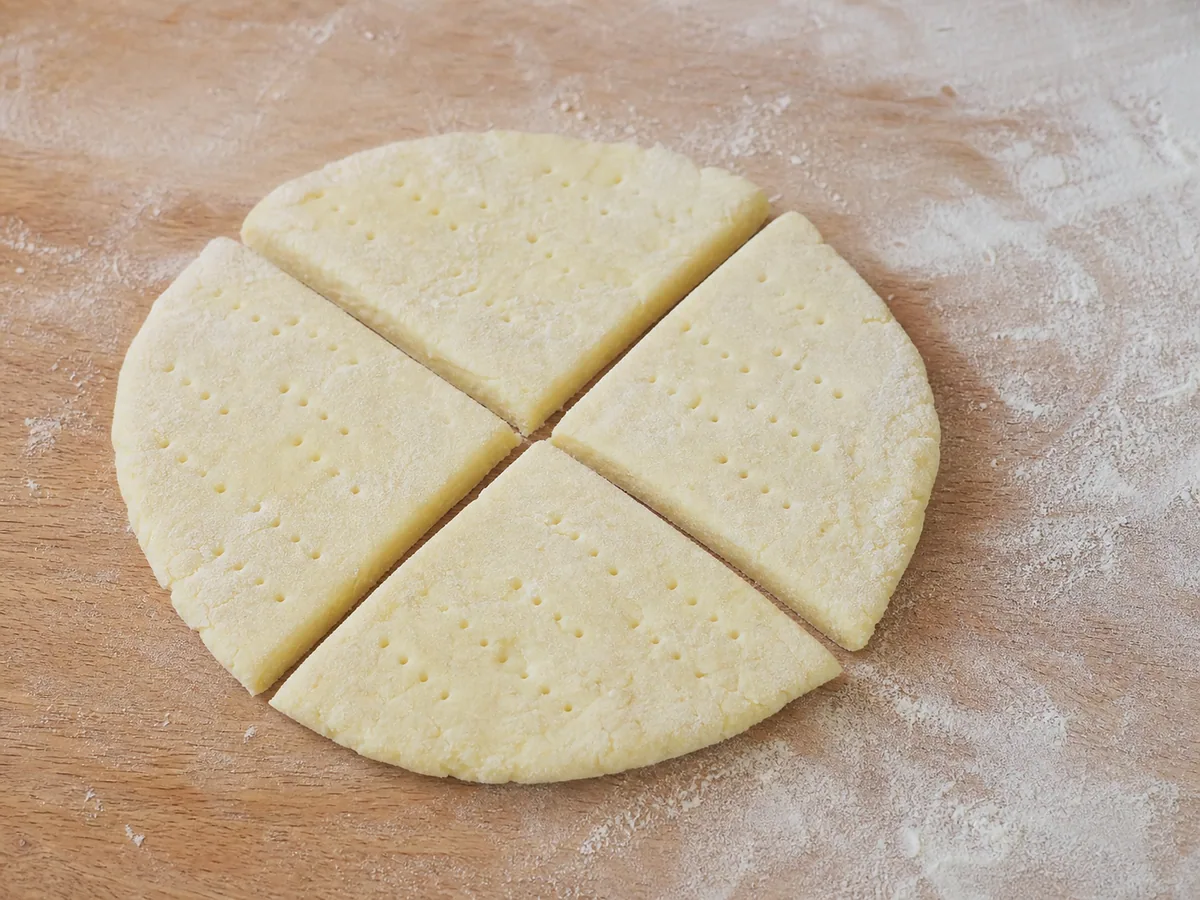
Lightly dust the work surface with the reserved flour. Divide the dough in half and roll each piece into an 18 cm (7 in) round about 5 mm (1/4 in) thick. Prick each round all over with a fork, then cut each one into 4 wedges. Slide a thin spatula under the wedges so they lift without stretching.
Cook the first side
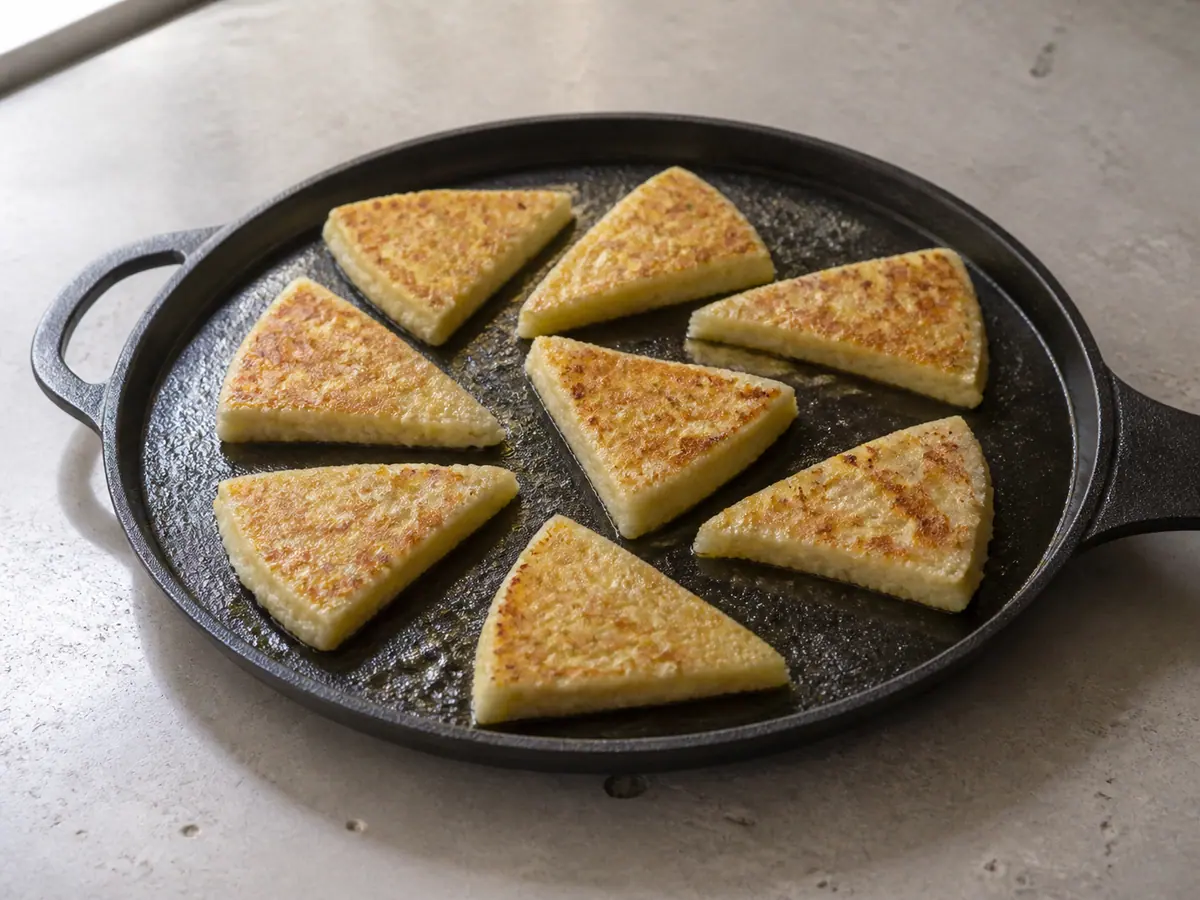
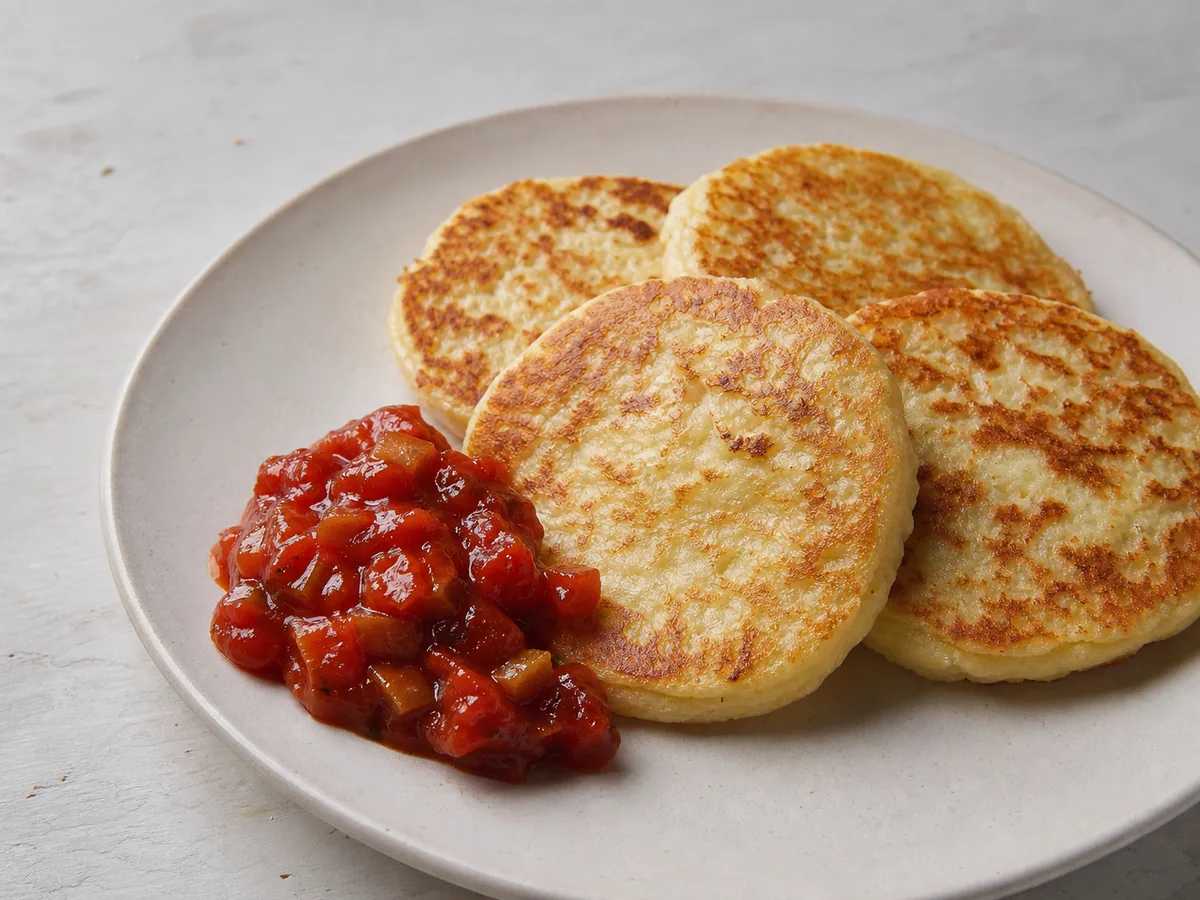
Heat a heavy griddle or large skillet over medium heat. Add 15 g of unsalted butter for griddle and spread it into a thin film. Arrange the wedges in one layer without crowding, working in batches if necessary. Cook the first side for 3 to 4 minutes, checking at 3 minutes, until the underside has mottled golden-brown patches and the upper edges look slightly dry. Lower the heat if the butter begins to darken quickly.
03:00Turn and finish the scones
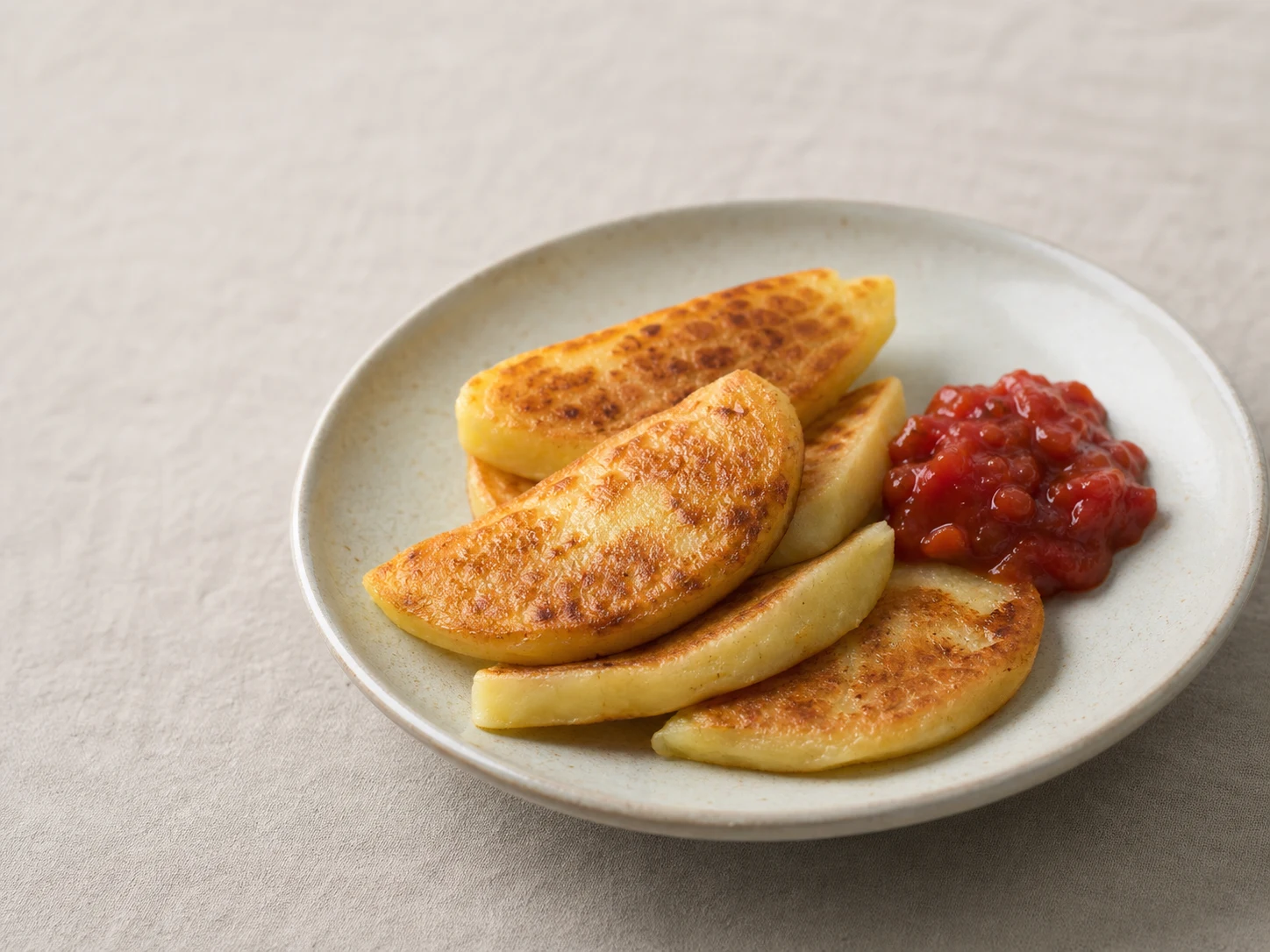
Turn the wedges with a thin spatula and cook the second side for 3 to 4 minutes, checking at 3 minutes, until both sides are golden in patches, the edges are dry, and the centres are hot and tender. Press any thicker spots gently against the pan for even contact. Transfer to a warm plate, spoon the tomato relish alongside, and serve immediately.
03:00


Smart Substitutions
- No floury potatoes? Use russet, Maris Piper, or another high-starch potato; avoid waxy salad potatoes.
- Need a dairy-free version? Use a firm dairy-free block butter in the dough and on the griddle.
- No malt vinegar? Use apple cider vinegar for a similarly rounded acidity.
- No mustard seeds? Use 1/2 teaspoon ground mustard or leave them out for a simpler relish.
Tips and Variations
- Return the drained potatoes to the hot pan briefly; excess moisture is the main cause of sticky dough.
- Roll the rounds evenly to 5 mm so the centres heat through before the butter browns.
- Use a wide saucepan for the relish so steam escapes quickly and the tomatoes stay chunky.
What Went Wrong?
- Dough is very sticky The potatoes may be damp. Work in a little extra flour, a spoonful at a time, only until the dough can be rolled.
- Wedges crack while lifting Press the cracks together gently and use a thin spatula; warm dough is more flexible than cool dough.
- Scones brown before the centres heat Lower the heat and keep the wedges thin so the potato centre warms as the surface colours.
- Relish remains watery Move it to a wider pan and simmer uncovered, stirring frequently, until a spoon leaves a brief track across the base.
Nutrition Estimate
- Fiber: 5 g per serving
- Sodium: 500 mg per serving
Nutrition disclaimer:This recipe is provided for general cooking information only. Nutrition values are estimates and may vary by ingredients, brands, preparation methods, and serving sizes. Check ingredient labels and follow appropriate food-safety practices. This content is not medical, dietary, allergy, or professional food-safety advice.
FAQ
Found an error or have a suggestion?
Help us improve this recipe. Send us your feedback and include the recipe name so we can take a look.