Method
Mix and knead the pastry
Combine 250 g of all-purpose flour and 2 g of fine salt for pastry in a wide bowl. Add 40 ml of extra-virgin olive oil for pastry and 125 ml of water, stirring until a shaggy dough forms. Knead on a clean surface for 5 to 6 minutes, until smooth and supple; use only a light dusting of flour if it sticks. Divide the dough into one slightly larger piece for the base and one smaller piece for the lid.
05:00Rest the pastry
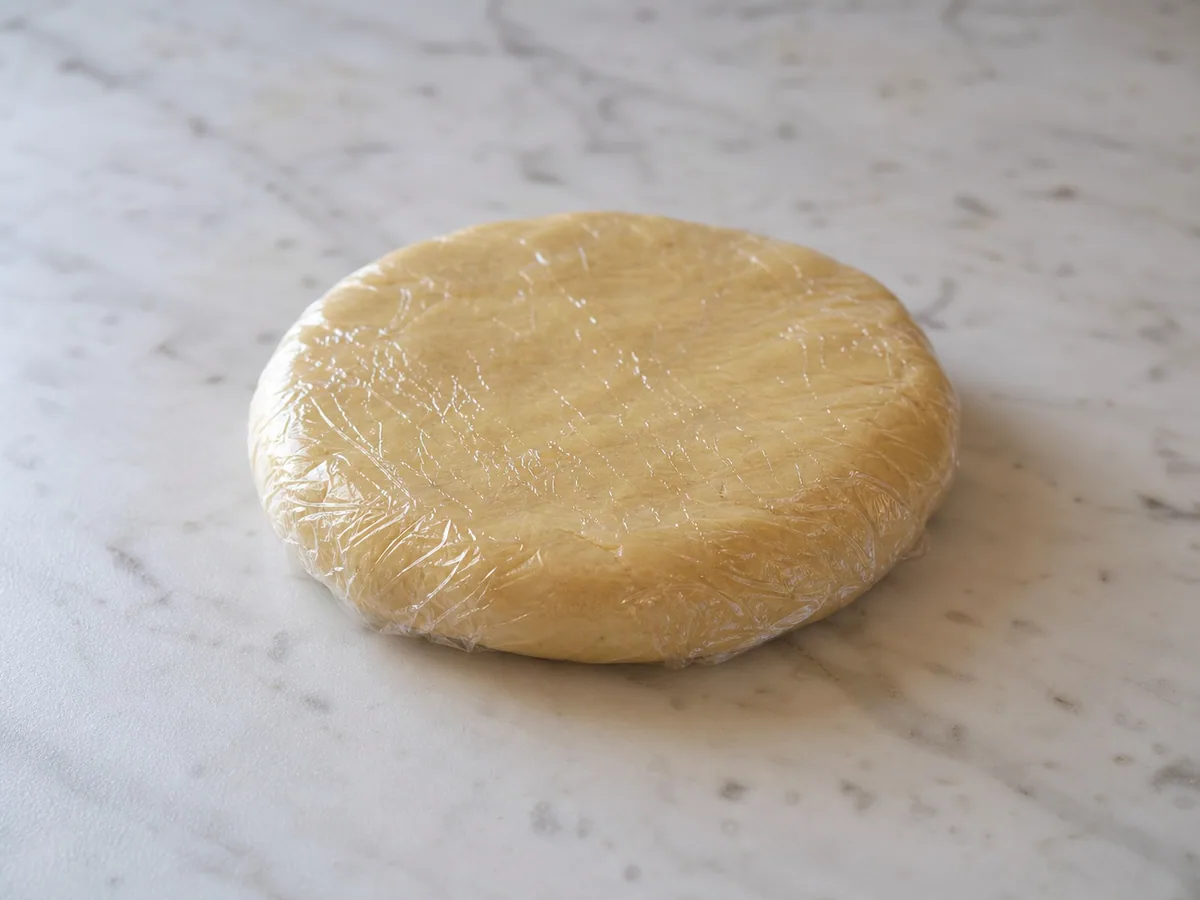
Set the two dough pieces side by side and cover them with an inverted bowl. Let the dough rest for 30 minutes while you begin the filling; keep both pieces covered so their surfaces remain flexible.
30:00Prepare the spinach and soften the onion
Rinse 600 g of fresh spinach thoroughly and shake off excess water. Slice 150 g of yellow onion thinly. Heat 15 ml of extra-virgin olive oil for filling in a wide skillet over medium heat. Add 150 g of yellow onion and cook for 5 to 6 minutes, stirring, until soft and translucent without browning.
05:00Cook the spinach filling dry
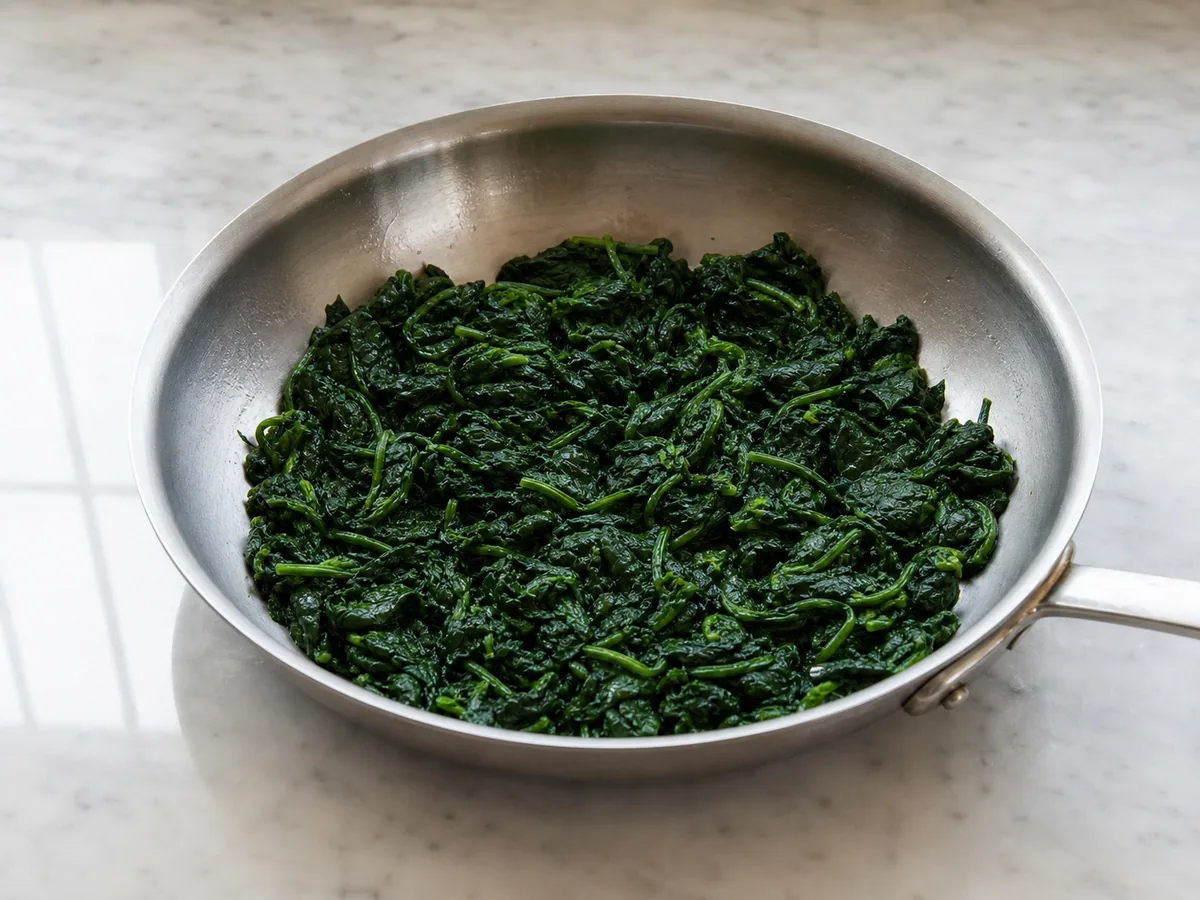
Add 600 g of fresh spinach to the softened onion in batches and cook until wilted. Continue cooking for 6 to 8 minutes, stirring often, until the skillet is dry and no liquid pools when the greens are pressed to one side. Transfer the mixture to a colander, let it cool for several minutes, then squeeze firmly and chop.
06:00Season and combine the filling
Heat the oven to 200°C (400°F) with a baking sheet on the middle rack. Add 250 g of whole-milk ricotta to a large bowl and break it up with a fork. Finely grate 40 g of Parmesan cheese into the bowl. Beat 2 large eggs for filling in a separate cup, then stir them into the cheeses with 2 g of fine salt for filling, 1/2 g of ground nutmeg, and 1 g of black pepper. Fold in the cooled spinach mixture until evenly combined. The filling should be moist but not watery.
Line, fill, and seal the pie
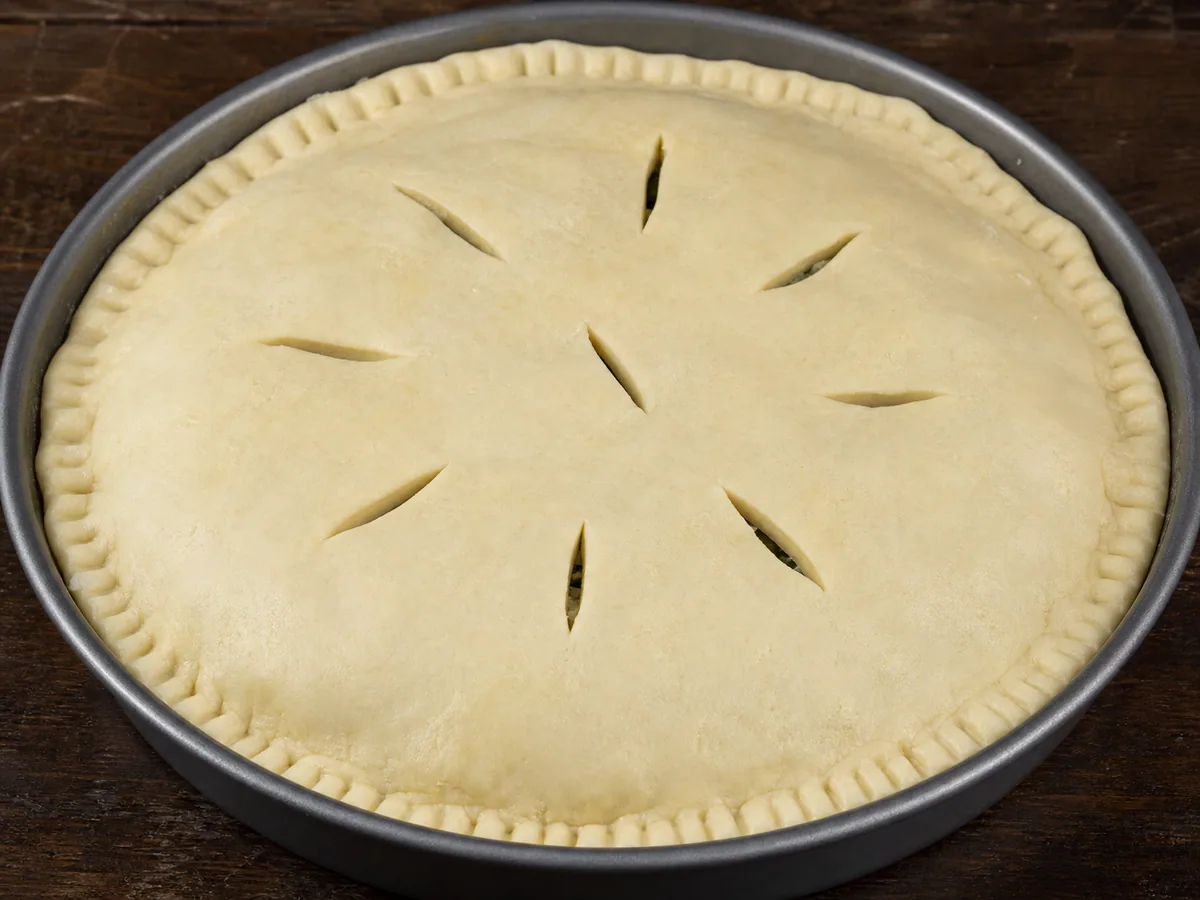
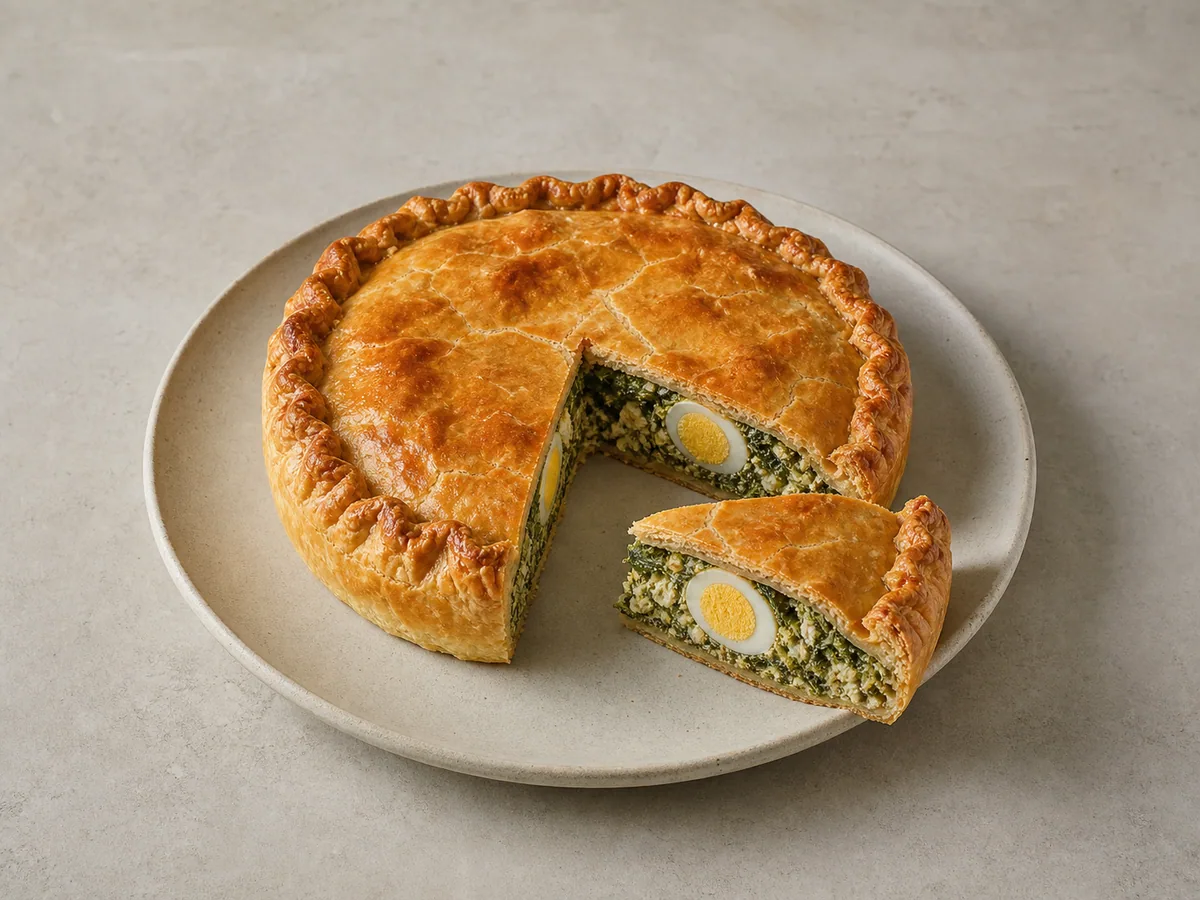
Use a 24 cm (9 1/2 in) round pie pan (for 4 servings). For scaled batches, choose a pan that keeps the filling at a similar depth. Line the base with a round of parchment. Roll the larger dough piece into a thin circle large enough to cover the base and sides, then fit it into the pan without stretching. Scatter 15 g of plain wheat breadcrumbs over the base. Spoon in the filling and level it. Use the back of a spoon to make enough deep wells to hold 4 large eggs for baking. Crack each egg into a small cup and slide it into a well, keeping the yolk intact. Roll the smaller dough piece into a thin lid, lay it over the filling, trim excess dough, and crimp the edges firmly. Cut three small, well-spaced steam vents in the top without piercing an egg.
Bake until golden and fully set
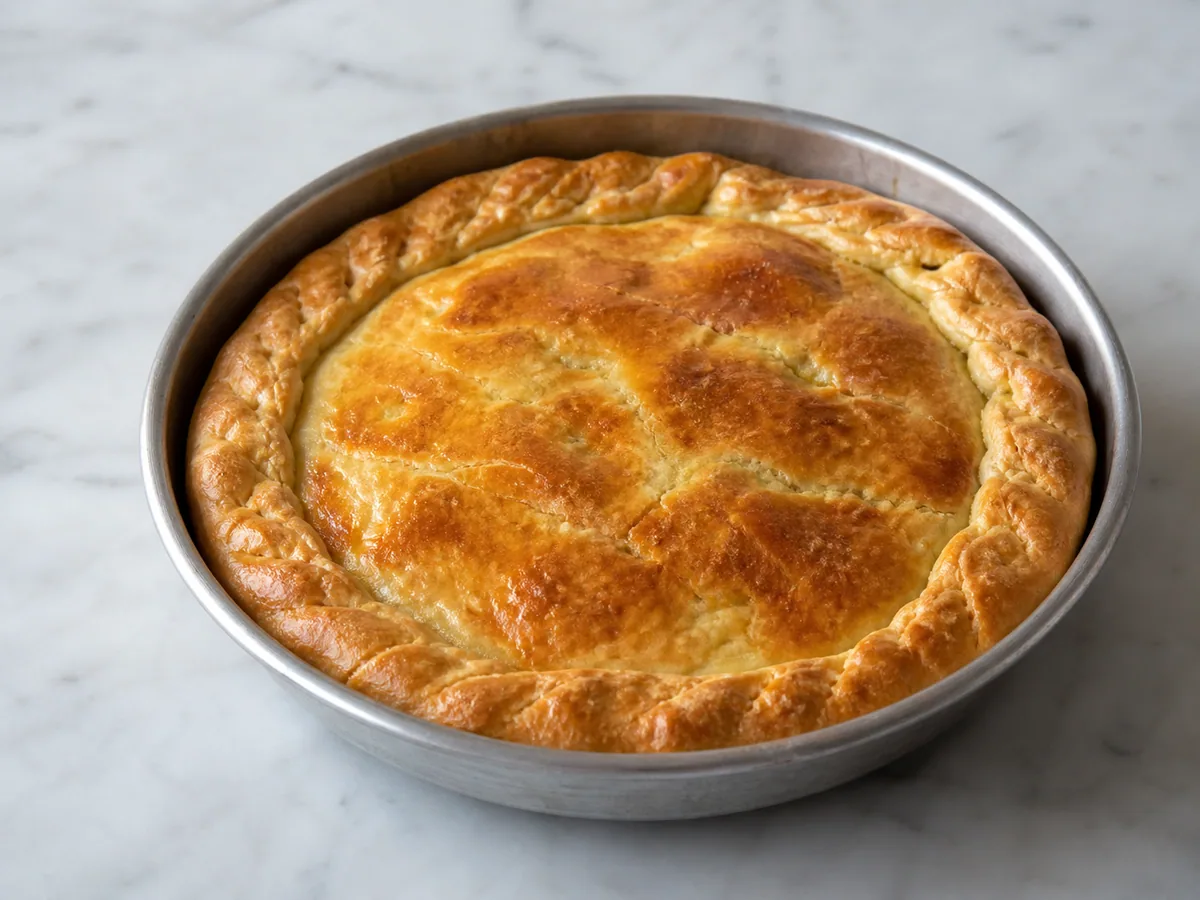
Set the pie on the hot baking sheet. Bake at 200°C (400°F) for 45 to 50 minutes, starting the first check at 45 minutes, until the crust is deeply golden and the center looks firm rather than fluid when the pan is gently nudged. Insert a clean food thermometer through a steam vent into the center of the filling, avoiding the pan and the positions of the whole eggs. Check at least two central locations through separate vents; every reading must reach at least 71°C (160°F).
45:00Let the pie set before slicing
Remove the pie from the oven and let it stand in the pan for 15 minutes before slicing and serving warm. The filling should hold cleanly around the fully set eggs when a wedge is lifted.
15:00


Smart Substitutions
- No ricotta? Use farmer cheese or small-curd cottage cheese, pressing out excess moisture before mixing.
- No spinach? Use tender Swiss chard leaves; remove the thick stems and cook the leaves until the pan is dry.
- No Parmesan? Use aged pecorino and reduce the filling salt slightly to balance its sharper salinity.
- Want a shortcut crust? Use enough plain savory pie dough to line and cover the pan, choosing a dough without added sugar.
Tips and Variations
- Keep both dough pieces covered during the rest so their surfaces stay flexible and roll without cracking.
- The preheated baking sheet gives the bottom crust an immediate burst of heat and helps it brown beneath the moist filling.
- Crack each baking egg into a cup first; this makes it easier to keep the yolk centered and remove any stray shell.
What Went Wrong?
- Bottom crust is pale or damp Cook and squeeze the spinach more thoroughly, keep the breadcrumb layer even, and bake on a fully preheated sheet.
- Pastry tears while rolling Let the dough relax under the bowl for another 5 minutes, then roll from the center outward with light pressure.
- Egg centers are still soft Continue baking until the filling reaches 71°C (160°F) and both whites and yolks are fully set.
- Filling spills from the first slice Give the baked pie the full 15-minute standing time so the cheese-and-egg filling can firm before cutting.
Nutrition Estimate
- Fiber: 6 g per serving
- Sodium: 770 mg per serving
Nutrition disclaimer:This recipe is provided for general cooking information only. Nutrition values are estimates and may vary by ingredients, brands, preparation methods, and serving sizes. Check ingredient labels and follow appropriate food-safety practices. This content is not medical, dietary, allergy, or professional food-safety advice.
FAQ
Found an error or have a suggestion?
Help us improve this recipe. Send us your feedback and include the recipe name so we can take a look.