Method
Make the orange syrup
Combine 200 g of granulated sugar for syrup, 240 ml of water, 120 ml of fresh orange juice for syrup, and 15 ml of fresh lemon juice in a small saucepan. Bring to a boil over medium-high heat, stirring only until the sugar dissolves. Lower the heat and simmer steadily for 8 minutes, then remove from the heat and leave the syrup uncovered to cool while you make the cake.
08:00Prepare the pan and dry ingredients
Heat the oven to 180°C (350°F). Line the bottom and sides of a 23 x 23 cm (9 x 9 in) baking pan (for 8 servings) with parchment, leaving enough overhang to lift the cake later. For a scaled batch, choose a pan that keeps the batter at a similar depth rather than trying to scale the dimensions directly. Whisk 170 g of fine semolina, 80 g of all-purpose flour, 10 g of baking powder, and 2 g of fine salt in a medium bowl until evenly combined.
Whip the eggs and mix the wet batter
Beat 3 large eggs with 125 g of granulated sugar for cake in a large bowl on medium-high speed for about 4 minutes, until pale, thick, and able to fall from the beaters in a ribbon that sits briefly on the surface. Reduce the speed to low and whisk in 180 g of plain whole-milk yogurt, 90 ml of sunflower oil, 60 ml of fresh orange juice for cake, 6 g of orange zest, and 5 ml of vanilla extract just until smooth.
04:00Fold the batter and bake
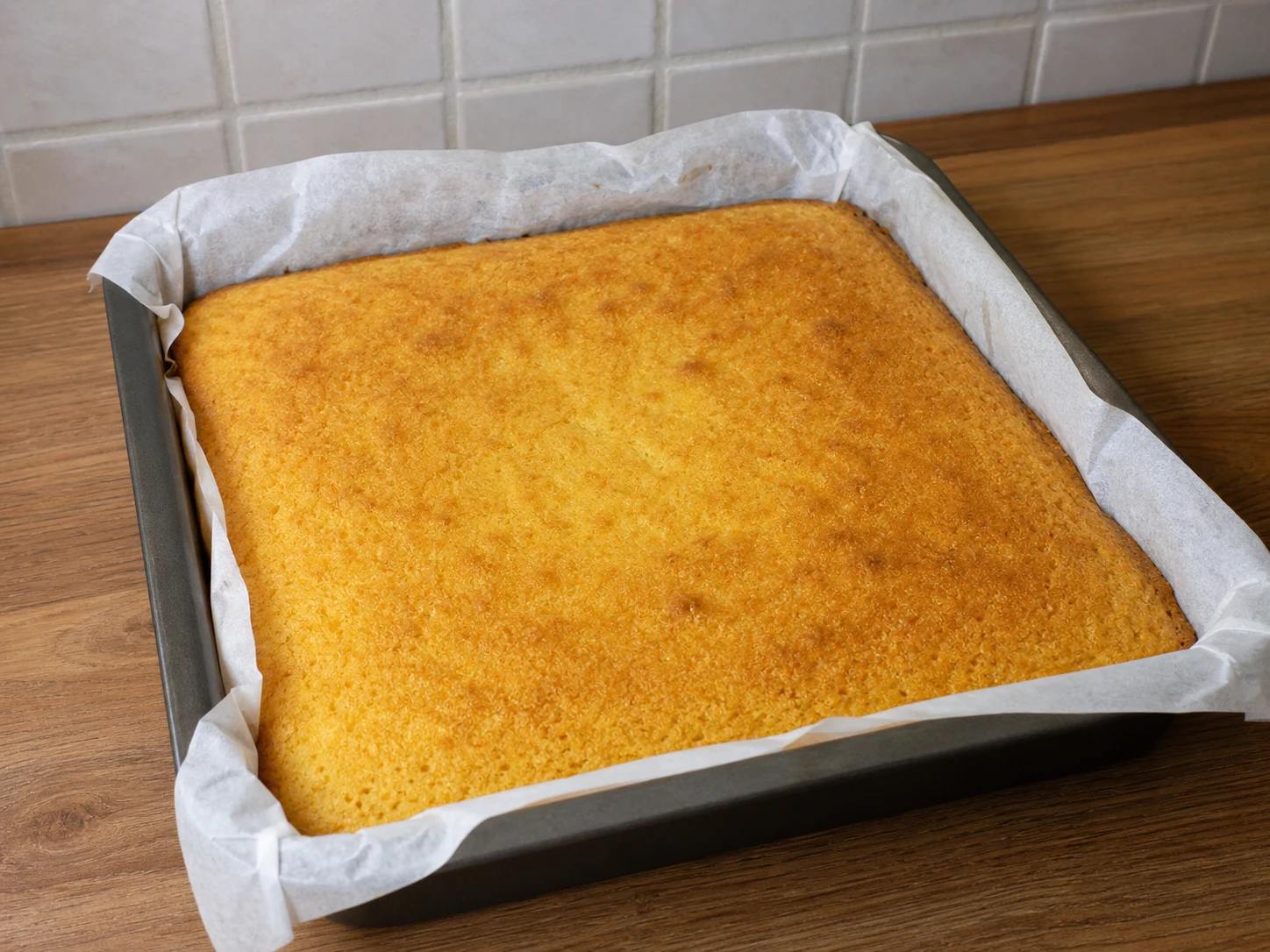
Add the dry mixture to the wet batter in two additions, folding gently after each until no dry streaks remain. Scrape the batter into the prepared pan and level the surface without pressing out the air. Bake for 30 to 35 minutes. Begin checking at 30 minutes; the top should be evenly deep golden, the center should spring back when lightly pressed, and a skewer should come out without wet batter. Because the cake contains eggs, use a food thermometer to confirm the center has reached at least 71°C/160°F before removing it from the oven.
30:00Pierce and soak the warm cake
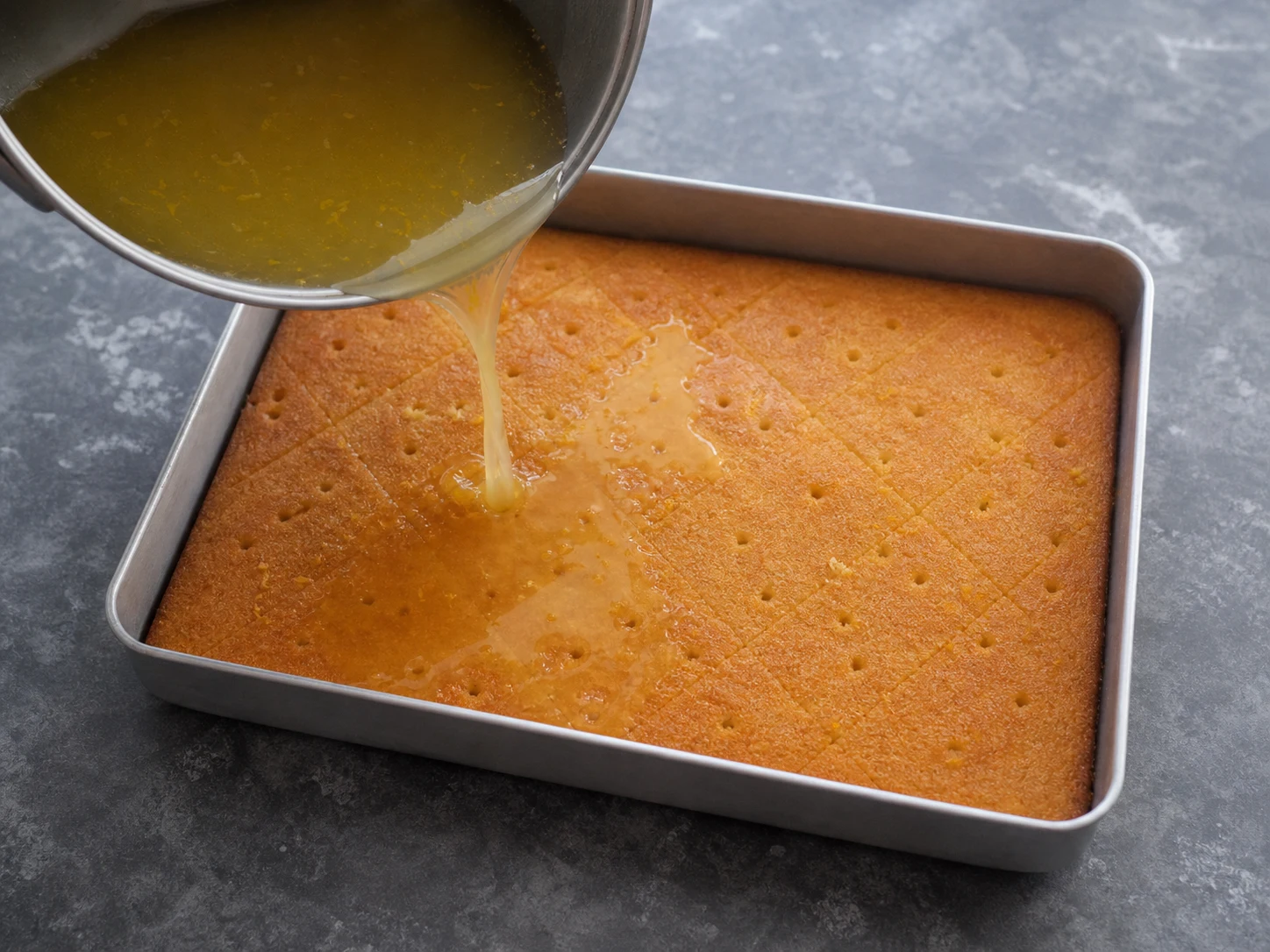
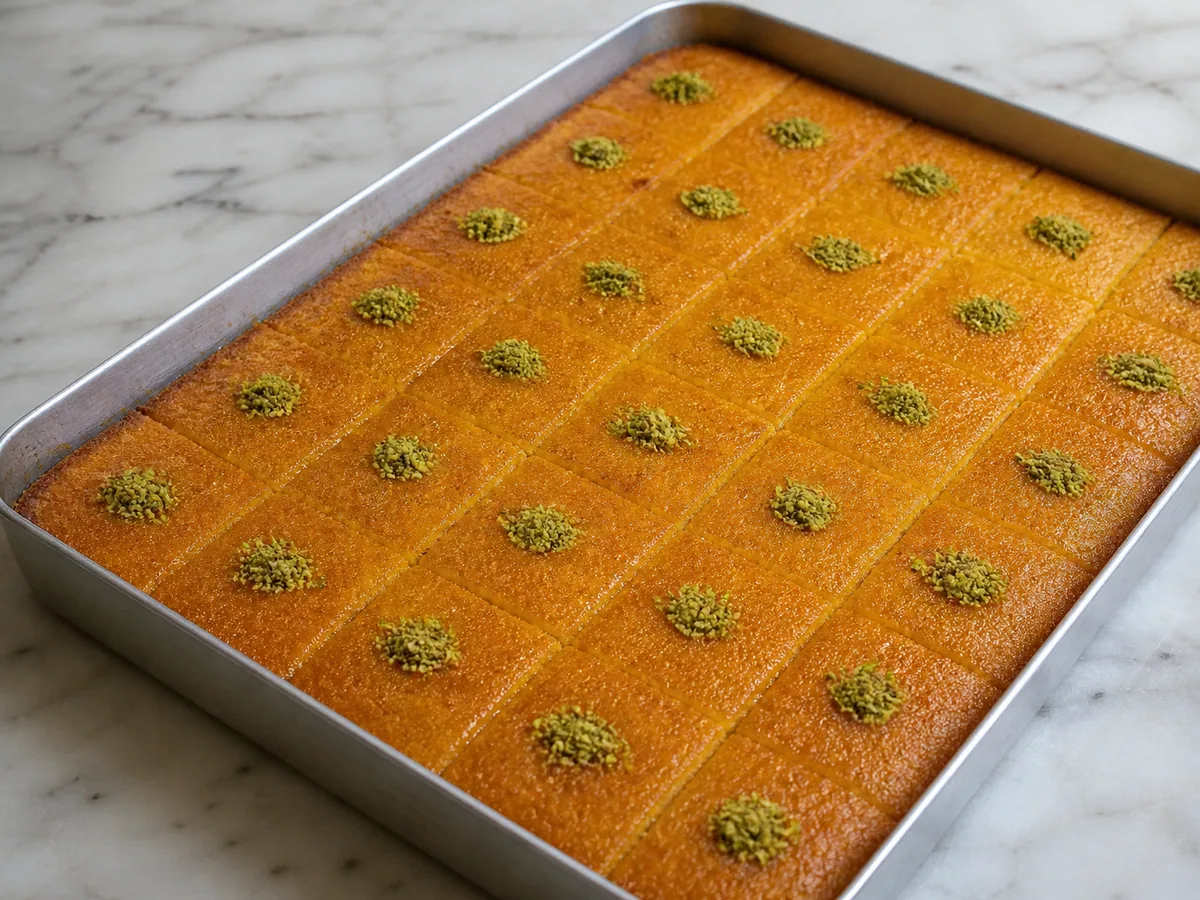
Set the pan on a heatproof surface and let the cake stand for 5 minutes. Use a skewer to make holes across the surface, stopping short of the bottom of the pan, then score the cake into the selected number of equal rectangular servings. Pour the cooled orange syrup over the warm cake in three slow rounds, pausing after each round so the liquid can travel through the crumb instead of collecting at the edges.
05:00Let the syrup absorb
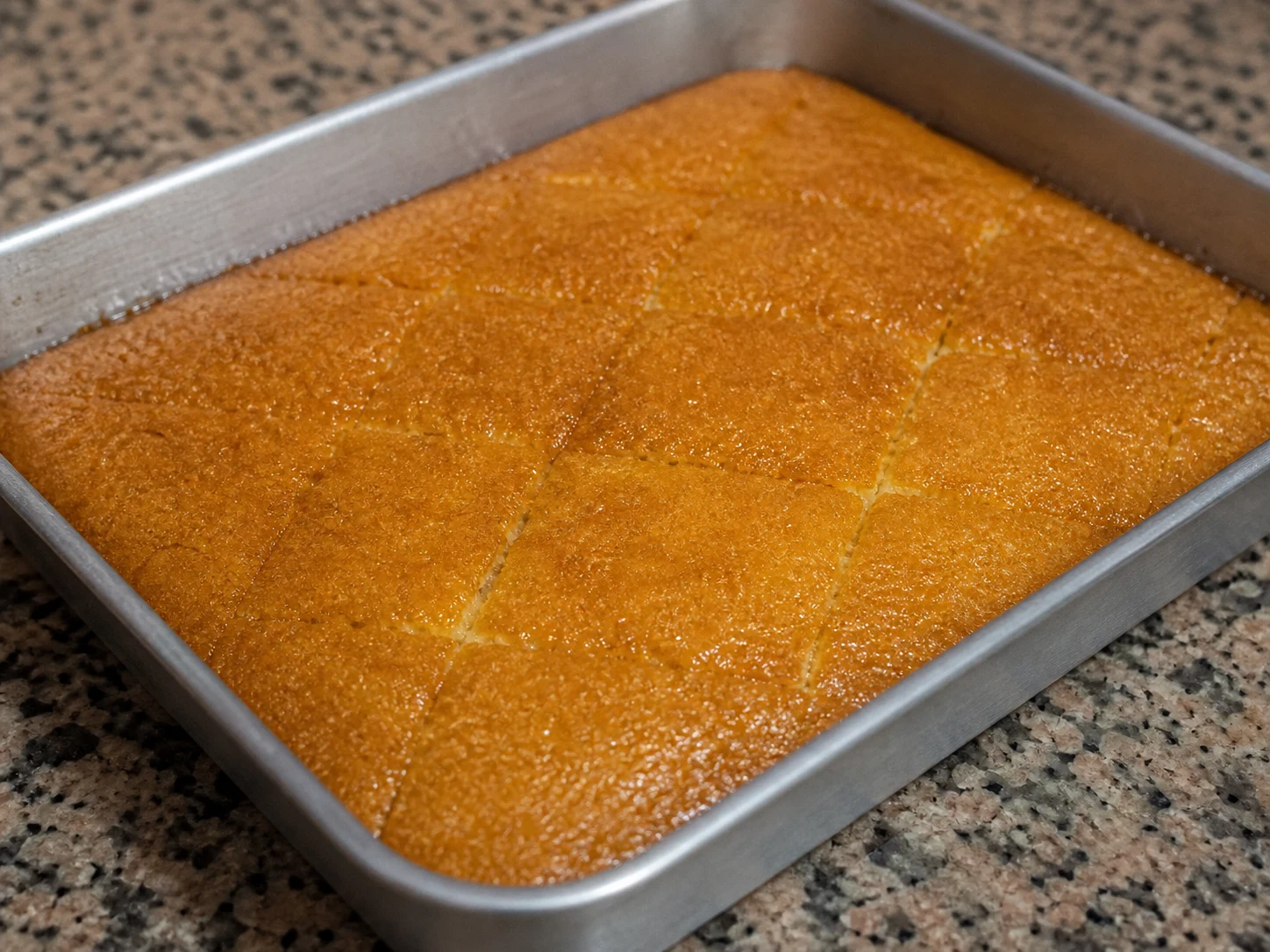
Leave the cake in the pan for 30 minutes, uncovered, until the syrup has moved through the crumb and only a light sheen remains on top. If a small amount gathers at the corners, tilt the pan gently once or twice to redistribute it without breaking the cake.
30:00Finish with pistachios and serve
Chop 30 g of unsalted pistachios into a mix of fine crumbs and small pieces, then scatter them evenly over the scored cake. Lift the cake from the pan, separate the rectangles with a sharp knife, and serve once the crumb is moist but no longer releasing loose syrup.


Smart Substitutions
- No sunflower oil? Use a neutral vegetable oil or a mild olive oil that will not overpower the orange.
- No whole-milk yogurt? Thin plain Greek yogurt with water until it matches the consistency of regular yogurt, then measure the listed amount.
- No pistachios? Use the same listed amount of toasted almonds or walnuts for a different nutty finish.
- Prefer another citrus? Replace the orange juice and zest with the same listed amounts of tangerine or clementine juice and zest for a softer, sweeter citrus profile.
Tips and Variations
- Keep the syrup cool and the cake warm; that temperature contrast helps the liquid enter the crumb gradually.
- Fold only until the flour disappears so the whipped eggs keep enough air to lift the semolina.
- Pour the syrup in stages and give each addition time to sink in before adding more.
What Went Wrong?
- Syrup collects around the edges Pause between additions and tilt the pan gently so the liquid reaches the center before adding the next round.
- Cake is dense and low Beat the eggs and sugar until they ribbon clearly, then fold the dry ingredients with a light hand.
- Center sinks after baking Bake until the center springs back and reaches at least 71°C/160°F; an under-set center cannot support the syrup.
- Texture feels coarse Use fine semolina and allow the full absorption time before cutting the portions apart.
Nutrition Estimate
- Fiber: 2 g per serving
- Sodium: 269 mg per serving
Nutrition disclaimer:This recipe is provided for general cooking information only. Nutrition values are estimates and may vary by ingredients, brands, preparation methods, and serving sizes. Check ingredient labels and follow appropriate food-safety practices. This content is not medical, dietary, allergy, or professional food-safety advice.
FAQ
Found an error or have a suggestion?
Help us improve this recipe. Send us your feedback and include the recipe name so we can take a look.