Method
Cook the potatoes and kale
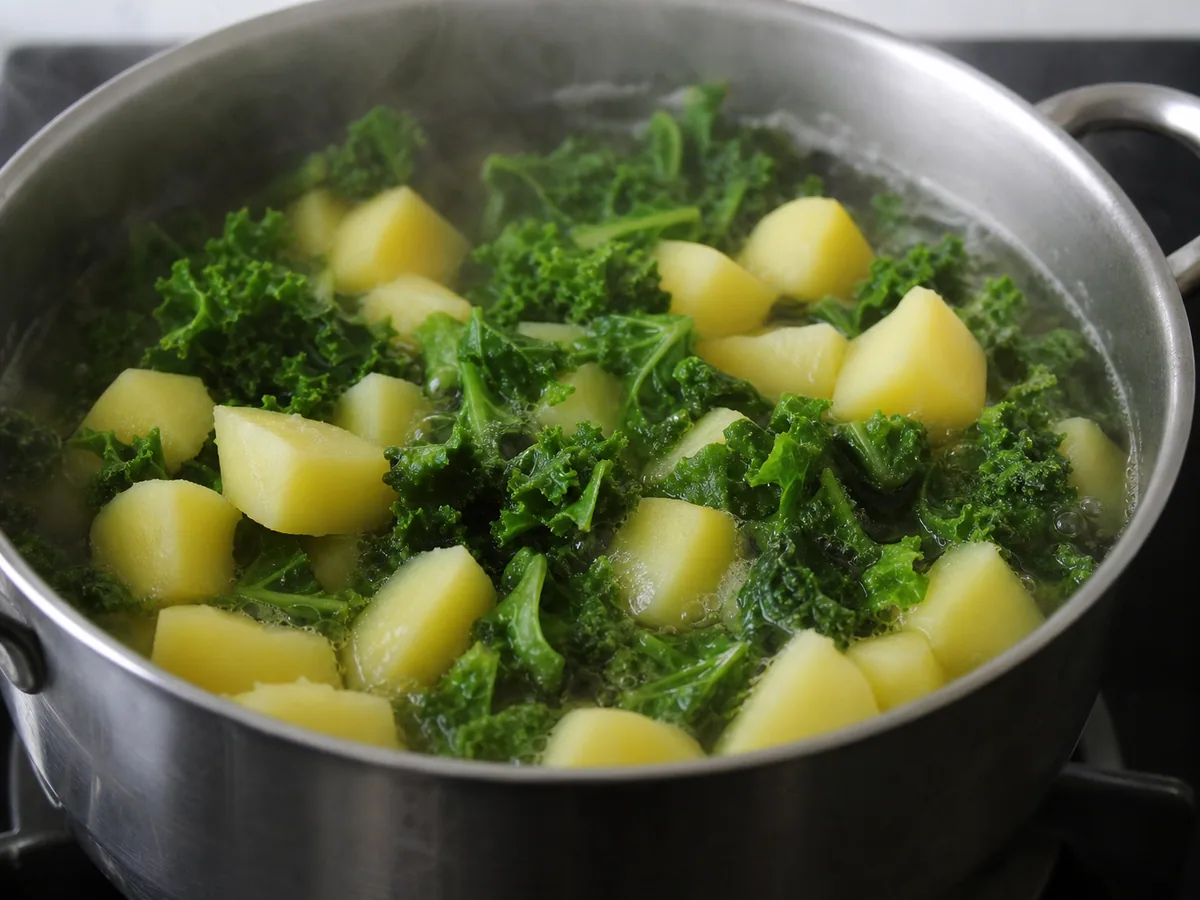
Rinse or scrub 1000 g of floury potatoes under cool running water, then peel them and cut them into even 4 cm (1 1/2 in) chunks. Rinse 500 g of curly kale thoroughly under cool running water unless it is labeled prewashed and ready to use. Remove the tough center ribs, then chop the leaves into small pieces. Put the potato chunks in a large deep pot and add cold water just to cover them. Spread the chopped kale over the potatoes without stirring, cover, and bring to a boil over high heat. Reduce to a steady simmer and cook for 20 minutes, until the potatoes break easily when pressed with a fork and the kale is tender. As soon as the simmer begins, start heating the sausage in the next step so both components finish at about the same time.
20:00Heat the smoked sausage safely while the vegetables simmer
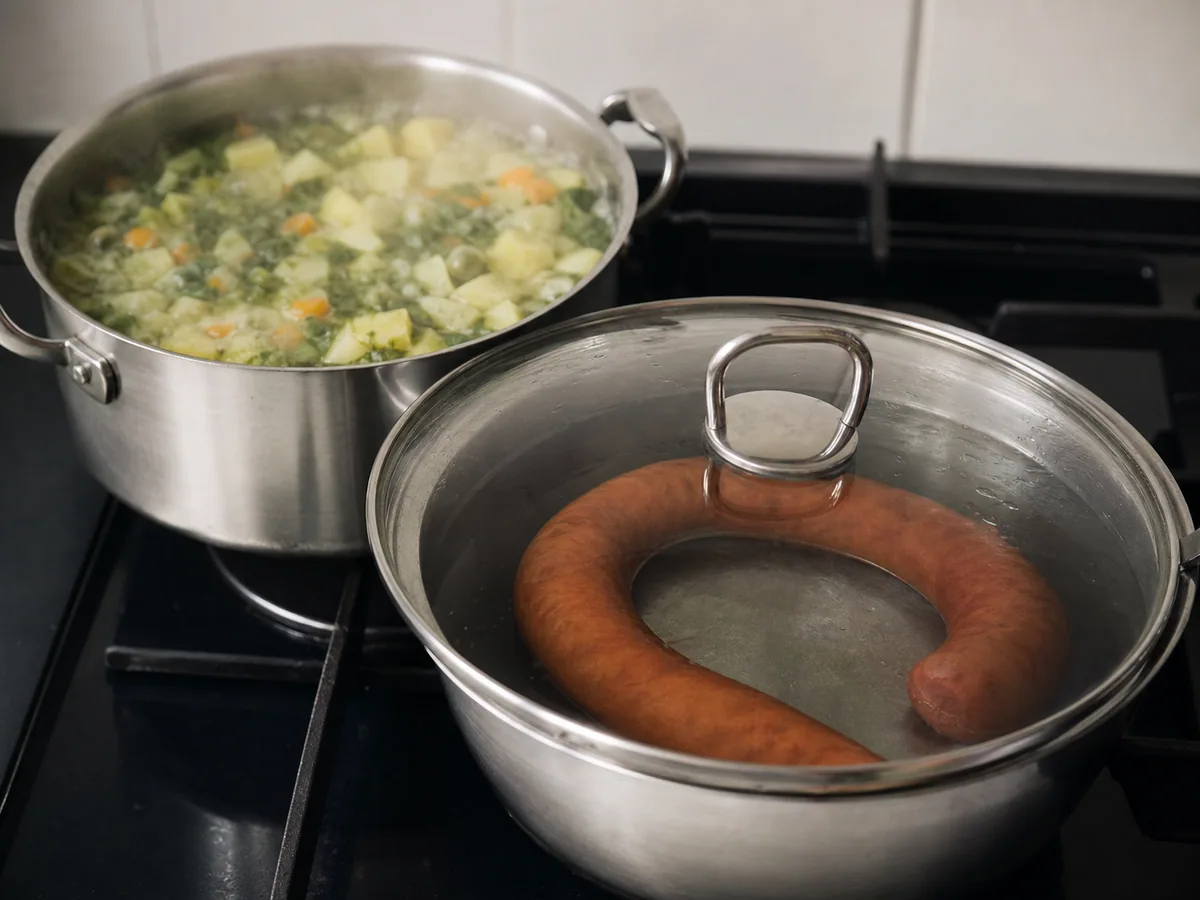
While the potatoes and kale simmer, check that 285 g of fully cooked smoked sausage is labeled fully cooked and follow its package directions. For a typical vacuum-packed rookworst, leave it in the sealed, undamaged inner pouch and submerge it in hot, non-boiling water for 15 minutes. Lift out the pouch with tongs, open it carefully away from rising steam, and use a food thermometer in the thickest part to confirm the sausage reaches 74°C/165°F before serving.
15:00Drain and mash the stamppot
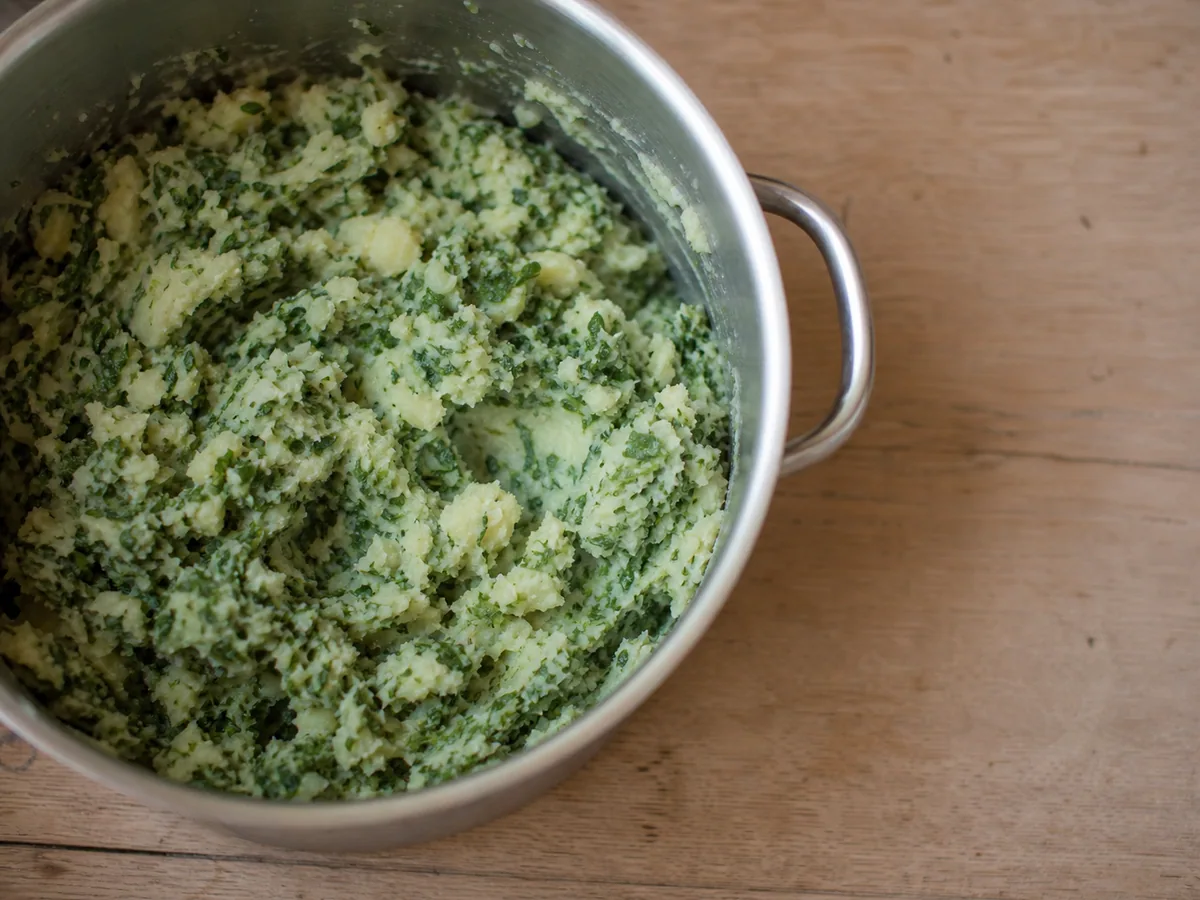
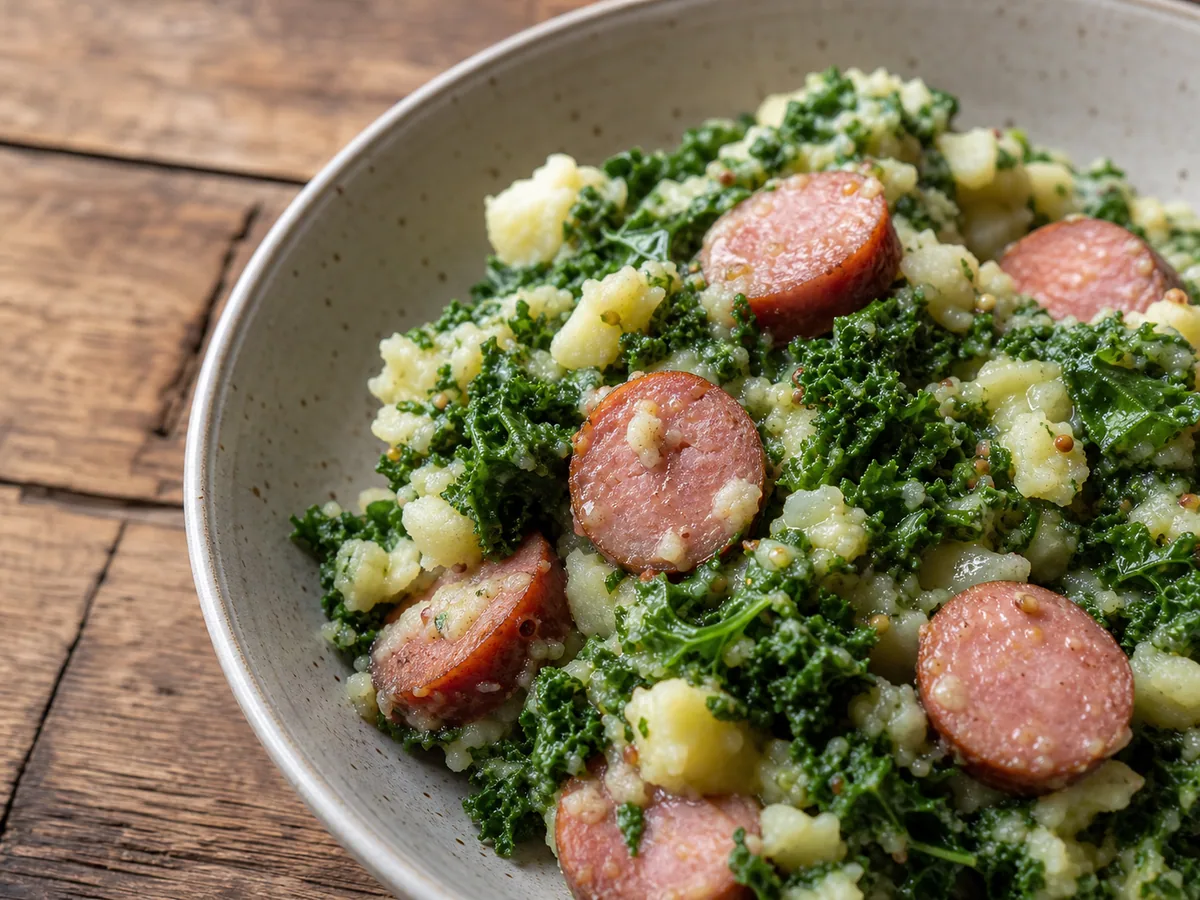
Drain the potatoes and kale thoroughly, then return them to the hot pot over low heat for 1 minute, shaking the pot, until excess moisture has steamed away. Warm 150 ml of whole milk until hot but not boiling. Add 40 g of unsalted butter, 20 g of wholegrain mustard, 1/2 g of ground nutmeg, 2 g of fine salt, and 1 g of black pepper to the pot. Mash by hand while adding the warm milk in stages, stopping when the mixture is cohesive and creamy but still coarse, with visible pieces of kale and a few small potato lumps. Taste and add hot water (optional, for loosening) a spoonful at a time only if the mash feels stiff.
01:00Slice and serve
Lift 285 g of fully cooked smoked sausage from the saucepan and blot the casing dry. Slice it into thick diagonal pieces. Spoon the hot stamppot into shallow bowls and arrange the sausage beside or over the mash. Serve immediately while the mash is soft and the sausage is steaming.


Smart Substitutions
- No rookworst? Use a fully cooked kielbasa or another mild smoked pork sausage of similar weight, and heat it to the same verified internal temperature.
- No whole milk? Use half-and-half for a richer mash, or use unsweetened oat milk and replace the butter with the olive-oil substitution for a fully dairy-free variation.
- No butter? Use 30 ml (2 tablespoons) of mild olive oil and add it gradually while mashing.
- Want a lighter mash? Replace up to one-quarter of the potatoes with peeled celeriac cut to the same size.
Tips and Variations
- Choose floury or starchy potatoes; waxy varieties hold their shape and make the mash feel dense.
- Chop the kale small enough to distribute through every spoonful, but leave enough texture to recognize the greens.
- Warm the milk before mashing so the potatoes stay hot and absorb it evenly.
What Went Wrong?
- Stamppot is watery Return it to low heat and stir gently for a minute or two so excess moisture can evaporate before adding more butter or milk.
- Stamppot is too stiff Work in warm milk or hot water one spoonful at a time until the mash loosens without becoming runny.
- Kale is tough Cover the pot and simmer a few minutes longer before draining; the chopped leaves should be tender enough to mash easily.
- Sausage casing splits Keep the heating water below a boil, use only an intact inner pouch when the package directs, and never pierce the sausage casing; follow the package directions if its heating method differs.
Nutrition Estimate
- Fiber: 11 g per serving
- Sodium: 860 mg per serving
Nutrition disclaimer:This recipe is provided for general cooking information only. Nutrition values are estimates and may vary by ingredients, brands, preparation methods, and serving sizes. Check ingredient labels and follow appropriate food-safety practices. This content is not medical, dietary, allergy, or professional food-safety advice.
FAQ
Found an error or have a suggestion?
Help us improve this recipe. Send us your feedback and include the recipe name so we can take a look.