Method
Soften the choricero peppers
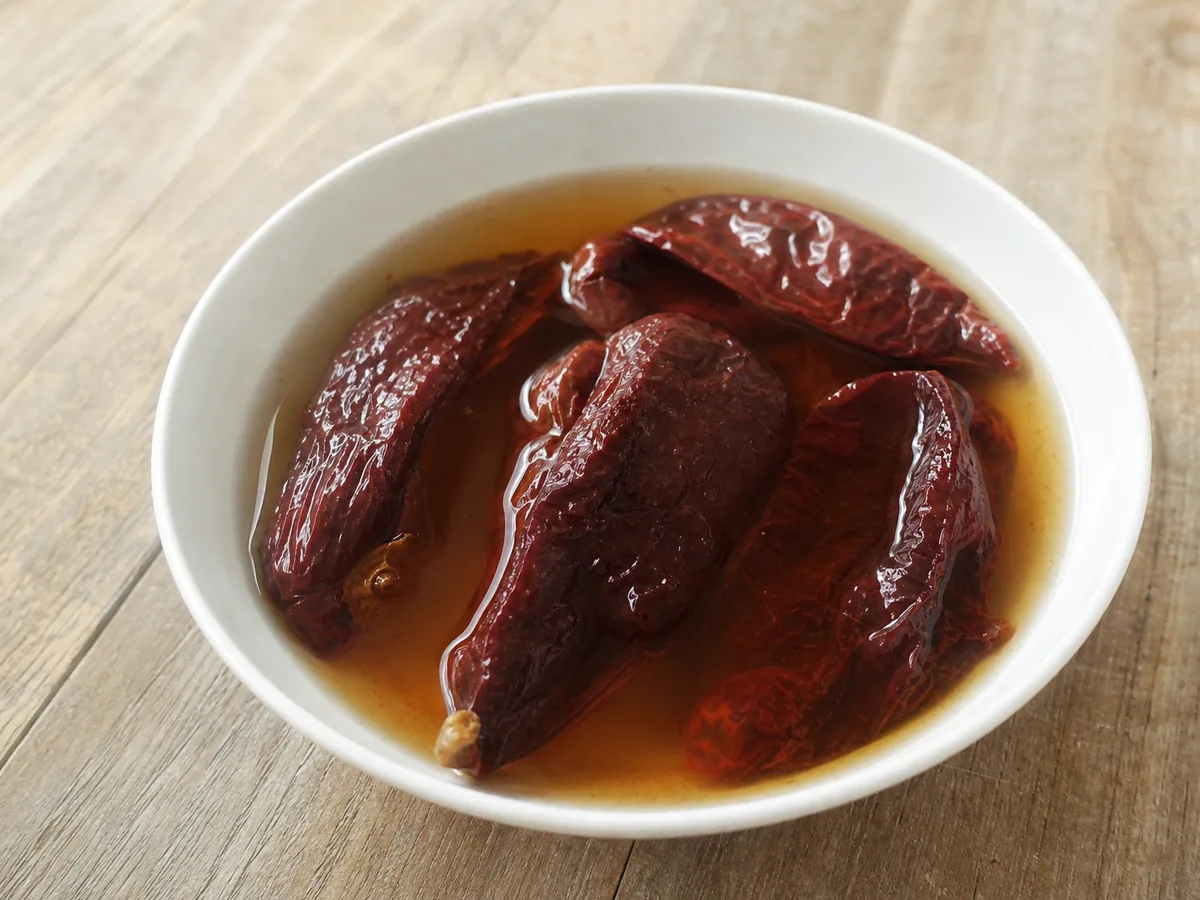
Place 2 dried choricero peppers in a heatproof bowl and cover with just-boiled water. Weigh them down with a small plate and soak for 20 minutes, until pliable. Split each pepper, discard the stems and seeds, and scrape the soft red flesh from the skins; reserve the flesh.
20:00Crack the potatoes
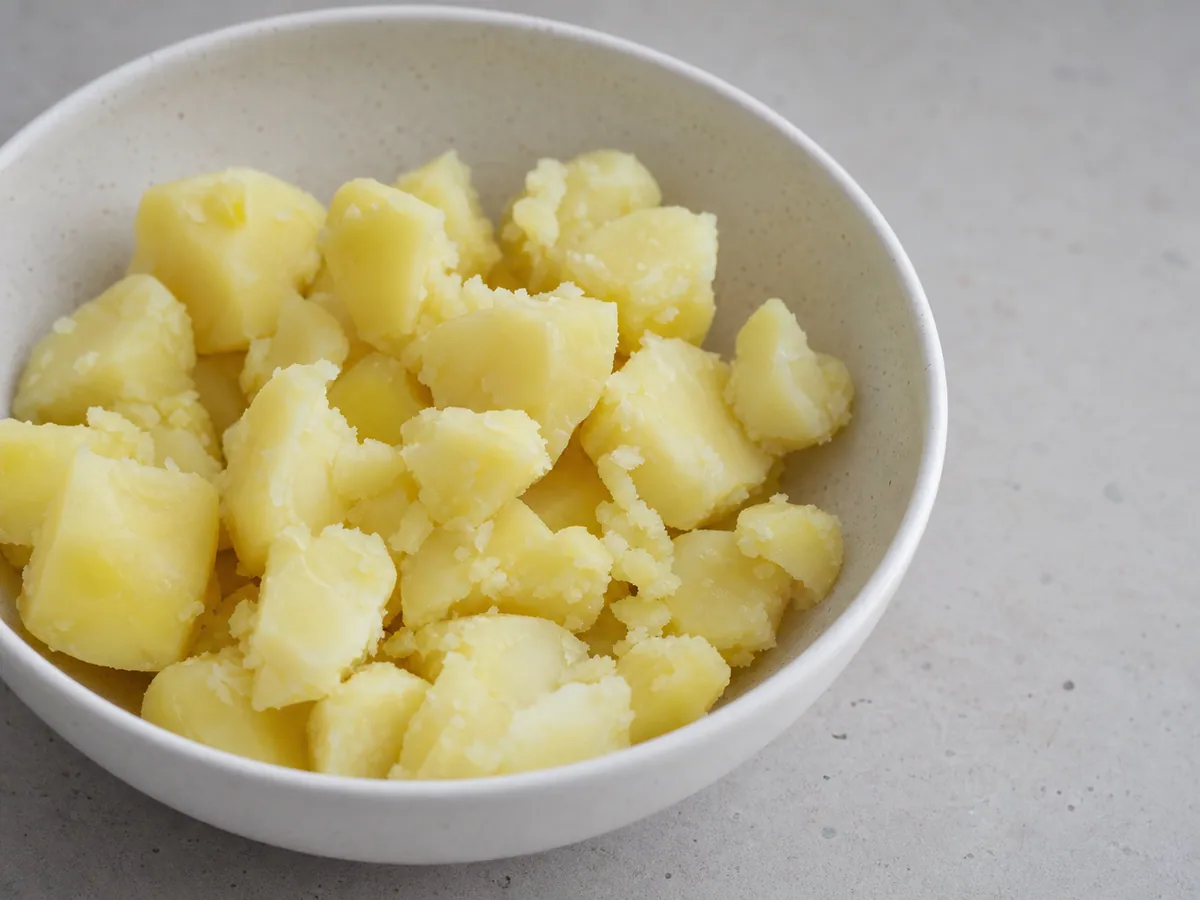
Peel 900 g of Yukon Gold potatoes. Cut partway into each potato with a small knife, then twist the blade to snap off irregular 3 to 4 cm pieces. Keep the rough, torn edges rather than trimming them smooth; those exposed surfaces release starch as the stew simmers.
Prepare the vegetables
Dice 200 g of yellow onion, 150 g of green bell pepper, and 150 g of red bell pepper into small pieces. Mince 4 garlic cloves. Core and coarsely chop 350 g of ripe tomatoes.
Soften the onion and peppers
Heat 45 ml of extra-virgin olive oil in a wide, heavy pot over medium heat. Add 200 g of yellow onion, 150 g of green bell pepper, and 150 g of red bell pepper. Cook for 10 to 12 minutes, stirring every few minutes, until the vegetables are soft and glossy but have not browned. Start checking at 10 minutes.
10:00 first checkFinish the pepper-tomato base
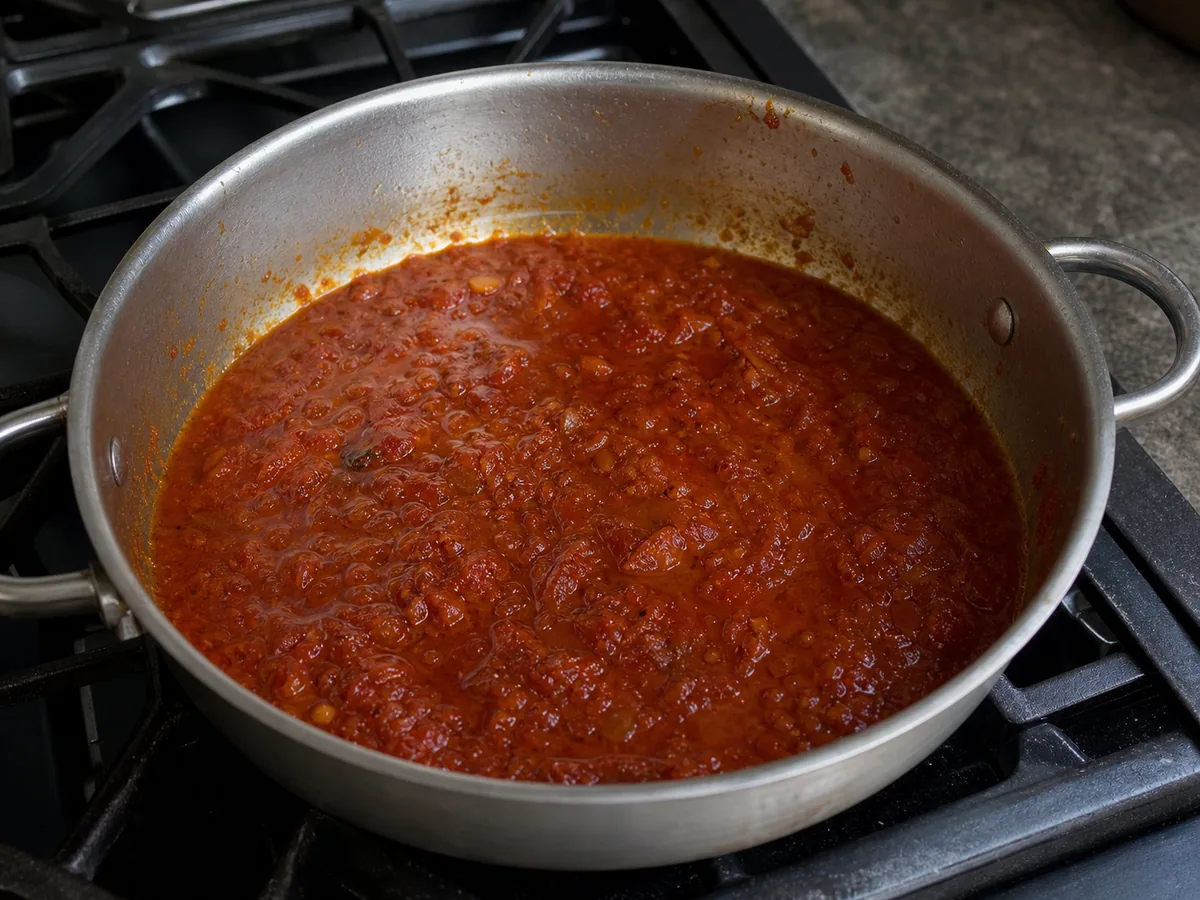
Add 4 garlic cloves and cook for 30 seconds, stirring constantly. Stir in the reserved choricero flesh and 3 g of sweet Spanish paprika. Add 350 g of ripe tomatoes, lower the heat to medium-low, and cook for 6 to 8 minutes, stirring often, until the mixture is pulpy and most of the loose liquid has evaporated. Start checking at 6 minutes.
06:00 first checkSimmer the potatoes
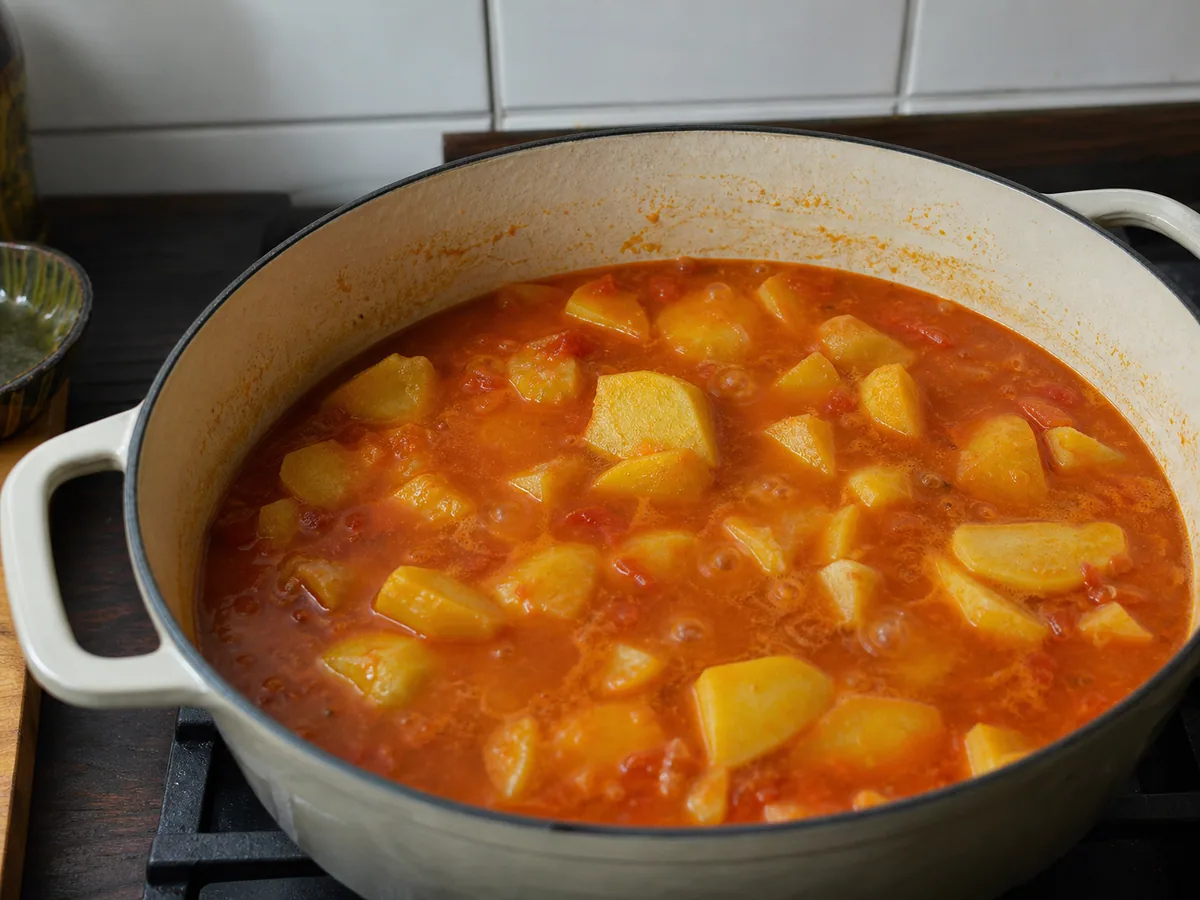
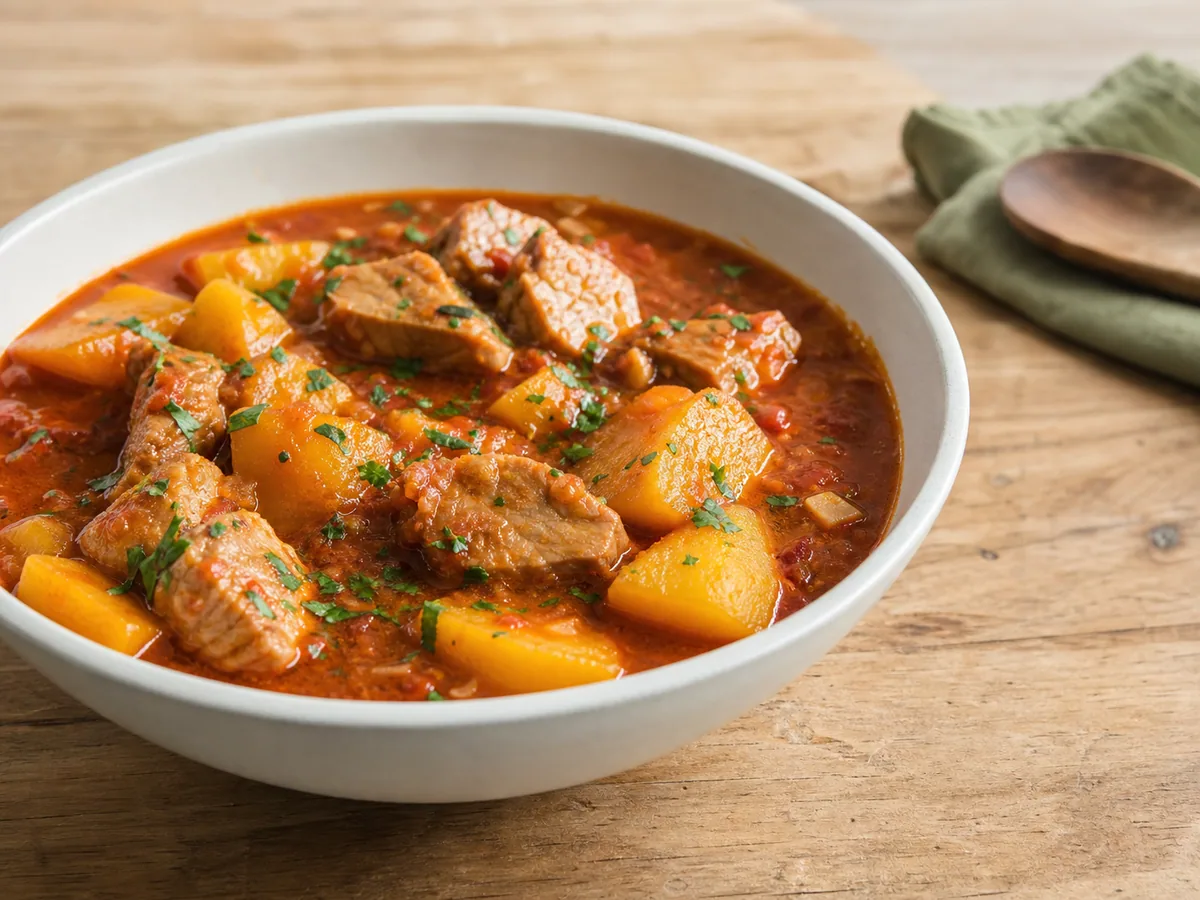
Fold 900 g of Yukon Gold potatoes through the vegetable base, then add 900 ml of water, 5 g of kosher salt, and 1 g of black pepper. Bring to a boil over medium-high heat. Reduce to a gentle simmer and cook uncovered for 20 to 25 minutes, stirring carefully once or twice, until a knife slips into the potatoes with little resistance but the chunks still hold their shape. The broth should look lightly thickened. Start checking at 20 minutes.
20:00 first checkCut and cook the tuna safely
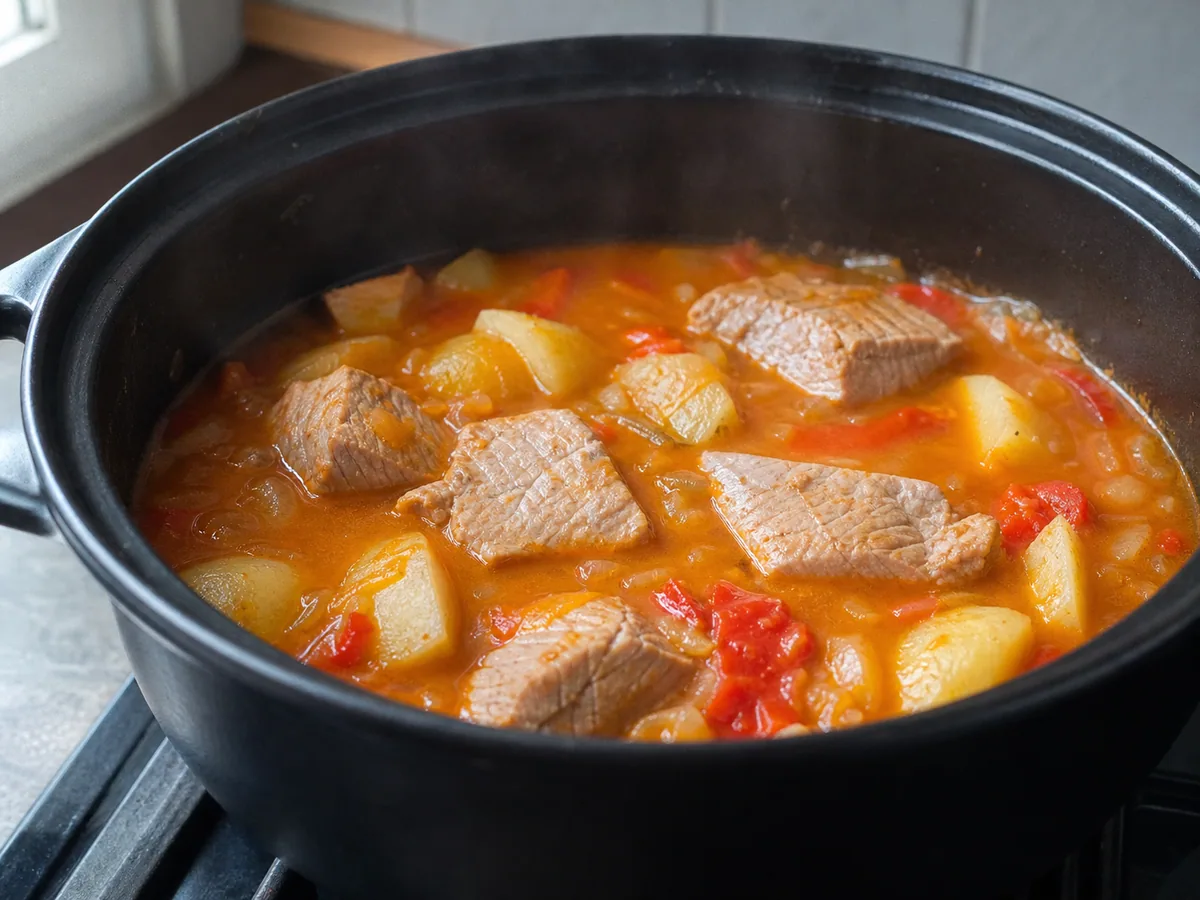
On a separate clean cutting board, cut 600 g of fresh yellowfin tuna steak into 3 cm chunks. Wash your hands with warm water and soap for at least 20 seconds. Wash the knife and cutting board thoroughly with hot, soapy water before touching fresh flat-leaf parsley (optional) or other ready-to-eat food. Lower the heat so the stew barely simmers. Add the tuna chunks in an even layer and cover the pot. Cook for 4 to 6 minutes, gently turning the chunks once if needed. Beginning at 4 minutes, check the thickest piece with a clean instant-read food thermometer; the center must reach 63°C/145°F and the tuna should be opaque. Continue cooking only until that temperature is reached.
04:00 first checkSettle the stew and serve
Take the pot off the heat and keep it covered for 5 minutes. Stir gently so a few softened potato edges enrich the broth without breaking up the tuna. Taste and adjust the seasoning, then spoon the marmitako into warm bowls and finish with fresh flat-leaf parsley (optional).
05:00


Smart Substitutions
- No choricero peppers? Use 2 dried ñora peppers and prepare them in the same way as the choricero peppers.
- No yellowfin tuna? Use fresh albacore or skipjack tuna steak cut into the same size chunks and cook to 63°C/145°F.
- No Yukon Gold potatoes? Use another medium-starch potato that holds its shape while releasing enough starch to thicken the broth.
- No fresh tomatoes? Use 12 ounces (350 g) canned whole peeled tomatoes, lightly drained and crushed by hand before adding them to the pot.
Tips and Variations
- Snap the potato pieces instead of cutting clean cubes; the torn edges are the stew's natural thickener.
- Keep the vegetable base below browning temperature so the peppers stay sweet and the paprika does not turn bitter.
- Wait until the potatoes are fully tender before adding the tuna, because the fish needs only a short final simmer.
What Went Wrong?
- Broth is too thin Mash one tender potato piece into the liquid and simmer gently for 2 to 3 minutes before adding the tuna.
- Potatoes are falling apart Use a gentler simmer and stir less often; larger irregular chunks hold their shape better than small cubes.
- Tuna is dry Check at 4 minutes and stop cooking as soon as the thickest piece reaches 63°C/145°F.
- The base tastes bitter The garlic or paprika likely scorched. A badly burned base should be restarted because its bitterness will carry through the stew.
Nutrition Estimate
- Fiber: 10 g per serving
- Sodium: 585 mg per serving
Nutrition disclaimer:This recipe is provided for general cooking information only. Nutrition values are estimates and may vary by ingredients, brands, preparation methods, and serving sizes. Check ingredient labels and follow appropriate food-safety practices. This content is not medical, dietary, allergy, or professional food-safety advice.
FAQ
Found an error or have a suggestion?
Help us improve this recipe. Send us your feedback and include the recipe name so we can take a look.