Method
Prepare and brown the lamb
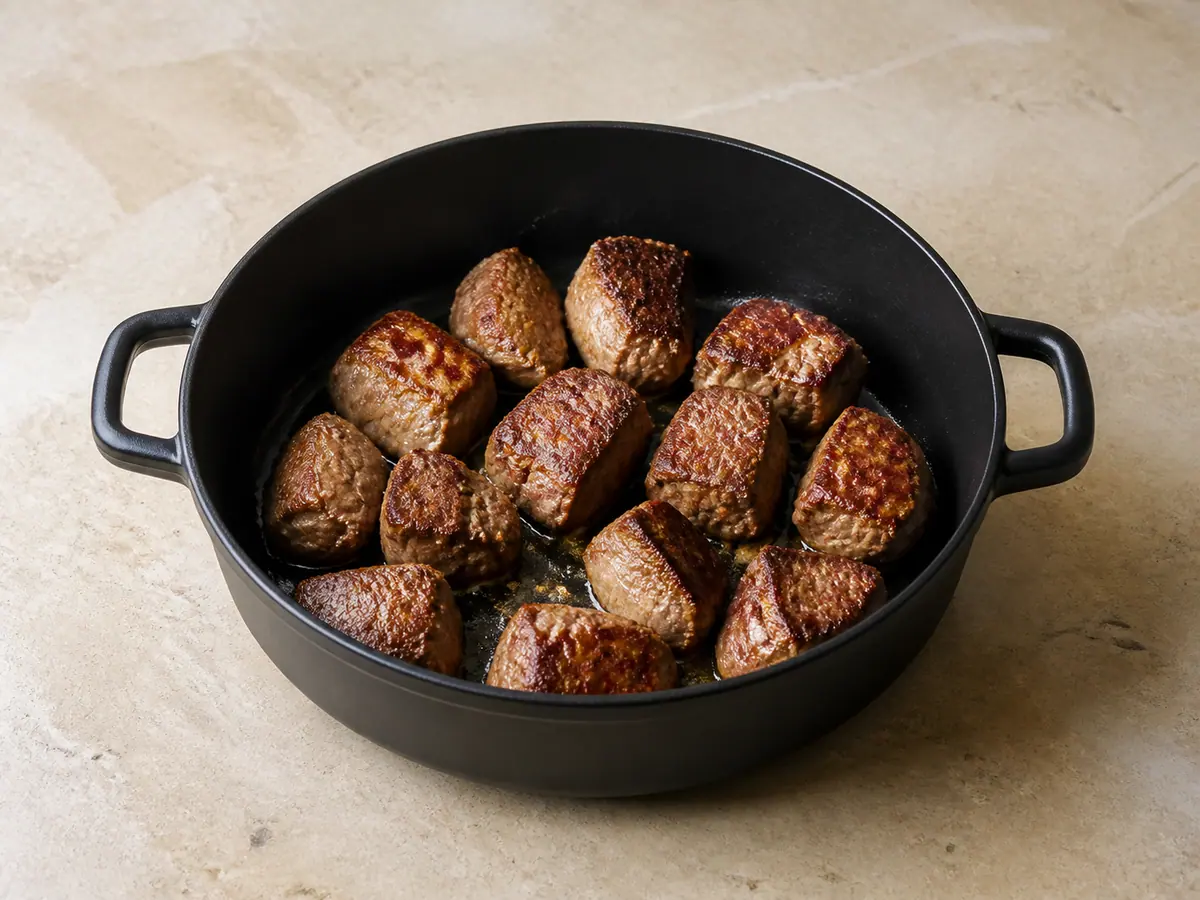
Set a heavy lidded pot over medium-high heat. On a cutting board reserved for raw meat, cut 570 g of boneless lamb shoulder into 4 cm (1 1/2 in) pieces, then pat them dry with paper towels. Season with 3 g of fine salt for stew and 1 g of black pepper. Wash your hands, knife, and board with hot soapy water before handling vegetables, and do not return cooked lamb to the raw-meat plate. Heat 22 ml of olive oil for lamb until shimmering. Brown the lamb in batches as needed, without crowding the pot, turning so several sides develop a deep crust, about 4 to 5 minutes per batch; transfer each browned batch to a clean plate.
Build the spiced broth
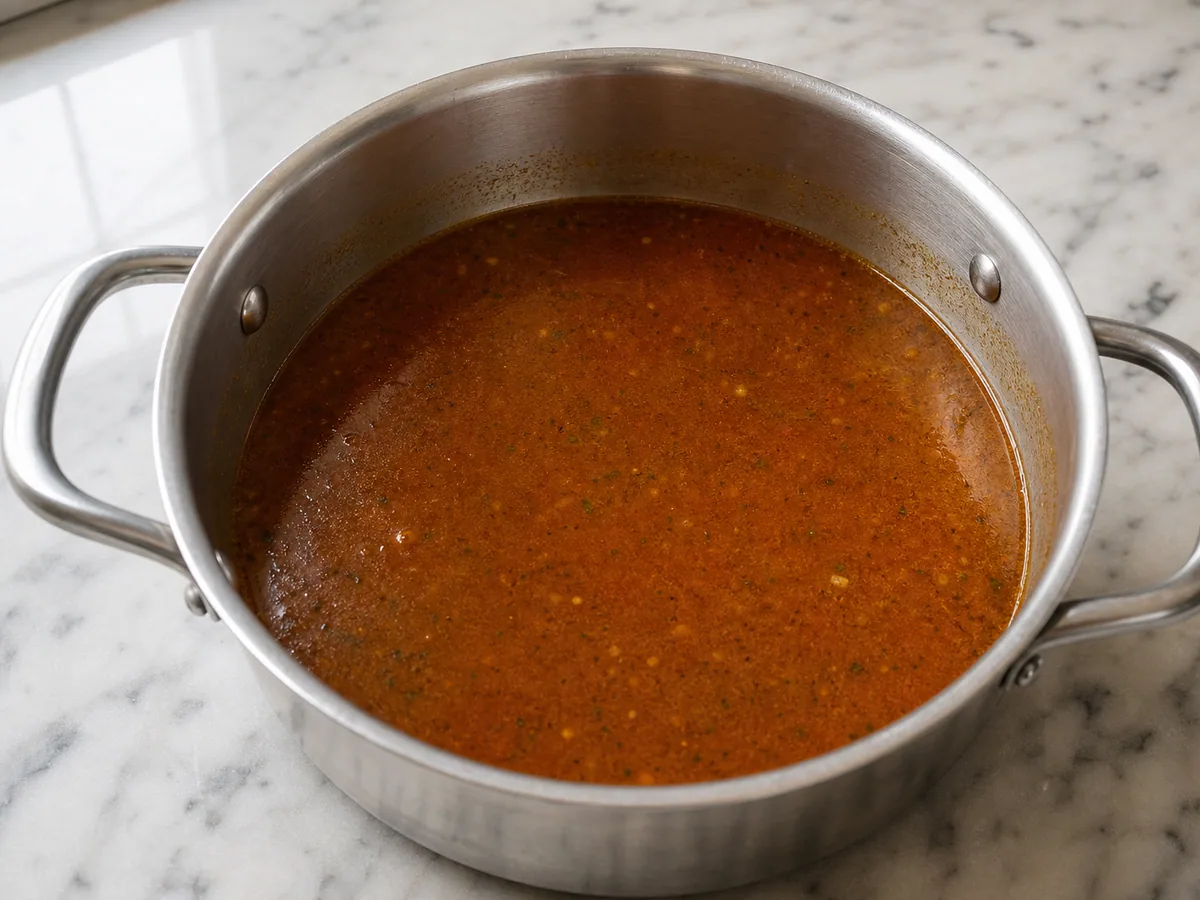
Reduce the heat to medium. Chop 1 yellow onion and add it to the pot; cook for 5 to 6 minutes, stirring and scraping up the browned bits, until softened and golden at the edges. Start checking at 5 minutes. Mince 3 garlic cloves, then stir it in with 6 g of ras el hanout, 2 g of ground cumin, 2 g of ground ginger, and 1 g of ground turmeric for 30 seconds, just until fragrant. Add 30 g of tomato paste and cook for 1 minute until it darkens slightly. Pour in 720 ml of low-sodium chicken stock for stew, scrape the base of the pot clean, then return the lamb and any juices from the clean plate.
05:00Braise the lamb
Bring the broth to a gentle boil, then cover the pot and reduce the heat to low. Simmer gently for 65 to 75 minutes, stirring about every 15 minutes, until the lamb begins to yield when pressed with a fork. Use 65 minutes as the first tenderness check rather than a guaranteed finish time. If the lamb is still firm at 75 minutes, continue simmering in 10-minute increments before adding the vegetables. Keep the liquid at a quiet simmer so the meat stays moist.
65:00Add the firm vegetables
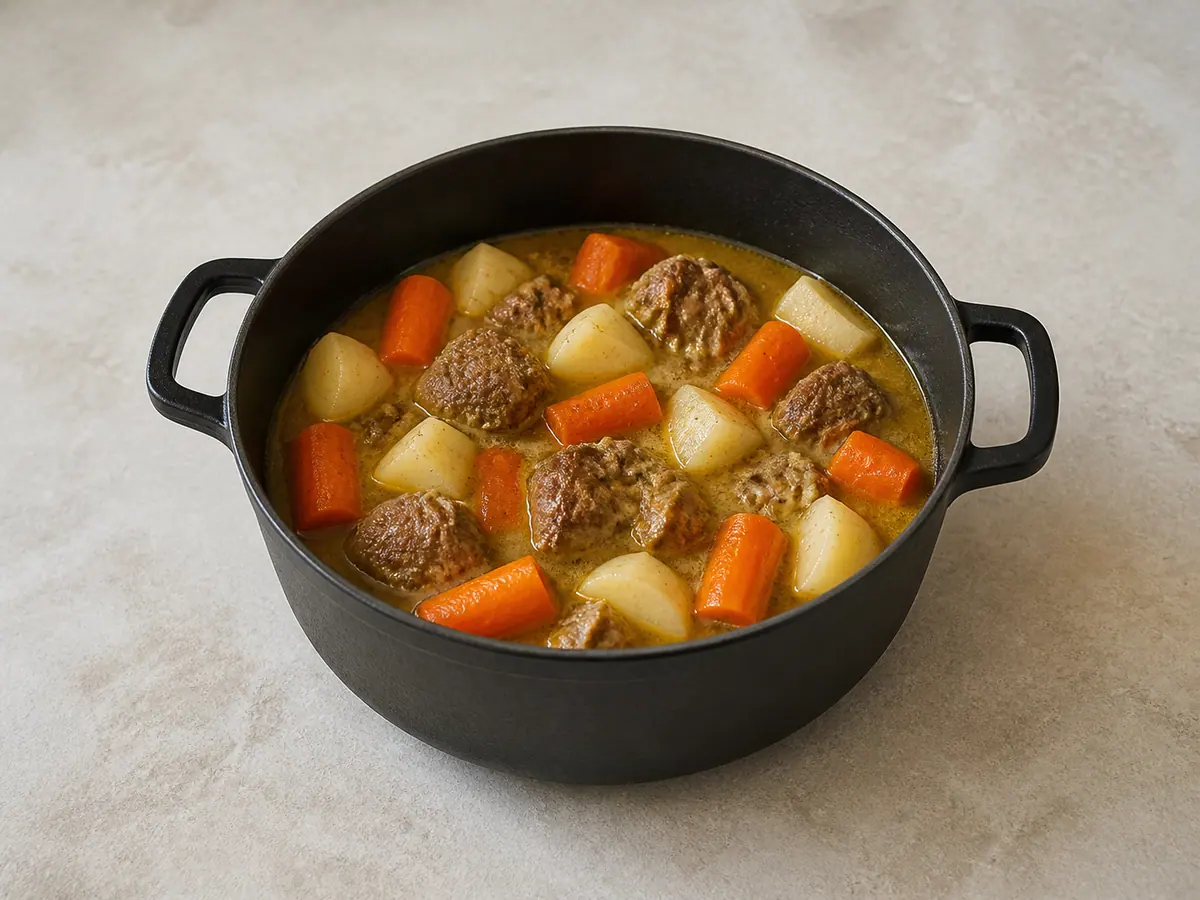
Peel 225 g of carrots and 170 g of turnip, then cut them into 4 cm (1 1/2 in) chunks. Stir them into the broth, cover, and simmer gently for 15 minutes, until the edges are starting to soften but the centers still offer some resistance.
15:00Finish the stew safely
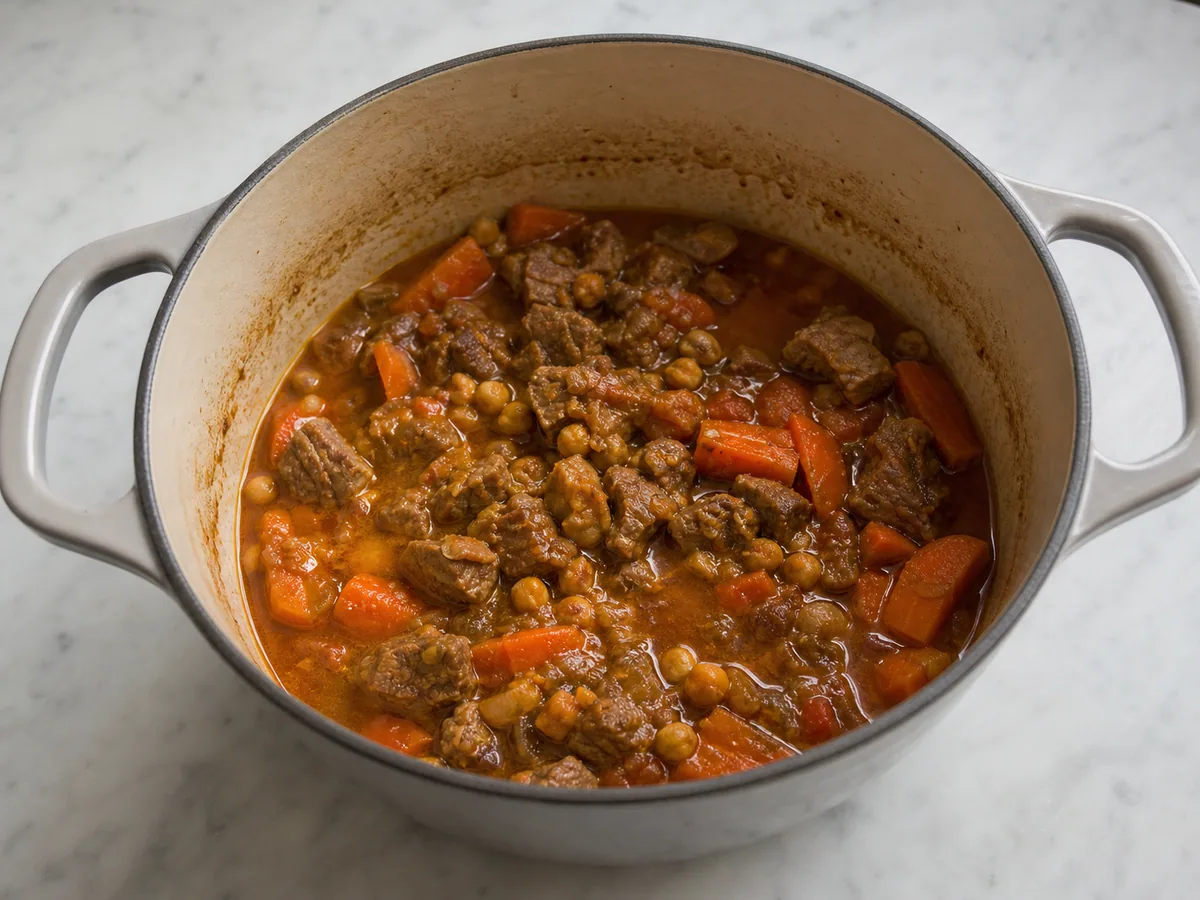
Trim 200 g of zucchini and cut it into 4 cm (1 1/2 in) pieces. Drain and rinse 240 g of chickpeas. Add both to the pot and simmer uncovered for 10 to 12 minutes, using 10 minutes as the first check, until the vegetables are tender and the lamb is fork-tender. Use a food thermometer in several of the largest lamb pieces to confirm they have reached at least 63°C/145°F. Continue simmering until the shoulder is tender, then remove the pot from the heat and cover it. Let the lamb stand in the hot broth for at least 3 minutes before serving; keep the pot covered while preparing the couscous in the next step.
10:00Steam the couscous
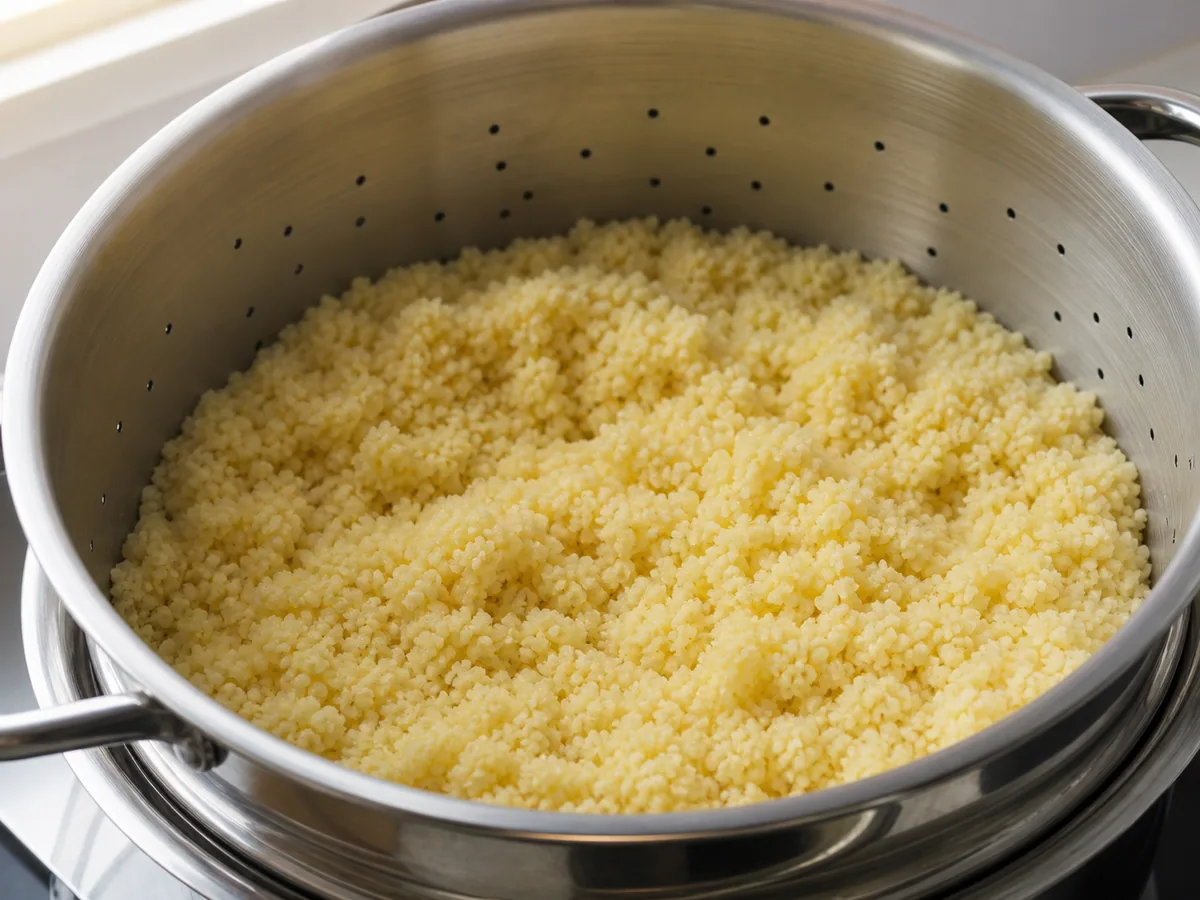
While the covered stew rests, bring 450 ml of low-sodium chicken stock for couscous, 8 ml of olive oil for couscous, and 1 1/2 g of fine salt for couscous to a boil in a medium saucepan. Remove the pan from the heat, stir in 260 g of dry couscous (wheat), cover tightly, and let it stand for 5 minutes. Uncover and rake through the grains with a fork until they are light, separate, and evenly hydrated.
05:00Brighten and serve
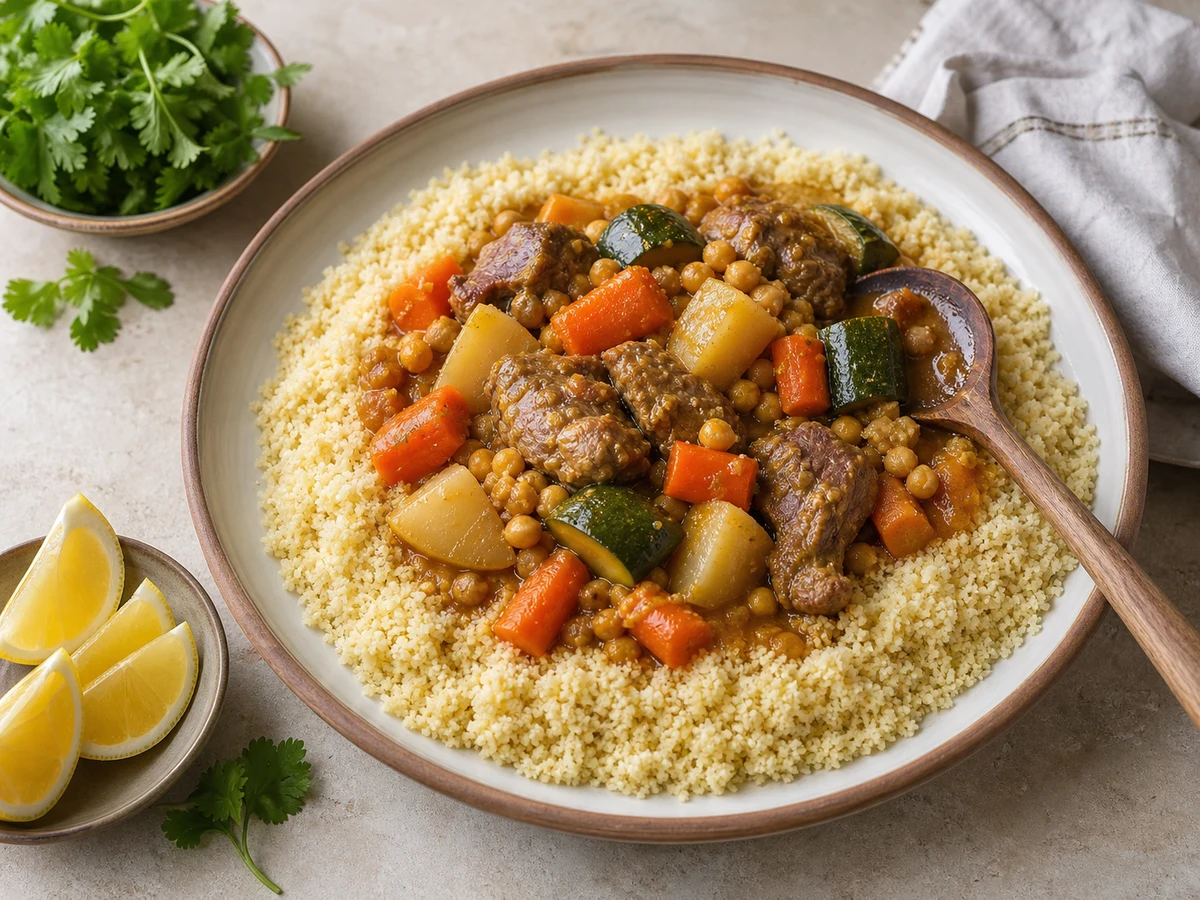
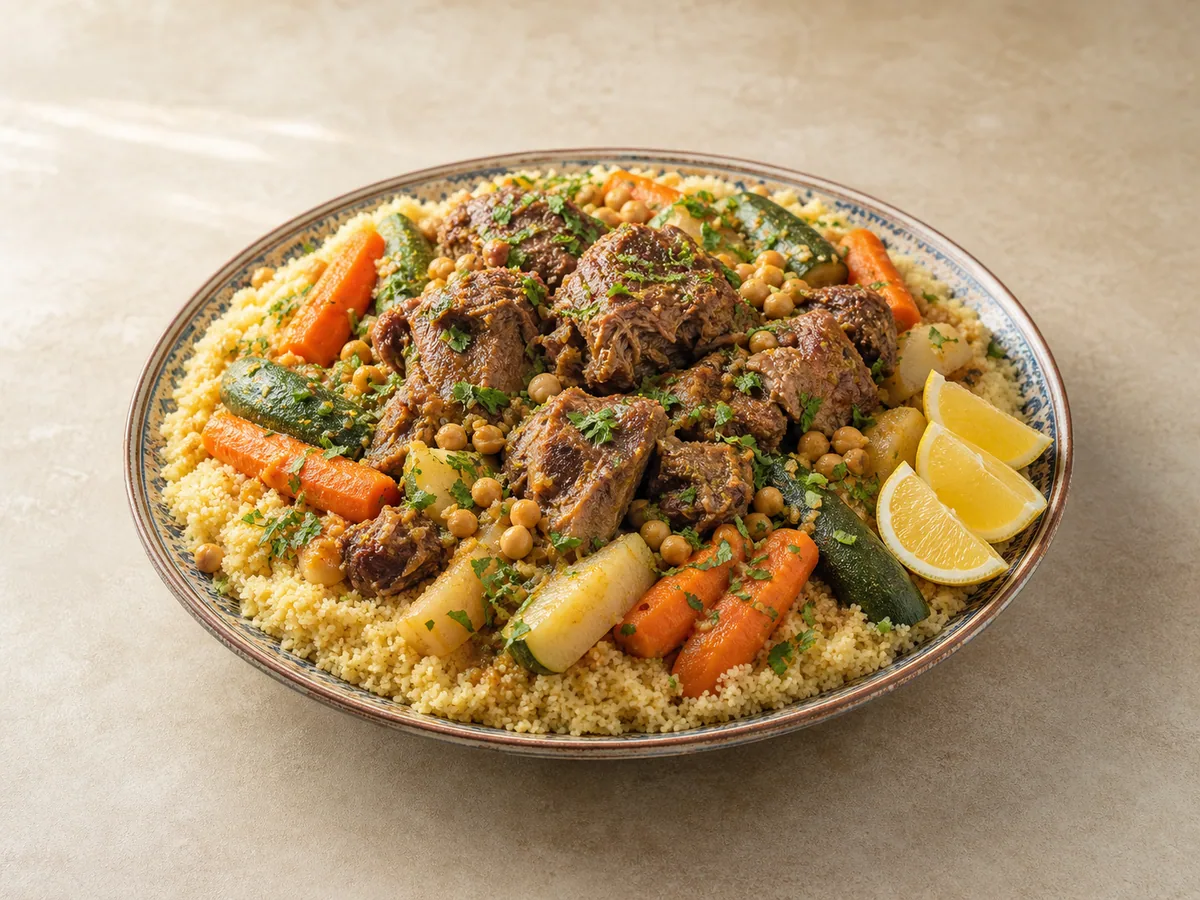
Finely chop 15 g of fresh cilantro. Zest 1 lemon, then cut it into wedges. Stir half of the cilantro and all of the zest into the stew. Spread the couscous on a wide platter, spoon the lamb and vegetables over the center, and moisten the grains with enough broth to flavor them without flooding the platter. Finish with the remaining cilantro and serve the lemon wedges alongside.


Smart Substitutions
- No lamb shoulder? Use boneless lamb leg and begin checking it earlier; the leaner cut can become dry if braised too long.
- No ras el hanout? Use a blend of ground coriander, cumin, ginger, cinnamon, turmeric, and black pepper for a warm, layered spice profile.
- No turnip? Use parsnip, rutabaga, or an equal weight of extra carrots.
- Need another base? Serve the stew with cooked millet or quinoa instead of couscous; the texture and cooking method will differ.
Tips and Variations
- Brown the lamb in batches so the pot stays hot enough to build a dark crust rather than steaming the meat.
- Keep the vegetable pieces large and even; they will hold their shape through the long simmer and look generous on the platter.
- Add broth to the couscous gradually at serving time so the grains stay distinct around the edges.
What Went Wrong?
- Lamb is still tough Keep the pot at a gentle simmer and cook for another 10 to 15 minutes before checking again; shoulder softens as its connective tissue breaks down.
- Broth is too thin Lift the cooked lamb and vegetables onto the serving platter, then simmer the broth uncovered for a few minutes until its flavor and body concentrate.
- Couscous is clumped Rake it firmly with a fork, breaking larger clumps against the side of the pan, then loosen it with a spoonful of hot broth.
- Vegetables are breaking apart Lower the heat to a quiet simmer and stir by lifting from the bottom rather than sweeping forcefully through the pot.
Nutrition Estimate
- Fiber: 12 g per serving
- Sodium: 910 mg per serving
Nutrition disclaimer:This recipe is provided for general cooking information only. Nutrition values are estimates and may vary by ingredients, brands, preparation methods, and serving sizes. Check ingredient labels and follow appropriate food-safety practices. This content is not medical, dietary, allergy, or professional food-safety advice.
FAQ
Found an error or have a suggestion?
Help us improve this recipe. Send us your feedback and include the recipe name so we can take a look.