Method
Heat the oven and prepare the pears
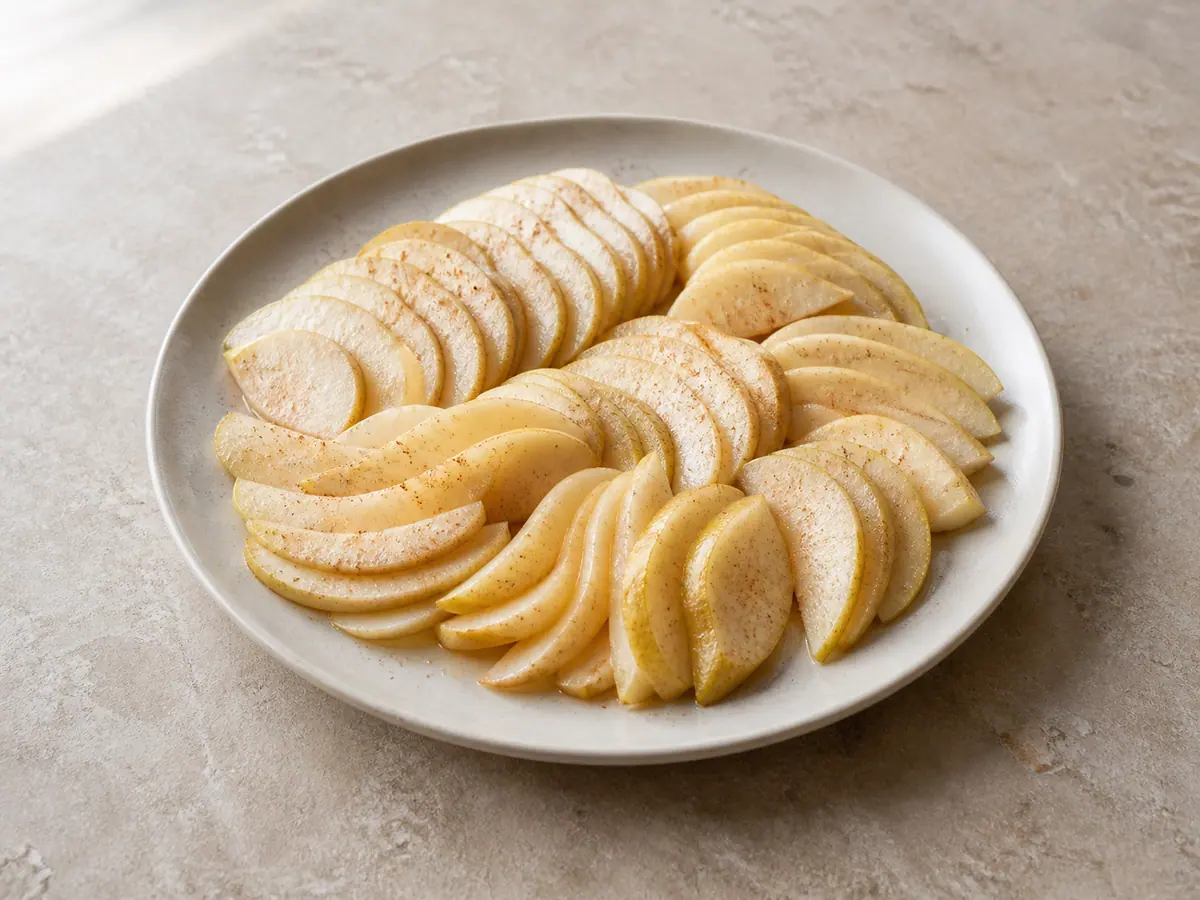
Heat the oven to 200°C (400°F). Line one large baking sheet with parchment paper for 2 or 4 servings; for 6 or 8 servings, line two large baking sheets so the tartlets can bake without crowding. Core 240 g of small firm ripe pears (about 240 g after coring) and cut them into slices about 3 mm (1/8 in) thick. Toss the slices gently with 15 ml of lemon juice and 1 1/2 g of ground cinnamon until evenly coated, then spread them on a plate so excess juice does not collect around the fruit.
Mix the ricotta filling
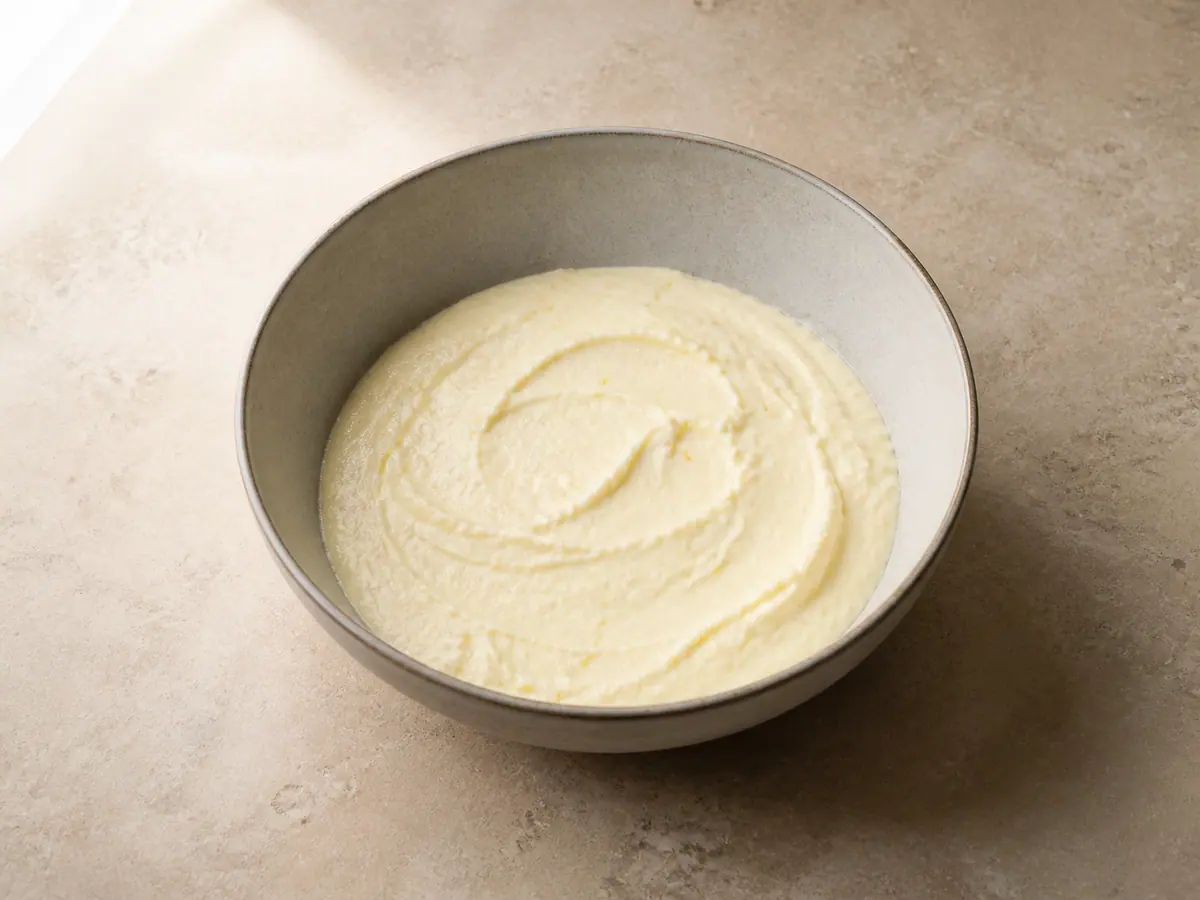
Stir 200 g of whole-milk ricotta, 30 g of honey, 2 g of lemon zest, 5 ml of vanilla extract, 8 g of cornstarch, and 3/4 g of fine sea salt in a medium bowl until the mixture is smooth and evenly blended. Stop once no dry cornstarch remains; vigorous mixing can make the ricotta loose.
Shape and fill the tartlets
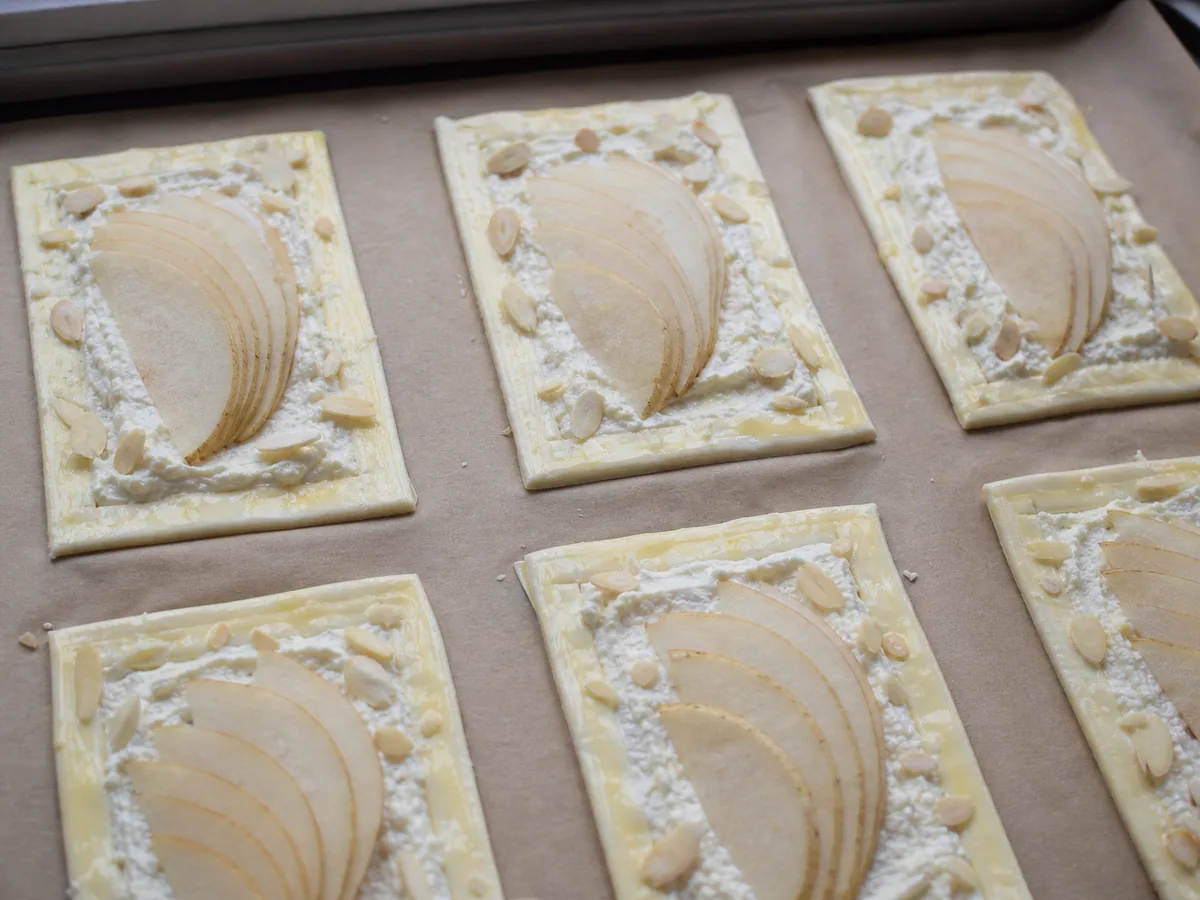
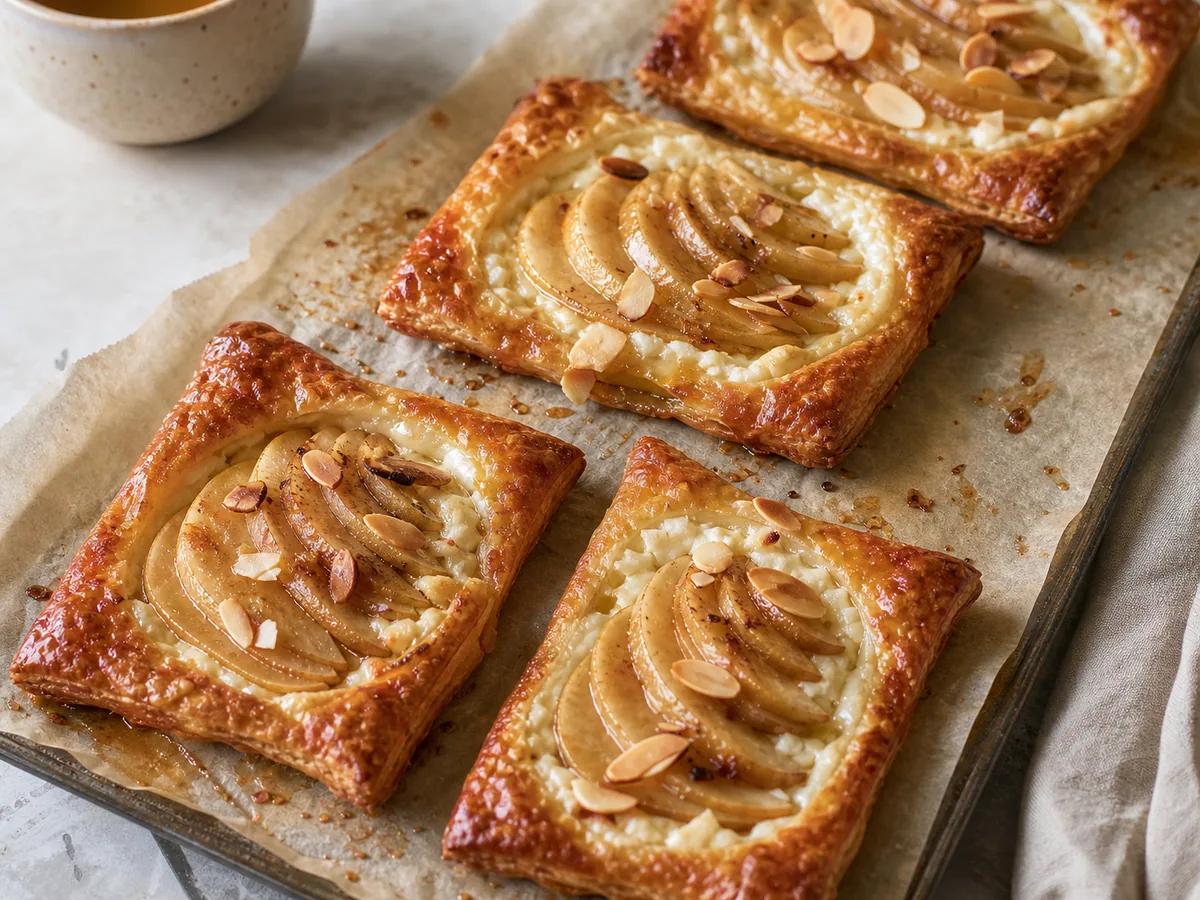
Unroll 200 g of ready-rolled puff pastry on the prepared baking sheet and cut it into equal rectangles, making one rectangle per serving. For 6 or 8 servings, divide the rectangles evenly between the two prepared sheets. Score a 1 cm (3/8 in) border inside each rectangle without cutting all the way through, then prick only the center areas several times with a fork. Divide the ricotta filling evenly among the centers and spread it up to, but not over, the scored lines. Fan the pear slices over the filling in a shallow overlapping layer. Brush the pastry borders with 15 ml of whole milk and scatter 20 g of sliced almonds over the pears.
Bake until crisp and golden
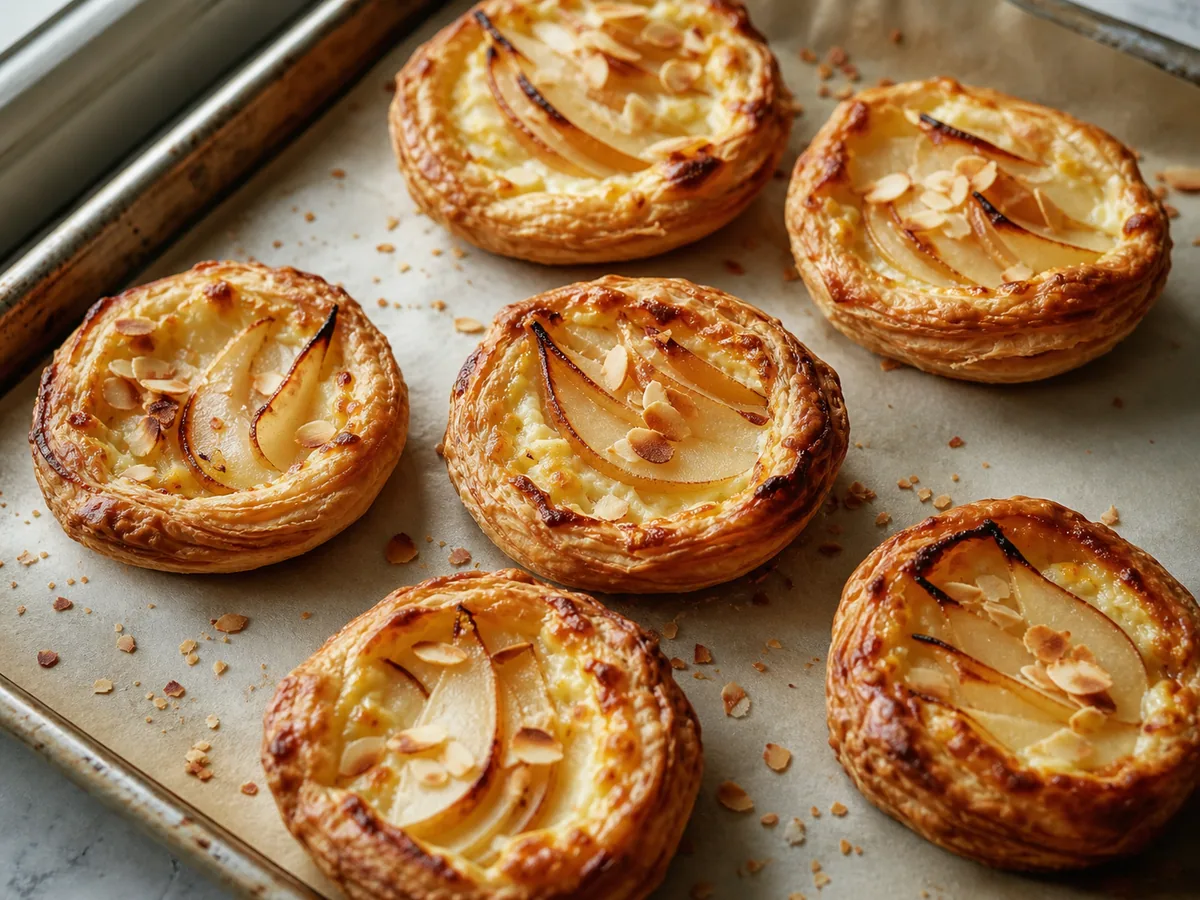
Bake one sheet on the middle rack. For two sheets, place them on the upper and lower thirds of the oven, then swap their rack positions and rotate them front to back halfway through baking. Bake for 22 to 25 minutes, checking first at 22 minutes. The tartlets are ready when the borders are deeply golden and visibly layered, the bases feel crisp when lifted carefully with a thin spatula, the pears are tender at the tips, and the ricotta filling looks set rather than wet. If needed, continue baking in 1-minute increments.
22:00Let the tartlets settle and serve
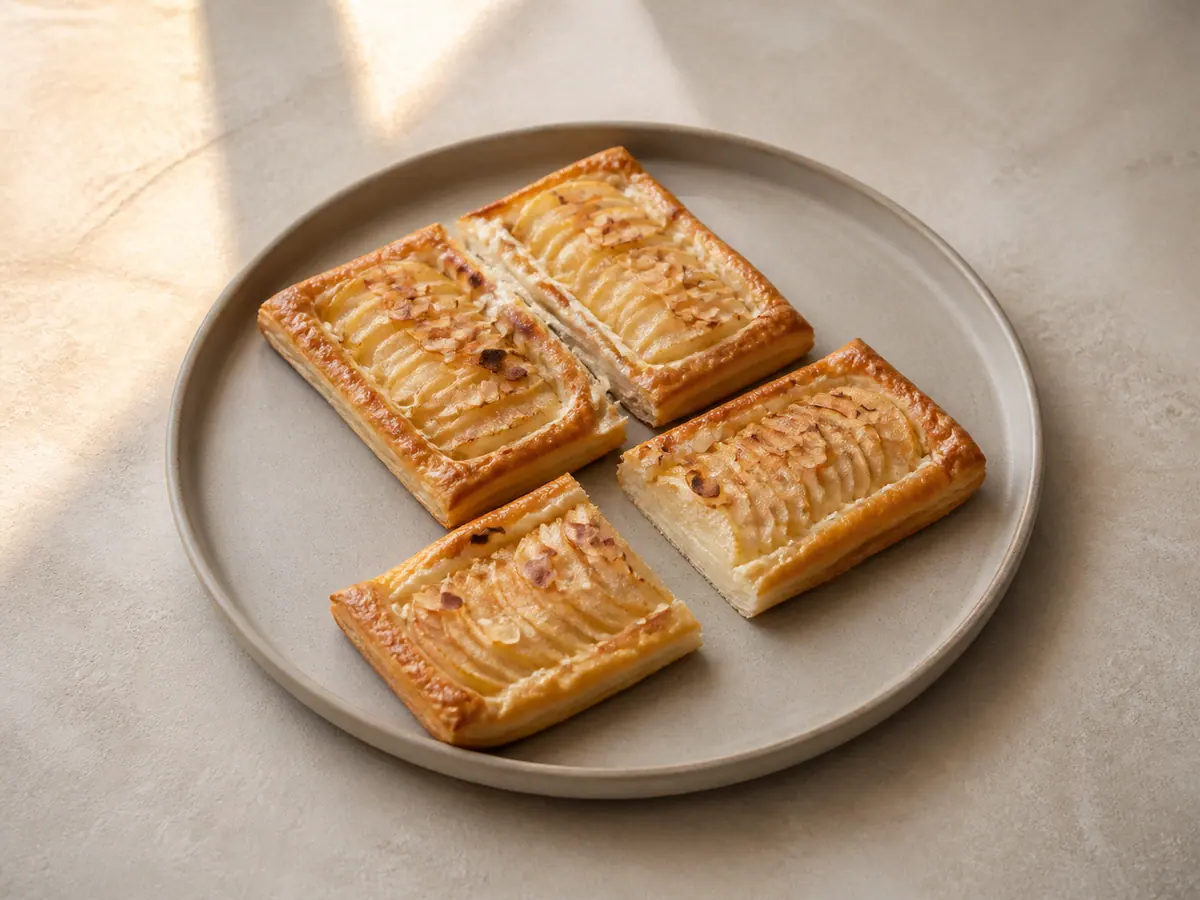
Leave the tartlets on the baking sheet for 10 minutes. This brief stand lets the ricotta firm slightly and keeps the flaky bases intact when moved. Slide a thin spatula underneath each tartlet and serve warm.
10:00


Smart Substitutions
- No whole-milk ricotta? Use part-skim ricotta with any visible whey poured off; the filling will be slightly leaner and less plush.
- No almonds? Use chopped hazelnuts, pistachios, or pumpkin seeds for a crisp finish.
- No honey? Use pure maple syrup in the same amount and expect a slightly looser filling.
- No pears? Use firm apples cut to the same thickness so they soften within the pastry baking time.
Tips and Variations
- Keep the pastry borders clean; ricotta or fruit on the scored line can prevent an even rise.
- Cut the pear slices to a consistent thickness so the tips soften without the centers collapsing.
- Use the middle oven rack for balanced browning on top and underneath the tartlets.
What Went Wrong?
- Pastry centers are soggy Choose firm pears, spread the tossed slices on a plate before assembly, and make sure no pooled lemon juice goes onto the pastry.
- Ricotta filling runs over the border Keep the filling inside the scored lines and stop mixing as soon as the cornstarch disappears.
- Pastry borders stay flat Check that the score line did not cut through the pastry and that milk or filling did not seal the exposed layers.
- Almonds brown before the pastry is crisp Cover the tartlets loosely with foil for the final few minutes while the bases finish baking.
Nutrition Estimate
- Fiber: 4 g per serving
- Sodium: 258 mg per serving
Nutrition disclaimer:This recipe is provided for general cooking information only. Nutrition values are estimates and may vary by ingredients, brands, preparation methods, and serving sizes. Check ingredient labels and follow appropriate food-safety practices. This content is not medical, dietary, allergy, or professional food-safety advice.
FAQ
Found an error or have a suggestion?
Help us improve this recipe. Send us your feedback and include the recipe name so we can take a look.