Method
Prepare the oven and dry mixture
Heat the oven to 180°C (350°F). Line a large baking tray with parchment. Stir 250 g of medium oatmeal, 2 g of fine sea salt, and 1 g of baking soda together in a wide heatproof bowl, breaking up any compacted oatmeal so the mixture is evenly textured.
Make the warm oat dough
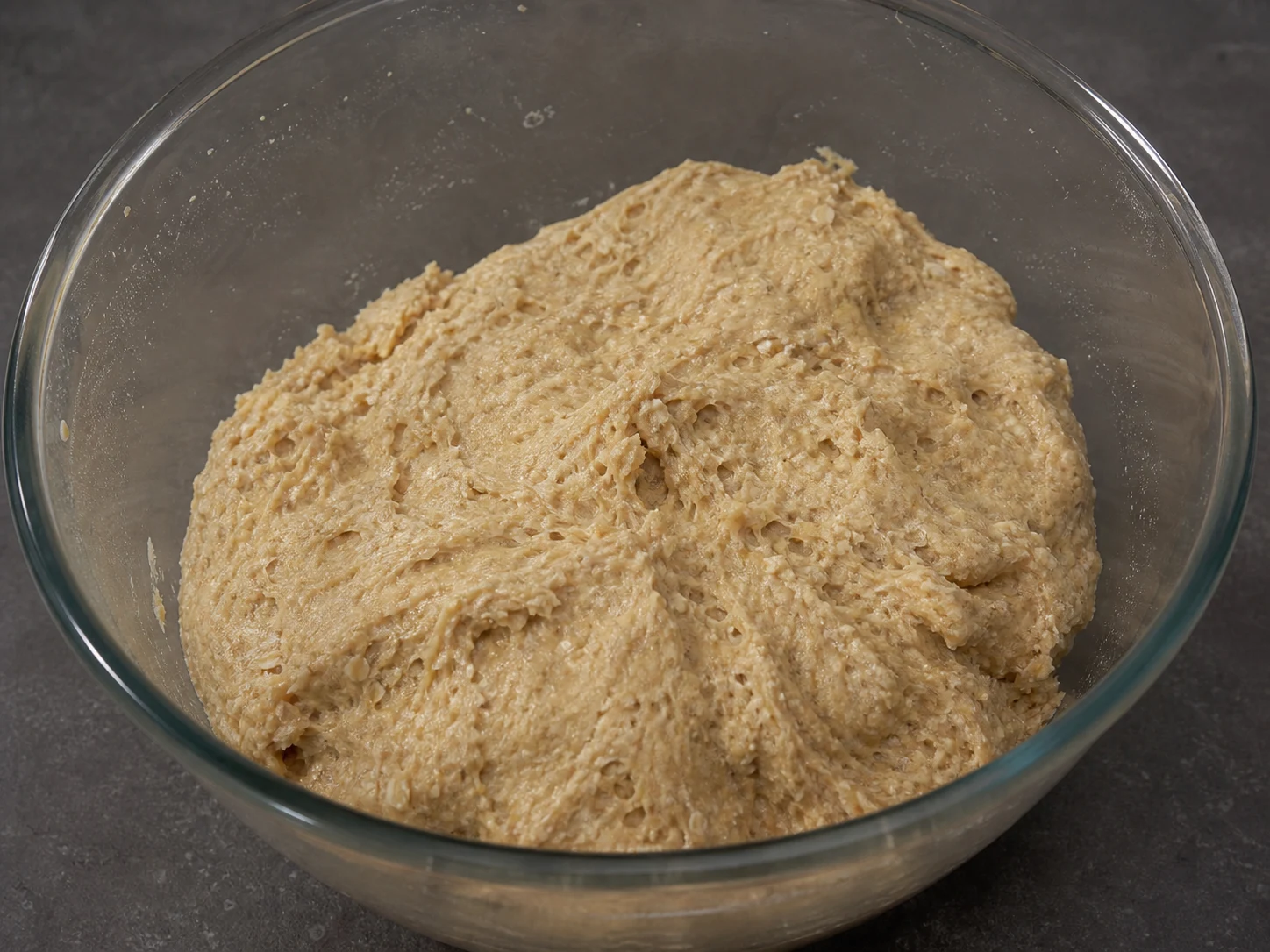
Cut 43 g of unsalted butter into small pieces and place it in a heatproof jug. Pour about three-quarters of 120 ml of freshly boiled water over it and stir until the butter melts. Tip the liquid into the dry mixture and stir firmly with a wooden spoon until no dry patches remain, adding the remaining water a little at a time only as needed. The dough should feel warm, firm, and slightly tacky rather than wet; work promptly because it becomes more fragile as it cools.
Roll and cut the oatcakes
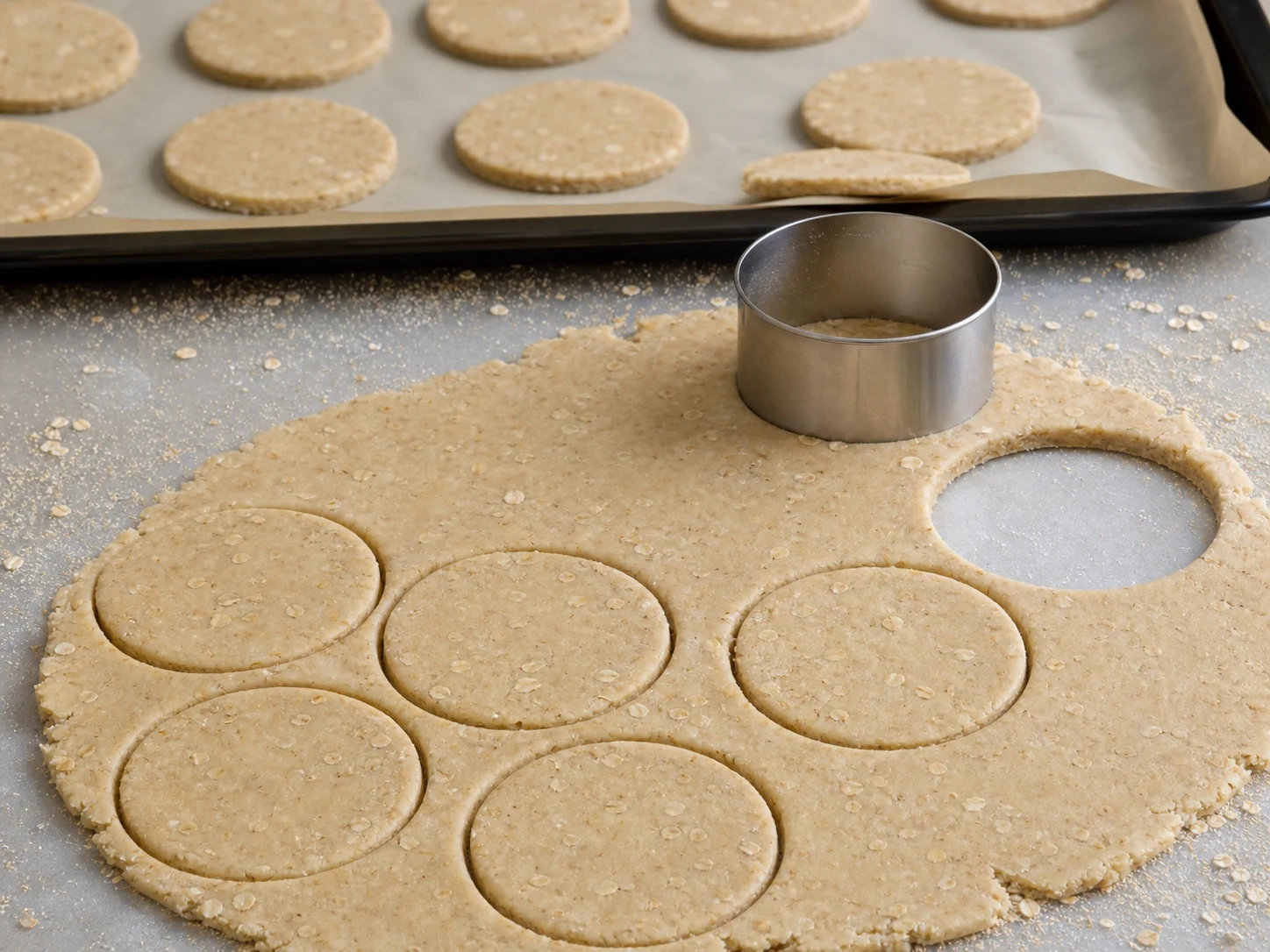
Scatter 15 g of medium oatmeal for dusting over the work surface and rolling pin. Press the dough together, then roll it to an even 3 mm (1/8 in) thickness. Cut rounds with a 6 cm (2 1/2 in) cutter, aiming for four oatcakes per serving, and set them on the lined tray as you go. Press the scraps together and roll again without kneading; if an edge splits, pinch it closed before cutting.
Bake until the surface sets
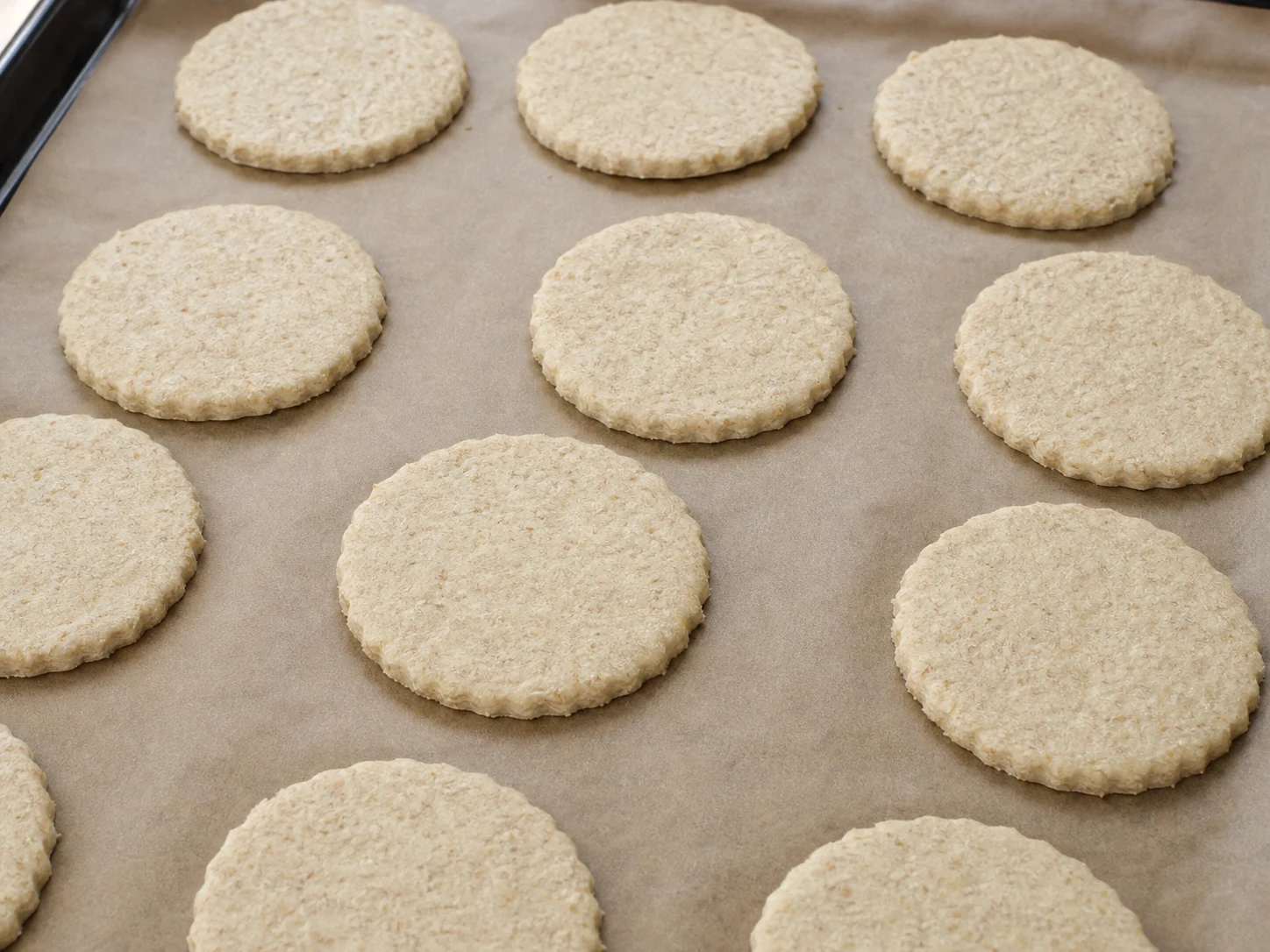
Bake on the middle rack for 15 minutes. The tops should look dry and matte, but the oatcakes will still be pale and delicate. Rotate the tray once if the oven browns unevenly.
15:00Turn and finish baking
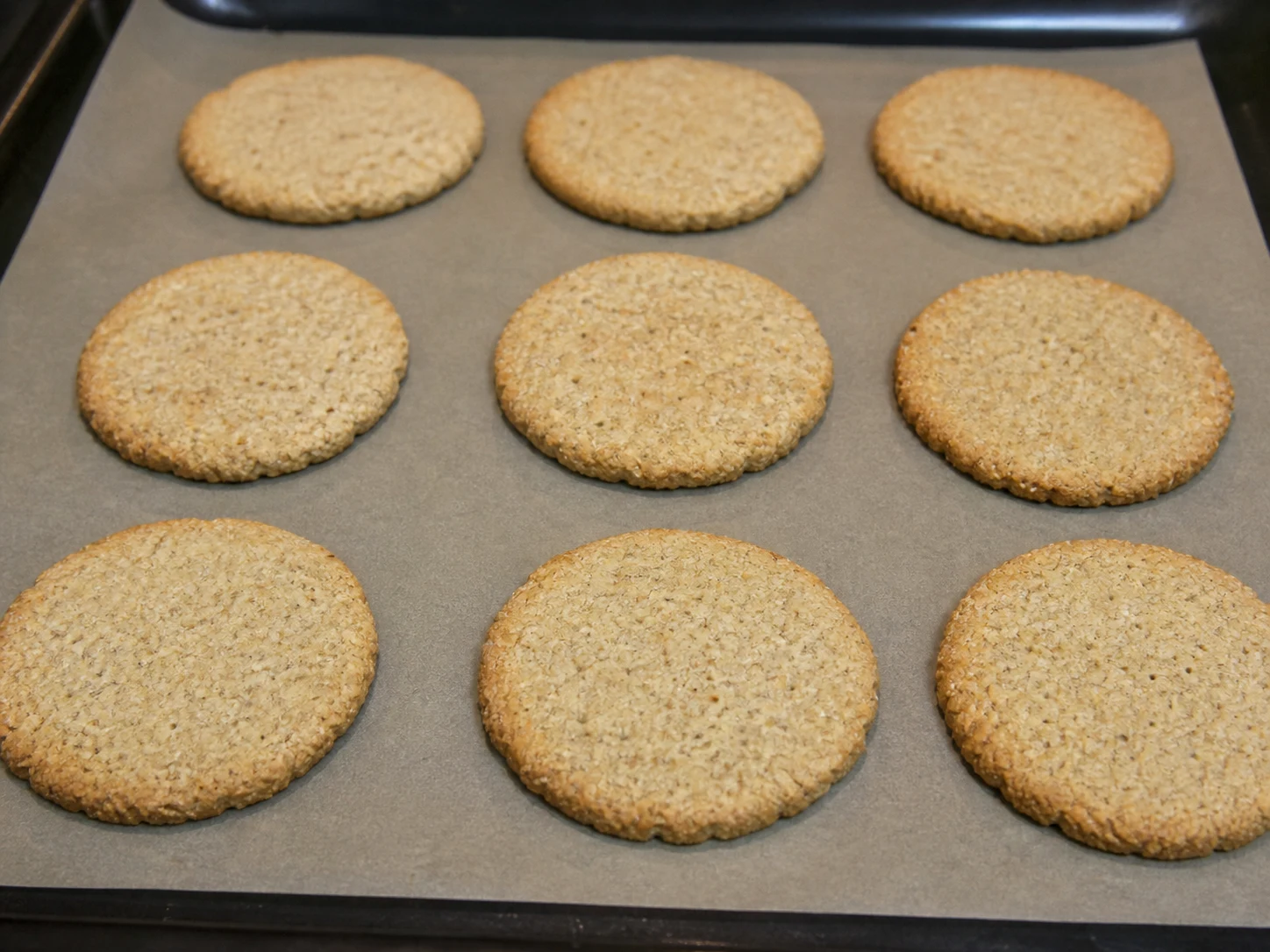
Turn each oatcake carefully with a thin spatula. Bake for 7 to 10 minutes more, checking at 7 minutes, until the edges are lightly golden and the centers feel dry and firm. They will crisp further as they stand, so remove them before the edges become dark.
07:00Let the oatcakes firm, then serve
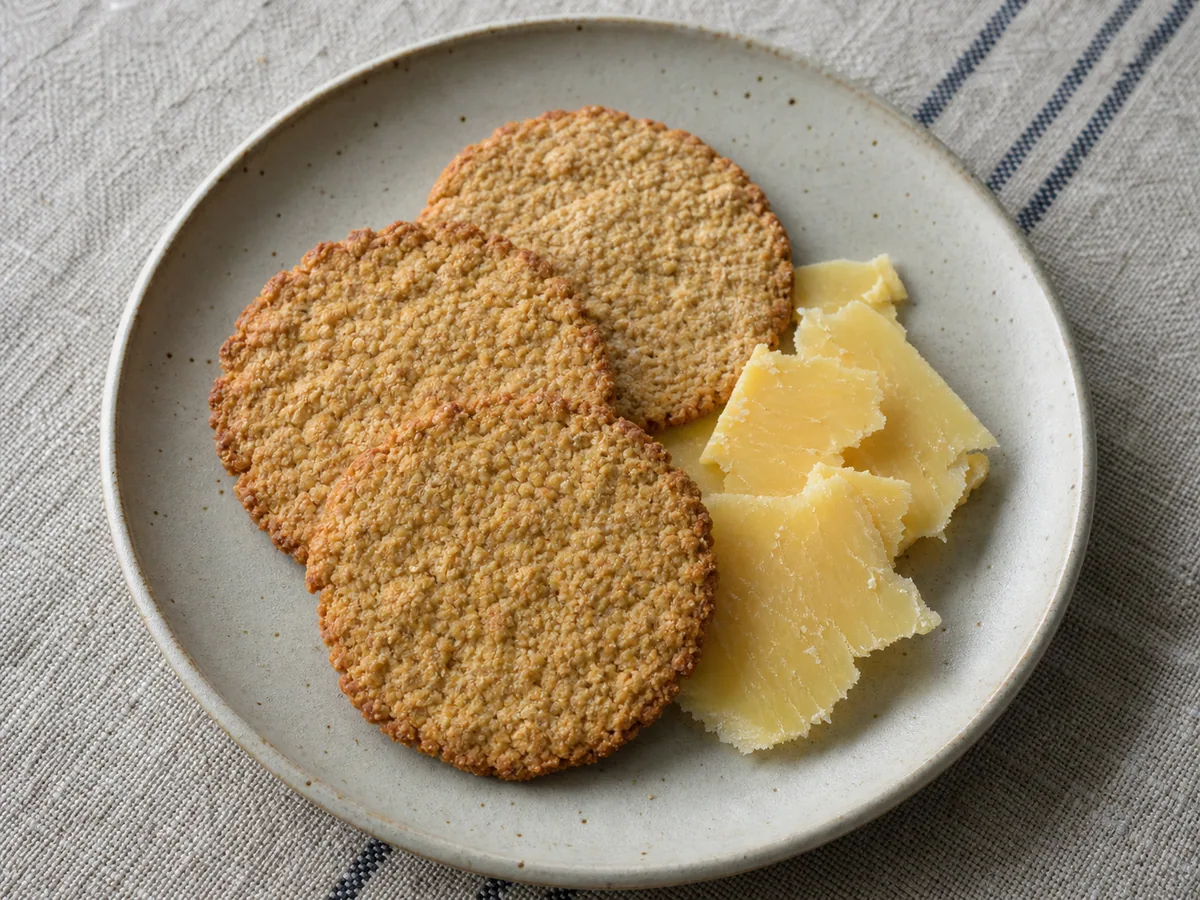
Move the oatcakes to a wire rack and let them firm for 5 minutes. Break or cut 120 g of aged cheddar into thin shards. Serve four oatcakes per person with the cheddar while the oatcakes are still slightly warm and crisp.
05:00


Smart Substitutions
- No medium oatmeal? Pulse quick-cooking oats in a food processor until they resemble coarse sand, then weigh the same amount.
- Prefer a leaner oatcake? For the default 4 servings, replace the butter with 40 ml (2 tablespoons plus 2 teaspoons) of rapeseed or another neutral oil; the finished oatcakes will be slightly crisper and less rich.
- Want a rougher texture? Replace one-fifth of the medium oatmeal with pinhead oatmeal and add a little extra freshly boiled water only if the dough will not hold together.
- No aged cheddar? Use another firm, full-flavored cheese such as mature farmhouse cheddar, aged Gouda, or crumbly Lancashire.
Tips and Variations
- Keep the rounds close together on the tray; oatcakes barely spread in the oven.
- Aim for one even thickness from edge to center so every round crisps at the same rate.
- A thin metal spatula is less likely to break the oatcakes when you turn them midway through baking.
What Went Wrong?
- Dough crumbles while rolling Work in a few drops of hot water and press the dough firmly together before rolling again.
- Dough sticks to the pin Dust the pin and surface lightly with oatmeal; too much will make the dough dry and prone to cracks.
- Oatcakes bend after baking Return them to the oven briefly and bake until the centers feel dry, then let them firm on the rack.
- Edges darken before the centers dry The rounds are uneven or the oven is running hot. Roll the next batch uniformly and reduce the heat slightly.
Nutrition Estimate
- Fiber: 5 g per serving
- Sodium: 485 mg per serving
Nutrition disclaimer:This recipe is provided for general cooking information only. Nutrition values are estimates and may vary by ingredients, brands, preparation methods, and serving sizes. Check ingredient labels and follow appropriate food-safety practices. This content is not medical, dietary, allergy, or professional food-safety advice.
FAQ
Found an error or have a suggestion?
Help us improve this recipe. Send us your feedback and include the recipe name so we can take a look.