Method
Cut and marinate the fish
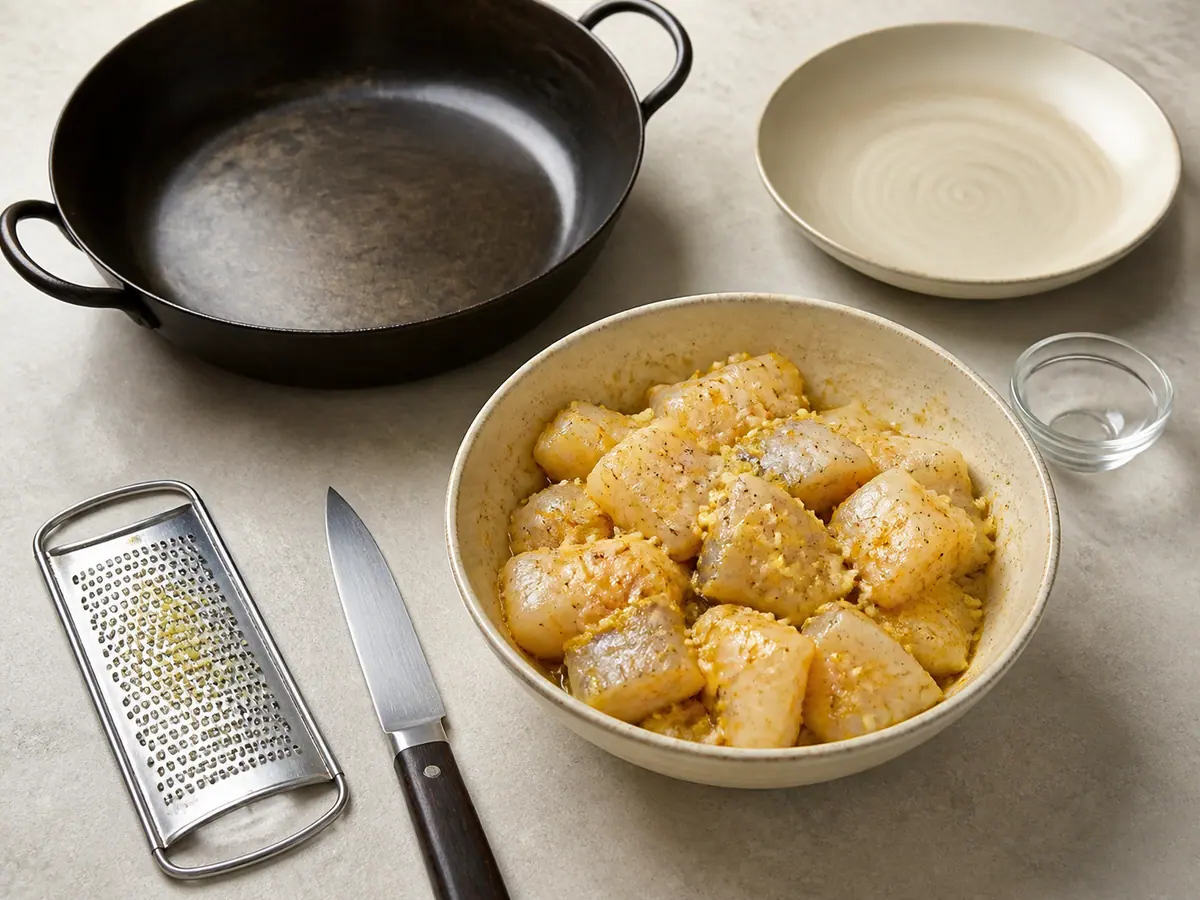
Pat 680 g of Atlantic cod fillets dry with paper towels and cut it into 4 cm (1 1/2 in) pieces. Peel 15 g of fresh galangal and 50 g of shallots, then grate them finely. Mince 2 garlic cloves for marinade. In a nonreactive bowl, combine 15 ml of fish sauce for marinade, 4 g of granulated sugar for marinade, 6 g of ground turmeric, grated galangal and shallots, minced garlic, and 1/2 g of black pepper. Fold in the fish until evenly coated and start a 15-minute timer. Wash your hands, knife, board, and every surface that touched the raw fish, then proceed immediately to the dipping sauce, toppings, and noodle water while the fish marinates.
15:00Prepare the sauce and toppings while the fish marinates
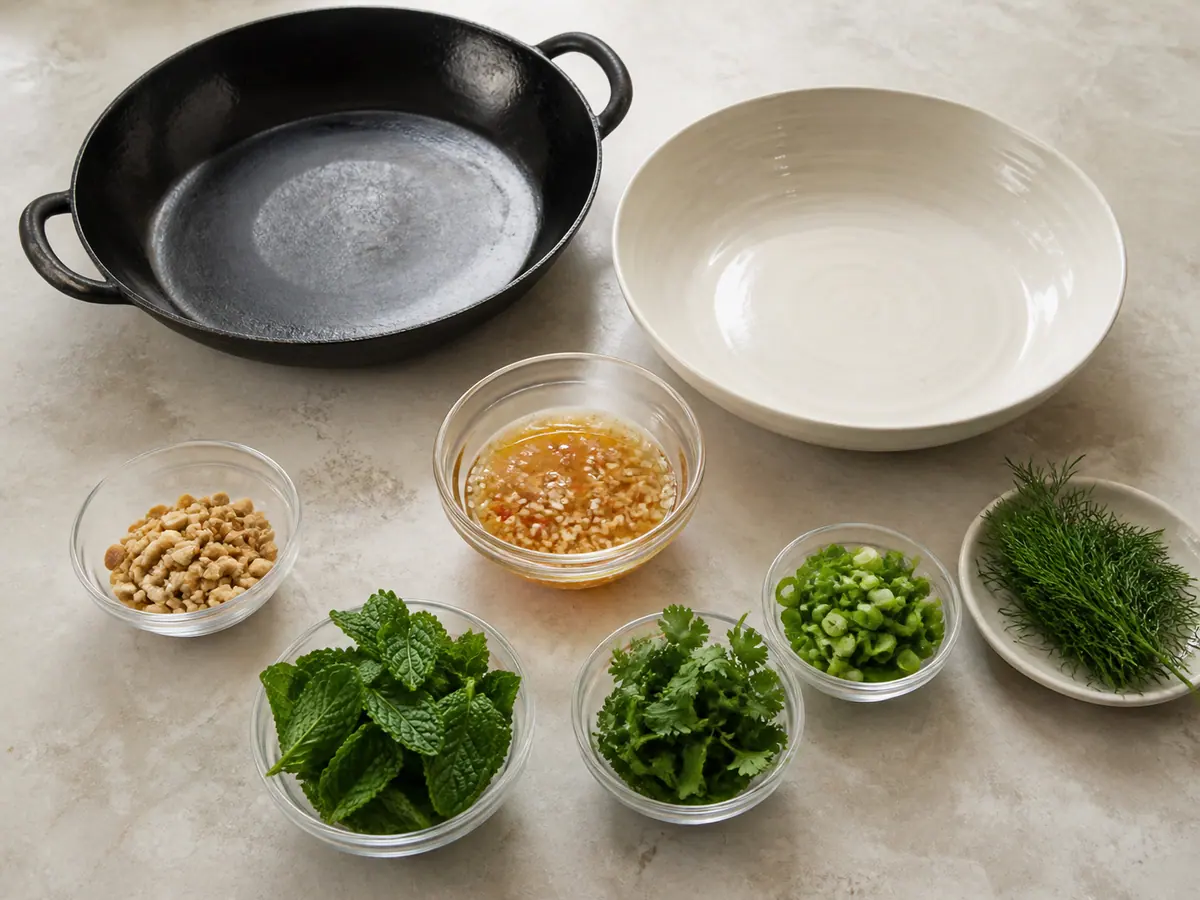
While the fish marinates, mince 1 garlic clove for dipping sauce and stir it with 30 ml of fish sauce for dipping sauce, 18 g of granulated sugar for dipping sauce, 45 ml of fresh lime juice, and 60 ml of warm water until the sugar dissolves. Roughly chop 45 g of dry-roasted unsalted peanuts. Pick the leaves from 20 g of fresh mint and 20 g of fresh cilantro on the cleaned work surface. Cut the root ends from 100 g of scallions, slice the white and green parts into 5 cm (2 in) lengths, and trim any thick stems from 50 g of fresh dill. Bring a large pot of water to a boil for the noodles.
Cook the rice noodles
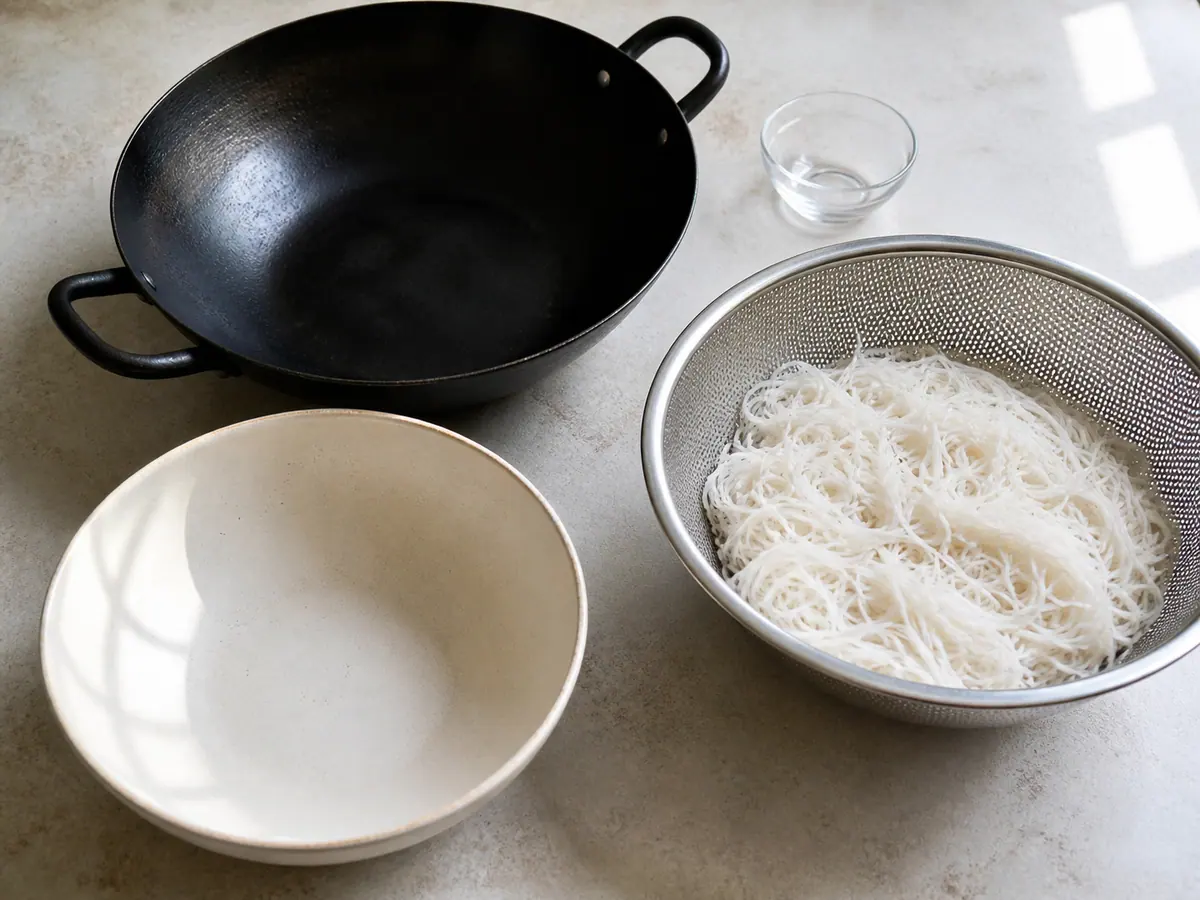
When the prepared pot of water reaches a boil, add 225 g of dried rice vermicelli and cook according to the package directions, beginning to check at 4 minutes, until tender but not mushy. Drain in a colander, rinse briefly under cool running water to stop the cooking, and shake well so the noodles do not dilute the sauce.
04:00Sear the fish until safely cooked
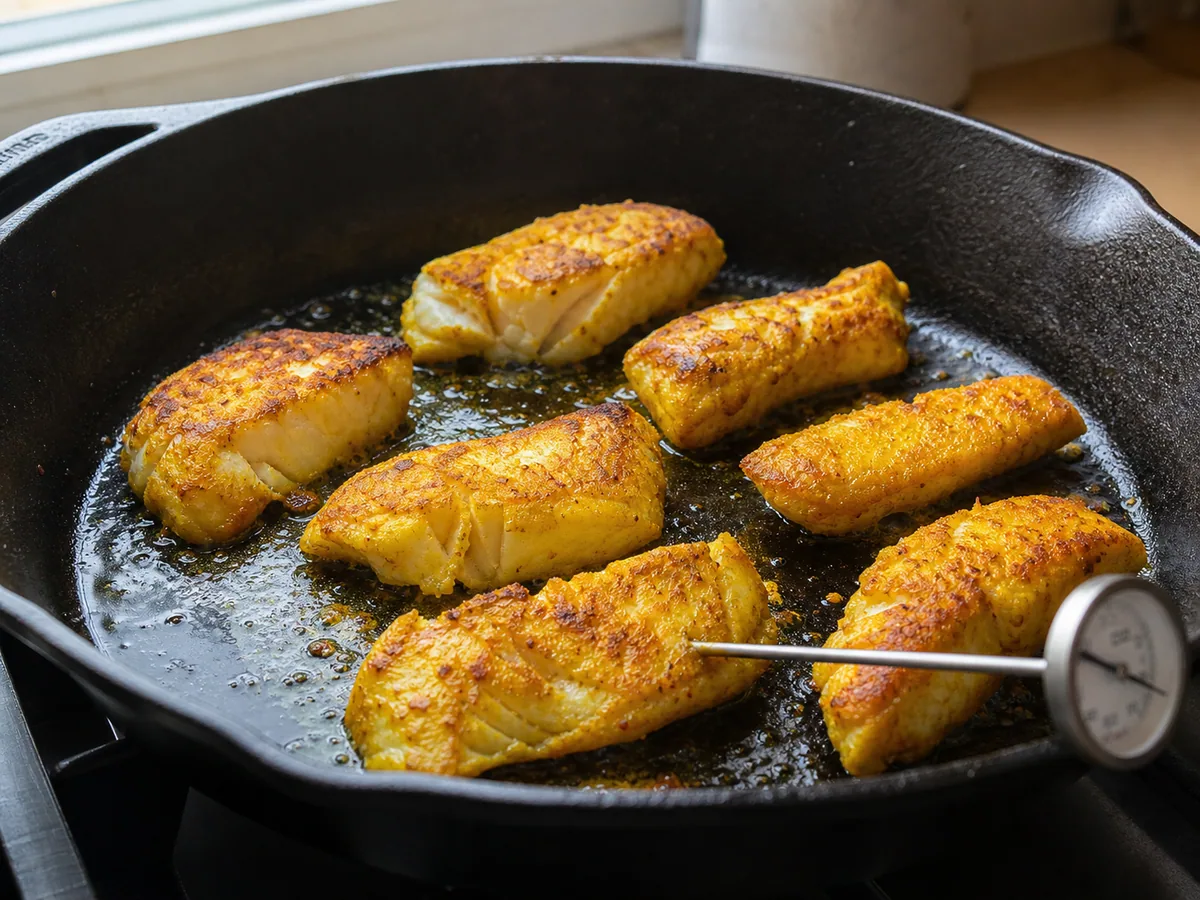
Heat a large heavy skillet over medium-high heat until a drop of marinade sizzles immediately, then add 30 ml of neutral oil. Lift the fish from the marinade, letting excess drip back into the bowl, and place the pieces in one uncrowded layer. Discard the used marinade. Sear without moving for about 3 minutes, then turn carefully and continue cooking until safely done. Use a food thermometer in the thickest pieces and continue cooking until they reach 63°C/145°F; the centers should be opaque and separate easily into moist flakes. Cook in two batches when needed so the fish browns instead of steaming. Transfer each safely cooked batch to a clean plate so it does not overcook while the herbs wilt.
03:00Wilt the dill and scallions
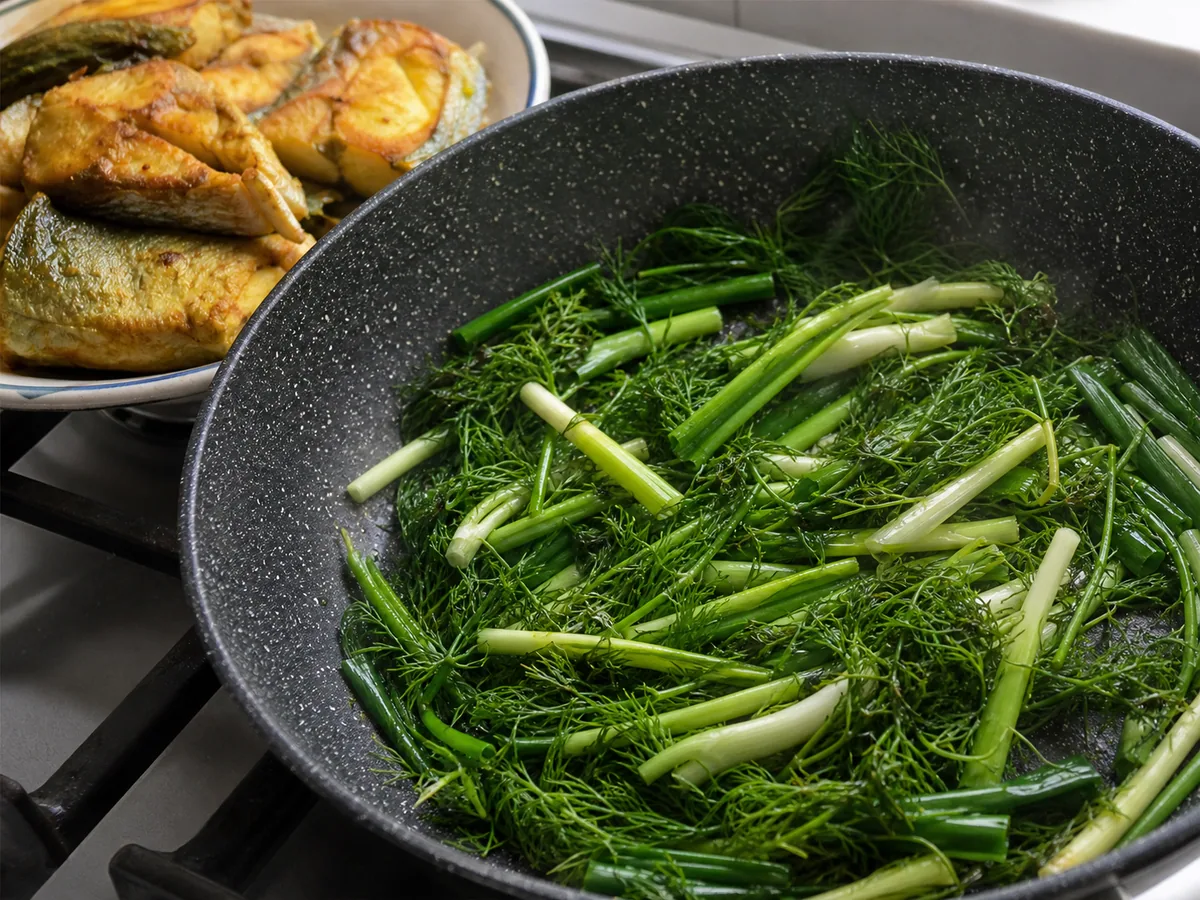
With the safely cooked fish resting on a clean plate, add 100 g of scallions and 50 g of fresh dill to the hot skillet in quick succession. Toss for about 90 seconds, until the scallions begin to soften and the dill is fragrant, bright green, and only just wilted. Remove the skillet from the heat, return the fish and any juices from the clean plate, and fold once or twice very gently to coat without breaking the pieces or cooking them further.
01:30Assemble and serve
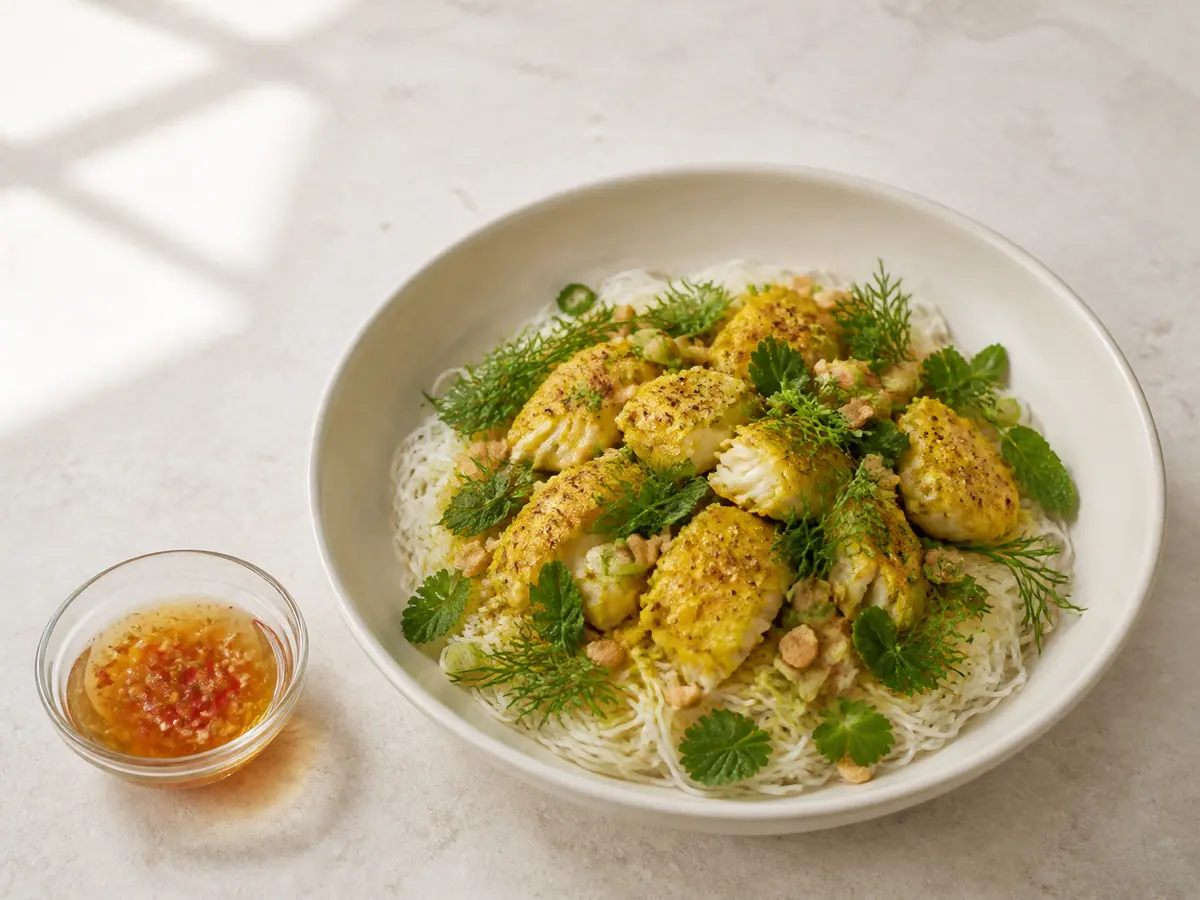
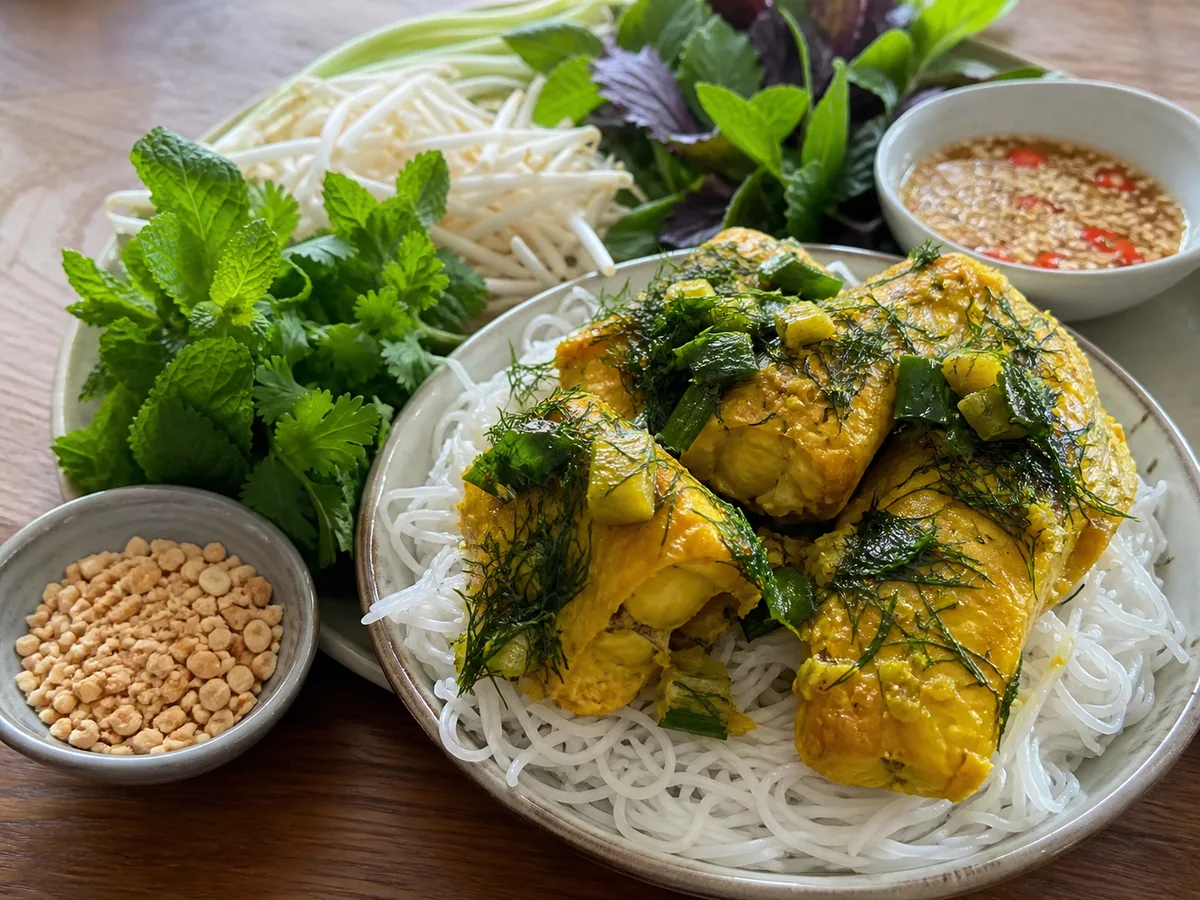
Divide the noodles among serving bowls. Spoon the hot turmeric fish, dill, scallions, and skillet juices over the noodles. Add 20 g of fresh mint, 20 g of fresh cilantro, and 45 g of dry-roasted unsalted peanuts at the table, and serve the dipping sauce alongside so each person can season each bite with a little salty, tart sauce.


Smart Substitutions
- No Atlantic cod? Use haddock, pollock, catfish, or another firm white fish that can be cut into sturdy pieces.
- No fresh galangal? Use the same weight of fresh ginger; the flavor will be warmer and less piney but still works with turmeric and dill.
- No peanuts? Use toasted cashews or toasted sesame seeds for crunch; note that these substitutions introduce different major allergens.
- Need a milder sauce? Replace one-third of the fish sauce for dipping with additional warm water, then adjust lime and sugar to taste.
Tips and Variations
- Dry the fish thoroughly before marinating; surface moisture makes browning harder and encourages the pieces to steam.
- Use a broad spatula and turn the fish only once so the tender chunks keep their shape.
- Keep mint, cilantro, peanuts, and dipping sauce at the table so each bowl can balance hot fish with cool herbs and crunch.
What Went Wrong?
- Fish sticks to the skillet Let the oil heat fully and wait until a browned crust forms before trying to turn the pieces.
- Fish breaks apart Use larger chunks, handle them with a broad spatula, and avoid repeated stirring before the crust sets.
- Dill turns dark and limp Remove the skillet from the heat as soon as the fronds soften; carryover heat will finish wilting them.
- Dipping sauce tastes too sharp Add warm water a teaspoon at a time, then rebalance with a small pinch of sugar.
Nutrition Estimate
- Fiber: 4 g per serving
- Sodium: 1200 mg per serving
Nutrition disclaimer:This recipe is provided for general cooking information only. Nutrition values are estimates and may vary by ingredients, brands, preparation methods, and serving sizes. Check ingredient labels and follow appropriate food-safety practices. This content is not medical, dietary, allergy, or professional food-safety advice.
FAQ
Found an error or have a suggestion?
Help us improve this recipe. Send us your feedback and include the recipe name so we can take a look.