Method
Toast the whole spices
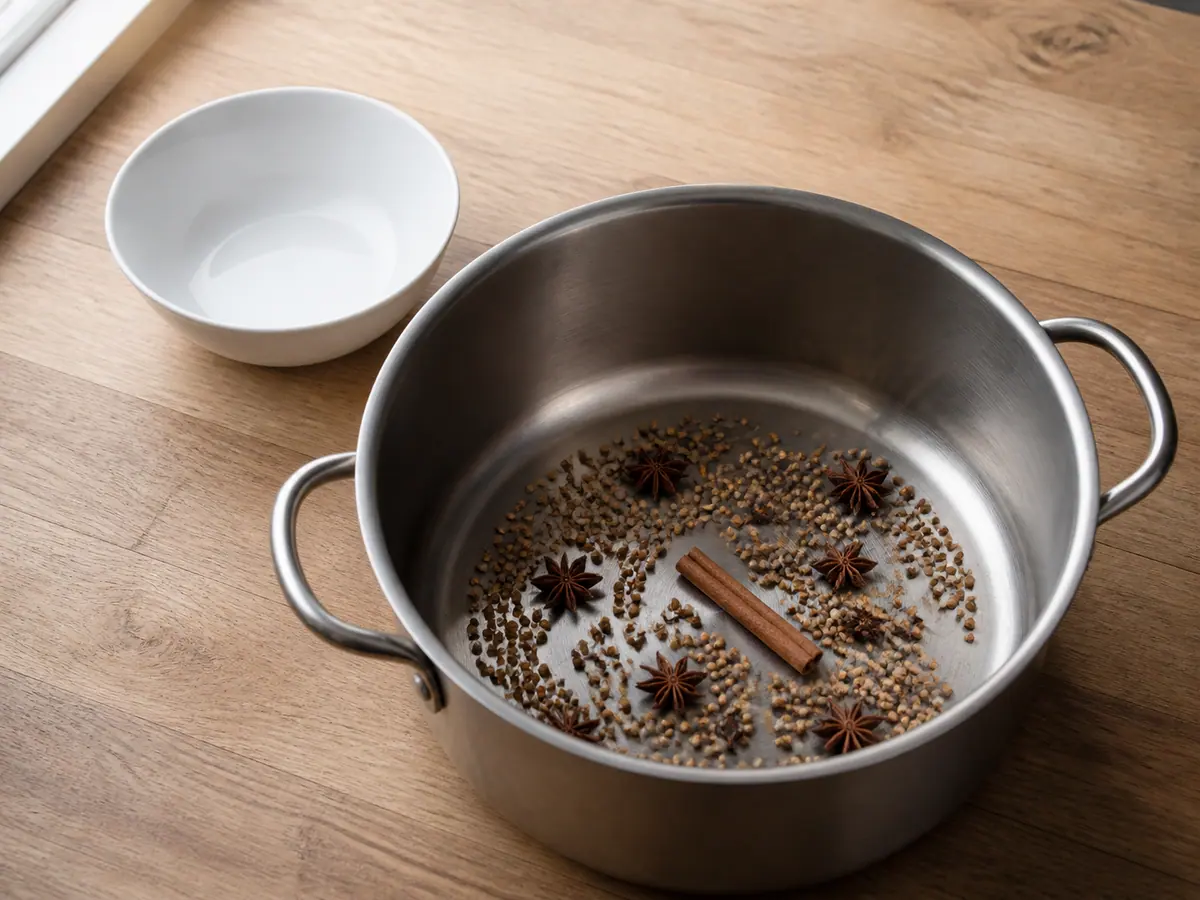
Set an oven rack near the broiler and heat the broiler to high. Toast 4 g of coriander seeds, 2 star anise, 1 cinnamon stick, and 4 whole cloves in a dry stockpot over medium heat for 2 minutes, shaking often, until aromatic. Remove the stockpot from the heat while you char the aromatics.
02:00Char the onion and ginger
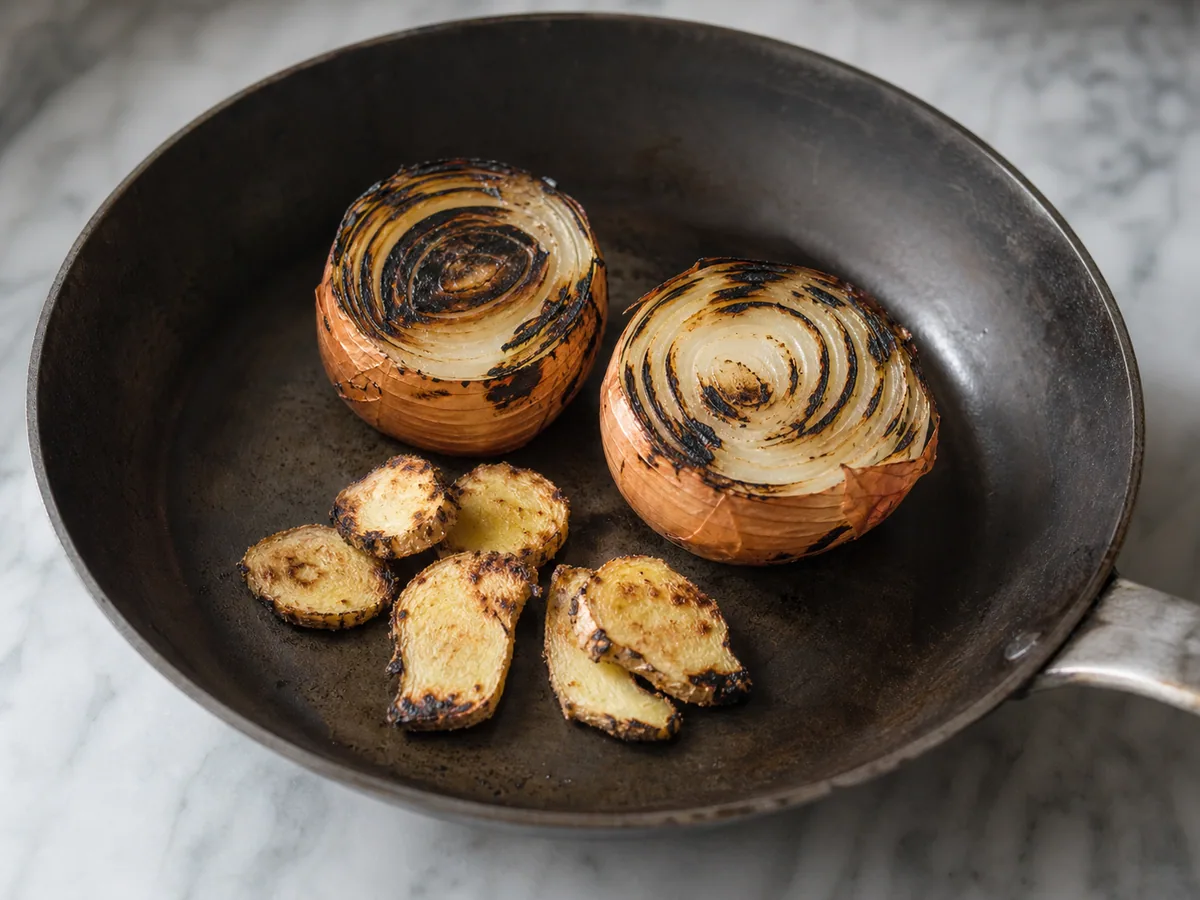
Cut 1 yellow onion in half through the root. Cut 85 g of fresh ginger lengthwise into broad slabs and lightly bruise them with the flat side of a knife. Place both on a foil-lined tray and broil, turning once, until blackened in patches and deeply fragrant, 8 to 12 minutes; start checking at 8 minutes.
08:00Start the chicken broth safely
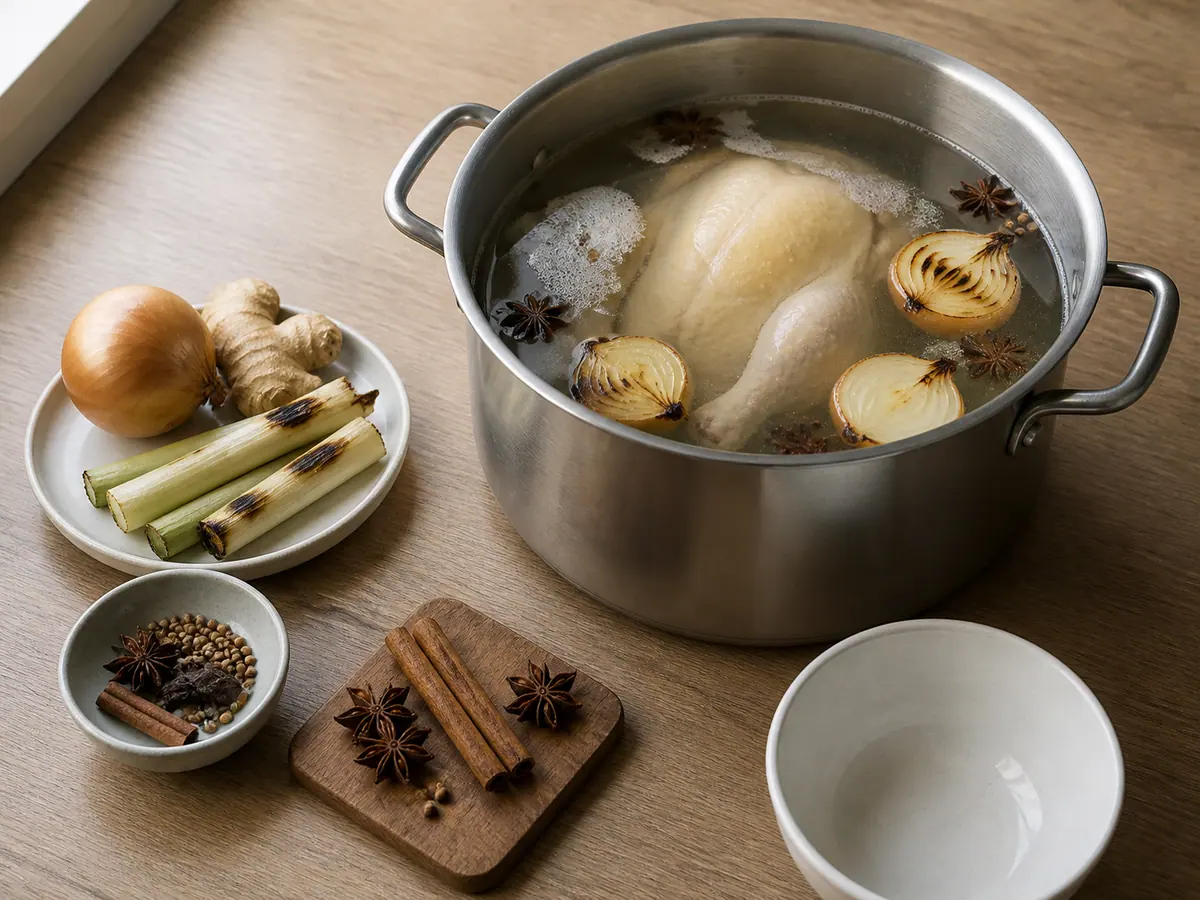
Remove any giblet packet from 1400 g of whole chicken with tongs and trim obvious excess fat; do not rinse the chicken. Place it in the stockpot with the toasted spices, add 2800 ml of water, and add the charred aromatics. Wash your hands with soap for 20 seconds, then wash and sanitize any tools and surfaces that touched raw chicken before handling garnishes. Bring the pot to a gentle boil over medium-high heat, immediately lower the heat to maintain a bare simmer, and skim off foam that rises during the first 10 minutes.
10:00Poach the chicken until safely cooked
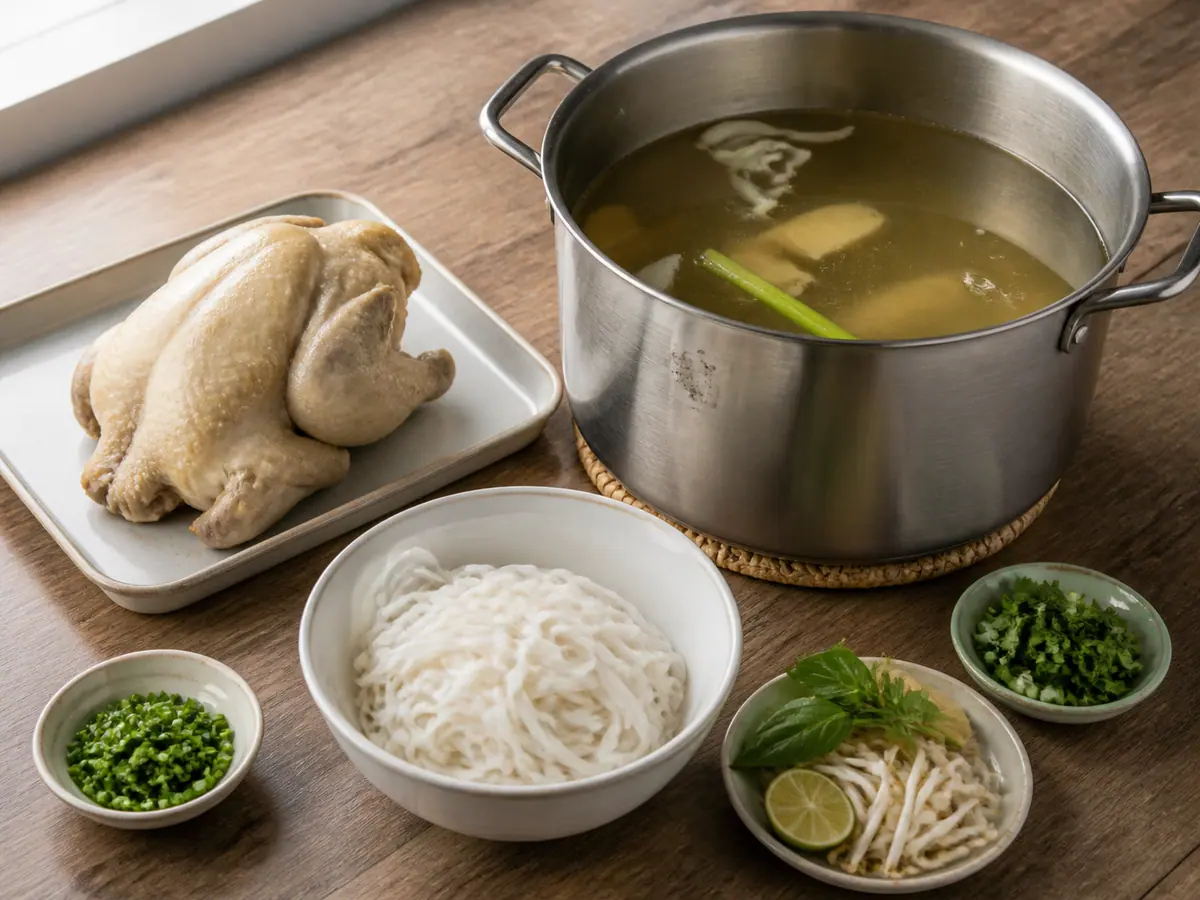
Partially cover the pot and keep the broth at a bare simmer, with only an occasional bubble breaking the surface. At 35 minutes, insert a food thermometer into the thickest part of the breast and the innermost part of the thigh without touching bone. Both areas must reach 74°C/165°F. If either is below that temperature, continue simmering and check again every 5 minutes. Transfer the chicken to a clean rimmed tray and keep the broth at a bare simmer.
35:00Shred the meat and deepen the broth
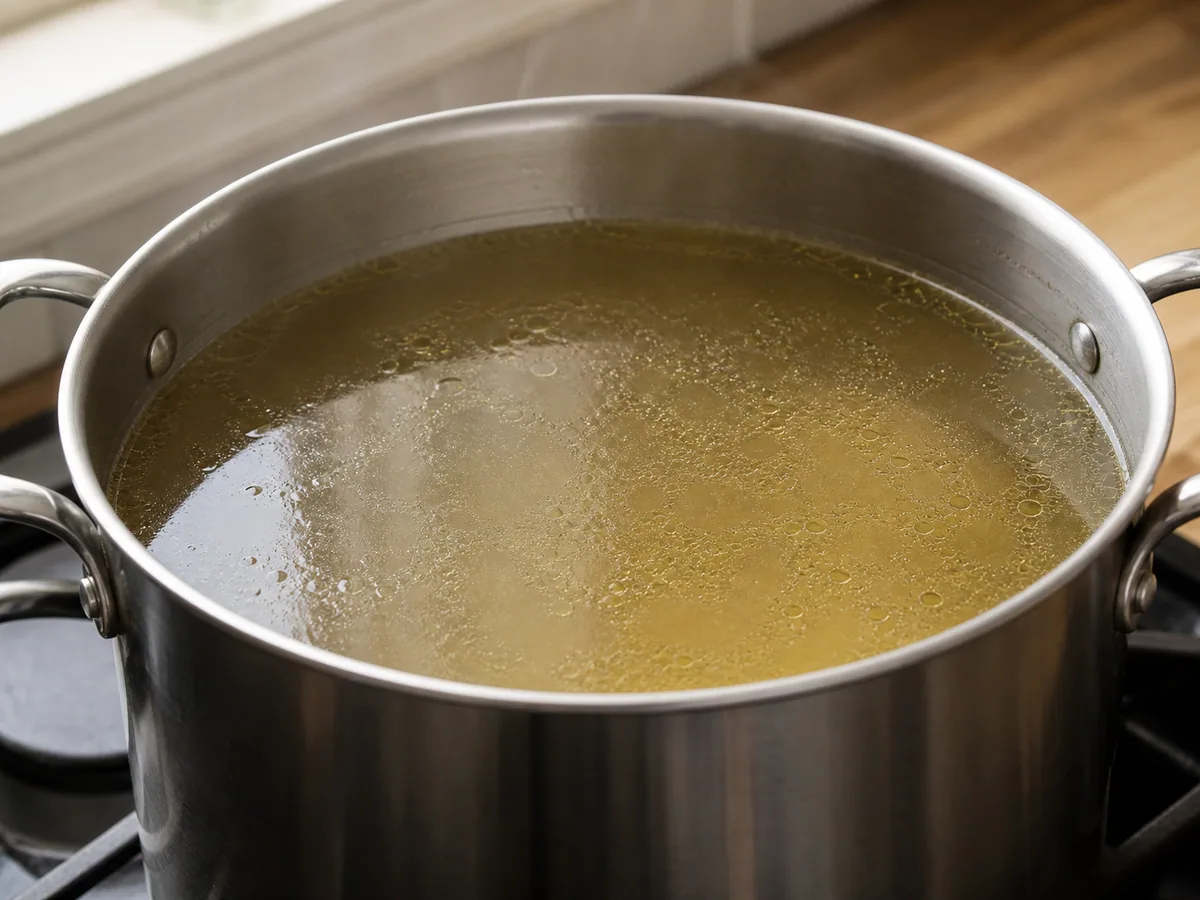
When the chicken is comfortable to handle, remove and discard the skin. Pull the meat from the bones and tear it into bite-size pieces, keeping the cooked meat on the clean tray. Return the carcass and all bones to the broth. Simmer uncovered for 25 minutes, adjusting the heat so the surface stays calm rather than boiling hard.
25:00Strain and balance the broth
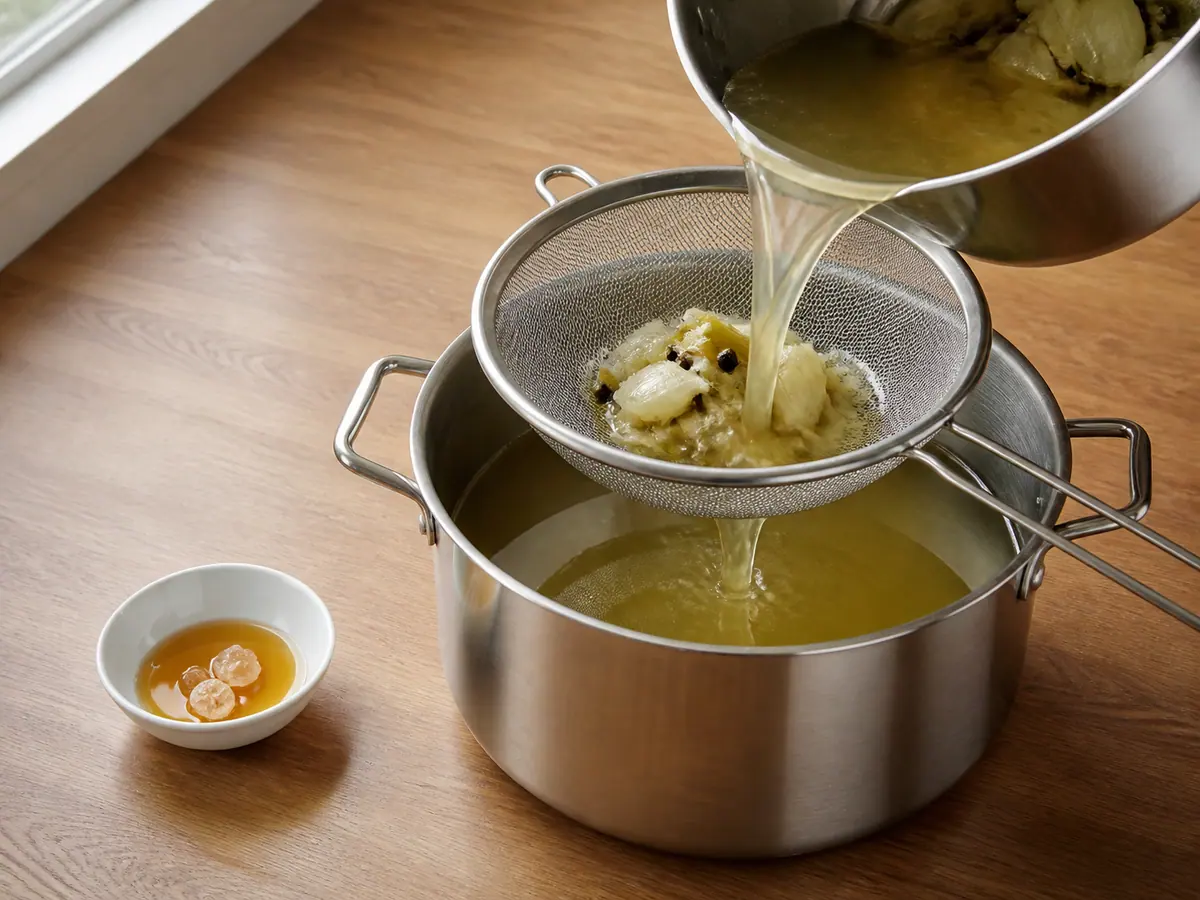
Strain the broth through a fine-mesh sieve into a clean pot and discard the solids. Skim off visible surface fat, then stir in 30 ml of anchovy fish sauce, 20 g of rock sugar, and 4 1/2 g of kosher salt. Simmer for 5 minutes, stirring until the sugar dissolves. Taste the broth; it should be clear, savory, gently sweet, and slightly more assertive than the finished bowl because the noodles will soften the seasoning.
05:00Prepare the noodles and fresh garnishes
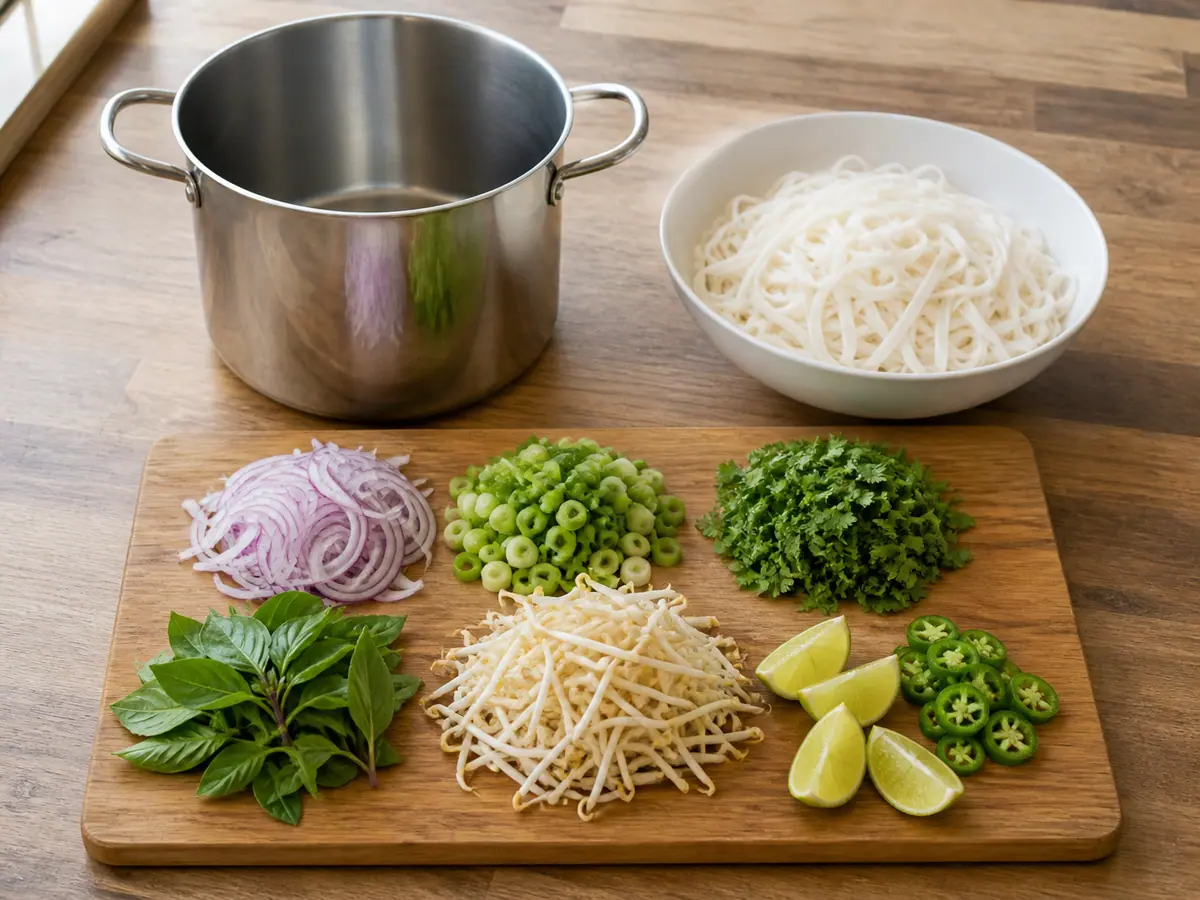
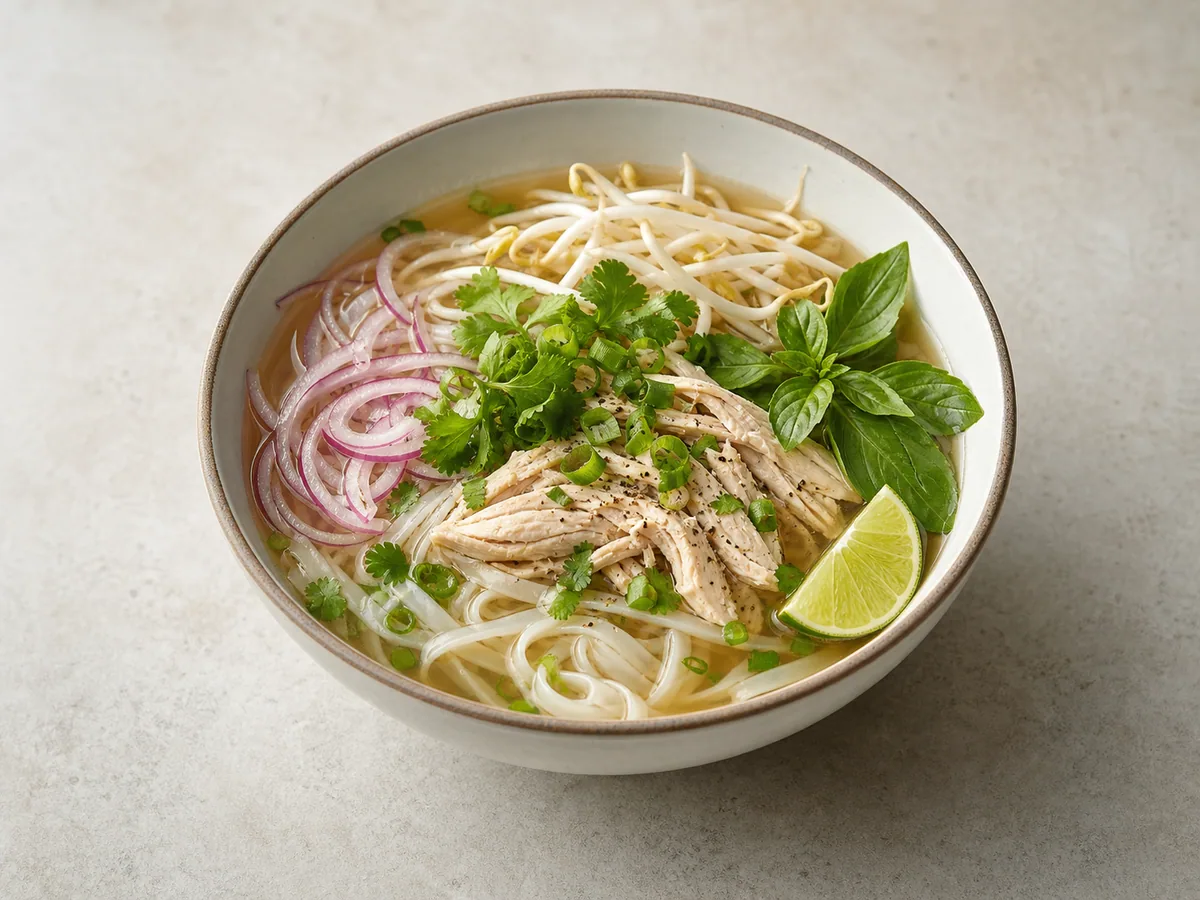
Bring a separate pot of water to a boil. Add 280 g of dried flat rice noodles and cook according to the package directions, stirring once, until flexible and just tender, 4 to 6 minutes; begin checking at 4 minutes. Drain and rinse briefly under cool running water to stop the cooking, then shake dry. On a clean board, slice 0.5 red onion very thinly; slice 4 scallions, chop 30 g of fresh cilantro, pull the leaves from 30 g of Thai basil, rinse 200 g of mung bean sprouts, cut 2 limes into wedges, and slice jalapeño (optional).
04:00Assemble and serve the pho
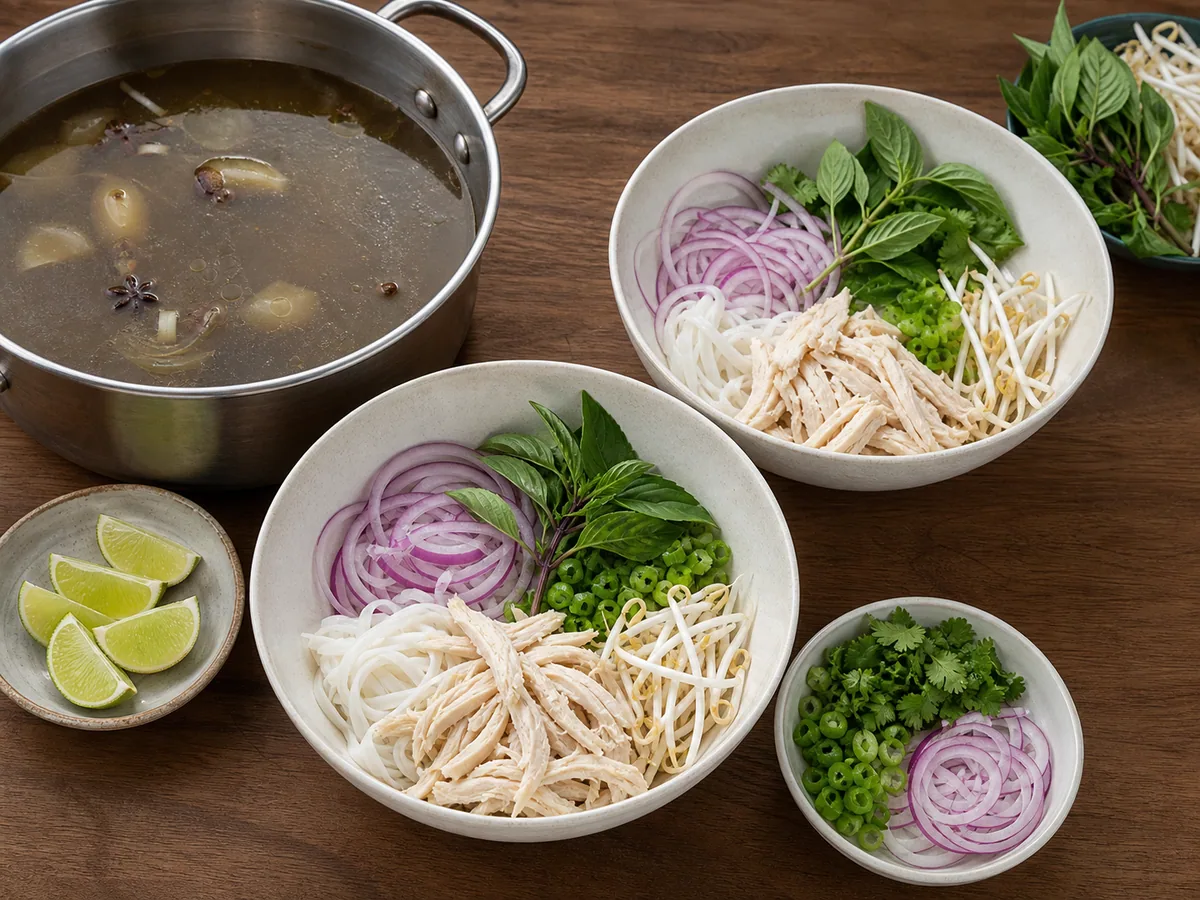
Bring the finished broth back to a full simmer. Season the shredded chicken with 1 g of ground black pepper, then divide cooked noodles and chicken among serving bowls. Arrange 0.5 red onion, 4 scallions, 30 g of fresh cilantro, 200 g of mung bean sprouts, 30 g of Thai basil, and jalapeño (optional) over the bowls. Ladle in vigorously hot broth, making sure the chicken is heated through, and serve immediately with 2 limes for squeezing.


Smart Substitutions
- No rock sugar? Use the same weight of granulated sugar; add it gradually and taste before adding more.
- No whole chicken? Use 1.4 kg (3 pounds) of bone-in chicken legs. Check the thickest pieces with a food thermometer and cook them to 74°C/165°F.
- No Thai basil? Use regular basil and increase the fresh cilantro slightly for a bright herbal finish.
- Only thin rice vermicelli available? Use it, but begin checking much earlier because fine noodles soften faster than flat pho noodles.
Tips and Variations
- Skim the broth most actively during the first 10 minutes, when foam rises quickly.
- Bruising the ginger before charring exposes more surface area and gives the broth a warmer aroma.
- Warm the serving bowls with hot water, empty them, and dry them just before assembly so the broth stays steaming hot.
What Went Wrong?
- Broth is cloudy The pot probably boiled too hard. Lower the heat and strain through a fine-mesh sieve; the flavor can still be excellent.
- Broth tastes weak Simmer it uncovered for 10 to 15 minutes to concentrate it, then taste again before adding more fish sauce or salt.
- Chicken is tough The broth likely boiled vigorously. Tear the meat across the grain into smaller pieces and keep the finished broth at a gentle simmer.
- Noodles clump together Rinse them briefly after cooking, shake them very dry, and portion them into bowls before adding the broth.
Nutrition Estimate
- Fiber: 3 g per serving
- Sodium: 1250 mg per serving
Nutrition disclaimer:This recipe is provided for general cooking information only. Nutrition values are estimates and may vary by ingredients, brands, preparation methods, and serving sizes. Check ingredient labels and follow appropriate food-safety practices. This content is not medical, dietary, allergy, or professional food-safety advice.
FAQ
Found an error or have a suggestion?
Help us improve this recipe. Send us your feedback and include the recipe name so we can take a look.