Method
Prepare the bananas and pandan
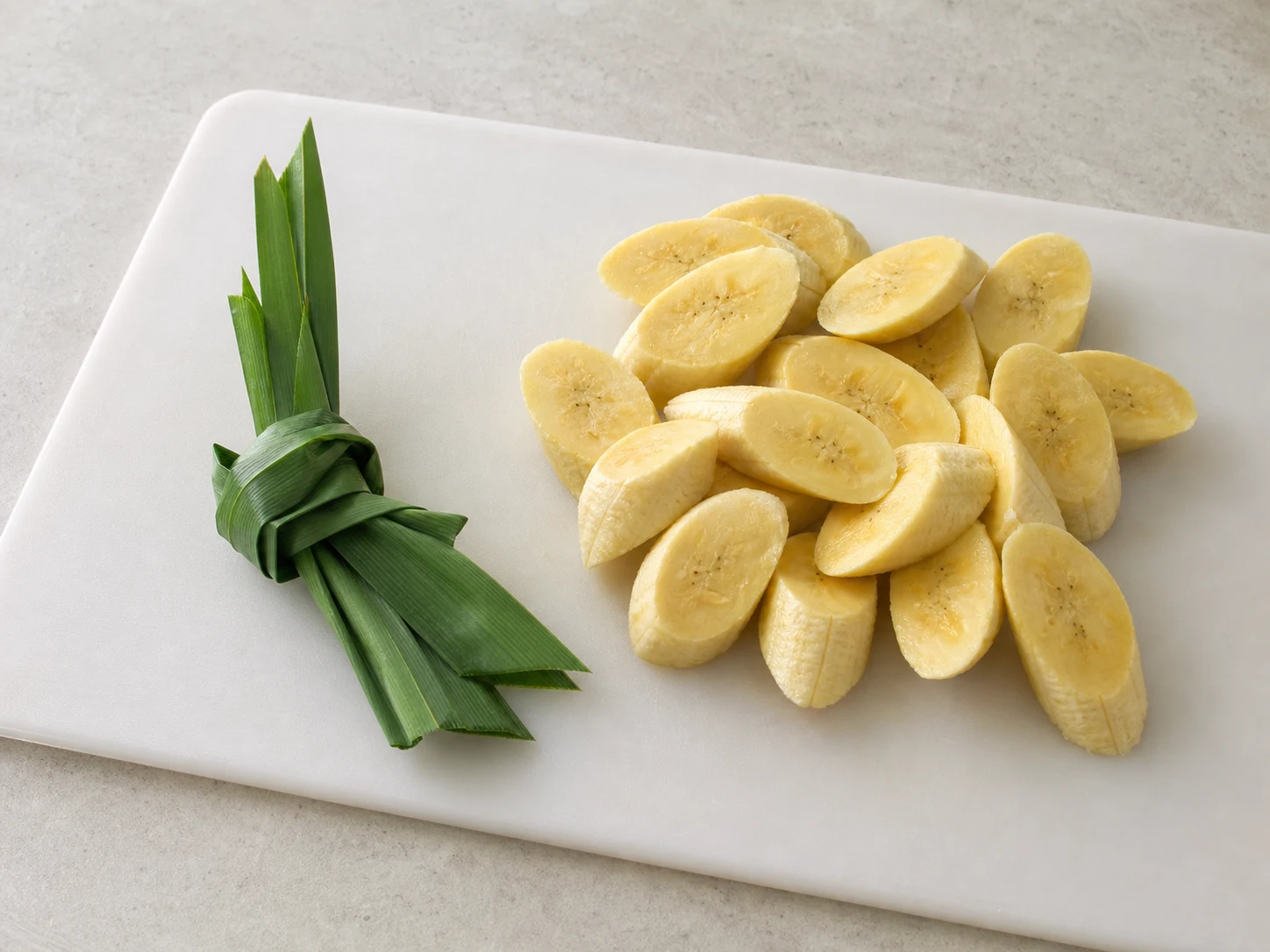
Rinse 3 fresh pandan leaves and bend the leaves into a loose knot that will be easy to lift out after cooking. Peel 450 g of ripe pisang awak bananas, then slice them on a diagonal into broad pieces about 2.5 cm (1 in) thick. Avoid thin slices, which soften too quickly in the saucepan.
Cook the tapioca in coconut and pandan
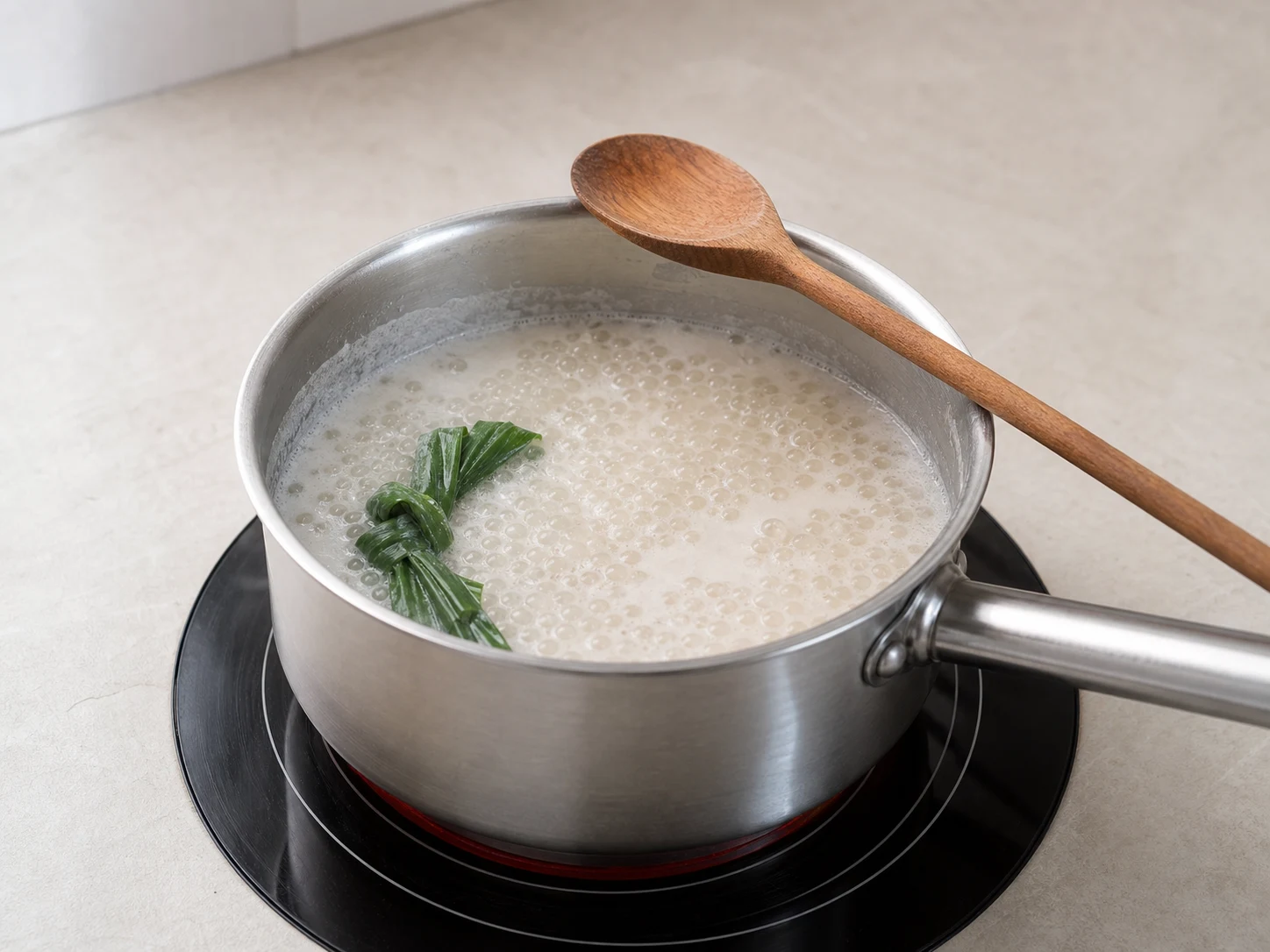
Pour 600 ml of water and 400 ml of full-fat coconut milk into a medium saucepan and add 3 fresh pandan leaves. Bring the liquid just to a boil over medium-high heat, stirring along the base of the pan. Stir in 55 g of small tapioca pearls, reduce the heat to a steady gentle simmer, and cook for 10 to 12 minutes, stirring often and breaking up any clumps. Begin checking at 10 minutes: the pearls should look mostly translucent with only pinprick white centers. Add a small splash of hot water if the mixture becomes too thick before the pearls reach that stage.
10:00Simmer until the bananas are tender
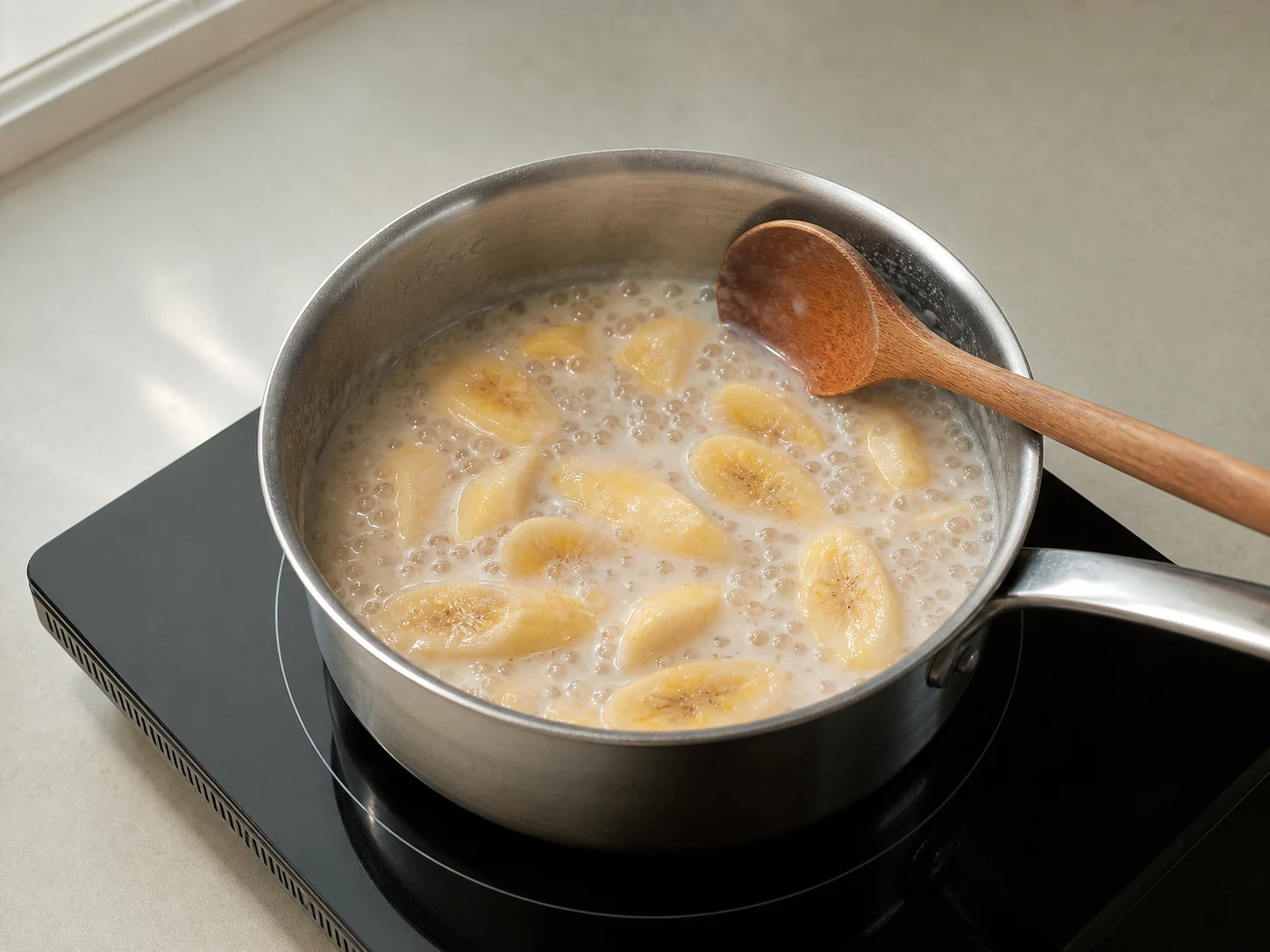
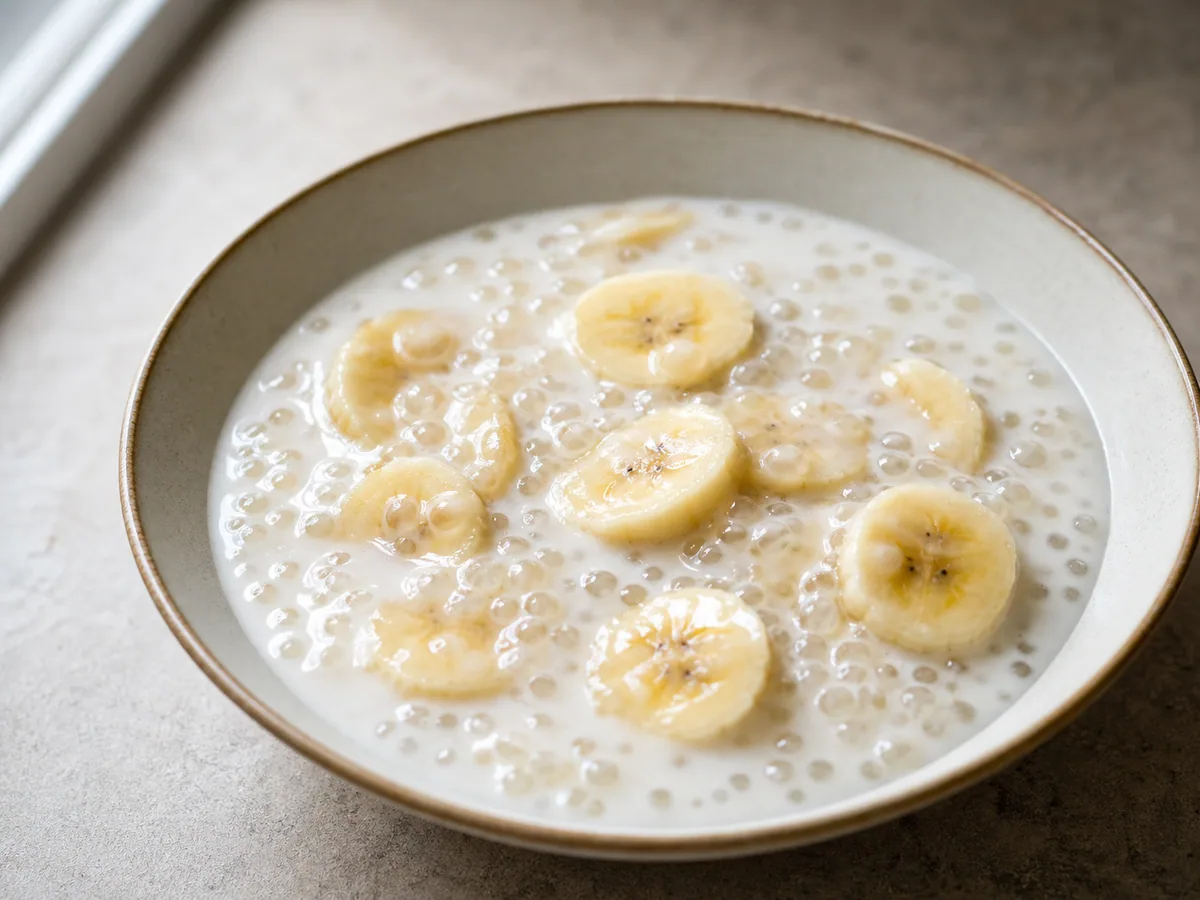
Add 450 g of ripe pisang awak bananas, 38 g of granulated sugar, and 1 g of kosher salt to the saucepan. Fold gently to coat the fruit without crushing it. Bring the mixture back to a quiet simmer and cook for 5 to 7 minutes, moving the spoon carefully around the edges, until the banana centers are bright yellow and tender, the pieces still hold their shape, and the tapioca pearls are fully translucent. Begin checking at 5 minutes and stop before the fruit starts to collapse.
05:00Rest briefly and serve warm
Turn off the heat and lift out 3 fresh pandan leaves. Leave the pudding undisturbed for 5 minutes so the coconut base gains a little body while remaining loose enough to ladle. Crush 50 g of roasted unsalted peanuts into coarse pieces. Divide the warm pudding among small bowls, making sure each portion has several banana pieces, then scatter the peanuts over the top.
05:00


Smart Substitutions
- No pisang awak bananas? Choose ripe plantains with heavily spotted skins. Slice them a little thinner and stop cooking as soon as they are tender.
- No pandan? Leave it out; the dessert will have a simpler coconut-and-banana aroma but will still cook correctly.
- Using larger tapioca pearls? Use the package directions as the timing guide and wait for the pearls to become translucent before adding the bananas; extra hot water may be needed.
- Skipping peanuts? Omit the topping and serve the pudding without a garnish.
Tips and Variations
- Use bananas that smell ripe and give slightly under gentle pressure but remain firm enough to cut into clean pieces.
- Sweep the spoon across the entire saucepan base after adding the tapioca so pearls do not settle into a sticky layer.
- Choose small bowls because the coconut base is rich and the pudding is best served in modest warm portions.
What Went Wrong?
- Tapioca pearls have opaque centers Continue at a gentle simmer, stirring often. Add a splash of hot water if the base becomes dense before the centers shrink to pinpoints and disappear.
- Pudding will not flow from the ladle Mix in hot water one spoonful at a time until the pearls move freely and the base falls in a slow stream.
- Banana pieces are falling apart Reduce the heat and use a folding motion instead of vigorous stirring. Firmer pisang awak bananas or ripe plantains hold their shape better than Cavendish bananas.
- Coconut base separates or looks greasy Take the saucepan off the heat and stir slowly until the liquid looks unified. Keep the remaining cooking at a quiet simmer rather than a hard boil.
Nutrition Estimate
- Fiber: 3 g per serving
- Sodium: 80 mg per serving
Nutrition disclaimer:This recipe is provided for general cooking information only. Nutrition values are estimates and may vary by ingredients, brands, preparation methods, and serving sizes. Check ingredient labels and follow appropriate food-safety practices. This content is not medical, dietary, allergy, or professional food-safety advice.
FAQ
Found an error or have a suggestion?
Help us improve this recipe. Send us your feedback and include the recipe name so we can take a look.