Method
Braise the beef until fork-tender
Use tongs to place 570 g of beef chuck roast in a heavy pot. Add 1.2 liters of water for braising, 150 g of roughly chopped yellow onion for braising, 2 garlic cloves for braising, 2 bay leaves, and 2.4 g of kosher salt for carne mechada. Bring to a boil over high heat, skim off any foam, then lower the heat so the liquid barely bubbles and partially cover the pot. Wash your hands and clean the tongs, sink area, and any surface touched by raw beef before handling other ingredients. Simmer for 100 to 120 minutes, checking at 100 minutes, until a fork twists easily in the thickest part. Use a food thermometer: a whole beef roast requires at least 63°C/145°F followed by a 3-minute rest for safety, but continue cooking to about 93°C/200°F for a reliably shreddable texture.
1:40:00Shred the beef and reserve the broth
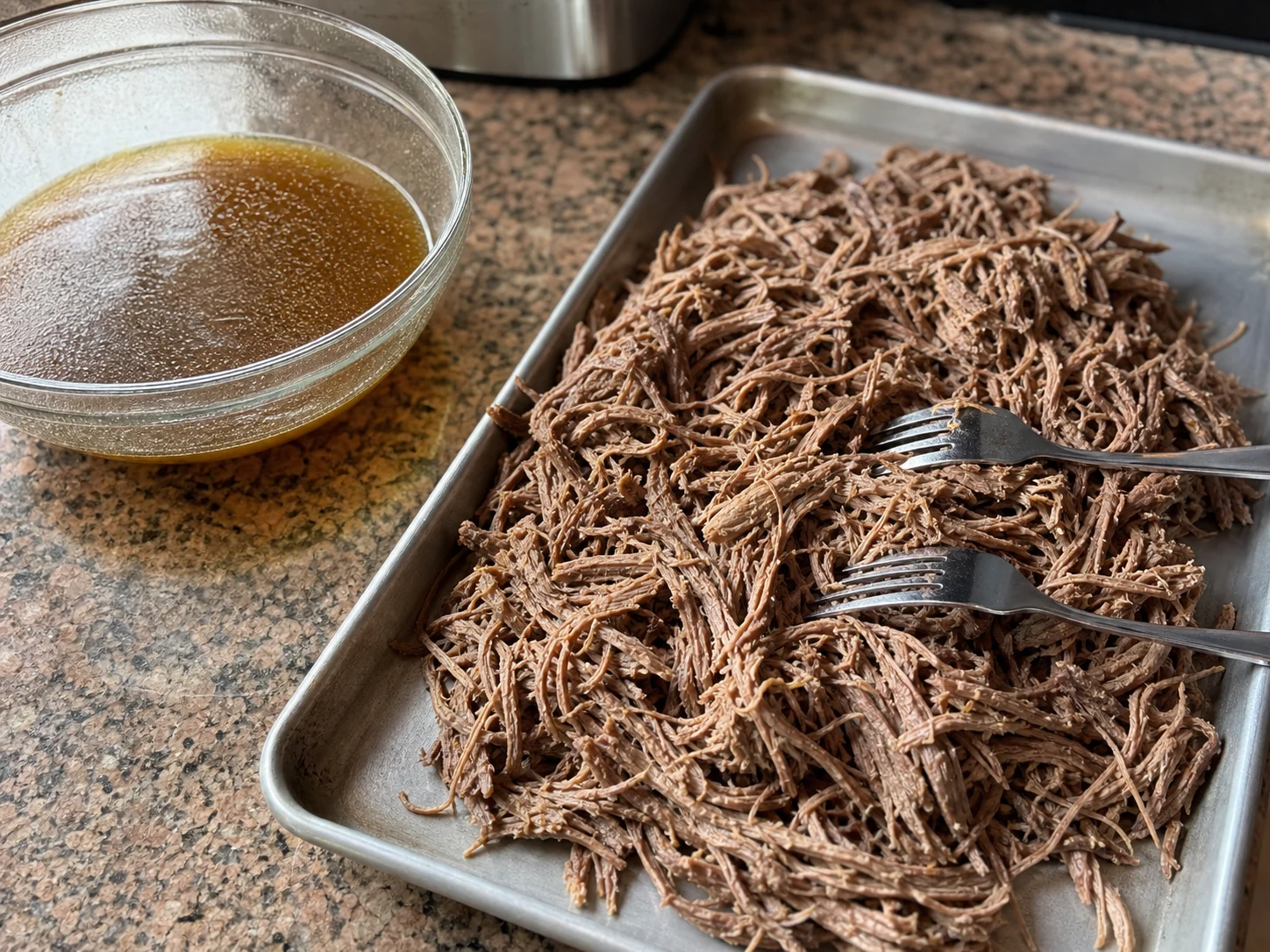
Transfer 570 g of beef chuck roast to a rimmed tray once it is fully cooked. Strain the cooking liquid into a heatproof bowl and discard the braising vegetables and bay leaves. Let the meat stand for 10 minutes, then pull it into long, fine strands with two forks, removing any large pieces of fat. Keep the strands loose so the sofrito can coat them evenly.
10:00Build the pepper and onion sofrito
Chop 150 g of yellow onion for sofrito and 150 g of red bell pepper for sofrito into small, even pieces. Mince 4 garlic cloves for sofrito. Warm 15 ml of olive oil for carne mechada in a wide skillet over medium heat, add the onion and pepper, and cook for 6 to 8 minutes until soft, lightly golden at the edges, and no longer watery. Stir in the garlic, 3 g of ground cumin, 1 g of dried oregano, and 1 g of black pepper, and cook just until fragrant without letting the garlic brown.
08:00Finish the carne mechada
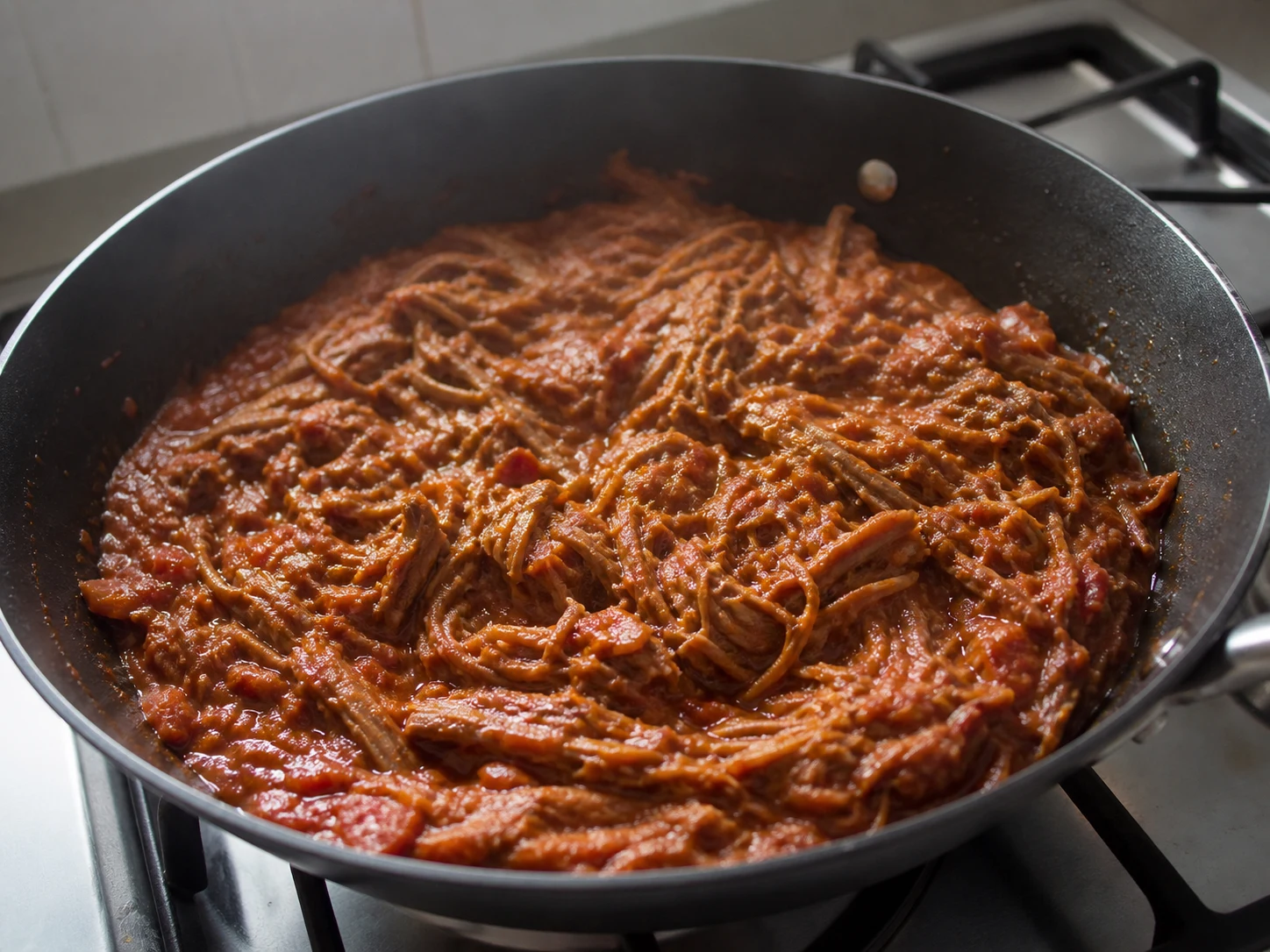
Stir 400 g of no-salt-added crushed tomatoes into the skillet and scrape up any browned bits. Return 570 g of beef chuck roast to the skillet and fold until every strand is coated. Add reserved cooking liquid a splash at a time so the mixture stays moist without becoming soupy. Simmer uncovered for 15 to 20 minutes, checking at 15 minutes, until the sauce clings to the beef and a spoon drawn across the pan leaves a brief trail. While it simmers, prepare the black beans and rice in the next steps. Taste and adjust only after the sauce has reduced.
15:00Simmer the black beans
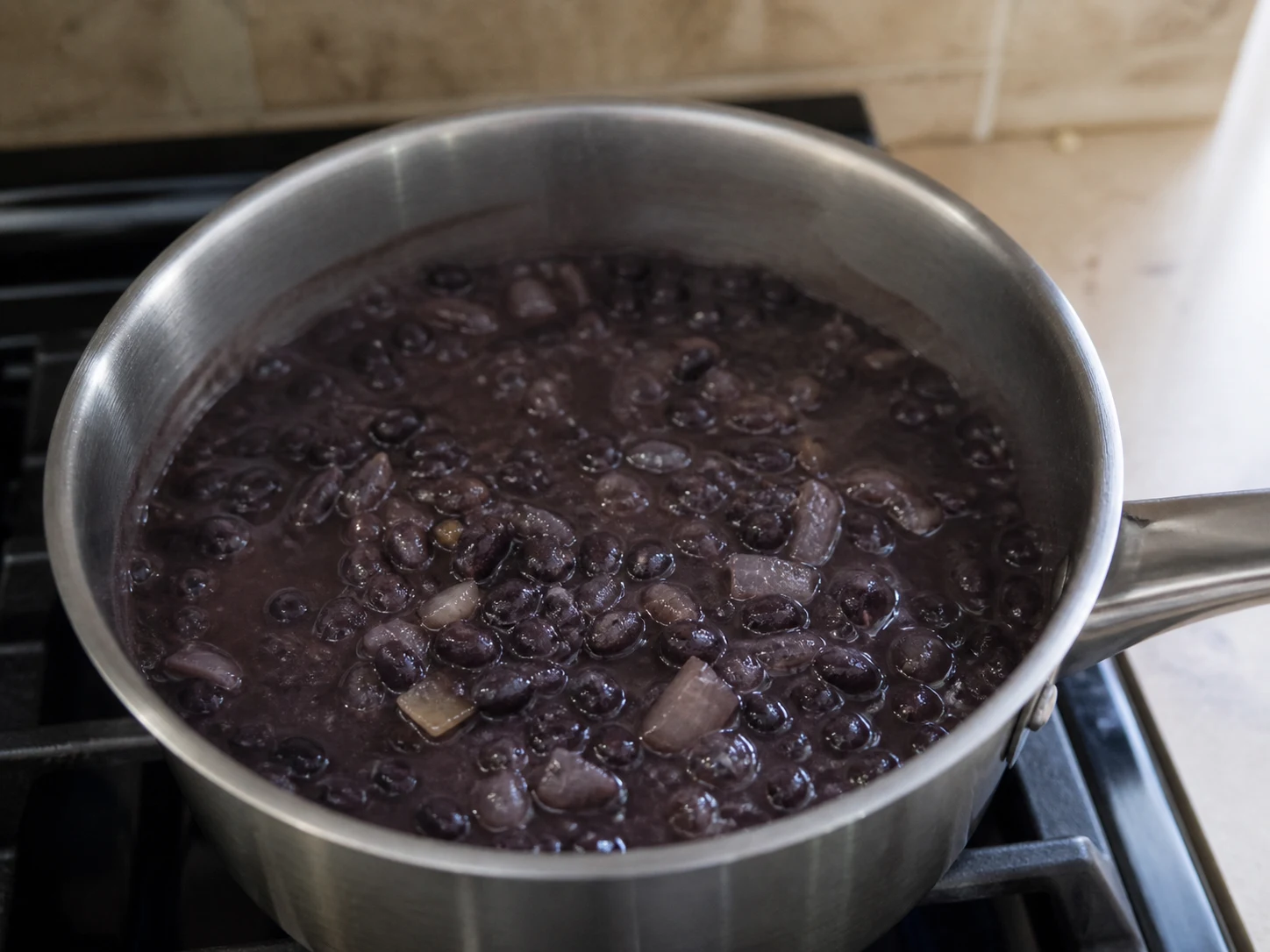
While the carne mechada simmers, chop 75 g of yellow onion for black beans and mince 1 garlic clove for black beans. Warm 15 ml of olive oil for black beans in a saucepan over medium heat, add the onion, and cook for 4 to 5 minutes until translucent with lightly golden edges. Stir in the garlic for about 30 seconds until fragrant, then add 425 g of canned no-salt-added black beans, drained and rinsed, 120 ml of water for black beans, and 1.2 g of kosher salt for black beans. Simmer uncovered for 12 to 15 minutes, checking at 12 minutes, until the liquid is glossy and lightly thickened. Mash a spoonful of beans against the side of the pan and stir them back in for a creamier body.
12:00Cook the white rice
As the carne mechada and beans simmer, rinse 250 g of long-grain white rice in a fine-mesh sieve until the runoff is much less cloudy. Combine 250 g of long-grain white rice, 480 ml of water for rice, and 2.4 g of kosher salt for rice in a saucepan and bring to a boil over medium-high heat. Stir once, reduce the heat to very low, cover tightly, and cook for 18 minutes without lifting the lid. The water should be absorbed and small steam holes should appear across the surface.
18:00Rest and fluff the rice
Remove the covered saucepan from the heat and leave it undisturbed for 10 minutes. Uncover, fluff gently with a fork, and spread the grains slightly in the pot so excess steam can escape without making the rice gummy.
10:00Pan-fry the ripe plantains
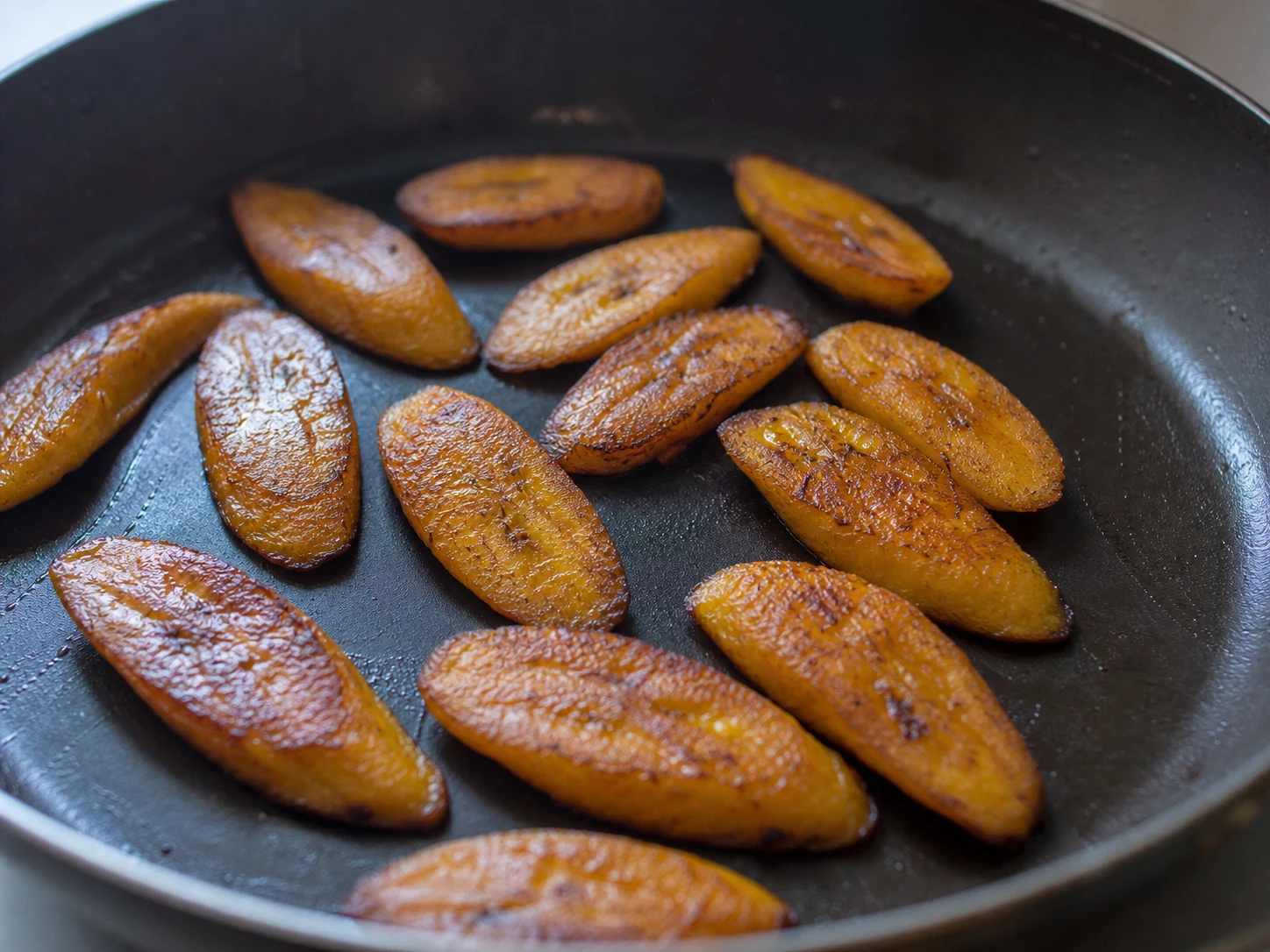
While the rice rests, peel 450 g of ripe plantains and cut them diagonally into slices about 1 cm (3/8 inch) thick. Warm 30 ml of neutral oil for plantains in a large skillet over medium heat until it shimmers but does not smoke. Fry the slices in a single layer, working in batches if needed. Check the first side after 2 minutes and turn when the undersides are deep golden, usually after 2 to 3 minutes. Cook the second side for about 2 to 3 minutes until caramelized at the edges and tender in the center. Lower the heat if the sugar-rich surfaces darken before the slices soften, and transfer them to a rack or paper-lined plate.
02:00Assemble the pabellón criollo
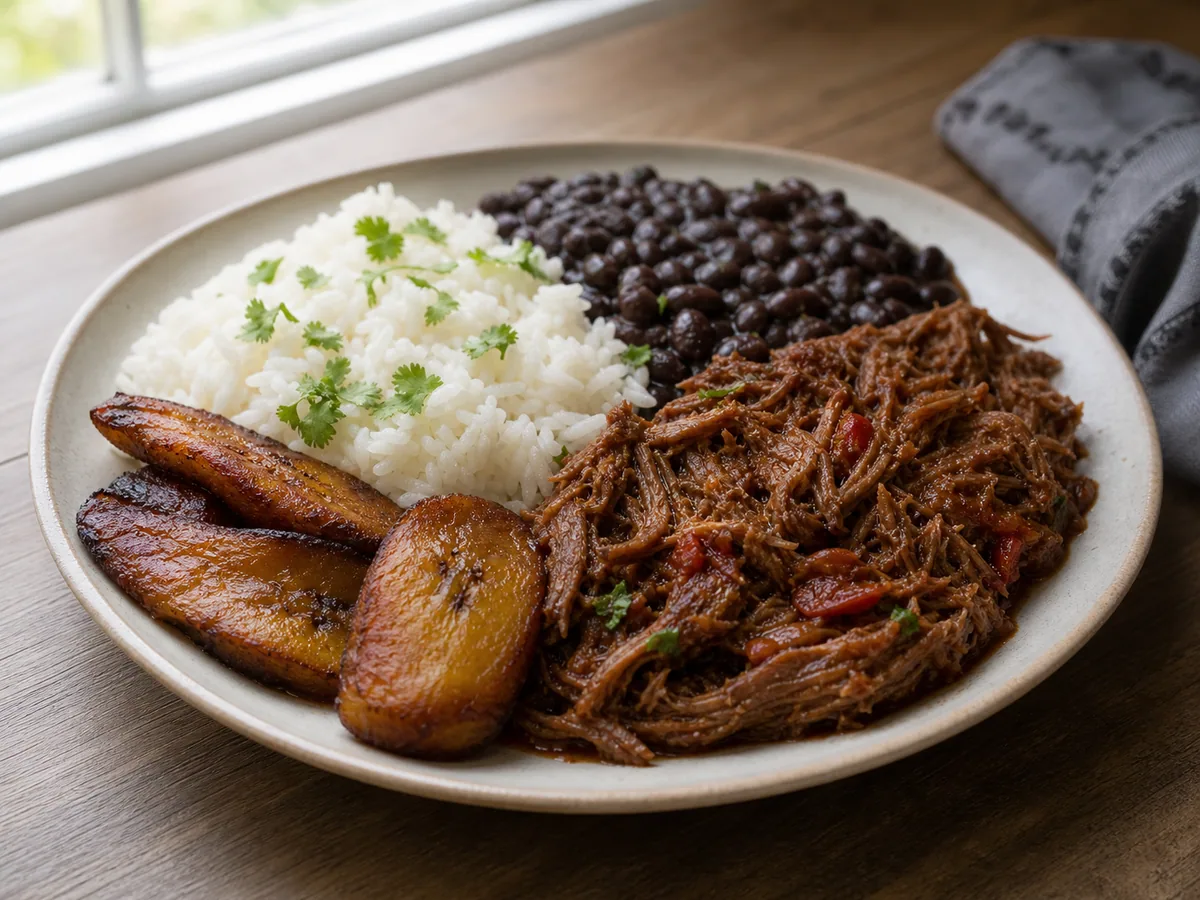
Divide the rice, black beans, carne mechada, and plantains among warm dinner plates, keeping the four components in distinct sections. Spoon a little of the clinging tomato sauce over the beef rather than over the rice, and serve while the plantains are still warm and the rice grains remain loose.


Smart Substitutions
- No chuck roast? Use beef brisket or flank steak and braise until the fibers separate easily; lean flank may become tender a little sooner.
- No red bell pepper? Use orange, yellow, or green bell pepper. Green pepper gives the sofrito a sharper, less sweet edge.
- No crushed tomatoes? Crush canned whole peeled tomatoes by hand or use an equal amount of plain passata.
- No neutral oil? Use avocado, canola, sunflower, or another mild high-heat cooking oil for the plantains.
Tips and Variations
- Choose plantains with yellow skins heavily mottled with black; firm green plantains will not develop the same tender sweetness.
- Shred the beef along its natural fibers, then shorten only the longest strands so the meat stays textured rather than mushy.
- Plate the four components separately first, then combine bites at the table to keep their contrasting textures clear.
What Went Wrong?
- Beef resists shredding Return it to the braising liquid and continue simmering gently until a fork twists through the thickest part with little pressure.
- Carne mechada is watery Simmer uncovered over medium-low heat, stirring often, until the tomato mixture clings to the strands and no liquid pools in the pan.
- Black beans taste thin Mash a larger spoonful against the pan, stir it back in, and simmer briefly until the starch thickens the liquid.
- Plantains darken before softening Lower the heat and give each side more time; very hot oil browns the natural sugars before the centers become tender.
Nutrition Estimate
- Fiber: 17 g per serving
- Sodium: 930 mg per serving
Nutrition disclaimer:This recipe is provided for general cooking information only. Nutrition values are estimates and may vary by ingredients, brands, preparation methods, and serving sizes. Check ingredient labels and follow appropriate food-safety practices. This content is not medical, dietary, allergy, or professional food-safety advice.
FAQ
Found an error or have a suggestion?
Help us improve this recipe. Send us your feedback and include the recipe name so we can take a look.