Method
Build and cook the spice paste
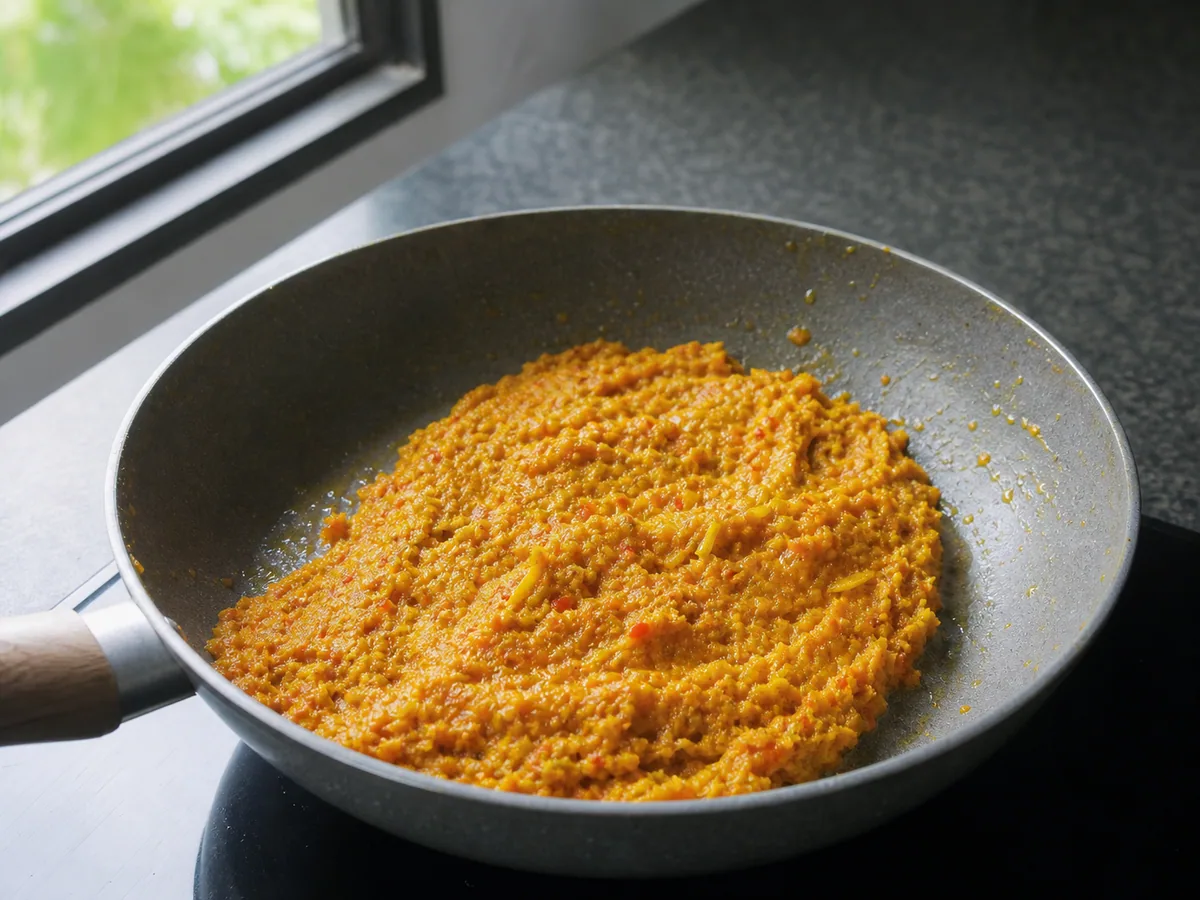
Peel 200 g of shallots, 30 g of garlic, 25 g of fresh ginger, 25 g of fresh galangal, and 20 g of fresh turmeric. Trim the tough tops from 2 lemongrass stalks, bruise the tender lower sections, and cut them crosswise. Stem 45 g of red bird's eye chiles; remove some seeds for gentler heat. Process those ingredients with 30 g of roasted candlenuts until finely chopped, scraping the bowl as needed. Heat 30 ml of coconut oil in a wide skillet over medium-low heat. Add the mixture, then stir in 5 g of ground coriander, 2 g of ground cumin, 8 g of shrimp paste, 15 g of palm sugar, 8 g of fine sea salt, and 1 g of ground black pepper. Cook for 8 to 10 minutes, stirring often, until the paste darkens to golden orange, looks glossy, and no longer smells raw. Stir in 30 ml of fresh lime juice and 120 ml of water, then cook for 3 to 5 minutes, stirring often, until thick enough to mound on a spoon. Cool until warm rather than hot.
08:00Season and seal the chicken
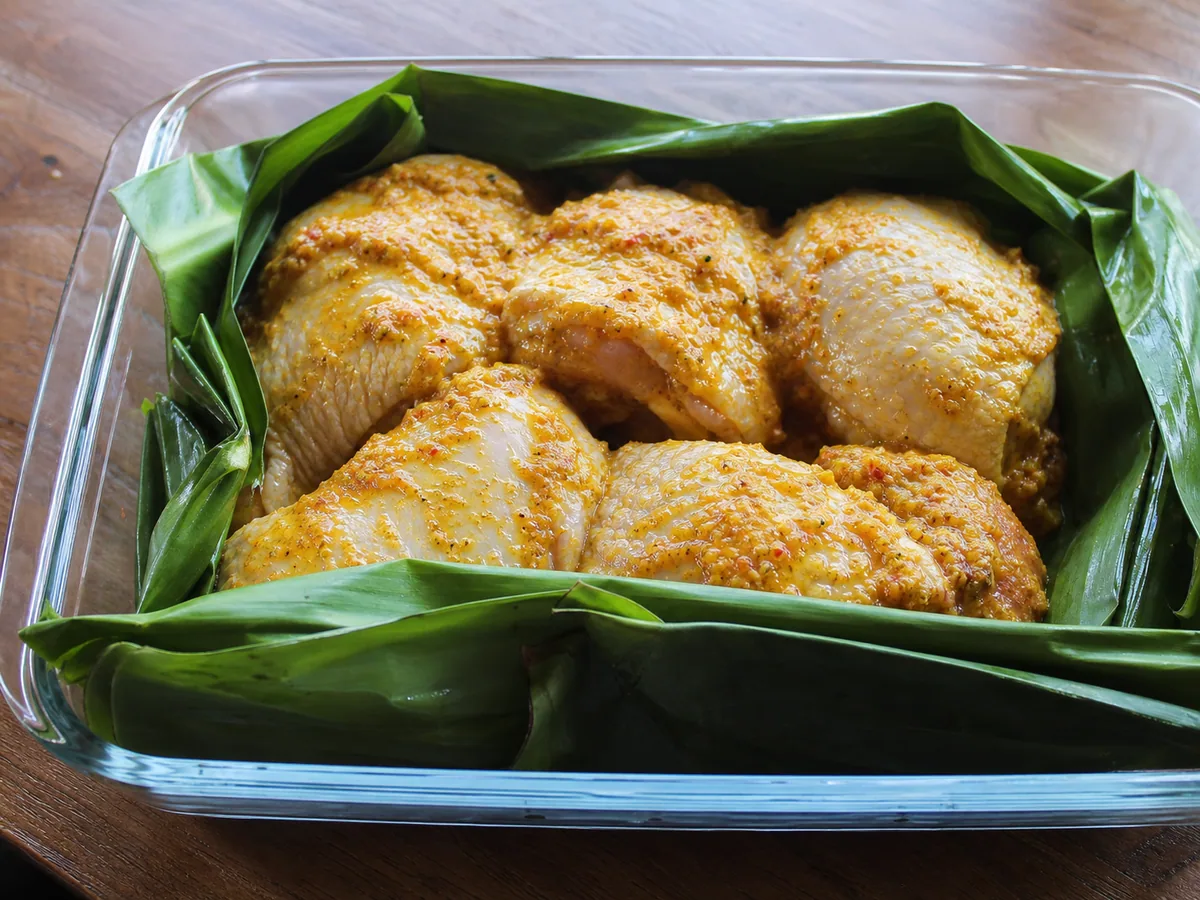
Heat the oven to 190°C (375°F). Warm 4 banana leaves in the oven for 1 to 2 minutes, checking frequently, until glossy and flexible; remove them immediately if the edges begin to dry or brown. Overlap them in a baking dish large enough to hold the chicken in one snug layer. Place 1.6 kg of bone-in skin-on chicken pieces on a separate clean tray and pat dry with paper towels; do not rinse it. Coat every piece with the cooled spice paste, working some beneath loose skin without tearing it. Arrange the pieces skin-side up in the lined dish. Tear 5 makrut lime leaves once to release their aroma and tuck them among the chicken with 2 Indonesian bay leaves. Fold the banana leaves over the chicken to make a closed parcel and cover the dish tightly with foil. Wash hands, sanitize the raw-chicken work area, and switch to clean utensils before continuing.
Slow-roast until safely cooked
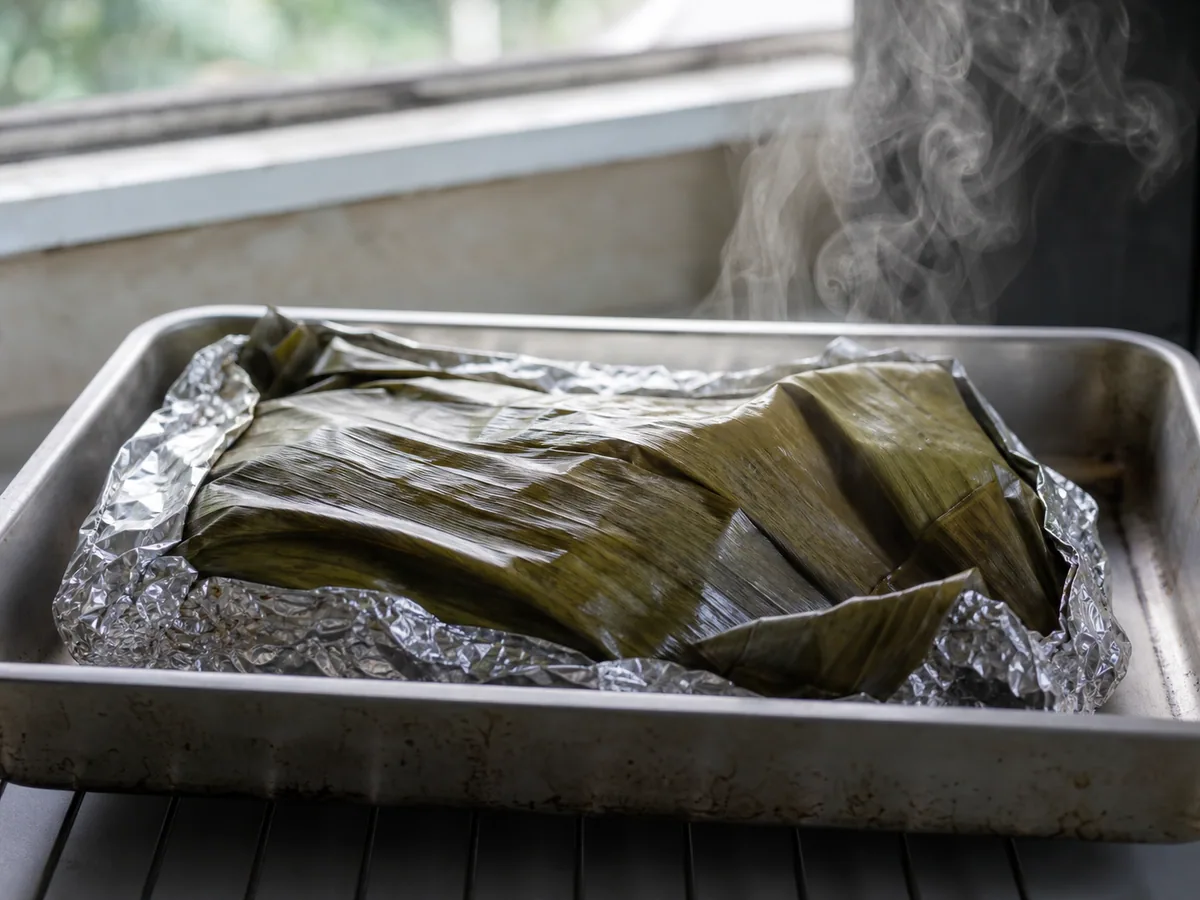
Roast the sealed dish for 75 minutes. At the first check, carefully lift one corner of the foil and leaves away from your face so steam can escape. Insert a food thermometer into the thickest part of each type of piece without touching bone. Every piece must reach at least 74°C/165°F. Using clean utensils, transfer pieces that have reached that temperature to a clean tray and cover them loosely with foil. Reclose the parcel around any underdone pieces and continue roasting, checking again in 10-minute intervals. Return all fully cooked pieces to the banana-leaf-lined dish before the browning step.
1:15:00Uncover and brown the edges
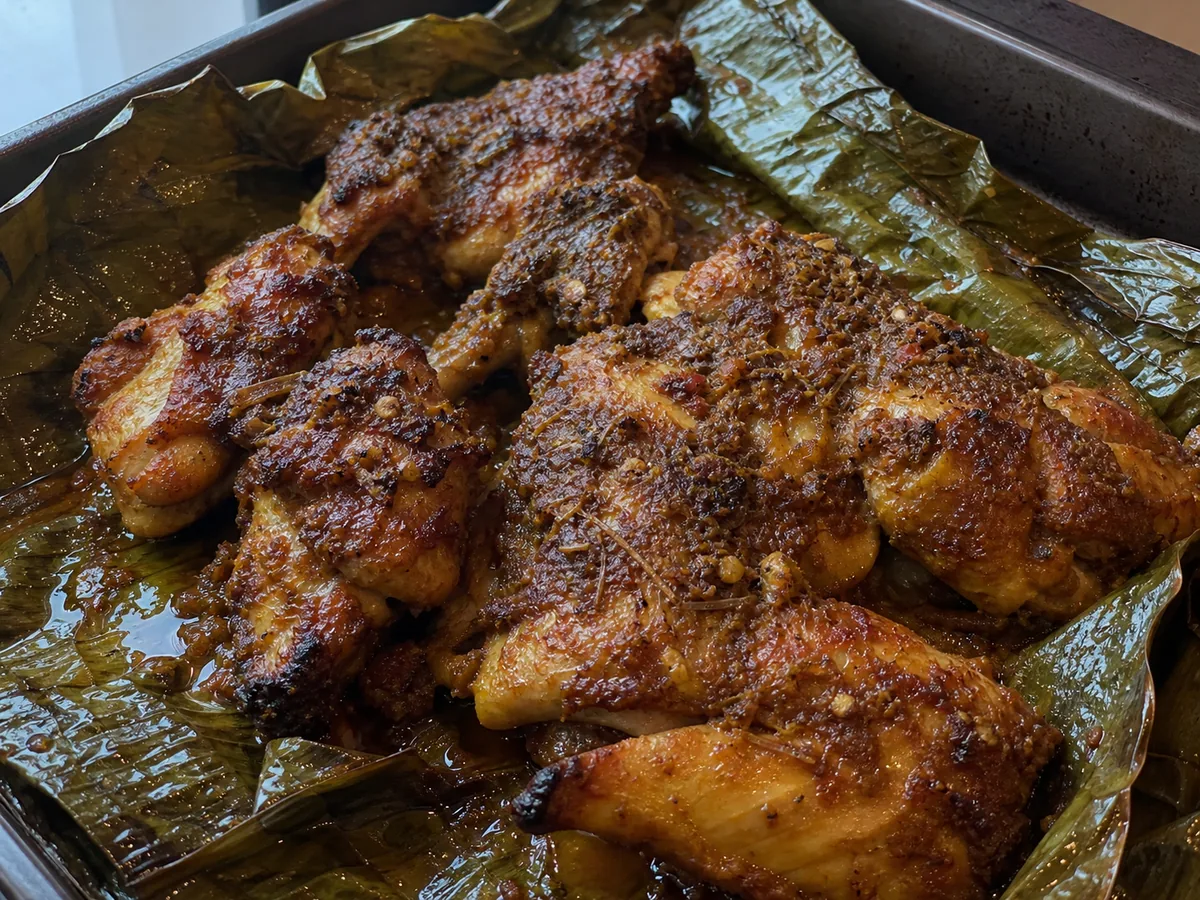
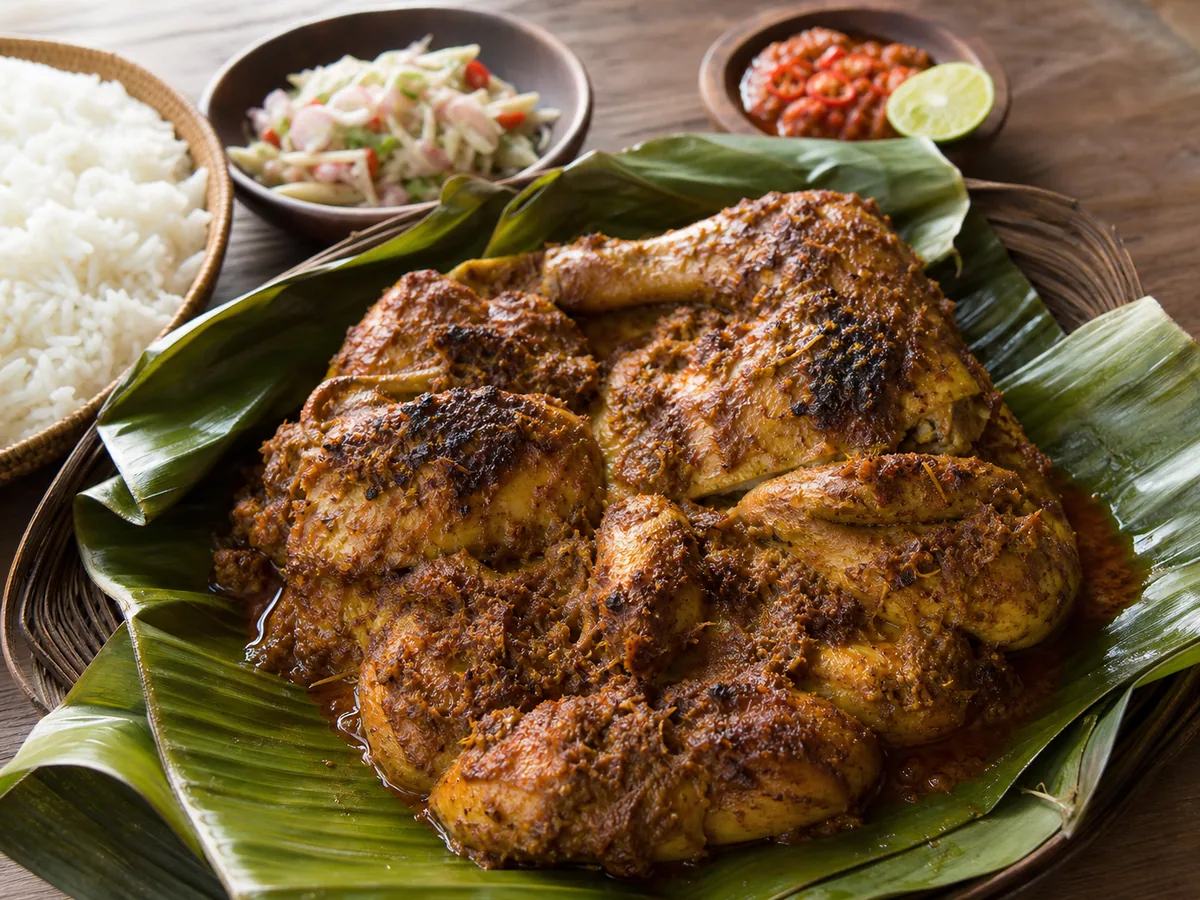
Once the chicken has reached 74°C/165°F, remove the foil and fold the banana leaves away from the surface. Increase the oven to 220°C (425°F). Spoon a little of the spice-rich pan juice over the chicken and roast uncovered for 12 to 18 minutes, checking at 12 minutes, until the skin and paste are deep bronze with a few dark, crisp edges. Keep the leaves folded clear of exposed heating elements and stop before the spice paste scorches.
12:00Rest and serve with the pan juices
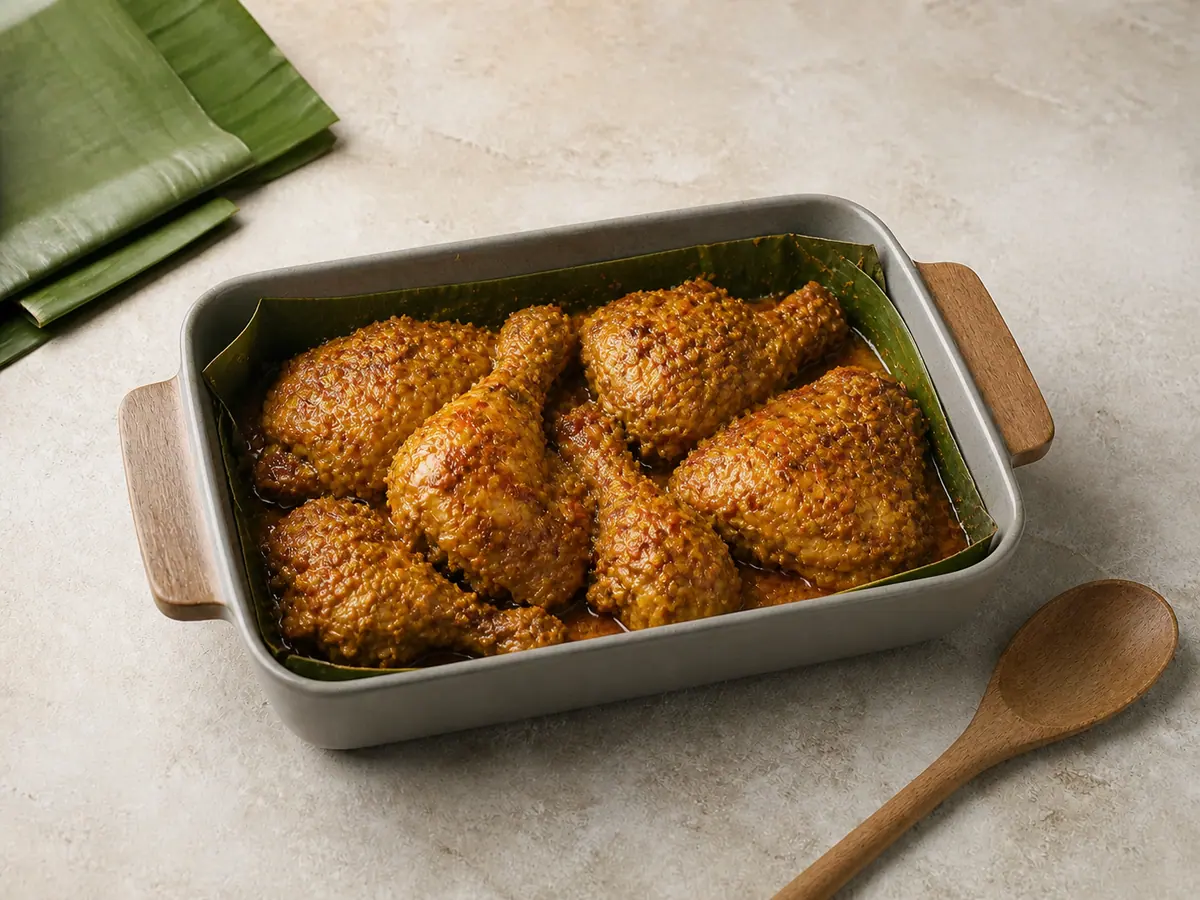
Let the chicken rest in the opened dish for 10 minutes so the juices settle and the spice crust firms slightly. Transfer the pieces to a banana-leaf-lined platter with clean utensils, spoon over the pan juices, and serve immediately with steamed jasmine rice (optional) and sambal matah (optional).
10:00


Smart Substitutions
- No banana leaves? Use two layers of baking parchment beneath the foil. The aroma will be less grassy, but the covered roast will still stay moist.
- No candlenuts? Use roasted macadamia nuts in the same quantity for a similarly rich, thick paste.
- No fresh galangal? Use extra fresh ginger and add finely grated lime zest to restore some of the sharp citrus note.
- Need milder heat? Use larger red chiles, remove their seeds, or replace part of the bird's eye chiles with red bell pepper.
Tips and Variations
- Keep the heat moderate while cooking the spice paste; the shallots should sweeten before the turmeric and sugar begin to catch.
- Overlap the banana leaves generously so steam stays inside the parcel during the covered roast.
- Check several chicken pieces with the thermometer because thighs, drumsticks, and breasts can finish at different times.
What Went Wrong?
- Spice paste is catching in the skillet Lower the heat and stir in a spoonful of the measured water. Scrape the skillet continuously until the paste loosens.
- Banana leaves split while folding Warm them a little longer to make them flexible, then patch the split with another overlapping leaf before adding foil.
- Chicken is below 74°C/165°F Close the parcel again and roast in 10-minute intervals, checking the thickest pieces without touching bone.
- Spice crust is browning too quickly Lower the oven to 200°C (400°F) and loosely shield the darkest areas with foil while the remaining pieces finish.
Nutrition Estimate
- Fiber: 4 g per serving
- Sodium: 1160 mg per serving
Nutrition disclaimer:This recipe is provided for general cooking information only. Nutrition values are estimates and may vary by ingredients, brands, preparation methods, and serving sizes. Check ingredient labels and follow appropriate food-safety practices. This content is not medical, dietary, allergy, or professional food-safety advice.
FAQ
Found an error or have a suggestion?
Help us improve this recipe. Send us your feedback and include the recipe name so we can take a look.