Method
Prepare the potatoes
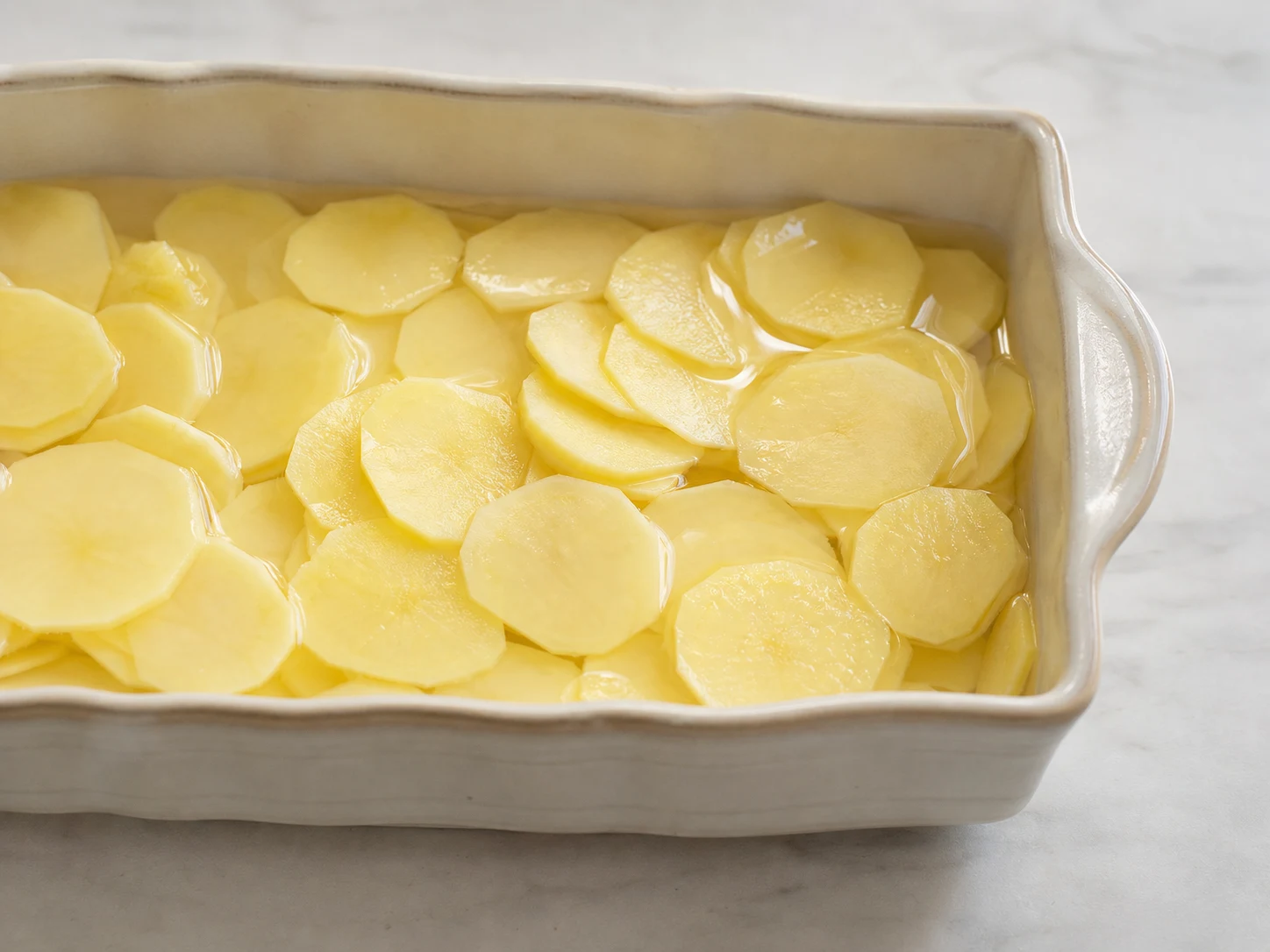
Heat the oven to 190°C (375°F). Peel 800 g of waxy potatoes and cut them into even 3 mm (1/8 in) slices. Put them in a large pot, cover with cold water, and bring to a boil. Reduce to a steady simmer and cook for 6 to 8 minutes, until the edges are tender but the centers still feel firm when pierced. Drain carefully and let the slices steam dry in the colander for 5 minutes so they do not water down the custard.
07:00Prepare the onion, salmon, and custard
Melt 15 g of unsalted butter for the skillet in a skillet over medium-low heat. Slice 1 yellow onion and cook for 7 to 9 minutes, stirring often, until soft and translucent without browning; remove from the heat. On a separate clean board, cut 350 g of skinless salmon fillet into 3 cm (1 1/4 in) pieces. Wash the board, knife, and your hands with hot soapy water before handling the remaining ingredients. Chop 20 g of fresh dill, reserving a small handful for serving. Whisk 4 large eggs, 350 ml of whole milk, 80 ml of heavy cream, 5 g of Morton coarse kosher salt, and 1 g of ground white pepper until smooth, then stir in the larger portion of dill.
08:00Layer the pudding
Coat a baking dish large enough to hold the mixture in an even 4 to 5 cm (1 1/2 to 2 in) layer with 15 g of unsalted butter for the baking dish. Arrange half of the potatoes across the base, overlapping them slightly. Spread the softened onion over the potatoes, distribute the salmon evenly, and cover with the remaining potatoes. Pour the dill custard slowly over the layers, pausing so it can settle into the gaps. Press the surface gently with a spatula so the top potatoes are lightly moistened.
Bake until fully set
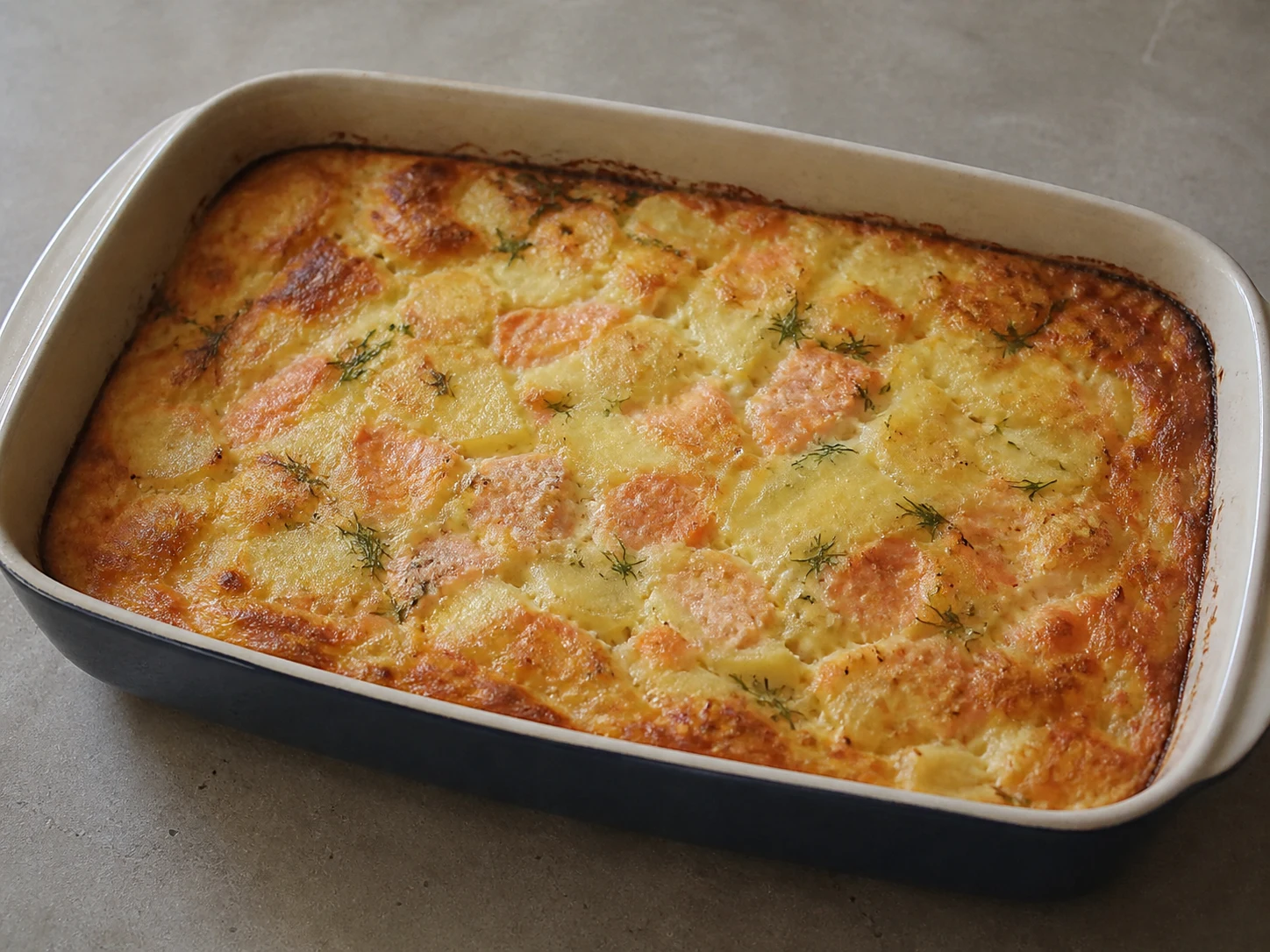
Bake for 40 to 50 minutes, checking first at 40 minutes. The top should be lightly golden, the center should no longer ripple like liquid, and the salmon should be opaque and flake easily. Insert a food thermometer into the center without touching the dish; the pudding is ready only when it reaches at least 71°C/160°F, which fully cooks both the egg custard and salmon. If the top browns too quickly before the center reaches temperature, cover it loosely with foil and continue baking.
40:00Rest and serve
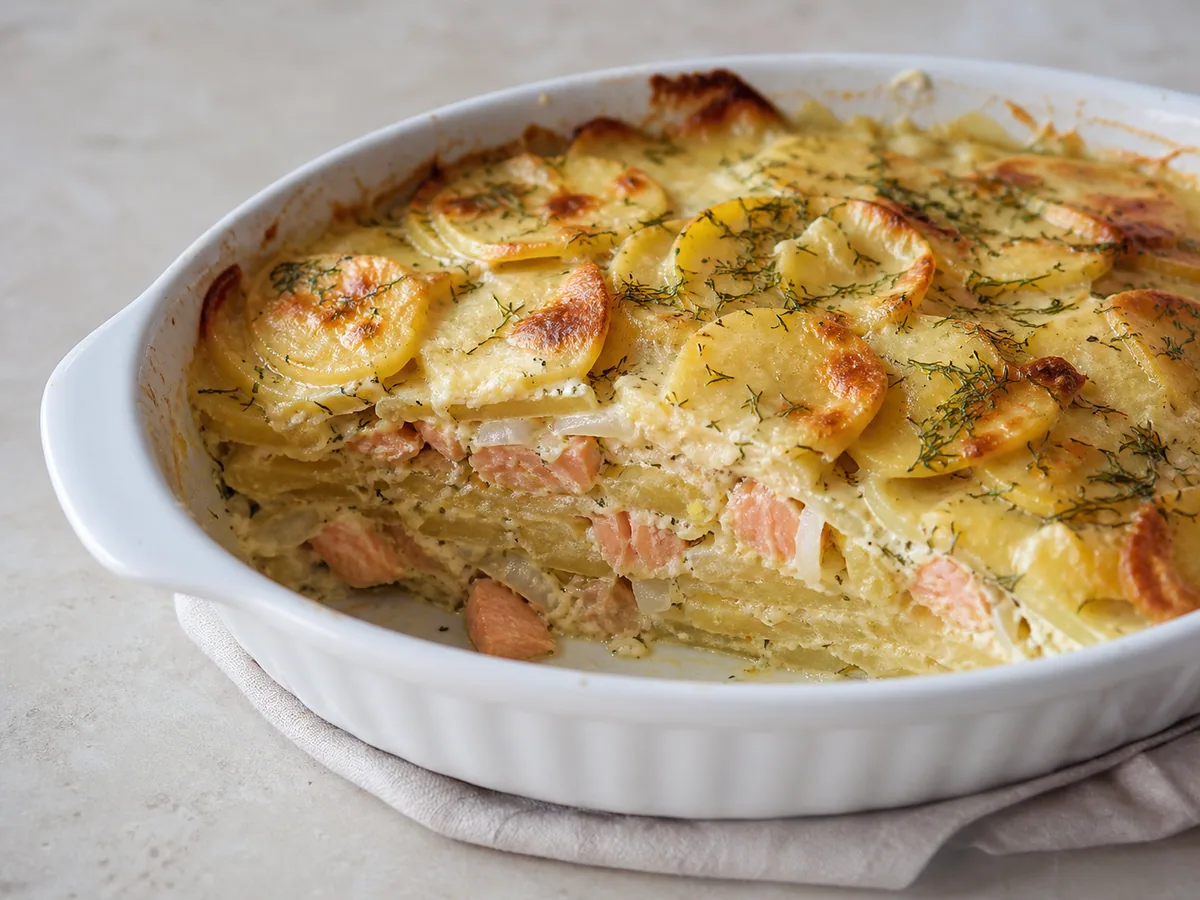
Set the baking dish on a heatproof surface and let the pudding stand for 10 minutes. The custard will settle and the potato layers will hold together more cleanly. Scatter the reserved dill over the top and serve warm in generous squares or spoonfuls.
10:00


Smart Substitutions
- No heavy cream? Use the same volume of whole milk; the custard will be lighter but will still set.
- Prefer smoked salmon? Use fully cooked hot-smoked salmon and reduce the salt slightly to account for its seasoning.
- No white pepper? Use freshly ground black pepper for a sharper, more visible finish.
- Dill tastes too strong? Replace up to half with fresh chives or flat-leaf parsley while keeping some dill for the dish's Swedish character.
Tips and Variations
- Choose a waxy potato such as Yukon Gold, Charlotte, or another firm salad potato so the layers stay distinct.
- Season with restraint at first; the salmon and reduced custard become more savory as they bake.
- Pour the custard in two passes, giving the first pour a moment to run between the layers before adding the rest.
What Went Wrong?
- Potatoes are still firm The slices were likely too thick or under-parboiled. Cover the dish loosely with foil and continue baking until a knife slides through the center easily.
- Custard looks watery Continue baking until the center reaches 71°C/160°F, then give the pudding the full 10-minute rest before serving.
- Top is browning too fast Cover the dish loosely with foil so the center can finish cooking without darkening the surface further.
- Salmon feels dry Keep the pieces about 3 cm (1 1/4 in) thick and begin checking the pudding at 40 minutes; remove it once the center reaches the safe temperature.
Nutrition Estimate
- Fiber: 4 g per serving
- Sodium: 670 mg per serving
Nutrition disclaimer:This recipe is provided for general cooking information only. Nutrition values are estimates and may vary by ingredients, brands, preparation methods, and serving sizes. Check ingredient labels and follow appropriate food-safety practices. This content is not medical, dietary, allergy, or professional food-safety advice.
FAQ
Found an error or have a suggestion?
Help us improve this recipe. Send us your feedback and include the recipe name so we can take a look.