Method
Make the coconut sambol
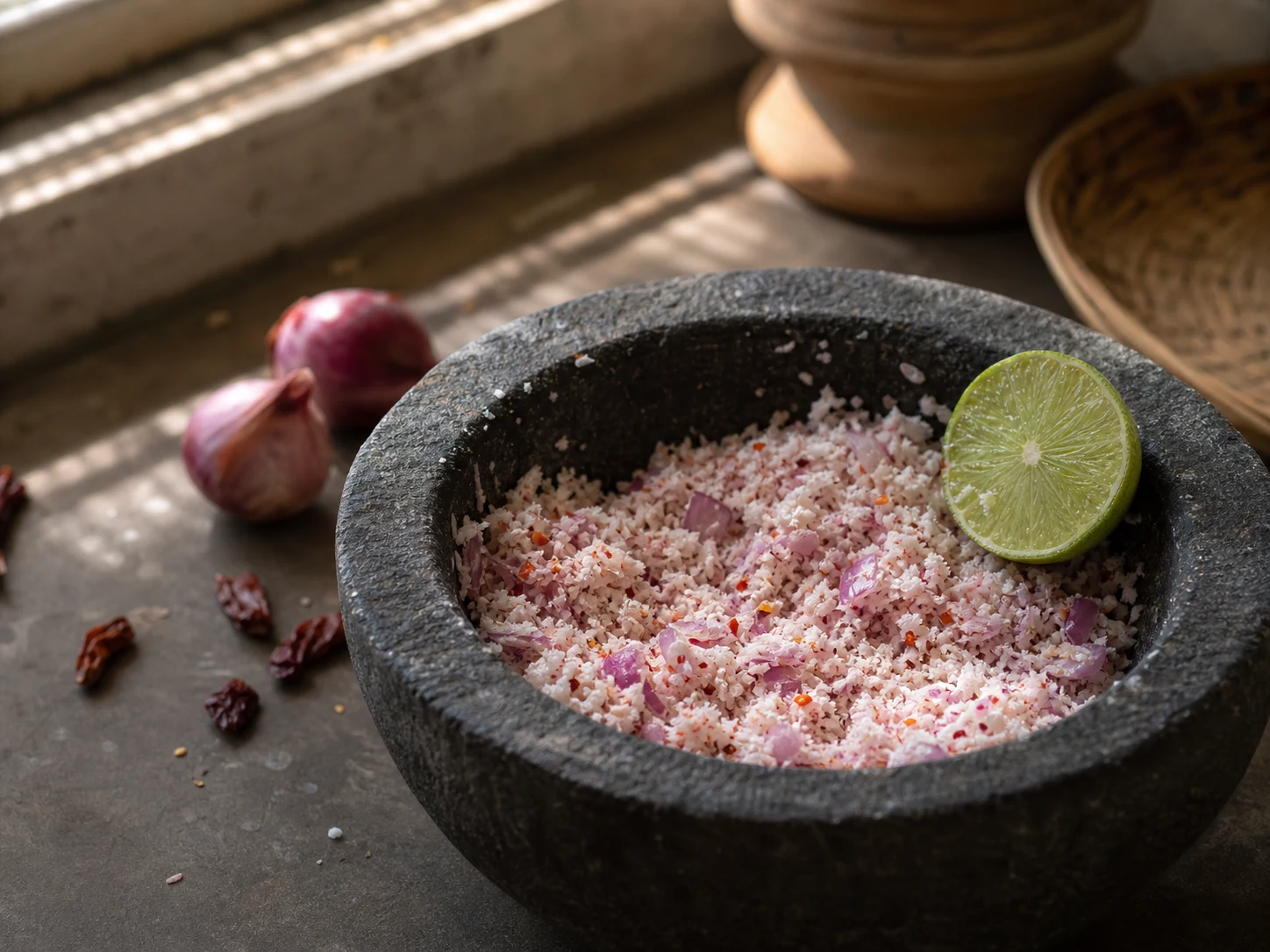
Put 4 g of dried red chile flakes and 2 g of fine salt for sambol in a mortar and grind to a coarse powder. Peel and roughly chop 80 g of red onion, add it, and pound just until juicy and broken down; stop before it turns into a smooth paste. Grate 160 g of fresh coconut, add it, and work the mixture with the pestle until the coconut is evenly streaked red and lightly moistened. Stir in 30 ml of lime juice, taste, and set the sambol beside the steamer while you make the nests.
Mix the string hopper dough
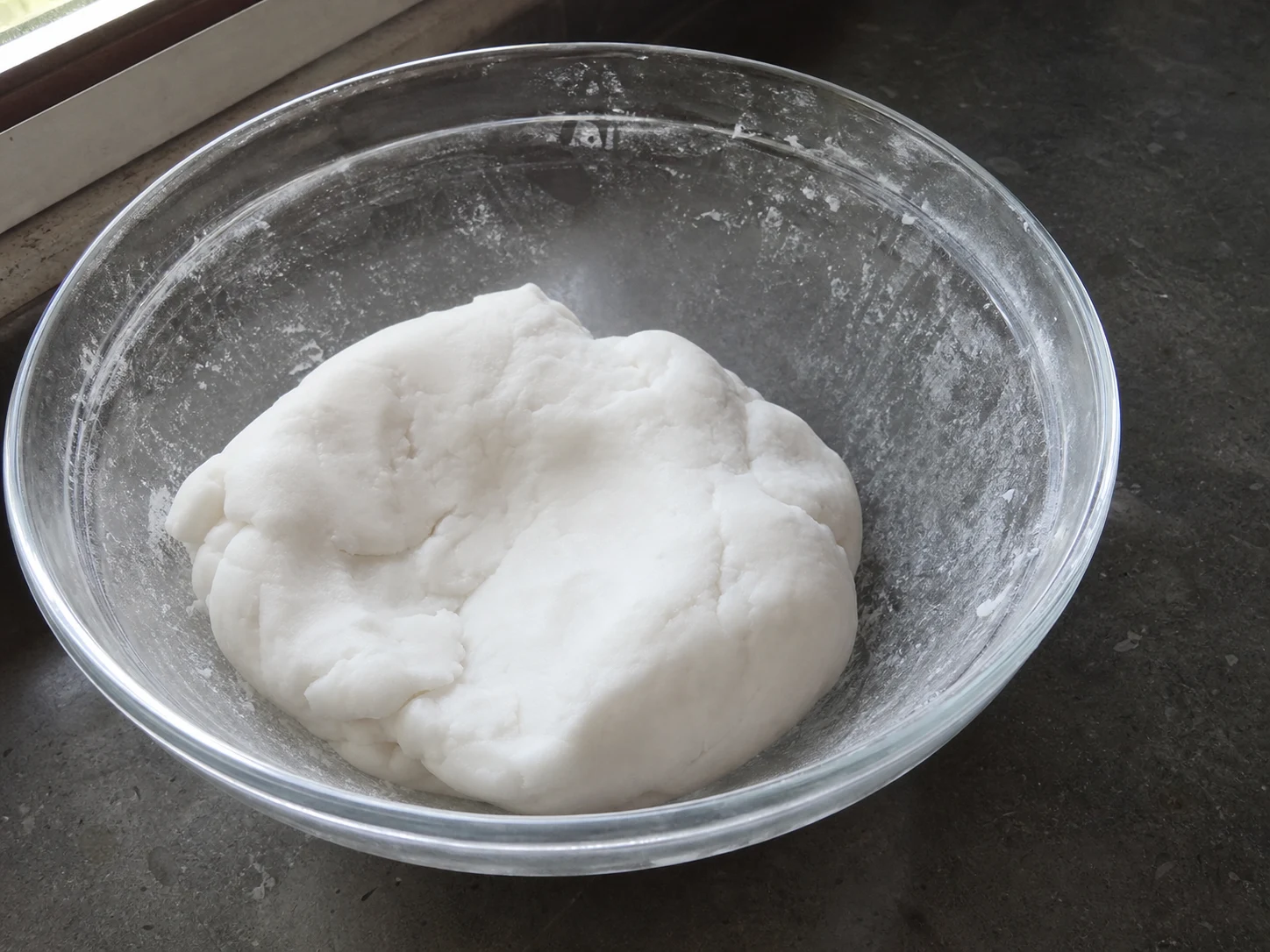
Bring the steamer water to a steady boil. Put 320 g of roasted rice flour and 4 g of fine salt for dough in a heatproof bowl. Pour in about three-quarters of 360 ml of boiling water while stirring firmly with a wooden spoon. Add the remaining water gradually until the flour gathers into moist clumps. When the dough is cool enough to handle but still warm, knead for 2 to 3 minutes until soft, smooth, and pliable. It should feel slightly tacky without coating your fingers, and a squeezed piece should hold together without cracking.
02:00Press the noodle nests
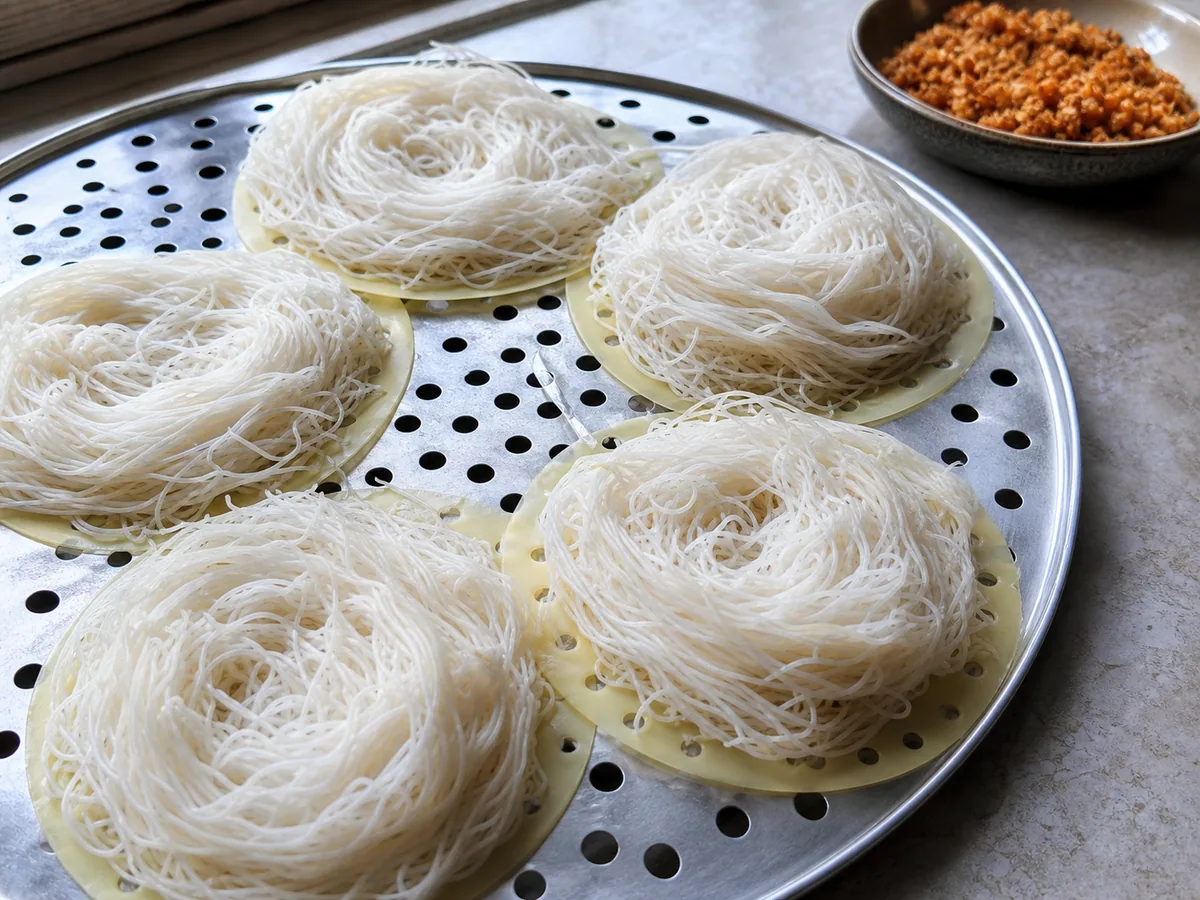
Brush 5 ml of neutral oil for trays lightly over perforated string hopper mats or heatproof steamer plates. Fit a string hopper press with its fine-holed disc. Divide the warm dough into portions that fit the press, keeping unused dough covered with an inverted bowl so it stays supple. Press fine strands in tight overlapping circles directly onto each prepared mat, forming small, even nests with no dense mound in the center.
Steam until tender
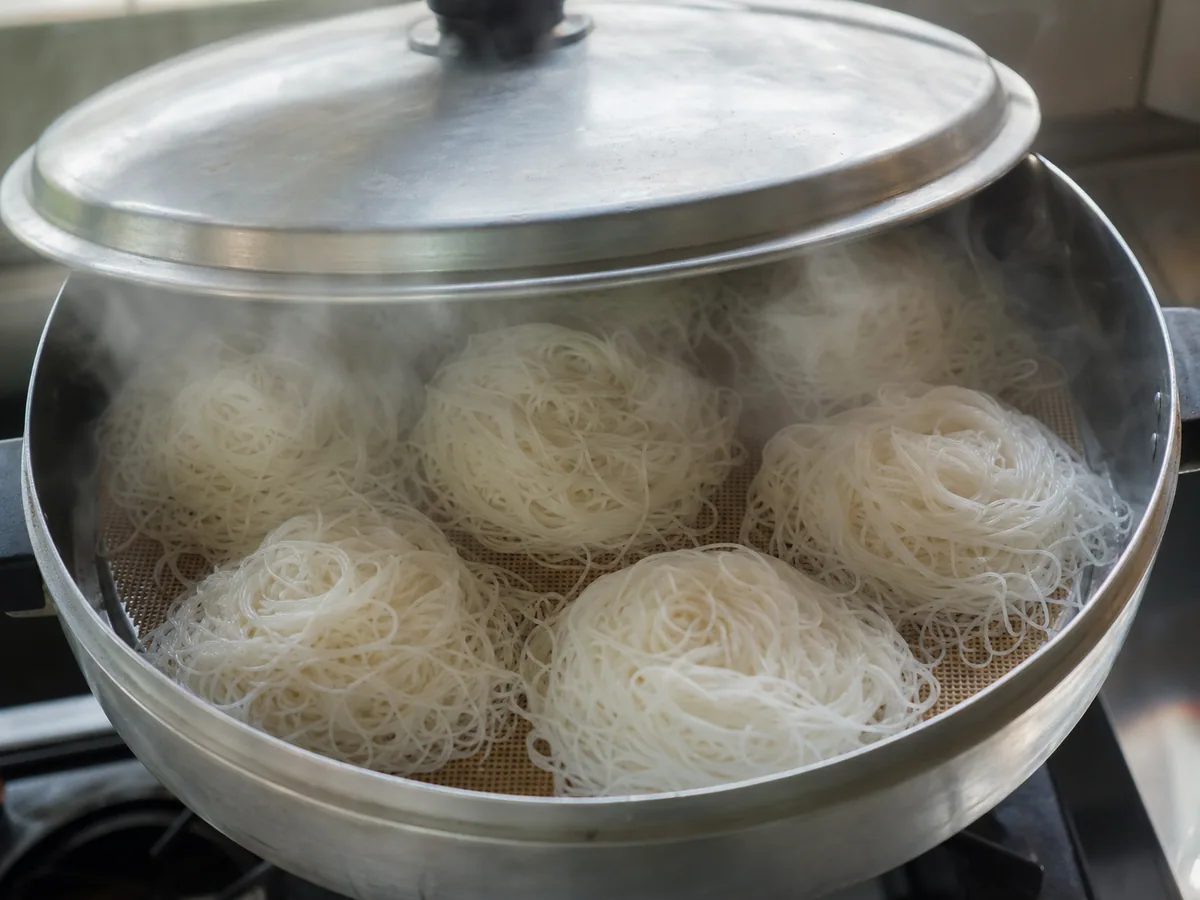
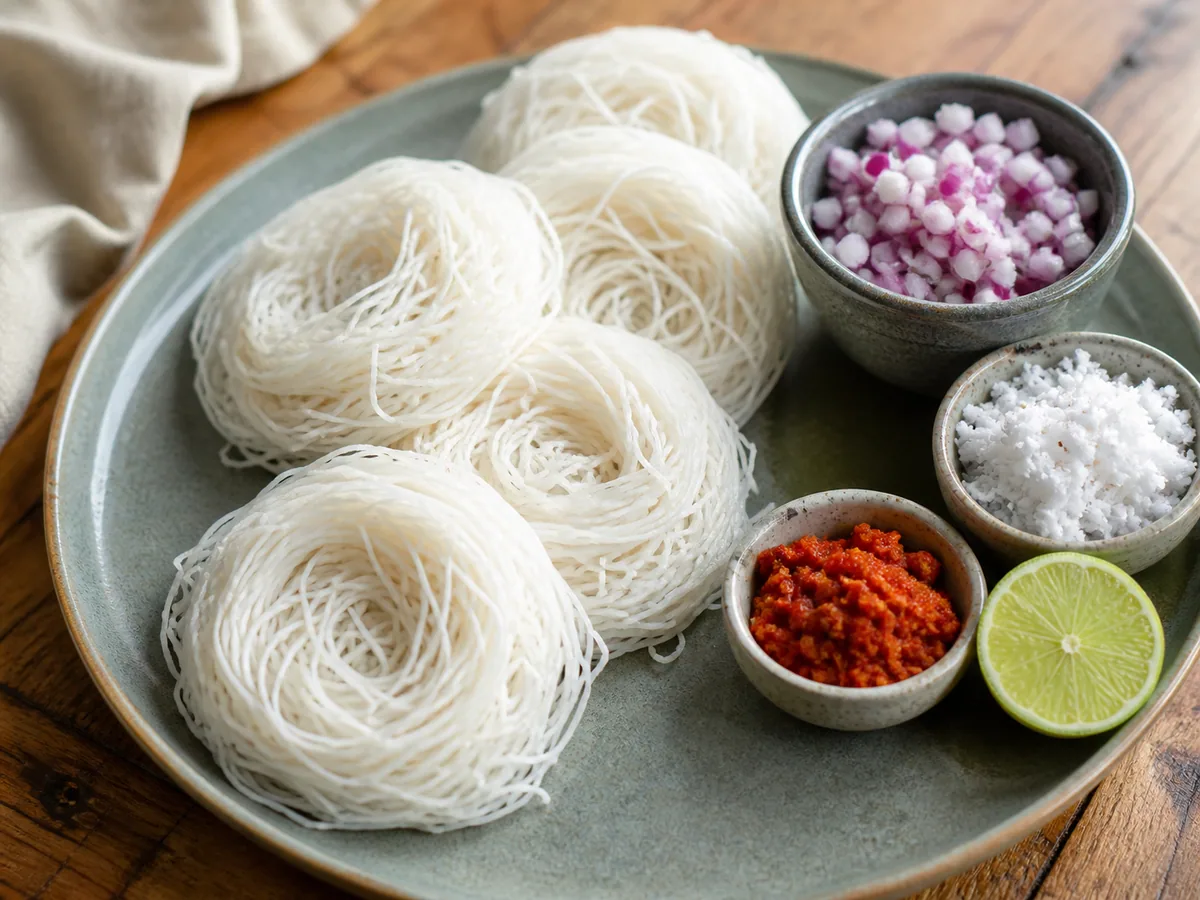
Arrange the filled mats over vigorously steaming water without letting the water touch the noodles. Cover and steam for 5 to 7 minutes. Begin checking at 5 minutes: the strands should look matte, feel springy, and lift cleanly from the mat without pasty spots. Move each finished batch to a serving platter and cover loosely with a clean towel while the remaining nests steam.
05:00Finish the batches and serve
Refill the press with warm dough and repeat the pressing and steaming until all the dough is used. If the dough begins to stiffen, knead in a few drops of hot water before loading the press again. Serve the string hopper nests hot with the coconut sambol spooned alongside so each person can add as much chile-lime coconut as they like.


Smart Substitutions
- No fresh coconut? Use unsweetened desiccated coconut and moisten it with enough warm water to restore a soft, fresh-grated texture before pounding.
- No roasted rice flour? Warm plain white rice flour in a dry skillet over low heat, stirring constantly until fragrant but not colored, then let it cool slightly before mixing the dough.
- No mortar and pestle? Pulse the onion, chile, and salt briefly in a small food processor, then fold in the coconut and lime by hand so the sambol stays coarse.
- Prefer less heat? Replace half of the dried red chile flakes with mild paprika for color and a gentler finish.
Tips and Variations
- Keep the dough warm and covered as you work; cool dough stiffens and is harder to press into unbroken strands.
- Fill the press only as high as it closes comfortably, then wipe the rim before tightening so the threads do not jam.
- Leave small gaps between nests on each mat so steam can circulate and set the strands evenly.
What Went Wrong?
- Dough cracks in the press Knead in hot water a few drops at a time until a squeezed piece bends without splitting.
- Dough sticks to your fingers Work in a spoonful of roasted rice flour and knead again until the surface feels only slightly tacky.
- Strands break as they are pressed Make sure the dough is still warm, then press with steady pressure rather than short, forceful bursts.
- Steamed nests are gummy Keep the mats above the waterline, maintain vigorous steam, and avoid stacking strands too thickly in the center.
Nutrition Estimate
- Fiber: 5 g per serving
- Sodium: 603 mg per serving
Nutrition disclaimer:This recipe is provided for general cooking information only. Nutrition values are estimates and may vary by ingredients, brands, preparation methods, and serving sizes. Check ingredient labels and follow appropriate food-safety practices. This content is not medical, dietary, allergy, or professional food-safety advice.
FAQ
Found an error or have a suggestion?
Help us improve this recipe. Send us your feedback and include the recipe name so we can take a look.