Method
Prepare the chicken and poaching pot
Check 1.4 kg of whole chicken and remove any giblet packet, neck, or packaging from its cavities. Pat the chicken dry with paper towels; do not rinse it. Rub 9 g of fine sea salt for chicken over the skin and inside the cavity. Smash 50 g of fresh ginger for poaching, trim 4 scallions for poaching, and lightly crush 4 garlic cloves for poaching. Place the aromatics with 3 L of water in a stockpot large enough to submerge the chicken. Wash hands and clean the sink area, board, knife, and any other tools that touched raw poultry before continuing.
Poach the chicken gently
Bring the pot to a full boil. Lower 1.4 kg of whole chicken carefully into the water, breast-side down, and return the liquid just to a simmer. Reduce the heat to low, cover with the lid slightly ajar, and poach for 35 minutes without a hard boil. Treat 35 minutes as the first temperature check rather than a guaranteed finishing time.
35:00Check and finish cooking the chicken
Check the thickest part of the thigh and the innermost breast with a clean food thermometer, avoiding bone; both must reach 74°C/165°F. If either reading is lower, return the chicken to the barely simmering broth, cook for 5 minutes, and check again with a clean thermometer. Repeat the 5-minute interval as needed until both areas reach 74°C/165°F.
05:00Rest the chicken and strain the broth
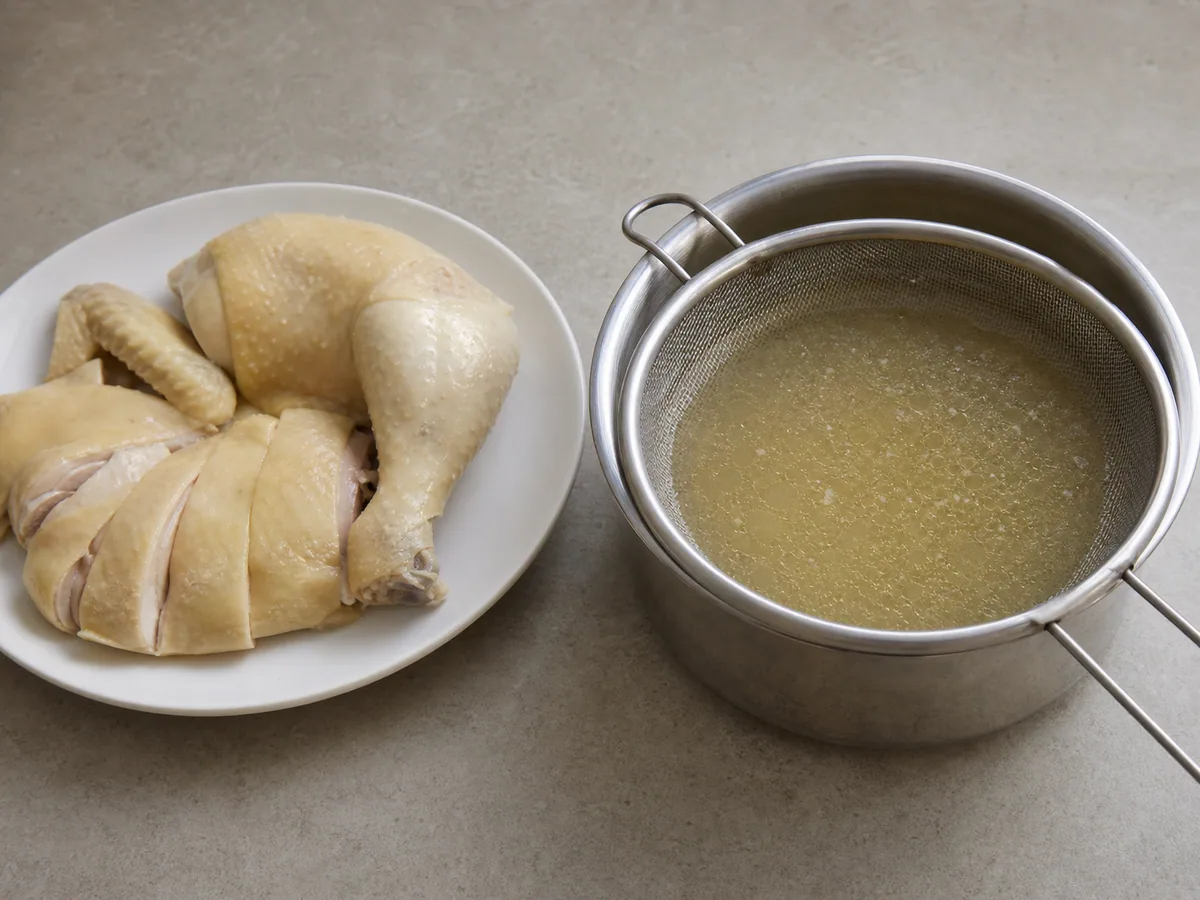
Transfer the fully cooked chicken to a clean tray and rest for 15 minutes. While it rests, strain the broth and measure 420 ml of reserved chicken poaching broth for rice and 45 ml of reserved chicken poaching broth for soy dressing into separate clean bowls for the rice and soy dressing.
15:00Rinse the rice and prepare the aromatics
Rinse 280 g of jasmine rice in several changes of cool water until the water runs mostly clear, then drain it thoroughly. Mince 20 g of fresh ginger for rice and 3 garlic cloves for rice.
Sauté the rice aromatics
Heat 15 ml of neutral oil for rice in a medium saucepan over medium heat. Add 20 g of fresh ginger for rice and 3 garlic cloves for rice and cook for 60 to 90 seconds, stirring, until fragrant but not browned.
01:00Coat and toast the rice
Add the drained 280 g of jasmine rice to the saucepan and cook for 2 minutes, stirring so the aromatic oil coats every grain.
02:00Cook the fragrant rice
Add 420 ml of reserved chicken poaching broth for rice, 3 g of fine sea salt for rice, and pandan leaves (optional). Bring to a boil, cover tightly, reduce the heat to the lowest setting, and cook for 15 minutes without lifting the lid.
15:00Rest and fluff the rice
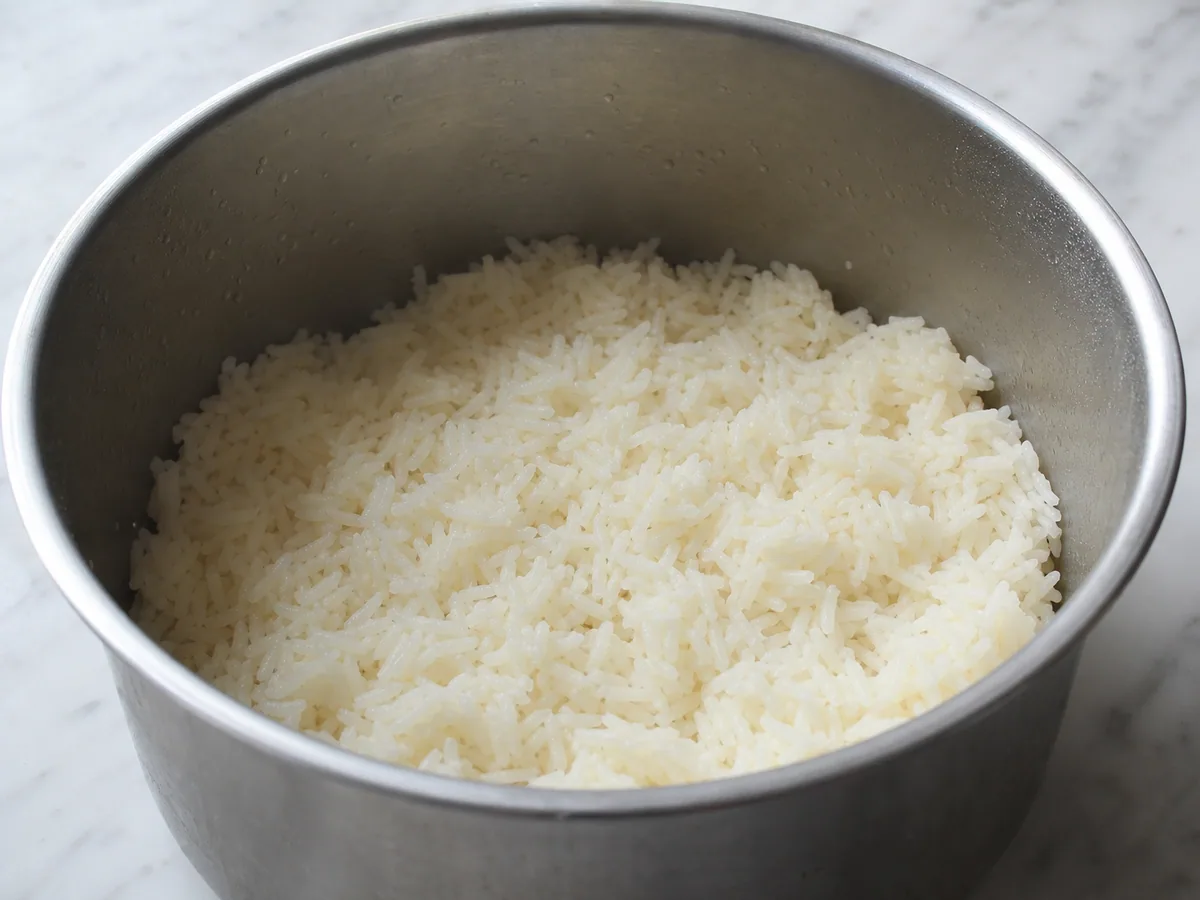
Turn off the heat and leave the rice covered for 10 minutes. Remove the pandan leaves if used, then fluff gently with a fork; the grains should be tender, separate, and lightly glossy rather than wet or clumped.
10:00Blend the chili sauce
Stem 40 g of fresh red chilies. Peel 2 garlic cloves for chili sauce and 10 g of fresh ginger for chili sauce. Blend them with 30 ml of fresh lime juice, 8 g of granulated sugar for chili sauce, and 1 1/2 g of fine sea salt for chili sauce until smooth, scraping the jar as needed. Taste for a bright balance of heat, acidity, and sweetness.
Make the ginger-scallion sauce
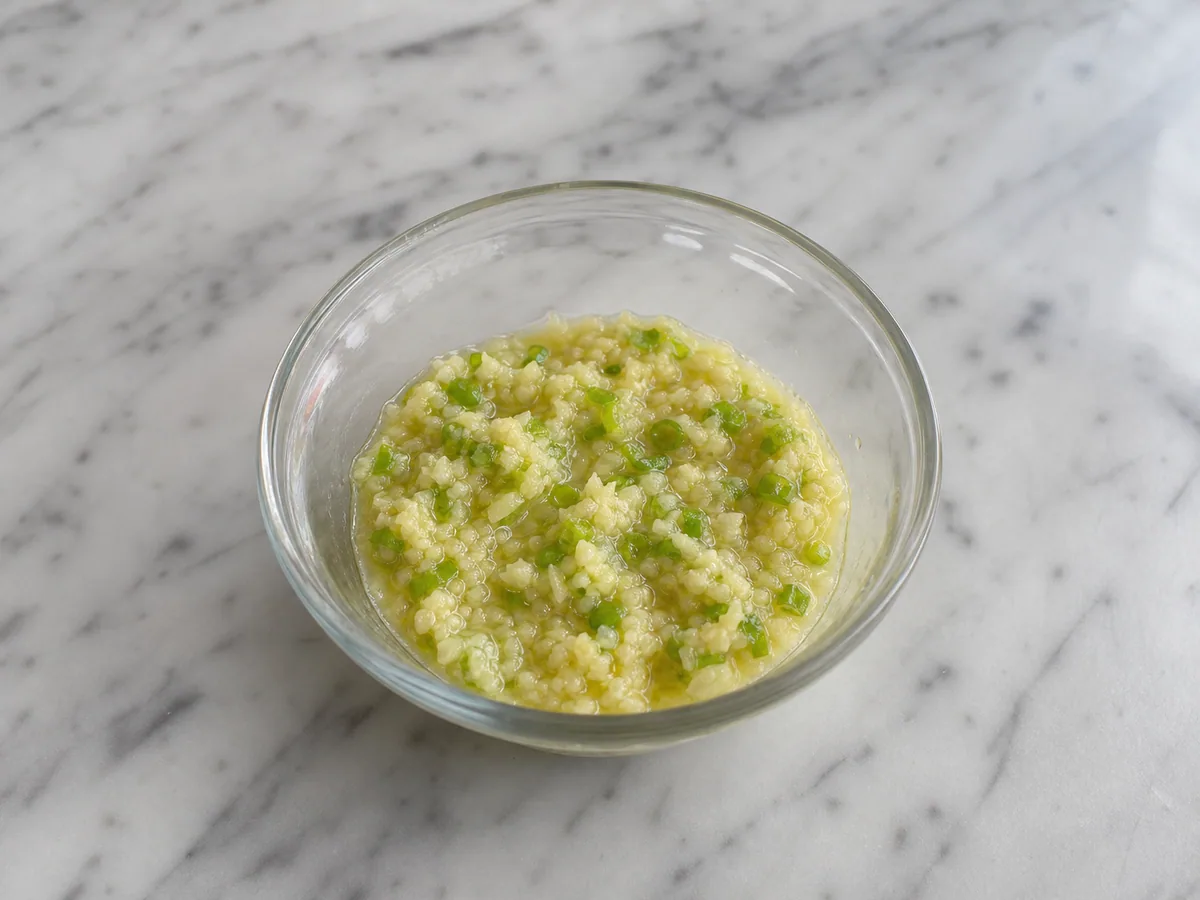
Peel and finely mince 35 g of fresh ginger for ginger sauce. Thinly slice 3 scallions for ginger sauce and place both in a heatproof bowl with 1 1/2 g of fine sea salt for ginger sauce. Heat 30 ml of neutral oil for ginger sauce in a small pan over medium-high heat until shimmering but not smoking. Pour it carefully over the aromatics; stand back because the moisture may sputter. Stir and let the sauce stand for 5 minutes.
05:00Mix the soy dressing
Stir 30 ml of reduced-sodium light soy sauce, 10 ml of toasted sesame oil, 4 g of granulated sugar for soy dressing, and 45 ml of reserved chicken poaching broth for soy dressing until the sugar dissolves and the dressing looks evenly blended.
Carve and serve the complete plate
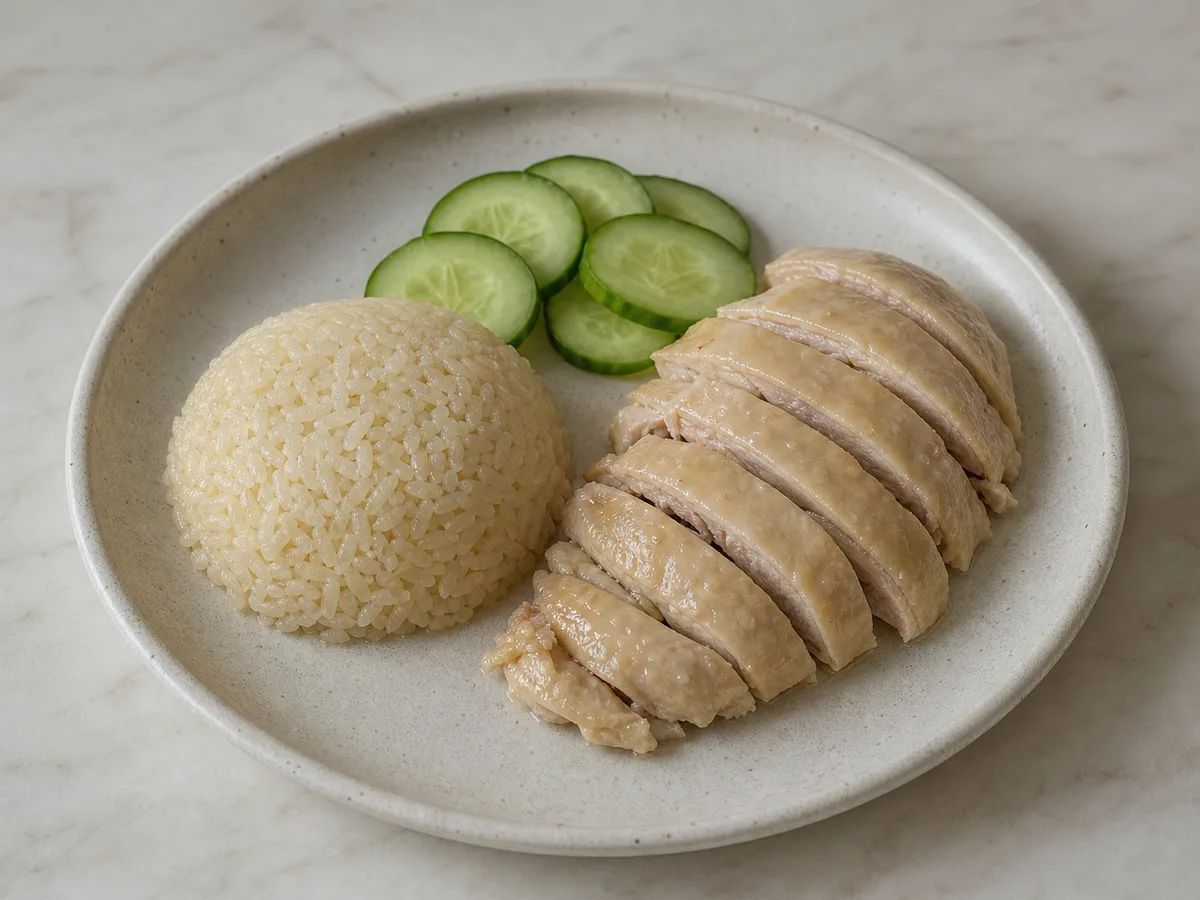
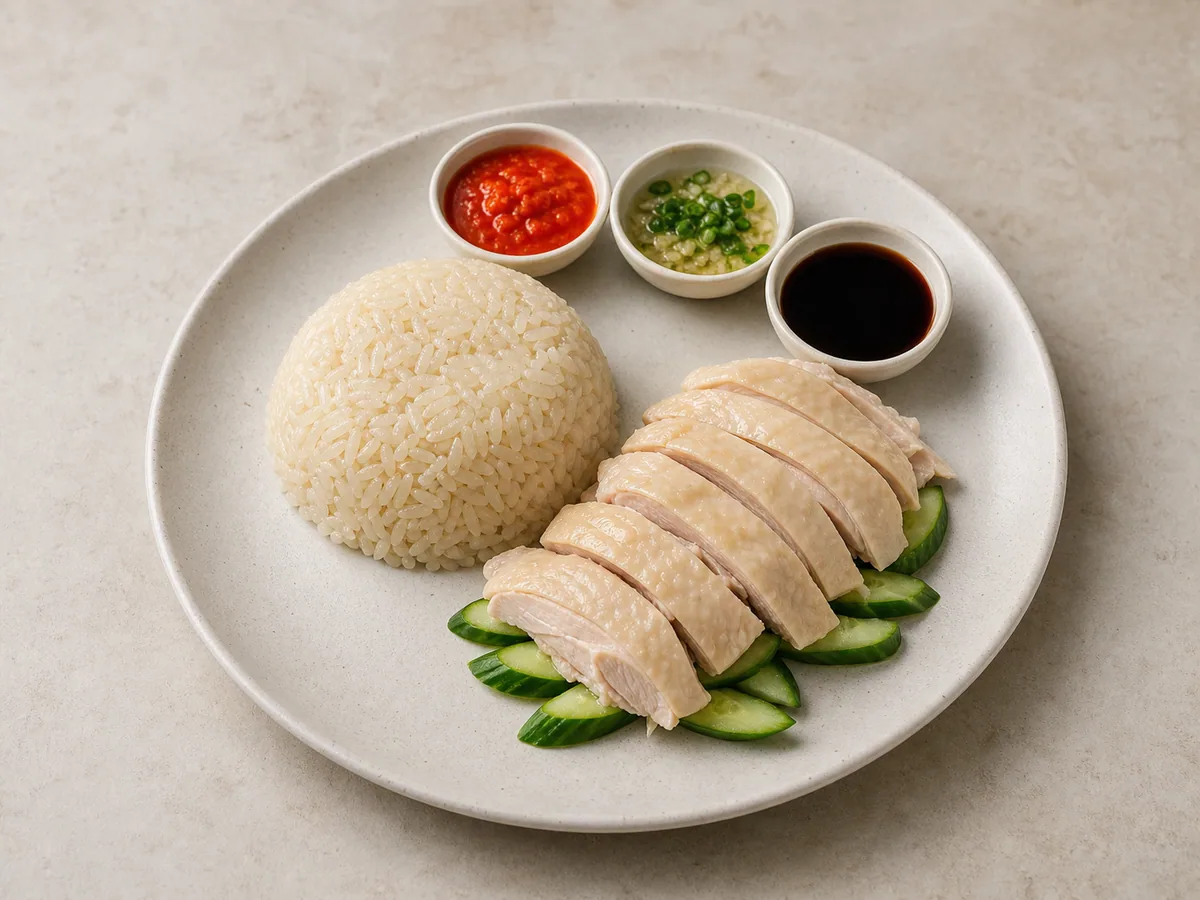
Cut 300 g of cucumber into thin slices and arrange them on a serving platter. Move the rested chicken to a clean cutting board; remove the legs and breasts, then cut the fully cooked meat into bite-size serving pieces. Arrange the chicken over the cucumber and spoon over enough soy dressing to lightly gloss the meat. Serve immediately with fragrant rice, chili sauce, ginger-scallion sauce, remaining soy dressing, and dark soy sauce (optional).


Smart Substitutions
- No whole chicken? Use bone-in, skin-on chicken thighs. Begin checking earlier and cook every piece to 74°C/165°F.
- Want richer rice? Replace the neutral oil for rice with rendered chicken fat for a deeper, more traditional aroma.
- No lime? Use calamansi juice for a floral citrus edge or rice vinegar for a sharper finish.
- Need gentler heat? Use mild red chilies and remove their seeds before blending the sauce.
Tips and Variations
- Pat the chicken dry instead of rinsing it; rinsing can splash raw poultry juices around the sink.
- Let the rice drain thoroughly after rinsing so the measured broth produces distinct, tender grains.
- Spoon the soy dressing over the chicken lightly and pass the rest at the table so the skin stays supple rather than soaked.
What Went Wrong?
- Chicken has not reached 74°C/165°F Return it to the barely simmering broth and check again after 5 minutes, using a clean thermometer in both the thigh and innermost breast.
- Chicken is dry or tight The liquid likely boiled too strongly or the chicken cooked past its target temperature. Keep the next batch at a bare simmer and remove it as soon as both checked areas reach 74°C/165°F.
- Rice is still firm Sprinkle over a small splash of hot broth, cover tightly, and cook on the lowest heat for 3 to 5 minutes before resting again.
- Ginger-scallion sauce tastes bitter The oil was probably smoking hot. Heat it only until shimmering so it releases the aromatics without scorching them.
Nutrition Estimate
- Fiber: 3 g per serving
- Sodium: 1280 mg per serving
Nutrition disclaimer:This recipe is provided for general cooking information only. Nutrition values are estimates and may vary by ingredients, brands, preparation methods, and serving sizes. Check ingredient labels and follow appropriate food-safety practices. This content is not medical, dietary, allergy, or professional food-safety advice.
FAQ
Found an error or have a suggestion?
Help us improve this recipe. Send us your feedback and include the recipe name so we can take a look.