Method
Blanch and clean the ribs
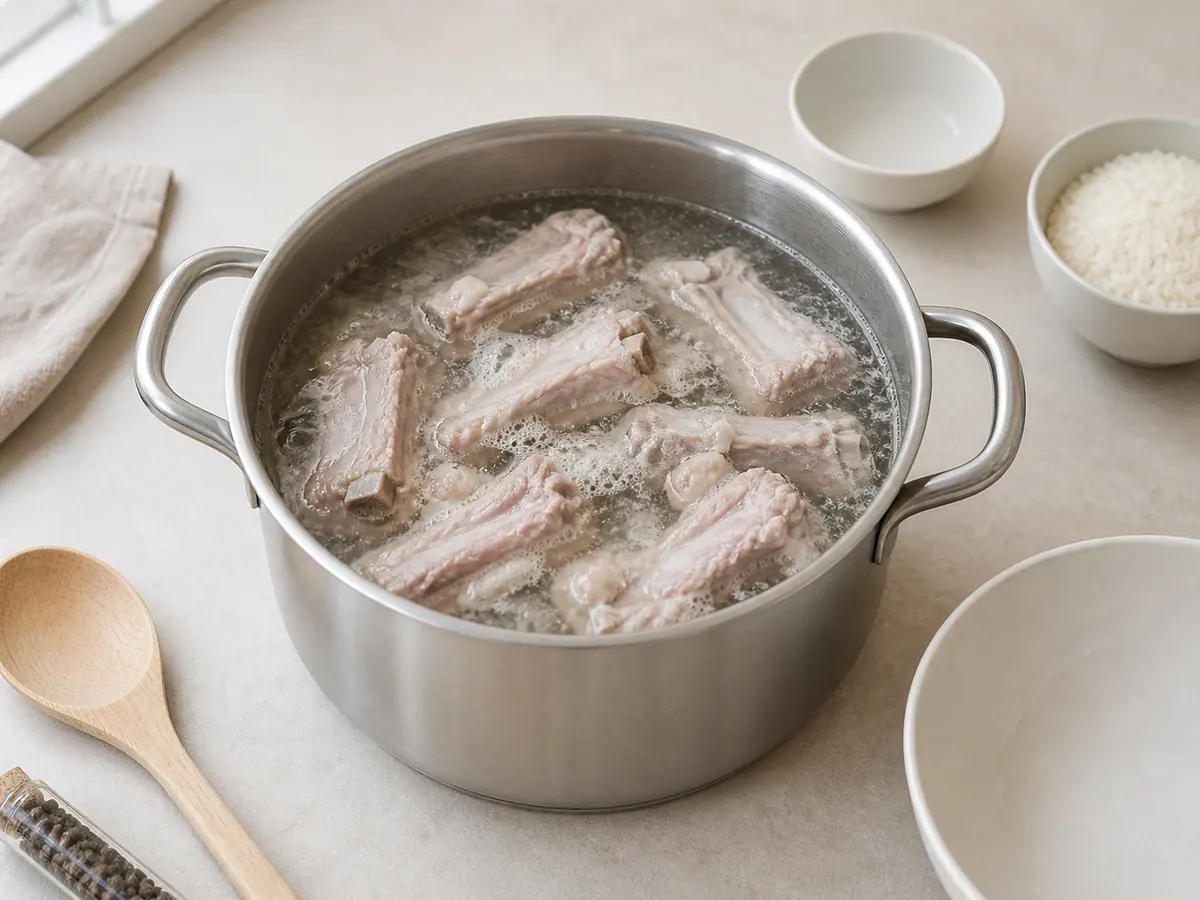
Set a colander in the sink. On a board reserved for raw meat, cut 1200 g of pork spare ribs between the bones if the butcher has not already done so. Transfer the ribs directly to a large stockpot, then wash the knife, board, nearby sink area, and your hands with hot soapy water before handling the aromatics. Cover the ribs generously with cold water, bring to a full boil, and boil for 5 minutes. Drain carefully, rinse the blanched ribs gently inside the colander with hot water while keeping splashes contained, and wash out the pot.
05:00Build the pepper and garlic broth
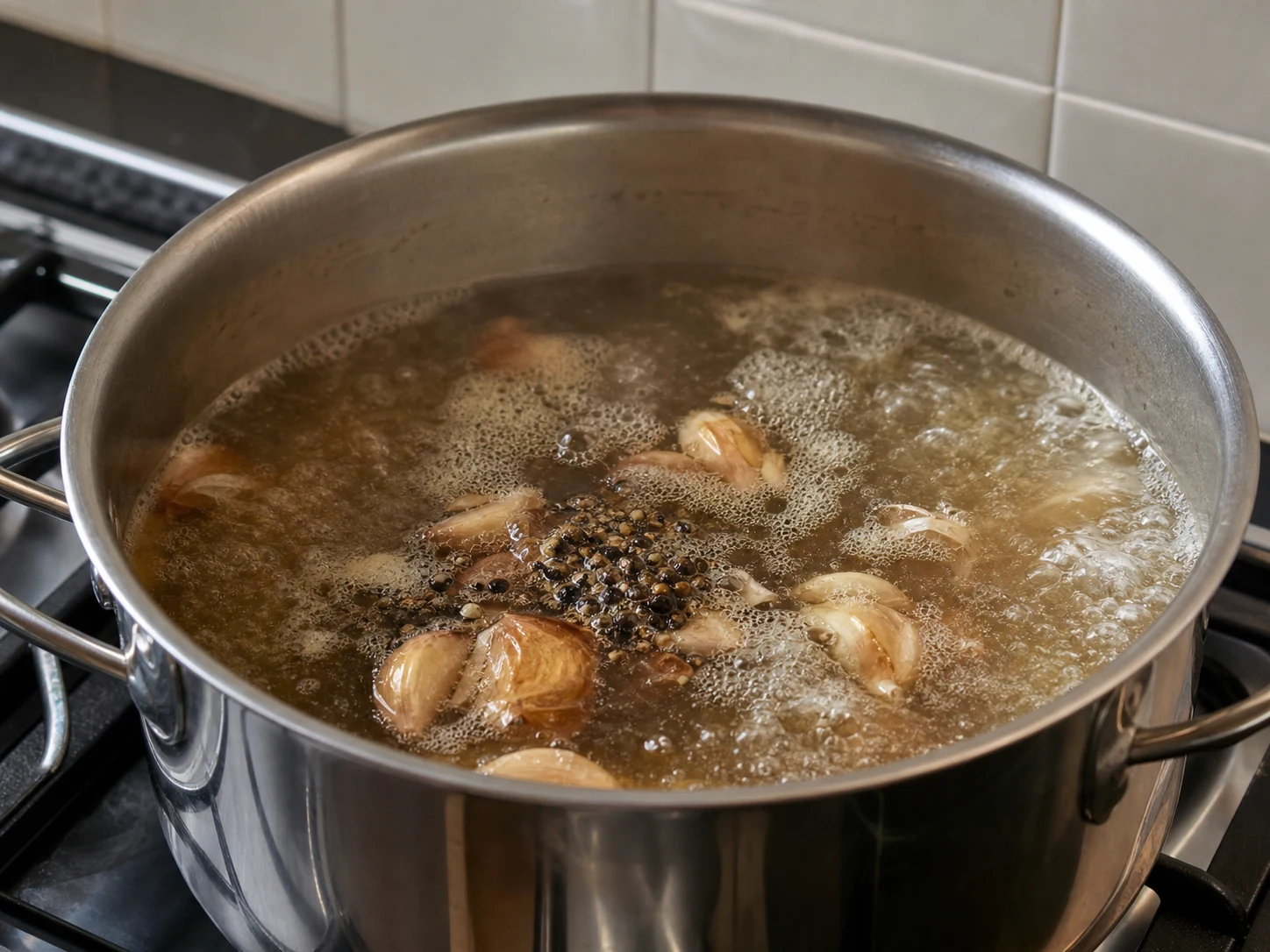
Put 18 g of white peppercorns and 3 g of black peppercorns in a sturdy bag and crack them coarsely with a rolling pin; the peppercorns should be broken, not ground to powder. Tie the cracked pepper in cheesecloth or enclose it in a roomy spice infuser. Separate 2 heads of garlic into cloves and lightly crush each clove, leaving the skins on. Add 1900 ml of water for broth, garlic, the pepper bundle, 15 ml of light soy sauce, and 5 ml of dark soy sauce to the cleaned stockpot. Bring the broth to a boil over high heat.
Simmer the ribs until tender
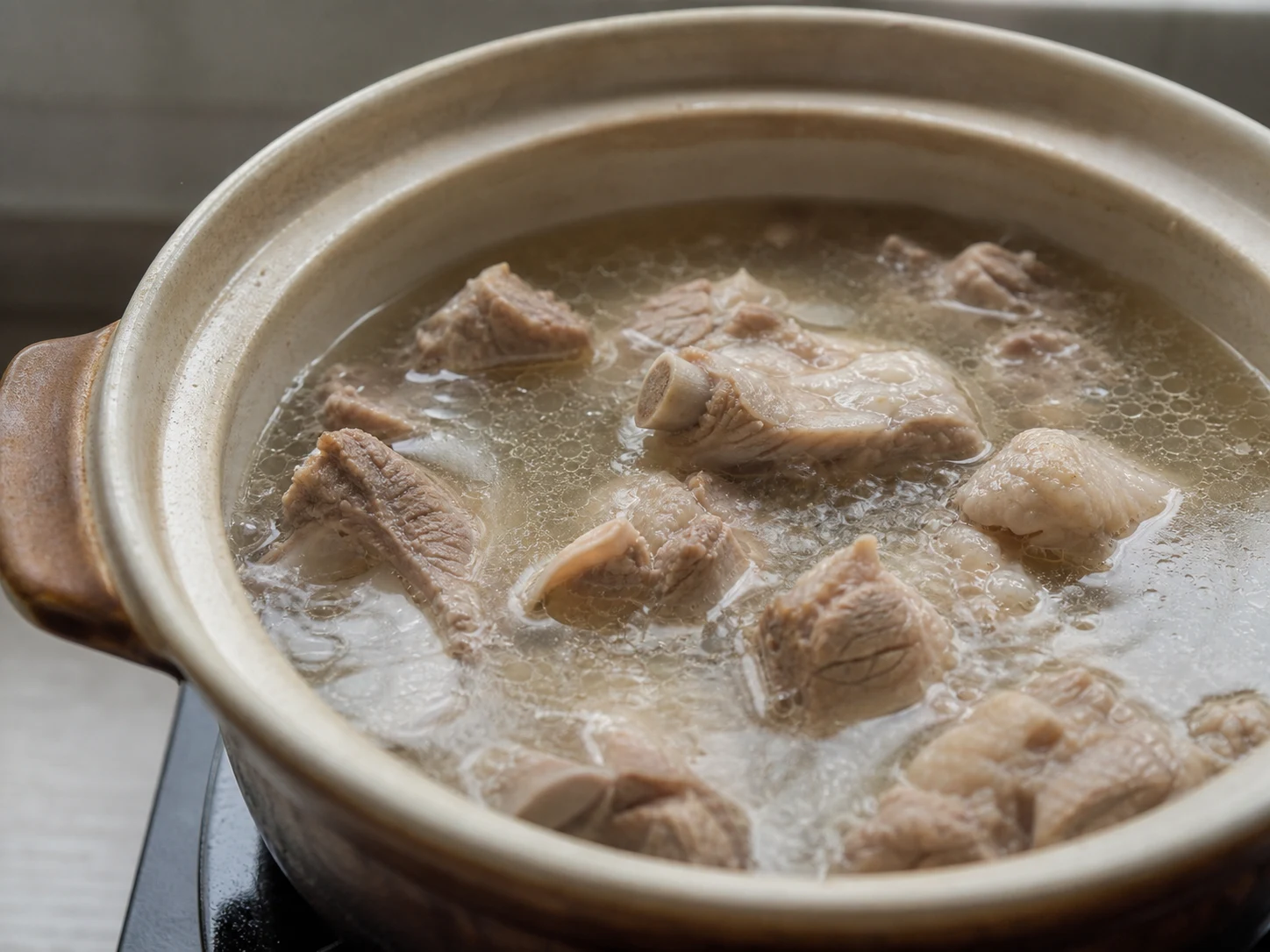
Return the blanched ribs to the boiling broth. Skim off any foam that rises, then reduce the heat until only occasional lazy bubbles break the surface. Partly cover and simmer for 75 to 90 minutes. At 75 minutes, check a thick rib: the meat should have pulled back slightly from the bone and a skewer should slide in with little resistance. Use a food thermometer to confirm at least 63°C/145°F in the thickest meat without touching bone, then keep the ribs simmering for at least 3 more minutes before serving and continue longer as needed for tenderness. Add hot water in small splashes only if the ribs are no longer mostly covered.
1:15:00Cook the rice during the final simmer
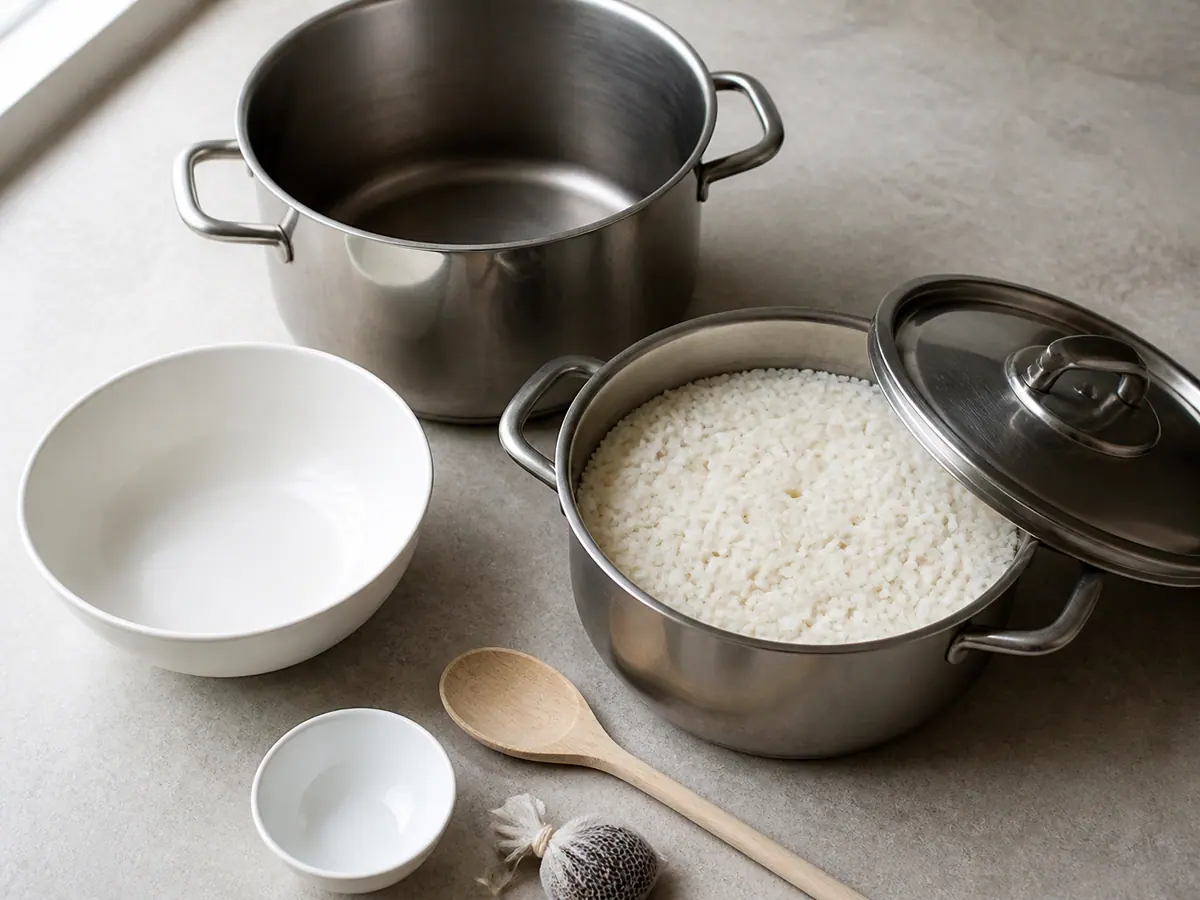
When the ribs have simmered for 50 minutes, rinse 240 g of jasmine rice in a bowl, changing the water until it is mostly clear. Combine the rice with 360 ml of water for rice in a saucepan large enough to hold the scaled rice and water with ample headroom; for 4 servings, use at least a 2-quart/2-liter saucepan. Bring to a boil over medium-high heat, stir once, cover tightly, reduce the heat to low, and cook for 15 minutes, until the water is absorbed and small steam holes appear across the surface. Remove the pan from the heat without lifting the lid.
15:00Rest the rice and season the soup
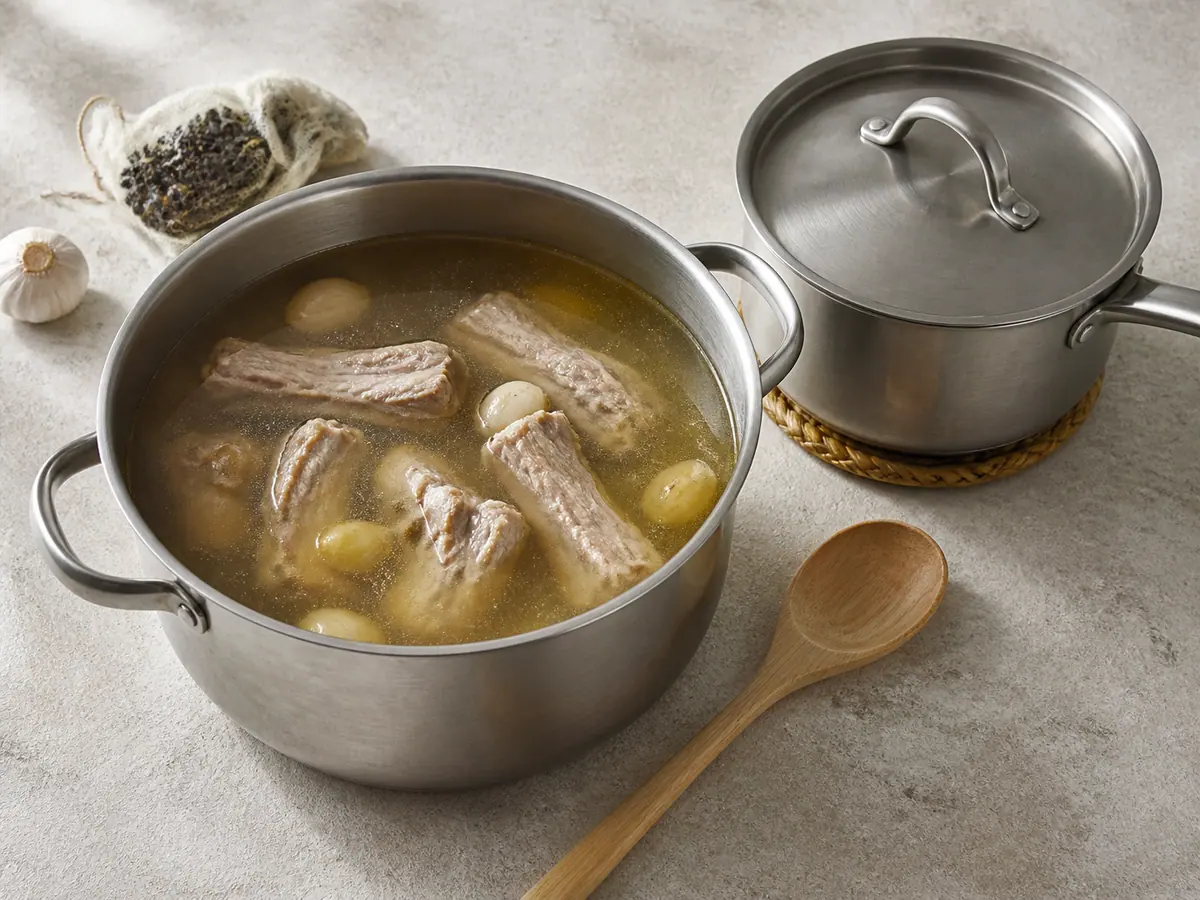
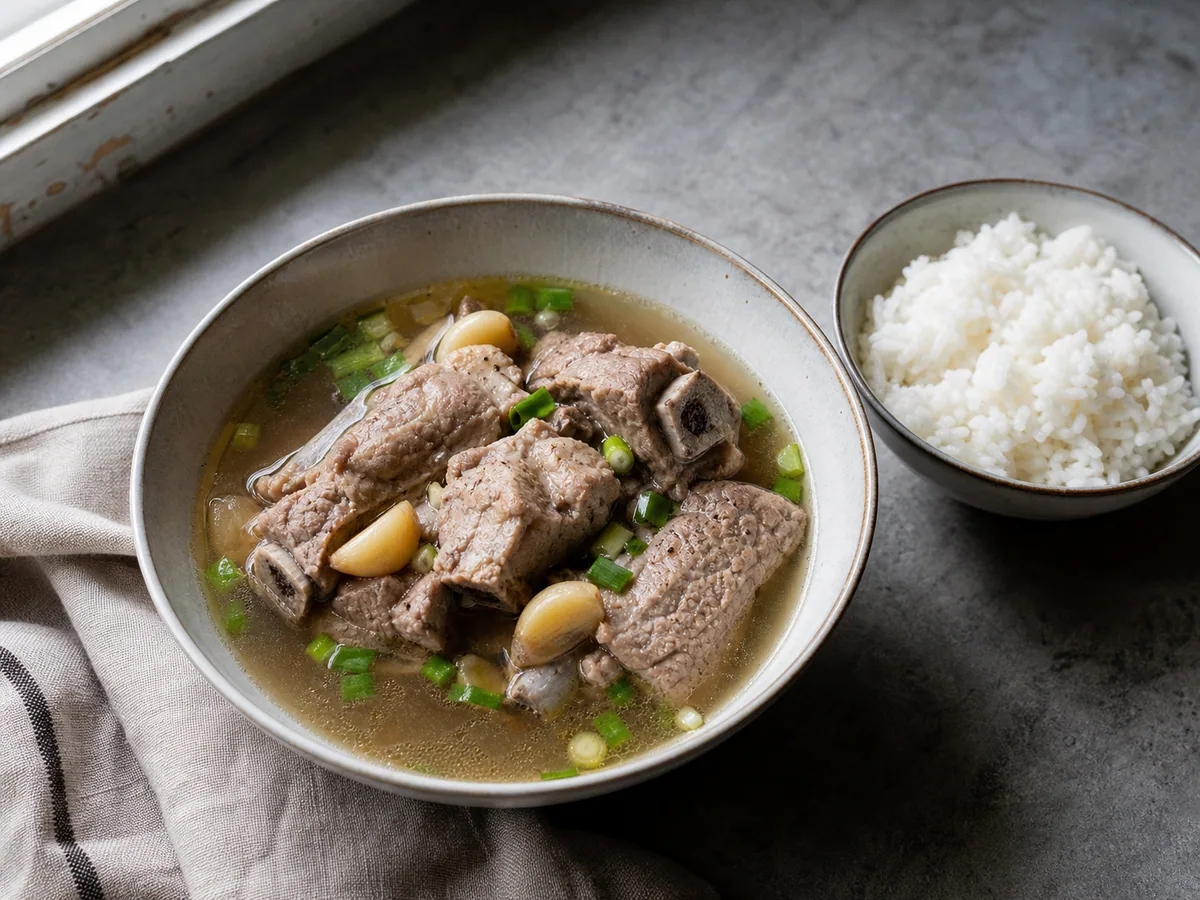
Let the rice stand covered for 10 minutes. Meanwhile, remove the pepper bundle from the soup, skim only the excess fat from the surface, and stir in 5 g of kosher salt. Taste the broth; it should be clear, deeply garlicky, and assertively peppery without tasting dusty. If it is too strong, add hot water in small splashes. If it tastes thin, simmer uncovered for a few minutes. Slice 3 scallions thinly.
10:00Serve the soup with rice
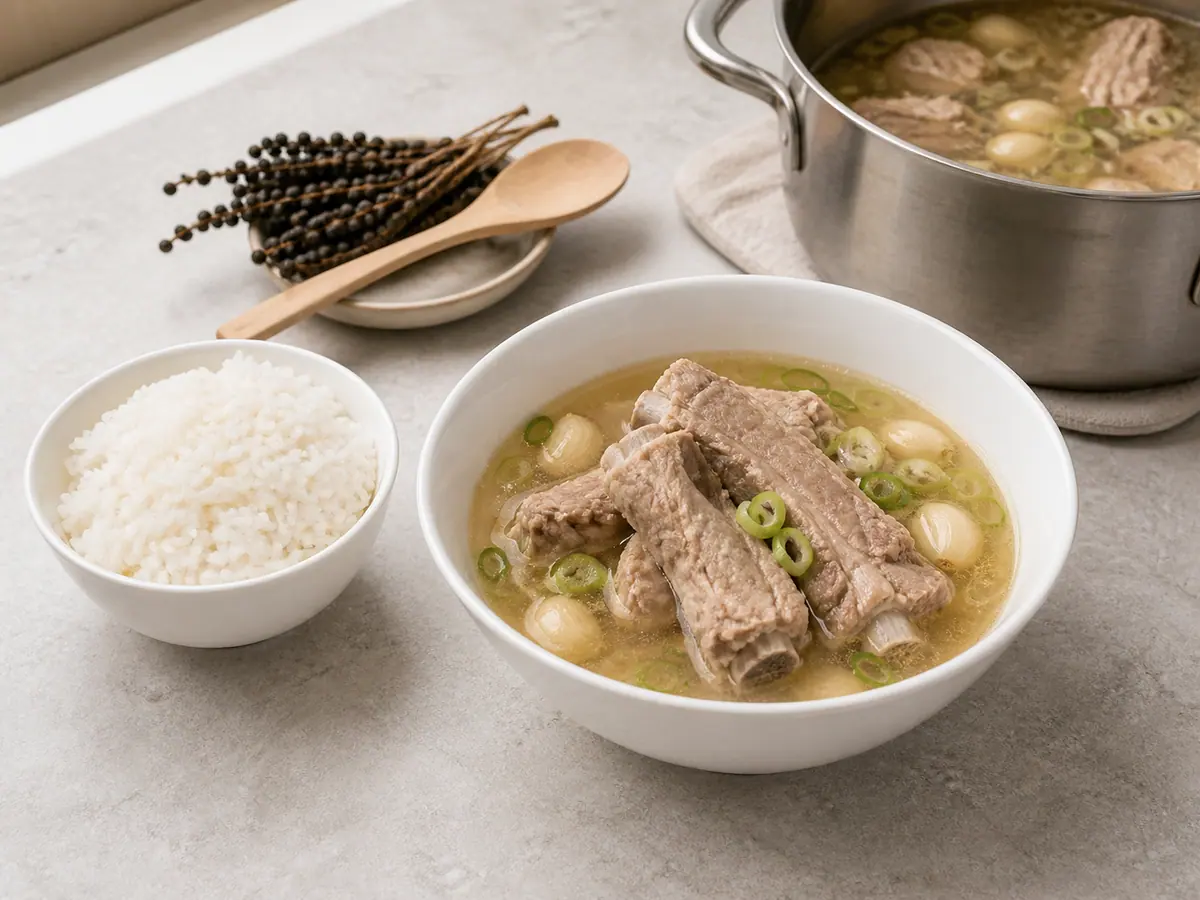
Fluff the rice and divide it among small side bowls. Place the tender ribs in deep serving bowls, ladle in the clear broth and softened garlic cloves, and scatter over the sliced scallions. Serve immediately with the rice alongside so each spoonful can be followed with a bite of rice.


Smart Substitutions
- No spare ribs? Use the same weight of baby back ribs and begin checking for tenderness about 15 minutes earlier.
- Prefer gentler heat? Use half the listed amount of white peppercorns while keeping the black peppercorns unchanged.
- No dark soy sauce? Replace the dark soy sauce with an equal amount of light soy sauce; the broth will be paler and slightly saltier.
- No jasmine rice? Use another white long-grain rice and follow its package liquid ratio if it differs.
Tips and Variations
- Keep the broth at a lazy simmer. A hard boil breaks fat into the liquid and turns a clear soup cloudy.
- Leave the garlic skins on after lightly crushing the cloves; they help the garlic soften slowly without disappearing into the broth.
- Crack the peppercorns just before cooking. Pre-ground white pepper can taste dusty and loses its bright heat quickly.
What Went Wrong?
- Broth is cloudy Lower the heat immediately, skim the surface, and continue at the gentlest simmer. The flavor will still be good even if the broth is not perfectly clear.
- Ribs are still tough Keep simmering and check every 10 minutes. Rib thickness and cut vary, and tenderness matters more than the clock once the safe temperature has been reached.
- Pepper heat is too sharp Remove the pepper bundle, add hot water in small splashes, and adjust the salt only after the broth is diluted.
- Broth tastes flat Add a little more kosher salt first. If it still lacks depth, stir in a few drops of light soy sauce and simmer for 2 minutes.
Nutrition Estimate
- Fiber: 2 g per serving
- Sodium: 900 mg per serving
Nutrition disclaimer:This recipe is provided for general cooking information only. Nutrition values are estimates and may vary by ingredients, brands, preparation methods, and serving sizes. Check ingredient labels and follow appropriate food-safety practices. This content is not medical, dietary, allergy, or professional food-safety advice.
FAQ
Found an error or have a suggestion?
Help us improve this recipe. Send us your feedback and include the recipe name so we can take a look.