Method
Prepare the sour cabbage
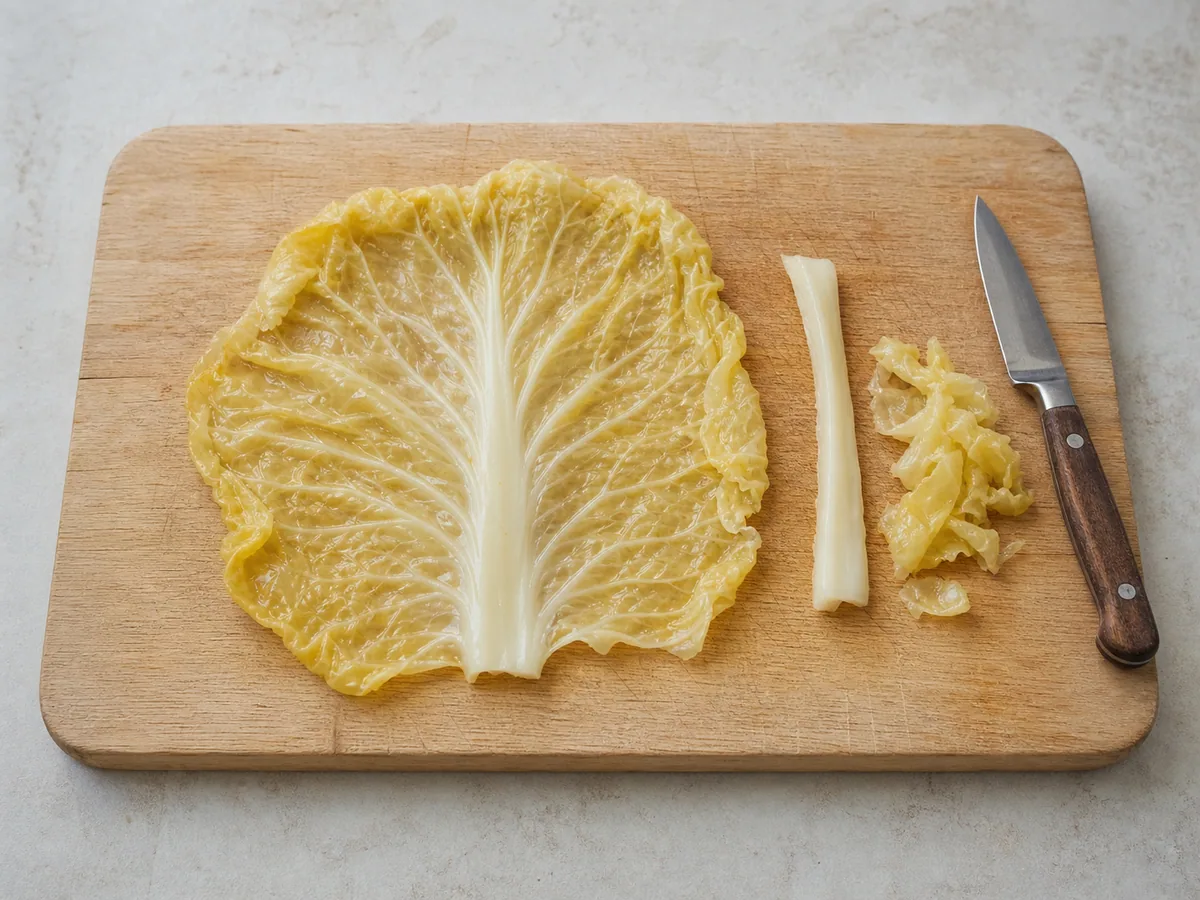
Rinse 1000 g of whole sour cabbage under cool running water, then taste a small piece. If it is sharply salty, soak it in a large bowl of cool water for 15 minutes and drain well. Separate the leaves carefully. Trim the thick central rib from each large leaf without cutting through the tender part, then cut very large leaves into two workable pieces. Reserve torn leaves and small inner pieces for lining the casserole.
15:00Soften the onion and rice
Chop 150 g of large yellow onion finely. Warm 15 ml of sunflower oil in a skillet over medium-low heat, add 150 g of large yellow onion, and cook for 5 to 7 minutes until translucent and soft but not browned. Stir in 100 g of long-grain white rice and cook for 1 minute, coating the grains in the oil. Scrape the mixture onto a plate and let it cool until no longer hot.
05:00Mix the pork filling
Place 600 g of lean ground pork in a large bowl. Chop 15 g of fresh dill and add it with the cooled onion-rice mixture, 5 g of sweet paprika, 2 g of dried thyme, 1 g of black pepper, and 1 g of fine salt. Mix gently with clean hands just until evenly combined; overmixing makes the filling firm. After handling raw pork, wash hands thoroughly and clean the bowl rim, work surface, and any utensils that touched the meat before continuing.
Shape the cabbage rolls
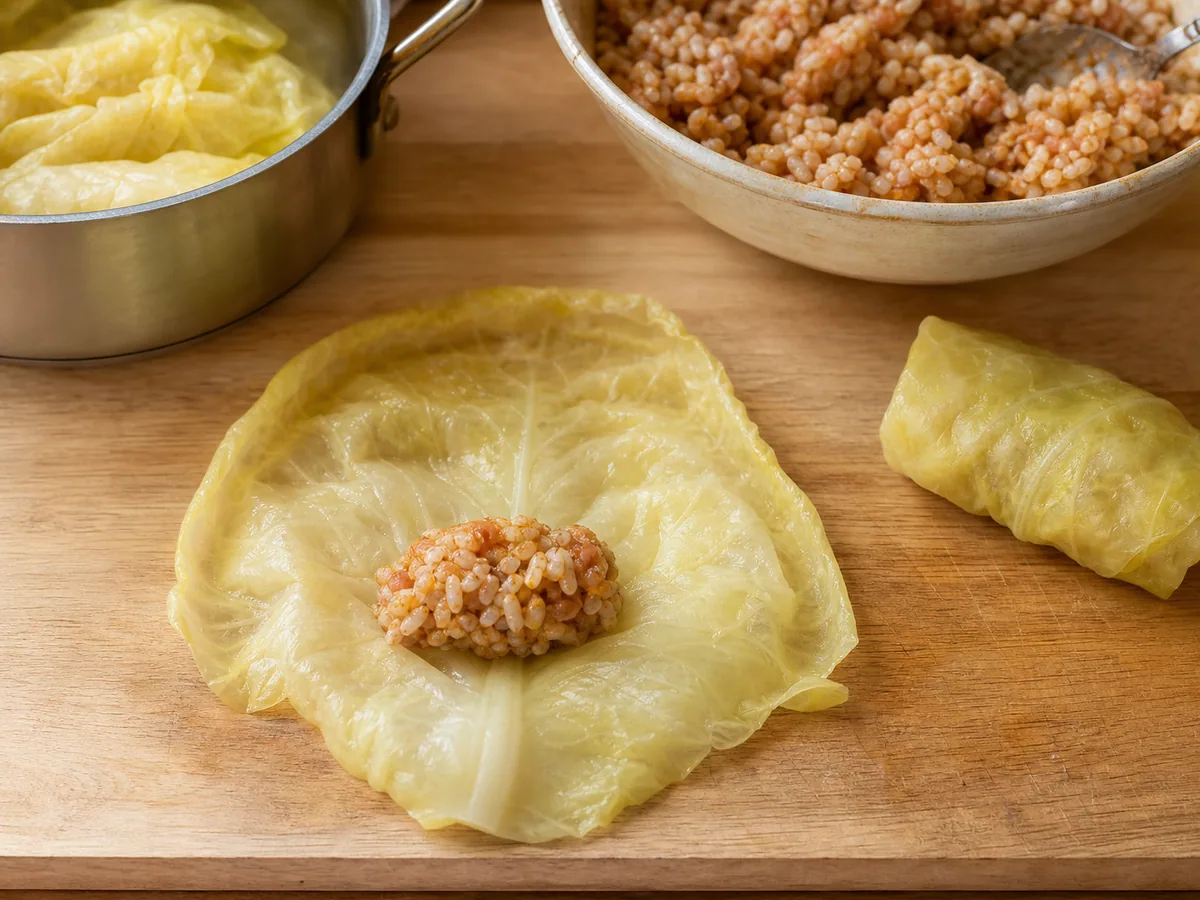
Lay one cabbage piece flat with the trimmed rib end nearest you. Place a compact spoonful of filling near that edge, leaving room for the rice to expand. Fold the bottom over the filling, fold in both sides, and roll into a snug parcel. Repeat to make about 16 rolls, keeping the rolls similar in size so they cook evenly.
Layer the casserole
Heat the oven to 170°C (340°F). Line a 5-quart (about 4.7-liter) lidded ovenproof casserole with the reserved cabbage pieces. Arrange the rolls seam-side down in close layers. Cut 50 g of smoked bacon into small pieces and scatter them between the rolls, then tuck in 2 bay leaves. Keep the rolls snug rather than compressed so the hot liquid can circulate.
Braise until tender and safely cooked
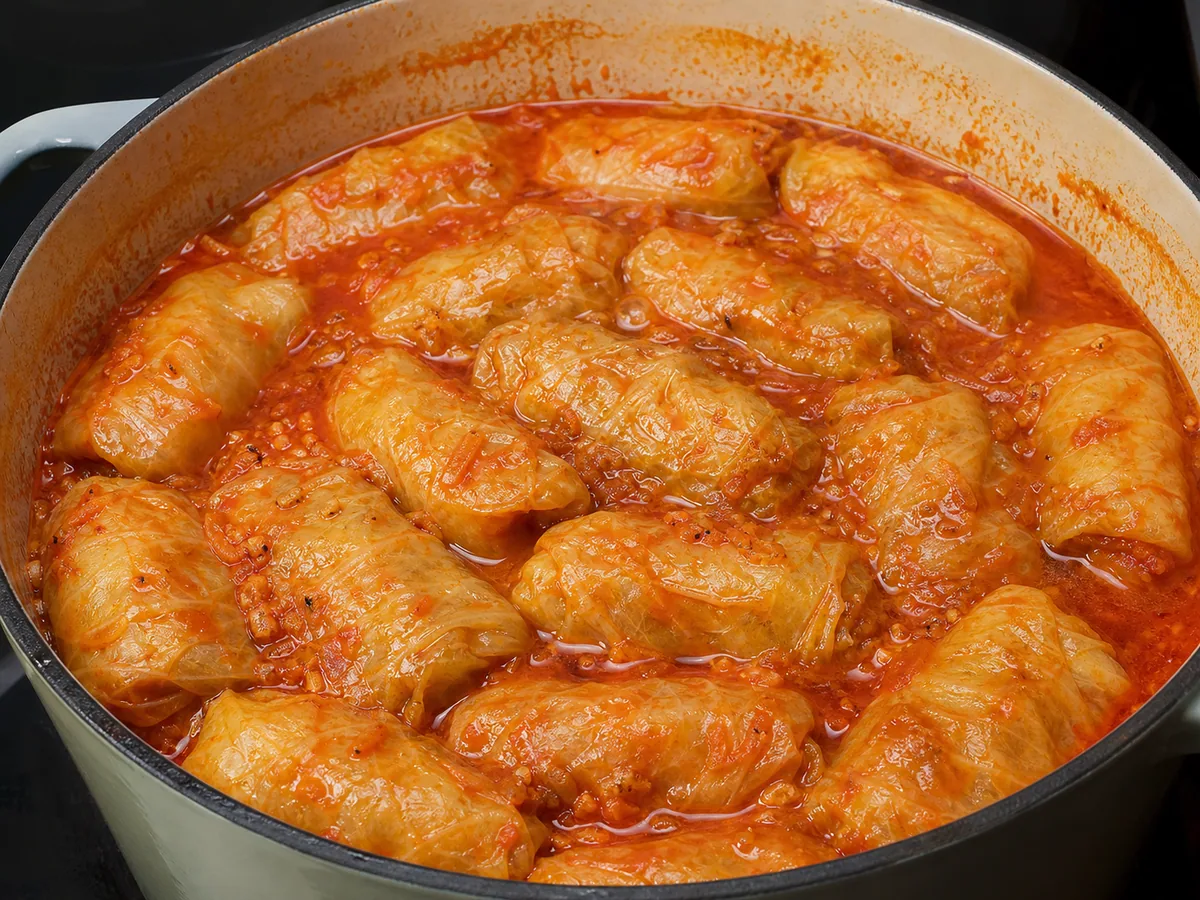
Whisk 500 ml of tomato passata with 500 ml of water and pour it around the rolls; the liquid should reach about three-quarters of the way up the top layer. Cover, bring just to a gentle simmer on the stovetop, then transfer to the oven. Braise for 2 hours 30 minutes before the first check. The cabbage should be silky and the rice tender. Insert a food thermometer into the center of a roll without touching the casserole; the filling must reach at least 71°C/160°F. If needed, cover and cook for 15 to 30 minutes longer, checking again before serving.
02:30:00Rest and serve
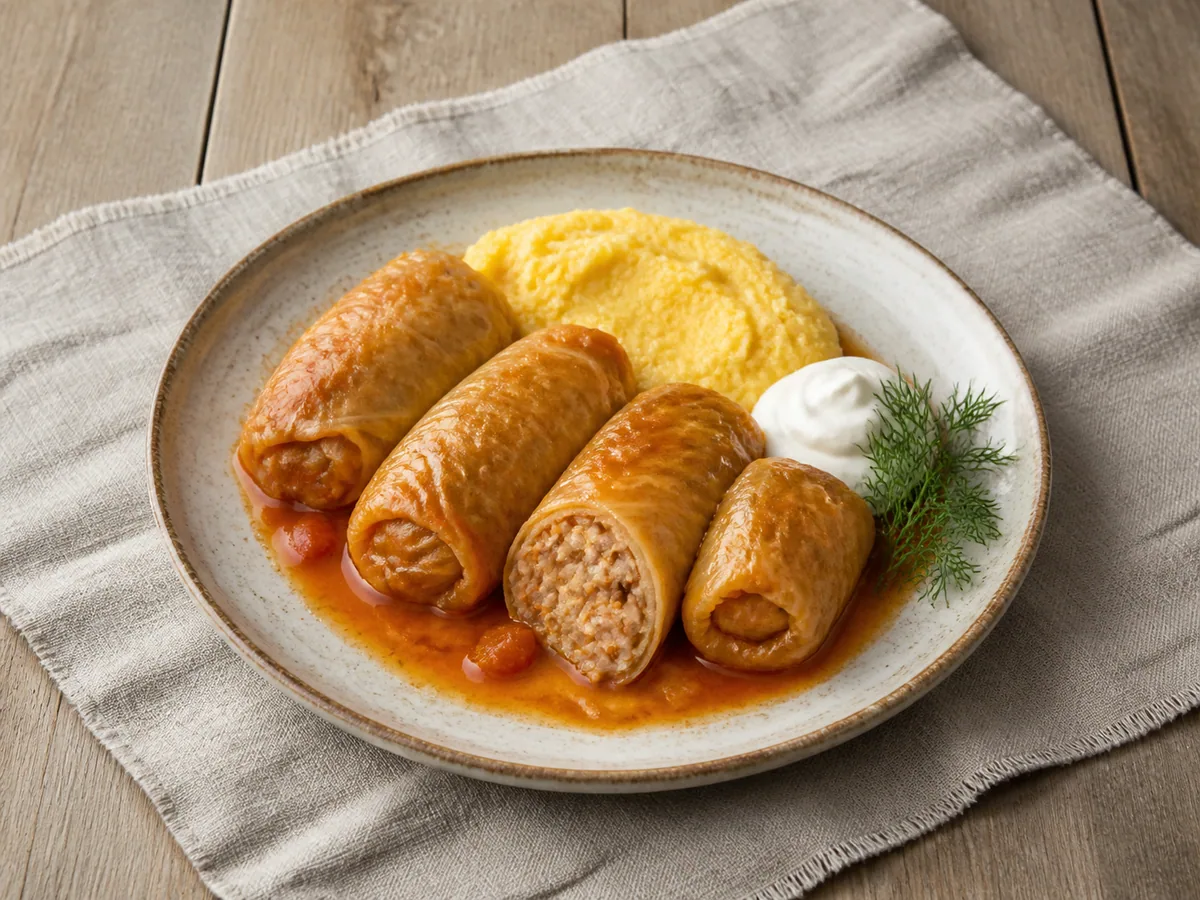
Remove the casserole from the oven and let the rolls stand, covered, for 15 minutes so the filling settles and the sauce thickens slightly. Spoon a little braising sauce over each serving and bring sour cream (optional) and cooked polenta (optional) to the table as optional accompaniments.
15:00


Smart Substitutions
- No sour cabbage? Blanch green cabbage leaves until flexible, trim the ribs, and expect a milder, less tangy result.
- Prefer mixed meat? Replace up to half of the pork with ground beef and keep the same 71°C/160°F final temperature check.
- No passata? Blend canned crushed tomatoes until smooth and use the same volume.
- No fresh dill? Use fresh parsley for a greener, gentler herb note.
Tips and Variations
- Taste the rinsed cabbage before seasoning the filling; fermented leaves and smoked bacon can contribute most of the salt the dish needs.
- Use less filling than seems necessary. The rice expands, and a modestly filled roll is easier to seal.
- Keep the braising liquid at a quiet simmer so the cabbage softens without the rolls knocking apart.
What Went Wrong?
- Cabbage leaves keep tearing Overlap two smaller pieces to form one wrapper, or trim more of the thick rib before rolling.
- Filling escapes during cooking Use a smaller spoonful, tuck the sides in firmly, and place every roll seam-side down in a snug layer.
- Rice is still firm Add a small splash of hot water around the rolls, cover, and continue braising until the grains are tender and the filling reaches 71°C/160°F.
- Braising liquid tastes too salty Spoon out part of the liquid, replace it with hot water, and simmer gently for several minutes before tasting again.
Nutrition Estimate
- Fiber: 11 g per serving
- Sodium: 1460 mg per serving
Nutrition disclaimer:This recipe is provided for general cooking information only. Nutrition values are estimates and may vary by ingredients, brands, preparation methods, and serving sizes. Check ingredient labels and follow appropriate food-safety practices. This content is not medical, dietary, allergy, or professional food-safety advice.
FAQ
Found an error or have a suggestion?
Help us improve this recipe. Send us your feedback and include the recipe name so we can take a look.