Method
Mix and knead the dough
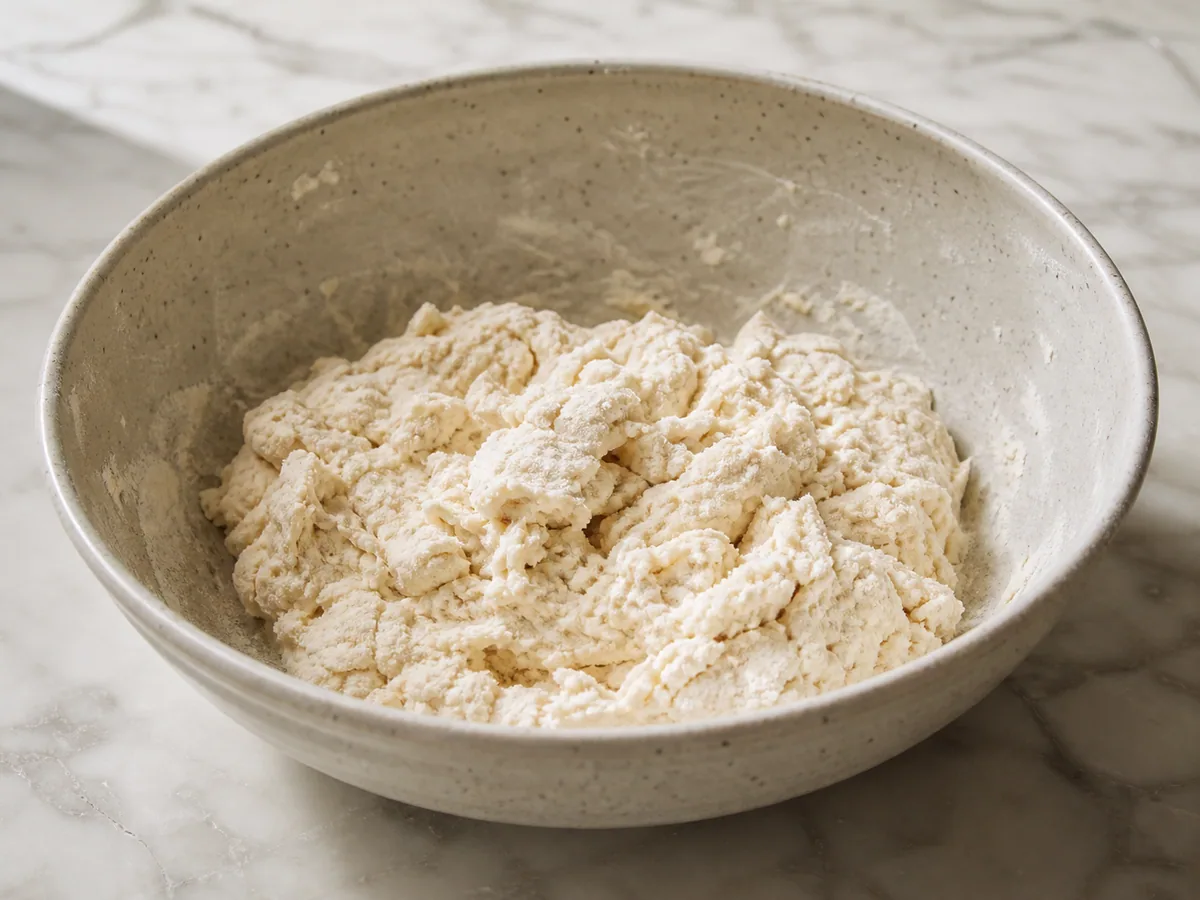
Whisk 360 g of all-purpose flour with 5 g of fine salt for dough in a wide bowl. Add 70 g of lard and rub it into the flour until the mixture resembles coarse crumbs. Pour in 160 ml of warm water for dough gradually, mixing until a shaggy dough forms. Knead on a lightly floured surface for 5 to 7 minutes, until smooth and supple; begin checking at 5 minutes.
05:00Rest the dough
Cover the dough and let it rest at room temperature for 30 minutes. While it rests, continue with the egg and filling steps.
30:00Cook the eggs until firm
Place 2 large eggs for filling in a saucepan and cover with cold water by 2.5 cm (1 in). Bring to a steady boil over medium-high heat, reduce to a gentle boil, and cook for 10 minutes so the yolks are fully firm.
10:00Cool, peel, and chop the eggs
Drain the eggs and cool them under cold running water for 5 minutes. Peel, chop, and set them on a clean plate away from the raw beef preparation area.
05:00Soften the onions and garlic
Chop 300 g of yellow onions and mince 2 garlic cloves. Warm 15 ml of olive oil in a large skillet over medium heat, add the onions and garlic, and cook for 8 to 10 minutes, stirring often, until soft and lightly golden; begin checking at 8 minutes.
08:00Cook the beef safely
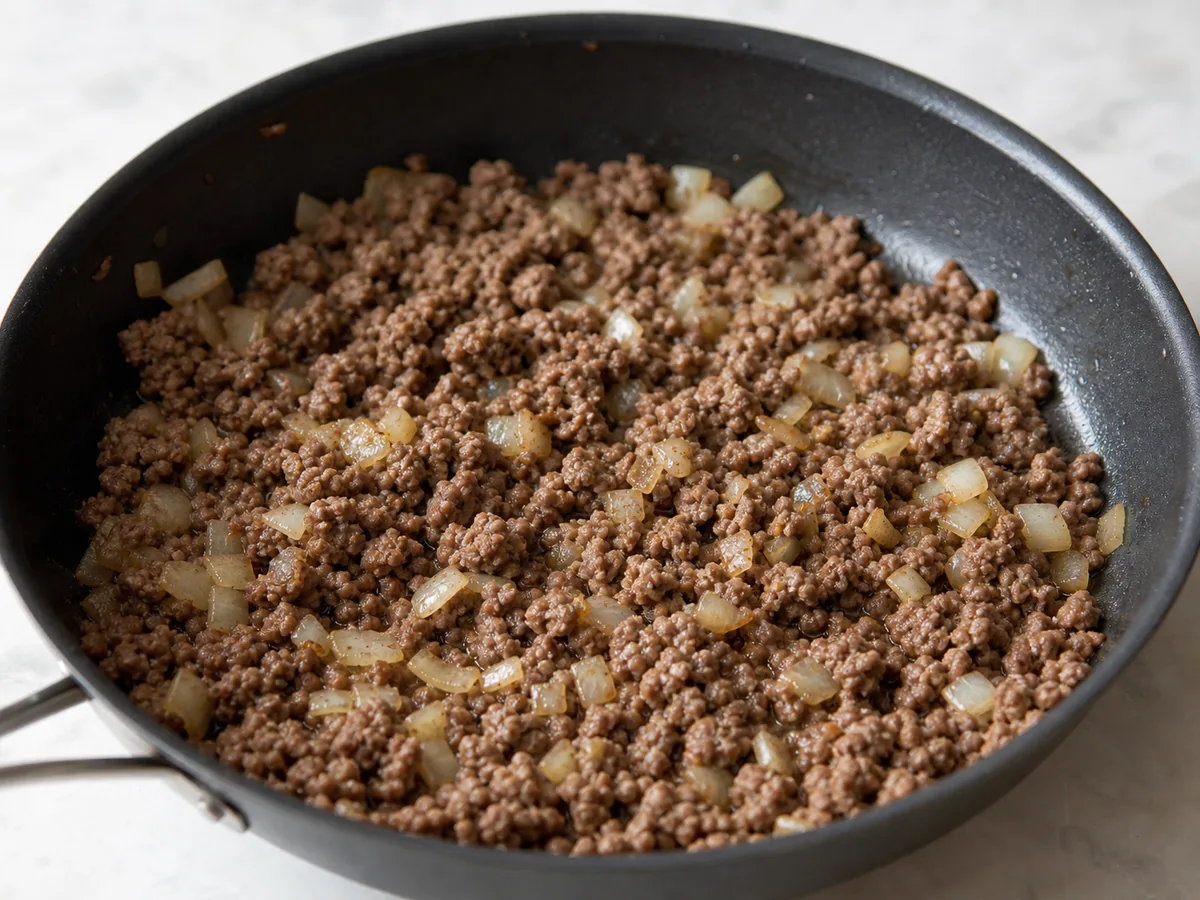
Add 450 g of 90% lean ground beef to the skillet and break it into small pieces with a clean spoon. Cook for 8 to 10 minutes, stirring, until no pink remains and the center of the meat reaches 71°C/160°F on a food thermometer; begin checking at 8 minutes. After handling the raw beef, wash your hands and wash any contacted utensils or surfaces with hot, soapy water before continuing.
08:00Season the filling
Reduce the heat to low. Stir in 8 g of sweet paprika, 2 g of ground cumin, 1 g of dried oregano, 2 g of fine salt for filling, and 1 g of black pepper, and cook for 1 minute, stirring, until fragrant and evenly distributed.
01:00Cool and finish the filling
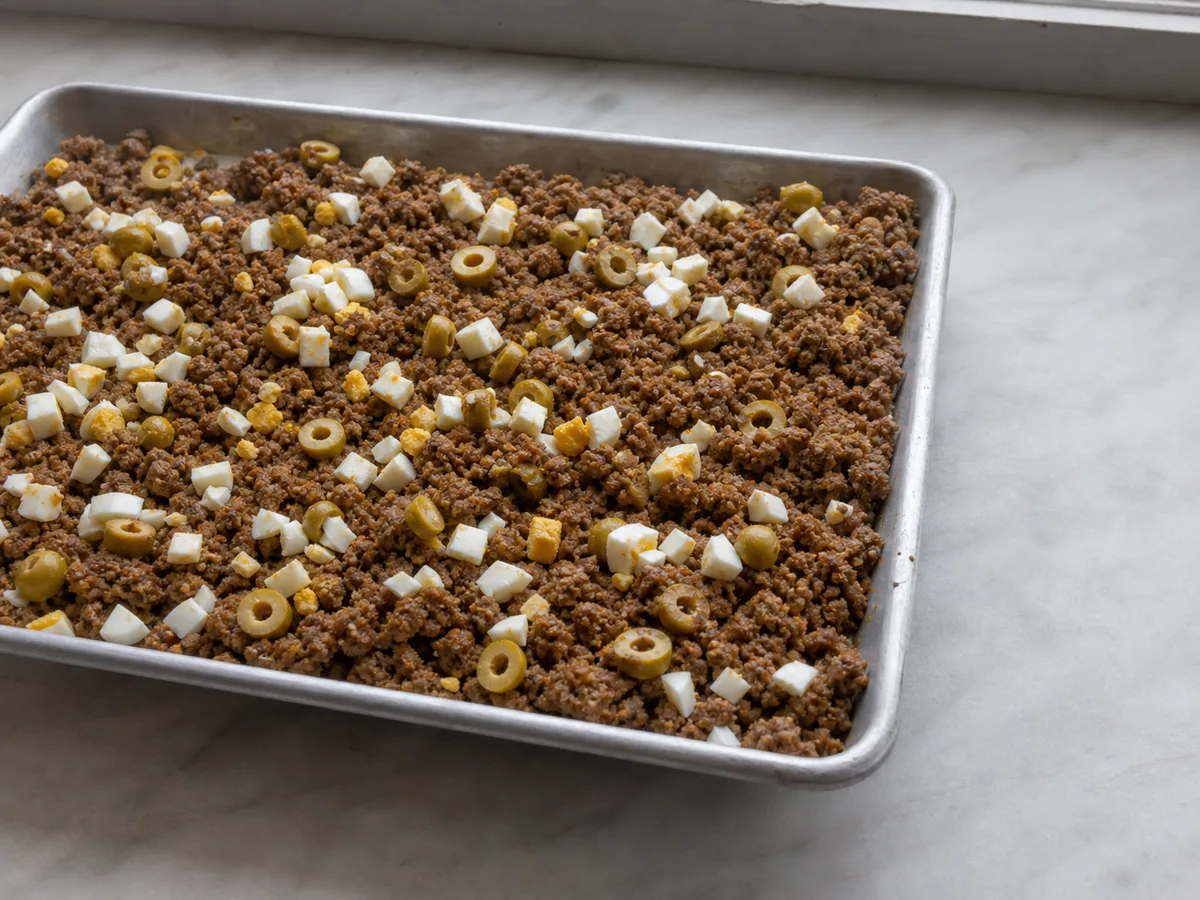
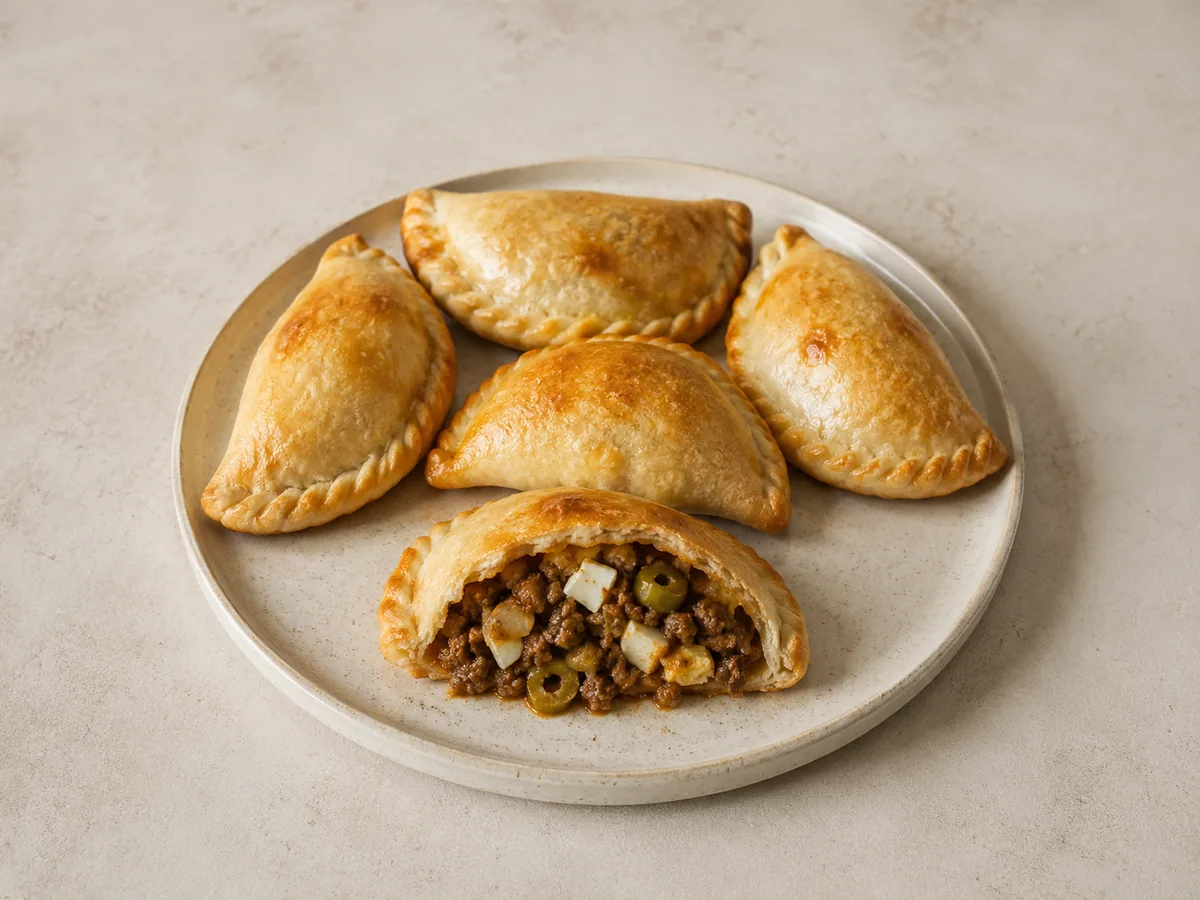
Scrape the cooked filling onto a wide tray and spread it into a thin layer. Let it stand for about 20 minutes, until no longer steaming and cool enough that it will not soften the dough. While it cools, begin rolling the rested dough in the next step. Chop 75 g of pitted green olives, then fold them and the chopped firm-cooked eggs into the cooled beef mixture.
20:00Roll the pastry rounds
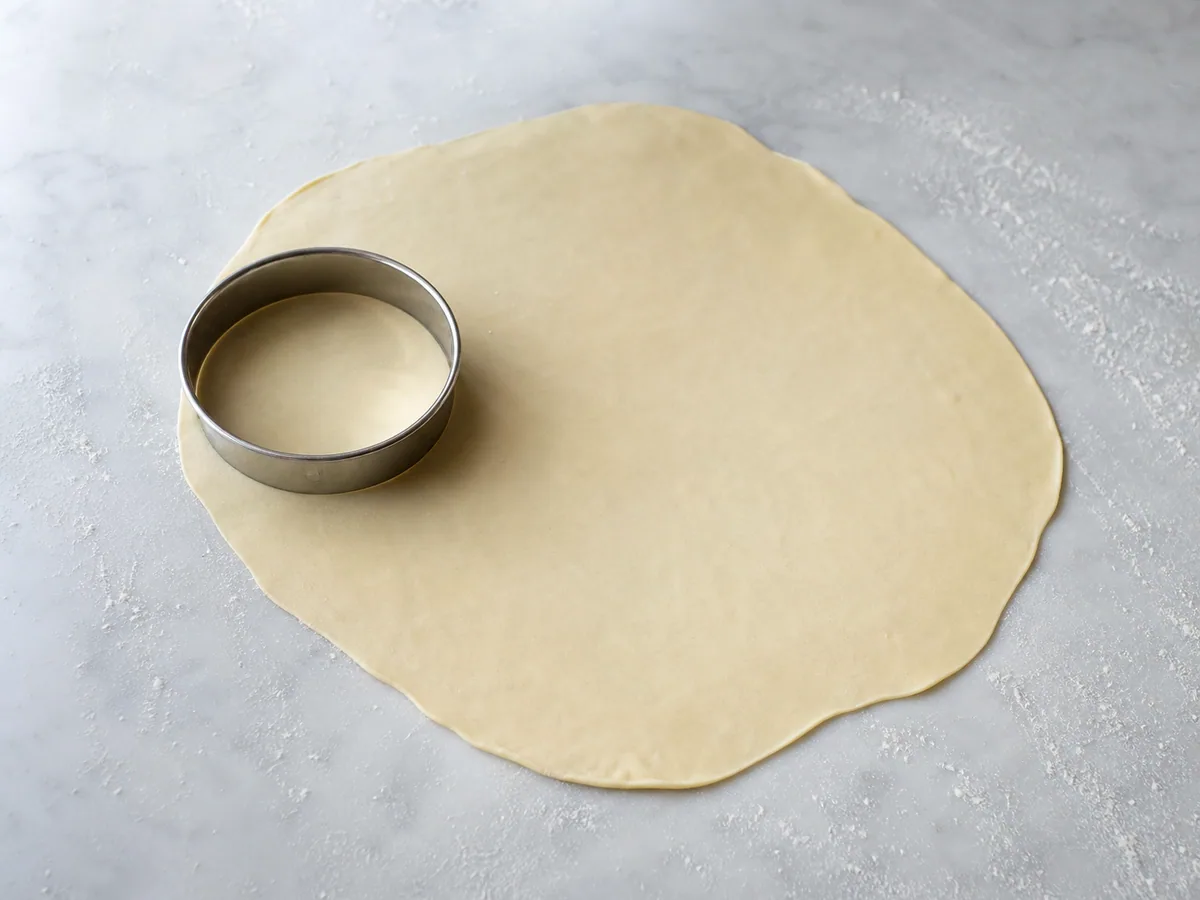
Divide the rested dough into evenly sized pieces, using three pieces per serving. Keep unused pieces covered while you work. Roll each piece on a lightly floured surface into a thin 13 cm (5 in) circle, turning it often so it stays round. Keep the edges slightly thinner than the center.
Fill the pastry rounds
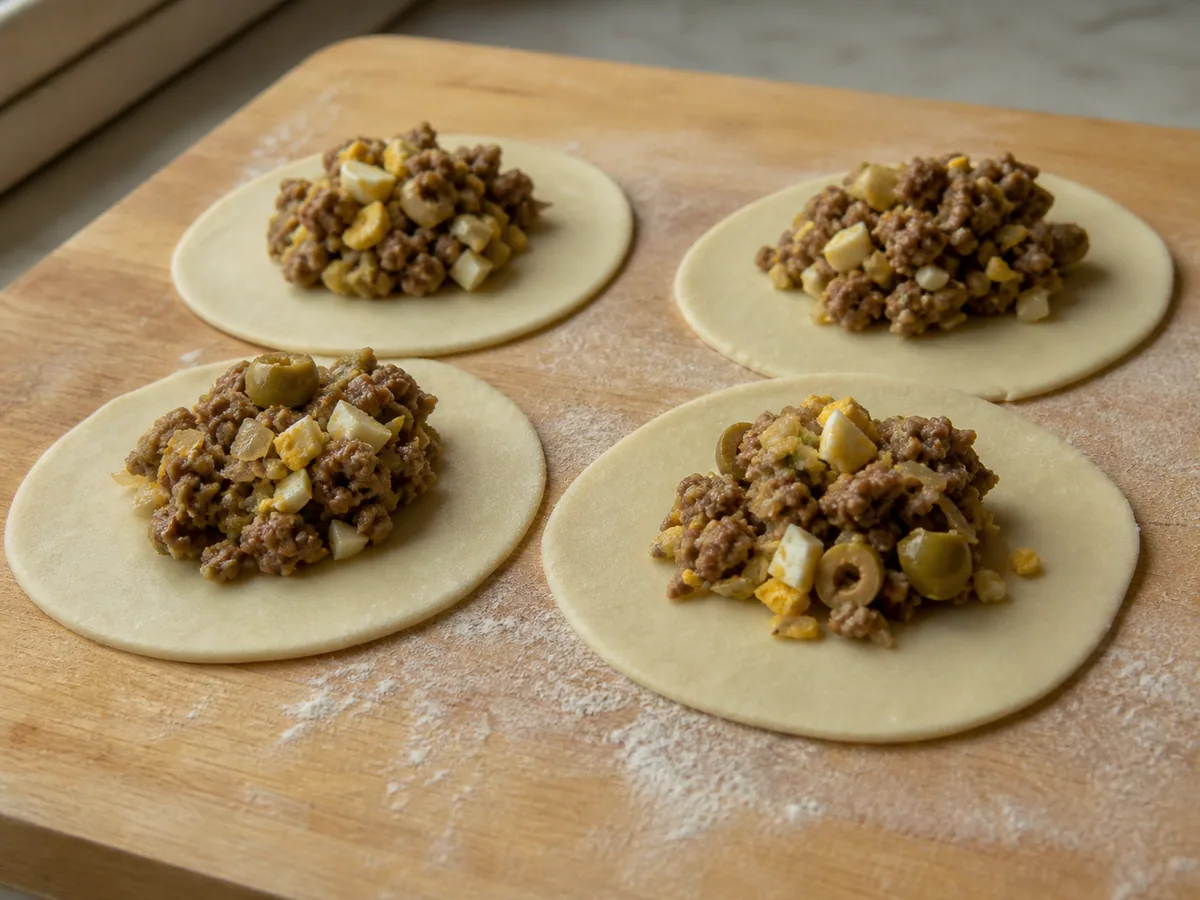
Divide the cooled filling evenly among the dough circles, placing it just off center and leaving a clean 1.5 cm (1/2 in) border. Keep filling and grease off the border so the dough will seal securely.
Seal and crimp the empanadas
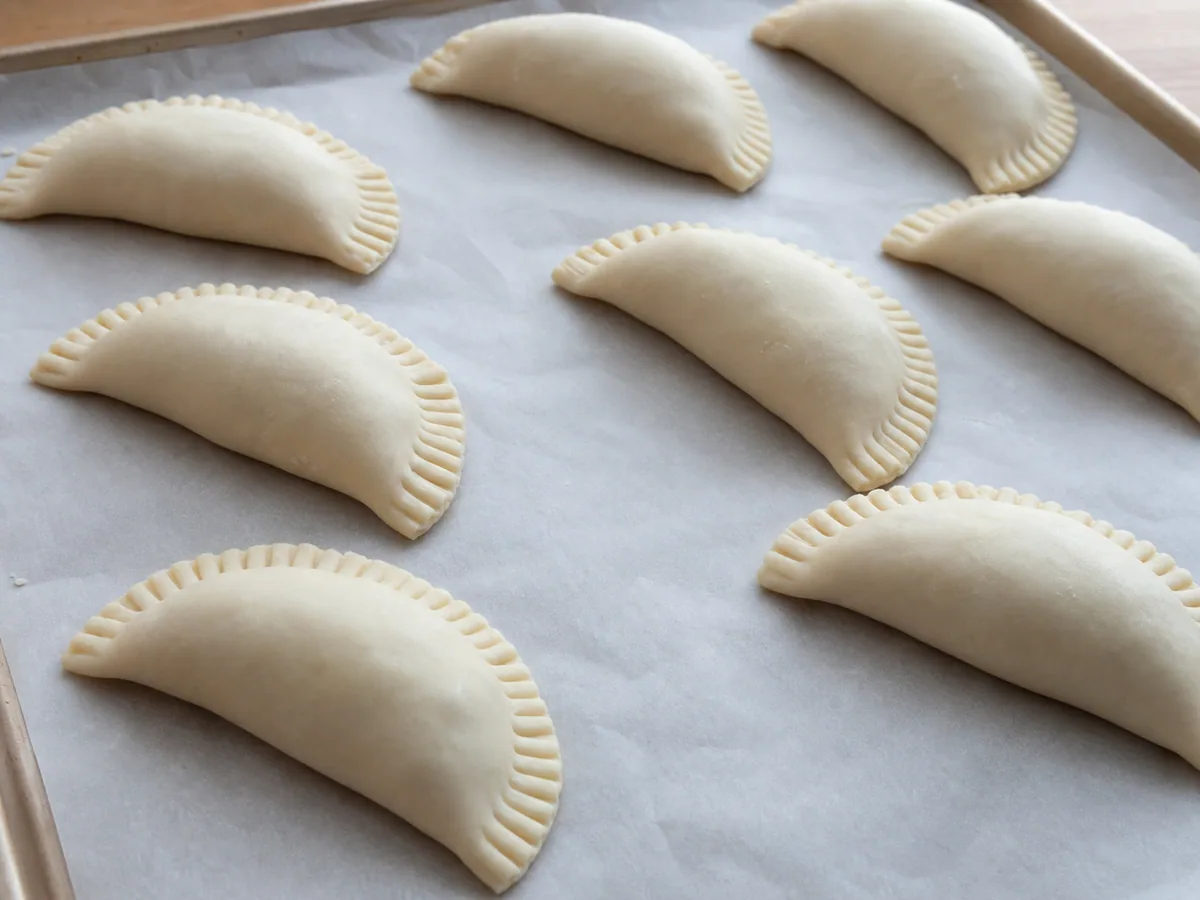
Fold each circle over the filling, press out trapped air, and pinch the edges firmly closed. Finish with a traditional twisted repulgue or press the edge with a fork. Arrange the sealed empanadas on a parchment-lined baking sheet with space between them.
Heat the oven and glaze the empanadas
Heat the oven to 220°C (425°F) with a rack in the upper-middle position. Whisk 1 large egg with 15 ml of water and brush a thin, even layer over every empanada, taking care not to pool glaze around the edges.
Bake until deeply golden
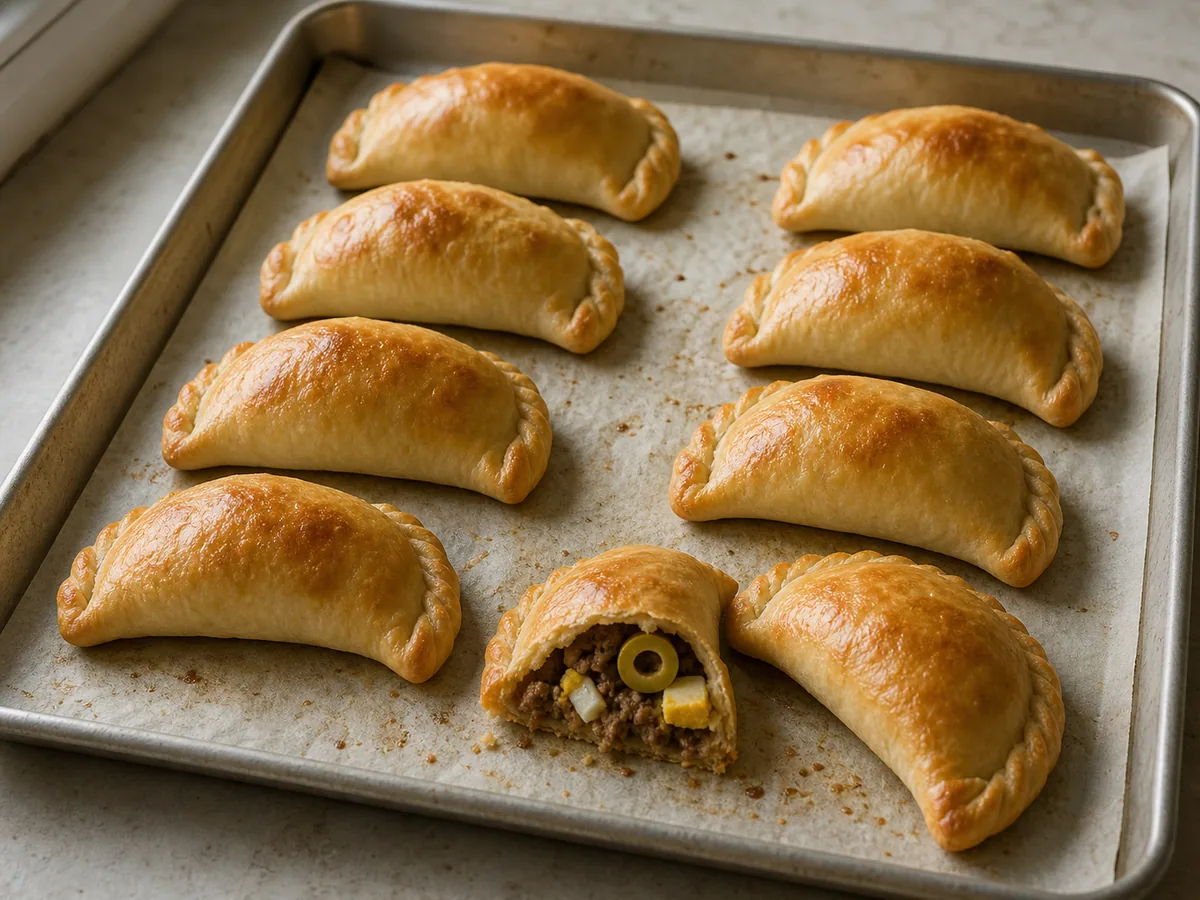
Bake for 18 to 22 minutes, rotating the sheet once, until the pastry is deeply golden and the crimped edges are crisp. Begin checking at 18 minutes.
18:00Rest before serving
Let the baked empanadas stand on the baking sheet for 5 minutes before serving so the pastry sets and the hot filling settles.
05:00


Smart Substitutions
- No lard? Use the same weight of unsalted butter and work it into the flour while cool but pliable; the crust will taste richer and slightly less crisp.
- Prefer prepared wrappers? Use empanada wrappers about 13 cm (5 in) wide, portioning three wrappers per serving, and begin with the filling steps.
- No green olives? Use the same weight of pitted black olives for a milder, less briny filling.
- Skip the egg in the filling? Omit the filling eggs and cook a little extra onion until soft to keep the beef mixture moist and balanced.
Tips and Variations
- Give the onions their full cooking time; their sweetness balances the saltiness of the olives and keeps the beef from tasting dry.
- Keep the pastry border free of filling and grease so the crimp grips clean dough instead of sliding apart.
- Roll the dough from the center outward and turn it often; this keeps the rounds even without overworking the edges.
What Went Wrong?
- Dough shrinks while rolling Cover it and let it rest for 10 more minutes so the gluten relaxes, then roll with light pressure.
- Filling breaks through the seal The filling may be too warm or the rounds too full. Let the mixture cool further, use a little less, and wipe the border clean before crimping.
- Pastry cracks at the fold The dough is slightly dry. Work a few drops of warm water into the next piece and keep the remaining dough covered.
- Empanadas look pale Brush on a complete but thin glaze and keep baking until the ridges and flat surfaces are evenly bronze.
Nutrition Estimate
- Fiber: 5 g per serving
- Sodium: 1110 mg per serving
Nutrition disclaimer:This recipe is provided for general cooking information only. Nutrition values are estimates and may vary by ingredients, brands, preparation methods, and serving sizes. Check ingredient labels and follow appropriate food-safety practices. This content is not medical, dietary, allergy, or professional food-safety advice.
FAQ
Found an error or have a suggestion?
Help us improve this recipe. Send us your feedback and include the recipe name so we can take a look.