Method
Rinse and soak the batter ingredients
Rinse 300 g of dosa rice and 30 g of thick poha until the water runs mostly clear, then place them in one bowl. Rinse 100 g of split urad dal and place it in a second bowl with 3 g of fenugreek seeds. Cover both mixtures generously with cool water and soak for 4 to 6 hours; begin checking at 4 hours. The rice should break easily when pressed, and the dal should feel plump.
4:00:00Grind and ferment the batter
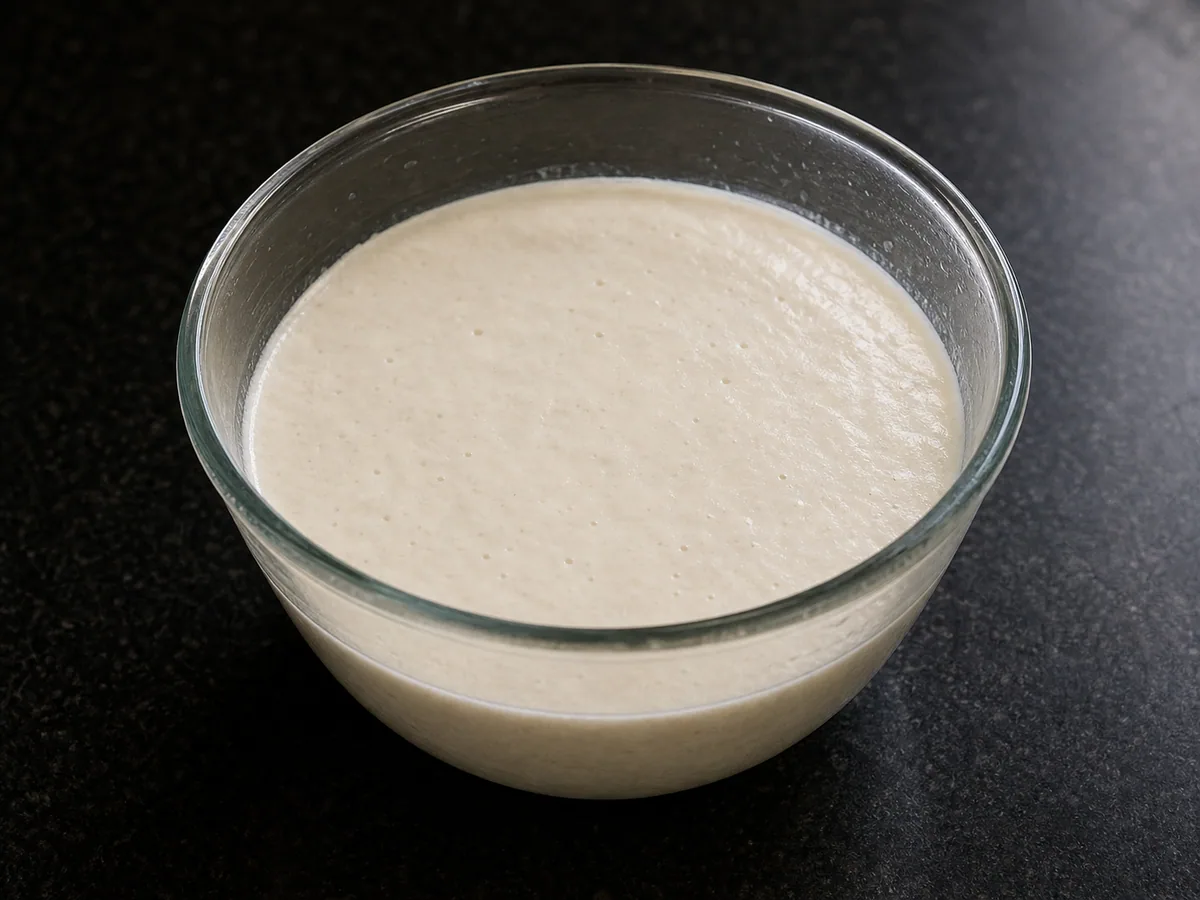
Drain both bowls. Keep 480 ml of water for batter beside the blender, reserving a small portion for adjusting the batter after fermentation, and add the rest gradually between the two batches. Blend the dal mixture first until pale, smooth, and airy, then transfer it to a large clean bowl. Blend the rice mixture until smooth with a faintly grainy feel. Combine both batters and mix firmly by hand or with a sturdy spoon for 1 minute to distribute air. Cover loosely and leave in a warm, draft-free place for 8 to 12 hours; begin checking at 8 hours. The batter is ready when it has risen noticeably, smells pleasantly tangy, and shows fine bubbles throughout.
08:00:00Cook and break up the potatoes
Place 600 g of Yukon Gold potatoes in a saucepan and cover with cool water. Bring to a boil, lower to a steady simmer, and cook for 18 to 22 minutes; begin checking at 18 minutes. A knife should enter the centers without resistance, but the potatoes should not collapse. Drain, let them stand until comfortable to handle, peel them, and break them into rough bite-size pieces.
18:00Temper the filling spices
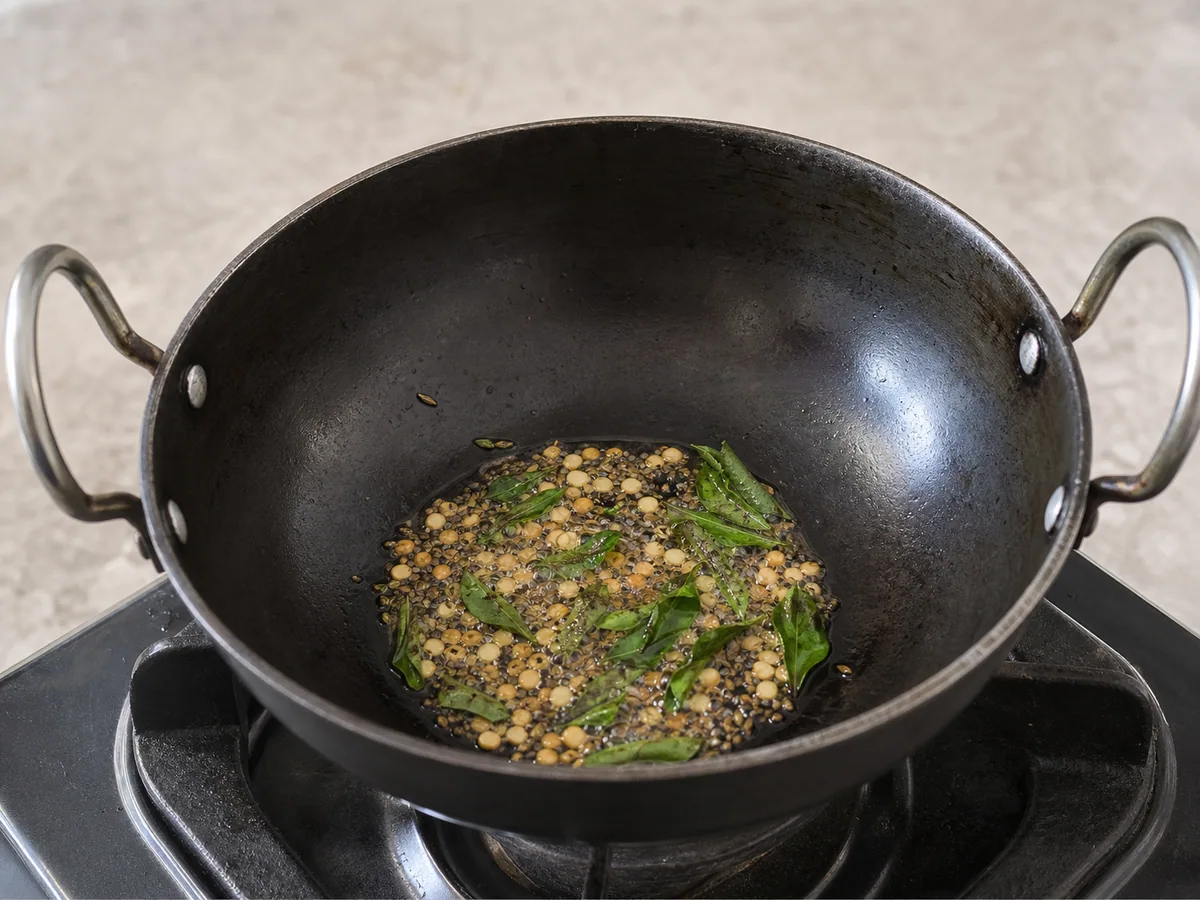
Heat 15 ml of neutral oil for filling in a wide skillet over medium heat. Add 4 g of black mustard seeds and cover briefly until they begin to crackle. Stir in 8 g of chana dal and cook until lightly golden. Tear 12 fresh curry leaves into the pan. Peel and finely grate 10 g of fresh ginger, split 2 green chiles, and add both; stir for 30 seconds until fragrant.
00:30Soften the onion
Thinly slice 150 g of yellow onion, add it to the tempered spices, and cook over medium heat for 6 to 8 minutes; begin checking at 6 minutes. Stir often until the onion is soft and translucent but not browned.
06:00Finish the potato filling
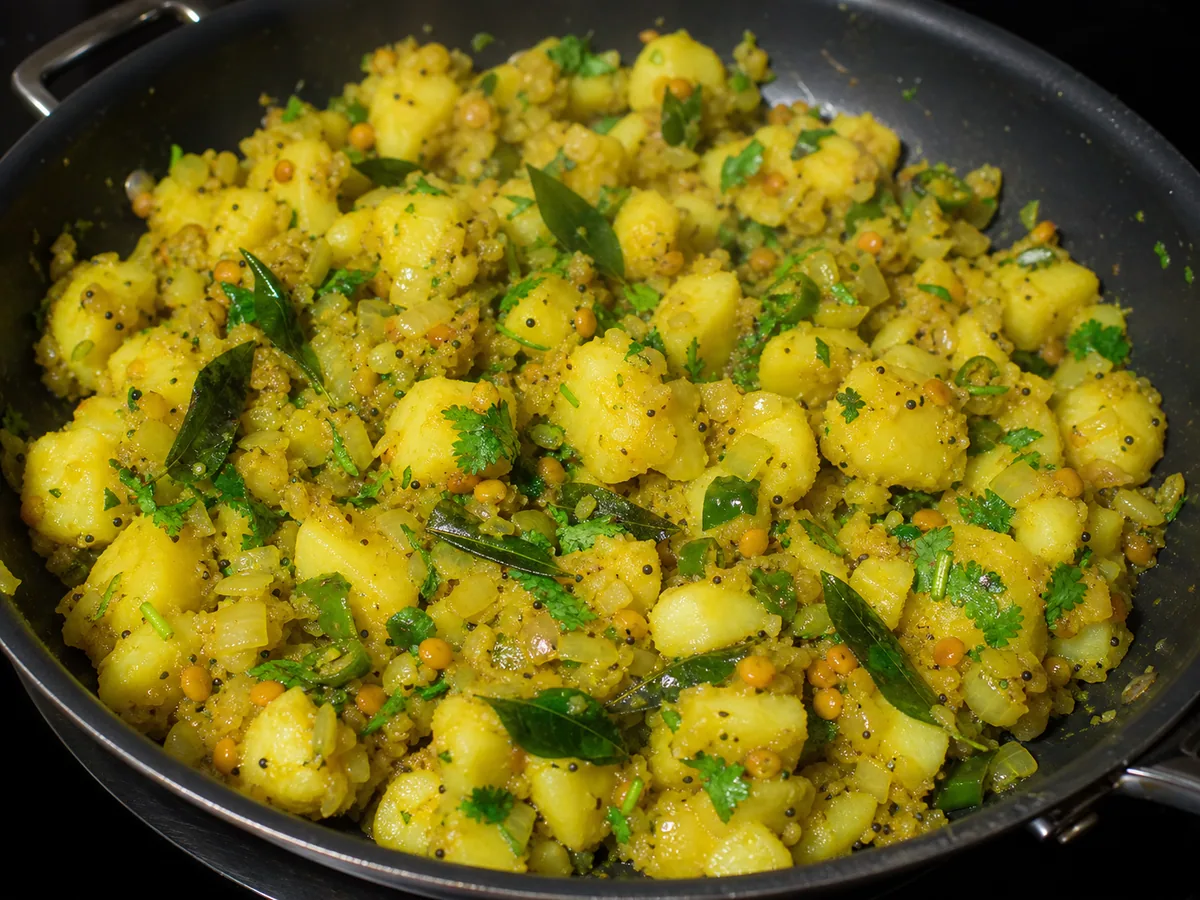
Stir 1 1/2 g of ground turmeric, 600 g of Yukon Gold potatoes, 3 g of fine sea salt for filling, and 120 ml of water for filling into the softened onion and tempered spices. Crush some of the potatoes against the pan while leaving plenty of rough pieces intact, then cook for 4 to 6 minutes; begin checking at 4 minutes. The mixture is ready when it is moist and cohesive with no loose liquid. Chop 15 g of fresh cilantro, remove the pan from the heat, and fold it in with 15 ml of fresh lemon juice.
04:00Season the batter and heat the griddle
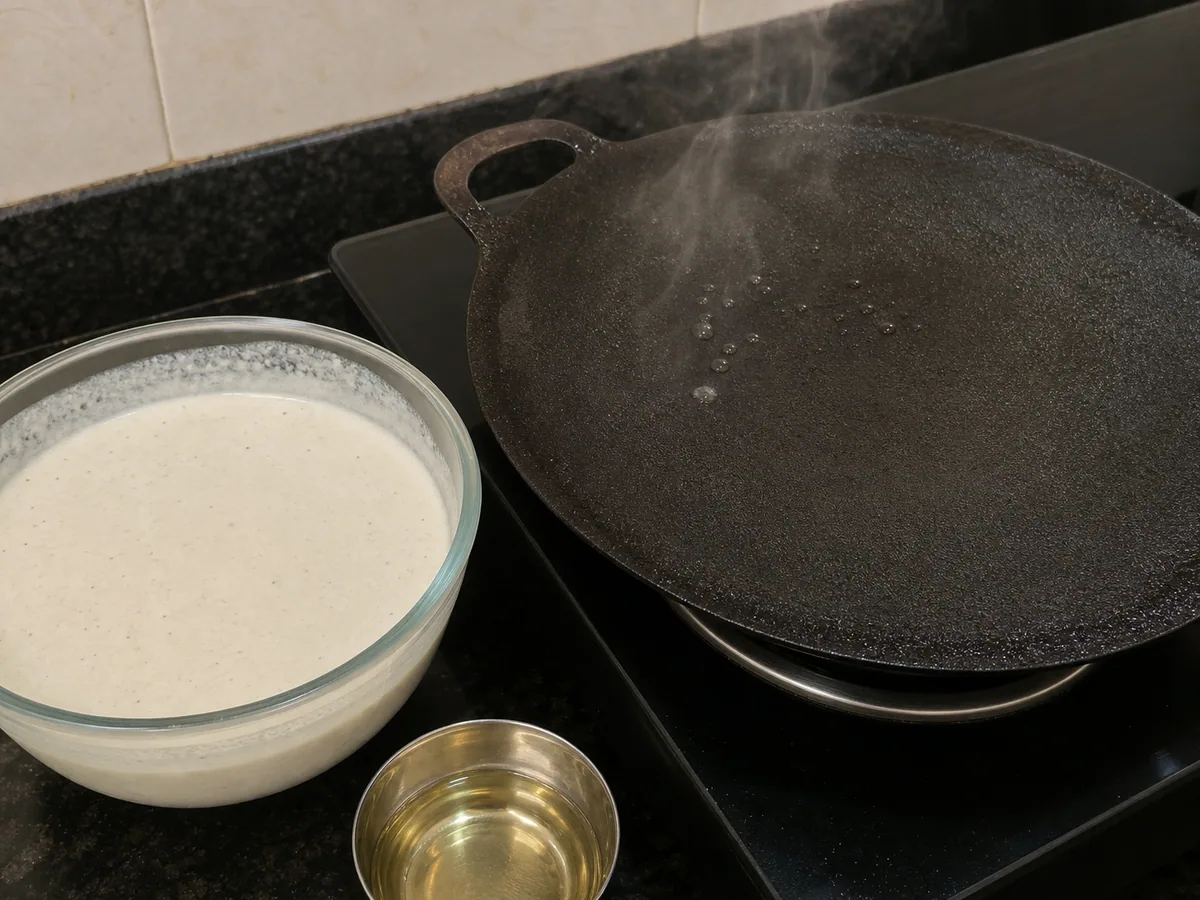
Fold 5 g of fine sea salt for batter through the fermented batter without beating out the bubbles. The batter should pour in a thick ribbon and spread easily; stir in a small splash of the reserved 480 ml of water for batter only when it feels stiff. Heat a wide cast-iron or nonstick griddle over medium heat. Flick on a few drops of water: they should dance and evaporate within a second or two, not vanish instantly. Wipe the surface clean and keep 30 ml of neutral oil for dosas beside the stove for greasing and drizzling across the full batch.
Spread, crisp, and fill the dosas
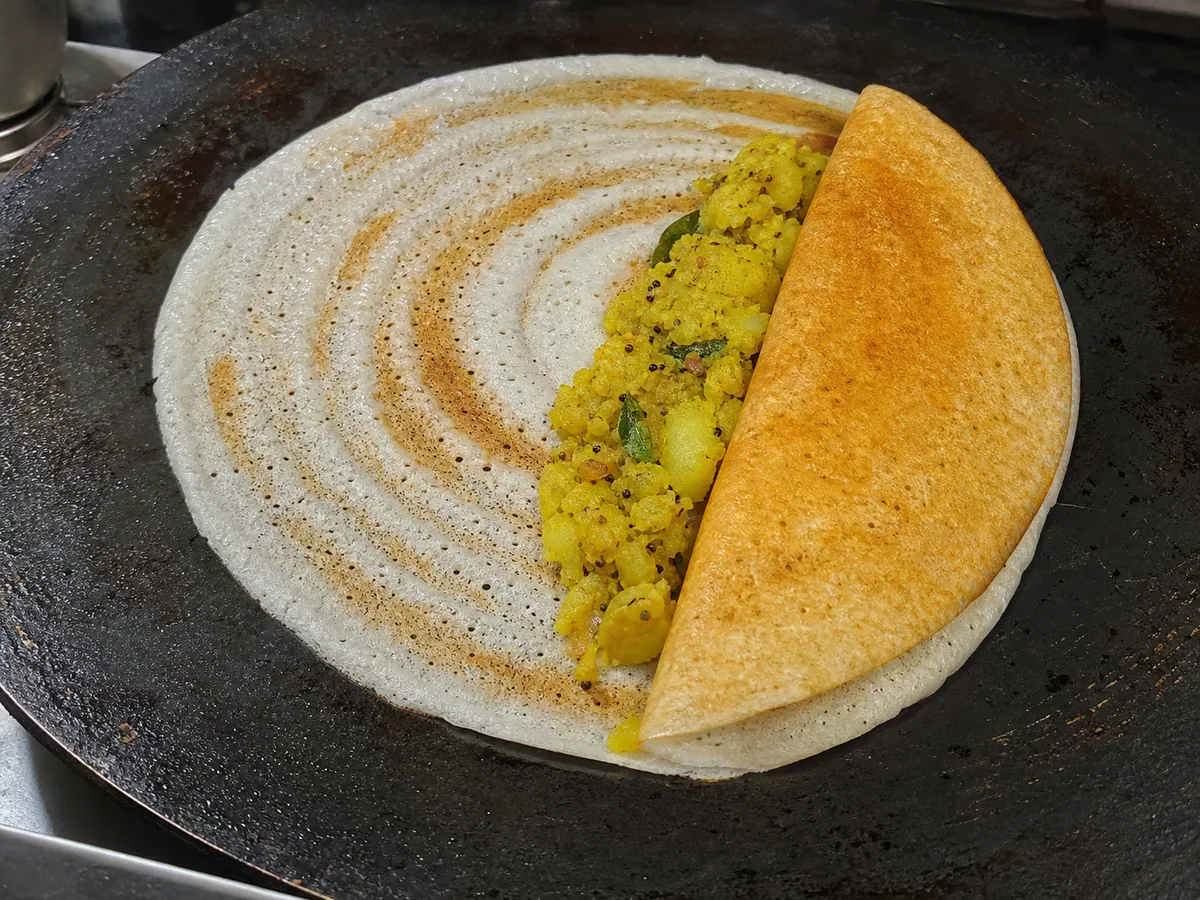
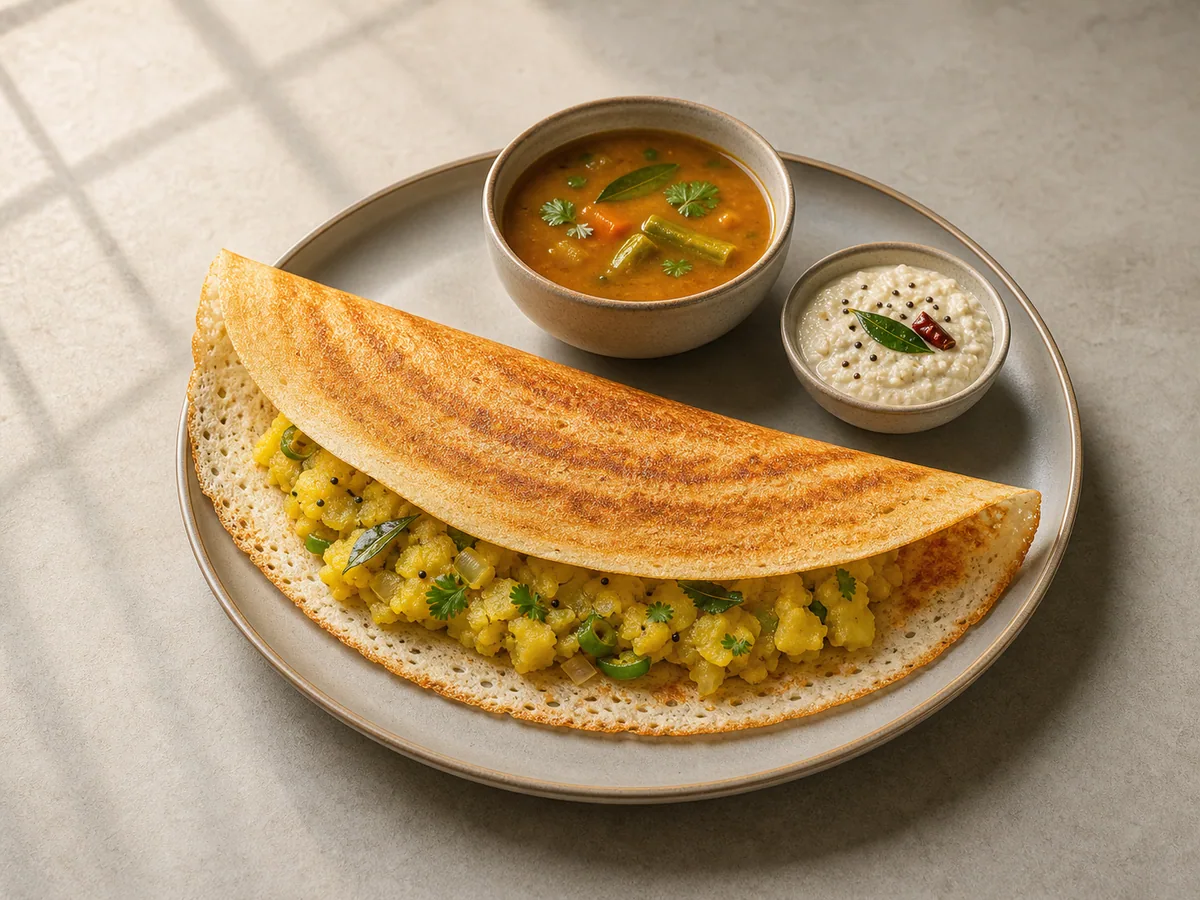
For each dosa, wipe the griddle with a thin film of oil, pour a scant 1/2 cup (about 100 ml) batter into the center, and immediately spiral outward with the back of the ladle to make a thin round. Brush the griddle and drizzle the surface lightly, using 30 ml of neutral oil for dosas across the full batch. Cook for 60 to 90 seconds until the top looks dry, the edges lift, and the underside is evenly golden. Spoon a narrow line of potato filling just off center, fold the dosa over it, and transfer it directly to a plate. If the batter sets before it can spread, lower the griddle temperature briefly before the next dosa.
01:00Serve each dosa while crisp
Cook the remaining dosas in the same way, stirring the batter gently before each one and adjusting the heat as needed. Serve each dosa as soon as it is folded, with coconut chutney (optional) and sambar (optional) alongside.


Smart Substitutions
- No dosa rice? Use an equal weight of short- or medium-grain white rice. Avoid aromatic rice, which tends to produce a more fragile dosa.
- No poha? Use the same weight of cooked white rice. It helps tenderness, though the dosa may brown a little differently.
- No fresh curry leaves? Omit them and add extra cilantro at the end. Dried curry leaves are milder and can taste woody.
- Prefer less heat? Use one green chile or remove the seeds before adding it to the filling.
Tips and Variations
- Use a bowl with ample headroom because a vigorous batter can rise substantially during fermentation.
- Blend the urad dal until light before grinding the rice; this order keeps the blender cleaner and makes the batter easier to aerate.
- Wipe the griddle with a barely damp cloth when it becomes too hot to spread the batter, then allow the surface to dry before continuing.
What Went Wrong?
- Batter did not rise Move it to a warmer place and give it more time. A pleasantly tangy aroma and fine bubbles matter more than a dramatic increase in volume.
- Dosa sticks to the griddle Let the pan heat fully, keep its surface clean, and allow the underside to brown before trying to lift an edge.
- Batter will not spread The griddle is probably too hot or the batter is too thick. Cool the surface briefly and loosen the batter with a small splash of water.
- Potato filling leaks from the fold Return it to medium heat and cook until no liquid pools when the potatoes are pushed to one side.
Nutrition Estimate
- Fiber: 10 g per serving
- Sodium: 810 mg per serving
Nutrition disclaimer:This recipe is provided for general cooking information only. Nutrition values are estimates and may vary by ingredients, brands, preparation methods, and serving sizes. Check ingredient labels and follow appropriate food-safety practices. This content is not medical, dietary, allergy, or professional food-safety advice.
FAQ
Found an error or have a suggestion?
Help us improve this recipe. Send us your feedback and include the recipe name so we can take a look.