Method
Prepare the bread and herbs
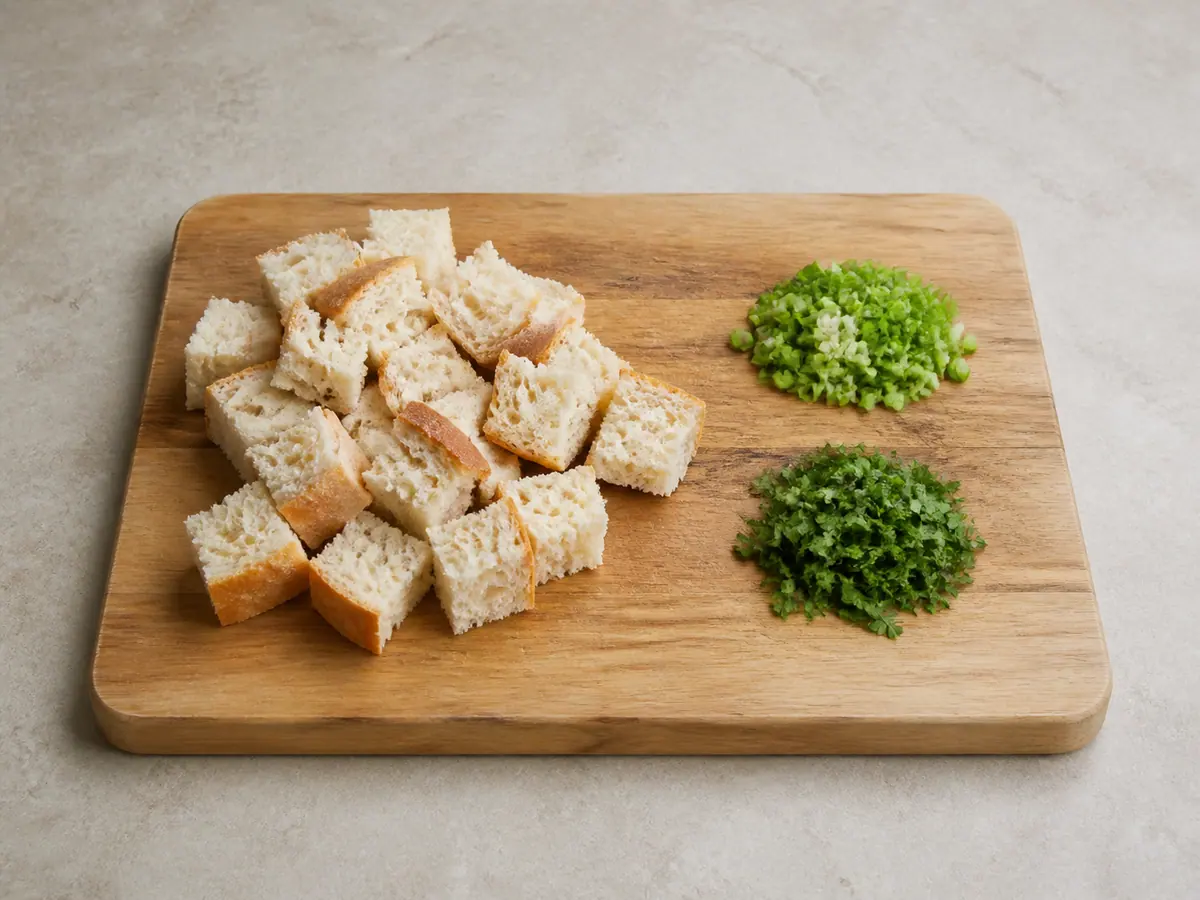
Cut 160 g of crusty white bread into bite-size pieces. Finely chop 4 scallions and 15 g of fresh cilantro, then reserve about one-quarter of each chopped herb for serving.
Build the milk broth
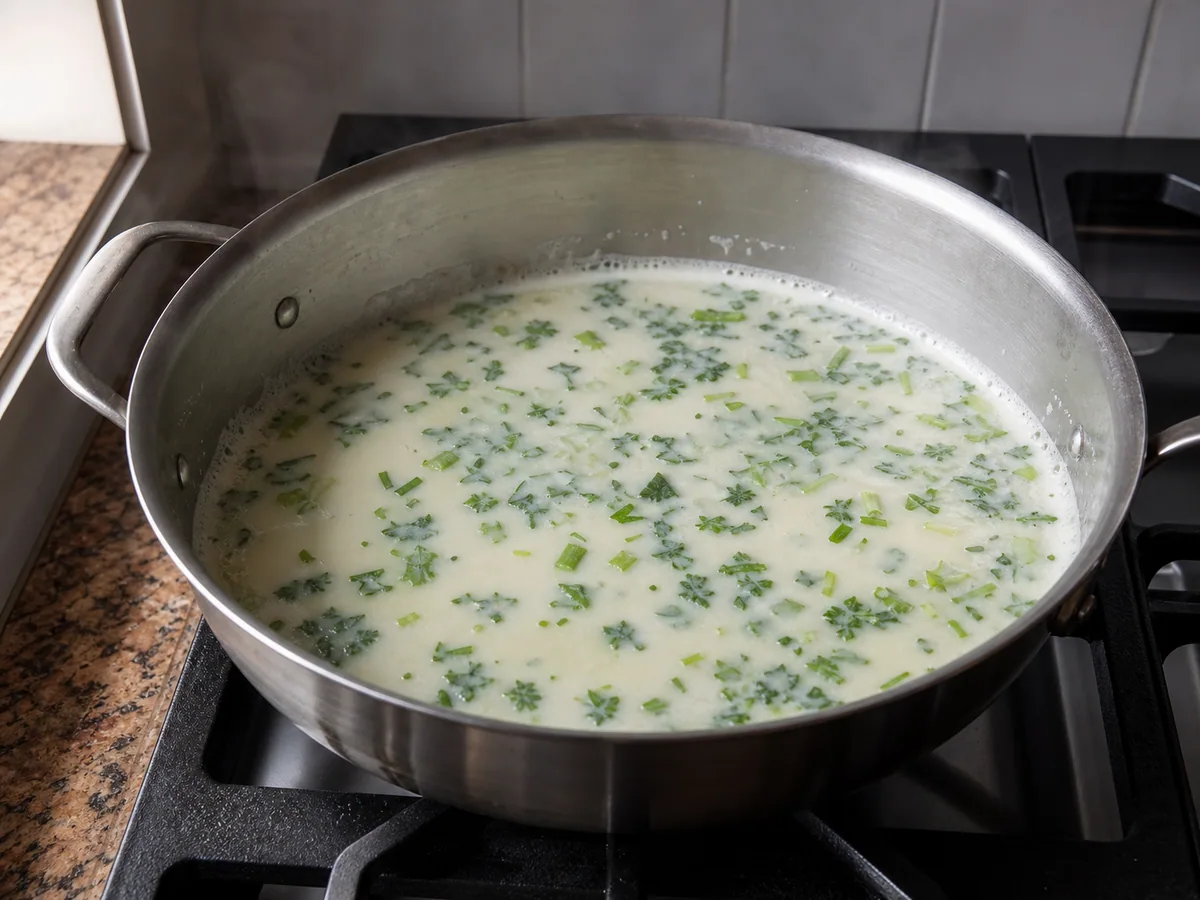
Melt 10 g of unsalted butter in a wide saucepan over medium-low heat. Add most of the chopped scallions and cilantro and stir just until aromatic and softened, without browning. Pour in 600 ml of water and 600 ml of whole milk, then stir in 4 g of kosher salt and 1 g of black pepper. Heat gently until the surface is steaming and small bubbles collect around the edge, 7 to 9 minutes; start checking at 7 minutes and do not let the milk reach a rolling boil.
07:00Cook the eggs until fully firm
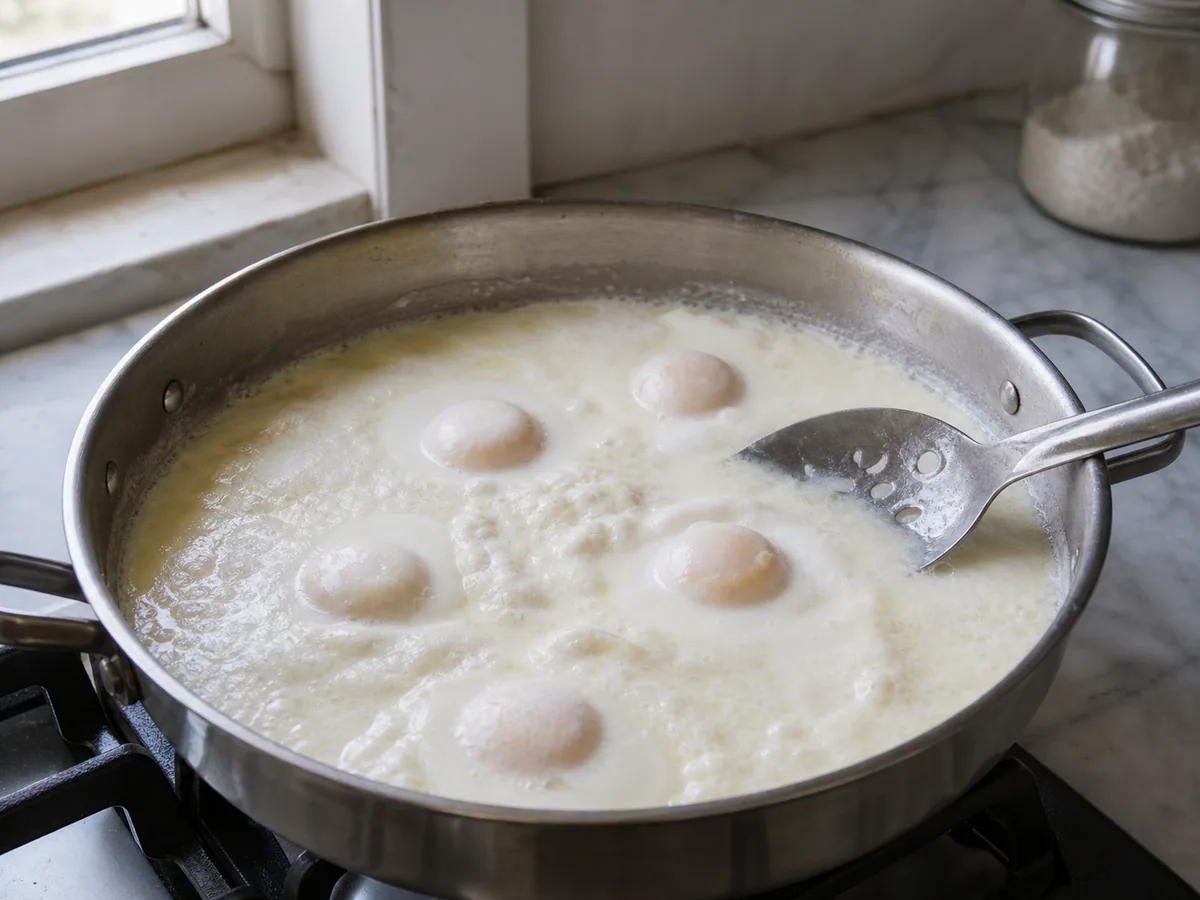
Reduce the heat so the broth holds a gentle simmer. Crack 4 large eggs one at a time into a clean small cup, then slide each egg close to the surface of the broth, spacing them apart. For 6 or 8 servings, divide the broth and eggs between two wide saucepans so the eggs remain in a single layer. Cover and cook for 6 to 8 minutes, starting the doneness check at 6 minutes. The whites and yolks must both be fully firm. For a temperature check, lift one egg onto a slotted spoon and insert a clean instant-read thermometer into the center of the yolk; it must reach 71°C/160°F before serving.
06:00Assemble and serve
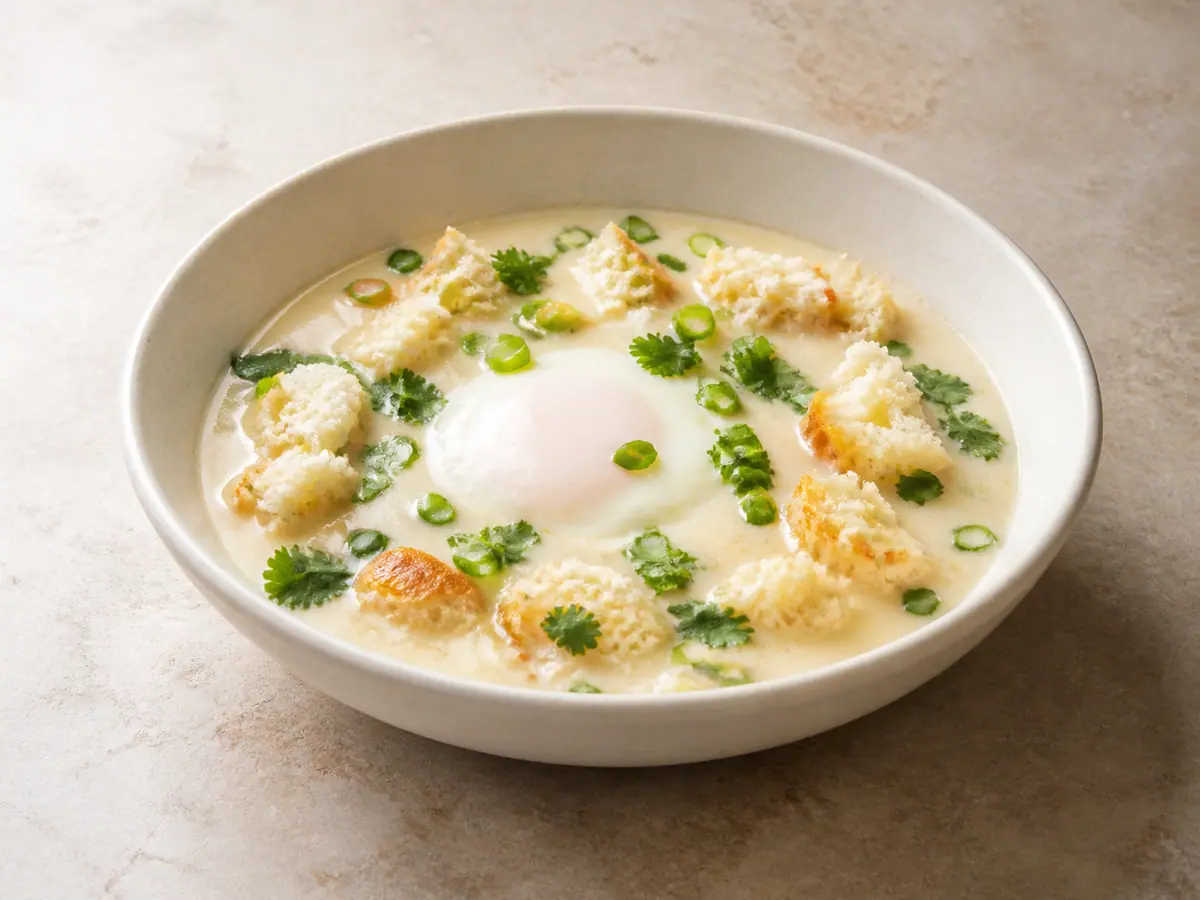
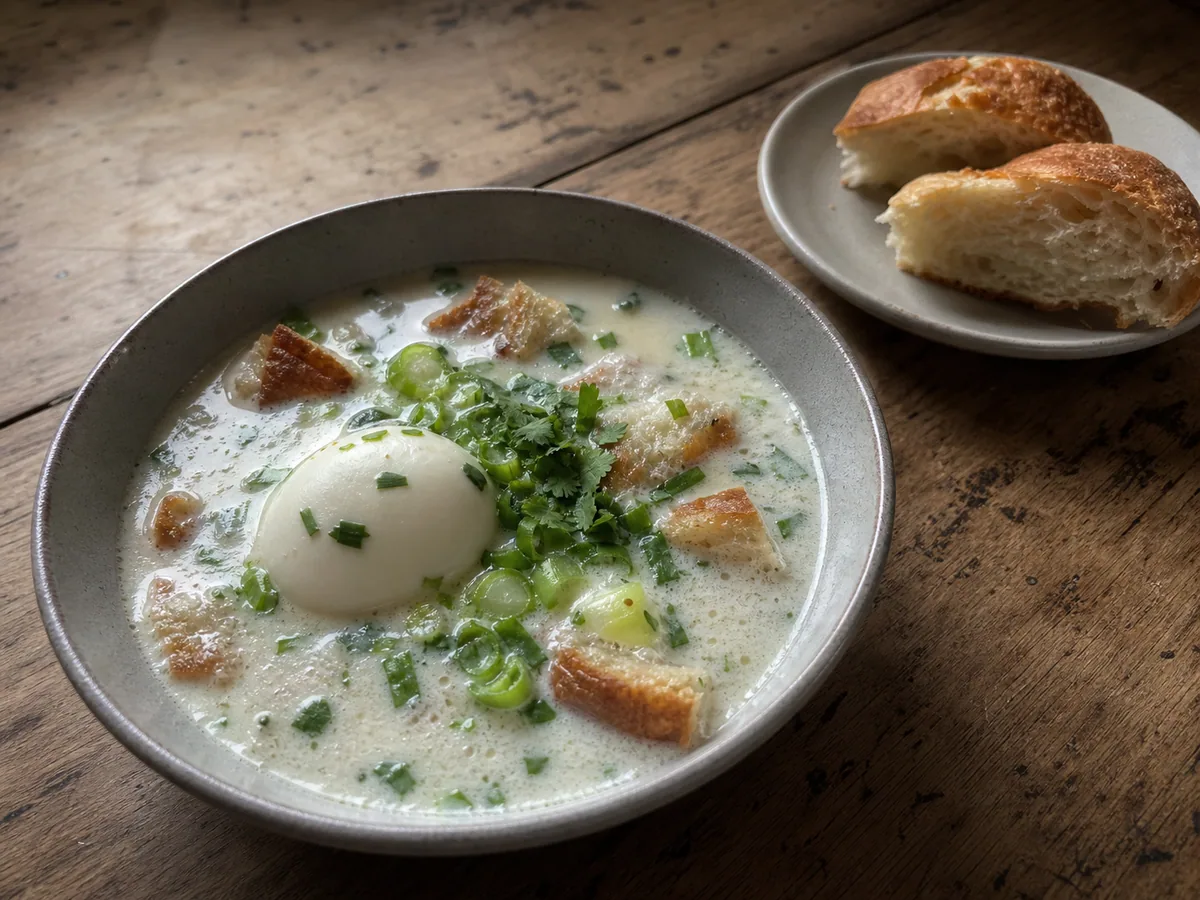
Divide the bread pieces among deep serving bowls. Use a slotted spoon to place one fully cooked egg in each bowl, then ladle in the hot broth. Finish with the reserved scallions and cilantro and serve while the bread still has some structure.


Smart Substitutions
- No whole milk? Use 2% milk for a lighter broth that still has enough body to carry the herbs.
- No crusty bread? Use Colombian calado, a plain bread roll, or a toasted arepa.
- No cilantro? Use flat-leaf parsley, knowing the finished flavor will be less traditional.
- No butter? Use a mild olive oil and keep the heat low while softening the herbs.
Tips and Variations
- Choose a wide saucepan so the eggs can cook in a single layer without touching; for 6 or 8 servings, divide the broth and eggs between two wide saucepans.
- Keep the broth just below a full boil; vigorous heat can make the milk look grainy.
- Add the reserved herbs after ladling so their fresh aroma stays distinct from the cooked broth.
What Went Wrong?
- Milk looks grainy Lower the heat immediately and stir gently. A hard boil is the usual cause.
- Egg whites spread too much Make sure the broth is at a gentle simmer and slide each egg in close to the surface.
- Yolks are still soft Cover and cook for another minute, then verify that the center reaches 71°C/160°F.
- Broth tastes flat Add salt in small pinches, then brighten the bowl with more of the reserved scallions and cilantro.
Nutrition Estimate
- Fiber: 1 g per serving
- Sodium: 728 mg per serving
Nutrition disclaimer:This recipe is provided for general cooking information only. Nutrition values are estimates and may vary by ingredients, brands, preparation methods, and serving sizes. Check ingredient labels and follow appropriate food-safety practices. This content is not medical, dietary, allergy, or professional food-safety advice.
FAQ
Found an error or have a suggestion?
Help us improve this recipe. Send us your feedback and include the recipe name so we can take a look.