Method
Prepare the vegetables
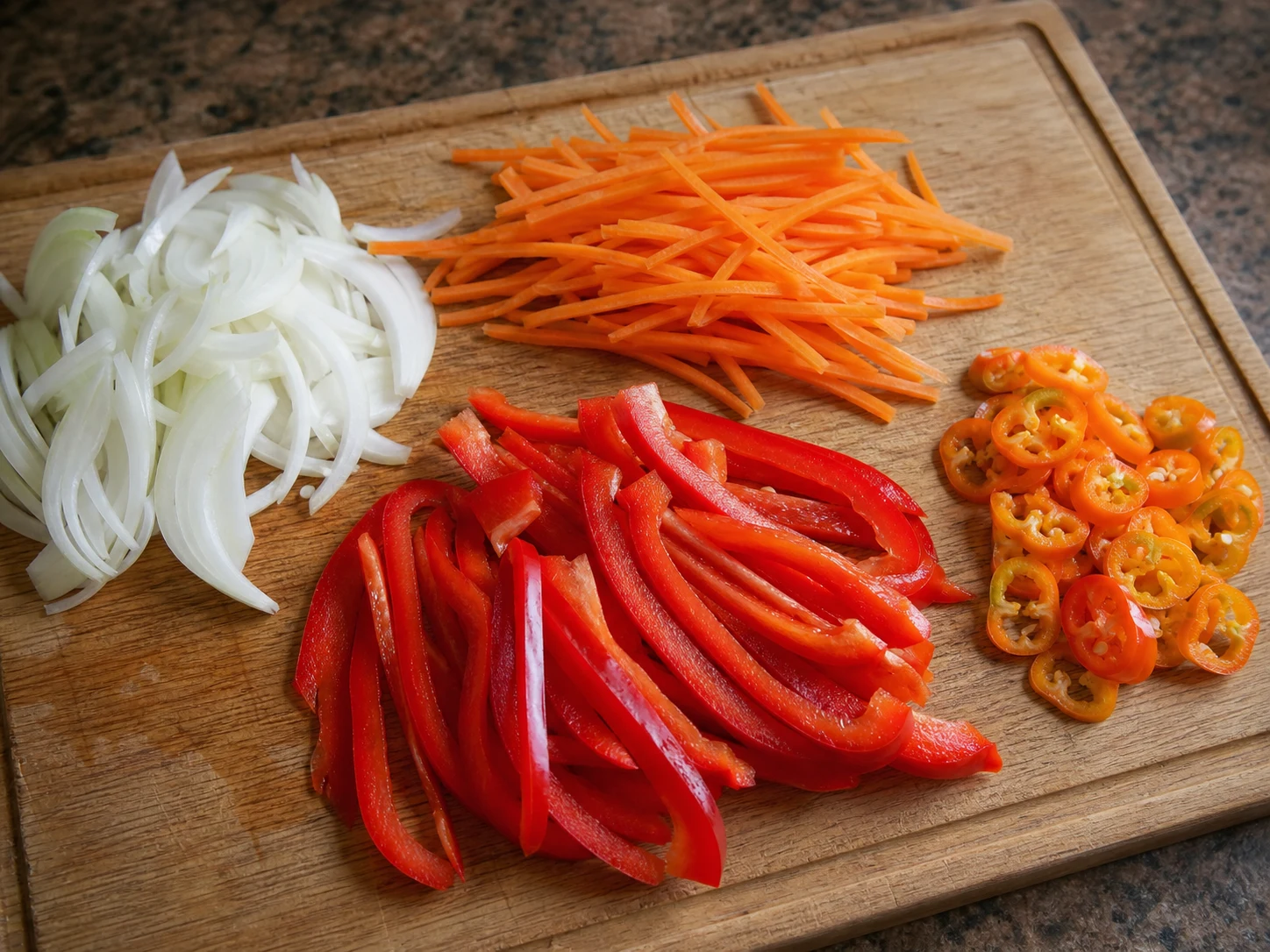
Peel 200 g of yellow onion and cut it into thin arcs. Cut 100 g of carrot into slender matchsticks. Remove the stem and seeds from 150 g of red bell pepper, then cut it into narrow strips. Stem and core 1 Scotch bonnet pepper, scraping out the seeds and pale inner membrane for gentler heat, then slice it crosswise into thin rings. Avoid touching your face while handling the chile, and wash the knife, board, and your hands well afterward.
Season and coat the fish
Pat 680 g of skin-on red snapper fillets thoroughly dry with paper towels and place it on a clean tray used only for raw fish. Squeeze 1 lime over both sides, then season evenly with 5 g of fine sea salt for fish, 2 g of black pepper, and 2 g of ground allspice. Let the fish stand for 10 minutes. Spread 60 g of all-purpose flour in a shallow dish, press each fillet lightly into it, and shake off the excess. Wash your hands and clean any surface or utensil that touched raw fish before continuing.
10:00Fry the first side
Heat 60 ml of neutral oil for frying in a wide heavy skillet over medium-high heat until shimmering but not smoking. Working in batches if the fillets do not fit without touching, lower the fish into the pan skin-side down. Fry without moving for 4 minutes, or until the skin is deep golden at the edges and releases cleanly when nudged with a thin fish turner.
04:00Finish frying the fish
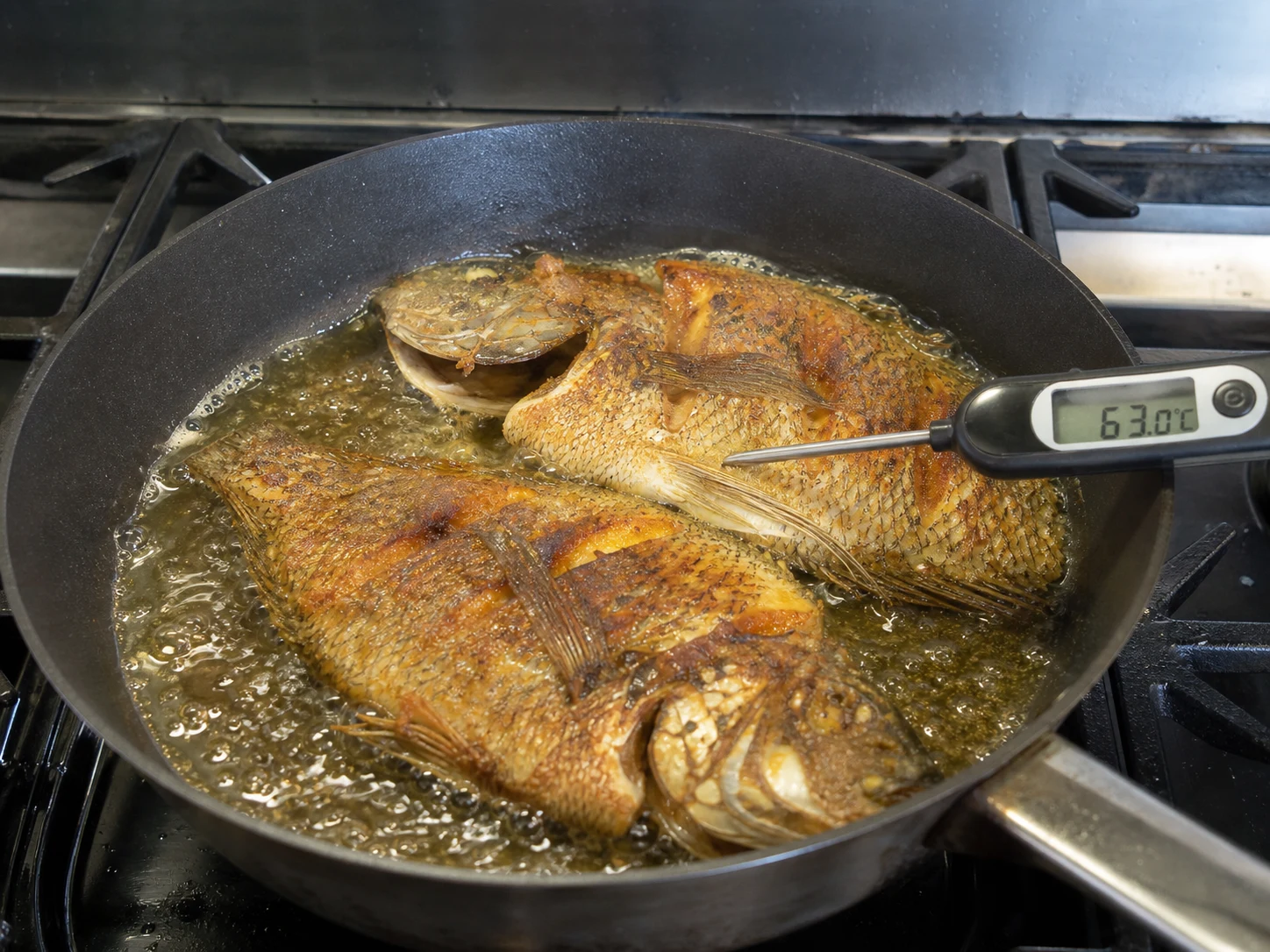
Turn the fillets and cook for 3 to 5 minutes more, checking first at 3 minutes. Insert a food thermometer into the thickest part; the fish is ready at 63°C/145°F, when the flesh is opaque and separates easily with a fork. Using a freshly washed or separate clean fish turner, transfer the fully cooked fillets to a clean serving platter, keeping the clean turner and platter away from raw fish and raw-fish utensils. Repeat with any remaining fish.
03:00Bloom the pickle aromatics
Set a clean skillet over medium heat and add 15 ml of neutral oil for vegetables. Add 8 whole allspice berries, 4 sprigs of fresh thyme, and 1 Scotch bonnet pepper. Cook for 30 seconds, stirring, until the thyme smells fragrant and the chile begins to perfume the oil without browning.
00:30Keep the vegetables crisp
Add 200 g of yellow onion, 100 g of carrot, and 150 g of red bell pepper to the skillet. Toss over medium heat for 2 minutes, just until the onion loses its raw edge while the carrot and pepper remain bright and distinctly crisp.
02:00Simmer the escovitch pickle
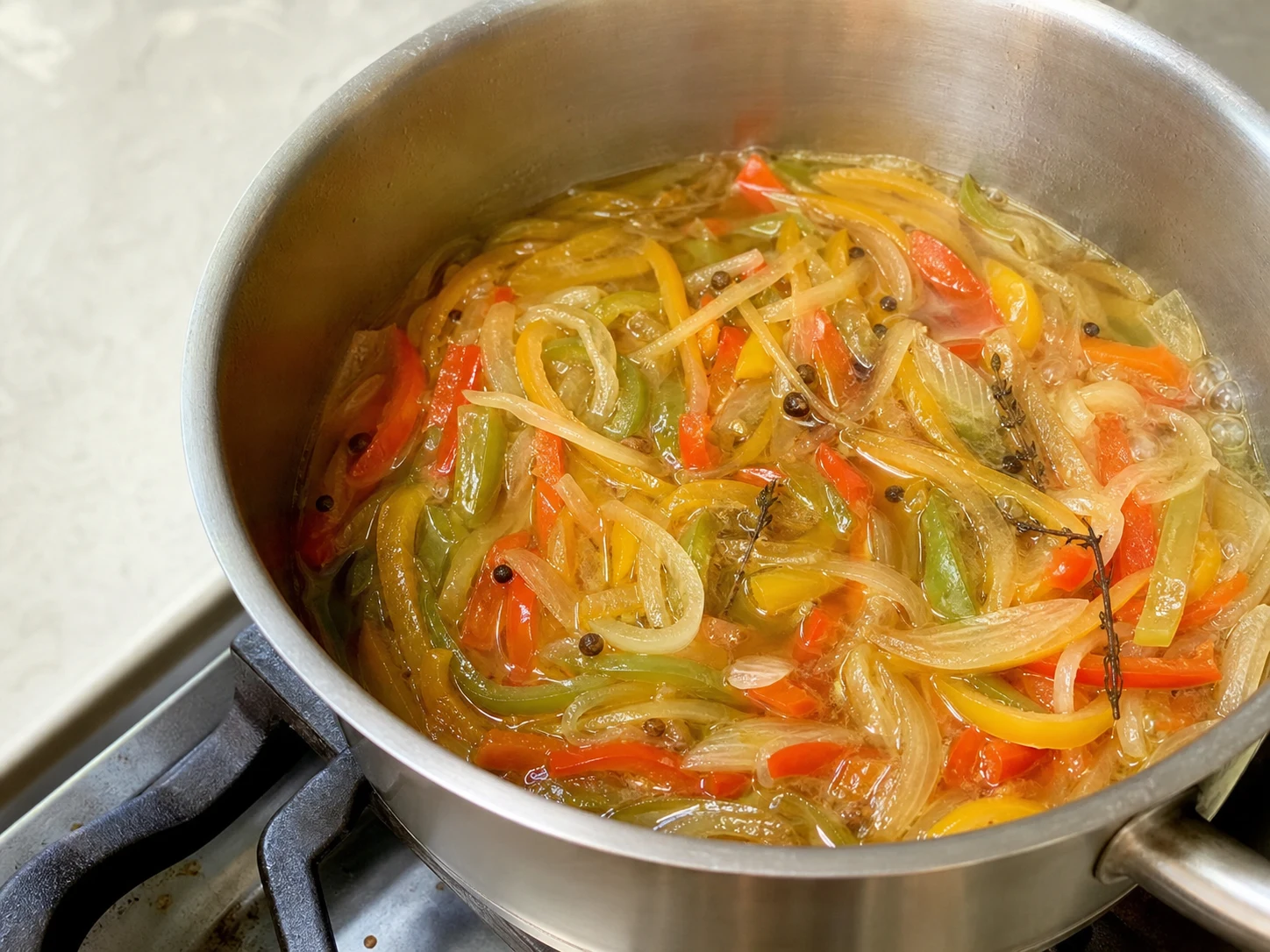
Pour in 240 ml of distilled white vinegar and 120 ml of water, then stir in 10 g of light brown sugar and 3 g of fine sea salt for pickle. Bring the liquid to a lively simmer and cook for 2 minutes, stirring until the sugar and salt dissolve. The vegetables should look glossy and lightly softened but still hold their shape.
02:00Finish with the hot pickle
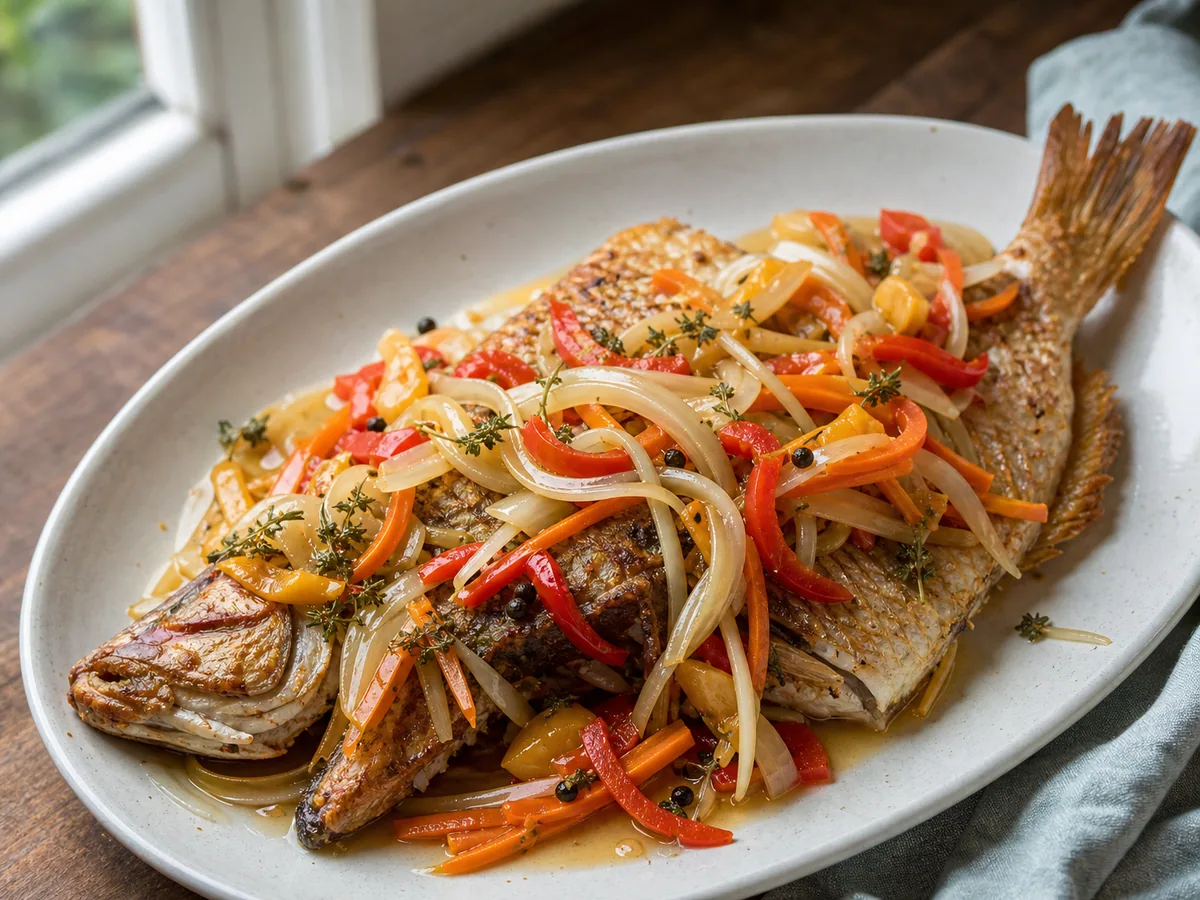
Immediately spoon the hot vegetables across the cooked fish, then pour the spiced vinegar around and over the fillets. Let the platter stand for 5 minutes so the pickle seasons the crust while the vegetables keep their bite. Serve while the fish is still warm.
05:00


Smart Substitutions
- No red snapper? Use skin-on sea bass, porgy, or firm tilapia fillets of similar thickness, and cook them to 63°C/145°F.
- No Scotch bonnet? Use habanero for a similar fruity heat, or use less chile for a gentler pickle.
- Need a wheat-free coating? Replace the all-purpose flour with rice flour or fine cornmeal.
- No distilled white vinegar? Use cane vinegar or unseasoned rice vinegar for a clean, bright pickle.
Tips and Variations
- Cut the vegetables to a similar slender thickness so they soften at the same rate and stay crisp.
- Fry in batches rather than crowding the skillet; a crowded pan cools the oil and softens the coating.
- For more chile aroma with less heat, remove the Scotch bonnet seeds and inner membrane before slicing.
What Went Wrong?
- Coating sticks to the skillet Pat the fish drier, let the oil heat fully, and wait until the crust releases before turning.
- Fish browns before it is cooked through Lower the heat to medium and continue cooking until the thickest part reaches 63°C/145°F.
- Pickle tastes too sharp Simmer for another minute and add a small splash of the measured water to soften the edge.
- Vegetables are limp Cook them more briefly next time and pour in the vinegar while they are still visibly crisp.
Nutrition Estimate
- Fiber: 4 g per serving
- Sodium: 920 mg per serving
Nutrition disclaimer:This recipe is provided for general cooking information only. Nutrition values are estimates and may vary by ingredients, brands, preparation methods, and serving sizes. Check ingredient labels and follow appropriate food-safety practices. This content is not medical, dietary, allergy, or professional food-safety advice.
FAQ
Found an error or have a suggestion?
Help us improve this recipe. Send us your feedback and include the recipe name so we can take a look.