Method
Mix the sticky dough
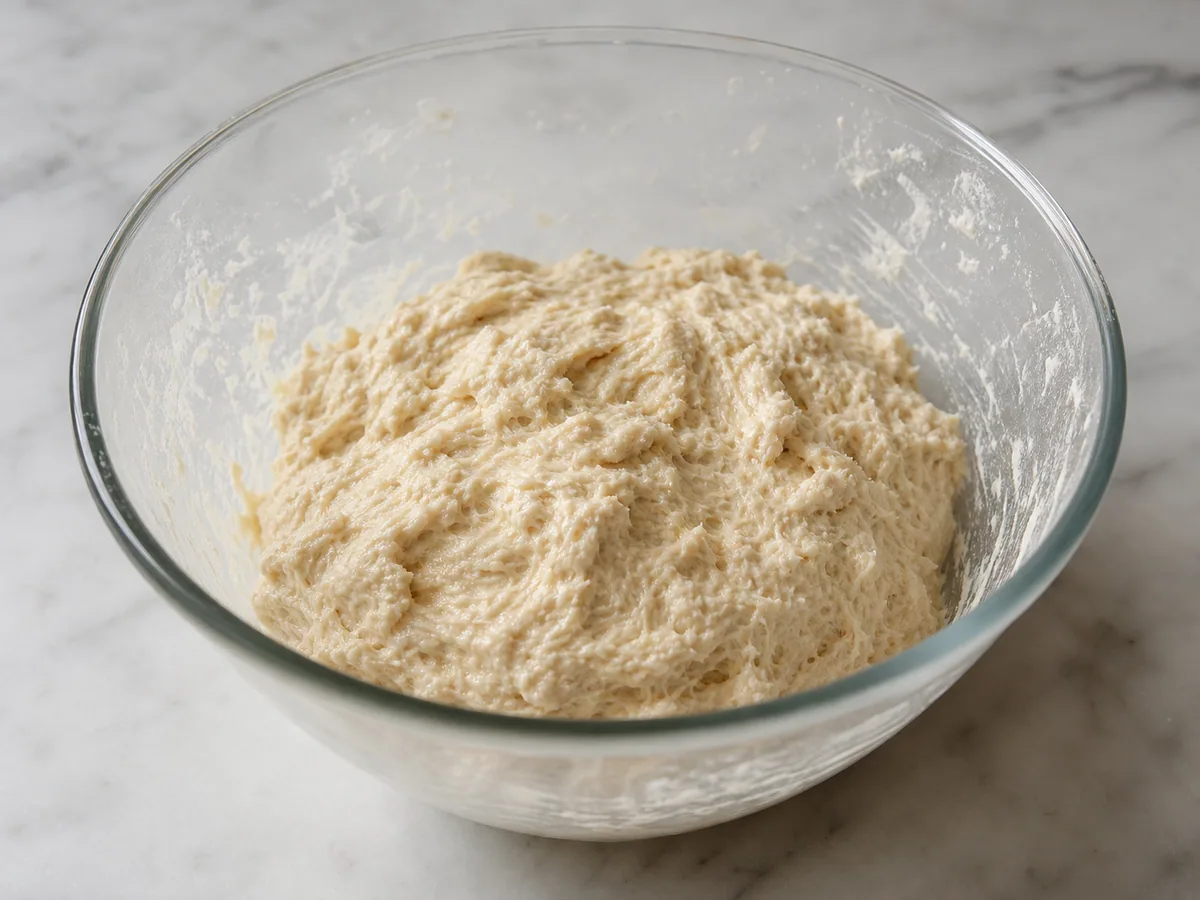
Place 500 g of strong white wheat flour, 7 g of instant yeast, and 8 g of fine sea salt in a large bowl and whisk to distribute evenly. Warm 375 ml of water to 32–38°C (90–100°F), then pour it in with 15 ml of extra virgin olive oil for dough. Stir firmly with a sturdy spoon or wet hand until no dry flour remains; the dough should look shaggy, glossy, and very sticky. Cover and rest for 10 minutes.
10:00Build strength with folds
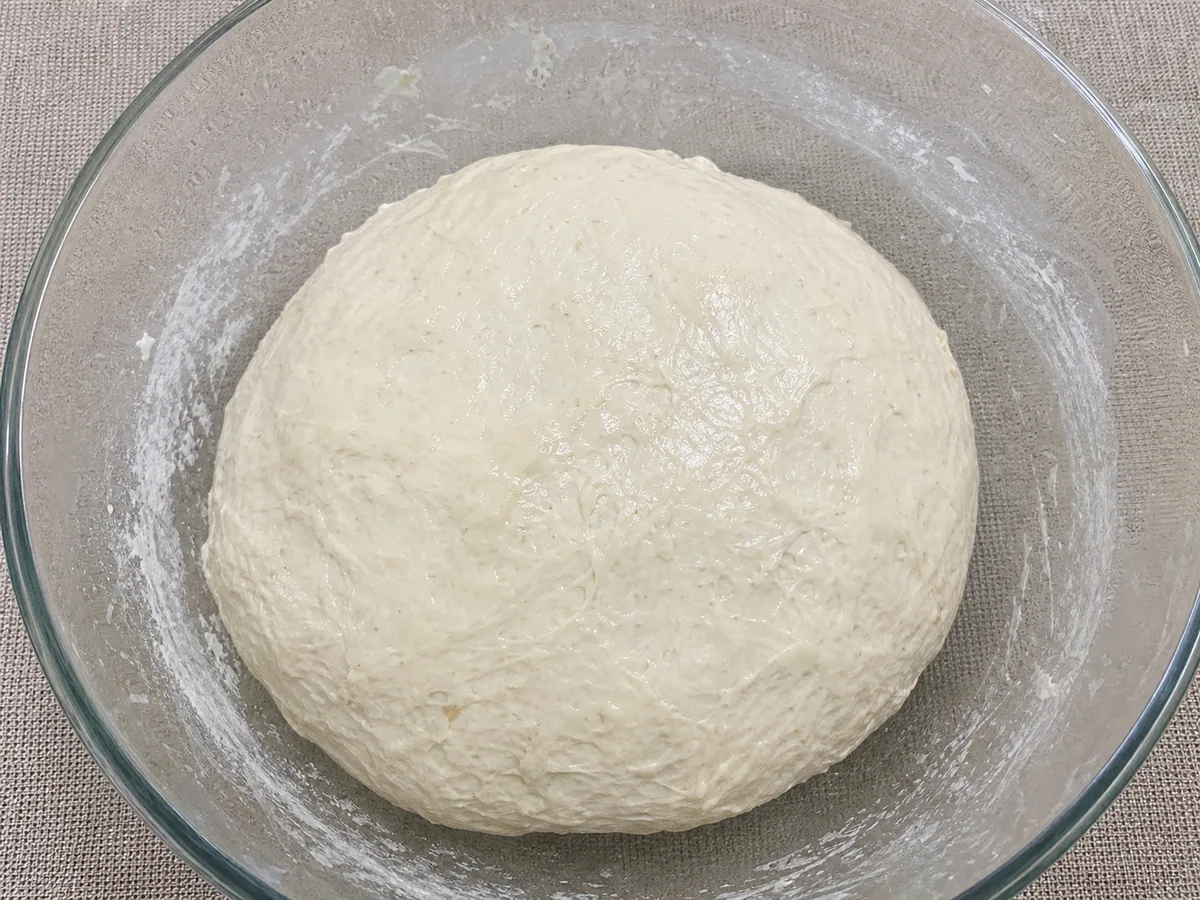
With a wet hand, lift one edge of dough, stretch it upward without tearing, and fold it over the center. Turn the bowl and repeat 6 to 8 times to make a full circuit. Cover and rest for 15 minutes. Repeat this fold-and-rest cycle twice more; after the final fold, the dough should feel smoother and hold a rounded shape.
15:00Let the dough rise
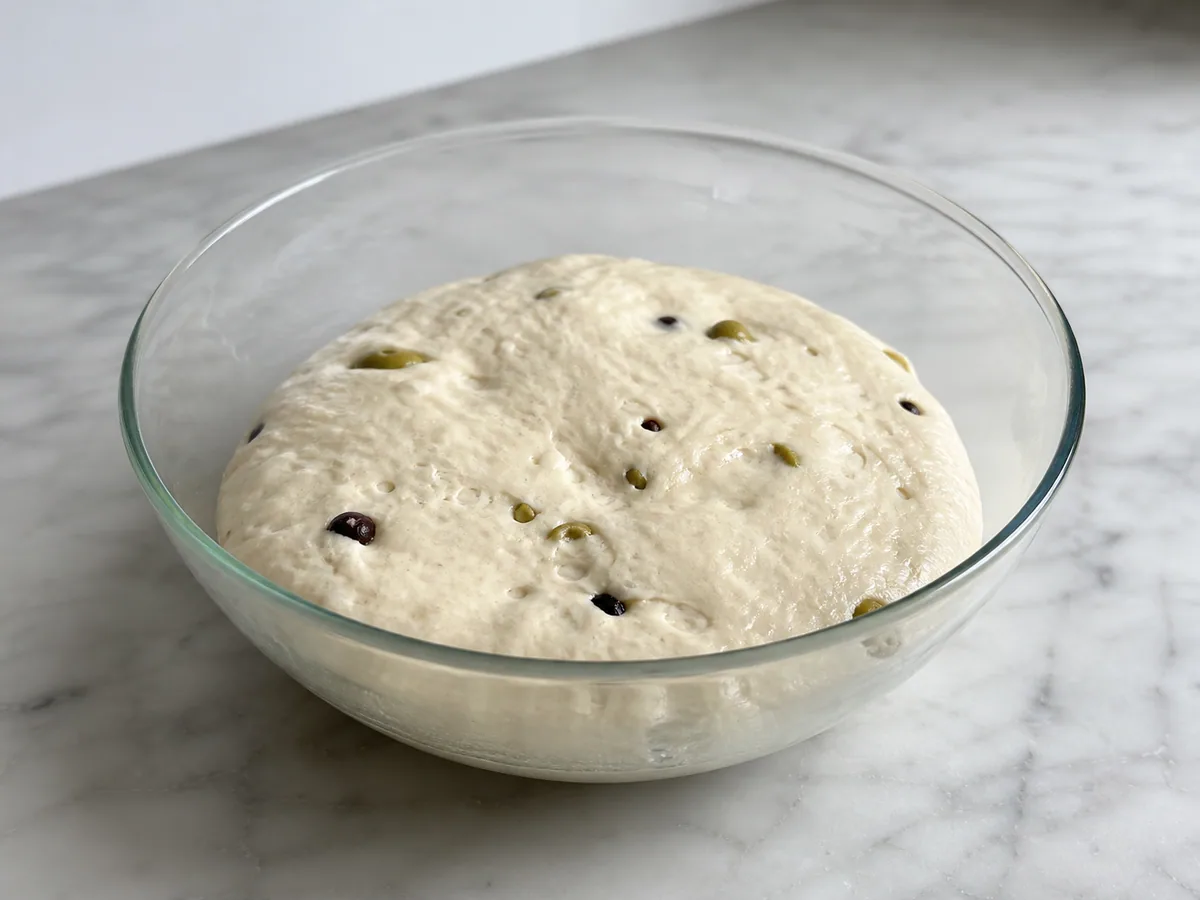
Cover and let the dough rise in a warm, draft-free spot for 60 to 75 minutes, until nearly doubled, bubbly at the edges, and visibly aerated. Begin checking after 60 minutes; a cool room may need the full interval.
1:00:00Oil the pan and stretch the dough
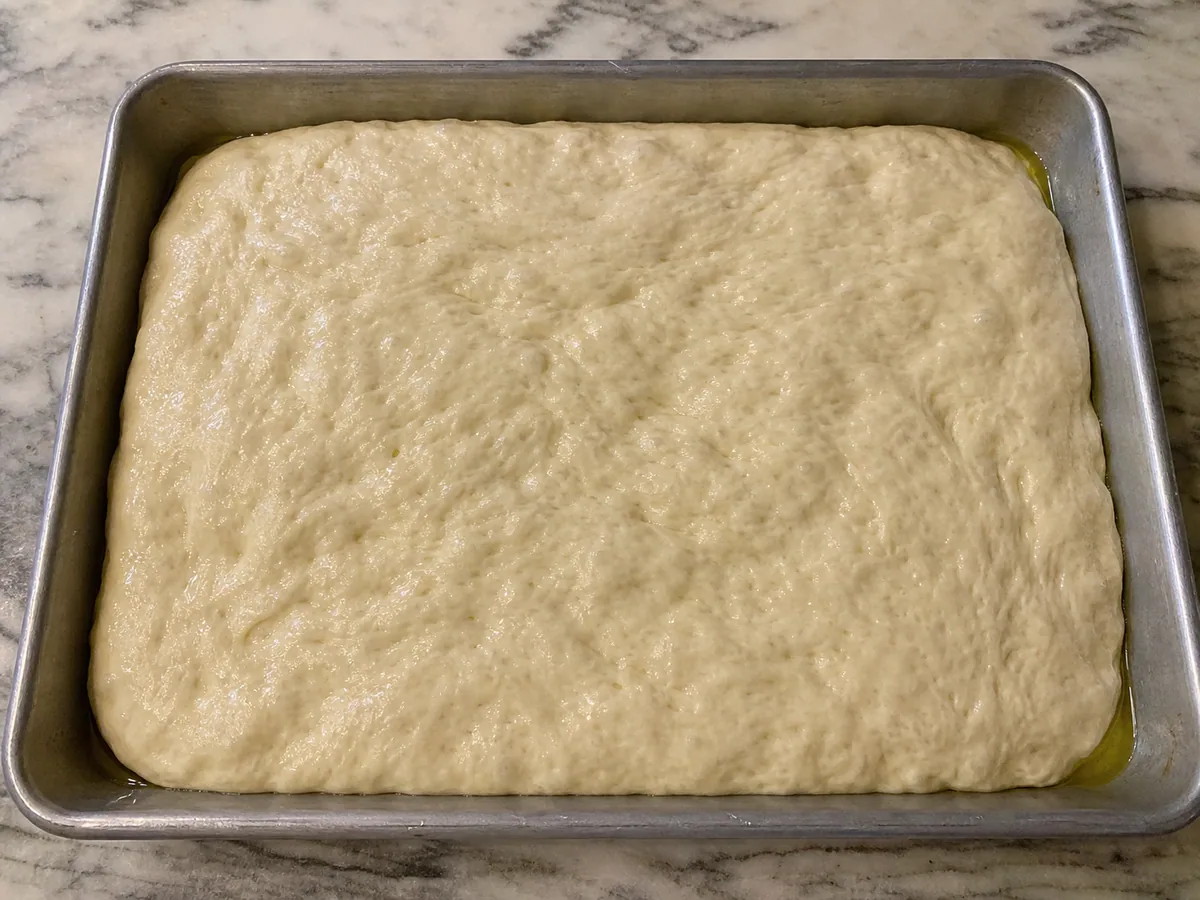
Coat a 23 x 33 cm (9 x 13 in) metal baking pan (for 8 servings) with 30 ml of extra virgin olive oil for pan, reaching the corners and sides. For scaled batches, use a pan that keeps the dough at a similar depth rather than scaling dimensions directly. Ease the dough into the pan and turn it once to coat. Rest for 10 minutes, then gently stretch it toward the corners without forcing.
10:00Proof until puffy
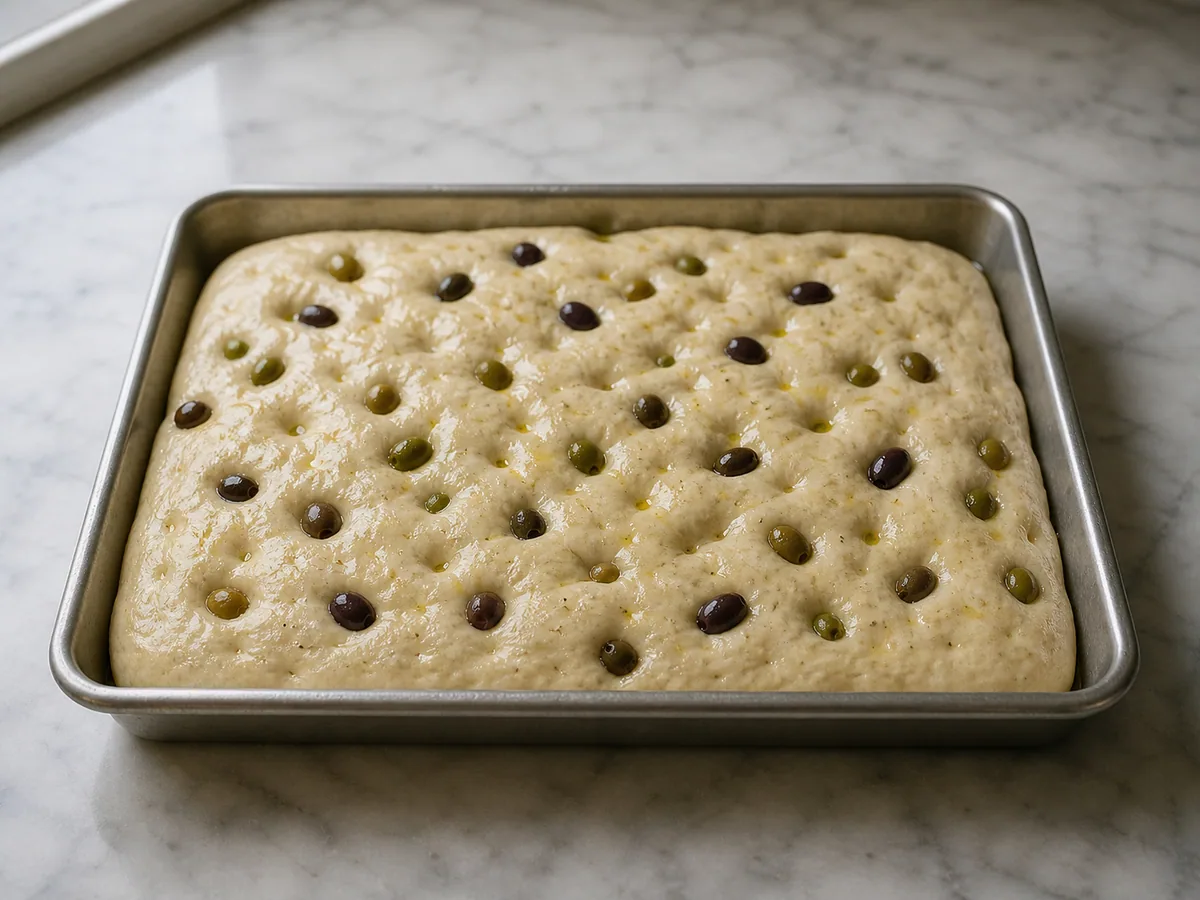
Cover the pan and let the dough rise for 45 to 60 minutes, until puffy, visibly aerated, and softly jiggly when the pan is nudged. While the dough proofs, heat the oven to 220°C (425°F) with a rack in the lower third. Begin checking the dough after 45 minutes; it should be fully proofed and the oven fully preheated before topping.
45:00Dimple and add the olives
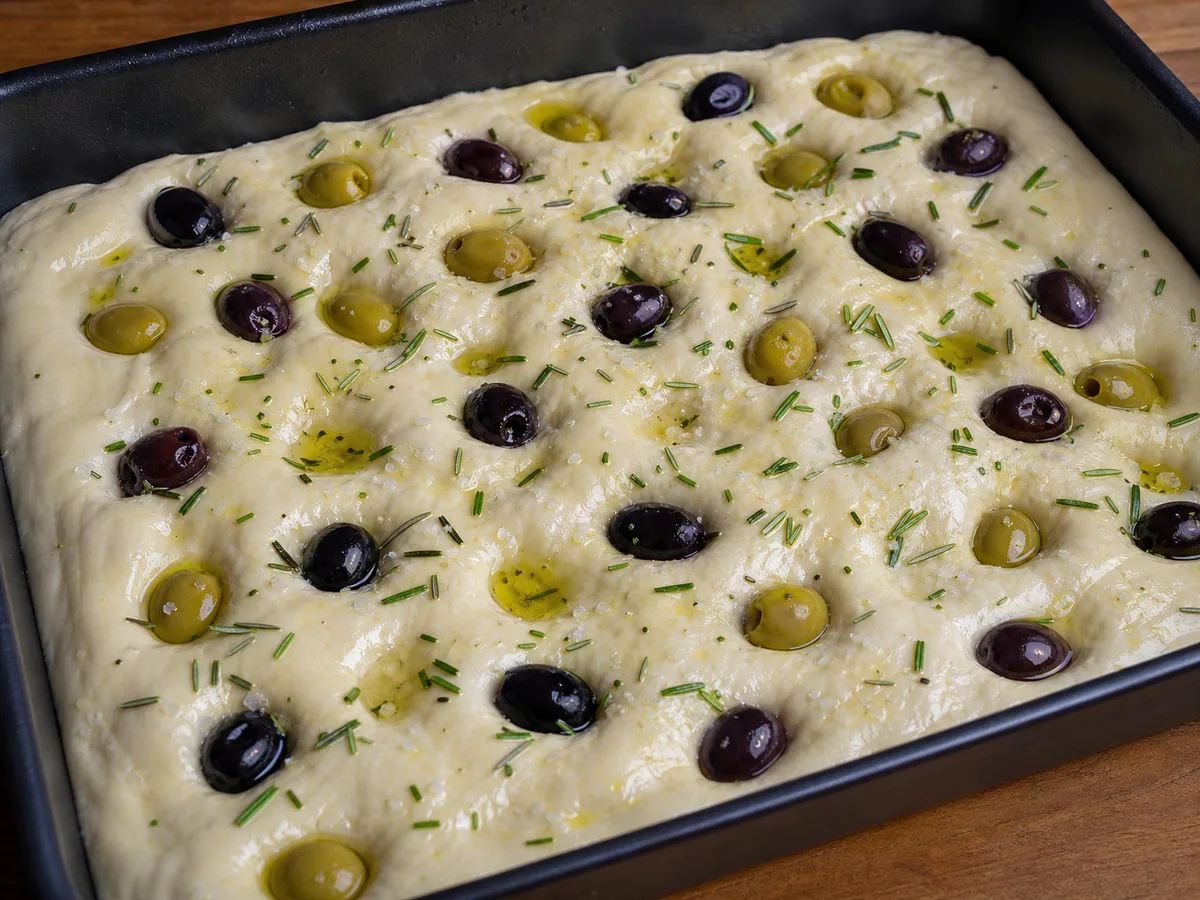
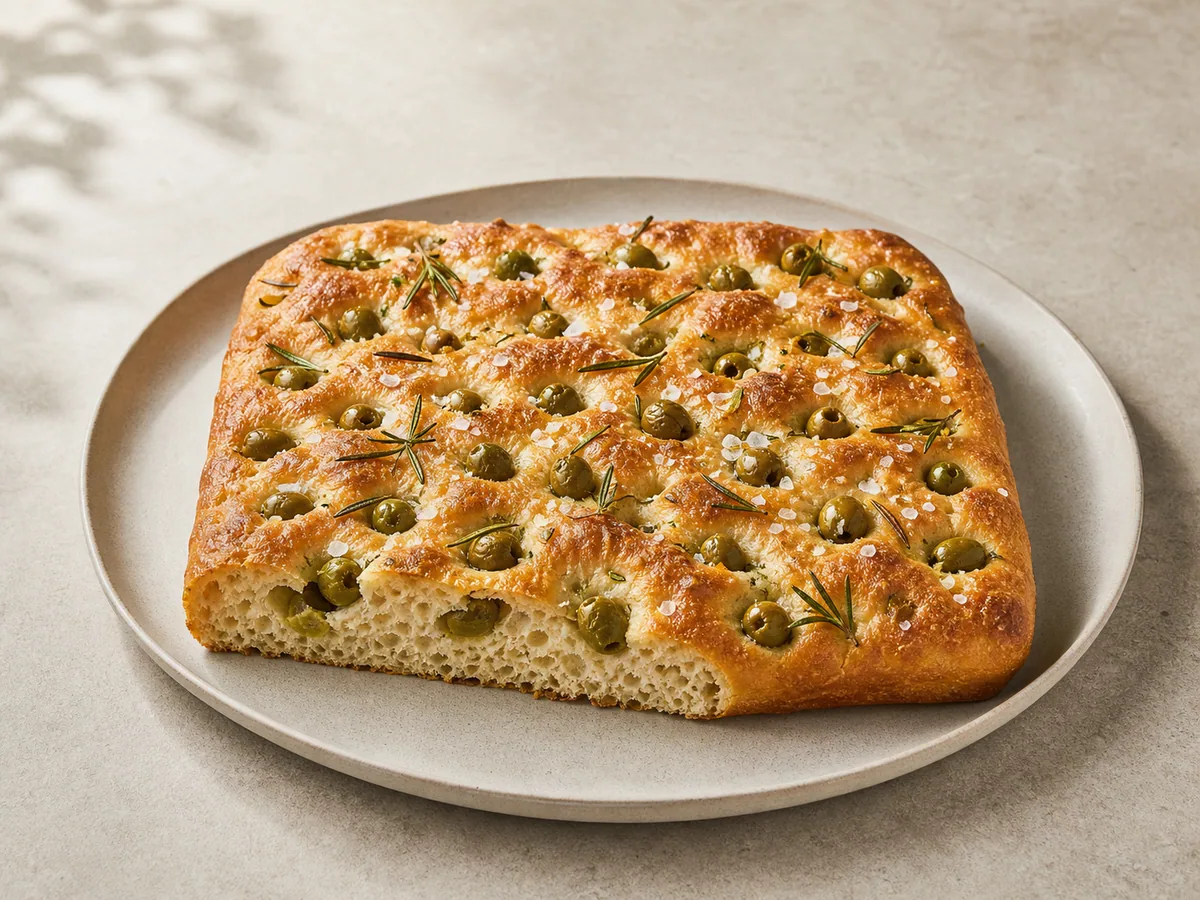
Drain 120 g of pitted green olives thoroughly, pat them dry, and halve any large ones. Chop 5 g of fresh rosemary coarsely. Uncover the dough, oil your fingertips lightly from 30 ml of extra virgin olive oil for topping, and press straight down to make deep dimples. Scatter 120 g of pitted green olives and 5 g of fresh rosemary across the surface, pressing the olives partly into the dough. Drizzle the remaining 30 ml of extra virgin olive oil for topping into the dimples and finish with 2 g of flaky sea salt.
Bake until deeply golden
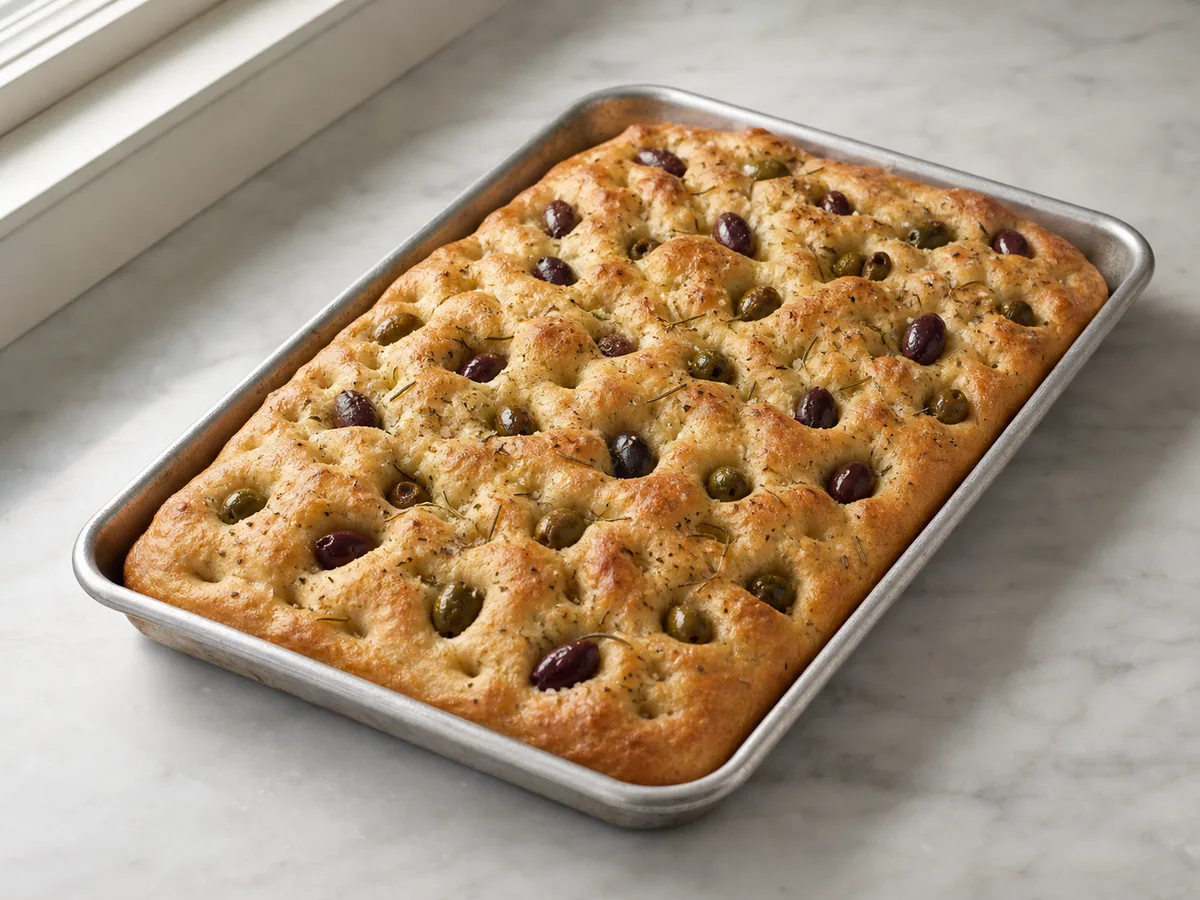
Bake for 22 to 27 minutes, rotating the pan near the end if the oven browns unevenly, until the top is deep golden, the olives are lightly blistered at the edges, and the underside is crisp and browned. Begin checking at 22 minutes. Loosen the edges immediately with a thin spatula and lift the focaccia onto a rack.
22:00Rest, cut, and serve
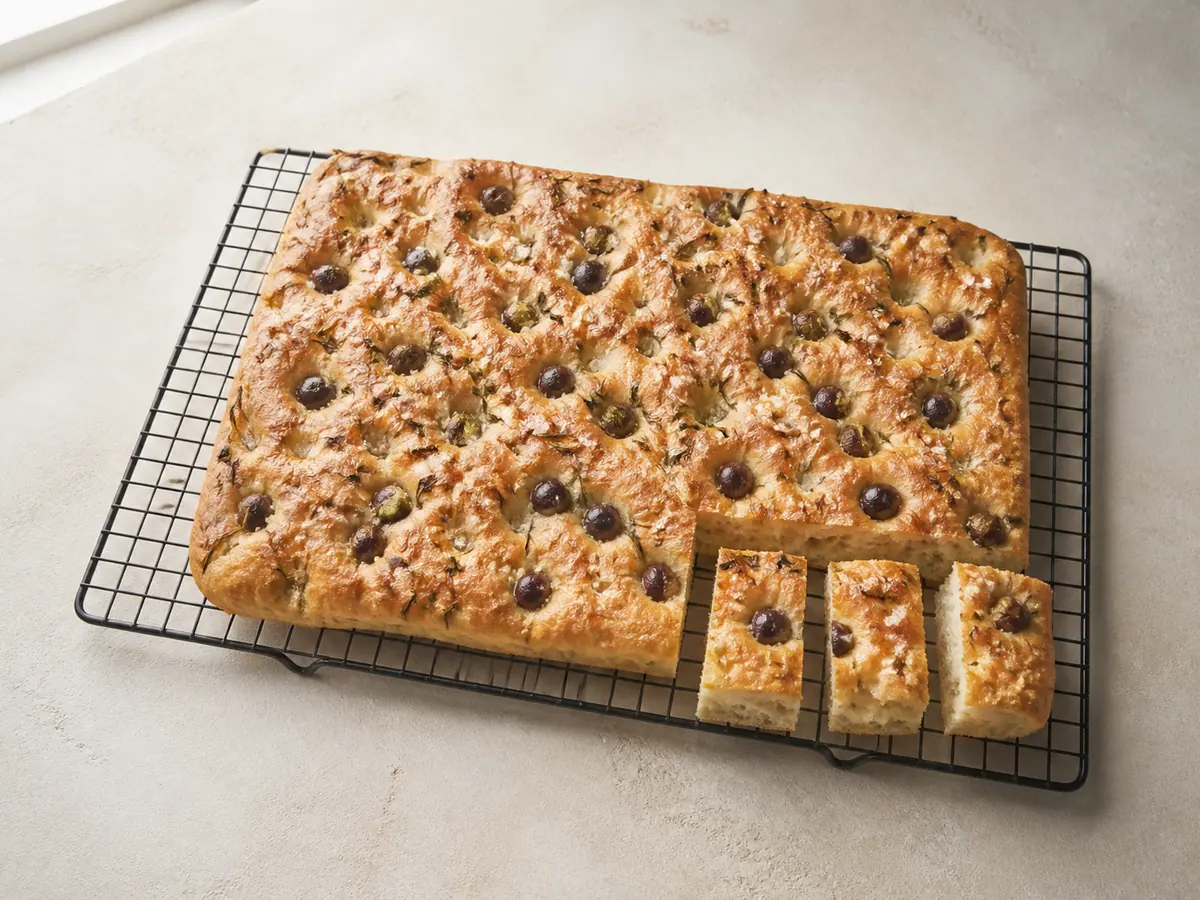
Let the focaccia stand on the rack for 15 minutes so the crumb can set, then cut it into portions and serve warm.
15:00


Smart Substitutions
- No bread flour? Use all-purpose flour and add the water gradually, stopping when the dough is sticky but still cohesive.
- Prefer black olives? Use firm drained black olives or a mixed olive blend, and pat them dry before topping the dough.
- No fresh rosemary? Use fresh thyme or a light scattering of dried oregano for a different herbal note.
- No instant yeast? Use the same weight of active dry yeast and stir it into the warm water before mixing the dough.
Tips and Variations
- Wet your hand before every fold so the dough stretches cleanly instead of clinging to your fingers.
- Use a metal pan for stronger bottom browning and spread the oil all the way into the corners.
- Dry the olives well so excess brine does not collect in the dimples or soften the surface.
What Went Wrong?
- Dough spreads flat after folding Give it the full set of folds and judge the rise by bubbles and volume rather than the clock alone.
- Dough springs back in the pan Stop stretching and let it rest for 10 minutes, then ease it toward the corners again.
- Top browns before the base Keep the pan in the lower third of the oven and use metal bakeware rather than glass.
- Wet patches form around the olives Drain and pat the olives thoroughly dry, then press them only partway into the dough.
Nutrition Estimate
- Fiber: 2.4 g per serving
- Sodium: 715 mg per serving
Nutrition disclaimer:This recipe is provided for general cooking information only. Nutrition values are estimates and may vary by ingredients, brands, preparation methods, and serving sizes. Check ingredient labels and follow appropriate food-safety practices. This content is not medical, dietary, allergy, or professional food-safety advice.
FAQ
Found an error or have a suggestion?
Help us improve this recipe. Send us your feedback and include the recipe name so we can take a look.