Method
Blend the epis and season the pork
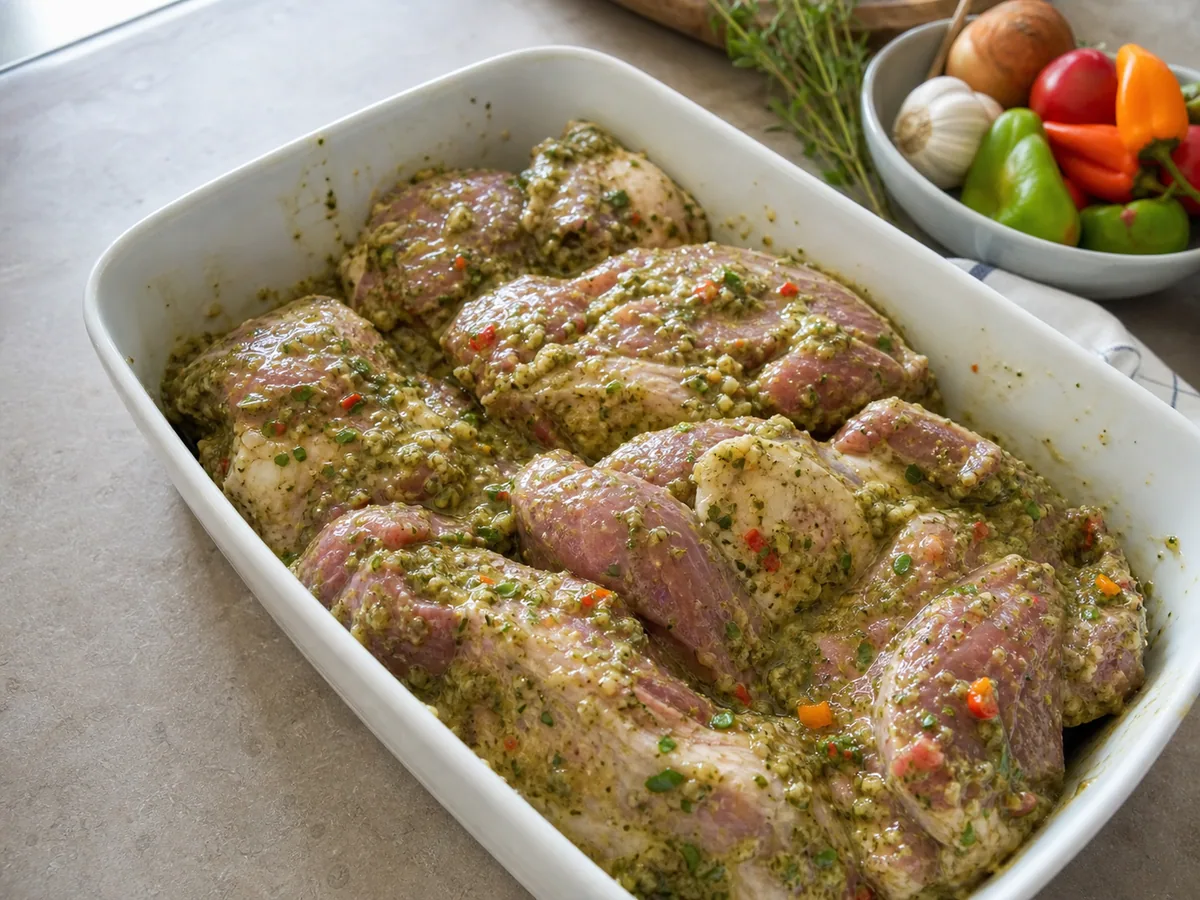
Heat the oven to 190°C (375°F). Strip the leaves from 8 g of fresh thyme. Blend 180 ml of sour orange juice, 30 ml of white vinegar for pork, 120 g of green bell pepper, 150 g of yellow onion, 60 g of scallions, 18 g of garlic cloves, 25 g of fresh parsley, the thyme leaves, 1 Scotch bonnet chile for pork, 30 ml of olive oil, 7 g of kosher salt for pork, 2 g of black pepper, and 1 g of ground allspice into a coarse, spoonable epis. Cut 900 g of boneless pork shoulder into 5 cm (2 in) chunks on a dedicated board. Put the pieces in a nonreactive roasting dish large enough to hold them in a snug single layer; for a scaled batch, use a wider dish or a second dish so the depth stays similar. Pour the epis over the pork and turn with tongs until every piece is coated. Let stand for 30 minutes. Wash hands, tongs, the knife, the board, and every surface that touched raw pork before continuing.
30:00Roast the pork until tender
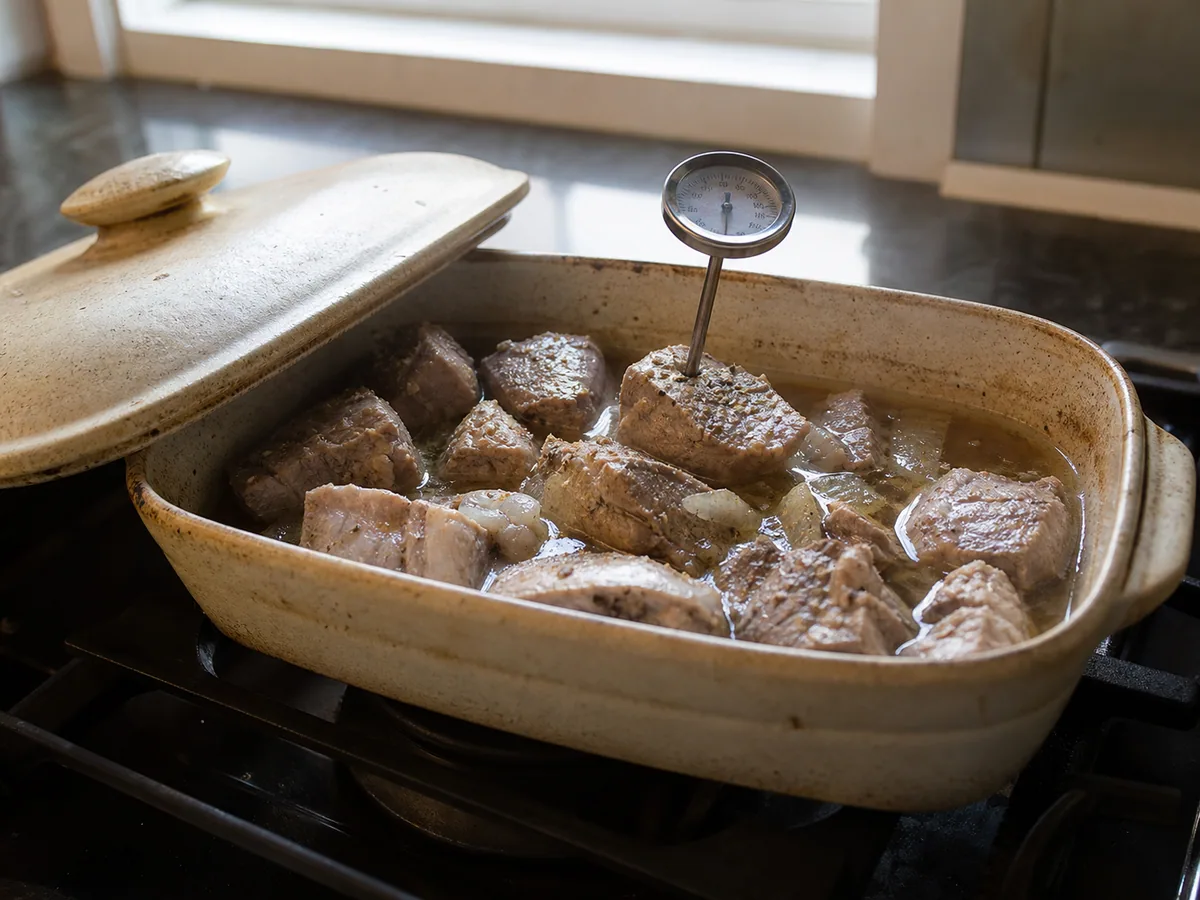
Pour 120 ml of water around the pork without washing the seasoning from the top. Cover the dish tightly with a lid or foil and roast for 80 minutes, turning the pieces once near the halfway point. Check the largest pieces with a clean food thermometer; they must reach at least 63°C/145°F before the cover is removed for the next stage. If they are below that temperature, re-cover and continue roasting in 10-minute increments. At the end of this stage, a fork should enter the pork with little resistance, but the edges will still look pale rather than crisp.
1:20:00Mix the quick pikliz
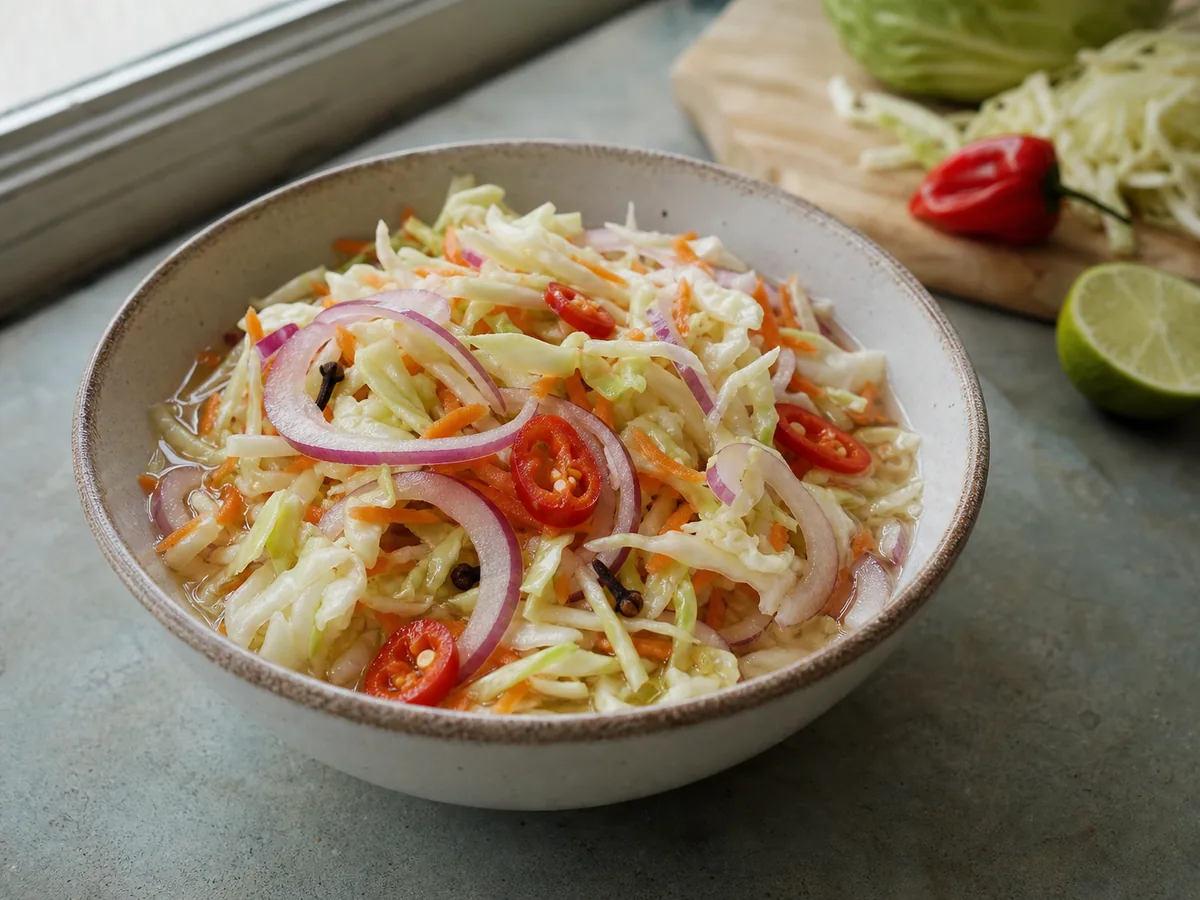
While the pork roasts and only after the raw-meat area has been cleaned, thinly slice 420 g of green cabbage, grate 120 g of carrots, and thinly slice 100 g of red onion. Stem 1 Scotch bonnet chile for pikliz and cut it into very thin rings; wear gloves and avoid touching your eyes. Toss the vegetables and chile with 180 ml of white vinegar for pikliz, 60 ml of lime juice for pikliz, 4 whole cloves, and 3 g of kosher salt for pikliz in a nonreactive bowl. Press the vegetables into the brine and let the quick pikliz stand for 30 minutes, tossing once or twice, until the vegetables remain crisp but begin to soften at the edges.
30:00Brown the pork and reduce the juices
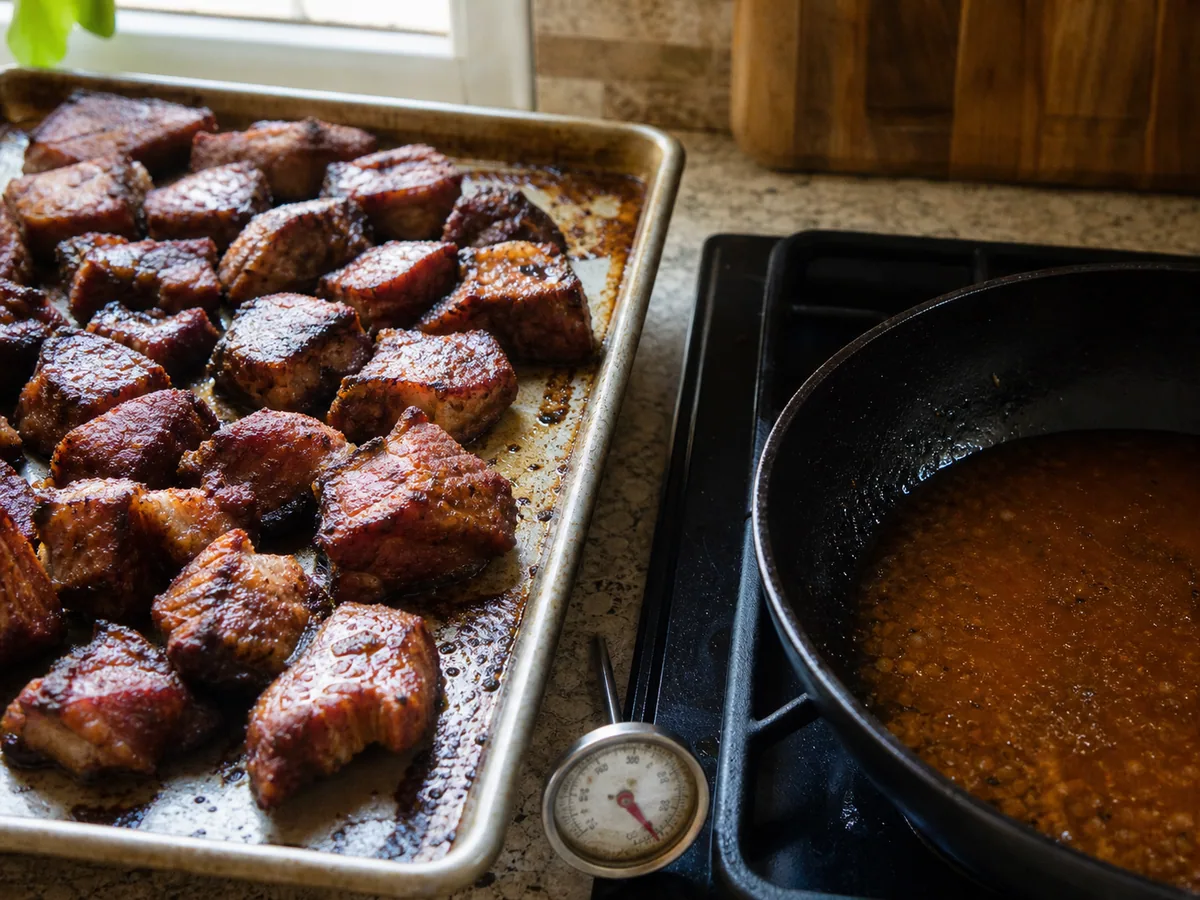
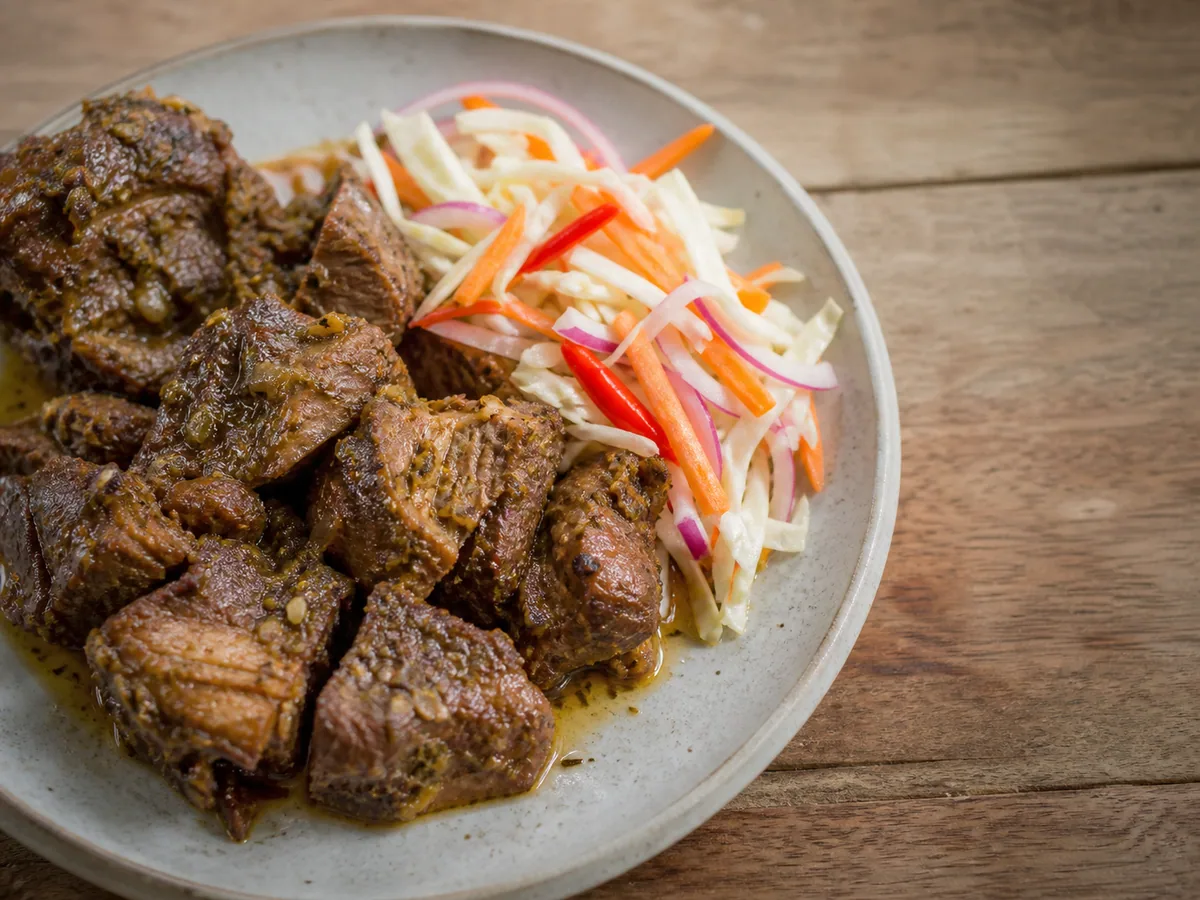
Remove the cover and transfer the pork with clean tongs to a rimmed baking sheet, arranging the pieces in a single layer with space between them. Pour the pan juices into a wide skillet. Increase the oven to 230°C (450°F) and roast the pork uncovered for 20 to 25 minutes, turning the pieces once and beginning to check at 20 minutes. While the pork browns, simmer the pan juices over medium-high heat for 8 to 12 minutes, stirring often, until they reduce to a glossy coating. Brush or spoon the reduced juices over the pork during the final 5 minutes. The edges should be deeply browned with a few crisp corners. Insert a clean food thermometer into the largest pieces: pork must be at least 63°C/145°F and should reach 88-93°C (190-200°F) for the fork-tender texture expected from shoulder. If the pork is tender but pale, move the sheet closer to the top heat for the final few minutes and watch closely so the coating does not scorch.
20:00Rest and serve
Rest the pork for 5 minutes. Toss the quick pikliz again, then lift it from the brine with a clean fork or slotted spoon so it stays crisp rather than soupy. Spoon any remaining reduced roasting juices over the pork and serve immediately with the quick pikliz alongside.
05:00


Smart Substitutions
- No sour orange juice? Use two parts orange juice and one part lime juice for a similar bitter-bright balance.
- No Scotch bonnet? Use habanero for comparable fruitiness and heat, or use less chile for a milder plate.
- No fresh thyme? Use dried thyme sparingly; its flavor is more concentrated than fresh leaves.
- Which pork cut? Pork butt or boneless picnic shoulder both work; choose a well-marbled shoulder cut rather than lean loin.
Tips and Variations
- Cut the pork into even 5 cm (2 in) pieces so the centers tenderize at the same pace.
- Wear gloves when cutting Scotch bonnet chiles, and keep the ready-to-eat quick pikliz away from utensils or surfaces used for raw pork.
- Brush the pork with the reduced citrus-herb juices during the final 5 minutes so the coating darkens without scorching.
What Went Wrong?
- Pork is still tough Cover the dish again, add a small splash of 120 ml of water, and roast until a fork enters easily before starting the browning stage.
- Pork will not brown Spread the pieces on the rimmed baking sheet with space between them, reduce the juices separately until glossy, and continue at 230°C (450°F) near the top of the oven while watching closely.
- Quick pikliz is too hot Remove visible chile rings and fold in more 420 g of green cabbage or 120 g of carrots to spread the heat through a larger volume.
- Quick pikliz tastes too sharp Drain off a little brine and toss the vegetables thoroughly; the pork juices will soften the acidity on the plate.
Nutrition Estimate
- Fiber: 5 g per serving
- Sodium: 785 mg per serving
Nutrition disclaimer:This recipe is provided for general cooking information only. Nutrition values are estimates and may vary by ingredients, brands, preparation methods, and serving sizes. Check ingredient labels and follow appropriate food-safety practices. This content is not medical, dietary, allergy, or professional food-safety advice.
FAQ
Found an error or have a suggestion?
Help us improve this recipe. Send us your feedback and include the recipe name so we can take a look.