Method
Rinse and toast the sorghum
Rinse 200 g of whole-grain sorghum in a fine-mesh strainer under cool running water, then shake off as much water as possible. Melt 14 g of unsalted butter for sorghum in a medium heavy saucepan over medium heat. Add the drained grains and cook for about 3 minutes, stirring often, until they smell lightly toasted and the pan looks dry.
03:00Cook the sorghum until tender
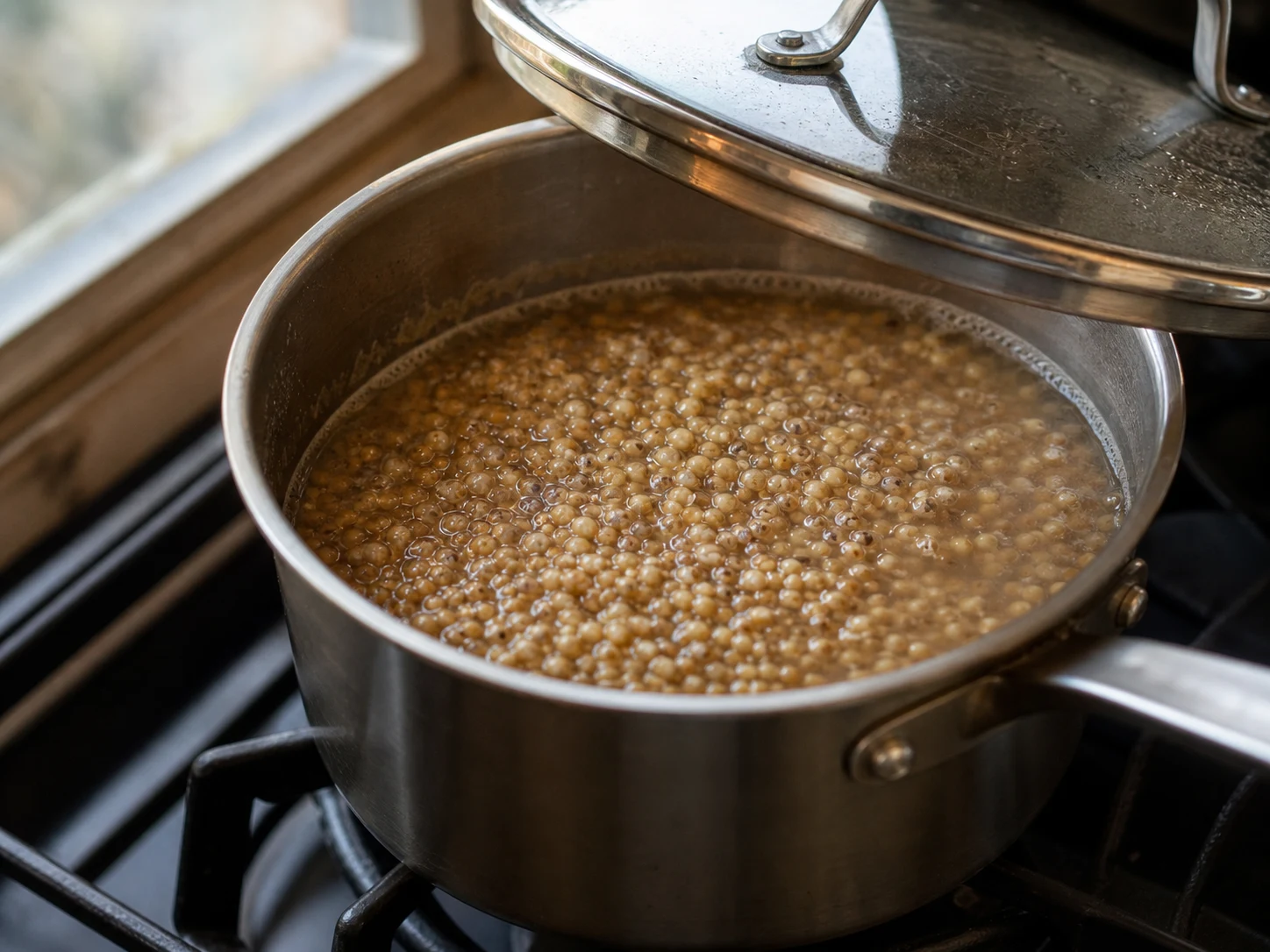
Carefully add 960 ml of water and 1 1/2 g of kosher salt; the pot may steam sharply. Bring to a full boil, then reduce the heat to maintain a gentle simmer and cover with the lid slightly ajar. Cook for 45 to 55 minutes, stirring once or twice, until the kernels are swollen and tender with a pleasant chew. Begin checking at 45 minutes. If the center is still hard, add a small splash of hot water and continue simmering. Drain only if more than a spoonful of liquid remains.
45:00Cut and soften the pears
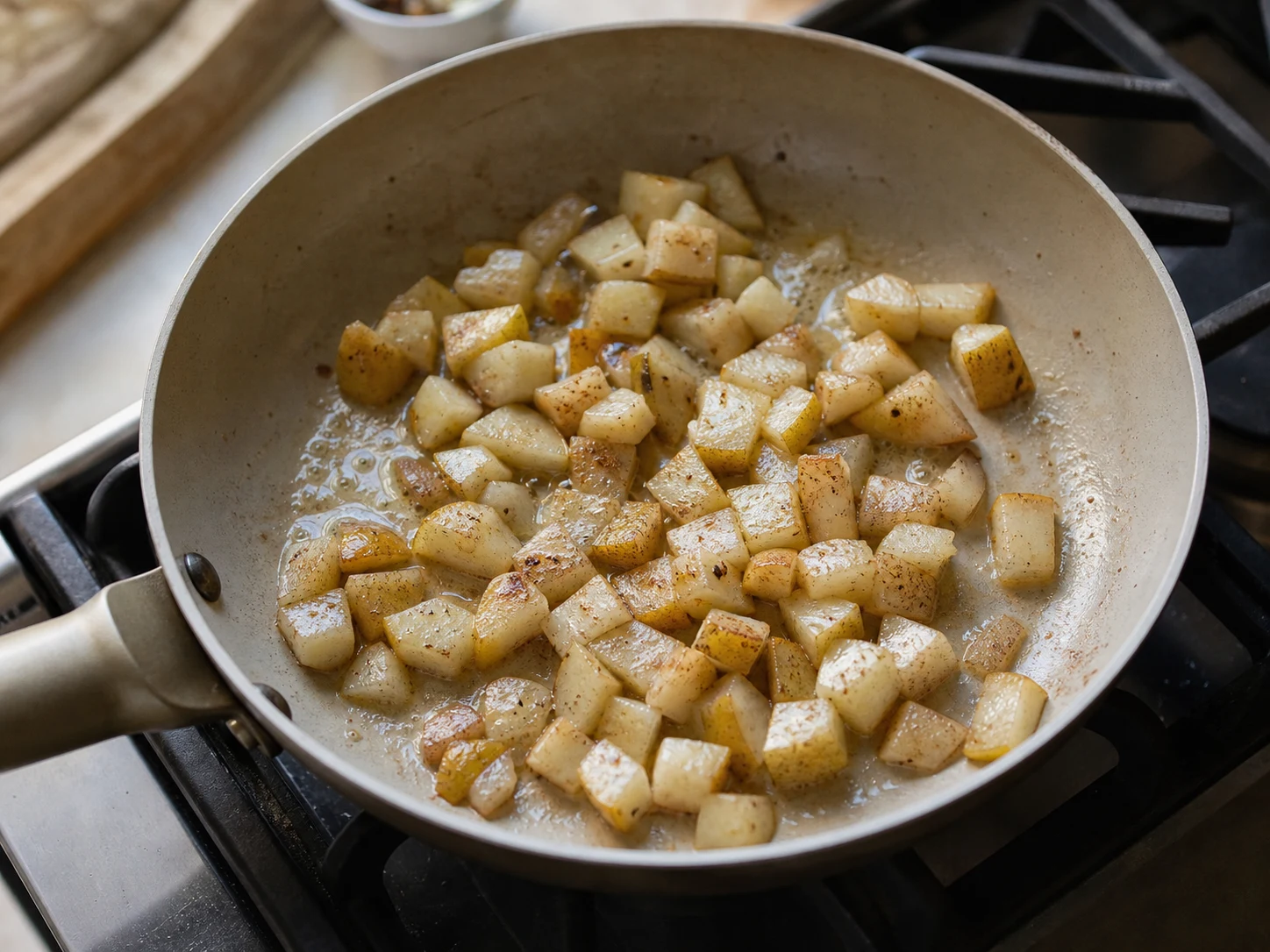
While the sorghum finishes cooking, core 360 g of firm-ripe pears and cut them into 1.25 cm (1/2 inch) pieces. Melt 14 g of unsalted butter for pears in a large skillet over medium heat. Add the pear pieces, 3 g of ground cinnamon, and 1/2 g of ground cardamom. Cook for 4 to 6 minutes, stirring occasionally, until the edges look translucent but the pieces still hold their shape. Begin checking at 4 minutes.
04:00Glaze the pears with maple
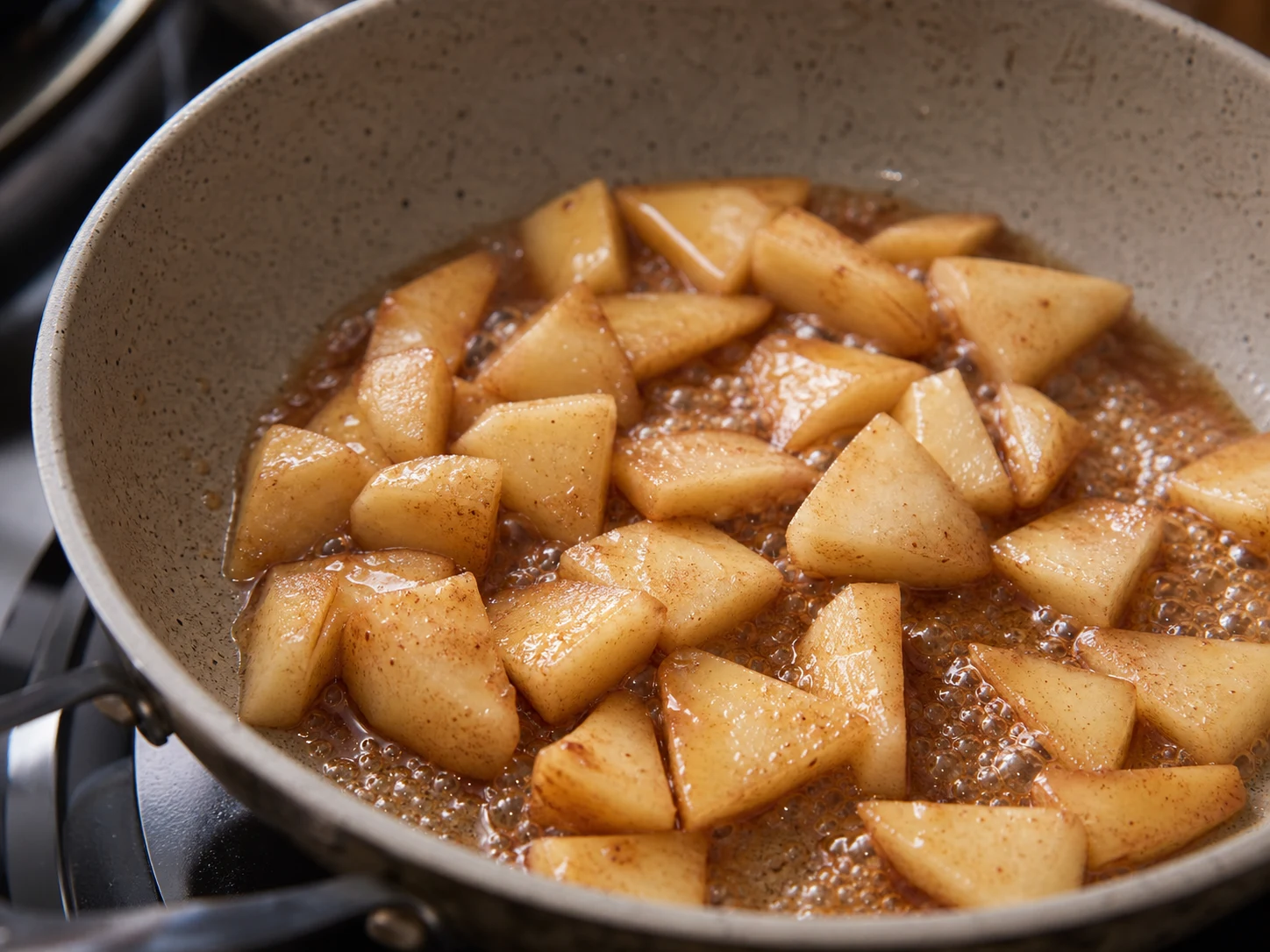
Drizzle 45 ml of pure maple syrup over the pears and raise the heat to medium-high. Cook for 1 to 2 minutes, stirring gently, until the syrup bubbles briskly and forms a thin, shiny coating around the fruit. Begin checking after 1 minute and remove the skillet from the heat before the maple darkens.
01:00Finish the pilaf and serve
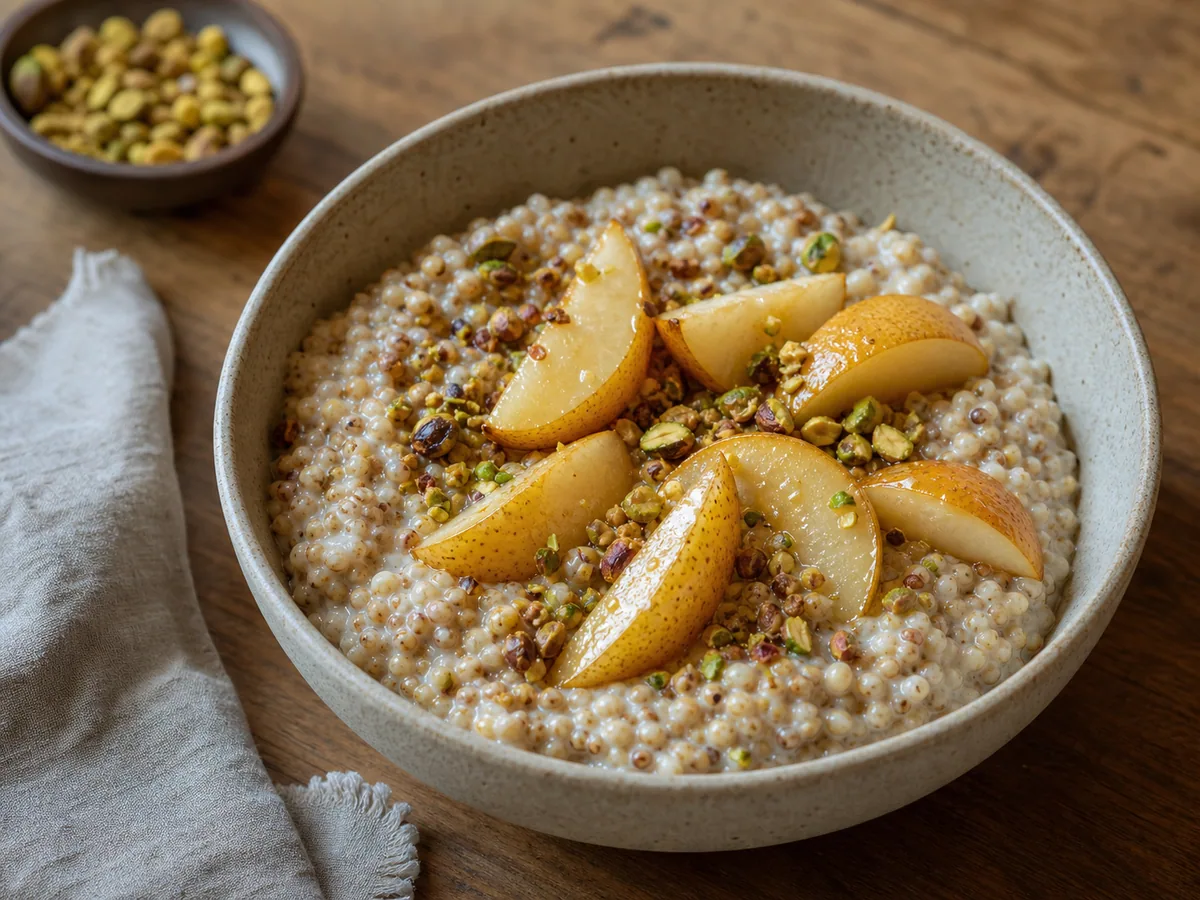
Set the cooked sorghum over medium-low heat. Stir in 240 ml of whole milk and 5 ml of vanilla extract, then cook for 3 to 5 minutes, stirring often, until the mixture is hot and lightly creamy while the grains remain distinct. Begin checking at 3 minutes. Divide the pilaf among warm bowls, spoon the maple-glazed pears over the top, and finish with 40 g of roasted unsalted pistachios. Serve immediately.
03:00


Smart Substitutions
- No whole milk? Use unsweetened oat milk for a similarly rounded finish, or unsweetened almond milk for a lighter one.
- No pistachios? Use chopped pecans, walnuts, or toasted pumpkin seeds for a crisp topping.
- No maple syrup? Use mild honey or light brown sugar, adding just enough water to help the sugar melt around the pears.
- No pears? Use firm apples and allow an extra minute or two for the pieces to soften at the edges.
Tips and Variations
- Drain the rinsed sorghum well before toasting so it browns lightly instead of steaming.
- Choose pears that yield only slightly near the stem; very soft fruit will lose its shape in the skillet.
- Use a wide skillet for the pears so the maple reduces into a glaze rather than pooling around the fruit.
What Went Wrong?
- Sorghum is still hard Add a small splash of hot water, cover partly, and simmer in 5-minute intervals until the centers are tender.
- Pilaf is watery Keep it over medium-low heat and stir for another minute or two so the milk lightly coats the grains.
- Pears are falling apart Use firmer fruit next time and stop cooking as soon as the edges turn translucent.
- Maple glaze tastes scorched Remove the skillet from the heat as soon as the syrup coats the pears; dark, sticky patches mean the heat was too high.
Nutrition Estimate
- Fiber: 8 g per serving
- Sodium: 180 mg per serving
Nutrition disclaimer:This recipe is provided for general cooking information only. Nutrition values are estimates and may vary by ingredients, brands, preparation methods, and serving sizes. Check ingredient labels and follow appropriate food-safety practices. This content is not medical, dietary, allergy, or professional food-safety advice.
FAQ
Found an error or have a suggestion?
Help us improve this recipe. Send us your feedback and include the recipe name so we can take a look.