Method
Prepare the cutlets and breading station
Place 65 g of all-purpose flour in one shallow dish, beat 2 large eggs in a second, and spread 110 g of fine dry breadcrumbs in a third. Keep a separate clean plate ready for the breaded cutlets. Place 600 g of boneless pork loin cutlets between sheets of parchment paper and pound each piece to an even 4 to 5 mm (about 3/16 in) thickness, working from the center toward the edges. Trim any thick rim of fat or connective tissue that could make the cutlets curl, then pat the pork dry and season both sides with 4 1/2 g of fine sea salt and 1 g of black pepper. Wash hands thoroughly with soap and water, then clean and sanitize the work surface, pounding tool, and anything else that contacted the raw pork before continuing.
Bread the pork lightly
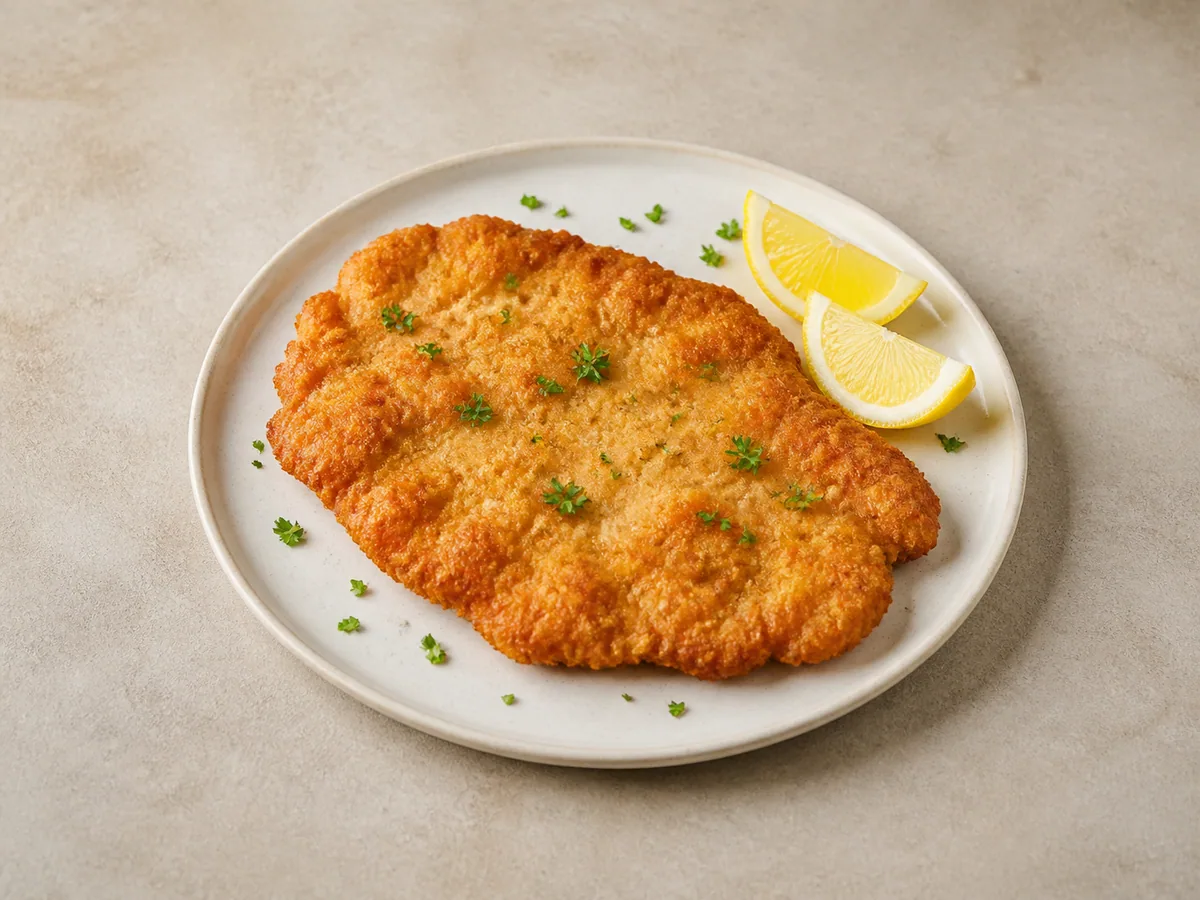
Working with one cutlet at a time, coat it lightly in flour and shake off the excess. Dip it in egg so every floury patch is covered, let the extra egg drip away, then lay it in the breadcrumbs. Turn once and lift it out without pressing the crumbs into the meat; a loose coating is what allows the crust to ripple and puff. Set the breaded cutlet on the clean plate and repeat. Discard the remaining flour, egg, and breadcrumbs that contacted the raw pork. Wash hands thoroughly with soap and water, then clean and sanitize the work surface and any utensils that touched raw pork or egg before moving to the stove.
Fry until crisp and safely cooked
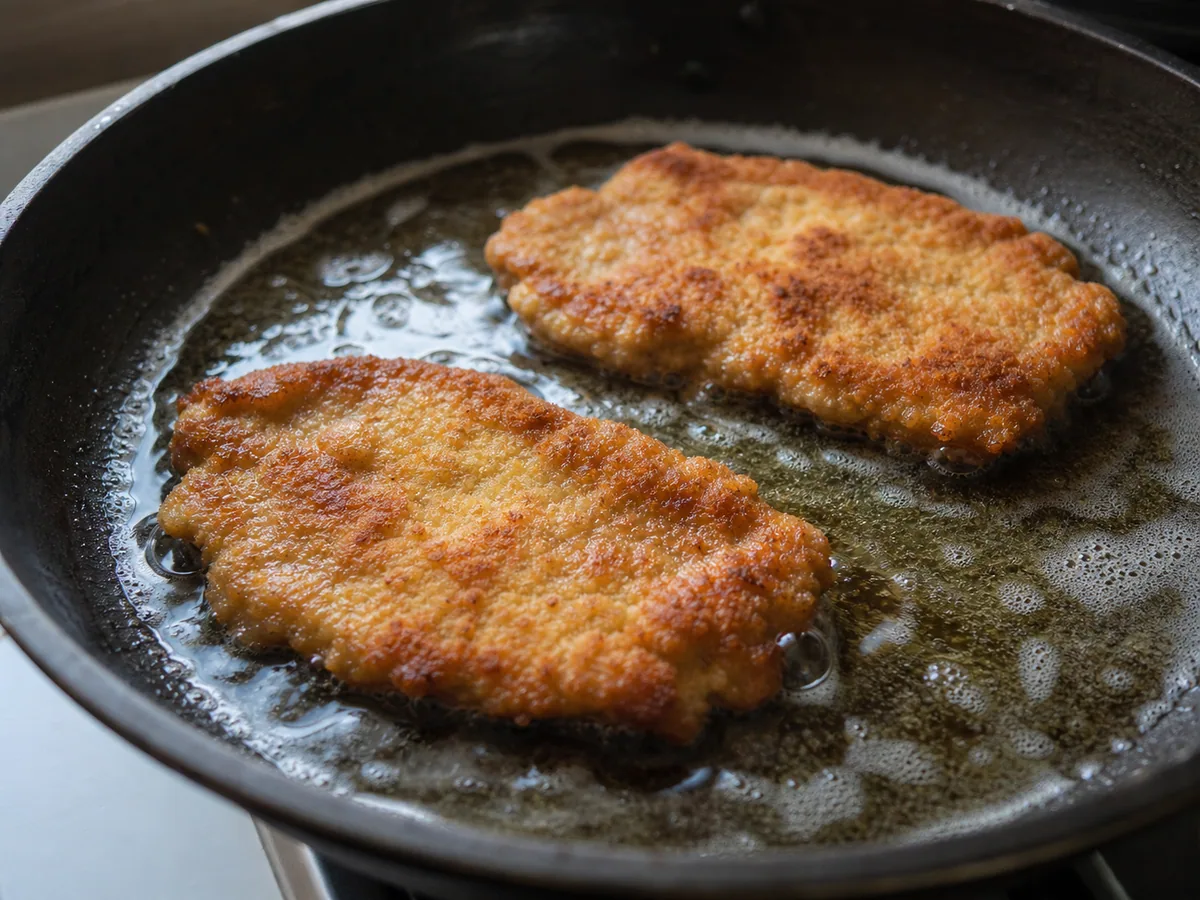
Add 180 ml of neutral frying oil to a wide, heavy skillet and heat over medium-high heat to about 175°C (350°F). Fry the cutlets in batches without crowding, gently moving the skillet so hot oil washes over the edges. Set a 2-minute timer for the first side; when it rings, check for a deep-golden underside and cook for up to 1 minute longer if needed. Turn with tongs reserved for handling the cutlets in the skillet, then reset the 2-minute timer for the second side. Insert an instant-read food thermometer sideways into the thickest part and confirm at least 63°C/145°F. Use a separate clean pair of tongs to transfer each cooked schnitzel to a clean rack or platter, never back to the plate that held raw pork. Clean the thermometer probe after each cutlet. Let the oil return to about 175°C (350°F) before adding the next batch.
02:00Rest briefly and serve with lemon
Let the schnitzel rest for at least 3 minutes after it reaches 63°C/145°F. On a clean board, cut 1 lemon into wedges. Serve the schnitzel while the crust is still crisp, with the lemon wedges alongside and fresh parsley (optional) scattered over the plate.
03:00

Smart Substitutions
- No pork loin cutlets? Cut boneless pork tenderloin into thick medallions, then pound them to the same even thickness and use the same thermometer guidance.
- No fine breadcrumbs? Crush panko into a finer texture before breading so it forms a lighter, more traditional-style coating.
- Prefer clarified butter? Use clarified butter in place of the neutral oil, watching the heat closely so the coating turns golden without scorching.
- No parsley? Leave it off and rely on the fresh lemon for a clean, bright finish.
Tips and Variations
- Use one hand for flour and breadcrumbs and the other for egg to keep the coating thin instead of clumpy.
- Gently swirl the skillet as the schnitzel fries; moving hot fat over the surface encourages the breadcrumb layer to puff away from the meat.
- Fry in batches and let the oil return to about 175°C (350°F) between batches so the crust stays crisp rather than oily.
What Went Wrong?
- Breading slides off Pat the pork dry before flouring, cover every floury patch with egg, and avoid pressing the breadcrumbs into the cutlet.
- Crust darkens before pork is cooked Lower the heat slightly, keep the cutlets evenly thin, and verify doneness with a thermometer rather than relying on crust color.
- Schnitzel tastes greasy Bring the oil back to about 175°C (350°F) before frying and avoid crowding the skillet, which drops the temperature quickly.
- Cutlets curl in the pan Pound the pork evenly and trim or snip any tight band of fat or connective tissue around the edge before breading.
Nutrition Estimate
- Fiber: 2 g per serving
- Sodium: 750 mg per serving
Nutrition disclaimer:This recipe is provided for general cooking information only. Nutrition values are estimates and may vary by ingredients, brands, preparation methods, and serving sizes. Check ingredient labels and follow appropriate food-safety practices. This content is not medical, dietary, allergy, or professional food-safety advice.
FAQ
Found an error or have a suggestion?
Help us improve this recipe. Send us your feedback and include the recipe name so we can take a look.