Method
Mix the sesame-soy dressing
Peel and finely grate 15 g of fresh ginger into a large serving bowl. Mince 1 garlic clove and add it with 45 ml of reduced-sodium soy sauce, 45 ml of rice vinegar, 30 ml of toasted sesame oil, and 15 ml of pure maple syrup. Whisk until the dressing looks smooth and slightly emulsified, then set the bowl beside the stove.
Prepare the vegetables and sesame
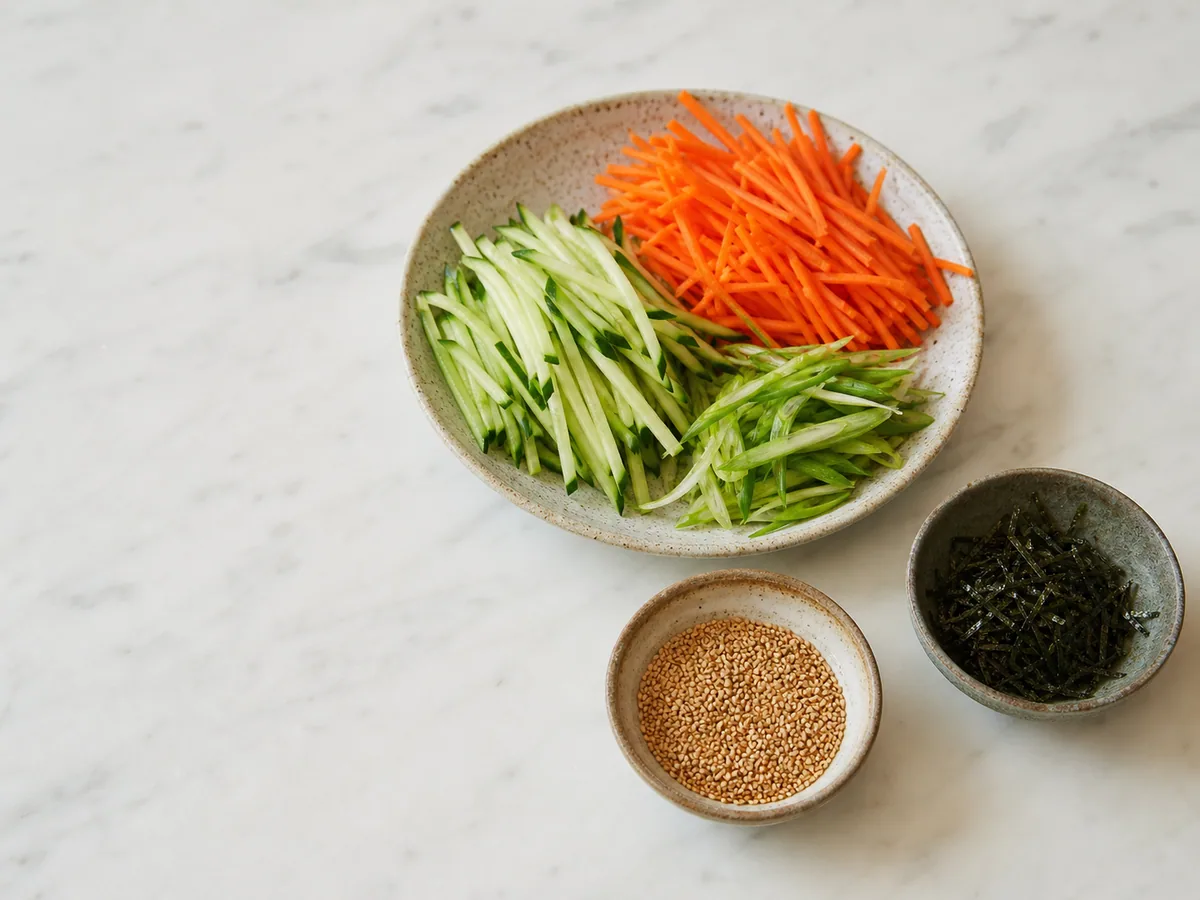
Cut 200 g of English cucumber into thin matchsticks. Peel 115 g of carrot and cut it into fine matchsticks. Remove the stem and seeds from 140 g of red bell pepper, then slice it into narrow strips. Slice 4 scallions on a diagonal. Warm a dry skillet over medium heat, add 18 g of sesame seeds, and stir often; begin checking at 2 minutes and remove them when fragrant and lightly golden. Transfer the seeds to a plate so they stop cooking.
02:00Cook and rinse the noodles
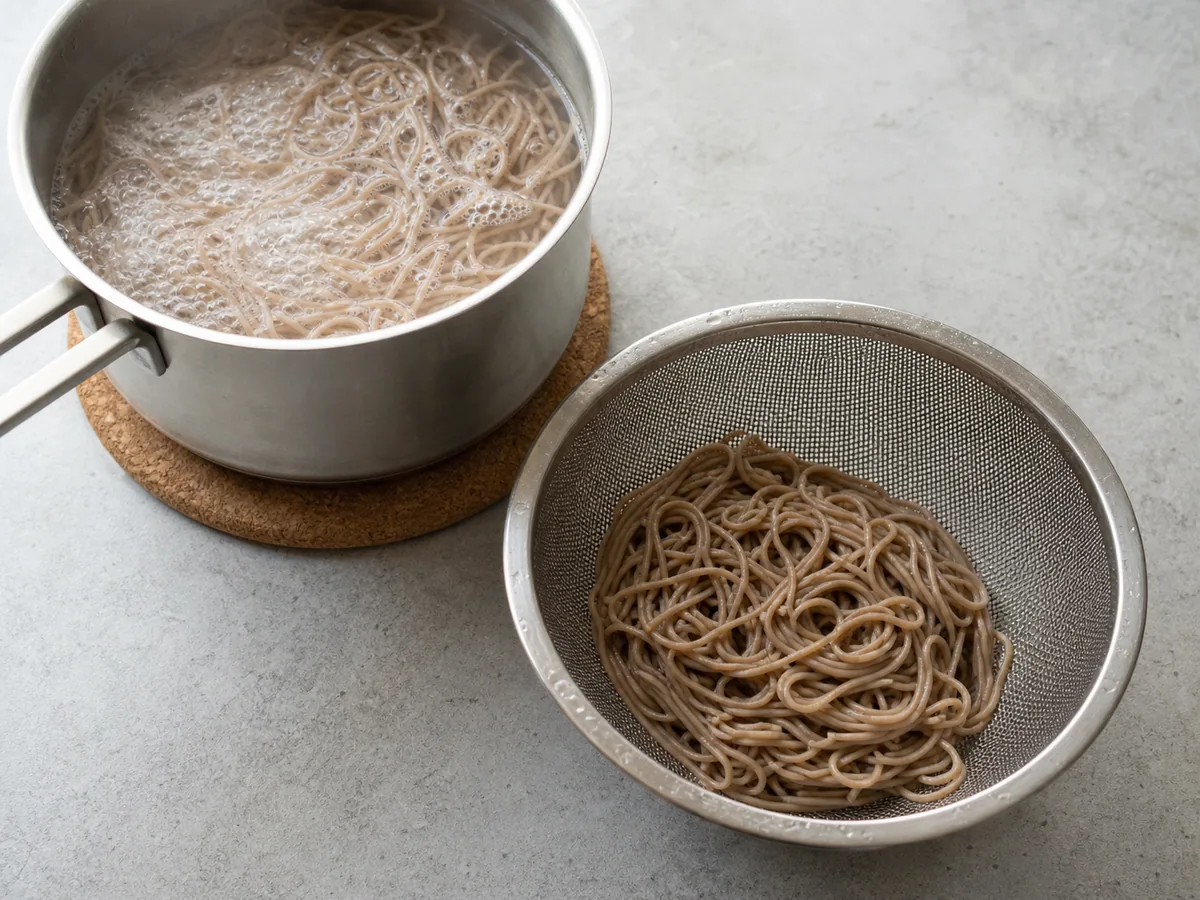
Bring a large pot of unsalted water to a rapid boil. Add 300 g of dried soba noodles and stir immediately to separate the strands. Set a timer for the package's stated cooking time. When 2 minutes remain, add 170 g of fully cooked shelled edamame so it heats through. Begin checking the noodles when 1 minute remains; they should be tender with a slight chew, not soft or swollen. Drain at once, rinse thoroughly under cold running water while gently loosening the noodles with clean fingers, then shake off as much water as possible.
Toss and serve
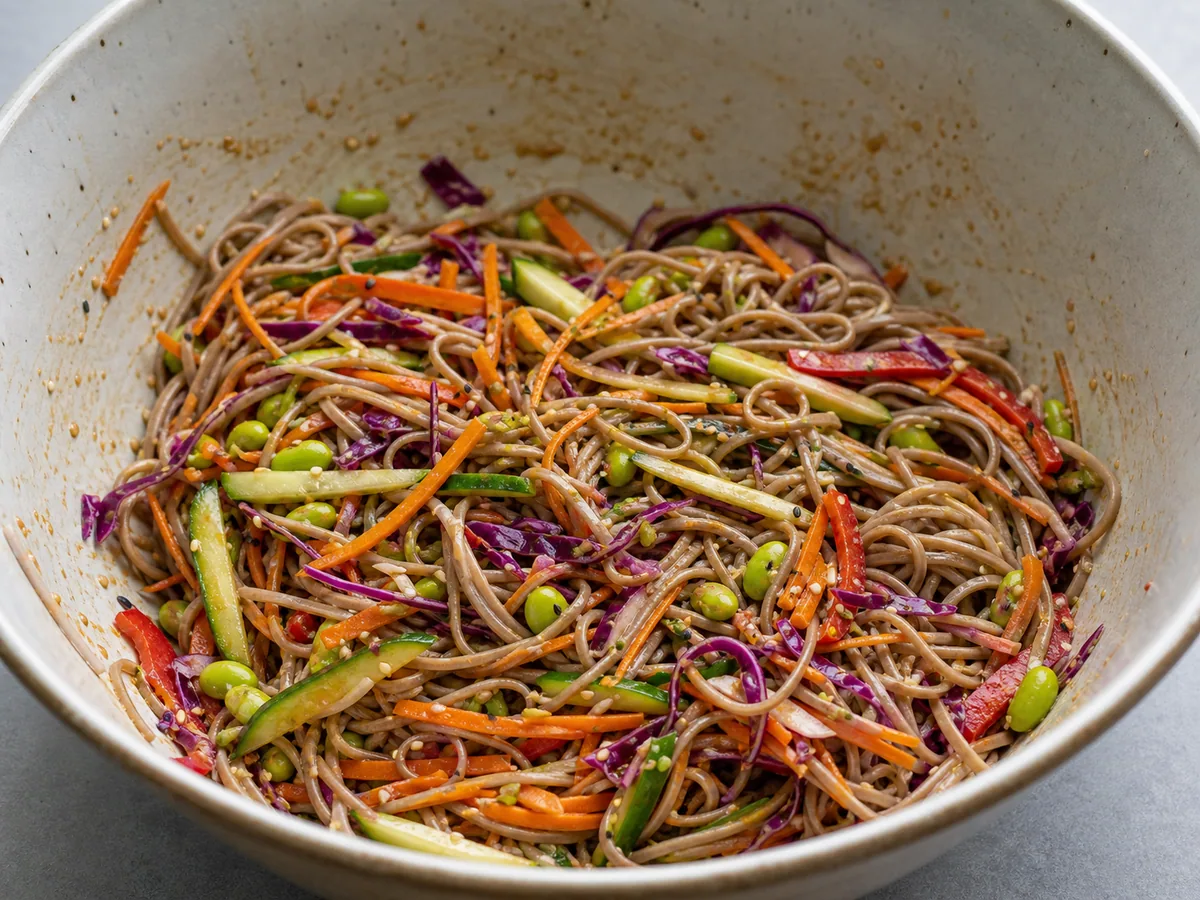
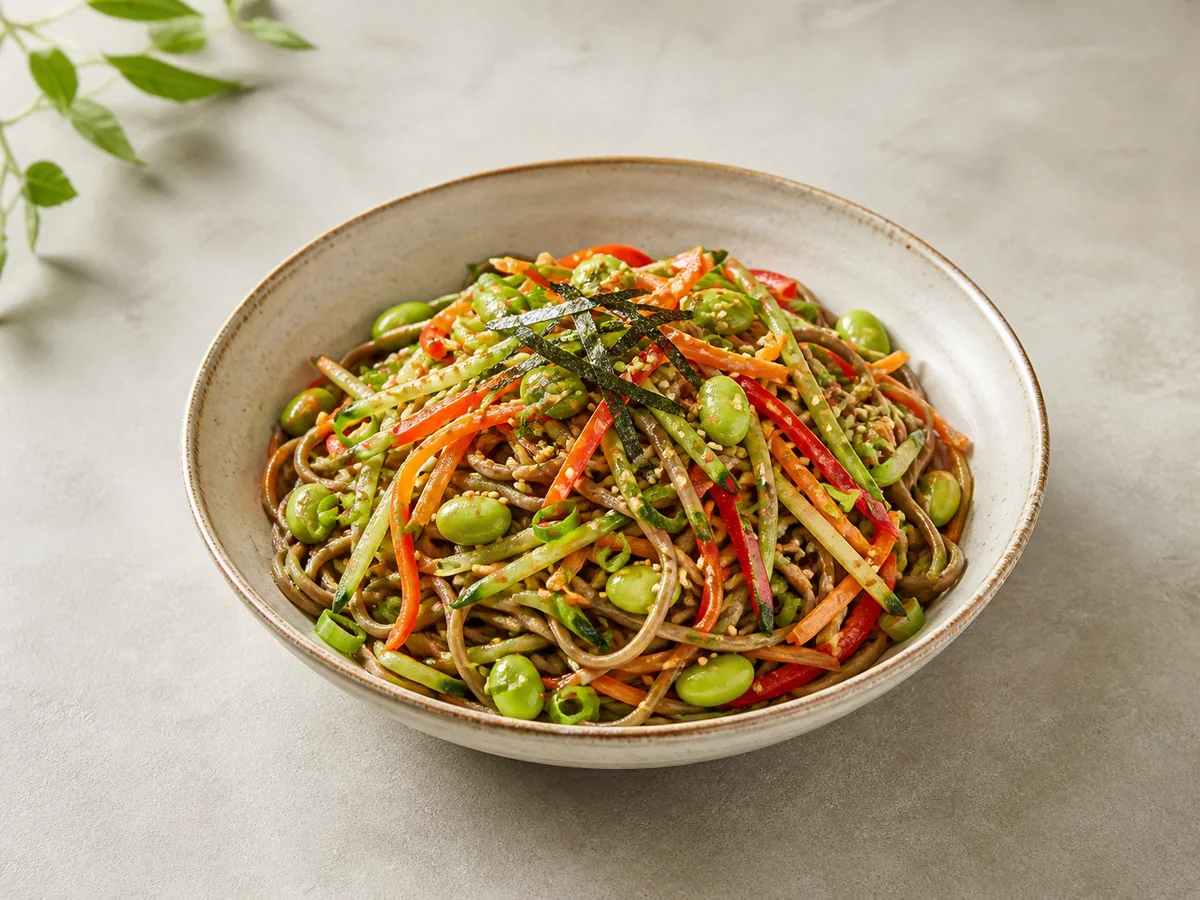
Add the well-drained noodles and edamame to the dressing and toss until every strand is lightly coated. Add 200 g of English cucumber, 115 g of carrot, 140 g of red bell pepper, and 4 scallions, then toss again with tongs until the vegetables are evenly distributed. Divide among bowls, scatter with 18 g of sesame seeds, and finish with 1 sheet of nori cut into fine strips. Serve immediately.


Smart Substitutions
- No edamame? Use cooked green peas or strips of baked firm tofu for a similarly substantial bite.
- No maple syrup? Use honey when the salad does not need to be vegan, or use granulated sugar and whisk until it dissolves.
- Need a gluten-free version? Choose soba labeled gluten-free and replace the soy sauce with gluten-free tamari; many standard soba noodles contain wheat.
- No nori? Leave it off or finish the bowls with thinly sliced shiso leaves.
Tips and Variations
- Use unsalted cooking water unless the noodle package specifically says otherwise; many dried soba noodles already contain salt.
- Cut the vegetables into similarly thin pieces so they mix through the noodles instead of collecting at the bottom of the bowl.
- Drain the rinsed noodles aggressively before tossing. Excess water is the main reason cold noodle dressings taste weak.
What Went Wrong?
- Noodles are clumped Rinse them longer under cold running water and separate the strands gently with clean fingers before draining again.
- Salad looks watery Drain the noodles more thoroughly and blot very wet vegetables with a clean towel before tossing.
- Dressing tastes too sharp Whisk in a little more sesame oil or maple syrup, then taste again before adding it to the noodles.
- Flavor tastes flat Add a small splash of soy sauce first, then brighten it with a little more rice vinegar or freshly grated ginger.
Nutrition Estimate
- Fiber: 6 g per serving
- Sodium: 490 mg per serving
Nutrition disclaimer:This recipe is provided for general cooking information only. Nutrition values are estimates and may vary by ingredients, brands, preparation methods, and serving sizes. Check ingredient labels and follow appropriate food-safety practices. This content is not medical, dietary, allergy, or professional food-safety advice.
FAQ
Found an error or have a suggestion?
Help us improve this recipe. Send us your feedback and include the recipe name so we can take a look.